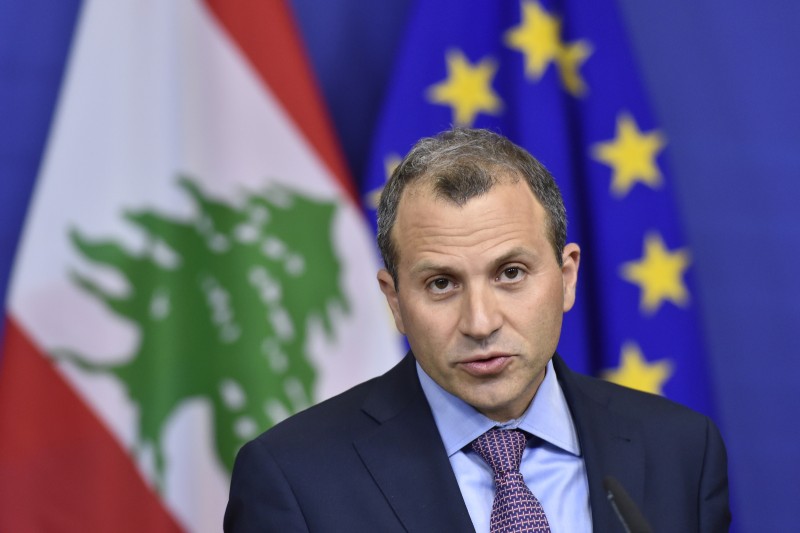
A U.S. district court has ruled against four Lebanese individuals, including a former minister, finding them liable for fraud, torture and civil conspiracy and ordering them to pay $35 million in damages, for orchestrating the kidnapping and torture of a Lebanese-American couple.
Speaking to OCCRP about the verdict from the Florida court, Lara Samaha, a U.S. green card holder, said the couple filed in the U.S. because “the justice system in Lebanon is so corrupt it is impossible to obtain justice.”
According to the default final judgment seen by OCCRP, a binding court order issued when defendants fail to respond to a lawsuit, the court ordered Gebran Bassil—a sitting member of parliament, Lebanon’s former foreign minister, and the son-in-law of former President Michel Aoun—to pay millions in damages, along with three co-defendants.
“I feel justice has been served after 7 years in court and more than 300 court filings,” Lara Samaha told OCCRP. She confirmed that there will be a follow up on a related lawsuit in Lebanon, though she declined to detail the next steps.
The Florida court heard that the defendants kidnapped and tortured Lara and her husband Elie Samaha, a U.S.-Lebanese citizen, to force them to dismiss a lawsuit they had raised in Florida in 2017, against Lebanese government officials who had stymied Lara’s efforts to obtain her inheritance. The couple alleged to the court that Bassil had worked to ensure the dismissal in order to protect one of those officials. The court found that Bassil and the other defendants had lured the couple to Lebanon under the pretext of a settlement discussion of the inheritance dispute.
Bassil’s office denied any connection to the case or the parties involved. In a statement issued on October 16 after reports of the ruling, his office said Bassil has no relationship with the parties involved and objected to what it called a selective and fragmented presentation of the legal proceedings. The office claimed that the Florida court had previously dismissed a lawsuit in March 2023 for lack of jurisdiction, and that the Lebanese judiciary had issued a ruling in Bassil’s favor against Elie and Lara Samaha.
Commenting on the statement, Lara dismissed Bassil’s office claims, saying that what matters is the US court orders and final judgement.
The office did not say whether or not Bassil plans to challenge the Florida court judgement.
The couple’s legal battles began in 2015, when they filed a lawsuit in Beirut alleging that politically-connected family members had stolen millions of dollars Lara was due to inherit. With that case delayed but still active, they filed a parallel suit in the U.S. on November 17, 2017, seeking to recover the inheritance.
In 2019, the couple traveled to Lebanon hoping to settle the dispute. That, they say, is when their ordeal began.
Lara Samaha told Daraj, OCCRP’s partner, that she and her husband were detained —she for 11 days and he for nine. The legal complaint alleged that Lebanese security forces detained the couple upon their arrival in Beirut. She alleged that each spent part of that time in an underground military prison, where they were denied food, medicine and light. She also alleged they were forced to withdraw their lawsuits in both the U.S. and Lebanon.
Bassil, who heads the Free Patriotic Movement (FPM), an influential Christian party in Lebanon allied with the Shiite movement Hezbollah, has been under U.S. sanctions since November 2020 for playing a major role in corruption in the country.
Bassil’s office did not respond to OCCRP’s request for comment.
A rescued mink from a Utah fur farm Julie Leopo for ProPublica
The strain of bird flu that’s ripped through American barns for the last four years has killed two people who caught it from sick animals. But as far as anyone can tell, humans can’t spread it. The virus has remained a true “bird” flu, tailored to attach to avian cells, not invade human throats and noses, where coughing and sneezing reliably spew droplets.
Under the right conditions, however, that could change. A single mutation could give the bird flu a foothold in people and spark a pandemic that experts fear could be deadlier than COVID-19.
For that to happen, this bird flu would likely need to find an intermediate host — an animal vulnerable to viruses that infect both birds and humans. These animals would be crowded together, each infection raising the odds that a new strain could arise through mutation. Then, for that strain to jump across species, it would have to have access to humans and time to spread among them undetected.
That perfect petri dish exists right now, a ProPublica investigation found. For over two months, an outbreak of bird flu has raged uncontrolled on a Utah farm that raises thousands of mink for fur. Mink have lungs and airways that on a cellular level are remarkably similar to those of people; they have caught and spread other flus and infected some humans with COVID-19.
Instead of trying to stop the outbreak and prevent it from spilling into humans, state and federal officials have done little except try to keep its existence quiet, our investigation shows. The failure to act amounts to a cascade of missteps flu experts called “irresponsible” and “puzzling.” One called it “playing with fire.”
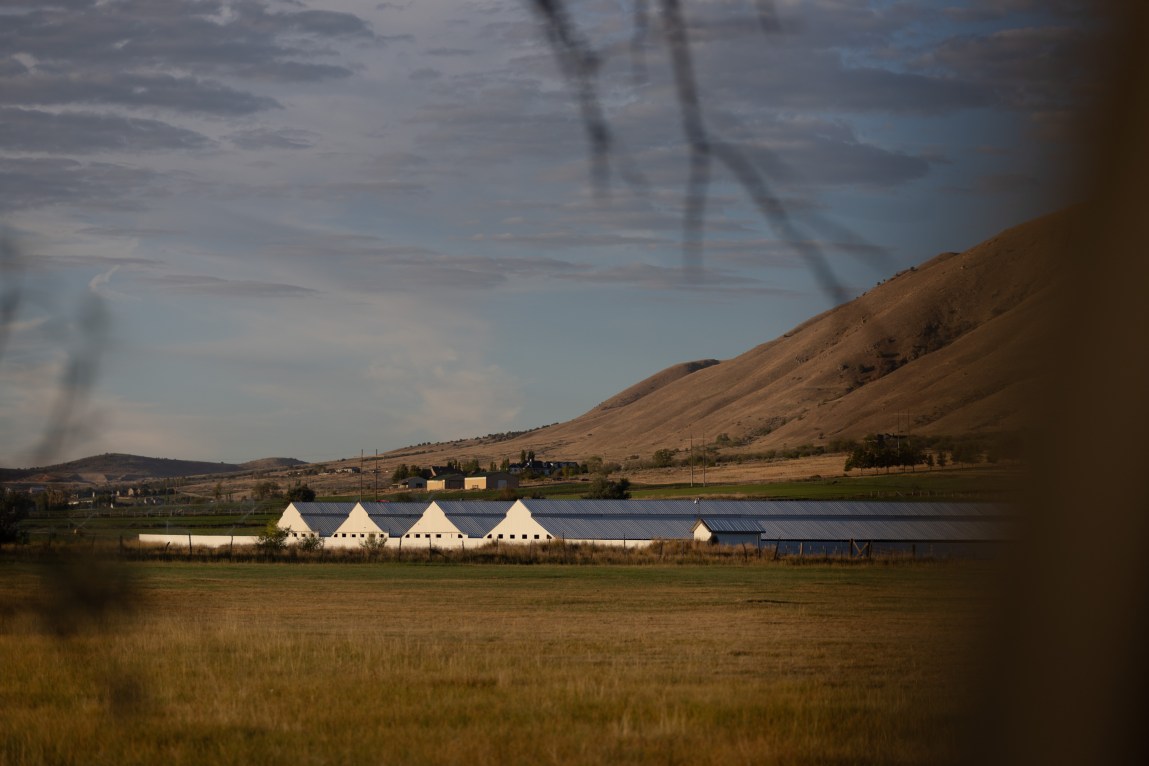
C&T Fenn Farms, a mink fur farm west of Provo, Utah, on Sept. 25Julie Leopo for ProPublica
Utah agriculture officials learned in mid-August that mink were dying of bird flu on C&T Fenn Farms, about an hour’s drive south from Salt Lake City, according to communications released under the state’s public records law.
Had poultry been infected, the playbook would have been clear: The strain is so virulent that if a single chicken tests positive, the U.S. government requires farmers to kill the whole flock to protect other farms as well as public health. Poultry farmers are reimbursed for the loss.
But there are no federal rules for how to deal with sick mink.
Handling Utah’s response was state veterinarian Amanda Price, who sought help from the U.S. Department of Agriculture, which takes the lead on bird flu outbreaks involving poultry and cows.
USDA officials said they didn’t regulate mink or have a vaccine that was approved to give them. And though officials with the Centers for Disease Control and Prevention spoke with Price’s health department counterparts who were less involved with the outbreak, they never talked to her, and she never reached out.
The threat of spillover has been far from the minds of Utah officials, records and interviews show. Instead, front and center have been the interests of a business raising animals to skin for luxury pelts to ship overseas.
“It has been devastating,” Price told ProPublica of the outbreak and its impact on the farm’s owner. “This is his life’s work that he’s seeing be destroyed. I really hope that you understand the humanity behind this situation.”
Flu experts were unequivocal that the government should have ordered the farm to cull its mink, as other countrieshave done.
But Utah never seriously considered it. A fur trade representative warned Price that doing so would kill the business and, ultimately, the industry. Farms spend decades breeding mink to develop unique genetic lineages.
“There’s just not a lot of options out there other than kind of sitting and waiting and seeing what happens,” Price said, noting that USDA officials did not urge her to kill the mink or make her feel like bird flu in mink was any riskier than infections in other animals that have caught it, like ducks and cows.
Flu experts found that response surprising.
“Every other country that I’m aware of that has had H5N1 in fur farms, depopulation has happened pretty quickly,” said Tom Peacock, an avian influenza researcher at the Pirbright Institute. “The fact that the first instinct wasn’t just to depopulate and figure stuff out later is very concerning to me.”
And all the while, officials didn’t monitor the mink workers for symptoms, as guidance from the CDC urges.
Their exposure is significant: Mink sneeze. They escape. They attack. “The mink are fierce,” said a Spanish-speaking “minkero” who works on a nearby farm, showing the scars he got from the aggressive, solitary creatures. “You get scared because the fucking thing bites, and it claws at you.”
A mink farmworker, sometimes referred to as a “minkero” among the Spanish-speaking community, shows scars from mink bites and scratches in Payson, Utah. Workers typically wear long gloves to protect themselves but can still be bitten or scratched.Julie Leopo for ProPublica
Right now in Washington state, officials are working to track down the contacts of a symptomatic person exposed to dairy cattle infected with bird flu. The patient is isolating at home. Utah public health officials used to do similar, proactive monitoring. But they stopped after complaints from their colleagues in the agriculture department that farmers were annoyed by it.
“Us doing active monitoring was making it so that farms didn’t want to work with them,” said Pamela Gomez Pinedo, a respiratory disease epidemiologist for Utah’s health department. As a result, public health workers had a “pretty difficult time” getting details from agriculture officials, she said.
As part of a 2025 agreement, the Utah Department of Agriculture and Food agreed to share information about bird flu outbreaks on farms — so long as the health officials didn’t do anything to track workers’ health.
“We will only do active monitoring in the case of evidence of human-to-human transmission,” Pinedo said in emails with a CDC epidemiologist. As the outbreak stretched to a month, CDC officials expressed concerns, asking how anyone would know if a worker had been infected if they weren’t getting tested.
Price said the state’s policy not to monitor workers is meant to allow farmers to decide whether to contact the health department, rather than “forcing it on them.” “If we started seeing people actively dying from this, obviously that would change how we respond to this,” she said.
A telltale sign of bird flu infection in humans is eye redness. It is present in over 90% of cases and is often the sole symptom a person displays.
Last Saturday, a ProPublica reporter tracked down two people who worked at the Utah mink farm. One had a visibly red eye.
After ProPublica reached out to the farm, its owner, Chad Fenn, contacted the Utah County Health Department about the red eye, which had cleared up by Monday, he told ProPublica. He said the worker got dust in his eye; the department didn’t recommend testing.
“They’re not going to do anything,” Fenn said. “They said they don’t see that there’s a need.” He said the department recommended testing only if other symptoms, like a cough or sore throat, developed.
A half dozen flu experts had no shortage of adjectives to describe their disbelief at the government decisions not to cull the mink or monitor and test the workers.
“It’s amazing to me,” said Gail Hansen, a former Kansas state public health veterinarian and epidemiologist. “Utah doesn’t want to be the epicenter of the next human flu outbreak, right?”
Most of the new viruses that have shaken humanity in the past century have spilled over from animals. Ebolas likely came from fruit bats; HIV, from chimpanzees. The leading theory for COVID-19 is that it jumped from bats to humans via an intermediate host mammal such as a raccoon dog. And all the modern flu pandemics have been bird flu viruses that mutated to spread in humans.
That’s not happening in Utah, experts said after reviewing ProPublica’s findings. Both the state and federal government are to blame.
“There’s no leader of this ‘one health’ team to take charge,” said Erin Sorrell, a senior scholar at the Johns Hopkins Center for Health Security. “That is going to allow the virus to continue to circulate, potentially adapt and potentially spill over into another host, whether it’s avian, mammalian or human.”
This strain of bird flu, which began ripping through American poultry farms in early 2022, has proved adept at jumping to other species. It took hold in cows in 2024 and since then has run rampant through dairies.
Yet federal guidance to prevent the spread into mink farms hasn’t considered cows a threat. Farmers are encouraged to keep wild birds from infiltrating their barns and avoid feeding them raw poultry. It has said nothing about feeding beef parts to mink, which farmers commonly do in summer months to encourage the animals to put on weight and grow.
The genomic data from the samples of mink lungs and brains sent from Utah to a USDA lab shows that the mink were stricken with the same strain of the virus that has spread in dairy herds. Officials said they didn’t know whether contaminated beef was the way the mink got infected.
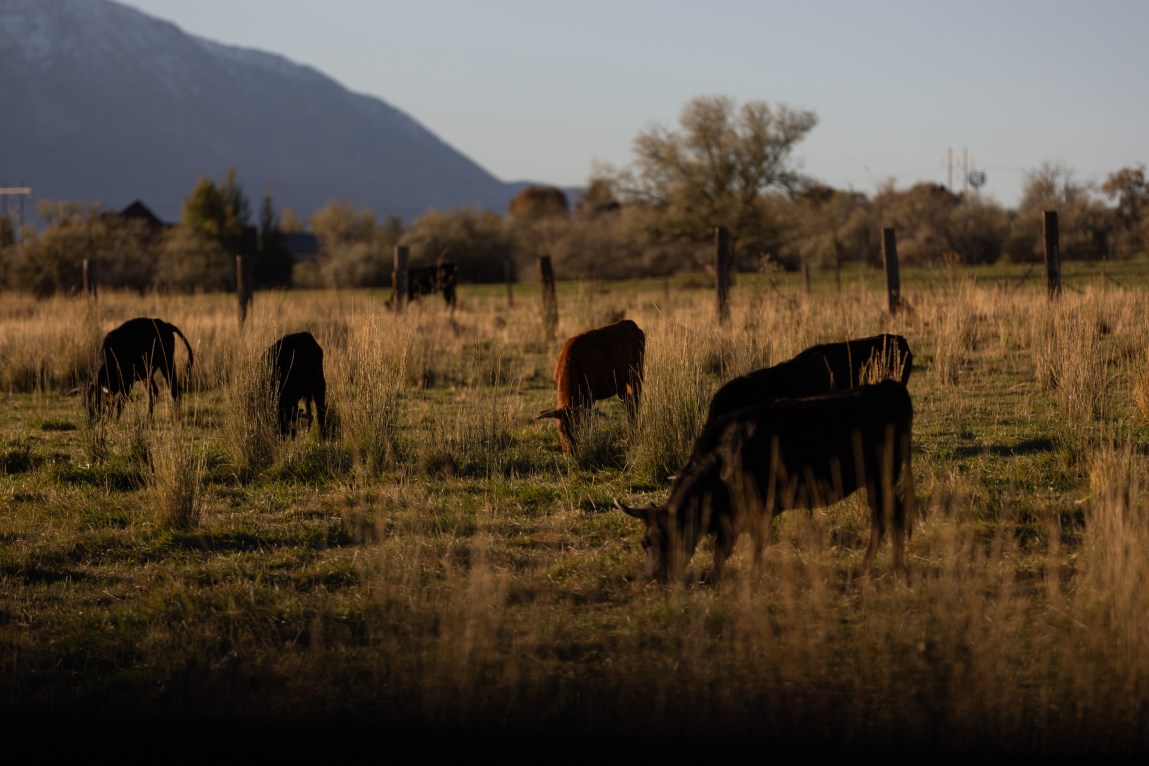
Cows graze in a field in Utah Valley, Utah.Julie Leopo for ProPublica
In mink, the dairy strain of bird flu may have found a much better host for mutating into a human flu, because mink airways have an abundance of the type of cell receptors in people’s throats and noses that are a common pathway for infection.
A 2024 study of the dairy strain of the bird flu found that a single mutation could switch the virus from preferring the bird-type receptors to human-type receptors. And in studies using ferrets, a close relative of mink, the virus acquired mutations that let it attack human-type cell receptors.
It’s not clear to scientists just how much of an evolutionary leap would be needed for this strain of bird flu to spread among humans, or whether mink are the host that would allow that leap to happen.
How this ultimately plays out “really depends on what happens with the virus,” said Meghan Davis, an epidemiologist at Johns Hopkins University.
“We might get lucky, and a response that is not robust may not have dire consequences,” she said. “But we may get unlucky.”
There’s also a risk of something called “reassortment,” where another flu virus could infect the same cell as a bird flu virus and swap wide swaths of genetic code already adapted to humans.
When the outbreak in the mink farm started, there was very little seasonal flu it could mix with, but September saw one of the earliest starts to flu season on record, compared with November, when flu normally takes off.
“The most likely scenario for a pandemic is that we have a virus that reassorts with another virus,” said Jennifer Nuzzo, director of the Pandemic Center at the Brown University School of Public Health. “Obviously, having this circulate amid human flu season is not great.”
Utah officials were far more responsive to the threat of spillover in 2020, when outbreaks of COVID-19 spread explosively on mink farms – including this very farm. They invited federal officials to the state to research how the virus adapted and moved.
There are no similar efforts now in Utah with bird flu.
A USDA spokesperson told ProPublica that it was more involved in 2020 because the virus that causes COVID-19 had “significant” potential to transmit between humans and animals and vice versa.
Scientists with the USDA sequenced and published bird flu genomic data from the first samples of dead mink. Those sequences didn’t show any particularly concerning mutations, experts and the CDC told ProPublica.
But in the past two months, experts said, the virus is sure to have continued mutating as it spread – it’s only a question of whether those mutations could confer some advantage in infecting humans as well.
“As long as it continues to go mink to mink, then it becomes more and more likely that it could jump to a human,” Hansen said.
Fenn said new samples were taken two weeks ago. Price said she is still waiting for the results.
John Korslund, a retired USDA official who helped coordinate the response to COVID-19 on mink farms several years prior, was one of several experts who said officials need to look closely at newer genetic samples to see how the virus is evolving.
“I really want to know what the virus has done, from when it started to today,” he said. “Are we getting accumulated mutations making the virus more dangerous?”
Mink have the type of cell receptors that a seasonal flu will target in human throats and noses.Julie Leopo for ProPublica
ProPublica began reporting on the outbreak late this summer after the USDA updated a bird flu dashboard that showed seven captive mink had tested positive in Utah. But neither the USDA nor state officials had said anything publicly, and, when asked, they wouldn’t discuss what was actually happening on the farm.
Willy Lanier, a public health veterinarian with the state health department, told colleagues to keep the outbreak under “closer hold” than outbreaks of bird flu on poultry and dairy farms. Keeping the information confidential was consistent with state protocol, a spokesperson in his department said, adding that it was still shared with local health officials. But when ProPublica reached out to the spokesperson for the Utah County Health Department about a possible bird flu outbreak, she said, “That would be news to me.”
Price is so deferential to the family that owns the farm that she has not set foot on the property.
“We might get lucky, and a response that is not robust may not have dire consequences. But we may get unlucky.”
Meghan Davis, Johns Hopkins University epidemiologist
“I’m really the only one here at this facility that’s been dealing with the producer. They’re a very private bunch,” Price said. “A lot of what I’m going off of is what I’ve seen from Google Maps, what I’ve talked to the producer about, what I’ve talked to the vet about. I haven’t felt the need to go out there based on those conversations.”
She said she “became very comfortable” in conversations with the owner that the virus wouldn’t spread off the farm. It doesn’t have animals moving on and off over the course of the year like on a dairy or poultry farm; mink leave only when they’re slaughtered and skinned for pelts at the end of the year. She also said that she was confident the owner would recapture any escaped mink.
Short of a formal quarantine, Price gave the farm a “verbal hold” to not move any mink, or manure or carcasses, off the farm. “We haven’t seen spread off of this farm. We have not had additional cases in Utah that are linked to this, so thus far the verbal hold orders and the measures that have been taken look to be successful: There is not spread happening from this farm from this case.”
Price’s assertion didn’t allay the concerns of experts that ProPublica spoke with. When poultry test positive for this strain of bird flu, all nearby farms are quarantined and tested for the virus. But the approach in Utah relies on farms reporting cases or the public calling in reports of dead birds in the area.
“If you’re not looking for something, you won’t find it,” Sorrell said. “Unless you’re doing active surveillance, you can’t claim that you haven’t had cases.”
Fenn told ProPublica his conversations with state officials made him less worried about any kind of spread. When the outbreak started, Fenn said, he asked whether the bird flu could infect people.
“Right off the bat, the state people we reported to, they said you don’t need to worry too much,” Fenn said. “My guys wear masks every day. They have glasses they can wear,” Fenn said. “ Me? I don’t wear it at all. Never have, never will, because I’ve been doing it for 40 years.”
Fenn said he wished he could vaccinate the mink for bird flu to keep the rest of his animals from catching it and dying; Price asked the USDA about a vaccine that had been used to save endangered wild species but said she got nowhere with that request. The USDA told ProPublica its division responsible for protecting animal health has no “species-specific regulatory authority or dedicated programs” for vaccinating mink, depopulating them or paying owners back for such a culling.
Fenn told ProPublica he thinks concerns about mink as a particularly risky bird flu host are trumped up by anti-fur activists, the same forces that he believed were behind the reactions in Spain and Finland, which depopulated mink farms hit with bird flu. “Europeans are a little scared of everything,” he said. “They’re going to do what they’re going to do, and here in the United States, we’re going to do what we’re going to do.”
Price said she was aware that Finland and Spain had depopulated their fur farms when the same strain infected them. “I didn’t really look much further into it,” she said, explaining that she was interested in those cases only for lessons about how to handle the outbreak, but not the particular reasons those countries chose to depopulate the farms.
A USDA spokesperson said Congress would have to specifically fund a program to depopulate mink. (The program to cull poultry to stop the spread of bird flu has cost well over $1 billion since 2022.)
The events in Utah are a “clear warning sign” about the dangers of mink farms, said Neil Vora, executive director for the Preventing Pandemics at the Source Coalition.
“Fur farms are to produce pelts purely for luxury goods, to make fancy coats,” he said. “It’s absurd that we’re willing to gamble with the lives of millions of people just to keep an industry alive.”
The industry has struggled as American consumers increasingly reject fur. Though domestic farms peaked about a decade ago, selling luxury pelts that often ended up in China, foreign farms have sprung up, threatening the business.
Amid mounting international pressure to clean up its financial system, Cambodia’s central bank published a statement earlier this month accusing unnamed actors of waging a campaign of “economic sabotage” against the country.
“Rumors and unverified information have been circulating on social media, claiming that a number of banking and financial institutions are facing issues or heading toward collapse in the near future,” the National Bank of Cambodia (NBC) said.
The NBC did not clarify who might be behind such a campaign, or which institutions were targeted. But the regulator warned that such “baseless” information could undermine “trust in the overall banking system.”
The banking system has taken a beating recently, as international attention turned to Cambodia’s role as a major hub for cyber-scams targeting victims around the world. Proceeds from scams have allegedly flooded into financial institutions.
The government has lurched into damage control, forming an “Ad-Hoc Commission for Combating Online Scams” which recently stated that a year of law enforcement actions had achieved “the complete eradication of large-scale online scam operations.” The NBC has shut down half a dozen banks since last year.
But the blows just keep coming.
In its annual review of Cambodia, published last month, the International Monetary Fund (IMF) flagged “persistent scam activities” as a threat to economic growth.
“The authorities need to urgently identify and address potential links between criminal activity and banks and close significant gaps in the licensing frameworks,” the IMF said, using uncharacteristically strong language.
The U.S. Treasury Department has also flagged such links, slapping sanctions over the past year on Cambodian financial institutions it alleged were laundering money from cyber-scams. Five of those sanctioned institutions were among the six closed down by the NBC.
But at least two other major lenders continue to operate, despite having been owned by well-known Cambodian businessmen accused of links to cyber-fraud operations.
‘Limited Reform’
Kok An is a Cambodian senator and tycoon whose business interests have included casinos and resorts, as well as Anco Specialized Bank Ltd. The U.S. Treasury Department sanctioned Kok An in April, alleging that his properties housed “scam centers whose occupants have stolen money from Americans.”
Kok An owned 70 percent of the shares of Anco Specialized Bank, according to the financial institution’s 2021 annual report. Reporters were unable to obtain more recent documentation showing current ownership of the bank, which is named after him.
Anco Specialized Bank operates today, and official records show that it holds an active license from the NBC. An Anco representative hung up the phone after being asked about the bank’s operations post-sanctions.
Reporters were unable to reach Kok An through phone numbers listed for him in corporate records. Speaking to RFI’s Khmer-language service following the U.S. sanctions, Kok An reportedly rejected the allegations and said he did “not know about scamming.”
Another institution under scrutiny was previously called B.I.C (Cambodia) Bank Plc, but rebranded last year as iBank (Cambodia) Plc. It was acquired in 2020 by Cambodian tycoon Yim Leak, who is facing allegations of money laundering in neighboring Thailand.
Thailand’s Anti-Money Laundering Office earlier this year froze about $590 million in assets linked to Yim Leak and an associate as part of an ongoing investigation. The country’s Securities and Exchange Commission separately filed criminal complaints against Yim Leak in June and August, accusing him of failing to disclose a share acquisition and a sale within the required deadline.
Neither Yim Leak nor iBank responded to requests for comment.
The NBC did not respond to questions about U.S. sanctions, the IMF allegations of potential links between Cambodian banks and criminal groups, and the roles of Kok An and Yim Leak in the financial sector.
Yim Leak has hired Seiden Law, a U.S. firm that said he and his family “are the apparent victims of guilt by association and political persecution.” The firm said in a June statement that Yim Leak had also been falsely identified to the U.S. Congress “as being associated with scam centers in Asia.”
Separately, the U.K. Treasury named B.I.C. Bank as a subsidiary to a Cambodian company sanctioned for alleged involvement in cyber-scams and human trafficking.
“Mr. Yim has never been convicted of a crime in any country and is repulsed by illegal cyber-crime centers in Asia. Mr. Yim is also not sanctioned,” Seiden Law stated.
Cambodia’s business registry shows that Yim Leak remains chairman of iBank. Since the rebrand, branches carry iBank signage and the commercial license has been transferred to that name. But the institution’s SWIFT code remains unchanged.
The ongoing presence in the financial system of banks that have been backed by people facing arrest warrants or international sanctions highlights the limits of Cambodia’s clean up efforts, said George McLeod, a partner at the security and intelligence advisory firm Critical Risk Team.
“The United States and other countries continue to pressure Cambodia to strengthen oversight of its banking sector, but meaningful reform has been limited,” he said.
‘Criminal Links’
While the NBC has not moved against iBank and Anco Specialized Bank, six other Cambodian institutions have been shuttered amid accusations of dirty money in the financial system.
In August, the NBC pulled the licenses and ordered the liquidation of CCU Commercial Bank Plc., HH Bank (Cambodia) Plc. and Heng Feng (Cambodia) Bank Plc.
The U.S. had sanctioned HH Bank in September 2025. The Treasury Department added Heng Feng to its sanctions list in April this year, and CCU Commercial Bank in June.
The Treasury Department cited alleged links to cyber-scams for each of the banks it sanctioned. However, the NBC did not mention such links when announcing the banks would be delicensed and liquidated. The central bank said only that the “decision is based on non-compliance with applicable laws and regulations.”
Earlier this year, the NBC revoked the license for Panda Bank, saying its “financial condition” had “continuously deteriorated, leading to an inability to provide normal banking services.”
Panda Bank had not been sanctioned, but the U.S. did target two other institutions that the NBC shut down last year: Prince Bank Plc. and Huione Pay.
Both institutions were targeted as part of sweeping sanctions related to the Prince Group, a Cambodian conglomerate that the U.S. alleged ran “industrial scale cyberfraud operations” out of “compounds reliant on human trafficking and modern-day slavery.”
The Prince Group has adamantly denied allegations of any illegal activity. A spokesperson previously told OCCRP that the conglomerate was “not a criminal syndicate but a collection of legitimate businesses serving millions of people and employing tens of thousands of people across the globe.”
The U.S. accused the conglomerate’s companies, including Prince Bank, of laundering the proceeds of scams. Prince Group companies mixed “illicit revenues with the legitimate Cambodian economy,” the U.S. Treasury Department alleged.
While the Huione Group was sanctioned alongside “146 targets within the Prince Group,” the Treasury Department did not allege that it was part of the Cambodian conglomerate. Huione Pay, also known as H-Pay, was part of the Huione Group, which the U.S, alleged had laundered the proceeds of “virtual currency investment scams.”
The NCB stated it had ordered the liquidation of Huione Pay after having “observed transactions involving the purchase, sale, or payment using crypto assets,” which violated Cambodian regulations. The NBC did not provide a specific reason for its decision to liquidate Prince Bank.
Rath Sophoan, chairman of the Association of Banks in Cambodia — which includes all licensed lenders in the country, but not crypto institutions like Huione Pay — argued that accusations against a handful of institutions should not be overstated.
He noted that the four lenders on the U.S. sanctions list accounted for less than 1 percent of the roughly $100 billion in assets held across the country’s 59 commercial banks as of December.
“Allegations involving individual institutions should not be generalized to Cambodia’s wider banking sector, which remains broad, diverse, and subject to licensing and supervision by the National Bank of Cambodia,” Rath Sophoan said.
In its statement earlier this month, the NBC attempted to counter what it said was “the dissemination and intentional fabrication of false information aimed at causing economic sabotage.”
But the IMF and others are urging the NBC to do more to build trust in the financial sector.
“An immediate priority is for the NBC, with support of other regulators, to identify banks with potential links to criminal activity and take action to address them,” the IMF said in its review last month.
Jacob Sims, a visiting fellow at Harvard University’s Asia Center and a leading expert on transnational crime in Southeast Asia, was even more direct in comments to OCCRP.
“The National Bank of Cambodia can complain about unfair reputational damage, but the most effective way to defend the reputation of the sector would be to show that regulations and enforcement standards are being applied seriously,” he said. “That simply hasn’t occurred.”
Material produced in a major metals refinery in Ireland is “undoubtedly” going into Russia’s weapons supply chain, the European Union’s Sanctions Envoy David O’Sullivan said on Thursday, adding that “there is a very real issue to be addressed.”
The comments, made at the Institute for International and European Affairs (IIEA) in Dublin, come seven months after OCCRP and partners published an investigation showing that the Aughinish Alumina refinery in western Ireland was indirectly supplying Russian weapons producers.
As much as half of the alumina from the Aughinish refinery was shipped to smelters owned by its parent company, United Company Rusal, and used to produce aluminum. The metal was then sold to a trading company supplying dozens of EU-sanctioned Russian weapons manufacturers, OCCRP’s investigation showed.
Weapons made by these firms have leveled entire city blocks in Mariupol, struck a children’s hospital in Kyiv, and blown open an apartment building in western Ukraine, according to EU sanctions listings, Ukraine’s military intelligence, and the London-based Royal United Services Institute (RUSI).
Aughinish Alumina’s sales to Russia — which have increased since the full-scale invasion of Ukraine — are entirely legal under EU trade rules. That is because although EU exports of finished aluminum are banned, shipments of the intermediate material alumina are not, partly as a result of lobbying years ago by Ireland, where Aughinish Alumina is an important employer.
OCCRP’s investigation sparked controversy in Ireland and internationally, and led to growing pressure to sanction EU alumina exports. The Irish government launched its own investigation, which reached an ambivalent conclusion, saying that a lack of data made it “difficult to ascertain where Russia is sourcing its tools and weapons from.” It shared its findings with the EU Commission in July.
O’Sullivan was less cautious in his assessment.
“The alumina goes to smelters in Russia, who produce stuff which undoubtedly goes at least in part to the military-industrial complex,” he said. “I’ve read the government report. I personally, I think there’s no doubt the investigative journalists got it right.”
O’Sullivan did not say whether the EU would eventually ban alumina exports to Russia.
“I think there is a very real issue to be addressed. We just have to find the best way of doing it, which doesn’t have unhelpful collateral consequences,” he said, noting that Aughinish Alumina also supplied smelters in Europe.
In July, Ukrainian President Volodymyr Zelenskyy said in a visit to Dublin that “Every ton of raw material that ends in Russia is used against us. I do hope whatever we are doing now, we are cutting every possibility, every sphere for Russia to build up, to militarize itself.”
Aughinish Alumina has said that its material is not used to make weapons, and that almost all the alumina it sends to Russian smelters is solely used to produce aluminum for onward export out of Russia.
OCCRP’s original investigation was published in partnership with iStories, the Irish Times, KibOrg, De Tijd, The Guardian, and Delfi.
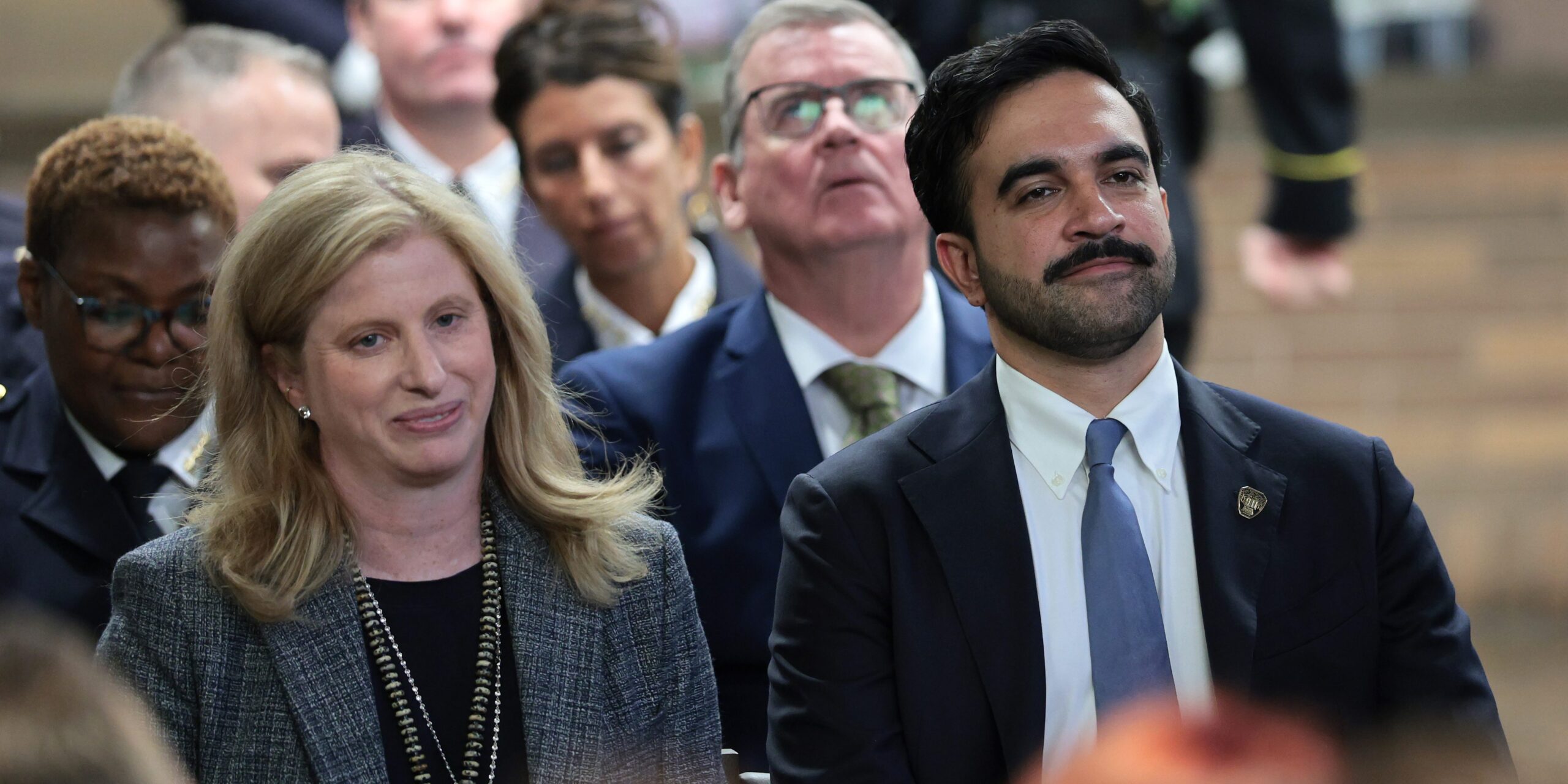
NYPD Commissioner Jessica Tisch and Mayor Zohran Mamdani attend an unveiling ceremony for a new 9/11 Memorial Wall on Sept. 9, 2026, in New York City.Photo: Michael M. Santiago/Getty Images
The October 8 shooting of Oscar Belgal by Immigration and Customs Enforcement agents in front of his 5-year-old son in Manhattan forced into the open a question that had been on many New Yorkers’ minds: What would the New York Police Department do when ICE broke the “rule of law” in the city, and how would Mayor Zohran Mamdani, the person who has the power to hire and fire the NYPD commissioner, respond?
Shortly after the shooting, Mamdani addressed the incident with an appropriate amount of outrage, declaring ICE “rotten to its core,” and calling for the department to be abolished. His frustration was visible, but he was much less expressive when it came to his appraisal of the city’s response to the situation. He had nothing substantive to discuss with respect to his police department’s involvement, despite NYPD officers arriving on the scene only to find unidentified ICE agents holding guns, wearing plain clothes and disguises and masks, in apparent violation of federal laws requiring identification. (A recently passed New York state law prohibiting federal agents from wearing masks and other face coverings was temporarily blocked by a judge.) NYPD officers applied first aid and transported Belgal to NewYork-Presbyterian Allen hospital.
According to many eyewitness accounts and widely circulated video, members of the NYPD appeared to assist ICE agents by forcefully helping with crowd control — at one point, an NYPD officer shoved congressional candidate Darializa Avila Chevalier, whom Mamdani personally stumped for, to the ground. Later, NYPD cleared a path for federal agents to whisk Belgal away from the hospital to a federal detention facility downtown.
After the shooting, the Democratic Socialists of America, several legislators, and Avila Chevalier all called on Mamdani to fire NYPD Commissioner Jessica Tisch and demanded the mayor uphold his campaign pledge to disband the NYPD’s infamous Strategic Response Group. Mamdani repeatedly refused to fire Tisch but said he was reviewing the 24-hour period around the shooting. When asked directly about Avila Chevalier being thrown to the ground, the mayor called it unacceptable, saying, “That is not something I will look to justify.” He reminded New Yorkers to be patient with efforts to reform the NYPD, ordered a review of the department’s use-of-force policies, and added funding for the inspector general’s office. But once again, he stood by his commissioner, citing “her record of uprooting corruption from the upper echelons of the NYPD while lowering crime across our city.”
Noticeably absent from any of Mamdani’s public remarks about the NYPD or Tisch was any public acknowledgment of the NYPD officers in relation to ICE agents during the Belgal incident.
Federal and city law enforcement occupy similar spaces but never really interact with each other. Mamdani made no mention of the ways in which the actions of federal agents put pressure on the NYPD as mediators — the primary function of police — to liaise in moments of conflict.
The NYPD typically relishes this role, which is why the department consumes so much of New York’s budget and shuns any attempts to redirect funds to other services that might reduce the need for police mediation to begin with. ICE forces local police to make choices in policy and in practice about how to deal with violent (often illegal) immigration operations.
If the NYPD believes itself to be the thin blue line, on which side of order and chaos do New York’s force and Mamdani believe these federal outside agitators to be?
When it comes to ICE, Mamdani’s rhetoric and policies haven’t always aligned, which has opened him up to questions about the kind of mayor he really is.
This omission — or evasion, depending on how you look at it — of this predicament is strange considering Mamdani’s willingness to speak with moral clarity about even the most contentious issues and confront them head-on. It’s also bizarre considering his penchant for weaving shared experiences together and for putting the lived experiences of New Yorkers front and center.
On the campaign trail, one of Mamdani’s most alluring traits was his ability to speak to the actual problems of everyday residents. It wasn’t just because he possessed once-in-a-generation oratory skills; candidate Zohran achieved this because, as a proud democratic socialist, there was an analysis — an explanation of the material conditions of life — baked into his politics. His rhetoric seemed in line with, or at least not alienated from (see: establishment Democrats), how fast reality was moving and how it was impacting the lives of everyday New Yorkers.
When it comes to ICE, however, Mayor Mamdani’s rhetoric and policies haven’t always aligned, which has opened him up to questions about the kind of mayor he really is. On one hand, he has shown that he will speak out against Trump’s fascist and inhumane immigration efforts. On the other hand, Mamdani hasn’t moved with the same level of force as his words. Many have pointed out that Mamdani seems to be engaging in realpolitik in an effort to get his extensive progressive agenda passed. It’s certainly not easy to bring the machine of the New York government up to speed while also being transparent about the ways in which he is moving the needle. But that’s exactly what he was elected to do.
Had Mamdani got into office and done nothing different than previous mayors — or even been exceptionally corrupt, pro-cop, and willing to help the Trump administration like predecessor Eric Adams — he might have been able to avoid his current moment of reckoning. But his administration’s genuine efforts on immigration set into motion a future where the NYPD and ICE would come into conflict.
One of Mamdani’s first moves as mayor was to take stock of how the city’s many agencies were upholding existing sanctuary city laws. In February 2026, he signed Executive Order 13, his first major order pertaining to immigration, to create the Mayor’s Office of Immigrant Affairs and establish baseline guidance, such as explicitly prohibiting ICE and other non-local law enforcement agencies from using city-owned garages and vacant lots. Crucially, EO 13 also required an audit of several agencies, including NYPD, to review their immigration-related policies.
NYPD already has a problematic history dealing with immigration enforcement. During the Adams administration, there were documented cases where the NYPD assisted or collaborated with immigration enforcement, sometimes in accordance with NYPD policies. A December 2025 report by Jocelyn Strauber, then-commissioner of the New York City Department of Investigation, found at least one incident in which “an officer violated local law by providing assistance to federal authorities in connection with enforcement of the federal civil immigration law,” as well as evidence that NYPD did “not fully comply with documentation and reporting requirements concerning requests for assistance with federal civil immigration enforcement.” The report also found that there were numerous examples of NYPD policies and practices that elevated the “risk of improper information sharing or assistance to federal authorities for purposes of civil immigration enforcement.”
The resulting audit, which was released on May 22 by Mamdani’s deputy mayor, built on those findings and recommended NYPD (and other city agencies) update its reporting requirements. But the audit also left a lot of open questions, which numerous legal advocates attested to, about areas in which NYPD protocols and policies keep avenues open to potentially collaborate with ICE. The NYPD was “not being held to a high standard of accountability or scrutiny for collusion,” the audit found, and there were significant “gaps” in documenting potential violations of department policies. The question of what the city and its mayor could do to ensure compliance also remained unanswered.
Sanctuary laws prohibit using city resources for immigration enforcement, and a January 2025 NYPD internal memo specifically barring officers from facilitating street closures to enable immigration enforcement seemed to solidify that directive. But several high-profile incidents involving the NYPD have tested the department’s compliance with sanctuary laws. In October 2025, before Mamdani was elected, during an immigration raid in Chinatown, eyewitnesses and viral videos showed NYPD officers establishing perimeters to create a path for federal law enforcement agents. In another instance in May 2026, ICE reportedly “dragged” a Nigerian immigrant out of a Brooklyn hospital after agents used force in his arrest; NYPD officers brutalized and arrested numerous protesters and cleared debris from the road to enable ICE to escape the crowds and abscond with their target.
When the NYPD arrives at an ICE raid or at a protest against an immigration abduction, what are officers supposed to do?
Both of these incidents happened under the watch of Tisch, who has insisted again and again that the department follows all sanctuary laws. When asked about the Brooklyn incident, Mamdani insisted NYPD was responding to 911 calls about the protest, not helping ICE. “Our laws leave nothing, no room for interpretation about the fact that our NYPD will not participate in civil immigration enforcement,” he said. NYPD told the Guardian US: “Upon arrival, officers observed numerous individuals acting in a disorderly manner, obstructing vehicular traffic, and blocking emergency entrances and exits at Wyckoff Heights medical center.”
When the NYPD arrives at an ICE raid or at a protest against an immigration abduction, what are officers supposed to do? On this point, NYPD and Mamdani have offered little clarity. But October 8 doesn’t pass the smell test for anyone who lives in overpoliced neighborhoods or closely observes the activity of police and their behavior.
NYPD officers were responding to an unrelated call nearby when they heard the report of shots fired. When they arrived, they encountered several men in various forms of attire, including some in construction-style vests, face masks, and at least one carrying a long gun, which officer body camera footage released by the Department confirms. The official account of the NYPD’s interaction offers no mention of ICE. There are no additional insights or explanations of department protocol that might shed light on how officers are supposed to act given the circumstances. Curiously, what those officers thought when they encountered several masked men with guns, and the conversations that took place between the ICE agents and the police, is a mystery, too. All we know is that officers agreed at some point that the NYPD would place Belgal in a vehicle, apply aid, and take him to the hospital.
Since that evening, Mayor Mamdani has stood firm in his condemnation of ICE and their operations. “We will not normalize ICE’s viciousness,” he said, calling for the agency to be abolished. That’s the least he could say to reassure New Yorkers he understands the stakes they feel in their bones already. The shooting of Oscar Belgal and his subsequent inhumane treatment — his lawyers say Belgal is still in solitary confinement with a bullet in his neck — is a reminder of how normalizing ICE operations in New York City is already well underway.
There have been more lower-profile ICE sightings and kidnappings, which echoes what has been the case in other parts of the country. What Mamdani will do to bring the city’s response into alignment with the needs of New Yorkers in this moment still remains an open question, including clarifying the NYPD’s role in the city’s ongoing fight against the Trump administration’s gestapo tactics.
If this month’s incident offered a lesson for Mamdani, it is that clearly articulating what is right is a full-time job that requires an unwavering willingness to confront reality. It’s not enough to say the thing on one issue — calling a genocide by its name, publicly dragging FIFA for pandering to wealthy elites, or deriding the inhumane practices of slumlords — but not stand on business when it comes to the reality that New Yorkers are seeing on their own streets.
Sometimes, an actual seismic event can reveal what needs to be done and that there are alternatives that may not have been fully realized before. Hope isn’t lost. There is still time for Mamdani to update his analysis. But in this moment, the mayor must make a choice: renew his commitment to the truth, or be defined by its absence.
Kate Pundyk, Siena Anstis, and Marcus Michaelsen write about the rise of AI-enabled digital transnational repression in their piece for Just Security. The use of AI models to identify, monitor, and target diaspora activists and exiled dissidents around the world demonstrates how the misuse of technology produced by companies like Anthropic can have an adverse impact on human rights.
Smugglers netted an estimated $388 million to $509 million from sea crossings to Europe in 2025, according to new research by the UN Office on Drugs and Crime (UNODC). The agency estimated that between 190,000 and 209,000 people were smuggled along four major Mediterranean and Atlantic routes, with criminal networks facilitating between 57 percent and 90 percent of departures. Fees varied widely depending on the journey, ranging from $170 for crossing to Spain’s Canary Islands to more than $7,500 for routes toward Italy and Malta, according to the International Organization for Migration.
The Central Mediterranean was the busiest route, with up to 100,400 people smuggled, followed by the Eastern Mediterranean with up to 51,300, the Northwest African Atlantic route with 33,000, and the Western Mediterranean with 24,500. These estimates, according to UNODC, reflect all smuggling attempts, including journeys that ended in interception or tragedy. The routes remained deadly: 3,404 people died or went missing in 2025, while another 104,200 were intercepted at sea and returned.
It was an unusual request. On Nov. 21, 2025, the owner of an apartment in a luxury complex north of Miami drafted a message asking the building’s management to remove his houseguest immediately, the same man his family had vouched for in writing two months earlier.
The guest was Alexandre Ramagem, a Brazilian congressman and spy chief under former President Jair Bolsonaro. In September, Ramagem had fled Brazil days before being sentenced to 16 years in prison for his role in Bolsonaro’s plot to overturn the 2022 election. The message was drafted the same day the country’s Supreme Court ordered Ramagem’s arrest and two days after a Brazilian news site published photos of him and his wife strolling through the Miami complex in workout clothes, causing outrage back home.
The message was written in the name of Rodrigo Martins de Mello, who was convicted of running an illegal mining operation on protected indigenous land in the Amazon. De Mello claimed he had only just learned from the press that his guest was barred from leaving Brazil. “In order to avoid any issues for the condominium or for myself, I hereby request that the condominium IMMEDIATELY notify him of my directive for him to leave my property,” De Mello wrote.
But Brazilian investigators say De Mello and his family knew all along that Ramagem was on the run. Messages, notes and photos from confidential records reviewed by ICIJ and Agência Pública show that they housed Ramagem for months, vouched for him to building management and sought paperwork needed to obtain a Florida driver’s license for him, including a lease drafted to make it look as if he was renting a room.
The records, obtained by Agência Pública and shared with ICIJ, are part of a sealed investigation by Brazil’s Federal Police into Ramagem’s escape, conducted within the Supreme Court’s sprawling investigation into the plot to overturn the 2022 election.
The Federal Police had an officer in Miami working alongside the U.S. Immigration and Customs Enforcement. With the officer’s help, the confidential records say, ICE found Ramagem, who Brazil wants to extradite, and arrested him in Orlando in April for overstaying his visa.
Then the case took an unexpected turn. After two days, ICE released Ramagem while he pursues asylum. Days after that, the State Department told the Brazilian officer who had helped locate Ramagem to leave the country, accusing him of trying to extend “political witch hunts” to U.S. soil.
There’s a lot of favoritism and discrimination and double standards in the immigration system now. — Tessa Petit, Florida Immigrant Coalition
Six months later, Ramagem remains free in Florida. Officials in Brazil declined to say whether the U.S. has responded to its extradition request.
Ramagem’s treatment stands in sharp contrast with that of thousands of asylum seekers who have been deported since Trump returned to office.
“There’s a lot of favoritism and discrimination and double standards in the immigration system now,” said Tessa Petit, executive director of the advocacy group Florida Immigrant Coalition.
Most immigrants don’t get the break Ramagem got, said Petit, who fled Haiti in 2001 and was initially denied asylum before winning her case in immigration court. “The reality for the majority of people is: Be vigilant, be careful, and hopefully be lucky enough to not get picked up.”
Neither Ramagem nor the De Mellos responded to requests for comment for this story.
In Brazil and in the U.S., supporters of Jair Bolsonaro, a close ally of President Donald Trump, praised the White House for Ramagem’s release.
On Oct. 25, Brazilians will vote in a presidential runoff in which the narrow front-runner, Flavio Bolsonaro, a son of the former leader, has promised pardons for everyone convicted in the coup plot.
Brazilian presidential candidates Flavio Bolsonaro, left, and Luiz Inacio Lula da Silva attend a presidential debate ahead of the national election in Sao Paulo, Brazil, on October 18, 2026.
‘An illegal alien from Brazil’
Ramagem’s only known run-in with U.S. authorities came after months of living in plain sight in Florida and publicly accusing the Brazilian government of persecution.
Ramagem entered the country legally on Sept. 11, 2025, with permission to stay six months, the Department of Homeland Security, which oversees ICE, told ICIJ. But he “chose to illegally overstay his welcome in violation of our nation’s laws,” the agency said, calling him, “an illegal alien from Brazil.”
Brazil filed a formal extradition request with the State Department on Dec. 30, 2025, according to Brazil’s Justice Ministry.
On April 13, police detained Ramagem in Orlando during a traffic stop and handed him over to ICE. Two days later, ICE let him go, pending the outcome of his removal proceedings, the agency said. He paid no bail, according to Paulo Figueiredo, a U.S.-based Brazilian commentator and Bolsonaro ally who said his immigration consulting firm has assisted Ramagem. Detained immigrants usually must go before a judge to seek release, but ICIJ found no record of Ramagem petitioning the court for his freedom. ICE told Brazilian police at the time that the release was an administrative decision and that Ramagem could remain free while his asylum claim was reviewed, according to Brazilian media reports citing police sources.
Ramagem’s allies credited Washington for his release. “Thank you, President Trump and everyone in the administration,” Figueiredo wrote on X. Eduardo Bolsonaro, another son of the former president, thanked Trump and Secretary of State Marco Rubio. Sóstenes Cavalcante, a leader of Bolsonaro’s party in Brazil’s Congress, said Rubio had helped speed up the release, which he said would otherwise have taken at least two weeks.
RAMAGEM IS FREE AND BACK HOME!
My deepest thanks go to Donald Trump @realDonaldTrump and @SecRubio for their sensitivity and attention in addressing the case of this true national hero, who, even under persecution, has never wavered.
Alexandre Ramagem deserves asylum in the land of freedom, alongside his courageous wife – tireless in fighting for his liberty – and their beautiful daughters.
Ramagem himself suggested he had U.S. government support. In November, after the publication of photos showing him in Miami, Brazil’s Supreme Court had ordered his arrest. The next day, in a livestreamed interview, Ramagem said he was safe in the United States “with the consent and knowledge of the American government.”
On April 20, five days after Ramagem’s release from immigration custody, the State Department asked Marcelo Ivo de Carvalho, the Brazilian Federal Police liaison officer posted in Miami to work with ICE, to leave the country. “No foreigner gets to game our immigration system to both circumvent formal extradition requests and extend political witch hunts into U.S. territory,” the department’s Bureau of Western Hemisphere Affairs wrote on X.
The government in Brasília retaliated and suspended the duties of a U.S. immigration agent posted there, who then left the country on April 22. In a statement, the Foreign Ministry said the U.S. had failed to consult Brazil first, as the two countries’ agreement on police liaisons requires, and ignored “good diplomatic practice of dialogue between friendly nations, such as Brazil and the United States, over more than 200 years of relations.”
Neither the State Department nor the White House responded to multiple requests for comment. In its statement, DHS did not explain why Ramagem was released, saying only that he was freed “pending the outcome of his removal proceedings” and “will receive due process.” It added that a pending application “does NOT confer any type of legal status in the United States” and that “illegal aliens are not welcome in our country.”
The handling of Ramagem’s case stands out among those of hundreds of thousands of asylum seekers in the United States.
Since Trump returned to office, immigration judges have ordered more than 440,000 asylum seekers removed, more than in the previous eight years combined, according to a recent Washington Post analysis. Release from ICE detention has also become the exception. By late 2025, ICE was deporting more than 14 people directly from detention for every one it released to await a hearing, according to the American Immigration Council, an advocacy group that analyzed ICE data. In December, the administration paused decisions on all asylum applications pending with U.S. Citizenship and Immigration Services.
Ramagem’s release was not just an immigration matter. A career federal police officer, he headed Bolsonaro’s security when Bolsonaro was president-elect. He was then appointed head of Brazil’s intelligence agency, becoming part of the inner circle of a president whose prosecution the Trump administration has criticized. In July 2025, Trump imposed 50% tariffs on Brazilian goods, calling Bolsonaro’s trial a “witch hunt,” and his administration sanctioned Alexandre de Moraes, the Supreme Court justice who oversees the coup case against Bolsonaro and Ramagem. A White House executive order that month accused Brazilian officials of politically persecuting the former president.
Brazilian President Luiz Inácio Lula da Silva, a leftist who defeated Bolsonaro in the 2022 election, has accused Washington of meddling in Brazil’s affairs. Last month, Lula used his speech at the United Nations General Assembly to warn against foreign interference in the upcoming election there.
Court, the Federal Police arrested Rodrigo’s son Celso, on suspicion of helping Ramagem flee. In a statement, the family said Celso is innocent. Moraes also ordered Rodrigo’s arrest, and Rodrigo remains a fugitive. (This week, another Supreme Court justice rejected Rodrigo’s request to overturn the order, the Brazilian news site Amado Mundo reported.)
Ramagem has denied that Celso helped him. In an Instagram post after the ICE arrest, he said he didn’t know “a certain” Priscila or Celso. “They arrested a young man, a kid, who only met me when I was already in the U.S.,” he said. “In fact, this young man is American.”
Celso now wears an ankle monitor while the investigation, which is under seal, continues.
The confidential records show the De Mello family’s alleged involvement began early. Since June 2025, Ramagem, then a member of Brazil’s Congress, had been barred by court order from leaving Brazil and was required to surrender all his passports while on trial. He was charged with using the country’s intelligence agency to help Bolsonaro discredit its voting system. (Ramagem’s defense told the Supreme Court that the evidence against him was “extremely timid.”)
On Sept. 9, while on medical leave from Congress, he crossed from the northern town of Bonfim into Lethem, Guyana. A photo found on the phone of Priscila Freitas de Mello, then Rodrigo’s wife, shows him there the next day, smiling, at what appears to be an immigration post in Guyana. Brazilian Federal Police investigators say Rodrigo took the picture, according to the records.
On Sept. 11, as Brazil’s Supreme Court convicted him, Ramagem flew to the United States on a diplomatic passport that he had kept.
On Sept. 15, Celso messaged Priscila asking for a utility bill in his father’s name so Ramagem could apply for a Florida driver’s license, the confidential records show.
“Hi Pri, good evening,” Celso wrote to his stepmother. “Can you send me a bill for your apartment in my dad’s name? Water, electricity, phone, internet… We’re going to try to get Alexandre’s driver’s license tomorrow at the DMV.” He had drafted a lease, Celso wrote, to make it look as if Ramagem “had rented the room.”
“Let me see,” Priscila replied.
Two days later, Priscila wrote to the condominium’s management asking for a new gate access card. “Since we are traveling, we won’t be able to pick it up,” she said. “Therefore, we authorize a friend of ours, Alexandre Rodrigues Ramagem, to collect the new card on our behalf.” Celso also contested parking fines Ramagem had run up at the complex, the records show.
On Nov. 17, Ramagem’s spouse and daughters joined him in the apartment, according to the wife’s social media posts.
Investigators in Brazil allege in the confidential records that the De Mello family played a key role in keeping Ramagem hidden, both by housing him and by helping him deceive U.S. authorities with false documents. It is unclear whether a driver’s license was ultimately issued.
Rodrigo, the De Mello patriarch, has denied helping Ramagem escape. In November, he called the escape story a “fallacious narrative” meant to persecute the right, and said that when Ramagem was with him, he faced no conviction or legal impediment to leaving Brazil. The two men appeared together publicly in March 2025, when Rodrigo posted a photo of Ramagem’s visit to Boa Vista, De Mello’s longtime base in the state of Roraima, near the Guyana border, calling him “a great ally” of Bolsonaro.
Recommended reading MEET THE INVESTIGATORS How investigating political fanatics became one of the most dangerous jobs in Brazil Jan 08, 2023 FINCEN FILES White House pick to run Venezuela oil deal under investigation in two countries Sep 03, 2026 Accountability Arizona gun shop owner faces terrorism-related charges for allegedly selling high-caliber weapons bound for Mexican cartels Apr 30, 2026
Interpol announced Thursday that authorities from 21 countries across Africa have arrested 1,462 suspects linked to cross-border cybercrime networks in what it described as “one of Africa’s largest cybercrime enforcement operations.” The agency said the operation disrupted 10,909 malicious networks and led to the recovery of more than $105 million in illicit funds.
Law enforcement identified 65,929 victims targeted by these cybercriminal networks, with investigations linking the criminal activity to losses exceeding $385 million. In Uganda alone, authorities dismantled two transnational fraud rings, arresting 365 foreign nationals linked to online investment and pension fraud schemes targeting victims across Asia.









 (@BolsonaroSP)