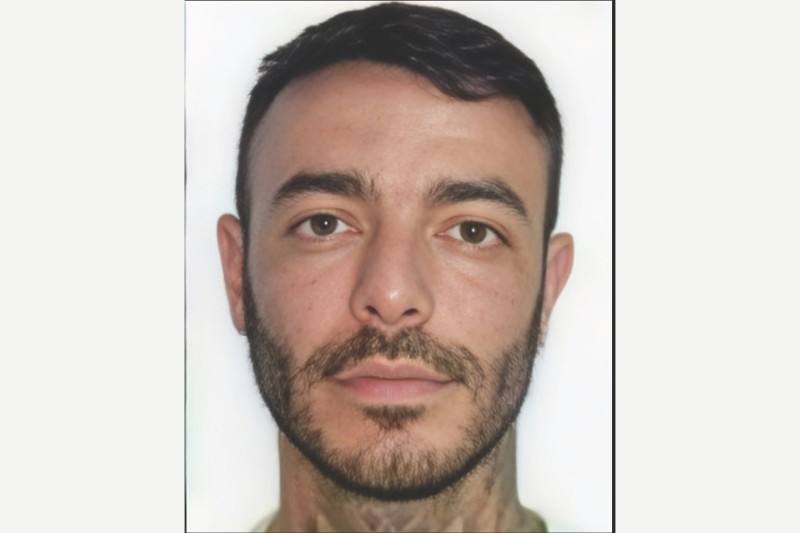
American prosecutors want to introduce examples of encrypted communications and alleged bribery of government officials as part of their case against accused South American drug baron Sebastián Marset.
In pretrial motions filed this week, the Justice Department argued the evidence is necessary to give jurors a full picture of Marset’s alleged global drug trafficking network ahead of a trial expected early next year.
Prosecutors told District Judge Rossie Alston Jr. that the evidence will also show Marset engaged in a conspiracy to launder drug proceeds.
Marset was arrested in a pre-dawn raid in Santa Cruz, Bolivia, in March and expelled to the U.S. with the assistance of the U.S. Drug Enforcement Administration. He was initially charged with money laundering counts, but was later indicted on drug trafficking and narco-terrorism charges.
Marset’s lawyers argue that the initial charge of money laundering is invalid because it involved a single wire transfer between Portugal and China that did not involve the servers of a U.S. bank. They say Marset never trafficked drugs to the U.S., and the narco-terrorism groups were not designated as such at the time of his dealing with them.
Prosecutors alleged in the new filings that “the defendant ran his organization in a ruthless, brutal manner, killing those that opposed him or cooperated with law enforcement. He also did not tolerate governments interfering in his criminal activity, employing a classic plata o plomo — silver or lead — model to coerce governments into acceding to his will.”
“In practice, this meant that the defendant threatened, bombed, and even murdered those members of law enforcement whom he could not corrupt,” they wrote.
In a key development as part of the filings, prosecutors asked Judge Alston to allow evidence of bribery in Uruguay, Paraguay, Bolivia, and Venezuela. They alleged that Marset “paid government officials in order to receive information and protection from law enforcement.”
“These bribes allowed him to carry on his drug trafficking, money laundering, and terrorist activities without interference from law enforcement,” the prosecutors added.
Videos from Marset’s arrest sparked a sweeping purge of high-ranking officials, just 48 hours after the U.S. State Department announced visa restrictions targeting Bolivian political and judicial officials over allegations of high-level corruption and illicit drug ties.
The filing alleges that the “payments also allowed the defendant to receive drug trafficking files from Bolivian law enforcement, to evade capture operations, and to receive notice of DEA meetings with Bolivian officials.”
Prosecutors want to allow witness statements showing a conspiracy to launder drug proceeds. They asked to introduce evidence statements from people including an unindicted co-conspirator and an undercover officer, describing how funds moved from Europe to South America.
Prosecutors are also seeking to introduce encrypted messages sent to and from Marset on phones that were part of the Sky ECC network. A 2024 investigation by OCCRP and media partners showed how these phones from a Canadian company with servers in France were favored by criminal organizations in Serbia, Latin America, and elsewhere.
The admissibility of Sky’s encrypted communications in court is an unsettled legal battle in several jurisdictions.
In Marset’s case, prosecutors said they identified 12 personal identification numbers used by those in the alleged conspiracy. They alleged that three belonged to Marset, and contained messages and images showing his tattoos, his family, and other identifiers.
The prosecutors note in the filing on Sky that “the defendant texted a picture of an individual he murdered, and the government has independent evidence that the defendant was responsible for the murder.”
Defense attorneys filed their own motion asking the judge to withhold from the jury any reference to violent crimes that do not meet the definition of narco-terrorism, any reference to a drug seizure in international waters near Africa, all bank records not connected to the specific charges against Marset, and secondhand statements tied to the money laundering conspiracy.
It is unclear when Judge Alston will rule on the seven new motions. He had pledged to rule by November 6 on several defense motions challenging the charges brought against Marset, but had not as of Thursday.
The alleged trafficker’s defense last week withdrew a request to strike use of a seized cellphone as evidence after they said prosecutors committed to not use information from it.
Source: OCCRP · 2026-11-13