The U.S. “Backyard”
It would have been unimaginable for the United States and longtime U.S. adversary, Venezuela, to enter into a military alliance just one year ago. But that’s exactly what U.S. “Secretary of War” Pete Hegseth announced from its capital, Caracas, on November 18, as part of a surprise meeting with Venezuela’s acting president, Delcy Rodríguez.
The new military agreement — which will include joint training, intelligence sharing, and defense equipment capabilities — and an oil deal signed in August, which even Bloomberg has called a reprise of the industry’s “neocolonial past,” is the most significant achievement of President Donald Trump’s aggressive “Donroe Doctrine” to strengthen U.S. control over Latin America. “In the last year, the country that previously sent its oil wealth to Cuba or to China, from rigs built by Venezuelans and Americans, has now signed a historic oil deal with the United States, through the Department of War,” Hegseth boasted at a press conference last week.
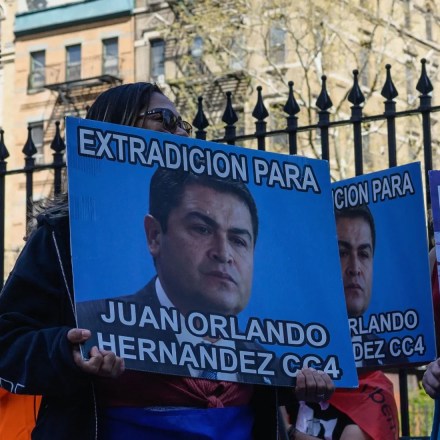
That same day, however, the New York Times reported that Colombia rejected a plan to conduct joint military operations with the United States. This led Hegseth to cut a visit to Colombia short; he had originally planned to discuss military cooperation with the country’s new right-wing president, Abelardo de la Espriella. Both he and Hegseth took to X deny the Times’s claims. But de la Espriella, who campaigned by aligning himself with the Trump administration and calling for military action against drug cartels and gangs, did not have sufficient support in Colombia’s Congress to ink a military agreement with the United States that would have allowed U.S. troops to conduct counter-cartel operations inside Colombia.
The military agreement with Venezuela and the lack of one in Colombia showcase the contradictions of the Trump administration’s aggressive Latin America policy. On the one hand, the administration has greatly expanded operations in the Western Hemisphere over the past year. But a recent series of setbacks, of which Colombia’s snub is only the latest, show the limits of U.S. power projection even in a region it has treated as its backyard for hundreds of years.
The Donroe Doctrine in Action
One year ago this month, the Trump administration published its National Security Strategy, which candidly advocated for a “Trump Corollary” to the Monroe Doctrine, invoking the policy that the United States historically used to treat Latin America and the Caribbean as the country’s exclusive sphere of influence. Just two months after releasing the NSS, on January 3, the administration carried out a coup in Venezuela, which removed its president, Nicolás Maduro, from power. A U.S. strike in southern Venezuela in June reportedly killed a leader of the Tren de Aragua gang. And last month, U.S. aircraft attacked a camp of supposed Colombian guerrillas operating inside Venezuela, killing more than two dozen people.
With the cooperation of remaining regime officials, headed by Rodríguez, U.S. Secretary of State Marco Rubio has also effectively dictated significant shifts in Venezuelan domestic and economic policy, including the oil deal which gives the United States a direct stake in more than 17 strategic oil fields and the resumption of U.S. embassy operations in Caracas.
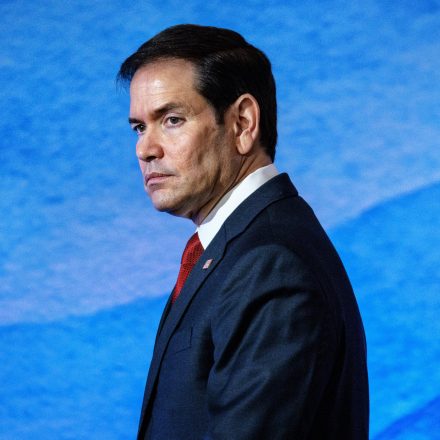
Rubio’s influence over Venezuelan policy also enabled him to escalate an economic offensive against Cuba, which has long been a target of Rubio’s staunch anti-communist crusade. Venezuela had been Cuba’s largest oil supplier, but after the coup, Venezuela quickly cut off its supply of fuel to the island nation. The Trump administration then threatened tariffs against any country that sold oil to Cuba. By February, the United Nations was warning that Cuba faced “humanitarian collapse” from the embargo. Trump officials have also repeatedly threatened to carry out regime change on the island. As recently as November 13, Trump told reporters: “I want to get Cuba done before I leave you.”
Since last September, the United States has also conducted scores of attacks on supposed drug boats in the Caribbean Sea and Pacific Ocean. By alleging that these boats are suspected of “narco-trafficking,” the Trump administration has carried out lawless operations that have killed more than 240 civilians.
The administration had even bigger plans for Latin America. The NSS envisioned a region run by subservient governments willing to play their part in advancing policies favorable to U.S. interests. As the document put it:
Our goals for the Western Hemisphere can be summarized as “Enlist and Expand.” We will enlist established friends in the Hemisphere to control migration, stop drug flows, and strengthen stability and security on land and sea. We will expand by cultivating and strengthening new partners while bolstering our own nation’s appeal as the Hemisphere’s economic and security partner of choice.
Shifts in the region would favor this policy, with recent Latin American elections bringing U.S.-aligned, right-wing leaders to power in several countries that had previously been governed by left-wing administrations. Bolivia, Chile, and Honduras elected right-wing heads of state in 2025, followed by Costa Rica, Colombia, and Peru this year. These new governments joined staunch Trump allies Javier Milei in Argentina, Nayib Bukele in El Salvador, and Daniel Noboa in Ecuador.
On March 7, 2026, Trump and Rubio brought 13 of these allies together at a summit of Shield of the Americas, a multinational security initiative created by the administration earlier this year. The main result of the summit was the creation of the Americas Counter Cartel Coalition, which Trump described as “a pledge from military leaders and representatives from 17 countries demonstrating that the region is ready to operationalize hard power to defeat these threats [cartels and terrorists] to our security and civilization.” At an October meeting, the coalition (which has grown to 19 countries) “committed to expand information sharing, increase bilateral and multilateral cooperation, and conduct combined operations that deter and dismantle those networks, secure borders and critical infrastructure, and protect law-abiding citizens,” according to a U.S. Southern Command press release.
New Partnerships and Human Rights Concerns
Under Noboa, Ecuador has been at the forefront of advancing U.S. military operations in Latin America, offering a glimpse of what might be in store as the United States seeks to expand military cooperation across the region.
In March, U.S. Special Operations forces began joint operations with Ecuador’s military against alleged drug cartel facilities. The partnership was established despite a referendum in Ecuador which saw voters overwhelmingly reject a proposal to host a U.S. military base. A New York Times investigation found that at least one of the facilities targeted in these joint operations was a civilian dairy farm. A Human Rights Watch report — based on extensive interviews and analysis of data including satellite imagery, judicial documents, and medical records — found three separate incidents implicating the U.S.–Ecuador security partnership in subjecting civilians to torture, drone strikes, and arbitrary detention. The report argues:
From a human rights perspective, this partnership is a perilous one. The two countries’ security relationship is deepening at a moment when both governments have engaged in serious human rights violations fueled by their insistence on framing their confrontations with organized crime groups as a kind of war.
On November 6, Rep. Jesús “Chuy” García and 12 other members of Congress sent a letter to Rubio urging him to suspend military assistance to Noboa, noting “Ecuador has seen the repression of opposition actors across the political spectrum, attacks on judicial independence, and restrictions on the freedom of the press.”
While the plans to expand military cooperation in Colombia suffered a setback, the Colombian and U.S. militaries have nonetheless made efforts to deepen their relationship. This month, 350 U.S. military personnel were in Colombia training alongside 400 local troops as part of a military exercise dubbed Southern Vanguard 2027. Panama and Honduras have also hosted training exercises with U.S. troops in the past year.
A recent U.S. Army press release also announced that U.S. and Colombian military leaders met for bilateral discussions about the two countries’ partnership. Even under left-wing President Gustavo Petro, who was a vocal critic of Trump and the war on drugs, U.S. military personnel were deployed to Colombia and the two countries shared intelligence.
Historically, U.S. military partnerships with Latin American leaders have been linked to human rights abuses, including the Guatemalan military’s massacre of Indigenous Maya civilians during the country’s 36-year-long civil war, and Peru’s government, under the 10-year rule of Alberto Fujimori, carrying out forced disappearances of dissidents. Considering the civilian toll of the administration’s boat strike campaign, as well as the abuses being carried out in Ecuador, it is likely that the Donroe Doctrine will lead to further human rights violations.
The administration has also increasingly meddled in the political affairs, and even the sovereignty, of various Latin American countries, including conditioning a $20 billion bailout of Argentina’s economy on the success of Milei’s party in the country’s legislative elections, pressuring Bolivia’s government to arrest its own attorney general and other officials who were investigating a Trump-friendly political strategist, and attempting to sway Brazil’s presidential election in favor of Trump ally Flávio Bolsonaro.
Has the Donroe Doctrine Peaked?
Despite the seemingly unrestrained advance of the Donroe Doctrine this past year, Trump’s influence over the region is already teetering. Even before Colombia rejected deeper cooperation, Trump had encountered several other key setbacks across Latin America.
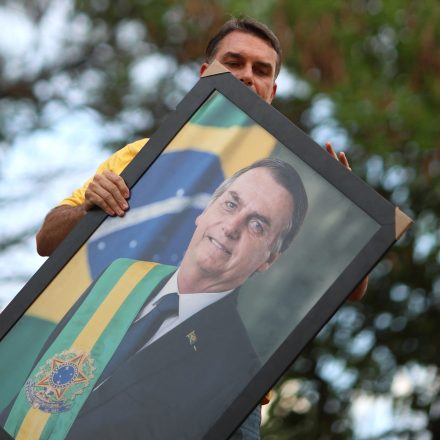
Despite Trump’s efforts to sway Brazil’s presidential elections in October, incumbent President Luiz Inacio Lula Da Silva pulled off a stunning defeat of Bolsonaro, securing another term leading the largest country in Latin America. Bolsonaro’s loss, bolstered in no small part by the Brazilian public’s outrage at U.S. interference, dashed the Trump administration’s hopes of having an entirely subservient ally at the head of the largest and most politically influential country in Latin America.
This month, outrage over a banking scandal in Paraguay led to the impeachment of Trump-aligned President Santiago Peña. In Chile, right-wing President José Antonio Kast’s approval rating has plunged to new lows after just eight months in office. And in Argentina, where Milei, one of Trump’s most subordinate allies, has been carrying out sweeping neoliberal reforms, the country appears to be entering a recession just ahead of next year’s presidential election.
This year has also seen significant protests and increased left-wing activism challenge the region’s right-wing governments. In May, a peasant-led rebellion in Bolivia over austerity and government ties to the Trump administration brought the country to a standstill for over a month. President Rodrigo Paz has since enacted a state of emergency, enabling him to use the military and police to suppress dissent. Despite this, Bolivian teachers launched a strike last month over efforts by the government to privatize education. In Chile, the country’s student movement has held several national days of protests, facing off against police armed with tear gas and water cannons. Recently, Chilean truckers also entered the fray, setting up roadblocks to protest fuel price hikes.
In Argentina, Trotskyist congresswoman Myriam Bregman has rapidly grown in popularity. Recent polling has shown that Bregman, a vocal critic of Milei and U.S. influence in Argentina, now has the highest favorability rating of any political figure in the country, foreshadowing an electoral environment in which the far left is becoming a serious contender against the right and the country’s more mainstream Peronist opposition. All these trends further signal a landscape less conducive to Trump’s agenda of continued U.S. intervention.
This surge of left-wing populism across Latin America doesn’t mean that the administration will cease aggressive interventions in the region. Trump’s appointment of Stephen Miller as his new chief of staff may signal the opposite. Miller was highly involved in planning the coup in Venezuela and the boat strike campaign. But following the Republican Party’s historic defeats in the U.S. midterm elections, the administration will have to contend with a new Congress elected by a public that is souring on constant military interventions. Hegseth, competing with Miller in his zeal for employing military terror in the region, has already become the target of an impeachment effort which is likely to carry over into the next legislative term.
As the Iran war has shown, military might alone is not enough to make countries, let alone entire regions, submit to U.S. dictates. The Trump administration may well continue its efforts to revive the Monroe Doctrine, but the long history of U.S. intervention in Latin America is also a history of the region’s people defending their sovereignty from U.S. empire and local quislings. This year has been another chapter in that history.
“To the narco-terrorists who have used this as a safe haven, your time is up. We will hunt you down. We will find you. And we will kill you,” Hegseth announced last week in Caracas. He also passed along a “greeting” from Trump to Rodríguez and lauded the puppet-president who has consistently met Washington’s demands. Standing outside the U.S. Embassy, Hegseth praised Venezuela’s transformation from an enemy to a “compliant security partner.” But repeating the success in Venezuela may prove to be very difficult.
Source: The Intercept · 2026-11-25