Welcome back to the Abstract—and Happy Halloween! Here are the studies this week that smashed into Earth, put aliens on ice, drank mummy wine, and hugged it out.
First, a century-old theory that comets enriched Earth with the stuff of life is upended by new models of ancient impacts. Then: the case for life in extraterrestrial sea ice, a Halloween-coded medieval concoction, and a scientific embrace.
As always, for more of my work, check out my book First Contact: The Story of Our Obsession with Aliens, or subscribe to my personal newsletter The BeX Files.
Did the seeds of life come from above or below?
Carl Sagan eloquently said that we are all made of “star stuff,” but just how much of us is really comet vomit? This is a hotly debated question in science due to the popular theory that comets delivered essential ingredients for life to Earth during impacts more than four billion years ago, paving the way for the curious emergence of Earthlings.
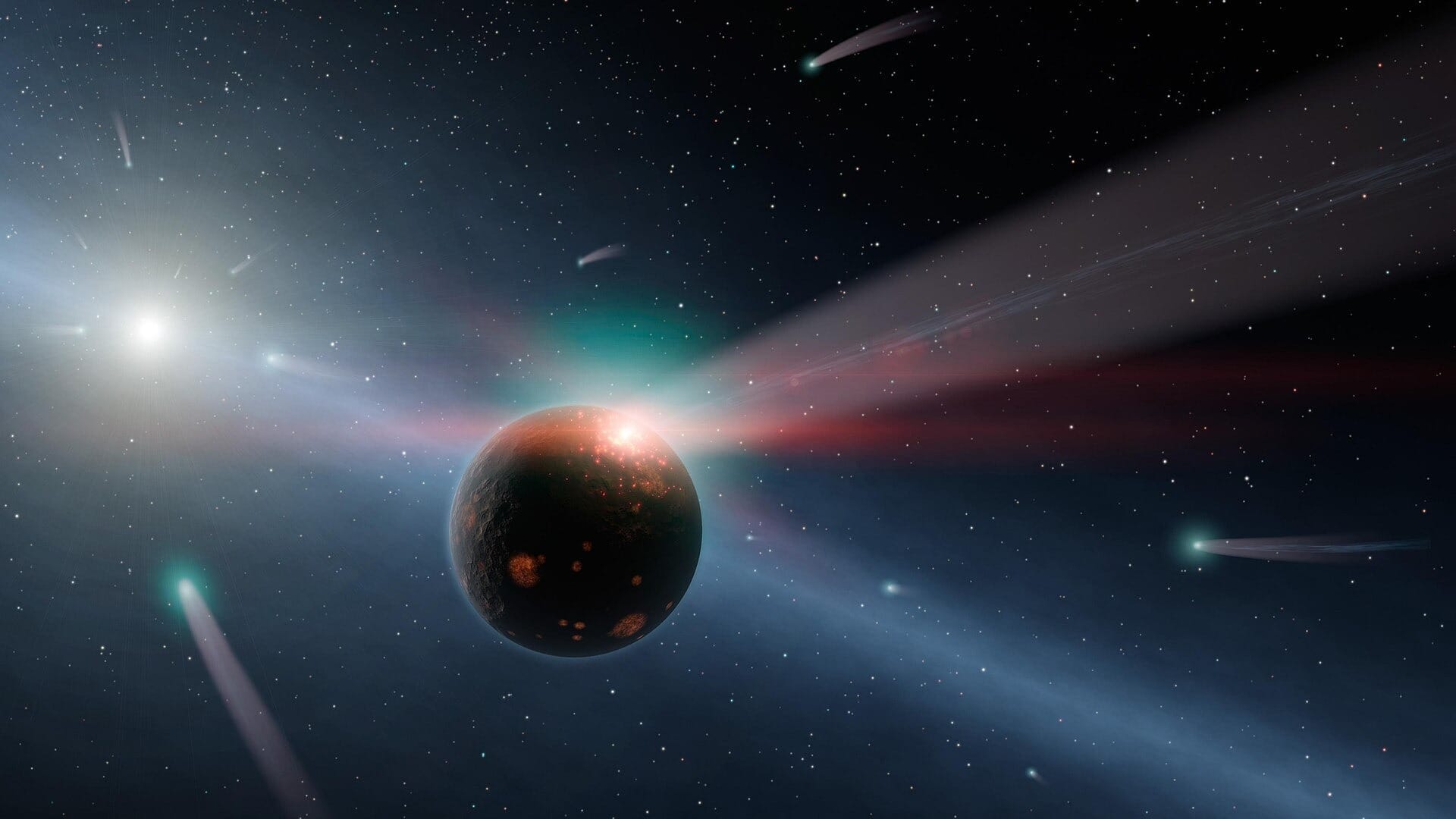
But scientists have thrown cold primordial water on this idea in a new study that challenges “the long-held assumption that cometary impacts played an important role in the origins of life on Earth.” By running more than 100,000 advanced simulations of comet impacts, the team found that key prebiotic molecules found in comets, such as hydrogen cyanide, would be smashed to smithereens during impacts with Earth’s ancient surface in most cases.
Moreover, while Earth was pummeled by these snowballs during its youth—relatable!—this bombardment doesn’t neatly line up with the timeline of abiogenesis, the term of the origin of life. For these reasons, it’s much more likely that life assembled from earthly molecules that leaked out from our planet’s interior, according to the study.
“The most probable timing of successful cometary impact is in the early Hadean…more than 100 [million years] earlier than the estimated emergence of the last universal common ancestor (LUCA) at 4.2 [billion years ago],” said researchers led by Richard Anslow of the University of Cambridge.
“Taken together, the rapid decline in Earth’s cometary impact bombardment and the efficient destruction of fragile cometary organics indicate that the successful delivery of prebiotic feedstock molecules was an exceedingly rare event,” the team added.
The researchers didn’t rule out the possibility altogether, but concluded that any impact that had a direct influence on abiogenesis would be an edge case. That said, comets might serve as prebiotic wellsprings on other planets, such as Mars, where key molecules might have faced better odds of survival upon impact due to the red planet’s smaller mass and thin atmosphere.
“Mars would have been the more favourable target for the cometary delivery of prebiotic feedstock molecules” which “strengthens the possibility that life could have emerged on Mars,” the study concluded.
In other news…
The tip of an alien iceberg
While we’re on the topic of prebiotic feedstock molecules—a household conversation, no doubt—let’s speculate about their accumulation on weird exoplanets. In a new study, scientists suggest that these molecules might build up in sea ice on a variety of extraterrestrial ocean worlds, providing a pathway to the emergence of aliens.
“Water worlds with potential deep oceans are at the forefront of currently observable exoplanetary habitability,” said researchers led by Edouard Barrier of the University of Cambridge. “Here we outline a location where nutrients could be concentrated in sufficiently high quantities to make abiogenesis possible—at the interface between the open ocean and the surface ice shelf.”
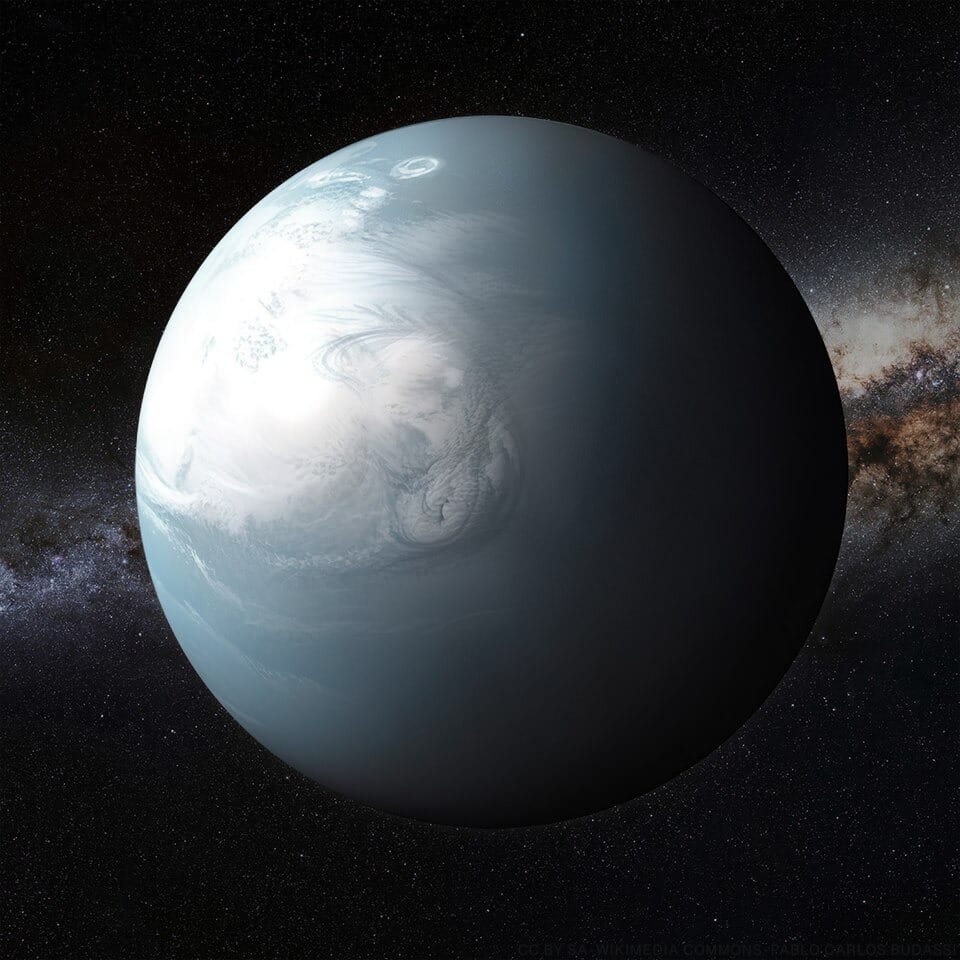
The team studied the dynamics of sea ice on Earth, and modelled how similar features might form on a range of different exoplanets, including hypothetical “Hycean” planets. These are worlds more massive than Earth, but smaller than Neptune, making them part of the “sub-Neptune” class of exoplanets.
The results revealed mechanisms that “may plausibly provide concentrated chemical feedstock for prebiotic chemistry” on many of these exoplanets, suggesting they could be a substrate for the emergence of alien life. This “rich avenue of research…has the potential to significantly advance our understanding of aquaplanet habitability, and particularly to improve the prospects of abiogenesis on sub-Neptunes,” the team concluded.
What a week for the prebiotic feedstock beat! Taken together, these studies point to multiple onramps for life on worlds like Earth, Mars, exotic sub-Neptunes, and more, upping odds that life exists elsewhere in the universe—regardless of whether we ever find it.
Drink the mummy wine
To celebrate Halloween, here’s a trick and a treat all wrapped up in one delightfully grotesque story about mummies. Roughly 700 years ago, someone had the interesting idea of grinding up parts of Egyptian mummies, mixing the residue with wine or other liquids, and prescribing it as a medicinal elixir for people to drink.
This resulting product, known as Mumia vera aegyptiaca, circulated in Arabic and European markets for centuries, but its exact composition and pharmacology remain unclear. You know what that means: It’s time to do science on the medieval mummy cocktails.
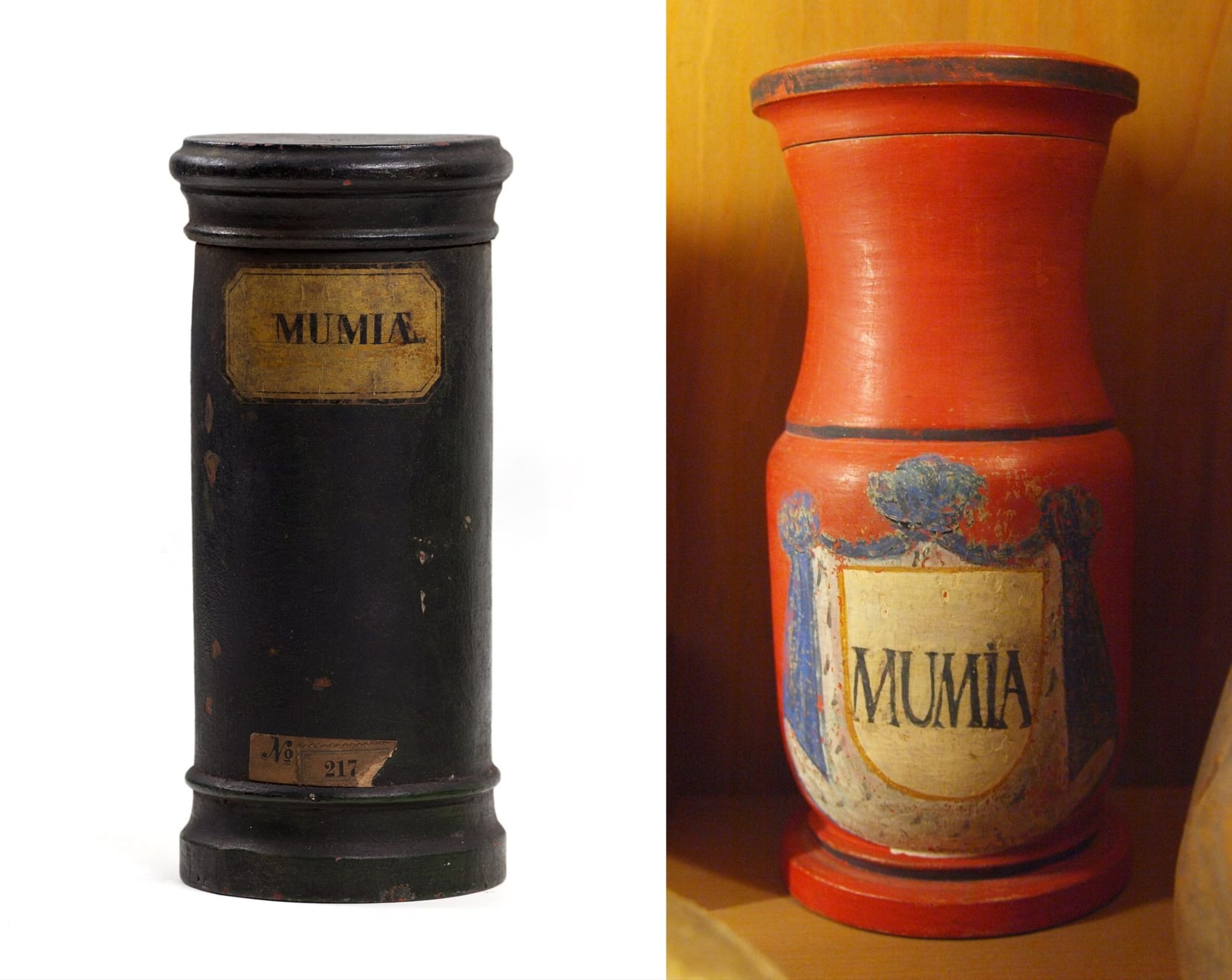
Researchers analyzed historical Mumia vera products, mummified body parts, embalming residues, bandages, and two mummified skulls. The team discovered a wide range of formulas for this medicine, including one powdered product that appears to have been derived from a mummified head.
The results demonstrate that “an apparently uninformative powdered material can be chemically linked to a specific mummified head,” said researchers co-led by Tim Berger and Amira Naimi of Marburg University. “This study shows that linking historical texts, material culture, molecular composition, and bioactivity, can open new routes for decoding historical medicines and reconstructing the material biographies of human remains and museum objects.”
So if you are really committed to the spirit of this season, break out some Mumia vera aegyptiaca to pair with your Halloween candy and witches’ brew. Bottoms up—or more accurately: mummified-heads up.
Advances in hug science
What better way to close out this chilling spooky season than with the warm embrace of science? So come on, bring it in for a hug—or, in this case, roughly 15,000 of them.
Hugging is an incredibly common form of affection among humans, and even some other animals, including Halloween favorites like vampire bats. But little is known about “how individual differences shape the remembrance of such experiences,” according to a new study.
To fill this cuddly gap, scientists analyzed survey responses from 15,049 adult participants in the United Kingdom who were recruited in a public broadcasting campaign that included the BBC. The volunteers reported that their most memorable hugs were “for comfort, support, and understanding” and there was a noticeable gender split, as men were more likely to remember hugs that were “arousing” than women.
“Regarding hugs, men have shown different lateralisation and arm crossing patterns when hugging other men compared to women,” said researchers led by Anna Lena Dueren of the University of Bristol. “Furthermore, women were found to experience a stress buffering effect of hugs that was absent in men.”
And for anyone who considers themselves not a “hugger,” you are not alone. Plenty of participants expressed that they found hugs difficult or unpleasant. So whether you love bear hugs or cannot bear hugs, this study has something for you.
Thanks for reading! See you next week.
Source: 404 Media · 2026-10-31