Tag: TomDispatch

  • Defeating Zionism to Free Palestine

    Defeating Zionism to Free Palestine

    The World at a Crossroads

    Three years on from the onset of Israel’s genocide in Gaza, we are at a crucial hinge point. The world today, when it comes to Palestine, stands at the crossroads: meaningful support for liberation and decolonization, or the normalization of colonial expansion and erasure.

    Since the 2021 “Manifesto of Dignity and Hope” and the unified call of Palestinians to confront Zionism, the Israeli political sphere has only continued to sustain and entrench its fascist trajectory and its racist laws. After 2023, Israeli settler colonialism and domination escalated into all-out destruction and elimination. Palestinians who had been enduring suffocating apartheid and siege for far too long were now subjected to genocidal assault. Though the context on the ground shifted, the urgent need for a better understanding and challenge to Zionism on political, legal, structural, and ideological grounds remained.

    Related

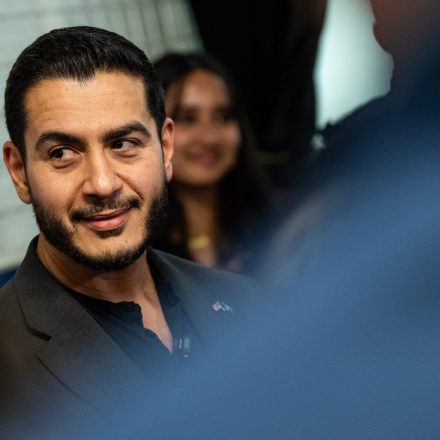
    Abdul El-Sayed Won His Senate Seat With a Mandate on Palestine. Can He Deliver?


    It was a new generation of Palestinian activists who produced the Manifesto of Dignity and Hope, but their text was shaped by the legacy and spirit of Palestinian revolutionaries and anti-colonial thinkers from earlier periods. Common language echoes through the generations. A quarter-century ago, Palestinian intellectual Edward Said wrote the core of the issue of Palestine “is intellectual truth and the need to combat any sort of apartheid. We should concentrate our resistance on … fully confronting the apartheid provisions inherent in Zionism.” And as diplomat Fayez Sayegh captured it in 1965: Racism is not an acquired or incidental or passing feature of the Israeli state; it is “inherent in the very ideology of Zionism.” Today, we can draw inspiration from these intergenerational reverberations across Palestinian theory and activism, in their consonant commitments to confronting Zionism.

    Part of our own task as anti-colonial legal scholars is to expand our analysis of the limitations of narrow liberal legal readings of apartheid and inequality, and to highlight how a radical critique of Israeli apartheid is essential to dismantling Israel’s apartheid regime. This requires scrutiny not only of Zionism and Israeli settler colonialism, but also of the concept of apartheid itself. Apartheid was previously understood in the context of the African anti-apartheid struggle, in a formulation originally coined by the South African Communist Party, as “colonialism of a special type.” By the late 1990s, however, apartheid had been stripped in mainstream understandings of its global character and colonial essence, and effectively reframed as “racial discrimination of a special type.”

    One factor in this analytical shift was the domestication of racism in international law, which has obscured its relationship to global capitalism and transformed racism into a problem for individual countries to resolve through juridical reform or diversity, equity, and inclusion programs. Racism is not merely abhorrent because people’s feelings are hurt or one feels unseen, however, but because it is entangled with power and economic structures, and because materially, the continuum of racist violence culminates in genocide, which is squarely understood as a global phenomenon. Martin Luther King Jr. pointed to this in 1967 when he said: “In the final analysis, racism is evil because its ultimate logic is genocide. … If one says that I am not good enough to eat at a lunch counter, or to have a good, decent job, or to go to school with him merely because of my race, he is saying consciously or unconsciously that I do not deserve to exist.”

    International law attempts to capture this continuum. Three of the specific acts conducted to maintain apartheid are identical to the acts conducted to commit genocide under their respective legal definitions. In the former, they are done with the intent to dominate; in the latter, with the intent to destroy. These are not mutually exclusive, but rather interact with each other: Colonialism, apartheid, and genocide combine under the Zionist project in Palestine to produce a system of oppression based on conquest, structural racism, dispossession, and elimination.

    Related

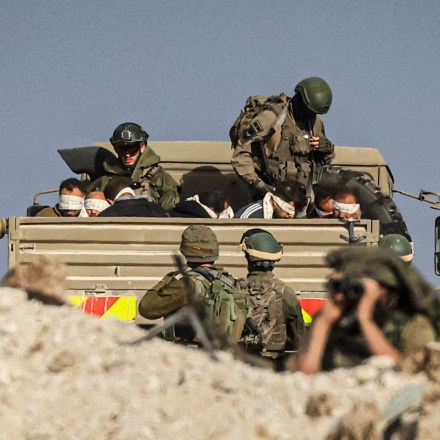
    Israel’s Ruthless Propaganda Campaign to Dehumanize Palestinians


    Palestinian opposition to Zionism and the imperatives of decolonization — for political emancipation, material survival, and cultural flourishing — are the central thrust of our work. The colonial origins and early legal mechanics of Zionist settler colonialism and Israel’s apartheid regime reveal how Zionism functioned both as a colonial initiative and a racializing project. This manifested in colonial institutions even before the state was established in 1948, after which they were enshrined in racist legal regimes. A broad structural analysis of the institutional and economic processes of land and capital accumulation that have occurred under settler colonialism in Palestine is necessary to understand the machinery of conquest and dispossession — and the role that racism has played in driving it forward. Drawing on the anti-colonial Palestinian intellectual tradition, we can see that an antiracist analysis has been organic to the Palestinian liberation struggle and is precisely what shaped U.N. initiatives in the 1960s and 1970s that condemned Zionism as a form of racism and racial discrimination alongside apartheid and colonialism.

    Despite all the analysis of Israeli state racism and colonial violence since 1948 and all of the mass popular mobilizations and legal advocacy against Israeli apartheid, nothing substantive was done at an international, political, or institutional level to address or redress it. This inaction and the impunity afforded to Israel inevitably culminated in the situation that the world found itself in after October 2023: unsanctioned apartheid accelerating into unadulterated genocide — and given the green light by those who had the power to stop it. There was a decade of increasingly flagged warning signs leading up to this. But Palestinian scholars and international lawyers who had warned of a “prelude to genocide” or “slow-motion” genocide over the years were largely ignored, and in some cases castigated. The consequences have been catastrophic. The United States actively funded, armed, and cheer-led the butchery in Gaza. European Union leaders chose to “stand with Israel” as it announced its starvation policy and war of annihilation.
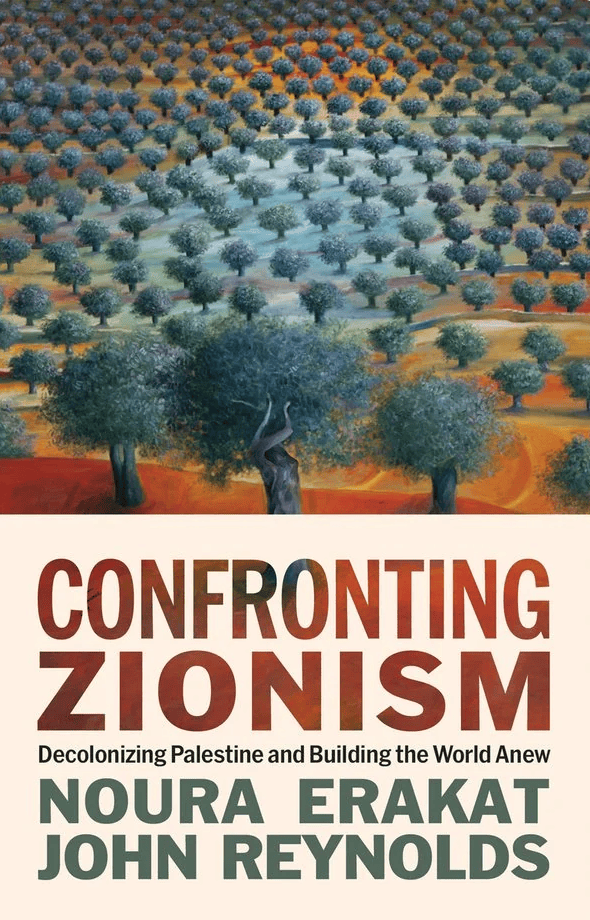
    “Confronting Zionism,” by Noura Erakat and John Reynolds. Available on Bookshop.org

    We would not have ended up in this present moment if the critiques of Zionism as colonialism and racism and the reality of Israel as an apartheid regime had been taken seriously. In 1975, the U.N., led by a Third World majority, declared “international co-operation and peace require the achievement of national liberation and independence, the elimination of colonialism and neocolonialism, foreign occupation, zionism, apartheid and racial discrimination in all its forms, as well as the recognition of the dignity of peoples and their right to self-determination.” Against this, the Western world, led by the United States, has worked to normalize Israeli apartheid.

    We see part of our task now as one of continuing to build on the recent “mainstreaming” of condemnations of Israeli apartheid and genocide, but in a way that decisively resists the drift toward narrower, liberal articulations and insists on the importance of radical, anti-colonial, and anti-imperial analysis and praxis. In our work as critical legal scholars, we situate apartheid and the shape it has taken as a category in international law, and we explore the limits and potential of legal tactics, arguments, and institutions to dismantle Israeli apartheid and end the genocide in Gaza. We argue that while legal actions should be pursued in the service of political and social movements, legal logic is insufficient in itself — and can risk narrowing or distorting the horizon of Palestinian liberation. In our view, the proliferating condemnations of Israel by major human rights organizations and mainstream figures in recent years have belatedly reflected the popular consensus and a political reality that Palestinian activism had made undeniable. They also fit, to varying degrees, within a wider pattern of containment.

    As one example, take the case of European officials and states finally beginning to acknowledge the heinousness of Israel’s obliteration of Gaza in mid-2025, but doing so primarily in the form of calling for a Palestinian state. They did so only after almost two full years of enabling untold destruction, and refusing to impose any serious sanctions to stem the genocide. Their moves to recognize Palestinian statehood were not about any genuine support for Palestinian self-determination, but rather a way to stabilize the apartheid status quo and try to slow down the Israeli–U.S. drive to continue the erasure of Gaza and full annexation of the West Bank.

    Related

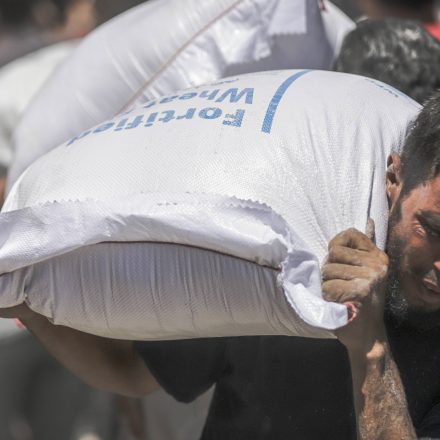
    Israeli Soldiers Killed at Least 410 People at Food Aid Sites in Gaza This Month


    With all of that in mind, it is important to situate the political moment we are in — the increasing focus on Israeli apartheid in recent years and subsequently on the genocide in Gaza — alongside the urgency of thinking about Palestine’s future and our collective responsibilities. In doing so, we have several core aims: to offer a deeper understanding of the nature and extent of Israel’s colonial rule over Palestinian lands and lives; to think through the relationship between the practices of Israeli settler colonialism, apartheid, and genocide on the one hand, and the institutions and ideology of Zionism on the other; to situate Palestinian liberation and its global solidarity alliances as an antiracist struggle and an anti-colonial movement; and to insist on the need for systemic anti-imperial understandings and critiques of Zionism. To properly confront Zionism and avoid the pitfalls of neo-apartheid, we must be attentive to the necessities and practicalities of decolonization.

    The decolonization of Palestine today continues a legacy of other liberation struggles — against European colonization globally, against domestic regimes of fascism, against apartheid in southern Africa, and against white supremacy in the United States and elsewhere. These are political orders that Third World, antiracist, partisan, and socialist movements have fought against throughout the past century and more. We must continue that tradition in the service of decolonization by fleshing out the political, legal, historical, and moral reasoning of anti-colonial and anti-Zionist thinking and movements. In our own writing, we feel we are merely providing footnotes to the political education and organizing that has fanned out from Palestine around the world, and that has shaped what millions of activists and people of conscience have viscerally felt: that Zionist colonial rule should and can be dismantled, and that Palestinians must be supported in their struggle to do so.

    The stakes of confronting Zionist settler colonialism are high for the entire world: first and foremost for Palestinians’ own liberation, but also because their struggle is at the epicenter of wider global struggles against structures of domination and exploitation. Zionism is a colonial project in Palestine, but also a vehicle of imperialism in the region — agitating for U.S. war and intervention, acting as an antagonist of imperial aggression against Lebanon, Syria, Iran, Yemen and beyond, and actively collaborating with reactionary geopolitical forces globally. Zionism has been further mobilized by ethnonationalists and imperial projects as a proposition on how to organize a society on a basis of racial hierarchy that leaves its excluded groups to perish. Palestinian revolutionary intellectual Ghassan Kanafani always insisted on the importance of understanding the Palestinian struggle in the context of “the alliance between Zionism and imperialism.” And in positioning Kanafani’s analysis in the context of global movements against imperialism today, educator and organizer Layan Sima Fuleihan reiterates the Palestinian cause is “a banner for all of humanity.”

    Naji al-Ali, the Palestinian political cartoonist famous for his iconic Hanzala (or “Handala”) character who symbolizes Palestinian resolve and future return, was himself displaced from northern Palestine as a boy during the Nakba and grew up in refugee camps in Lebanon. Kanafani came across Al-Ali and his artwork in Ein al-Hilweh camp and began to publish his drawings in the early 1960s. Al-Ali went on to produce tens of thousands of cartoons over the next 25 years, and through his art was renowned as a voice of Palestinian and Arab political consciousness. In 1984, just a couple of years before he would be assassinated, Al-Ali reflected on what Hanzala and Palestine represented:

    I feel that I can recall and sense every bush, every stone, every house and every tree I passed when I was a child in Palestine. The character of Hanzala was a sort of icon that protected my soul from falling whenever I felt sluggish or I was ignoring my duty. That child was like a splash of fresh water on my forehead, bringing me to attention and keeping me from error and loss. He was the arrow of the compass, pointing steadily towards Palestine. Not just Palestine in geographical terms, but Palestine in its humanitarian sense — the symbol of a just cause, whether it is located in Egypt, Vietnam or South Africa.

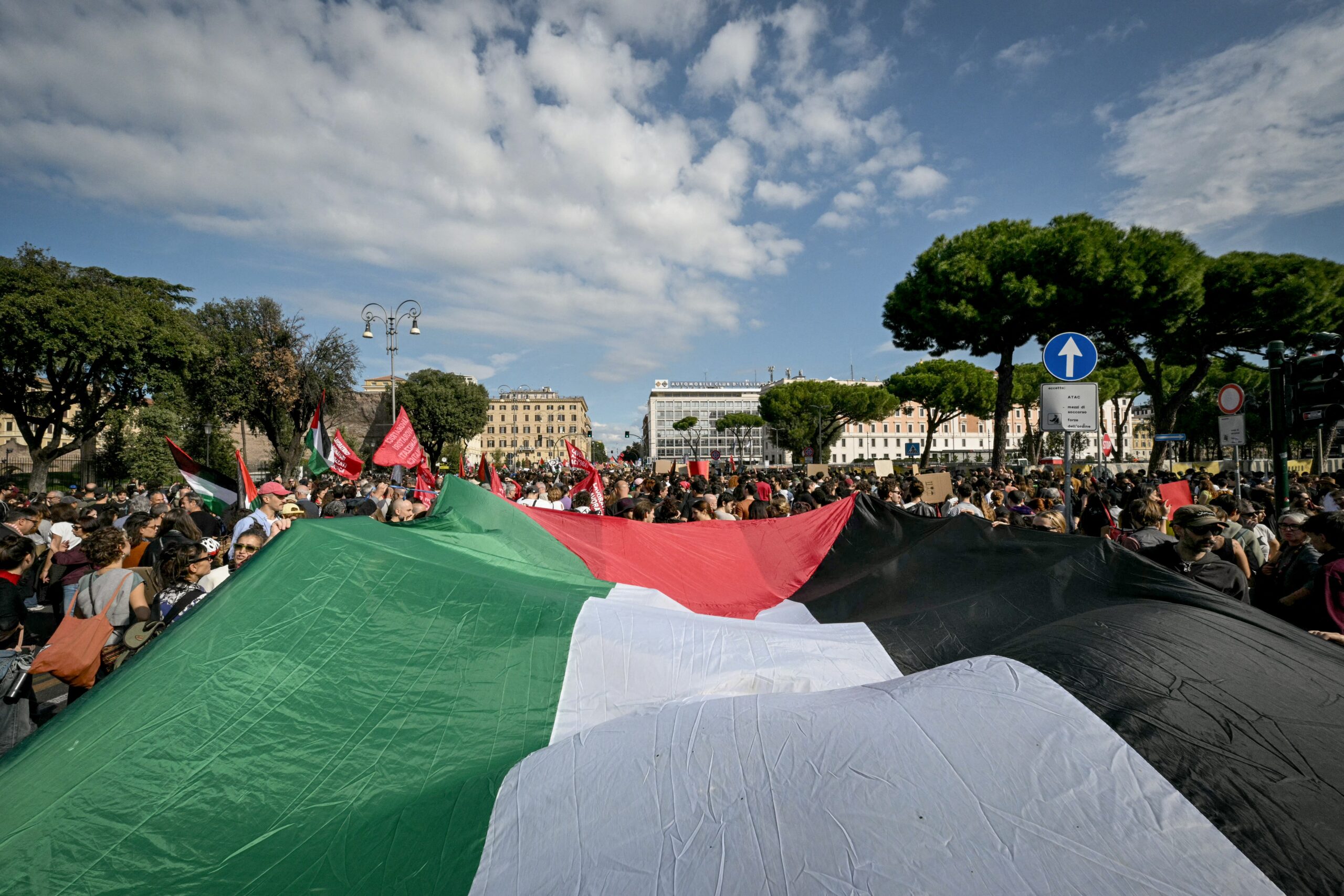
    In the decades since then, the idea of Palestine as the compass has resonated in struggles for justice around the world. Most recently, in 2025, the Palestinian Youth Movement and a coalition of solidarity groups brought thousands of activists together for the People’s Conference for Palestine, under the banner “Gaza is the compass.”


    Related

    Mahmoud Khalil: “We Can’t Afford to Stay Silent”


    A wide array of voices, from community activists to trade union organizers to political representatives, emphasized how central Palestine is to all of the social struggles they are engaged in.

    Palestinian doctor Mohammad Mustafa articulated the perspective of the many involved in movements for justice across the globe: “Gaza is the measure of our humanity. It is the litmus test that reveals who we are; as individuals, as a nation, as a world. … The compass points in one direction no matter who you are or where you are. In this way it provides a mandate and direction towards freedom for everyone.”

    Lawyer and organizer Huwaida Arraf echoed these ideas: “Gaza is our compass because it points us to the truth. … When we’re fighting for Gaza, we’re fighting for a world where no people live in cages or under siege, under the boot of militarism or of fascism.”

    Monadel Herzallah from Gaza, who lost five family members in the genocide, insisted the same: “To fight for a free Palestine is to fight for a free Haiti, a free Congo, a free Sudan — a free and just world which will be molded by all of us.”

    Palestine is the compass because of what it represents as a banner for all humanity, and because of the horizons it opens up everywhere in imagining and building a new world.

    Excerpt adapted from “Confronting Zionism: Decolonizing Palestine and Building the World Anew,” coming from Haymarket Books on November 10, 2026.

    Source: The Intercept · 2026-11-06
  • The Incredible Shrinking Superpower

    The Incredible Shrinking Superpower

    The Limits of American Might

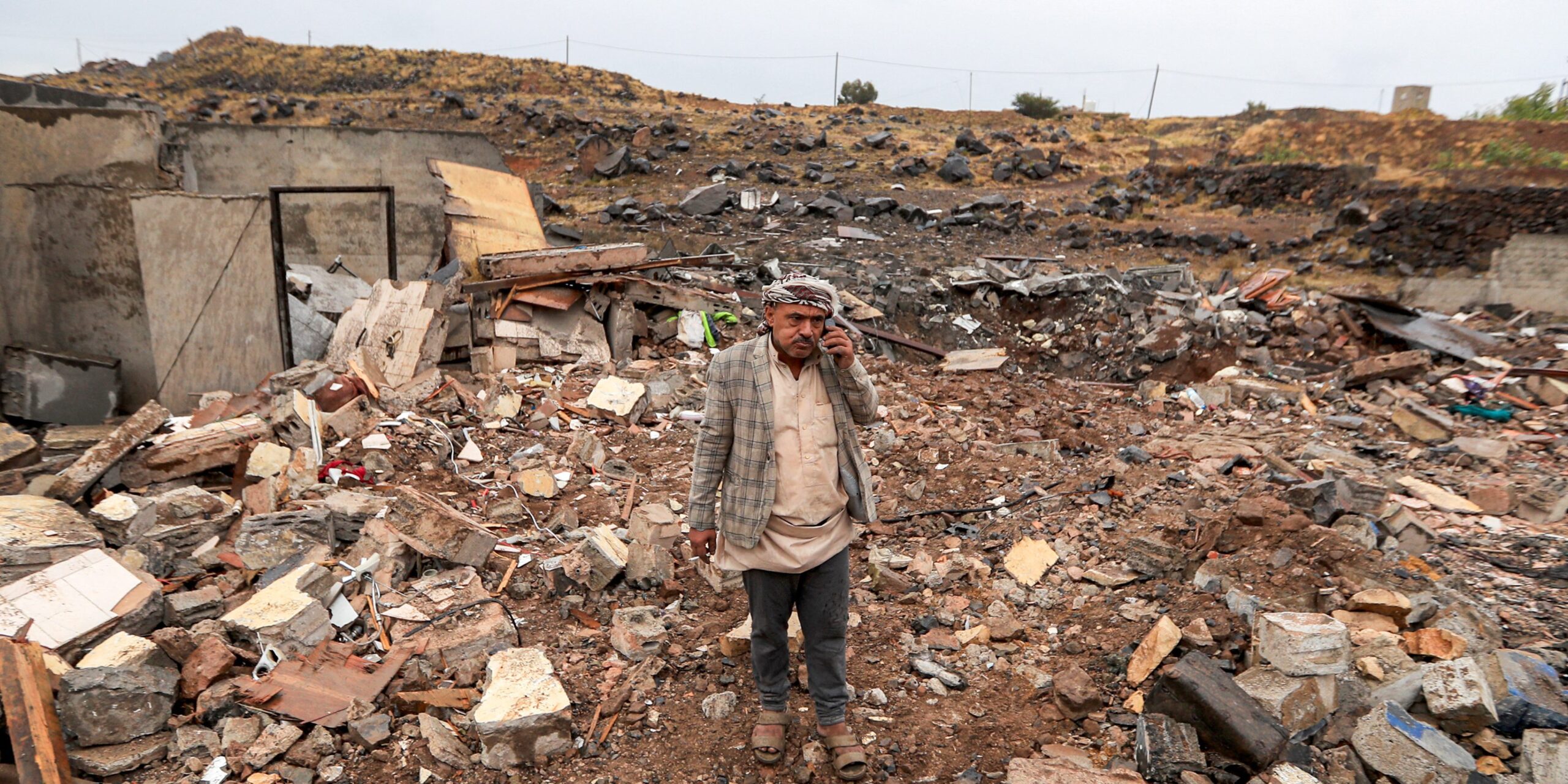
    The failure of Tel Aviv and Washington to achieve their war aims in Iran has resulted in the most dramatic American retreat from a region since the U.S. flight from Vietnam in 1975. This startling American defeat — after a generation of forever war failures and stalemates — has been thrown into broad relief by the resumption of another regional conflict that has received far less attention than the Trump administration’s sputtering war with Tehran. This fall, the forces that most Americans know as “the Houthis” have conducted a blitzkrieg in their native Yemen and have been pummeling Saudi Arabia’s aviation and energy infrastructure with missiles and drones. In doing so, they have put a spotlight on the limits of American power, and the shrinking U.S. military footprint, in the Middle East. 

    The long-standing conflict between Saudi Arabia and northern Yemen’s Ansarullah, or “Helpers of God,” led by the Houthi clan, heated up again in July 2026, when Saudi Arabia struck Sanaa International Airport to prevent a Houthi delegation from landing on its return from the funeral in Iran for slain Ayatollah Ali Khamenei. The Ansarullah government launched its own attacks and, in October, managed briefly to close Saudi Arabia’s own airport. The renewed war has now expanded into a regional conflict, with Pakistan, Türkiye, and, recently, Egypt pledging to defend the kingdom from attack, though none of these regional powers appear eager to conduct operations in Yemen itself. Notably absent from the current conflict is Saudi Arabia’s most powerful ally, the United States, since President Donald Trump has repeatedly declined to intervene on behalf of his Saudi allies.

    The typical U.S. press framing of Ansarullah as an “Iran-backed militia” is inaccurate, since the movement has local, Arab nationalist reasons for its actions and is a full-scale government that rules some 80 percent of Yemen’s population. Still, it does receive surreptitious technical and military support from Iran, though nothing like the hundreds of billions of dollars’ worth of high-tech armaments — from kits turning 2,000-pound “dumb” bombs into precision munitions to advanced air-to-air missiles — that the U.S. provides the Saudis. Ironically, Trump’s war on Iran, fought in conjunction with Israeli Prime Minister Benjamin Netanyahu, weakened the Saudis and exposed their vulnerabilities to military attack by Iranian drones and missiles, impelling them to seek a symbolic win over a less formidable enemy in neighboring Yemen. But the weaknesses exposed by Iran’s drones helped encourage a vigorous Ansarullah rejoinder.

    The Incredible Shrinking Superpower

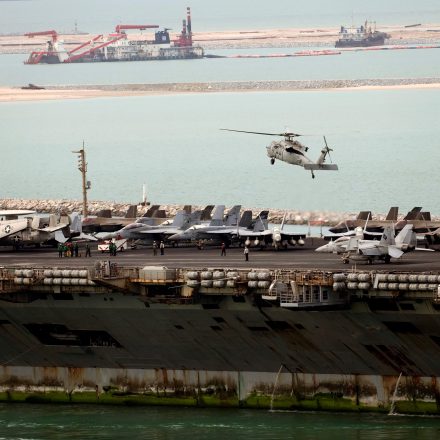
    The American refusal to join Saudi Arabia’s war signals a profound degradation in U.S. capabilities and standing in the Middle East. The U.S. military had, for decades, dominated the region from a network of about 20 major bases. The U.S. Navy operated out of the headquarters of the Fifth Fleet in Manama, Bahrain. The U.S. Air Force flew missions from the massive al-Udeid Air Base in Qatar, which housed 10,000 U.S. personnel. Thousands of ground troops were barracked in Kuwait, the United Arab Emirates, and Jordan. The Pentagon admitted that “Iranian strikes damaged and destroyed hundreds of buildings and structures at U.S. bases in Kuwait, Bahrain, Qatar, UAE, Saudi Arabia, Iraq, Oman, and Jordan during the conflict. In addition, dozens of U.S. aircraft were destroyed or damaged during OEF.”

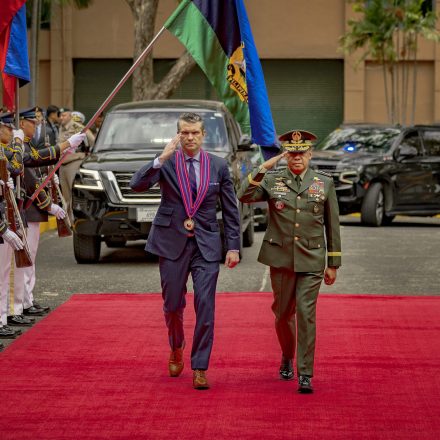
    The naval base at Manama, one of America’s most important naval facilities and headquarters of the Navy’s Fifth Fleet, was destroyed by Iranian strikes. (Acting Navy Secretary Hung Cao admitted last month that Iran “blew the hell out of Bahrain.”) The loss of Manama led to supply shortages and poor morale aboard the USS Lincoln and other ships patrolling the Strait of Hormuz, bedeviling Secretary of Defense Pete Hegseth.

    The CIA offices at the U.S. Embassy in Riyadh were annihilated. Iran struck al-Udeid’s evacuated Combined Air Operations Center in Qatar, from which the Pentagon had directed its strikes on enemies as diverse as the Taliban and ISIL over recent decades, and rendered this facility inoperable. All U.S. troops were also withdrawn from Iraq, a process accelerated by the inability of U.S. missile interceptors to protect them from attacks by Iran and allied Shiite militias there.


    Related

    Iran War Has the U.S. Military on the Brink of a “Breakdown”


    Iran’s deployment of swarms of Shahed drones caused the United States and Israel to use up much of their stock of interceptors, which are time-consuming and expensive to replace. A basic Shahed costs as little as $20,000, though new hardened versions are more expensive — whereas a Patriot interceptor costs $4 million. One reason the Trump administration may be reluctant to intervene in Yemen is that if the U.S. cannot fly missions from al-Udeid, and cannot be sure any new fighter-jet fleets stationed in the region will be safe from Iran, given the paucity of interceptors, the Pentagon will have a limited ability to rescue any U.S. pilots shot down over Yemen.

    America’s Profound Weakness in the Middle East 

    Saudi Arabia launched a war against the ascendant Ansarullah in 2015 when the latter staged a coup in the capital of Sanaa. The Ansarullah movement is rooted in Yemen’s Zaidi Shiism, though it is more radical than traditional Zaidism. (Zaidi Shiism differs substantially from Iranian Shiism, having no ayatollahs and having relatively good relations with Sunnis.)

    About a third of Yemenis are Zaidis, who predominate in the north of the country, and many have long resented the dominance of their politics and culture by neighboring, oil-rich, Sunni Saudi Arabia, whose official ideology is hard-line Wahhabism, a puritanical form of Islam that insists on a literal interpretation of the Quran. Wahhabi proselytizing among the Shia enraged the Houthi clan and their followers began rebelling against the government of military dictator Ali Abdullah Saleh in 2004. But when he was deposed by popular demonstrations during the Arab Spring in 2012, Saleh gradually allied with the Houthis, and by 2015 about half the Yemeni military rallied to their side, along with some major Sunni tribes.


    Related

    The Real Outrage About the Yemen Signal Group Is That It Called for Attack on Civilian Home


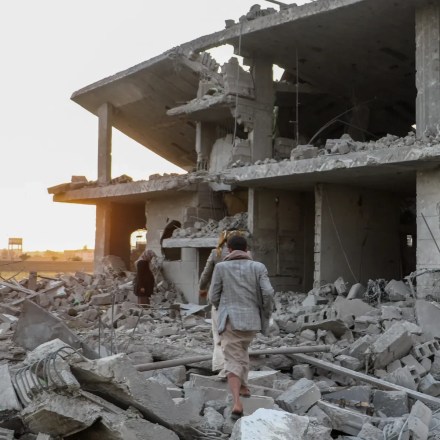
    In response to the Houthis’ rise, a Saudi-led coalition that included the United Arab Emirates began bombing Yemen in 2015. Until 2022, the U.S, then militarily dominant in the region, provided the Saudis with strategic advice, weaponry, and in-air refueling for their fighter jets in the Yemen war, though Riyadh’s tendency to bomb civilian infrastructure rather than confining themselves to military targets caused tension between the two allies. While the Saudis and their coalition pushed the Houthis out of much of the south of the country, including Aden, they were unable to dislodge them from the north. The Saudis implicitly acknowledged their failure with a United Nations-brokered truce in April 2022, which largely held until this past summer.

    The Forever Wars Effect

    America’s forever wars against Middle Eastern countries that decline to accept the Israel project or American corporate neocolonialism helped reignite the Saudi–Yemeni conflict. Iran is the last major state in the region that rejects Israel and is off-limits to U.S. corporate investment, a stance that inspires much of Washington’s animus. Netanyahu was therefore easily able to persuade Trump, as a privileged visitor to the White House Situation Room, to attack Iran in February.

    The glib expectation of Netanyahu and of his Mossad chief at that time, David Barnea, that the Islamic Republic would crumble if Israel murdered Ayatollah Ali Khamenei and around 50 other high-ranking regime figures proved wishful thinking. The notion that Iran was vulnerable to a tightened petroleum blockade was turned on its head by the hard-liners who ascended to power after Khamenei’s death. Largely veterans of the grueling eight-year Iran–Iraq War of the 1980s, the country’s new leaders pursued a policy of “de-basing” toward the United States, taking out its main regional military facilities.

    By successfully striking Saudi Arabia, Iran demonstrated that the kingdom’s ability to protect itself is imperfect and its infrastructure is vulnerable.

    In addition, Iran launched precision strikes at the energy facilities of their Arab Gulf neighbors who had hosted those American bases. They struck Kuwait’s national petroleum company and its fields and refineries. They took out 17 percent of the production of Qatar’s Ras Laffan natural gas facility, even though Doha had good relations with Tehran and had mediated for Iran. Tehran also struck ships passing through the Strait of Hormuz, using missiles and drones, scaring the major shipping insurers into withdrawing their contracts. Few shipping magnates would risk cargoes worth billions of dollars without insurance.


    Related

    Pentagon Fears Drone Attacks on U.S. and Foreign Bases


    Iran threw the world into an energy crisis reminiscent of the 1970s, which would have been even more devastating had China not released oil from its vast private and public petroleum reserves and cut its oil imports from 11.5 million barrels a day to under 9 million barrels a day, a move partially enabled by its turn to electric vehicles, which saved it 1.5 million barrels a day. High gasoline and diesel prices hurt Asia more than the United States, but prices rose globally. A third of the world’s helium, essential for cooling computer chips in the production process, comes from the Gulf, and that supply was also interrupted, increasing the price of electronics.

    By successfully striking Saudi Arabia, Iran demonstrated that the kingdom’s ability to protect itself is imperfect and its infrastructure is vulnerable. By blockading the Strait of Hormuz in a way that the United States had difficulty undoing, Iran demonstrated the vulnerability of key world maritime arteries, something Ansarullah had already highlighted by striking at shipping in the Red Sea to protest the Gaza genocide. 

    Blockade for Blockade

    When the Saudis bombed Sanaa’s airport in July 2026, Ansarullah’s leadership appears to have decided that Riyadh posed an ongoing existential danger to their state and sought to strangle the Yemeni economy, just as Israel had done to Gaza. Moreover, they sensed that the kingdom could be rolled back in the wake of the failure of the Israeli–U.S. war on Iran. Just as Iran had weakened the Gulf Arab states with its blockade of the Strait of Hormuz, the Houthis believed they could seriously degrade the Saudi economy by blocking Riyadh’s shipping through the Bab al-Mandab, “the Strait of Tears,” between the Red Sea and the Gulf of Aden.

    Saudi exports through the Strait of Hormuz had fallen substantially. The kingdom did, however, have an escape valve: its East-West pipeline to Yanbu on the Red Sea. Ships loading at Yanbu then headed for Saudi Arabia’s major Asian markets through the Bab al-Mandab. If Ansarullah could make the tanker captains fearful of this transit, they could reduce Saudi Arabia’s income even further. The Houthi spokesperson, Muhammad Abd al-Salam, warned that the prohibition of Saudi shipping was only the first step in a tit-for-tat strategy of “blockade for blockade.” The idea wasn’t original. The Saudis and the U.S. had often attempted to blockade petroleum imports to northern Yemen during the seven-year Saudi–Yemeni War.


    Related

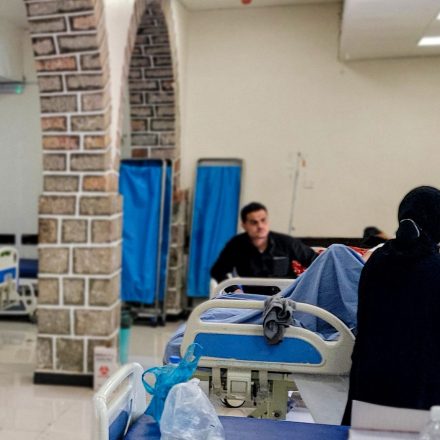
    Yemenis Unable to Reach Hospital Are Part of the Iran War Death Toll


    In the subsequent three months, Ansarullah deployed missiles and drones constructed from Iranian models by military engineers trained by the old nationalist government of Ali Abdullah Saleh, many of whom had joined the Ansarullah military, in what has been called a Yemeni “military industrial complex.”

    Just as the kingdom’s interceptors had proven unable to prevent Iranian strikes on targets such as the CIA section of the U.S. Embassy in Riyadh, they sometimes failed to halt the barrage of Yemeni missiles and drones. Refineries and oil installations, even the headquarters of the state oil giant, Saudi Aramco, in Dhahran, were hit. In October, Ansarullah closed Riyadh’s International Airport, just as the Saudis had attempted to close that of Sanaa in July. Ansarullah also surged out of their mountain strongholds and made a major push to Yemen’s southwest coast, taking the strategic port of Mocha overlooking the Bab al-Mandab. They also moved on Taiz, an inland industrial city of nearly 1 million inhabitants, one of the last major population centers not already under their control, in a campaign that tested the ability of the small Saudi-backed government of Rashad al-Alimi in Aden to resist it.

    Highlanders and Oil Sheikhs

    Just as the Vietnam War was one conflict among many fought in the Third World during the Cold War between the U.S. and the Soviet Union, so the Saudi–Yemeni War of 2026 is part of the larger struggle between the U.S. and Israel and Iran. Still, just as Vietnam was more about Vietnamese anticolonialism, nationalism, and sovereignty than about Communism and the ownership of the means of production, so the Saudi–Yemeni War is about Yemeni autonomy more than it is about the loose Houthi alliance with Iran. The conflict is not primarily between Zaidism and Wahhabism, though religious tensions are part of the story, but is far more rooted in a struggle between desperately poor Yemeni highlanders and fabulously wealthy Saudi sheikhs.

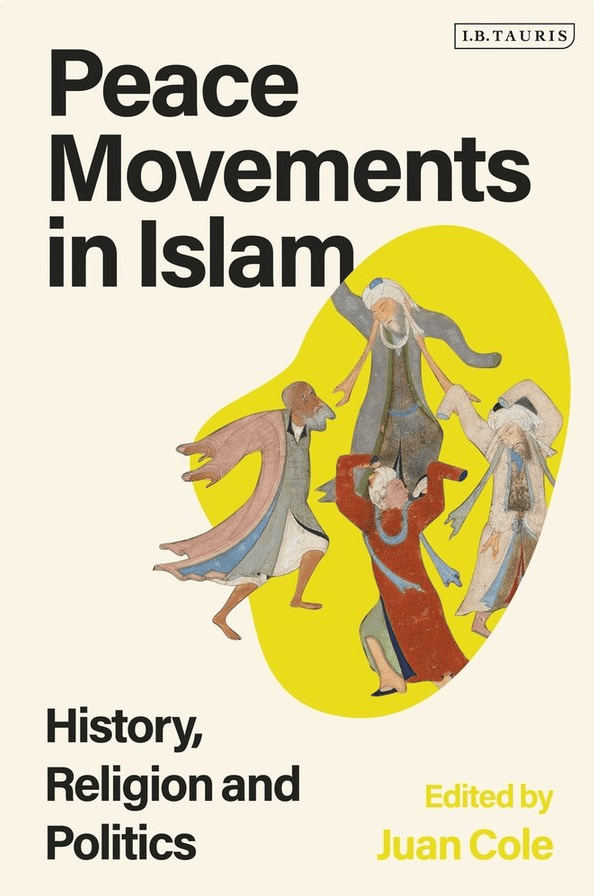
    “Peace Movements in Islam,” edited by Juan Cole. Available on Bookshop.org

    The plutocratic Saudi ruling elite is closely tied to Washington and has secret dealings with the Israelis, with whom it shares a distrust of the poverty-stricken Palestinian resistance, and views Ansarullah as cat’s paws of Iran in the Arabian Peninsula and as radical republicans trying to overthrow the region’s oil monarchies in favor of populism. For its part, Ansarullah are Arab nationalists, anti-American, and seek to use oil resources for populist purposes. And they have been willing to attack Israel to defend the Palestinians of Gaza from genocide.

    Last week, Ansarullah battered targets across Saudi Arabia, prompting a further pullback from the region by Washington. The Yemeni forces attacked King Fahd International Airport in Dammam. An Ansarullah spokesperson said the group also targeted the Saudi defense ministry in the capital, Riyadh, along with an Aramco site in Yanbu, and an airport in the southern city of Abha. Reports also emerged of an attack on another Aramco oil field.

    “Houthis have increasingly engaged in hostilities against Saudi Arabia, including attacks on civilian airports and other critical infrastructure,” wrote State Department spokesperson Tommy Pigott in an October 21 post on X, after the wave of attacks, ordering “non-emergency U.S. government employees and their family members” out of Saudi Arabia.

    It’s just the latest evidence of the most significant regional retreat by the U.S. in half a century and evidence of profound American military decline. The outcome of their war with the Saudis will not determine the issue of the U.S.–Israeli contest with Iran, but the very ability of Ansarullah to prosecute it points to the profound weakening of the American posture in the Middle East.

    Source: The Intercept · 2026-10-28

  • Bankrolling American Empire in the Philippines

    Bankrolling American Empire in the Philippines

    Bankrolling Empire

    During the Cold War, the Subic Bay Naval Base in the Philippines was a key enabler of U.S. military operations in the Pacific and beyond. It served as a critical support facility for the U.S. war in Vietnam and a transit point for U.S. weapons destined for American military personnel in the 1991 Persian Gulf War. That all changed in June of that year, when the Philippine Congress, under pressure from a grassroots anti-bases movement, refused to renew the lease for Subic Bay and other U.S. outposts in that nation.

    After the closing of U.S. bases, military relations between the U.S. and the Philippines were conducted indirectly through arms transfers, joint training exercises, and deployments of Special Operations forces to aid Philippine counterinsurgency efforts, rather than by the permanent presence of tens of thousands of troops. The relationship was codified in 1999, when Washington and Manila entered into a Visiting Forces Agreement, which eased the movement of U.S. troops and equipment in and out of the Philippines and put U.S. personnel in the country under the jurisdiction of U.S. rather than Philippine authorities.

    But now Subic Bay is back in play as part of a new expansion of the U.S. military presence in the Philippines. And this time around, private capital is financing these empire games.

    Military Might Versus Human Rights

    The long-standing U.S. military ties with the Philippines have come at a high price for the residents of that nation. Washington’s military and economic interests there have prompted it to look the other way as repressive leaders like Ferdinand Marcos and Rodrigo Duterte engaged in systematic human rights abuses against their own people.


    Related

    “Trump Has Appointed Himself Judge, Jury, and Executioner”


    To its credit, the Reagan administration eventually cut ties with Marcos — who was overthrown through peaceful protests known as the “People Power” revolt in 1986 — throwing its support behind his democratically elected opponent, Corazon Aquino. But there was no such shift with respect to Duterte, whose regime ruled the Philippines from 2016 to 2022, and engaged in extrajudicial killings of thousands of Filipinos, including journalists and land reform activists, all under the guise of a “war on drugs.” Duterte is now under indictment by the International Criminal Court, which has cited him for “the crimes against humanity of murder and attempted murder.”

    While Marcos and his family fled the Philippines in the 1980s, his son — Ferdinand Marcos Jr. — returned and, in 2022, won the presidency in a landslide, in part by promising to continue some of the strongman policies introduced by Duterte. According to Human Rights Watch, since the younger Marcos took office:

    Serious human rights violations have continued in the country largely unabated, including arbitrary arrests, extrajudicial killings and enforced disappearances by security forces. The murderous ‘war on drugs’ has continued, though with fewer killings. Leftist civil society activists, journalists, environmentalists, Indigenous leaders, trade unionists, and left-wing politicians remain under serious, at times deadly, threat.

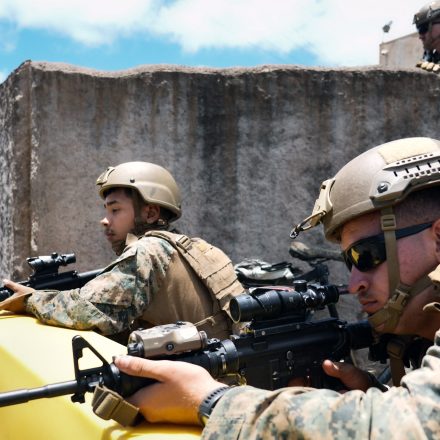
    During the Biden presidency, the U.S. expanded a 2014 pact — the Enhanced Defense Cooperation Agreement — which gave the U.S. military access to five major sites in the Philippines. In 2023, the number of bases was expanded to nine. The State Department has described the scope of the EDCA as authorizing “U.S. forces access to agreed locations in the Philippines on a rotational basis, for security cooperation exercises, joint and combined military training activities, and humanitarian assistance and disaster relief activities.” That official summary fails to admit the real reason for the signing of the EDCA: to give the U.S. access to territory that can be used in a future war with China.

    The Privatization of Subic Bay

    Building on his predecessor’s enhanced cooperation with the Philippines, President Donald Trump, who had been a staunch Duterte supporter, has pursued even tighter ties with Marcos’s government. This has been driven, in significant part, by the desire to use the Philippines as a platform for potential U.S. military interventions in the Pacific region and further economic penetration of Asia.


    Related

    The Philippine Missile Crisis: U.S. Deployed Arms to the Philippines and No One Noticed But China


    As part of the accelerating security partnership between the U.S. and the Philippines, military activities at Subic Bay have resumed. But this time, formal access has been secured by a private investment firm, Cerberus Capital Management, which controls the area through a 50-year lease granted through collaboration with a Philippine company, Agila.

    A report by the New York Committee for Human Rights in the Philippines, a member of the International Coalition for Human Rights in the Philippines, summarized current activities at Subic Bay:

    In mid-2025, the U.S. Congress approved a plan to build a forward operating base and ammunition production facility in Subic Bay. It is projected to be the world’s largest weapons hub. … The shipyard [is home to] HD Hyundai Heavy Industries, deep sea fiber optic data cables manufacturer Sub Com, defense contractor V2X and the Philippine Navy, which operates a portion of the facility.

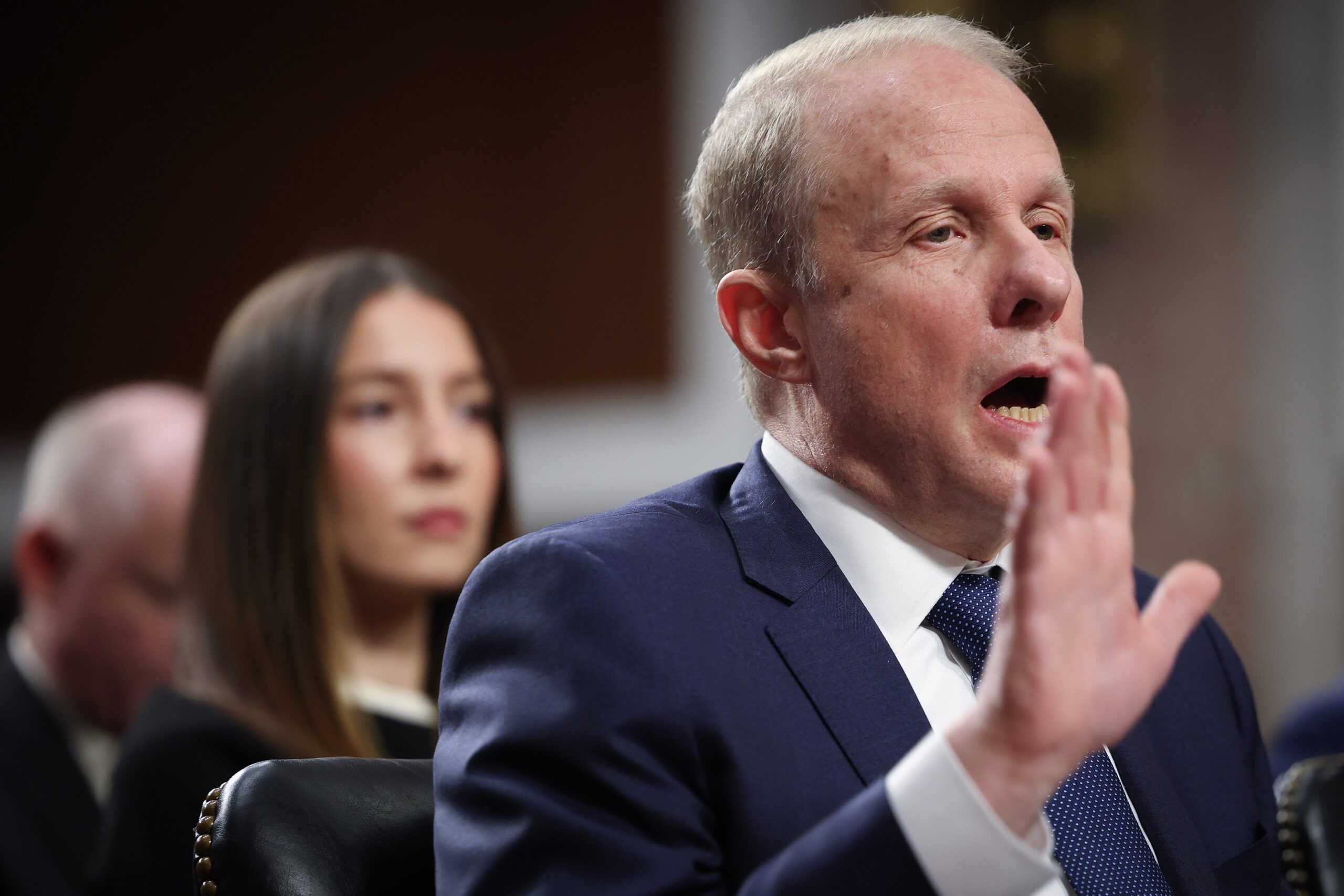
    Cerberus has strong ties to the Trump administration, first and foremost through its founder, Stephen Feinberg, who is deputy secretary of the Department of War, second in command at the Pentagon behind Pete Hegseth. In that role, Feinberg oversees the Pentagon’s Office of Strategic Capital, which makes loans to military tech companies, many of which are current or former Cerberus clients.

    Feinberg “earned” his position the old-fashioned way — by giving millions to Rebuilding America Now, a super PAC devoted to supporting Trump, and hosting a $50,000-a-plate fundraiser, the proceeds of which also went to support candidate Trump in 2016.


    Related

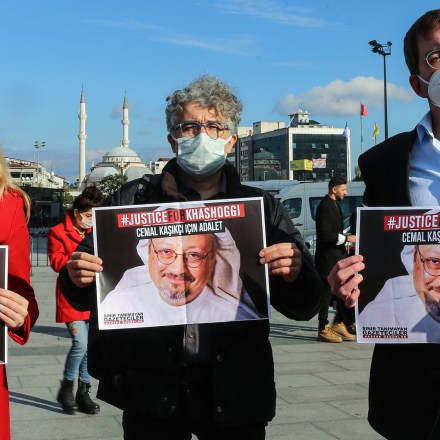
    Major Trump Donor Owned Security Firm That Trained Khashoggi Killers


    Bloomberg News has identified four other former Cerberus executives now in key positions at the Pentagon: David Lorch, director of the OSC; George Kollitides, a special government employee who is simultaneously a director of D. Boral Acquisition, a company that brokers mergers and acquisitions in the weapons sector; and senior Pentagon advisers John Gallagher and Tom Rakusan.

    On the other side of the revolving door, Cerberus has hired major Republican figures like former Treasury Secretary John Snow and former Vice President Dan Quayle, who serves as chair of the company’s global investment unit. Given these connections, the Pentagon is all-in behind Cerberus’s activities in the Philippines. But this has prompted a backlash. Activists in the Philippines and beyond are speaking out against the role of Cerberus, calling for public pension funds to withdraw their investments in the company for underwriting the militarization of the Philippines.

    Another important avenue of increased cooperation between the U.S. and the Marcos government is the Philippines’ participation in Pax Silica, a U.S.-initiated cartel that the State Department describes as its “flagship effort on AI and supply chain security, advancing new economic security consensus among allies and trusted partners.” And by “supply chain security,” the declaration primarily means “reducing dependence on China” for critical minerals needed to feed and sustain the computing power now central to the Pentagon and the U.S. arms industry.


    Related

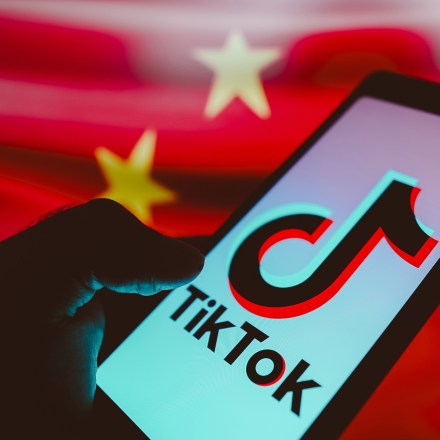
    Tech Official Pushing TikTok Ban Could Reap Windfall From U.S.–China Cold War


    In addition to the Philippines, there are 24 other participants in Pax Silica, including two other key Asian partners, India and Japan, as well as Taiwan, which is an associate member of the cartel. Jacob Helberg, a former adviser to military tech giant Palantir who now serves as the State Department’s point person on Pax Silica, has stressed that the initiative goes well beyond just securing the supply of specific critical resources. “If the 20th century ran on oil and steel, the 21st century runs on [computing power] and the minerals that feed it,” he said. “This declaration [announcing Pax Silica] hails a new economic security consensus ensuring aligned partners build the AI ecosystem of tomorrow — from energy and critical minerals to high-end manufacturing models.”

    The China Syndrome

    Although it supplies many other benefits to U.S. corporations and America’s national security state, the enhanced effort to bring the Philippines more securely into the U.S. military, political and economic orbit is all rationalized as moves toward reining in China’s economic and military power and garnering Manila’s support in a possible war between China and the U.S.


    Related

    The Pentagon’s Obsession With China Puts Hawai‘i at Risk


    The policy of economic warfare and aggressively preparing for a military conflict with China could not be more misguided. The oft-cited “need” to posture U.S. forces to do battle with China over Taiwan ignores the fact that there are diplomatic means of preventing such a conflict.

    What is needed is a joint understanding on the status of Taiwan. For over 40 years, peace in the Taiwan Strait has been maintained through the U.S.–China agreement that Washington will not take steps toward recognizing Taiwan as an independent state and China would agree not to resolve the issue of Taiwan by force — the so-called “One China” policy. That agreement has been weakened by actions taken during both the Biden and Trump administrations. The simplest and best way for Washington and Beijing to avoid a war over Taiwan would be to revert to the “One China” policy.

    Using trade wars and military buildups as the primary U.S. tool for influencing China simply will not work.

    China does not pose a direct military threat to the United States. Its last major war was its invasion of Vietnam in 1979, a conflict in which its troops were badly beaten by battle-hardened Vietnamese forces. The U.S. also spends almost three times as much on its military as China does, and is far ahead of Beijing in numbers of advanced combat aircraft, naval firepower, and nuclear weapons.

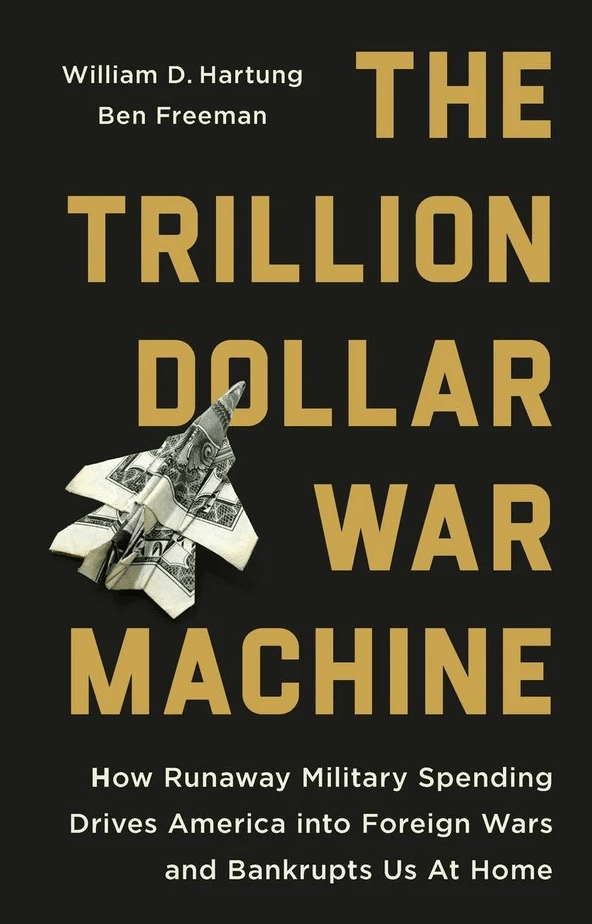
    “The Trillion Dollar War Machine,” by William D. Hartung and Ben Freeman Available on Bookshop.org

    In areas where China might be a peer competitor with the U.S. military, like AI-driven weapons, there need to be some rules of the road on how such systems can be used. Using trade wars and military buildups as the primary U.S. tool for influencing China simply will not work. The likely result of persisting in such an approach will be a dangerous arms race and an increased risk of outright war.

    A more productive approach to U.S.–China relations would be to seriously explore cooperation on central issues like arms control, addressing the climate crisis, and stabilizing the global economy. There would still be a U.S. military strategy for the Asia–Pacific region, but it should be genuinely defensive in nature, a posture that could save hundreds of billions of dollars in the years to come.

    Pursuing a more balanced policy toward China would open the way to developing more equal, less exploitative relations with the Philippines and other nations in the Pacific, and it would allow Washington to finally take a genuine interest in promoting human rights and opposing repression as central pillars of U.S. international relations.

    At a time when armed conflict and threats of war are the bedrock of U.S. policy, from the Western Hemisphere to the Middle East, a shift toward diplomacy seems daunting. But it is the only way forward if we want to move toward a more peaceful world where no one nation or group of nations dominates, and where corporations aren’t bending foreign and domestic policies to their will.

    Source: The Intercept · 2026-10-26