Hunt.io uncovered a credential-stealing operation that compromised 603 PCs and exposed bank, government and password manager accounts.
Hunt.io found an exposed open directory sitting on a Netherlands VPS, and inside it was the live loot store of a credential-theft operation. The report describes decrypted password-manager vaults, cleartext bank logins, and accounts behind the federal identity gateways ID.me and Login.gov. No bank or agency was breached directly; this all happened on the victims’ own Windows PCs.
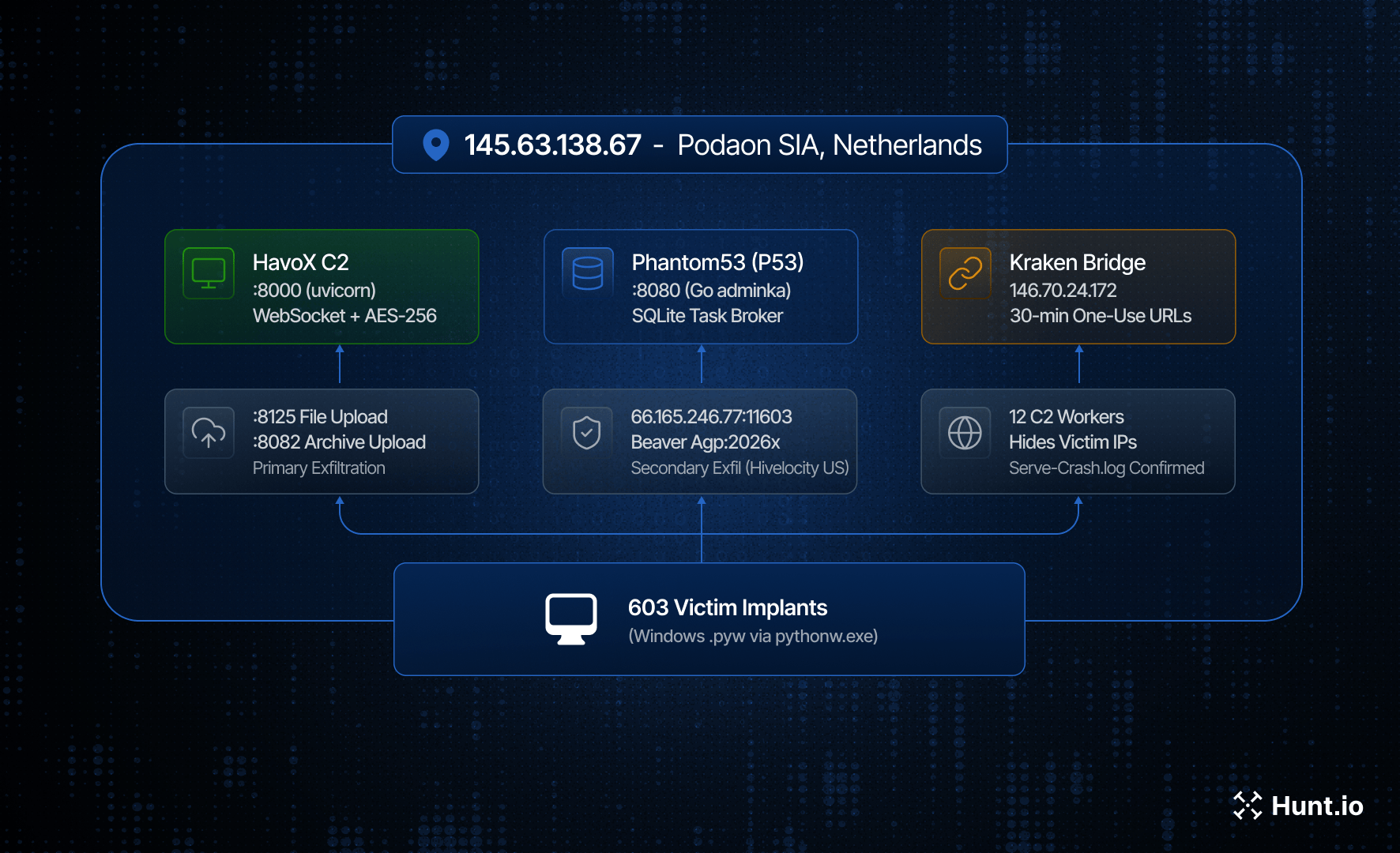
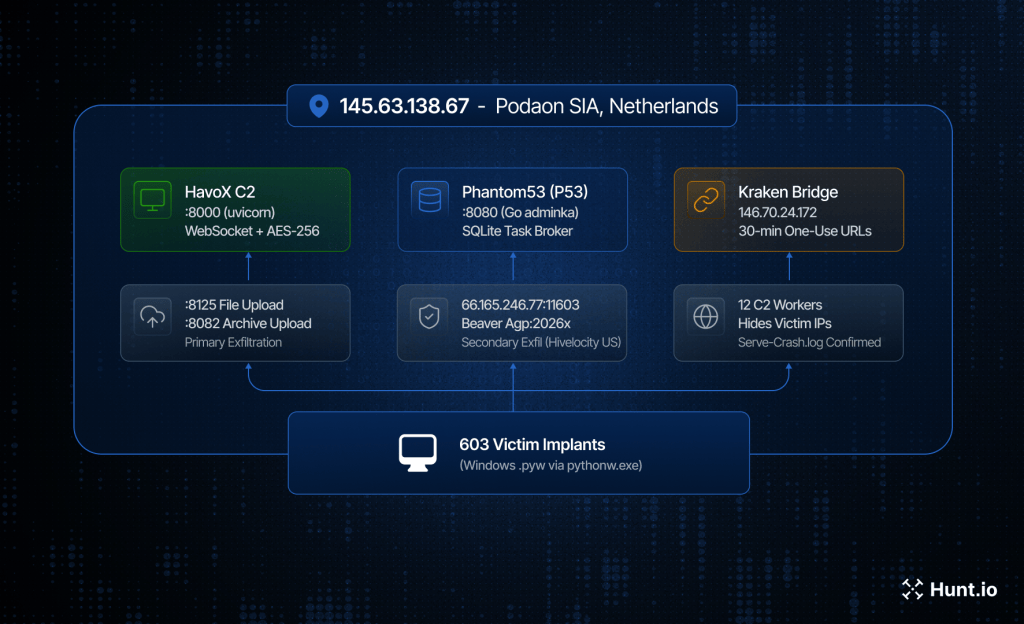
The attackers used three custom-built tools to manage the operation. HavoX handled communication with infected computers and ran commands, Phantom53 managed victims and tasks, while the Kraken Bridge connected the system to an external control panel.
HavoX used encrypted connections and hidden Python scripts to operate quietly. Phantom53 tracked infected devices, while Kraken Bridge sent commands and delivered tasks through temporary download links that were deleted after use.
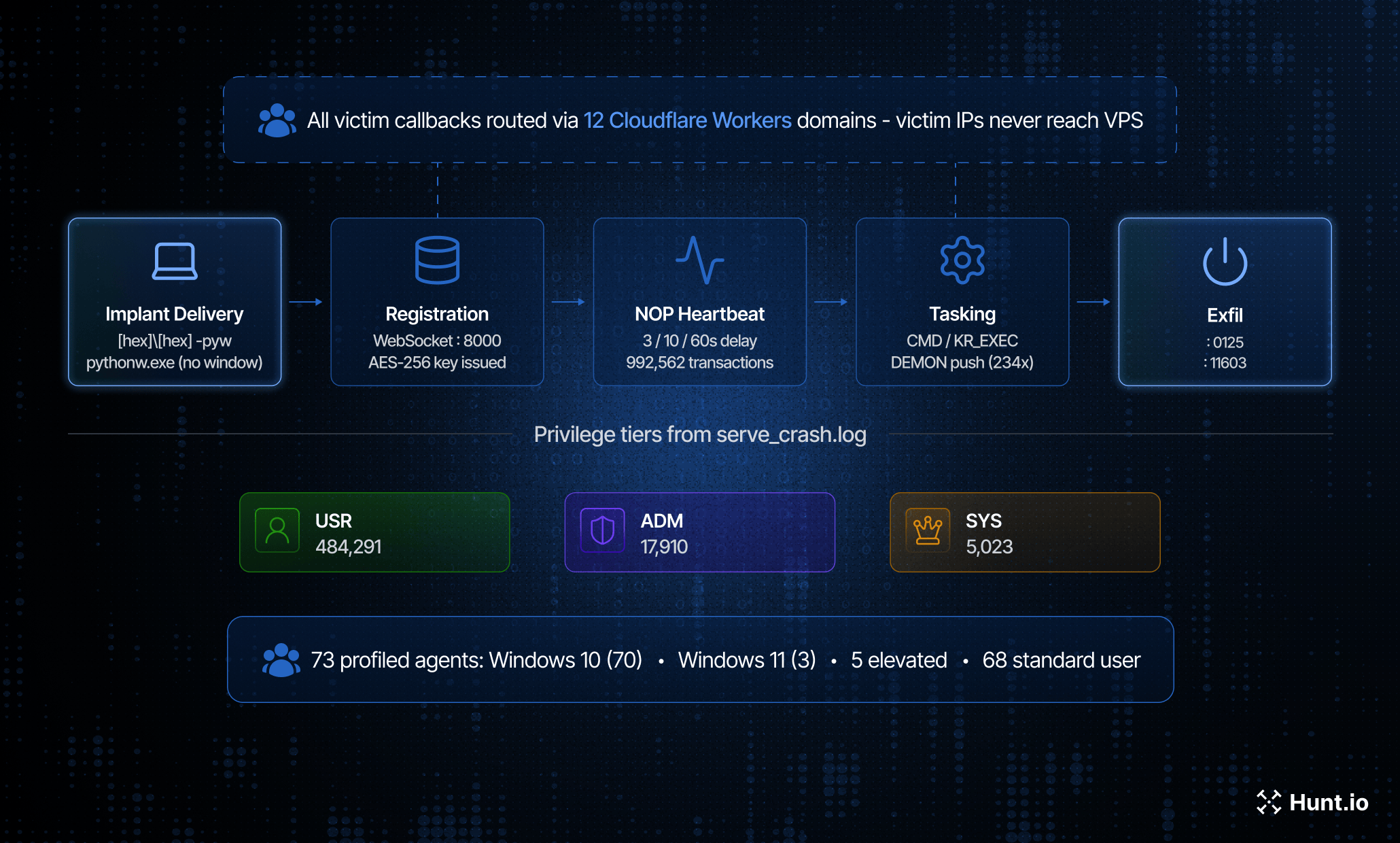
The operation affected 603 computers, which had been communicating with three command-and-control systems since October 12. In just three weeks, they generated more than 1.2 million connections. At least 57 victims had US bank or government login details stored on their computers, while 46 had accounts linked to federal benefits or identity services. In one case, the attacker cracked an entire LastPass vault offline, recovering 2,880 logins, including access to a bank account, the IRS and the vault’s own sharing key.
The attacker also bypassed Chrome’s newer app-bound encryption by using hardcoded AES-GCM keys for Chrome versions 20 and 21. A script then searched stolen cookies for 28 valuable online services, including Google, Anthropic, Binance, PayPal and several banks.
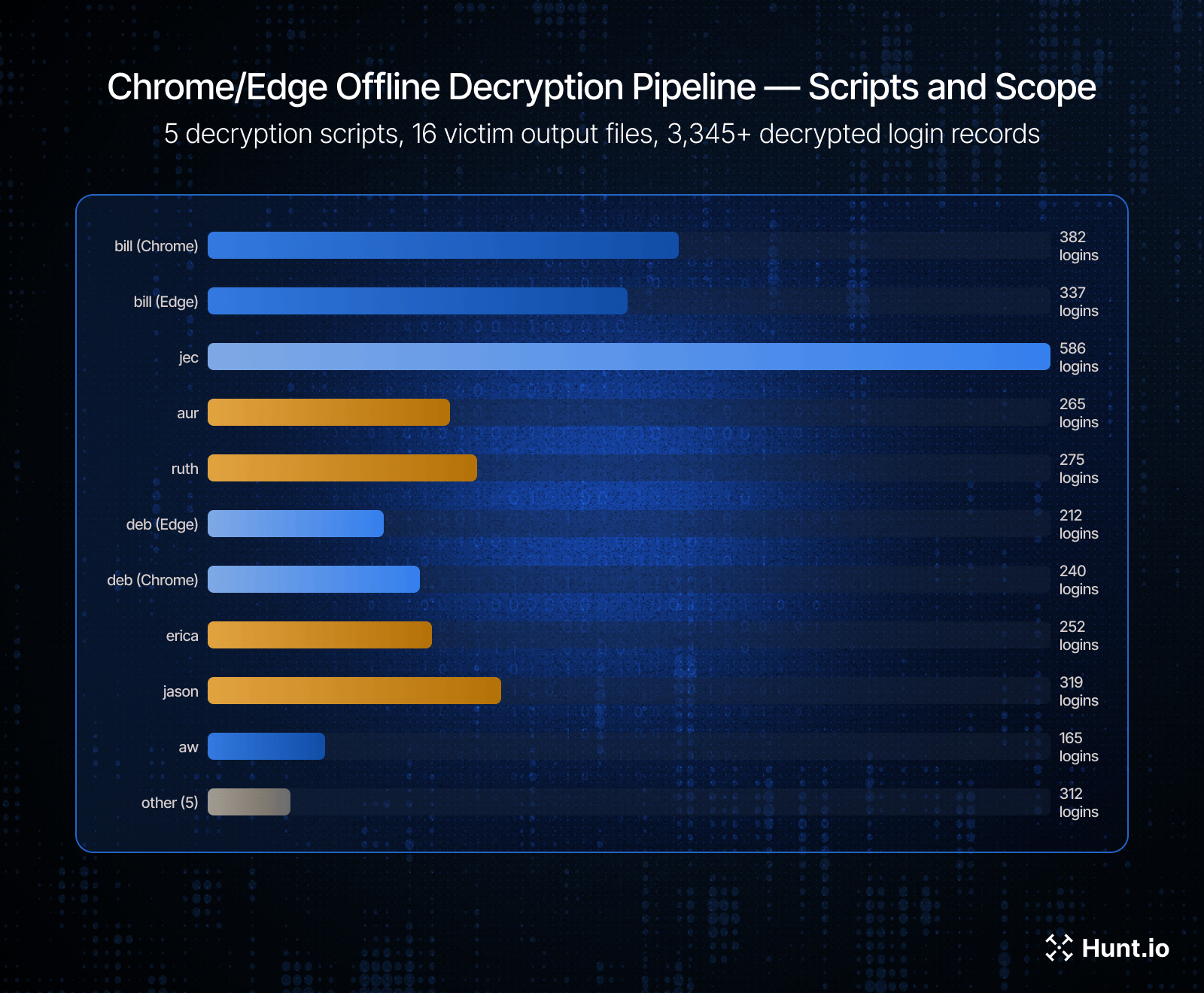
“Across 16 identified victims, the recovered data contained at least 3,345 decrypted login records from Chrome and Edge databases spanning 15 hosts, including plaintext passwords.” reads the report. “The operators also collected 30 cookie database files and JSON cookie exports from multiple victims.”
Password managers fared no better. LastPass fell to a custom seven-script pipeline that cracked its AES-CBC storage format and pulled 2,880 logins from one vault alone, plus 17 passkeys and secure notes covering Wi-Fi passwords and security answers. 1Password’s master password was cracked for two victims through a PBKDF2, HKDF, and AES-GCM keyset attack, and a developer’s live KeePass database was lifted straight off a GoLand workstation while the app was still open.
Microsoft 365 took a different hit. Stolen ESTSAUTHPERSISTENT session cookies let the operator replay a PKCE OAuth flow and pull live Graph API tokens without ever triggering a login or MFA prompt. Two tenants were confirmed compromised this way, and a reconnaissance log showed the operator mapping accounts and installed software on a corporate host.
The attackers also targeted more than banks and email accounts. Four PowerShell scripts stole session tokens from 35 AI developer tools, including Claude, Codex and Gemini. They also collected credential files, chat histories and API keys. Three other scripts targeted 44 cryptocurrency platforms and seven browser wallet extensions, stealing 6,570 records from 67 victims.
To maintain access to infected computers, the operator used legitimate remote-access tools, including ConnectWise ScreenConnect and Level.io. The Level.io installer was built into the attack platform, allowing the attackers to keep access even after the original malware was removed.
The operator had developed the platform from the ground, and the custom tooling shows it.
The attribution rests on the operator’s own files. Comments, logs, and docstrings across 249 files are written in Russian, in the kind of casual, private language someone uses when they don’t expect anyone else to read it, from a bridge component’s runtime log to section comments inside a seed-phrase search script.
Hunt.io’s defensive advice centers on treating AI CLI credential files the same as SSH keys, enforcing conditional access tied to device state, and alerting on pythonw.exe spawning from unusual locations. None of the affected institutions were hacked, which is itself the point the researchers want understood.
“None of these institutions is breached. What is exposed is live customer access, which is account-takeover fuel.” concludes the report. “The fix sits on the account side: phishing-resistant authentication, session and device binding, and fast resets for the customers in this loot.”
Follow me on Twitter: @securityaffairs and Facebook and Mastodon
(SecurityAffairs – hacking, Credential Theft Operation)
Source: Security Affairs · 2026-11-20