Tag: Hacking

  • U.S. CISA adds Ivanti Connect Secure flaws to its Known Exploited Vulnerabilities catalog

    U.S. Cybersecurity and Infrastructure Security Agency (CISA) adds Ivanti Connect Secure flaws to its Known Exploited Vulnerabilities catalog.

    The U.S. Cybersecurity and Infrastructure Security Agency (CISA) added the following Ivanti Connect Secure vulnerabilities to its Known Exploited Vulnerabilities (KEV) catalog:

    • CVE-2026-111357 (CVSS score of 8.8) – A missing authentication check for a critical function that could allow an authenticated local attacker to gain higher privileges.
    • CVE-2026-118527 (CVSS score of 4.3) – A predictable identifier vulnerability that could allow an authenticated remote attacker to upload files containing malicious content to a known location on the system.

    The vulnerabilities are part of an exploit chain that cybersecurity firm Volexity first documented in mid-October.

    “Volexity has identified active in-the-wild exploitation of a vulnerability chain allowing unauthenticated remote code execution in Ivanti Connect Secure VPN devices. Ivanti has published an advisory providing upgrade instructions to customers.” states Volexity. “Systems exhibiting signs of compromise, such as attempts to move laterally originating from the ICS VPN device, should be forensically investigated to ensure no breach has occurred.“

    The attacks combined these vulnerabilities with an authentication bypass vulnerability, tracked as CVE-2026-104935 (CVSS score of 8.6).

    In early October 2026, Volexity discovered that a threat actor tracked as UTA0576 was exploiting a zero-day vulnerability chain to compromise fully patched Ivanti Connect Secure VPN appliances. The attack combined authentication bypass, remote code execution, and privilege escalation flaws, allowing attackers to gain root access without logging in. The authentication bypass and RCE flaws are tracked as CVE-2026-104935.

    After gaining access, the attackers targeted Active Directory credentials and sensitive information, including LAPS passwords and BitLocker recovery keys. Volexity worked with Ivanti as soon as it suspected the vulnerabilities were being exploited.

    CISA added CVE-2026-104935 to the Known Exploited Vulnerabilities (KEV) catalog on October 13, 2026.

    Ivanti released security updates to address both CVE-2026-111357 and CVE-2026-118527:

    • Version 25.1.1.2 and earlier: upgrade to 25.1.1.3.
    • Version 22.8R2.5 and earlier: upgrade to 22.8R2.6.

    Ivanti said it disclosed CVE-2026-104935 first because a fix was already available and ready for testing. When researchers discovered the additional privilege escalation flaws, the company decided not to delay the release of the first patch, which addressed the main attack method. Ivanti also worked with Volexity to share information about the attackers’ techniques, including how they chained the vulnerabilities.

    Ivanti had already fixed part of the issue in its July 25.1.3.0 release and was preparing updates for other supported versions. Patches are now available for all the vulnerabilities used in the attacks.

    “At the time of discovery of exploitation, Ivanti had a fix developed for CVE-2026-104935 which was already in QA for supported versions, and we made the decision to not delay getting a fix to customers that resolved the primary exploitation path when the LPE was discovered. Because of this, our focus was initially centered on the disclosure of CVE-2026-104935 and providing protection for our customers as quickly as possible.” states Ivanti. “Additionally, Ivanti collaborated with Volexity on their blog post which provided information to arm defenders on known threat actor behavior, including chaining the local privilege escalation vulnerability. These additional CVE disclosures have now been added to this Security Advisory and a fix is available now.”

    According to Binding Operational Directive (BOD) 22-01: Reducing the Significant Risk of Known Exploited Vulnerabilities, FCEB agencies have to address the identified vulnerabilities by the due date to protect their networks against attacks exploiting the flaws in the catalog.

    Experts also recommend that private organizations review the Catalog and address the vulnerabilities in their infrastructure.

    CISA orders federal agencies to fix CVE-2026-111357 by November 2, 2026, and CVE-2026-118527 by November 13, 2026.

    Follow me on Twitter: @securityaffairs and Facebook and Mastodon

    Pierluigi Paganini

    (SecurityAffairs – hacking, CISA)

    Source: Security Affairs · 2026-10-31
  • Attackers Exploit Critical Drupal Commerce Core Vulnerability CVE-2026-118539

    Drupal warns that attackers are exploiting a critical authorization flaw in Commerce Core, putting vulnerable online stores at risk.

    Drupal warns that threat actors are exploiting a highly critical security flaw, tracked as CVE-2026-118539, in its Commerce Core module. The vulnerability is caused by missing authorization checks.

    “This module enables you to sell goods and services to customers through an included shopping cart and checkout form or through decoupled applications via APIs. The module doesn’t sufficiently protect certain routes and entity fields, leading to an access bypass that may financially impact the vendor.” reads the advisory. This vulnerability is being actively exploited in the wild.”

    The module allows websites to sell products and services through shopping carts, checkout forms, and APIs.

    “Missing Authorization vulnerability in Drupal Commerce Core allows Forceful Browsing. This issue affects Commerce Core versions: from 0.0.0 to 2.41, from 3.0.0 to 3.3.13.” reads the advisory.

    Researchers Dan Puccetti (dpuccetti), Marcus Johansson (marcus_johansson), and Robert Snyder (rsnyd) reported the vulnerability.

    The maintainers at the open-source project confirmed that the vulnerability is being actively exploited in the wild.

    Drupal recommends that users update their installations to the latest available release. Those running the 3.x branch should upgrade to version 3.3.13, while users on earlier releases should move to Commerce Core 8.x-2.41.

    In May, Drupal warned that attackers were exploiting an SQL injection flaw, tracked as CVE-2026-9082, in its database abstraction API. The vulnerability could allow attackers to gain higher privileges, access sensitive information, and execute malicious code remotely.

    The US Cybersecurity and Infrastructure Security Agency (CISA) added the flaw to its Known Exploited Vulnerabilities (KEV) Catalog.

    Follow me on Twitter: @securityaffairs and Facebook and Mastodon

    Pierluigi Paganini

    (SecurityAffairs – hacking, CVE-2026-118539)

    Source: Security Affairs · 2026-10-31
  • Yoba Malware Hides a Crypto Miner Behind Legitimate OpenAI and Anthropic Binaries

    Yoba Malware Hides a Crypto Miner Behind Legitimate OpenAI and Anthropic Binaries

    Yoba malware uses fake ChatGPT and Claude apps to sideload malware through signed installers and deploy a cryptocurrency miner.

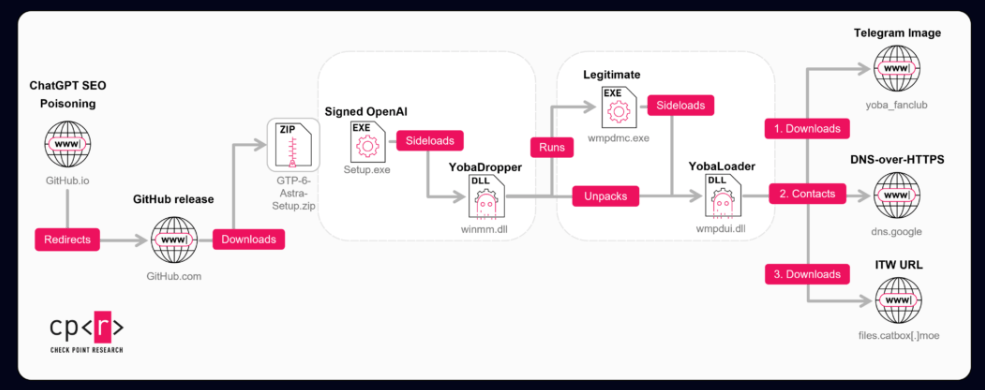
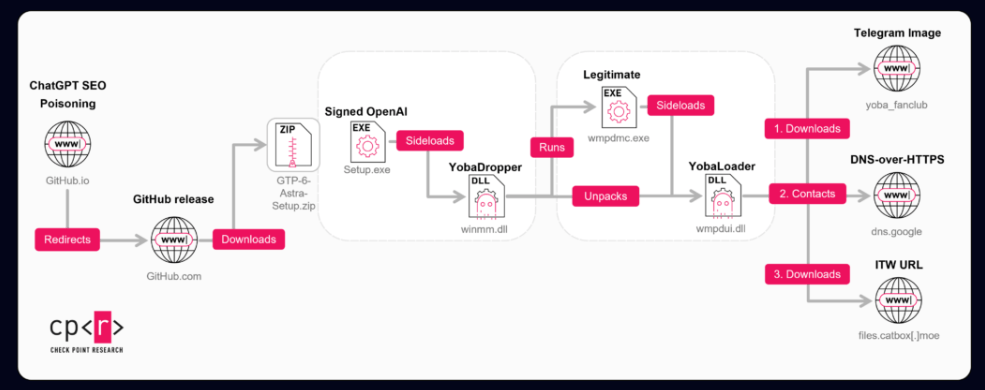
    Check Point Research has spent two months tracking a campaign it calls Yoba, which uses the popularity of AI tools to spread a custom malware chain. The attackers build fake GitHub projects that pose as AI desktop applications such as GPT-5.6 Sol, GPT-6 Astra and Claude Opus. The projects look convincing and run on real GitHub infrastructure, which helps them seem legitimate to potential victims.

    “These projects look convincing and use real GitHub infrastructure, which helps them appear legitimate to potential victims. The website exhibits search-targeted content and suspicious installer-delivery tactics consistent with an SEO-poisoning lure.

    Inside the installers, there is a malicious component we refer to as the YobaDropper. This dropper includes another component, the YobaLoader, which is responsible for contacting attacker-controlled infrastructure and fetching the final payload.” reads the report. “In this report, we describe how victims are lured to these fake projects, how the YobaDropper and YobaLoader work together, and how the attackers ultimately use this chain to run unwanted software on infected systems.”

    The lure is simple. Each project has a repository, a GitHub.io page describing the software, and a ZIP release with the malware. The repositories show no fake stars or forks, yet they still rank among the top Google results, most likely through SEO poisoning that optimizes titles, descriptions and hosting domains.

    The first repository appeared around July 2026, but the first malicious releases landed only on August 30 and 31, and a third followed about five days later on September 4. Each repository uses a different Outlook address, and commit times point to UTC+4, UTC-4 and UTC+3, which Check Point reads as a deliberate attempt to hide the actor’s real time zone.

    Here’s the trick that gives the report its title. Each ZIP holds a legitimate signed executable from OpenAI or Anthropic, named Setup.exe, next to a malicious winmm.dll. The signed program loads the DLL on its own, a technique known as DLL sideloading, which is often used to bypass security protections.

    The ZIP files were not even password-protected. Attackers often use passwords to prevent security tools from automatically unpacking and scanning files. However, these binaries already had very low detection rates because they used anti-sandbox and other techniques to avoid analysis. The DLL’s compilation date is another clue: it was built on the same day it was added to the archive, unlike the legitimate files around it.

    The dropper, called YobaDropper, checks the environment before running. It calculates a hash of the name of the program that launched it and continues only if the name is Setup.exe. This means that sandboxes that run the DLL on its own will fail this check. When that happens, the process does not exit. Instead, it sleeps 200,000 times for 5.5 seconds each, a total of about 12.73 days.

    The malware also avoids victims in CIS countries by checking the keyboard layout. It excludes Russian, Belarusian, Tajik, Armenian, Azerbaijani, Georgian, Kazakh, Kyrgyz, Turkmen, Uzbek, and Tatar. Interestingly, Ukraine, which has often appeared in similar exclusion lists, is not included.

    Next, the malware requests administrator privileges. If the user does not have them, it displays the message “Please run this program as Administrator.” and exits. The victim must then restart it with administrator rights.

    Once it has the required privileges, the malware creates a folder called WMProcess under ProgramData. It copies the legitimate WMPDMC.exe file from System32 into this folder and places the second-stage payload there under the name wmpdui.dll.

    The malicious code achieves persistence by using a scheduled task dressed up as Microsoft. The author is set to Microsoft Corporation, the description says it collects device metadata for Windows Media Player, and it starts three minutes after boot as Local System. The task launches the legitimate program, which sideloads the malicious DLL.

    The second stage, YobaLoader, shares code with the dropper, which points to the same developer. It only runs under WMPDMC.exe and uses a different seed for its hashing than the dropper does, which separates the stages and weakens hash-based detection. Its job is to find its payload without a classic command server.

    It goes to a Telegram channel, t[.]me/yoba_fanclub, and downloads the channel’s profile picture. The last 50 bytes of the image seed a domain generator that builds names from word lists in the form adjective-noun-verb-number on dedyn[.]io. Change the picture and the operator gets a new domain.

    Then it asks Google’s DNS-over-HTTPS service for a TXT record on that domain. The reply is signed, and the loader checks the signature before decrypting it, which gives a link to a payload on Catbox. Check Point says this reliance on DoH and common hosting aims to bypass passive DNS monitoring and some gateway protections, and the campaign avoids dedicated command-and-control infrastructure, using Telegram, Tor, Catbox and DoH instead.

    The operator can choose how the payload runs. It can inject it into svchost.exe, save it as an executable after removing the Zone.Identifier mark, or run it as a hidden PowerShell script while bypassing execution policies.

    “Finally, the injected payload into svchost.exe is an XMRig 6.26.0 miner with a hidden command line targeting a TLS-enabled onion mining endpoint through a local Tor SOCKS5 proxy. It can unpack and start Tor 0.4.9.12 plus lyrebird 0.8.1, monitor user-input activity to pause mining, and conditionally load the WinRing0 driver service for MSR-based mining optimization.” continnues the report.

    The miner uses Tor to connect to an encrypted mining server. It can start its own Tor components, use about 85% of CPU threads, and pause mining when the user is active. It resumes after 240 seconds of inactivity and can load the WinRing0 driver to optimize mining performance.

    However, YobaLoader is not limited to cryptocurrency mining. Its DNS tasking system allows operators to deliver any PE executable or PowerShell payload, meaning future attacks could distribute other malware families.

    Earlier versions appeared in June 2026. They used Cursor.exe for sideloading, a startup shortcut for persistence, and excluded only Russia. They also used .aber[.]ir instead of dedyn[.]io and included anti-debugging and anti-VM checks that later versions dropped.

    Check Point believes the attackers may have Russian origins and mainly operate in the UTC-4 time zone, but this is an assessment, not a confirmed attribution.

    Defenders should look for suspicious WMPDMC.exe copies under ProgramData, fake Microsoft scheduled tasks, Telegram-related traffic, DNS lookups for dedyn[.]io through dns.google, and unexplained high CPU usage.

    “The Yoba campaign shows how attackers can use trusted platforms and the current interest in AI tools to distribute malware in a way that looks believable and harmless at first glance. By packaging their code together with well-known software names and hosting it on GitHub, they lower the chances that users or basic security checks will immediately flag the files as suspicious.” concludes the report. “Organizations should be cautious about installing “AI helpers” or similar tools from unverified repositories and should enforce policies that restrict running software from unknown sources. Combining user awareness with basic technical controls.”

    Follow me on Twitter: @securityaffairs and Facebook and Mastodon

    Pierluigi Paganini

    (SecurityAffairs – hacking, Yoba malware)

    Source: Security Affairs · 2026-10-30

  • U.S. CISA adds GitLab and Cisco flaws to its Known Exploited Vulnerabilities catalog

    U.S. Cybersecurity and Infrastructure Security Agency (CISA) adds GitLab and Cisco flaws to its Known Exploited Vulnerabilities catalog.

    The U.S. Cybersecurity and Infrastructure Security Agency (CISA) added GitLab and Cisco vulnerabilities to its Known Exploited Vulnerabilities (KEV) catalog:

    Below are the flaws added to the catalog:

    • CVE-2026-97229 (CVSS score of 10.0) GitLab Community Edition and Enterprise Edition Integer Overflow or Wraparound vulnerability
    • CVE-2026-76418 (CVSS score of 8.6) Cisco Secure Firewall ASA Software and Cisco Secure FTD Software Unchecked Return Value to NULL Pointer Dereference Vulnerability

    CVE-2026-97229 is a critical security flaw that could let attackers run code on its servers without logging in.

    The flaw affects Community Edition (CE) and Enterprise Edition (EE), it is an integer overflow bug caused by weak validation of regular expressions in CI/CD configurations. The issue affects GitLab versions 19.2 before 19.2.8, 19.3 before 19.3.5, and 19.4 before 19.4.2. Users should upgrade to a patched version to protect their systems. GitLab advisory

    “GitLab has remediated an issue that, under certain conditions, could have allowed an unauthenticated user to execute arbitrary code on the GitLab server via a specially crafted regular expression in a CI/CD configuration, due to insufficient regular expression validation.” reads the advisory.

    The researchers joaxcar reported this vulnerability through the company’s HackerOne bug bounty program.

    Alpine Linux recently reported that an unknown attacker tried to exploit the vulnerability against Alpine Linux on October 20 and 21, 2026, but the attempts failed.

    CVE-2026-76418 is a NULL pointer dereference vulnerability affecting Cisco Secure Firewall ASA and FTD Software. It could allow an unauthenticated remote attacker to force a device to reload, causing a denial-of-service (DoS) condition.

    Cisco said it became aware of active exploitation earlier this month. The company has not disclosed who is behind the attacks, how many organizations have been targeted, or what attackers may have done after gaining access.

    According to Binding Operational Directive (BOD) 22-01: Reducing the Significant Risk of Known Exploited Vulnerabilities, FCEB agencies have to address the identified vulnerabilities by the due date to protect their networks against attacks exploiting the flaws in the catalog.

    Experts also recommend that private organizations review the Catalog and address the vulnerabilities in their infrastructure.

    CISA orders federal agencies to fix the two vulnerabilities by November 1st, 2026.

    Follow me on Twitter: @securityaffairs and Facebook and Mastodon

    Pierluigi Paganini

    (SecurityAffairs – hacking, CISA)

    Source: Security Affairs · 2026-10-30

  • ‘Wake Up Call:’ Fanfiction Writers and Readers React to AO3 Outage

    ‘Wake Up Call:’ Fanfiction Writers and Readers React to AO3 Outage


    ‘Wake Up Call:’ Fanfiction Writers and Readers React to AO3 Outage

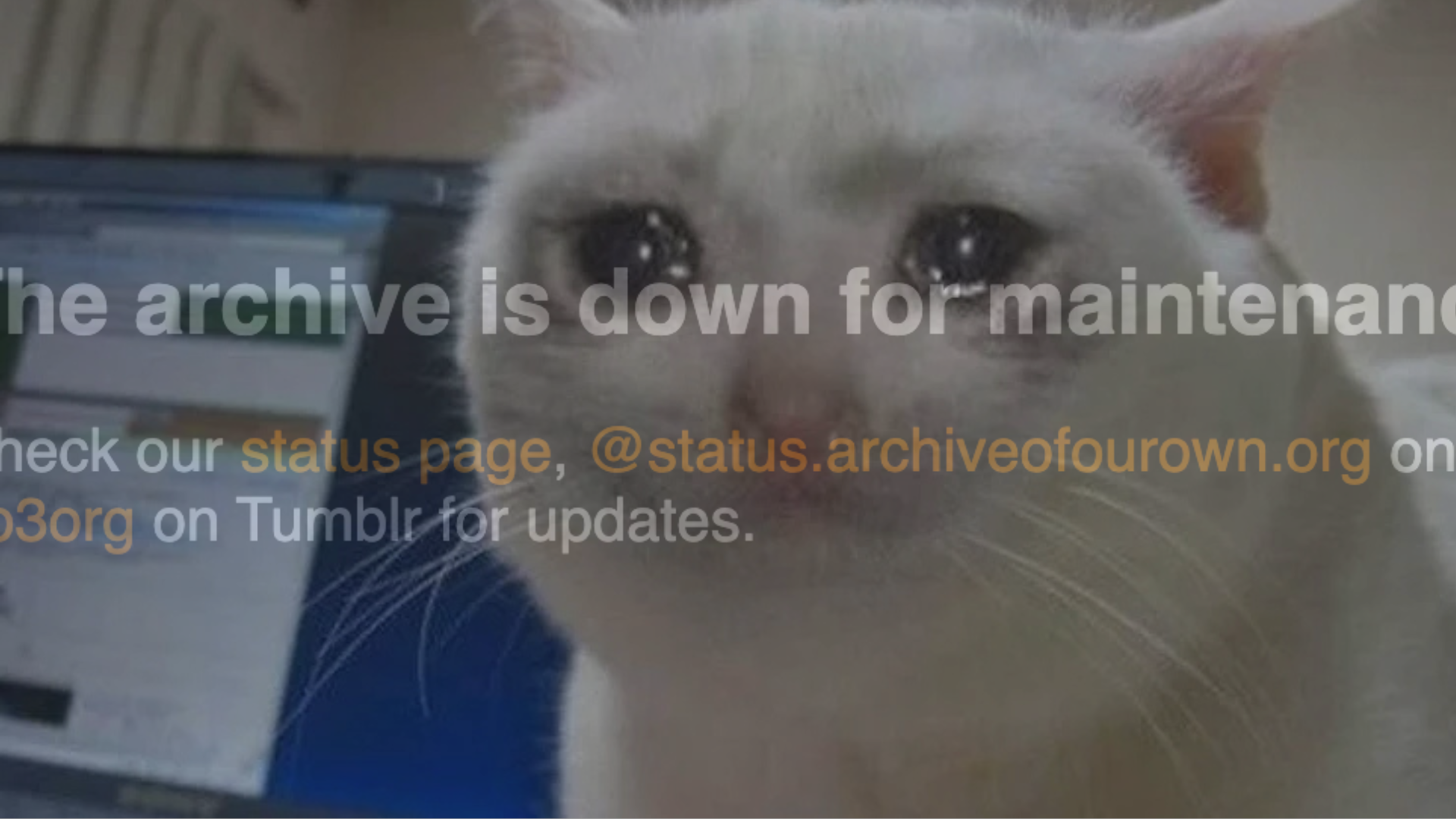
    In the wake of fanfiction repository Archive of Our Own (AO3) announcing a weeks-long security incident outage, readers and writers are reflecting on why the site is important to the fanfiction community, and how they’re coping with the downtime.  

    On Thursday, the Organization for Transformative Works (OTW), the non-profit organization that runs AO3, posted that the site was down for maintenance, eventually updating to say the site restoration will take around two weeks, but could take up to a month. OTW confirmed in an updated status report Friday morning that this outage is due to a security incident. 

    Some have speculated that the outage is a result of the PHP scramble this week that led to several sites going down to update their security, but AO3 doesn’t use PHP. An OTW representative told CNET: “I can let you know that this is not related to the PHP security issue as the Archive uses Ruby on Rails.” 

    Massive Fanfic Site Archive of Our Own Says It’s Going Down for ‘Up to 4 Weeks’

    Oh my god?

    A lot of people are grieving the loss of Kinktober, AO3’s annual group writing exercise where writers upload a chapter or fic every day throughout October based on a prompt of the day. (The prompts are horny, if that’s not clear.) Several of the writers and readers who reached out to me following the outage brought up the poor timing around Kinktober.

    One writer I spoke to who posts her writing and reads others’ writing on AO3, told me that she was in the middle of racing to finish a work that was deliberately timed to Kinktober and Halloween when the outage happened. She was hitting “next chapter” while reading a fic on Wednesday night when she got the message that the site was down for maintenance, “which I initially took as a sign from the universe to go to bed,” she said.

    “The outage hasn’t derailed my desire to write. If anything, I want to have more chapters ready to go so my readers can eat good once it’s over,” she said. 

    💡
    Do you know anything else about what happened to Ao3? I would love to hear from you. Using a non-work device, you can message me securely on Signal at sam.404. Otherwise, send me an email at sam@404media.co.

    Some writers are considering posting elsewhere while they wait for AO3 to return, but it’s not an ideal workaround. AO3 author who goes by Selkie Myth told me they’re moving to Space Battles, another fanfiction site, during the outage. “I’m shrugging and just posting on SB [Space Battles] while the site’s down. Hopefully I’ll remember to post the chapters over on AO3 once it’s back up — the story is projected to end during the outage. I anticipate the same is true for a lot of other authors,” they said.

    Some people have said they’ll try fanfiction.net in the meantime, but it’s a much more bare-bones website. Fanfiction site Sufficient Velocity added a banner to its homepage welcoming AO3 refugees: “We’ve had a big influx of guests due to the AO3 outage. If you’ve been affected by the outage we’re sorry to hear that and hope that they’re able to get that fixed soon.” Wattpad, which many fanfiction writers and readers really, really hate for reasons I won’t get into here, posted on X: “we’re here to support you during this difficult time.” Overwhelmingly, the replies are from people telling Wattpad to go away.

    Another AO3 writer who goes by Ren told me she has two long works in progress right now with nowhere to post them. Posting elsewhere poses continuity and discovery problems, as some of these fanfiction works span chapters and hundreds of thousands of words of character and worldbuilding. “I could technically keep posting updates on sites like tumblr through the downtime, but both of these fics are quite long and I haven’t been posting them anywhere other than AO3 — if I drop a new chapter for my 130k Pokemon Black and White fanfic on Tumblr completely out of context, people just now finding my work aren’t going to be able to read the rest for a while :(“ she told me in an email. “I have seen other authors posting their gdocs and Ellipsus reader links in the meantime, but my draft files aren’t exactly presentable… I will keep marinating but what will probably happen is my wips [works in progress] will just be on hiatus for a bit. My readers are used to hiatuses at least.” 

    Another writer said she’s not considering posting elsewhere. “Wattpad can piss off,” she said. “But I may go back to fanfiction.net to save and physically print some of my favorite fics from way back in the day (the ancient/sacred texts, if you will) to ensure I have copies of those somewhere. This outage is a good reminder that things can vanish in the blink of an eye, whether a website crashes or is hacked or an author decides to suddenly delete their fic. If you love something, smash the kudos button, comment on it, bookmark it, subscribe, and consider downloading it. You never know.” 

    A reader who emailed me following the outage said they’ve been enjoying getting into AO3 as a new fan. “I was a big fanfic skeptic, but that’s changed lately. I’ve found some truly excellent writers, and real creativity. The free nature of it in this increasingly horrifying stage of capitalism is refreshing,” they said.

    AO3 has said in status updates and to journalists that they don’t expect any data loss. Losing works would be devastating for writers and readers, but AO3 is more than just a repository for writing; it’s a community of people commenting and reacting to those stories. Selkie mentioned the rigorous tagging habits of AO3 members, where stories are tagged with sometimes dozens of fanfiction tropes, character names, content hints and warnings, and can constitute a language specific to the platform and its readers; “Crack Treated Seriously,” for example, means writing a silly premise with a straight face, while “Idiots in Love” is self explanatory. 

    “To me, the more devastating thing would be to lose the comments and kudos on my fic. Technically I have them saved elsewhere because I get AO3 email alerts, but seeing them threaded in one place at the end of a chapter hits different,” a writer said. “Comments can turn an author’s entire day around and restore their will to live. I often reread them if I have writer’s block or a bad bout of imposter syndrome. They also turn the otherwise solitary act of writing into something communal. Seeing someone experience your story chapter by chapter is incredibly motivating and makes the writing process feel less isolating.” 

    OTW is entirely volunteer-run, and people on social media and in speaking to them directly have said they hope AO3 users go easy on staff during this time. “So many people rely on AO3 as an outlet for creativity and escapism as the real world burns, myself included. It’s also important to remember that the site is run by volunteers,” that writer said. “The work they do to protect writers, fight censorship and safeguard freedom of expression is extremely important and necessary, especially right now. They deserve all the respect and patience in the world as they work to get the archive back up and running. Be kind.” 

    Ren, echoing those sentiments, sent me a meme: 

    ‘Wake Up Call:’ Fanfiction Writers and Readers React to AO3 Outage

    “An additional sentiment I’ve seen is ‘ok so when AO3 comes back we’re all going to tell our favorite authors how much we missed their work, right?’ which I hope catches on — I’m writing for niche fandoms and had to disable guest comments due to bot spam, so comments are few and far between as it is,” Ren said. “I do kind of hope that the extended outage serves as a sort of wake-up call to anyone who’s been taking ao3 for granted lately. It certainly was for me.” 

    Source: 404 Media · 2026-10-30

  • $6.3 Billion Stolen from Binance in Attack Attributed to North Korea

    Binance links a $6.3 billion crypto theft to a compromised DevOps laptop, with North Korean hackers blamed by blockchain analysts.

    Binance was investigating suspicious transfers that early estimates put at up to $5.8 billion. A day later, multiple media outlets reported that the largest cryptocurrency exchange had linked the theft of about $6.3 billion to a DevOps engineer’s compromised laptop. Billions had moved out of wallets linked to the exchange.

    According to The Block, blockchain analyst Spreek identified approximately $3.55 billion in incoming transfers to an initially unidentified wallet.

    “Onchain data flagged by analyst Spreek shows about $3.55 billion in incoming transfers to the unlabeled wallet, with nearly $900 million subsequently moved across other wallets.” The Block reports. “Conor Grogan, a senior director and product leader at Coinbase, says the amount is up to $5.8 billion.”

    Coinbase executive Conor Grogan initially estimated that the total value of the movements could reach $5.8 billion.

    Those figures came from blockchain tracking and differing estimates, so they didn’t necessarily show the amount stolen.

    Binance pointed out that customer funds were safe, while co-founder Changpeng Zhao, widely known as CZ, said the activity appeared to be a hack. Zhao no longer manages Binance’s platform, but said he expected customers’ funds to be fully covered.

    The company said its user funds were “completely safe.”

    “Our teams are aware of reports of a potential security issue and are actively investigating. User funds are completely safe. Our security teams are reviewing all relevant information with urgency, and we will provide updates through official Binance channels as soon as we have verified information.” the company states. “Users should remain cautious of scams and should not trust unofficial links, messages, or requests for account information.”

    That assurance is important, but it doesn’t replace a technical explanation of how the transfers occurred or independent confirmation of the final impact.

    “Our initial investigation suggests this security incident may have started with a compromised DevOps engineer’s laptop. That gave an attacker access to a service container, where they submitted unauthorized withdrawal transactions.” Binance Co-CEO Richard Teng explained.

    “To be clear: the attacker did not simply use one engineer’s permissions, and this was not a single “one-click” action. It involved a more complex attack process. Our investigation has not attributed responsibility to any individual.”

    Attackers used access from an engineer’s laptop to reach a service container and send unauthorized withdrawal requests. Binance says it has found no evidence that attackers stole any wallet private keys.

    Binance also said it had found “additional points of breach” and was still investigating. Co-CEO Richard Teng said the investigation had not identified anyone responsible. After the attack, Binance suspended deposits and withdrawals to carry out security checks, cancelled the permissions linked to the affected address, and began working with blockchain analysis firms and law enforcement to track the stolen funds.

    Binance says it will cover all losses using its SAFU fund and its own money, and that customer funds are safe. The company also plans to publish an updated Proof of Reserves once it has completed the recovery work. This commitment does not replace a detailed technical explanation or independent confirmation of the full impact of the attack.

    Binance hasn’t named a culprit, but the blockchain analysis firm TRM has. It attributes the attack to TraderTraitor, a North Korean state-backed unit also tracked as Lazarus Group and APT38, and Chainalysis says it’s highly confident in that finding.

    TRM says the attacker moved about $6.36 billion out of Binance wallets on ten blockchains on October 29, most of it in roughly 20 minutes starting at 20:05 UTC. That makes it the largest crypto theft on record, about four times the $1.5 billion Bybit hack of February 2025.

    “On October 29, 2026, an attacker moved approximately USD 6.36 billion out of Binance wallets on ten blockchains, most of it in about 20 minutes starting at 20:05 UTC. That makes this the largest crypto theft on record, about four times the USD 1.5 billion Bybit hack of February 2025. Binance has confirmed a security incident and suspended withdrawals on several networks.” TRM said. “TRM attributes the attack to TraderTraitor, North Korea’s elite hacking unit, based on robust on and off-chain intelligence. We make this judgment with high confidence. TRM is tracking the funds and alerting partners through the Beacon Network.”

    Freezing the money only went partway. Tether, Circle, Ripple and World Liberty Financial froze about $2.67 billion in stablecoins, and Arbitrum’s Security Council froze 8,426 ETH and 74.6 million ARB, for roughly $2.7 billion in all. But the attacker raced the freezes by selling USDT to market makers and borrowing ETH against USDT on Aave. It now holds more than 420,000 ETH and 18,270 BTC, about $2.4 billion beyond any issuer’s reach.

    The early freeze numbers were messy too, Tether and Circle froze approximately $1.79 billion in stablecoins associated with the suspicious transfers in the initial reports. Those amounts describe different moments, and you shouldn’t add them without checking whether they cover distinct assets. A freeze works on tokens that have an issuer to call, and Ether and Bitcoin don’t.

    Hot wallets help explain how this type of theft can happen. They store cryptocurrency in systems connected to the internet, allowing exchanges to process withdrawals quickly. But this also makes strong security controls essential. Investigators still need to determine who initiated the transfers, whether they were authorized, whether attackers gained control of the wallets, and whose funds were stolen.

    Binance co-founder Changpeng Zhao, who no longer runs the company, said the activity looked like a hack and expected customers to be fully compensated. Large transfers alone do not prove a cyberattack, but the findings that emerged later provided strong evidence of a breach.

    Customers also need to be careful. Attackers often exploit the confusion after a major incident by spreading fake announcements, pretending to be support staff, and directing users to fraudulent websites. Use only Binance’s official channels, avoid unexpected links, and never share passwords, authentication codes, or wallet recovery phrases in response to unsolicited messages. Security teams should also watch for phishing emails that use the incident to pressure employees into verifying their accounts.

    The lesson goes beyond Binance. A public blockchain records every transaction, but it cannot show who authorized it or how attackers gained access. Blockchain transparency does not guarantee operational security.

    Follow me on Twitter: @securityaffairs and Facebook and Mastodon

    Pierluigi Paganini

    (SecurityAffairs – hacking, Binance)

    Source: Security Affairs · 2026-10-30

  • How to prioritize remediation after a pentest: a practitioner workflow

    A practical pentest workflow combines CVSS, EPSS and business impact to validate findings, prioritize fixes and document remediation decisions.

    Remediation prioritization after a pentest is the process of ranking and ordering security findings based on their risk, exploitability, and business impact. A penetration test can produce any number of findings, ranging from the very low (zero) to the very high (hundreds).

    The security of the tested organization depends on the findings management processes addressing the most important results first.

    • CVSS alone misranks risk. Accurate prioritization relies on combining CVSS, EPSS, and business context.
    • 68.4% of practitioners say a 500+ candidate finding set would strain the team or be unmanageable, so it’s important to validate first.
    • 81.7% of practitioners see AI-generated findings that need significant manual validation, so validation with concrete proof remains essential.
    • Document every deprioritization, because that record counts as audit evidence.

    Why aren’t CVSS scores alone enough to inform remediation?

    When prioritizing pentest results, some practitioners rely solely on frameworks like the Common Vulnerability Scoring System (CVSS). The logic is sound: the higher a vulnerability’s CVSS score is, the more risk it poses, and the sooner you should fix it, right?

    Unfortunately, the reality is much more complicated. Boiling down a complex ecosystem of risk into a one-dimensional number means ignoring the wider business context. In the end, that means you fix vulnerabilities that pose serious theoretical risk first, while genuine exposures get pushed to the back of the queue.

    Lets use two hypothetical vulnerabilities as an example.

    • Vulnerability A is an RCE flaw, CVSS 9.8, on an isolated intranet site.
    • Vulnerability B is a BOLA flaw, CVSS 6.5, on a public facing production payment API.

    Now think about which one you would fix first.

    Would you prioritize the“critical” flaw on an intranet site, containing no sensitive data that attackers could only reach if they’d already compromised your internal network? Or would you prioritize the “medium” flaw on an API that processes live credit card transactions, and that any script kiddie could manipulate?

    Across an entire organization, or multiple organizations if you’re a consultant or MSP, those critical flaws can really pile up. In one AI pentesting survey of 158 base practitioners by Pentest-Tools.com, conducted in June 2026, 68.4% of respondents said a 500+ candidate finding set would strain the team or be unmanageable.

    Approaching risk prioritization by trying to fix every “Critical” finding is going to exhaust you and your team. That’s when people make mistakes, and you end up with a major incident on your hands.

    What separates a validated finding from a candidate?

    That same distinction, in part, separates a candidate finding from a validated one. For example, vulnerability with a high CVSS score but near-zero exploitability should remain a candidate. To graduate a vulnerability from a candidate to a legally and technically validated finding, it must pass through a strict filter that involves three processes.

    The first step is to eliminate as much administrative noise as possible. That means deduplicating findings and removing any that are obviously non-exploitable. 

    Then, you need to confirm exploitability. That typically means executing a safe, controlled attack path against the target environment to prove that a state change, data exposure, or privilege escalation can actually occur.

    Finally, you need concrete evidence. A validated finding cannot rely on a generic tool’s “confidence score.” It must include comprehensive proof that a developer or auditor can immediately follow:

    • Technical proof tends to include HTTP request/response traces or specific error payloads.
    • Proof of impact includes things like screenshots or server-side telemetry demonstrating unauthorized data access.

    Now, many vendors are going to claim that AI-generated findings ease the strain of exploit validation. In many cases, they’re telling the truth. But as with any AI technology, a healthy level of skepticism is important. According to the same study, 81.7% of respondents encounter AI-generated findings that need significant manual exploit validation at least sometimes.

    How do CVSS, EPSS and business context combine into a ranking?

    Together, CVSS, Exploit Prediction Scoring System (EPSS) scores, and business context create a single risk ranking that reflects real-world danger to the tested organization.

    CVSS, as mentioned earlier, measures theoretical severity. It tells you how bad a flaw is in a vacuum, but is entirely blind to context. EPSS measures probability. It tells you how likely an attacker is to exploit a flaw in the wild over the next 30 days, but doesn’t measure the potential impact of an exploitation.

    Business context measures operational impact. It tells you the value of the affected asset, how easily an attacker can reach a flaw, and what they can steal. It tells you nothing, however, about the threat itself. Ultimately, business context is expressed as residual risk, the danger left over after you factor in your existing defenses. Calculating it relies on measuring four factors:

    • Exposure: Whether a server is open to the public internet.
    • User count: How many people use a system.
    • Data sensitivity: Whether the system holds sensitive information.
    • Compensating controls: Whether you have firewalls or antivirus tools actively blocking the attack path.

    By checking these boxes, you won’t waste time fixing a “Critical” bug locked in an empty, disconnected server. Instead, you’ll prioritize the “Medium” bug on your public checkout page that hackers are actively trying to breach.

    What goes first when dev time is limited?

    Sometimes, you’re not going to have much time for remediation. That’s natural. In those situations, prioritize validated findings with high threat activity (EPSS score) and critical business exposure. They’re the findings that pose the most threat to your organization.

    Prioritization done well is itself evidence. A ranked, validated list, with a written reason for what was deprioritized, is what a team can defend later.

    You’ll need to record the owner (the specific individual accepting the risk), the date of the decision, the technical operational basis for deprioritization (such as an active compensating control), and a hard review date for re-evaluation.

    Why does the ranked list count as audit evidence?

    A prioritized ranking list counts as valid audit evidence because it proves compliance alignment with several major security frameworks. For example:

    • ISO 27001 A.8.8 demands that organizations evaluate real-world exposure, take targeted corrective actions, and retain objective evidence that the remediation loop has successfully closed.
    • PCI DSS 11.4 mandates that penetration testing actively validates and exploits findings, with formal retesting conducted after significant organizational changes.
    • SOC 2 CC7.1 relies on this documentation to confirm that an organization maintains systemic operational consistency and rigorous vulnerability triage over time.

    A ranked, validated list also gives MSPs and MSSPs a clear, auditable record of truth that clients can either accept or challenge with their own evidence. This transparency ensures both sides agree on which real-world risks need to be addressed first.

    What does a defensible ranking record contain?

    A defensible ranking record contains the validated asset identification, its technical CVSS severity, its real-world EPSS probability, the active compensating controls defining its residual list, the formal sign-off from the risk owner, and the targeted review schedule.

    About the Author: Josh Breaker-Rolfe is a Content writer at Bora. He graduated with a degree in Journalism in 2021 and has a background in cybersecurity PR. He’s written on a wide range of topics, from AI to Zero Trust, and is particularly interested in the impacts of cybersecurity on the wider economy.

    Follow me on Twitter: @securityaffairs and Facebook and Mastodon

    Pierluigi Paganini

    (SecurityAffairs – hacking, pentest)

    Source: Security Affairs · 2026-10-30

  • Hacker leaks data on more than 40,000 Homeland Security employees

    A hacker leaks personal data on more than 40,000 DHS employees, including CBP, ICE and CISA staff, after an undisclosed breach.

    Personal details of thousands of U.S. Department of Homeland Security (DHS) employees are now online after a hacker stole reams of data in a data breach that occurred earlier this year and nobody had disclosed.

    “The breach includes names, job titles, and work contact information, such as email addresses, cell phone numbers, and office locations, of more than 40,000 people who work for the federal department, including border and immigration agents, cybersecurity staffers, and senior department officials.” TechCrunch reports.

    The incident impacted border and immigration agents, cybersecurity staff and senior department officials. DHS confirmed it is aware of a potential breach and is investigating, saying it takes threats to employees seriously and will provide updates when more information is available.

    “DHS is aware of a potential breach and is actively working to address the situation swiftly and effectively. We take all security threats against our employees and officers seriously and will work to ensure all are properly protected. We will update the public when more information is available,” a DHS spokesperson told SecurityWeek.

    The hacker, who uses the name Department of Peace, claims to have stolen the data from an Okta single sign-on system. DHS uses this service to give employees and contractors across its agencies access to the department’s central network. The system also stores IT and login records for each account, showing which systems and internal apps each person can access. The hacker left a note with the leaked data, seen by TechCrunch, saying that if others have their information, it is only fair to share theirs. The malicious actor did not reveal how the U.S. agency was breached.

    More than half of the records, around 21,000, belong to U.S. Customs and Border Protection (CBP) employees working at airports and other ports of entry. Another 10,000 belong to Immigration and Customs Enforcement (ICE) and its Homeland Security Investigations unit, while just under 1,000 are linked to the cybersecurity agency CISA. Thousands of other records belong to DHS headquarters and agencies such as U.S. Citizenship and Immigration Services and the Federal Protective Service.

    DDoSecrets says the leaked database identifies officials involved in undercover operations and key DHS personnel overseeing renditions and deportations. Department of Peace said the leak was a response to the government’s actions against ICE. Crimew described the database as an unprecedented view of DHS’s organizational structure, helping researchers identify employees, their roles and reporting lines. They said it could also support investigations and future Freedom of Information Act (FOIA) requests.

    DDoSecrets co-founder Emma Best said the database, called Icepick, identifies officials involved in covert operations, internal investigations and deportation programs. Ryan Shapiro of Property of the People added that employee contact details could help researchers submit more targeted FOIA requests. Best said the data could also support journalism, congressional inquiries, legal challenges and community investigations.

    “Rather than an indiscriminate directory of every DHS employee, Icepick identifies many of the architects and drivers of DHS policy and operations,” said journalist and DDoSecrets cofounder Emma Best. “The leak is extraordinary but deceptive in its simplicity as it identifies the officials responsible for overseeing covert and undercover operations, the government’s hunt for leakers and the failed BlueLeaks investigation — along with key personnel in DHS’s ever-escalating rendition and deportation programs.”

    “By replacing the regime’s anonymity with accountability, Icepick and the tool developed by maia are catalyst for investigations, empowering journalists, Congressional inquiries, legal challenges, community action and Freedom of Information Act requests,” added Best.

    DHS is investigating a potential breach. Okta says it has no evidence its systems or data were compromised.

    The breach follows other attacks on U.S. government agencies that exposed FBI records and military personnel data. It is also the second DHS breach this year, after the same hacker claimed to have stolen thousands of government contracts.

    Journalist maia arson crimew shared the data with DDoSecrets. TechCrunch verified some records, which suggest the database was copied around mid-August. The leak covers about one-fifth of DHS’s 220,000 employees.

    The records reveal access to tools including Microsoft 365, ChatGPT, Penlink surveillance software and Mobile Fortify, a facial recognition app used by CBP and ICE. Around 4,500 accounts belong to a Headspace user group, while more than 2,000 Homeland Security Investigations employees appear in Penlink-related groups.

    Researchers say the contact details could help journalists file targeted Freedom of Information Act requests. However, exposing employees’ phone numbers and office locations also creates security and privacy risks.

    Follow me on Twitter: @securityaffairs and Facebook and Mastodon

    Pierluigi Paganini

    (SecurityAffairs – hacking, DHS)

    Source: Security Affairs · 2026-10-30

  • Binance Probes Suspected $5.8 Billion Crypto Hack, $3 Billion Frozen

    Binance investigates a $5.8 billion crypto theft, with $3 billion in assets frozen. The exchange says user funds are safe as investigators trace funds.

    Source: HackRead · 2026-10-30

  • Binance Investigates Suspicious Crypto Transfers Worth Up to $5.8 Billion

    Binance Investigates Suspicious Crypto Transfers Worth Up to $5.8 Billion

    Binance probes suspicious crypto transfers worth up to $5.8 billion as Tether and Circle freeze $1.79 billion in stablecoins linked to the activity.

    Binance is investigating a potential security incident after billions of dollars in cryptocurrency moved from wallets linked to the exchange on October 29. The transfers raised concerns about a possible hack, while Tether and Circle moved to freeze stablecoins linked to the suspicious activity. The full scope of the incident remains unclear, and the reported outflows shouldn’t automatically be treated as confirmed losses.

    According to The Block, blockchain analyst Spreek identified approximately $3.55 billion in incoming transfers to an initially unidentified wallet.

    “Onchain data flagged by analyst Spreek shows about $3.55 billion in incoming transfers to the unlabeled wallet, with nearly $900 million subsequently moved across other wallets.” The Block reports. “Conor Grogan, a senior director and product leader at Coinbase, says the amount is up to $5.8 billion.”

    Coinbase executive Conor Grogan estimated that the total value of the movements could reach $5.8 billion.

    These figures come from blockchain tracking and different estimates, so they don’t necessarily represent the amount stolen.

    Binance acknowledged the reports and said its security team was investigating. The company had not publicly confirmed a breach in the initial reports, making it important to distinguish between suspicious transactions and a verified compromise.

    “We are aware of reports of a potential security issue and we are actively investigating.” He wrote in a post on X. “Our security teams are reviewing all relevant information with urgency, and we will provide updates through official Binance channels as soon as we have verified information. Users should remain cautious of scams and should not trust unofficial links, messages, or requests for account information.”

    This statement, reported by The Block, reflects the company’s position at the time. Binance also urged users to be cautious of unofficial messages and links, a relevant warning whenever a major security incident attracts public attention.

    Blockchain records showed large transfers from Binance-linked hot wallets to a wallet that wasn’t previously identified as belonging to the exchange. Hot wallets hold cryptocurrency in systems connected to the internet, allowing exchanges to process withdrawals and other transactions quickly. Their online availability also makes their security controls particularly important.

    The transfers involved Ethereum, stablecoins and other cryptocurrencies. Some funds were later moved to additional wallets, making it harder to track all the transactions.

    Investigators must determine who initiated the transfers, whether they were authorized and whether an attacker gained control of the wallets. They also need to establish whether the funds belonged to customers or Binance itself.

    Large transfers alone don’t prove a hack. However, unusual movements involving large amounts of cryptocurrency require immediate investigation.

    One of the most significant developments was the response from the companies behind two major stablecoins, USDT and USDC. According to The Block and Forbes, Tether and Circle froze approximately $1.79 billion in stablecoins associated with the suspicious transfers in the initial reports.

    The figures subsequently changed as the investigation developed. Tether CEO Paolo Ardoino later said the company had frozen more than $1.567 billion in USDT linked to a potential Binance exchange hack. These amounts reflect reported actions at different points in time and shouldn’t be combined without checking whether they refer to distinct assets and addresses.

    The freezes demonstrate an important feature of centralized stablecoins: their issuers can restrict transfers from addresses they control through their token contracts. This can help contain suspected theft, but it doesn’t provide the same control over assets such as Ether or Bitcoin. Nor does freezing a balance guarantee that every transferred asset can be recovered.

    The incident also highlights a practical tension in crypto security. Stablecoins offer the convenience of blockchain transfers, but their centralized issuers retain powers that can make a difference during an investigation.

    Binance maintained that customer funds were safe, while co-founder Changpeng Zhao, widely known as CZ, said the activity appeared to be a hack. Zhao no longer manages Binance’s platform, but said he expected customers’ funds to be fully covered.

    The company said its user funds were “completely safe.”

    “Our teams are aware of reports of a potential security issue and are actively investigating. User funds are completely safe. Our security teams are reviewing all relevant information with urgency, and we will provide updates through official Binance channels as soon as we have verified information.” the company states. “Users should remain cautious of scams and should not trust unofficial links, messages, or requests for account information.”

    That assurance is important, but it doesn’t replace a technical explanation of how the transfers occurred or independent confirmation of the final impact.

    A security investigation must establish more than whether an exchange can cover a potential loss. It should determine how the activity was authorized, whether credentials or signing mechanisms were compromised, which systems were involved and whether the attacker retained any access.

    For customers, the immediate priority is to avoid becoming a secondary victim. Attackers often exploit uncertainty around a major incident to distribute fake announcements, impersonate support staff and direct users to fraudulent websites. Users should rely on official Binance communication channels, avoid unexpected links and never disclose passwords, authentication codes or wallet recovery phrases in response to unsolicited messages.

    Security teams should also watch for phishing emails that use the incident to demand urgent account verification. Attackers may exploit the situation to launch a separate scam.

    The key lesson is that blockchain transparency does not guarantee operational security. Public ledgers show transactions, but they don’t reveal who authorized them, how attackers may have gained access or whether an exchange’s internal security controls failed.

    As the investigation continues, it’s important to distinguish between reported transfers, confirmed theft and funds that can be recovered. The figures may change as analysts trace more wallets and stablecoin issuers take further action.

    Follow me on Twitter: @securityaffairs and Facebook and Mastodon

    Pierluigi Paganini

    (SecurityAffairs – hacking, Binance)

    Source: Security Affairs · 2026-10-29