Tag: Security

  • British intelligence agency misplaced ‘thousands’ of storage devices, years later still can’t say how many

    British intelligence agency misplaced ‘thousands’ of storage devices, years later still can’t say how many

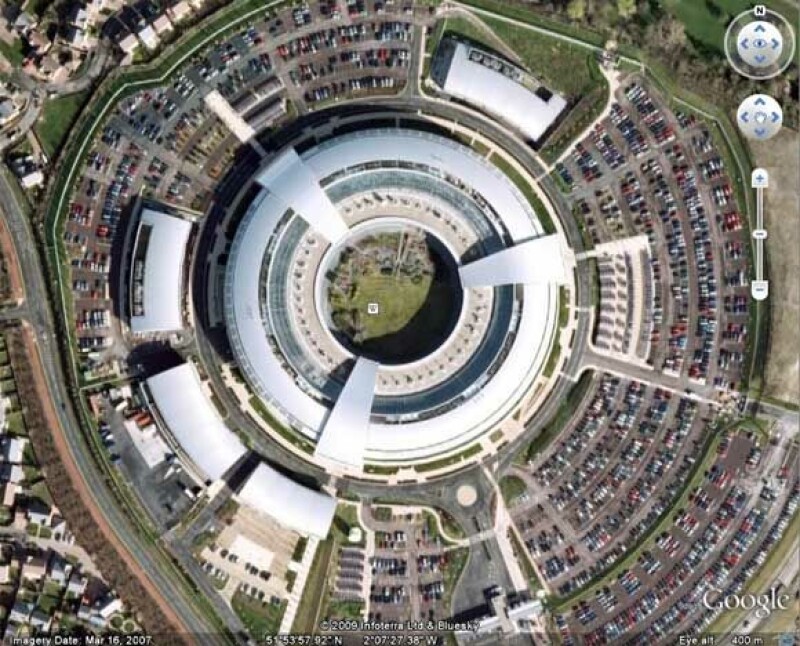
    Thousands of GCHQ storage drives containing sensitive data have been lost for years, and the British signals intelligence agency still cannot explain where they are. According to the Investigatory Powers Commissioner’s Office’s (IPCO) annual report, the missing storage drives have been known to officials for years, and may contain data related to the Investigatory Powers Act (IPA). “I remain concerned that GCHQ has not yet established a sufficiently clear understanding of the scale, location, and recoverability of lost removable media that may contain IPA-related data, notwithstanding that the underlying issues were first drawn to my attention several years ago,” wrote investigatory powers commissioner Lord Brian Leveson. “While I recognize the technical and practical challenges involved, the passage of time without a comprehensive account heightens the importance of sustained senior focus and assured remediation. Given the potential sensitivity of the material involved, I will continue to monitor progress closely.” Described as “a very significant number,” the report notes that GCHQ has scoped the maximum number of potentially lost drives, but is unaware of the exact scale of the issue. The agency has embarked on “a program of further work” to locate as many of the lost devices as possible, which includes implementing an automated asset-tracking system by the end of the year. After this is up and running, it said it will be able to provide a more precise number of lost drives. A GCHQ spokesperson told The Register: “As IPCO have reported, our management system for removable media was previously not sufficiently robust to effectively track the items that were registered for use. IPCO are right to note the flaws in the data the system produced, and we have taken action against all their recommendations. “We recognize the importance of security of removable media in our systems, and have a range of measures to mitigate the risks posed by these items. The findings in the report have been addressed comprehensively, and all necessary steps to correct this issue have been taken.” Peter Sommer, digital forensics expert and visiting professor at de Montfort and Birmingham City universities, told us: “Bearing in mind the sort of highly sensitive data collected and processed by GCHQ IPCO is right to be very concerned, the more so as the issue is already several years old. Vast quantities of data can be stored on the cheapest lowest cost hard disks and cards. At a much more modest level as an expert witness I know how important it is to keep careful track of the data entrusted to me.” Losing important devices is not an achievement that’s exclusive to GCHQ. Myriad stories like this have emerged from all corners of the public sector over the years, such as the British Minidstry of Defence misplacing USB drives containing secret information in the mid-noughties, civil servants routinely losing their BlackBerry handsets, and UK police losing thousands of devices, too. The missing storage drives comprise just one of the agency’s various transgressions highlighted by IPCO in its report. There are also “significant concerns” over the lax safeguards used to restrict the UK’s overseas partners when accessing bulk-intercepted data collected by GCHQ. IPCO was satisfied at how GCHQ ensured its own analysts remained compliant with safeguards around accessing confidential material related to journalism, journalistic sources, and privileged legal information. However, there were concerns around how these same safeguards were applied to its international partners, which have access to its so-called bulk data interception “product.” The report notes that most partners were properly restricted from accessing such material, although an internal probe found that there were inadequate arrangements in respect to one partner and their access to journalistic material. Both GCHQ and the overseas agency committed to rectifying the situation. GCHQ was also questioned after a software bug in a web app “used by a relatively small section of the public” misidentified individuals thought to be participating in terrorist activities. The agency identified and reported the flaw in the software, which it used for “target discovery work,” and although it only affected a small number of individuals, the errors led to five port stops made under the Terrorism Act and caused “serious prejudice” to the victims. A port stop, for the uninitiated, involves law enforcement detaining a suspect at a UK port, airport, train station, or within one mile of the Northern Ireland border, and can be carried out without suspicion. Once detained, individuals have a legal responsibility to provide passwords to their electronic devices, which can be seized for up to seven days, and in some cases have their biometric markers taken. Failure to comply can lead to a three-month prison term. IPCO ruled, however, that there was ultimately no error made as defined by the IPA. “This is because the activity was lawfully authorised under an interception warrant and the adoption of an unintentionally and unforeseeably imperfect target discovery methodology did not constitute such an error,” the report stated. Despite the agency’s vast technical expertise, IPCO said that the issue affecting the software was not foreseeable. GCHQ was not the only offender among the UK intelligence community (UKIC), with MI5’s mishandling of the infamous Agent X case taking center stage in the report. Agent X was an anonymous MI5 informant whose real identity has never been publicly released. A secret inquiry by IPCO as well as the report revealed that MI5 managed Agent X despite knowing he was a violent misogynist obsessed with extreme violence. Lord Leveson said “the case of Agent X is as serious as anything I have dealt with as Commissioner,” after MI5 gave false evidence to the High Court and Investigatory Powers Tribunal to protect a foreign neo-Nazi informant who was under police investigation for abusing his partner, referred to publicly as “Beth.” ®

    Source: The Register — Security · 2026-10-30
  • British intelligence agency misplaced ‘thousands’ of storage devices, years later still can’t say how many

    British intelligence agency misplaced ‘thousands’ of storage devices, years later still can’t say how many

    Thousands of GCHQ storage drives containing sensitive data have been lost for years, and the British signals intelligence agency still cannot explain where they are. According to the Investigatory Powers Commissioner’s Office’s (IPCO) annual report, the missing storage drives have been known to officials for years, and may contain data related to the Investigatory Powers Act (IPA). “I remain concerned that GCHQ has not yet established a sufficiently clear understanding of the scale, location, and recoverability of lost removable media that may contain IPA-related data, notwithstanding that the underlying issues were first drawn to my attention several years ago,” wrote investigatory powers commissioner Lord Brian Leveson. “While I recognize the technical and practical challenges involved, the passage of time without a comprehensive account heightens the importance of sustained senior focus and assured remediation. Given the potential sensitivity of the material involved, I will continue to monitor progress closely.” Described as “a very significant number,” the report notes that GCHQ has scoped the maximum number of potentially lost drives, but is unaware of the exact scale of the issue. The agency has embarked on “a program of further work” to locate as many of the lost devices as possible, which includes implementing an automated asset-tracking system by the end of the year. After this is up and running, it said it will be able to provide a more precise number of lost drives. A GCHQ spokesperson told The Register: “As IPCO have reported, our management system for removable media was previously not sufficiently robust to effectively track the items that were registered for use. IPCO are right to note the flaws in the data the system produced, and we have taken action against all their recommendations. “We recognize the importance of security of removable media in our systems, and have a range of measures to mitigate the risks posed by these items. The findings in the report have been addressed comprehensively, and all necessary steps to correct this issue have been taken.” Peter Sommer, digital forensics expert and visiting professor at de Montfort and Birmingham City universities, told us: “Bearing in mind the sort of highly sensitive data collected and processed by GCHQ IPCO is right to be very concerned, the more so as the issue is already several years old. Vast quantities of data can be stored on the cheapest lowest cost hard disks and cards. At a much more modest level as an expert witness I know how important it is to keep careful track of the data entrusted to me.” Losing important devices is not an achievement that’s exclusive to GCHQ. Myriad stories like this have emerged from all corners of the public sector over the years, such as the British Minidstry of Defence misplacing USB drives containing secret information in the mid-noughties, civil servants routinely losing their BlackBerry handsets, and UK police losing thousands of devices, too. The missing storage drives comprise just one of the agency’s various transgressions highlighted by IPCO in its report. There are also “significant concerns” over the lax safeguards used to restrict the UK’s overseas partners when accessing bulk-intercepted data collected by GCHQ. IPCO was satisfied at how GCHQ ensured its own analysts remained compliant with safeguards around accessing confidential material related to journalism, journalistic sources, and privileged legal information. However, there were concerns around how these same safeguards were applied to its international partners, which have access to its so-called bulk data interception “product.” The report notes that most partners were properly restricted from accessing such material, although an internal probe found that there were inadequate arrangements in respect to one partner and their access to journalistic material. Both GCHQ and the overseas agency committed to rectifying the situation. GCHQ was also questioned after a software bug in a web app “used by a relatively small section of the public” misidentified individuals thought to be participating in terrorist activities. The agency identified and reported the flaw in the software, which it used for “target discovery work,” and although it only affected a small number of individuals, the errors led to five port stops made under the Terrorism Act and caused “serious prejudice” to the victims. A port stop, for the uninitiated, involves law enforcement detaining a suspect at a UK port, airport, train station, or within one mile of the Northern Ireland border, and can be carried out without suspicion. Once detained, individuals have a legal responsibility to provide passwords to their electronic devices, which can be seized for up to seven days, and in some cases have their biometric markers taken. Failure to comply can lead to a three-month prison term. IPCO ruled, however, that there was ultimately no error made as defined by the IPA. “This is because the activity was lawfully authorised under an interception warrant and the adoption of an unintentionally and unforeseeably imperfect target discovery methodology did not constitute such an error,” the report stated. Despite the agency’s vast technical expertise, IPCO said that the issue affecting the software was not foreseeable. GCHQ was not the only offender among the UK intelligence community (UKIC), with MI5’s mishandling of the infamous Agent X case taking center stage in the report. Agent X was an anonymous MI5 informant whose real identity has never been publicly released. A secret inquiry by IPCO as well as the report revealed that MI5 managed Agent X despite knowing he was a violent misogynist obsessed with extreme violence. Lord Leveson said “the case of Agent X is as serious as anything I have dealt with as Commissioner,” after MI5 gave false evidence to the High Court and Investigatory Powers Tribunal to protect a foreign neo-Nazi informant who was under police investigation for abusing his partner, referred to publicly as “Beth.” ®

    Source: The Register Security · 2026-10-30

  • The $6.3 Billion Binance Hack Was Pulled Off in Just 20 Minutes

    The $6.3 Billion Binance Hack Was Pulled Off in Just 20 Minutes

    Multiple crypto-tracing firms say notorious North Korean hackers TraderTraitor may be behind the largest digital heist in history—with billions of crypto likely gone for good.

    Source: WIRED Security · 2026-10-30

  • Drupal warns of critical Commerce Core flaw exploited in attacks

    Drupal warned admins to patch a critical access bypass vulnerability in the Commerce Core module that attackers are exploiting in the wild. […]

    Source: BleepingComputer · 2026-10-30

  • Binance links $6.3 billion crypto theft to compromised DevOps laptop

    Binance, the world’s largest crypto exchange, has linked the theft of about $6.3 billion in cryptocurrency to a DevOps engineer’s compromised laptop. […]

    Source: BleepingComputer · 2026-10-30

  • Hacker leaks data on more than 40,000 Homeland Security employees

    A hacker leaks personal data on more than 40,000 DHS employees, including CBP, ICE and CISA staff, after an undisclosed breach.

    Personal details of thousands of U.S. Department of Homeland Security (DHS) employees are now online after a hacker stole reams of data in a data breach that occurred earlier this year and nobody had disclosed.

    “The breach includes names, job titles, and work contact information, such as email addresses, cell phone numbers, and office locations, of more than 40,000 people who work for the federal department, including border and immigration agents, cybersecurity staffers, and senior department officials.” TechCrunch reports.

    The incident impacted border and immigration agents, cybersecurity staff and senior department officials. DHS confirmed it is aware of a potential breach and is investigating, saying it takes threats to employees seriously and will provide updates when more information is available.

    “DHS is aware of a potential breach and is actively working to address the situation swiftly and effectively. We take all security threats against our employees and officers seriously and will work to ensure all are properly protected. We will update the public when more information is available,” a DHS spokesperson told SecurityWeek.

    The hacker, who uses the name Department of Peace, claims to have stolen the data from an Okta single sign-on system. DHS uses this service to give employees and contractors across its agencies access to the department’s central network. The system also stores IT and login records for each account, showing which systems and internal apps each person can access. The hacker left a note with the leaked data, seen by TechCrunch, saying that if others have their information, it is only fair to share theirs. The malicious actor did not reveal how the U.S. agency was breached.

    More than half of the records, around 21,000, belong to U.S. Customs and Border Protection (CBP) employees working at airports and other ports of entry. Another 10,000 belong to Immigration and Customs Enforcement (ICE) and its Homeland Security Investigations unit, while just under 1,000 are linked to the cybersecurity agency CISA. Thousands of other records belong to DHS headquarters and agencies such as U.S. Citizenship and Immigration Services and the Federal Protective Service.

    DDoSecrets says the leaked database identifies officials involved in undercover operations and key DHS personnel overseeing renditions and deportations. Department of Peace said the leak was a response to the government’s actions against ICE. Crimew described the database as an unprecedented view of DHS’s organizational structure, helping researchers identify employees, their roles and reporting lines. They said it could also support investigations and future Freedom of Information Act (FOIA) requests.

    DDoSecrets co-founder Emma Best said the database, called Icepick, identifies officials involved in covert operations, internal investigations and deportation programs. Ryan Shapiro of Property of the People added that employee contact details could help researchers submit more targeted FOIA requests. Best said the data could also support journalism, congressional inquiries, legal challenges and community investigations.

    “Rather than an indiscriminate directory of every DHS employee, Icepick identifies many of the architects and drivers of DHS policy and operations,” said journalist and DDoSecrets cofounder Emma Best. “The leak is extraordinary but deceptive in its simplicity as it identifies the officials responsible for overseeing covert and undercover operations, the government’s hunt for leakers and the failed BlueLeaks investigation — along with key personnel in DHS’s ever-escalating rendition and deportation programs.”

    “By replacing the regime’s anonymity with accountability, Icepick and the tool developed by maia are catalyst for investigations, empowering journalists, Congressional inquiries, legal challenges, community action and Freedom of Information Act requests,” added Best.

    DHS is investigating a potential breach. Okta says it has no evidence its systems or data were compromised.

    The breach follows other attacks on U.S. government agencies that exposed FBI records and military personnel data. It is also the second DHS breach this year, after the same hacker claimed to have stolen thousands of government contracts.

    Journalist maia arson crimew shared the data with DDoSecrets. TechCrunch verified some records, which suggest the database was copied around mid-August. The leak covers about one-fifth of DHS’s 220,000 employees.

    The records reveal access to tools including Microsoft 365, ChatGPT, Penlink surveillance software and Mobile Fortify, a facial recognition app used by CBP and ICE. Around 4,500 accounts belong to a Headspace user group, while more than 2,000 Homeland Security Investigations employees appear in Penlink-related groups.

    Researchers say the contact details could help journalists file targeted Freedom of Information Act requests. However, exposing employees’ phone numbers and office locations also creates security and privacy risks.

    Follow me on Twitter: @securityaffairs and Facebook and Mastodon

    Pierluigi Paganini

    (SecurityAffairs – hacking, DHS)

    Source: Security Affairs · 2026-10-30

  • In the year AI re-wrote the infosec rulebook, it’s comforting to know crypto exchanges still have bad security

    In the year AI re-wrote the infosec rulebook, it’s comforting to know crypto exchanges still have bad security

    Crypto exchange Binance has paused trading after discovering unknown parties cracked one of its workers’ laptops and used it to make massive trades. Late on Thursday, US time, the company used its social media feeds to report “Our teams are aware of reports of a potential security issue and are actively investigating.” The exchange insisted “User funds are completely safe” and warned its customers “should remain cautious of scams and should not trust unofficial links, messages, or requests for account information.” The company soon froze $2.5 billion worth of assets and warned that the figure could go higher “as our teams work closely with law enforcement, issuers, blockchain intelligence firms and industry partners to trace and freeze additional assets.” To prevent the matter worsening, Binance halted all trading, deposits, and withdrawals. It also promised to cover any losses. About an hour ago at the time of writing, Binance posted an update on the incident that explains what it thinks went wrong. “Binance’s initial investigation suggests that the security incident may involve a compromised DevOps engineer’s laptop, which allowed an attacker to gain access to a service container and submit unauthorized withdrawal transactions,” the post states. The company also hiked the amount it thinks is at risk to $6.3 billion and repeated its promise to cover any customer losses. The update also says Binance found no evidence of any wallet private key leak, suggesting that customers’ holdings remain secure. When they can use them again, as Binance is yet to resume trading. Binance hasn’t explained how attackers gained access to the engineer’s laptop. The scant details provided make it hard to rule out a successful phishing attack, or perhaps a supply chain attack on a package the developer used. Binance says it will spill once it knows exactly what happened. Cryptocurrency outfits have a long and inglorious history of falling victim to cyberattacks, perhaps starting with the 2011 raid on Mt Gox, to incidents allegedly perpetrated by nation-states, and, just last week, another situation possibly involving an AI-powered attacker. ®

    Source: The Register — Security · 2026-10-30

  • In the year AI re-wrote the infosec rulebook, it’s comforting to know crypto exchanges still have bad security

    In the year AI re-wrote the infosec rulebook, it’s comforting to know crypto exchanges still have bad security

    Crypto exchange Binance has paused trading after discovering unknown parties cracked one of its workers’ laptops and used it to make massive trades. Late on Thursday, US time, the company used its social media feeds to report “Our teams are aware of reports of a potential security issue and are actively investigating.” The exchange insisted “User funds are completely safe” and warned its customers “should remain cautious of scams and should not trust unofficial links, messages, or requests for account information.” The company soon froze $2.5 billion worth of assets and warned that the figure could go higher “as our teams work closely with law enforcement, issuers, blockchain intelligence firms and industry partners to trace and freeze additional assets.” To prevent the matter worsening, Binance halted all trading, deposits, and withdrawals. It also promised to cover any losses. About an hour ago at the time of writing, Binance posted an update on the incident that explains what it thinks went wrong. “Binance’s initial investigation suggests that the security incident may involve a compromised DevOps engineer’s laptop, which allowed an attacker to gain access to a service container and submit unauthorized withdrawal transactions,” the post states. The company also hiked the amount it thinks is at risk to $6.3 billion and repeated its promise to cover any customer losses. The update also says Binance found no evidence of any wallet private key leak, suggesting that customers’ holdings remain secure. When they can use them again, as Binance is yet to resume trading. Binance hasn’t explained how attackers gained access to the engineer’s laptop. The scant details provided make it hard to rule out a successful phishing attack, or perhaps a supply chain attack on a package the developer used. Binance says it will spill once it knows exactly what happened. Cryptocurrency outfits have a long and inglorious history of falling victim to cyberattacks, perhaps starting with the 2011 raid on Mt Gox, to incidents allegedly perpetrated by nation-states, and, just last week, another situation possibly involving an AI-powered attacker. ®

    Source: The Register Security · 2026-10-30

  • Binance Probes Suspected $5.8 Billion Crypto Hack, $3 Billion Frozen

    Binance investigates a $5.8 billion crypto theft, with $3 billion in assets frozen. The exchange says user funds are safe as investigators trace funds.

    Source: HackRead · 2026-10-30

  • Researchers find bugs in 5 AI developer tools, with OpenAI and Microsoft flaws still unpatched

    Researchers find bugs in 5 AI developer tools, with OpenAI and Microsoft flaws still unpatched

    Multiple vulnerabilities in five popular AI developer tools could allow attackers to execute code on a host machine, read and steal files, or spoof browser address bars. Researchers say flaws in OpenAI’s Codex and Microsoft’s VS Code remain unpatched, potentially putting developers who use affected configurations at risk. AI security startup Forever Security discovered vulnerabilities in Cursor, GitHub Copilot, Anthropic’s Claude Desktop, VS Code, and Codex, and disclosed four of the flaws to the affected vendors. GitHub independently fixed the Copilot vulnerability without receiving a report from Forever Security. All five share a common security weakness: embedded browsers granted capabilities beyond those available to conventional browsers. Each tool “enriched its embedded browser beyond what a normal browser allows, and those enrichments undermined the traditional threat model – as agent input, as the authority on a tab’s own address, or as reach onto the host,” Forever researcher Gal Weizman wrote in a Thursday report. Forever dubbed this class of vulnerability “Embrace,” short for EMbedded BRowser, and said the flaws led to code execution in Cursor, data theft in Claude Desktop, Codex, and VS Code, and address bar spoofing in GitHub Copilot. Here’s what each of these looks like, starting with Cursor. Cursor: arbitrary code execution Typical web pages can’t run commands on the host computer because a web page’s JavaScript cannot talk to local apps. Cursor’s integrated browser, however, allows a page to call the agent’s composer. The agent reads this as instructions and follows them, but the instructions remain hidden from human users. This opens the coding agent up to prompt injection attacks that could allow an attacker to execute commands on the host machine. The researchers disclosed the vulnerability to Cursor on September 10, and the vendor silently patched the flaw on October 1. According to Forever, Cursor did not publish a security advisory about the issue or respond to the researchers’ disclosure. Cursor also did not reply to The Register’s request for comment. GitHub Copilot: address bar spoofing Under normal browser operations, a webpage cannot change the content of the address bar. “Copilot’s browser preview works differently,” Weizman wrote. “Some pages change their address without loading a new page, and the app cannot always see that. So Copilot let the page tell the app its own address.” The app checked only whether the text looked like a web address, starting with http, https or file, but it didn’t check where the tab really pointed to. This can be abused to trick the embedded browser into displaying a spoofed URL – such as github.com/login – in the address bar, while loading a fraudulent website – like a phishing page – underneath. The researchers found the address-bar spoofing flaw in GitHub Copilot 1.1.27 on September 26. GitHub independently fixed the flaw in a later Copilot build (1.1.29) on October 13 without receiving a vulnerability report from Forever. We reached out to GitHub and did not receive a response. Claude Desktop, Codex, and VS Code: arbitrary file read All three of these vendors’ coding assistants allow local HTML files opened in the built-in browser to escape its boundaries and access other files. Both Claude Desktop and VS Code allow local pages access to their respective project folders, but the researchers found that these restrictions did not apply to web workers – a browser feature that allows JavaScript to run in a background thread, separate from the page’s main thread. This means a local page can start a worker, and the worker can bypass restrictions to reach any file on the machine. Codex, however, didn’t have this same restriction, meaning a local page could read any file directly without a worker. Weizman said his team disclosed the issue to Anthropic on July 23, and the AI vendor declined the Claude Desktop bug report as invalid for a “workspace trust” gated security boundary. A day later, however, Noma Security reported the same flaw, according to Weizman, and Anthropic accepted the report as valid. Anthropic did not respond to The Register’s questions about either bug report or Forever’s timeline of events. Forever disclosed the Codex bug to OpenAI on July 27 and didn’t get a response. The flaw remains unpatched, but an OpenAI spokesperson told The Register that it’s aware of the issue and working to address it. On September 10, Forever disclosed the VS Code vulnerability to Microsoft and says the vendor also labeled it as an invalid workspace trust gated security boundary issue. The researchers claim it remains unpatched. Microsoft did not respond to our request for comment.®

    Source: The Register — Security · 2026-10-29