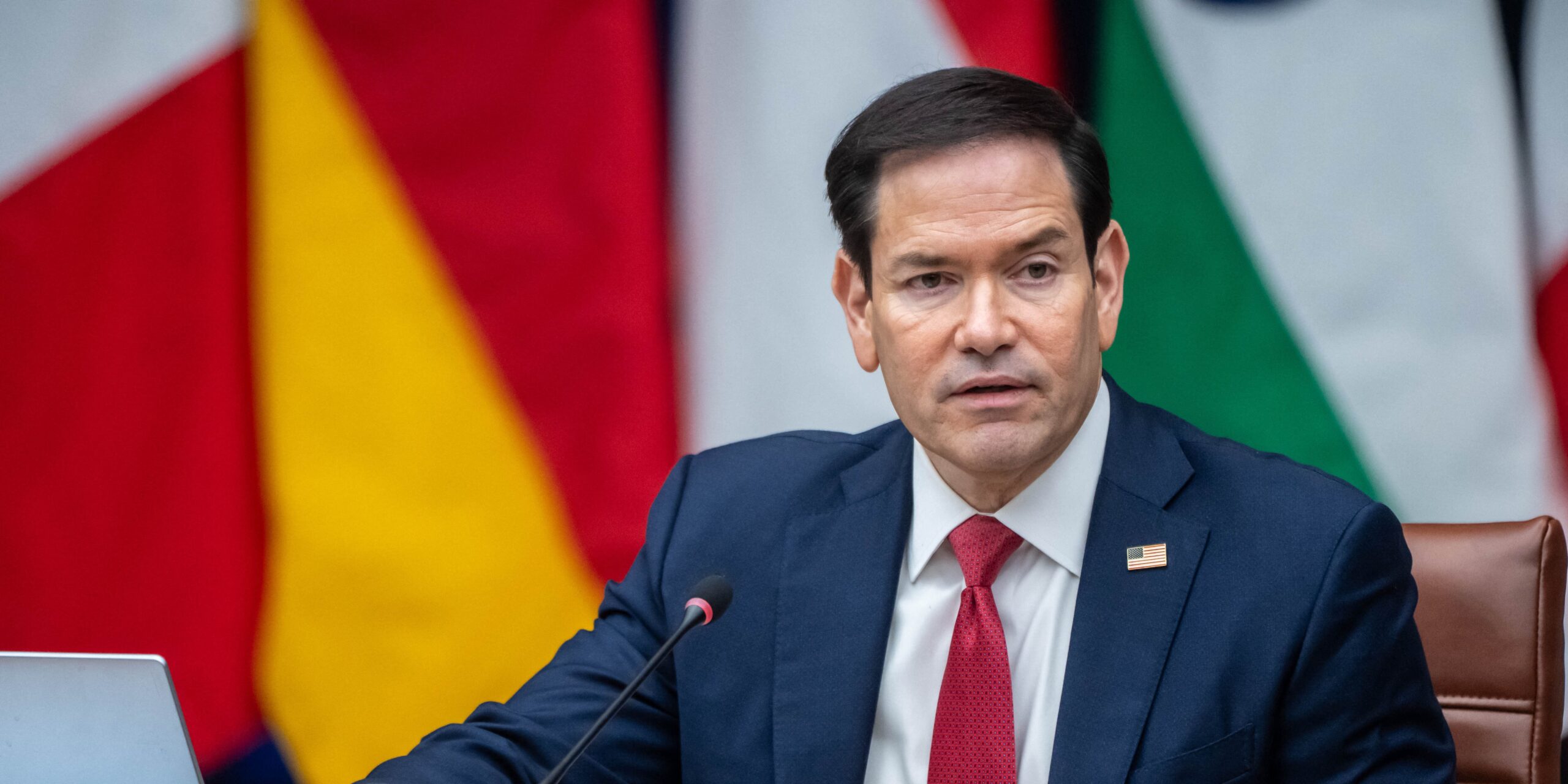
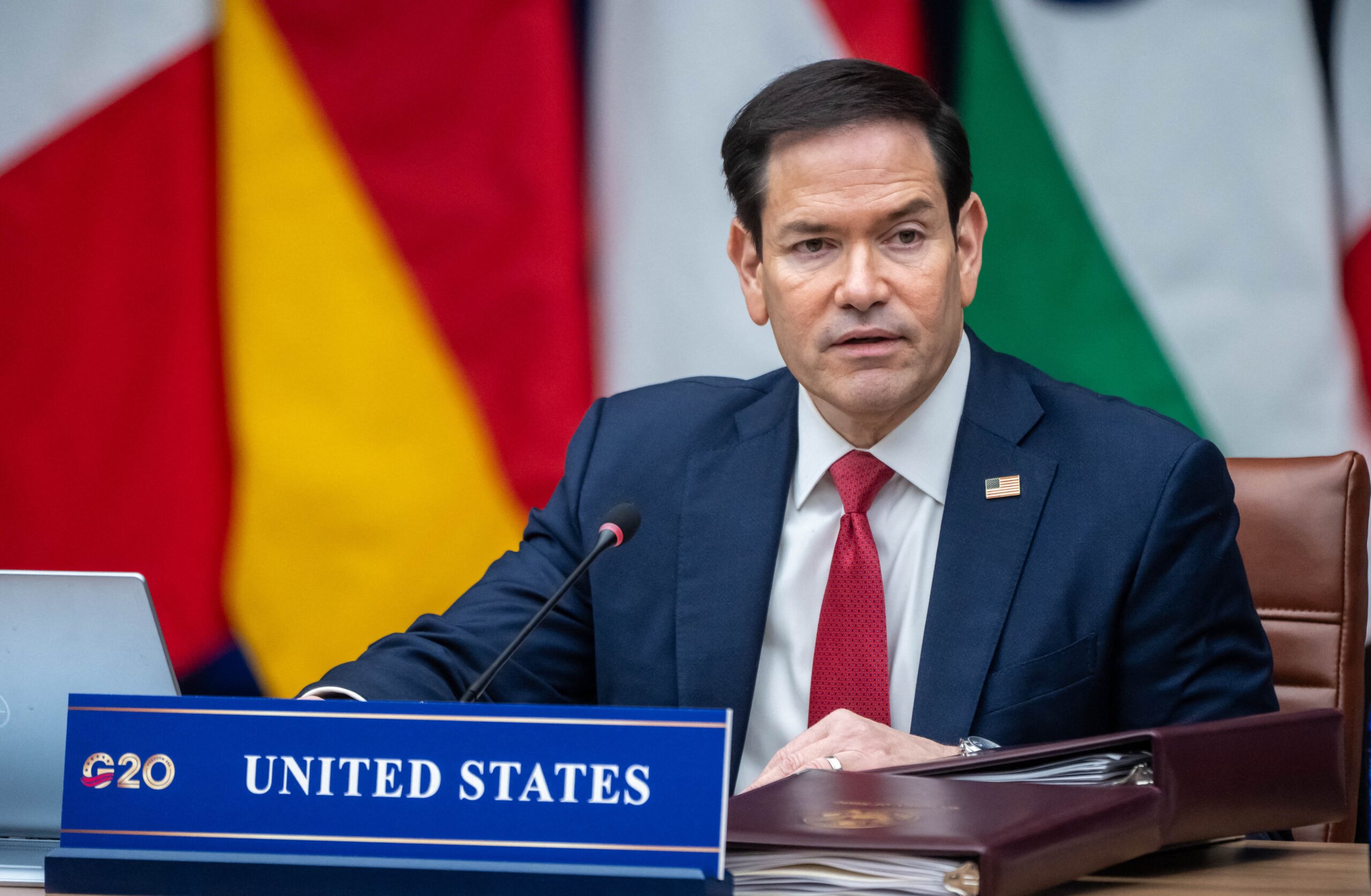
Secretary of State Marco Rubio speaks at the start of the G20 foreign ministers’ meeting on Oct. 30, 2026, in Atlanta.Photo: Michael Kappeler/picture alliance via Getty Images
Imperial ambitions are ever-shifting under President Donald Trump. Greenland, Venezuela, Iran, and Cuba are oftentimes spoken about as one continuous train of complete victories and soon-to-be-complete-victories. With the midterms fast approaching, and the date for an apparent telegraphed return to the Iran war on its heels, talk of easily overthrowing regimes has returned, if it ever truly left.
At a rally in Florida last Friday, Trump laid out his grand vision, which he promised would come to pass once the Islamic Republic is neutralized as a threat to the world: “We’re going to come back from Iran. Those beautiful ships will pass Cuba. We’ll have one of them stop about 50 yards off the coast. They’ll raise up their hands, and then we’re going to send Marco Rubio in to finish up the deal.”
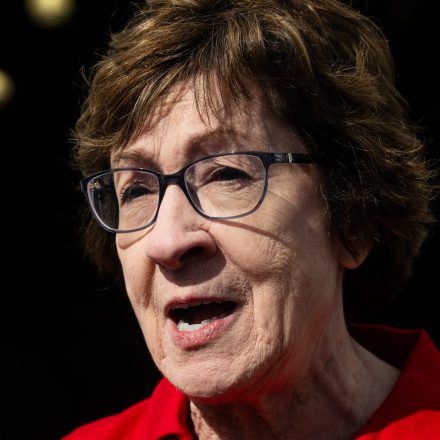
Secretary of State Marco Rubio, the descendant of Cuban immigrants who left under President Fulgencio Batista (though Rubio later tried to claim his parents fled Castro, who came to power three years later), has long put overthrowing the Communist government in Havana at the top of his agenda, with the hope of replicating the relative ease of kidnapping Venezuelan President Nicolás Maduro in January. Rubio turned some heads last Friday when he publicly posted on X that those seeking “to create positive change in Cuba” could “seize this opportunity to create the change you desire through a discrete [sic] partnership with the CIA.”
The post was widely met with bewilderment (Bloomberg’s White House correspondent wrote: “Checked like four times that this was real”), but U.S. officials and members of Congress also shared the post, elevating the public call for collaboration. Recruiting in public might come across as strange and out of character to a public that imagines the CIA recruiting secret agents and informants through clandestine channels or hidden websites, as the agency had done to try and recruit agents inside Iran under Bush and Obama.
But public appeals of this kind are not wholly new. Under the Biden administration, the CIA recruited collaborators inside Russia via a public Telegram channel, as well as publishing videos on social media hoping to recruit Chinese, Iranian, and North Korean assets.
This kind of overt recruitment stems from the difficulties Western intelligence agencies face against adversaries who have built sophisticated surveillance networks of their own. A CIA official told ABC News in May 2025, “in today’s world of [universal technical surveillance], we can’t recruit sources the same way that we did 20 years ago, probably the same way you did 10 years ago.” This has not only affected intelligence operations targeting Beijing, but also Tehran and Havana, where both the U.S. and Israel’s lack of on-the-ground connections and limited official presence has led the CIA and the Mossad to try to recruit willing informants online.
While these limitations may govern the particulars of this strategy, those in power in their respective countries may not see it as evidence of constraints, but instead as evidence of the power of their new strategy: boasting about their national power, rather than keeping it behind closed doors where it supposedly remains useless. After all, what is the use of a deterrent if nobody knows it was you?
The scale of these public appeals, despite having started under Biden, has exploded under the second Trump term, but these moves were arguably preceded by Benjamin Netanyahu’s efforts to bring the Mossad’s operations much more into the public sphere. The Israeli prime minister’s bragging about numerous cyberattacks targeting Iran’s nuclear program in the late 2010s began to precipitate a shift in public discussion of the Mossad’s work, with many Netanyahu allies, like then-Justice Minister Ayelet Shaked, praising the fact that Iran could now “know it is exposed and that Israel can reach anywhere in the Islamic Republic.” A former deputy director of the Mossad said after the unveiling of Iran’s stolen nuclear archive that Netanyahu’s move “goes against our nature,” and that “the prime minister insisted on publicizing this.”
Netanyahu’s pick in 2021 for the director of the Mossad, David Barnea, has been credited with institutionalizing that change, shifting the secretive intelligence agency’s operations toward appealing to larger masses, and reportedly concerning Mossad veterans who were shocked by the publicizing of agents inside Iran. Casting Israel as a superpower capable of exerting its power anywhere has become a popular refrain under Netanyahu. In an interview with “60 Minutes,” one Mossad officer said of the 2024 pager attacks in Lebanon, which injured more than 2,000 people, that “they are walking proof of our superiority all around the Middle East,” with another officer saying the operation’s complexity and success demonstrated “the world is our stage.”
The U.S. has also gotten in the habit of flexing its superpower status under Trump, declaring the nation’s intent to conquer places like Greenland and Canada, to steal the natural resources of Venezuela and Iran to fill American coffers, and to openly and unabashedly place the Western Hemisphere under a Washingtonian protectorate known as the “Donroe Doctrine.” Rubio declared in Greece in early October, speaking in terms of civilizational battle against the backdrop of the Acropolis, that “we choose the unapologetic pursuit of national power.”
Openly siccing the CIA on foreign adversaries and ICE on domestic ones has been part of that strategy of embracing imperial fervor at home and abroad. Erik Prince, the founder of Blackwater and a private security contractor who remains influential in Trump world, said he was “jealous” of the pager attacks and publicly urged the CIA to take a lesson from the Mossad, saying “we should be getting those kinds of results.”
While both countries have openly sought deep intelligence penetration in adversarial nations, there are limitations to the power of clandestine and overt operations, even by superpowers and wannabes. While the CIA asserted its power in May by openly having its director meet with Cuban officials in Havana to demand “fundamental changes” in return for relief from economic strangulation, the agency’s history of attempts to overthrow the Communist Cuban government are as storied as they are unsuccessful. Earlier hopes for Iran to be as quick and as clean as taking control of Venezuela’s government were dashed early on in the conflict, with the war that was supposed to only take a few weeks now all but certain to extend past the midterm elections for another devastating round.
Even if the war with Iran ends so easily that American ships are able to go through Cuba on the way back ready for more, both outside analysts and even internal U.S. intelligence assessments do not see as easy a way to overthrow the Communist state. The New York Times reported in August that American intelligence sources indicate it could be a situation closer to Iran, where even if Raúl Castro (who has held no official position in the country since 2021) were captured, “few pragmatic officials” are likely to take power in his stead.
While Cuba’s military lacks the kind of advanced equipment Iran has, and shows of readiness (like with Venezuela) are no indication of a country’s actual willingness to fight a protracted campaign, Cuba’s military structure is similar to Iran’s in that it is based on decentralization and redundancies in leadership. In addition, Cuba has a political power structure that, also similar to Iran, is not actually based around a single individual, despite popular claims to the contrary.
Despite Trump’s constant bluster about the miracle of being able to take out Maduro without a single American death, the brazenness of that operation, and the openness with which the negotiations with Iran have been deceptive, appear to have had lessons for the Cuban leadership. President Miguel Díaz-Canelsaid in June: “All these elements create a lot of distrust in the Cuban people when it comes to conducting any type of negotiation. We continue to express our willingness for dialogue, but it has to be a dialogue between equals, without pressure and with respect for our sovereignty.” American officials have yet to internalize that sentiment. Discussing Cuba in March, Trump joyfully mused: “Whether I free it, take it, I think, I could do anything I want with it.” At the time, he was saying similar things about Iran.
Top defense officials are expressing increasing worry about the vulnerability of U.S. bases around the world and even within the United States as cheap drone technology upends long-standing defense strategies.
The fear is mounting after a series recent attacks and threats against ground targets, including the destruction of key bases in the Middle East by Iran, plots against mega-bases in Europe, including to U.S. bombers at a British air base, and a Russian campaign that damaged European military facilities, according to two government officials.
While the Pentagon is notorious for inflating threats to press for additional funding, the officials stressed that the anxiety is real, not invented. Despite the U.S. military’s enormous budget, they say, the United States now finds itself scrambling strengthen its fortifications, protect its costly equipment, and recall personnel from some locations.
“Now all the world knows what the SecDef should have,” said one of the officials.
Foreign adversaries have taken notice of Iran’s ability to defeat U.S. air defenses using missiles and drones, they said. The officials drew specific attention to Tehran’s ability to damage or destroy bases that have been the key to U.S. power-projection and war-making for decades in the Middle East.
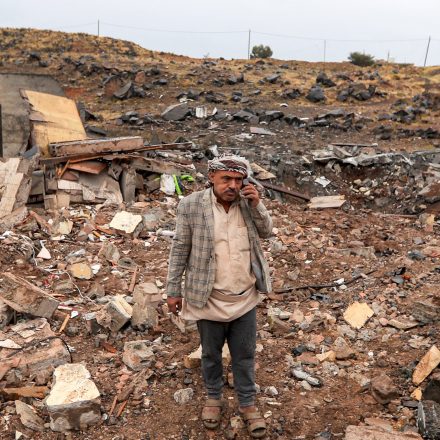
An Iranian missile and drone attack on February 28 destroyed Navy facilities in Manama, Bahrain, the region’s most critical logistics hub. The Combined Air Operations Center at Al Udeid Air Base, Qatar, was severely damaged by Iranian missiles early in the war, rendering it inoperable. Both were recently attacked again, raising questions about whether either will ever be rebuilt. The destruction of these bases has fundamentally altered America’s future force posture in the region, according to the officials. One of them called it a “seismic shift.”
On Friday, the Trump administration leaked highly classified intelligence to Fox News and Axios suggesting Iran has “substantially increased” efforts to target U.S. diplomats and other officials in the Middle East and beyond. The October 23 memo claimed that “the lethal plotting efforts by the Iranians against U.S. citizens have reached advanced stages.” A U.S. official confirmed the accuracy of the intelligence but questioned the motives of the “official leak,” suggesting it’s part of a case being built to justify renewing the failed war.
The leak came as the State Department ordered a further reduction in staff at multiple diplomatic posts across the Middle East, including in Jordan, Lebanon, Qatar, Saudi Arabia, and the United Arab Emirates. One of the officials said the move “definitely” spoke to America’s inability to defend its assets overseas. Those fears now extend to the United States, according to the officials.
Last month, buried in an unhinged address to troops in which he attacked the press and those within the military he calls beardos, weirdos, and wimps, self-styled War Secretary Pete Hegseth tacitly acknowledged the vulnerability of U.S. domestic bases, noting that the Pentagon was now “hardening every installation on American soil” against “sabotage and drones.” And last week, the Pentagon quietly began seeking advice on new ways to protect bases by using innovative advanced materials, camouflaging facilities, obscuring their thermal and electromagnetic signatures, hiding them underground, and making them more resilient in the face of successful attack by adversaries, according to a special notice issued by a top Pentagon official.
As the Pentagon refines this “base of the future” concept, Iran is teasing a “war of the future” effort that builds on its successes in throttling the Strait of Hormuz, regionalizing the war, and battering U.S. bases, according to Mahdi Mohammadi, a senior adviser to Mohammad Bagher Ghalibaf, the lead negotiator and speaker of Parliament. “The second generation of surprises will be on their way; at the time and place of our choosing, in the manner we have devised, and with the creativity that only our unparalleled fighters can muster,” he wrote on X, teasing how Iran would respond if America ramps up the war.
Iran’s successful attacks on U.S. bases have added to the growing realization that foreign adversaries, proxies, terror groups, and lone wolf actors can use low-cost, easily obtained drones to attack the military bases, aircraft, and military personnel of the U.S. and its allies.
While Iran dominated the headlines for months, officials became increasingly worried about danger from Russian attacks. “When do we stop calling it gray zone?” asked a third official briefed on the intelligence, referring to a Russian drone attack on a massive air freighter, used to carry military assistance to Ukraine, at Leipzig/Halle Airport in Germany in August. One drone hit the cargo plane but failed to explode, another struck a different aircraft, and a third was found near the airport. “That’s what Putin always does. He keeps testing us, pushing us, to see how far he can go,” said the official. That official and another said that the intelligence proved there was “no question” that Russia was behind the operations. Russia has denied responsibility.
The August drone attack was part of a monthslong campaign of nonstop sabotage, cyberattacks, and psychological operations against NATO nations. “These were happening in sequence from earlier in the year, through August, through September and they didn’t show any signs of stopping,” said the third official. But the attacks slowed or stopped after President Donald Trump announced earlier this month that the United States would buy Russian diesel in an effort to bring down fuel prices before the midterm elections and called on Ukraine to stop striking oil Russian refineries.
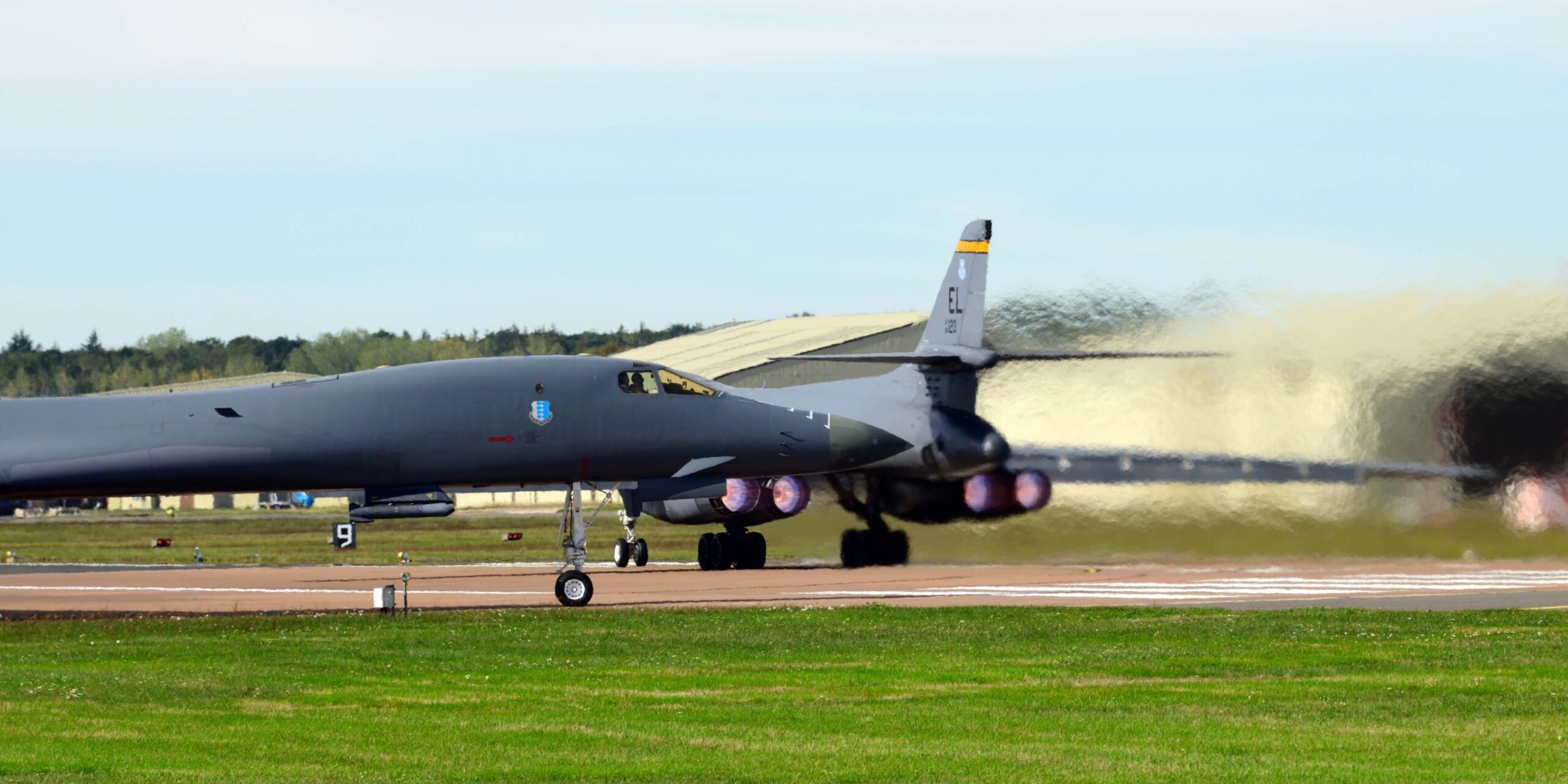
The officials noted that Pentagon leadership has been slow to respond to the changing nature of warfare, specifically drawing attention to tactics honed by Ukraine in its war with Russia. Earlier this month, for example, intelligence suggested that Iran’s Islamic Revolutionary Guard Corps was planning a complex drone attack on U.S. B-1 bombers used to attack Iran, and U.S. personnel at Royal Air Force Fairford air base. The plot, they said, was to launch small drones from just beyond the bases’ fenceline, attacking the supersonic bombers, which were not in hardened shelters but in the open on the tarmac. They noted that the plot appeared to be patterned on a Ukrainian attack, dubbed Operation Spider’s Web, against Russia last year. The plot so unnerved top military officials that the bombers were flown out while some aerial refueling aircraft were still being deployed to support their panicked flights back to the U.S. In addition to RAF Fairford, U.S. officials referenced additional threats against other bases in Europe, including Ramstein Air Base in Germany.
Last August, Hegseth established Joint Interagency Task Force 401 to deliver “C-sUAS” or counter-small unmanned aircraft system “capabilities to America’s warfighters, [to] defeat adversary threats, and promote sovereignty over national airspace.” But an inspector general report from January said “immediate attention” was required to protect the most critical bases in the U.S. against drones and noted that Pentagon “documents contradict one another and do not speak to certain aspects of C-UAS authorities and capabilities.” The IG found also that key “military installations, government-owned, contractor-operated facilities, and contractor-owned, contractor-operated facilities conducting critical missions” were not even designated for protection.
In March, small drones flew over Louisiana’s Barksdale Air Force Base, the home of Global Strike Command which oversees America’s bomber fleet and its intercontinental-ballistic missiles. And the IG report mentions “10 DoD installations and activities where Unmanned Aircraft Systems (UAS) incursions have occurred.”
Late last month, the Air Force awarded a contract for counter-drone systems for Joint Base McGuire-Dix-Lakehurst in New Jersey. The military has also been looking into drone-killing technologies to defend Yokota Air Base in Tokyo, Japan; Minot Air Force Base in North Dakota; Battle Creek Air National Guard Base in Michigan; and Shaw Air Force Base in South Carolina, among other facilities.
Two of the officials suggested that new Pentagon plans for military base modernization are rooted in an uneasy acknowledgment that U.S. outposts around the world — including within the continental United States — are increasingly vulnerable to complex and asymmetric attacks. A recent Pentagon inspector general report revealed Iranian strikes “damaged and destroyed hundreds of buildings and structures at U.S. bases in Kuwait, Bahrain, Qatar, UAE, Saudi Arabia, Iraq, Oman, and Jordan during the conflict.”
Hegseth’s office did not respond to multiple requests for comment by The Intercept.
One U.S. official told The Intercept that the cost of repairing and rebuilding these Middle East outposts could be “upwards of $50 million,” but said the “real cost” might be “far higher.” The Pentagon, however, refuses to disclose the price tag of the damage, which has only been shared in a classified briefing.
“The American people deserve to know the full cost of the Trump administration’s unauthorized war against Iran. Even if DoD has not yet determined which facilities it is planning to rebuild, disclosing these costs represents the bare minimum transparency DoD owes the public,” wrote Democratic Sens. Elizabeth Warren, Richard Blumentha, Mazie Hirono, Tammy Duckworth, and Gary Peters in a recent letter to Adm. Brad Cooper, the chief of Central Command. CENTCOM did not reply to a request from The Intercept for the total cost.
Last week, the Pentagon quietly began seeking information for “near-term” procurement and long-term modernization strategies to “move past traditional ‘pour-concrete-and-hope’ hardening” of its facilities and increase the “survivability of these installations under kinetic and multi-domain threats,” according to a special notice from the office of Dale R. Marks, the assistant secretary of war for energy, installations, and environment.
Following the destruction of NSA Manama and Al Udeid Air Base, the Pentagon is seeking ways to promote “operational capability and survivability under kinetic impact,” by employing decentralized energy grids, “autonomous backup utility systems,” innovative base layouts, and modular structures. Recognizing the need to “protect assets and personnel from kinetic impacts, thermal effects, and blast overpressures,” the military is looking at ways to harden facilities. This means employing advanced construction methods involving metamaterials designed for surviving air attack, energy-dissipating composites, self-healing materials, and “novel concrete formulations.”
The U.S. is also seeking ways to lower the profile or conceal the location of its bases through technological means. This includes camouflaging facilities and integrating them into the natural environment to make them more difficult to spot, masking their thermal and electromagnetic signatures, and creating decoy structures to draw fire.
Beyond the use of “terrain-integrated facility design,” the U.S. is also seeking to take its most sensitive facilities deep below ground. Increased vulnerabilities to aerial attack have led to a reemergence and increased reliance on subterranean warfare in the Russia–Ukraine war, harkening back to World War I trench warfare and the use of massive underground tunnel networks and bases by Vietnamese forces in the American war.
Iran, for its part, uses underground facilities to shield its missile and nuclear programs. The Pentagon, according to the documents, is interested in new methods of “high-speed tunneling,” the rapid creation of protected caverns, and “shock-isolated underground structural design[s].”
Last week’s quiet plea from the Pentagon follows an announcement by Hegseth of a FORTRESS America initiative that he calls a “national insurance policy for the American homeland.” One former Pentagon analyst, however, said it sounded more like “cutting America and Americans loose” in the event of a major conflagration, tying it to Hegseth’s belief that the military is a warrior elite superior to civilians.
“Every major military installation in America is going to generate its own power. Independent of the civilian grid. If an adversary takes down the grid by cyberattack, by sabotage, by any means, our bases stay lit. Our aircraft keep flying. Our command centers never go dark,” said Hegseth, explaining the FORTRESS concept. “We are building long overdue strategic reserves deep enough to fight through disruption. Think munitions. Fuel. Medicine. Blood. Deep enough that if the world’s supply lines break, and in a real war, they are going to break — America keeps fighting anyway.”
The former advisor said that Hegseth’s plan appeared to send a message to 99 percent of the American public: “It sounds as if he is saying to people ‘fuck off and you’re on your own.’”
During the Cold War, the Subic Bay Naval Base in the Philippines was a key enabler of U.S. military operations in the Pacific and beyond. It served as a critical support facility for the U.S. war in Vietnam and a transit point for U.S. weapons destined for American military personnel in the 1991 Persian Gulf War. That all changed in June of that year, when the Philippine Congress, under pressure from a grassroots anti-bases movement, refused to renew the lease for Subic Bay and other U.S. outposts in that nation.
After the closing of U.S. bases, military relations between the U.S. and the Philippines were conducted indirectly through arms transfers, joint training exercises, and deployments of Special Operations forces to aid Philippine counterinsurgency efforts, rather than by the permanent presence of tens of thousands of troops. The relationship was codified in 1999, when Washington and Manila entered into a Visiting Forces Agreement, which eased the movement of U.S. troops and equipment in and out of the Philippines and put U.S. personnel in the country under the jurisdiction of U.S. rather than Philippine authorities.
But now Subic Bay is back in play as part of a new expansion of the U.S. military presence in the Philippines. And this time around, private capital is financing these empire games.
Military Might Versus Human Rights
The long-standing U.S. military ties with the Philippines have come at a high price for the residents of that nation. Washington’s military and economic interests there have prompted it to look the other way as repressive leaders like Ferdinand Marcos and Rodrigo Duterte engaged in systematic human rights abuses against their own people.
To its credit, the Reagan administration eventually cut ties with Marcos — who was overthrown through peaceful protests known as the “People Power” revolt in 1986 — throwing its support behind his democratically elected opponent, Corazon Aquino. But there was no such shift with respect to Duterte, whose regime ruled the Philippines from 2016 to 2022, and engaged in extrajudicial killings of thousands of Filipinos, including journalists and land reform activists, all under the guise of a “war on drugs.” Duterte is now under indictment by the International Criminal Court, which has cited him for “the crimes against humanity of murder and attempted murder.”
While Marcos and his family fled the Philippines in the 1980s, his son — Ferdinand Marcos Jr. — returned and, in 2022, won the presidency in a landslide, in part by promising to continue some of the strongman policies introduced by Duterte. According to Human Rights Watch, since the younger Marcos took office:
Serious human rights violations have continued in the country largely unabated, including arbitrary arrests, extrajudicial killings and enforced disappearances by security forces. The murderous ‘war on drugs’ has continued, though with fewer killings. Leftist civil society activists, journalists, environmentalists, Indigenous leaders, trade unionists, and left-wing politicians remain under serious, at times deadly, threat.
During the Biden presidency, the U.S. expanded a 2014 pact — the Enhanced Defense Cooperation Agreement — which gave the U.S. military access to five major sites in the Philippines. In 2023, the number of bases was expanded to nine. The State Department has described the scope of the EDCA as authorizing “U.S. forces access to agreed locations in the Philippines on a rotational basis, for security cooperation exercises, joint and combined military training activities, and humanitarian assistance and disaster relief activities.” That official summary fails to admit the real reason for the signing of the EDCA: to give the U.S. access to territory that can be used in a future war with China.
The Privatization of Subic Bay
Building on his predecessor’s enhanced cooperation with the Philippines, President Donald Trump, who had been a staunch Duterte supporter, has pursued even tighter ties with Marcos’s government. This has been driven, in significant part, by the desire to use the Philippines as a platform for potential U.S. military interventions in the Pacific region and further economic penetration of Asia.
As part of the accelerating security partnership between the U.S. and the Philippines, military activities at Subic Bay have resumed. But this time, formal access has been secured by a private investment firm, Cerberus Capital Management, which controls the area through a 50-year lease granted through collaboration with a Philippine company, Agila.
A report by the New York Committee for Human Rights in the Philippines, a member of the International Coalition for Human Rights in the Philippines, summarized current activities at Subic Bay:
In mid-2025, the U.S. Congress approved a plan to build a forward operating base and ammunition production facility in Subic Bay. It is projected to be the world’s largest weapons hub. … The shipyard [is home to] HD Hyundai Heavy Industries, deep sea fiber optic data cables manufacturer Sub Com, defense contractor V2X and the Philippine Navy, which operates a portion of the facility.
Cerberus has strong ties to the Trump administration, first and foremost through its founder, Stephen Feinberg, who is deputy secretary of the Department of War, second in command at the Pentagon behind Pete Hegseth. In that role, Feinberg oversees the Pentagon’s Office of Strategic Capital, which makes loans to military tech companies, many of which are current or former Cerberus clients.
Feinberg “earned” his position the old-fashioned way — by giving millions to Rebuilding America Now, a super PAC devoted to supporting Trump, and hosting a $50,000-a-plate fundraiser, the proceeds of which also went to support candidate Trump in 2016.
Bloomberg News has identified four other former Cerberus executives now in key positions at the Pentagon: David Lorch, director of the OSC; George Kollitides, a special government employee who is simultaneously a director of D. Boral Acquisition, a company that brokers mergers and acquisitions in the weapons sector; and senior Pentagon advisers John Gallagher and Tom Rakusan.
On the other side of the revolving door, Cerberus has hired major Republican figures like former Treasury Secretary John Snow and former Vice President Dan Quayle, who serves as chair of the company’s global investment unit. Given these connections, the Pentagon is all-in behind Cerberus’s activities in the Philippines. But this has prompted a backlash. Activists in the Philippines and beyond are speaking out against the role of Cerberus, calling for public pension funds to withdraw their investments in the company for underwriting the militarization of the Philippines.
Another important avenue of increased cooperation between the U.S. and the Marcos government is the Philippines’ participation in Pax Silica, a U.S.-initiated cartel that the State Department describes as its “flagship effort on AI and supply chain security, advancing new economic security consensus among allies and trusted partners.” And by “supply chain security,” the declaration primarily means “reducing dependence on China” for critical minerals needed to feed and sustain the computing power now central to the Pentagon and the U.S. arms industry.
In addition to the Philippines, there are 24 other participants in Pax Silica, including two other key Asian partners, India and Japan, as well as Taiwan, which is an associate member of the cartel. Jacob Helberg, a former adviser to military tech giant Palantir who now serves as the State Department’s point person on Pax Silica, has stressed that the initiative goes well beyond just securing the supply of specific critical resources. “If the 20th century ran on oil and steel, the 21st century runs on [computing power] and the minerals that feed it,” he said. “This declaration [announcing Pax Silica] hails a new economic security consensus ensuring aligned partners build the AI ecosystem of tomorrow — from energy and critical minerals to high-end manufacturing models.”
The China Syndrome
Although it supplies many other benefits to U.S. corporations and America’s national security state, the enhanced effort to bring the Philippines more securely into the U.S. military, political and economic orbit is all rationalized as moves toward reining in China’s economic and military power and garnering Manila’s support in a possible war between China and the U.S.
The policy of economic warfare and aggressively preparing for a military conflict with China could not be more misguided. The oft-cited “need” to posture U.S. forces to do battle with China over Taiwan ignores the fact that there are diplomatic means of preventing such a conflict.
What is needed is a joint understanding on the status of Taiwan. For over 40 years, peace in the Taiwan Strait has been maintained through the U.S.–China agreement that Washington will not take steps toward recognizing Taiwan as an independent state and China would agree not to resolve the issue of Taiwan by force — the so-called “One China” policy. That agreement has been weakened by actions taken during both the Biden and Trump administrations. The simplest and best way for Washington and Beijing to avoid a war over Taiwan would be to revert to the “One China” policy.
Using trade wars and military buildups as the primary U.S. tool for influencing China simply will not work.
China does not pose a direct military threat to the United States. Its last major war was its invasion of Vietnam in 1979, a conflict in which its troops were badly beaten by battle-hardened Vietnamese forces. The U.S. also spends almost three times as much on its military as China does, and is far ahead of Beijing in numbers of advanced combat aircraft, naval firepower, and nuclear weapons.
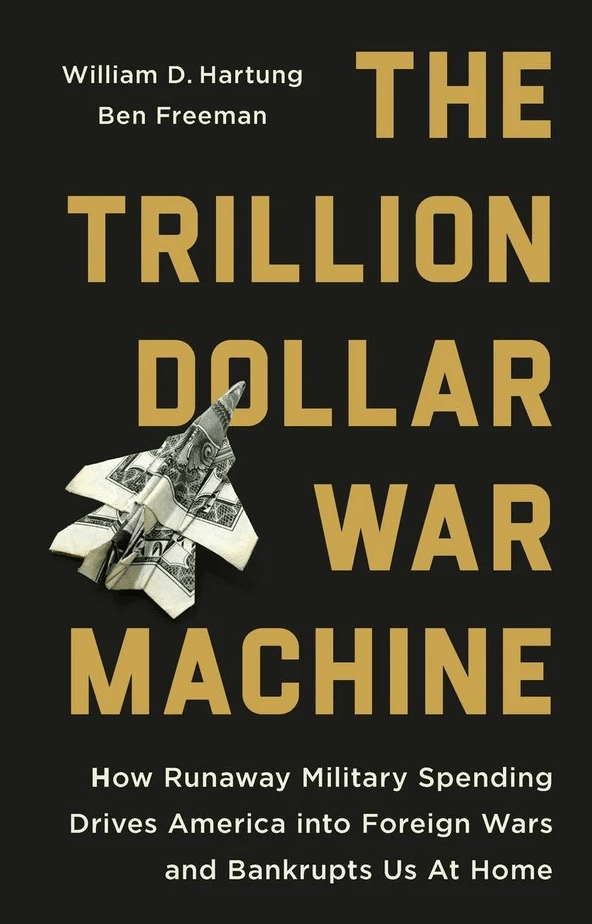
“The Trillion Dollar War Machine,” by William D. Hartung and Ben FreemanAvailable on Bookshop.org
In areas where China might be a peer competitor with the U.S. military, like AI-driven weapons, there need to be some rules of the road on how such systems can be used. Using trade wars and military buildups as the primary U.S. tool for influencing China simply will not work. The likely result of persisting in such an approach will be a dangerous arms race and an increased risk of outright war.
A more productive approach to U.S.–China relations would be to seriously explore cooperation on central issues like arms control, addressing the climate crisis, and stabilizing the global economy. There would still be a U.S. military strategy for the Asia–Pacific region, but it should be genuinely defensive in nature, a posture that could save hundreds of billions of dollars in the years to come.
Pursuing a more balanced policy toward China would open the way to developing more equal, less exploitative relations with the Philippines and other nations in the Pacific, and it would allow Washington to finally take a genuine interest in promoting human rights and opposing repression as central pillars of U.S. international relations.
At a time when armed conflict and threats of war are the bedrock of U.S. policy, from the Western Hemisphere to the Middle East, a shift toward diplomacy seems daunting. But it is the only way forward if we want to move toward a more peaceful world where no one nation or group of nations dominates, and where corporations aren’t bending foreign and domestic policies to their will.
Angelina Resendiz’s voice on the phone was frantic. She was calling a friend from the barracks room of Jermiah Copeland, a fellow sailor at Naval Station Norfolk in Virginia. They had spent the evening together, kissing and drinking, and now Resendiz, 21, needed to leave.
It was the last time anyone would hear from her. When Resendiz’s friend arrived at the barracks 15 minutes later, the pair was nowhere to be found.
“The Navy failed her,” Resendiz’s mother, Esmerelda Castle, told The Intercept. After her daughter’s disappearance, friends and family spent a week scrambling to find Resendiz. Castle found the Navy’s reports in that time unclear, delayed, or downright false.
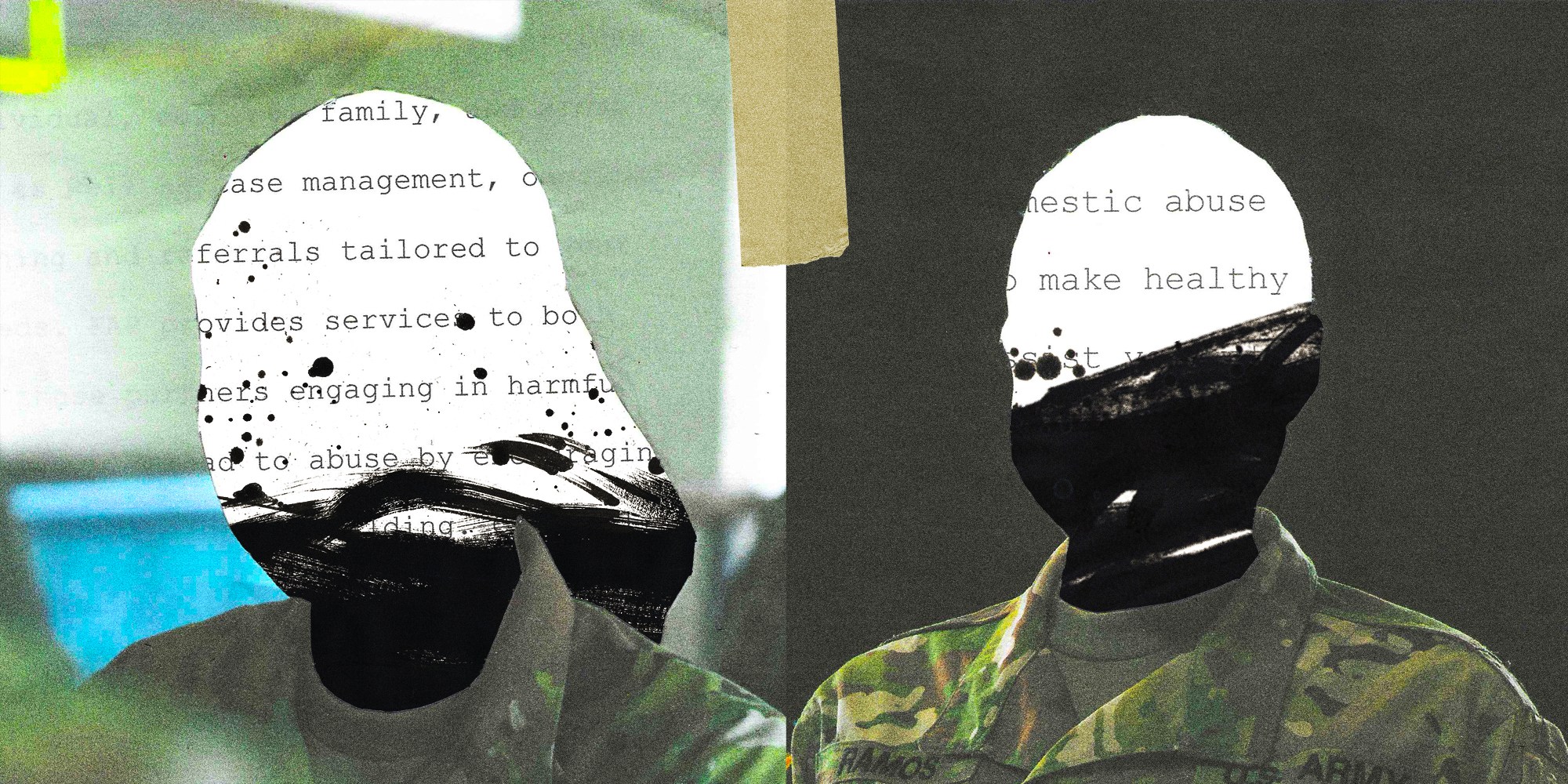
A first-of-its-kind Intercept investigation has found critical shortcomings in the U.S. military’s procedures for documenting and preserving records of homicides that result from domestic abuse, including intimate partner violence. The Pentagon’s mandated reports to Congress appear to substantially undercount these killings, omitting nearly half of cases.
In the six years before Copeland’s murder of Resendiz, the Pentagon recorded 41 domestic abuse-related homicides committed by service members. The Intercept identified nearly twice as many: at least 73 potential cases involving 79 victims — almost all of them women — during the same period. Reports for fiscal year 2025, when Resendiz was murdered, are due in November.
The Intercept examined publicly available news articles, obituaries, court records, memorials, and other data to investigate the specifics behind the Defense Department’s numbers. Reporters also used data obtained through a Freedom of Information Act request on Army noncombat fatalities to match names, because some news coverage did not mention the victims’ and alleged perpetrators’ military service.
A killing qualified for the dataset if it occurred in fiscal years 2019 to 2024; if the perpetrator was a member of the military at the time of the crime; and if the case involved a homicide. The database only includes cases where a victim of the violence had dated or was in a romantic relationship with the suspected perpetrator, and it includes multiple women living abroad who were foreign citizens dating American troops.
In the fiscal years since the second Trump administration took power, The Intercept found at least 10 service women or women working for the Defense Department have died from intimate partner and domestic violence, six of them killed by male co-workers. An additional 10 civilian women have been killed by male military personnel in intimate partner violence-related homicides during the same period.
A Pentagon spokesperson acknowledged The Intercept’s queries about the discrepancy in homicide rates but did not respond to detailed questions before publication.
“At this moment in our country’s history, I am afraid these numbers are going to increase even further,” said Jacquelyn Campbell, a professor at Johns Hopkins University’s School of Nursing who has been studying domestic violence in the military for decades. “We need primary prevention for everyone in the military and their partners.”
The findings come in the wake of President Donald Trump’s August announcement of a Military Spouse Commission, led by Jennifer Hegseth, the wife of Defense Secretary Pete Hegseth, and other high-level military leaders. The commission’s mandate is to guide policy around issues affecting military families. Though intimate partner violence and spousal abuse have concerned military family advocates for decades and thousands of new cases are reported each year, the commission does not mention the issue as one of its areas of focus.
The Navy and DoD have said in public statements and communication with members of Congress and Castle that while “proper procedures were followed” following the death of Resendiz, they have identified several processes that require further review.
“What Are the Statistics?”
Copeland killed Resendiz on May 29, 2025. In the days after Resendiz’s disappearance, her friends filed missing person reports and called Castle in Texas, who in turn called the Navy. None of them knew that Resendiz was dead.
The Navy’s official timeline of events says it did not start investigating her disappearance as a crime until a missing person’s report was filed on the 31st, and that Castle did not reach out until that day. Phone records she shared with The Intercept and members of Congress show she started calling on the 29th.
“I was told she was found, and that the original missing person’s report was exaggerated,” Castle recalled. “I didn’t think for a second that the Navy would lie to me.
“I was told she was found, and that the original missing person’s report was exaggerated.”
Technically, Resendiz had been found — a Navy chief searching for her had seen Resendiz’s body packed under the covers in Copeland’s bed around 10 a.m. on the day of her disappearance. They assumed she was asleep, according to evidence later revealed during trial. But as Castle tells it — including in a congressional inquiry she wrote requesting a deeper investigation— a Navy chief claimed on the phone to have spoken to her daughter in Copeland’s room.
She had been dead for hours.
“He had Angie wrapped up in a blanket on his bed,” said Castle. “It was against policy for her to be in the barracks. And they just turned their backs and left.”
Intimate partner violence in the military has long been a problem with unclear signs of progress. Killings in the 1990s on bases such as Fort Campbell made national headlines, leading Congress to establish the Defense Task Force on Domestic Violence in 2000.
Campbell, the nursing professor, was part of the effort, which issued over 200 suggestions for improvement by 2003. “Most of the recommendations we made a long time ago were never implemented,” she said. For one, she’d repeatedly requested better recordkeeping.
“One of the things I kept asking was, ‘What are the statistics on intimate partner homicide in the military?’ We could never get them,” Campbell said. “And in the military’s suicide reports, you cannot determine how many suicides were part of homicide–suicides, where a service member killed a civilian wife or partner before killing himself.”
This lack of clarity sounded familiar to Priscilla Rodriguez, who spent 10 years in the Marine Corps before working in strategic communications for the Navy.
“The command chose not to pursue military legal action.”
Rodriguez experienced domestic violence that met the Defense Department’s criteria from her husband, an active-duty Marine at the time, according to documents reviewed by The Intercept. Her husband pleaded guilty to misdemeanor child abuse in civilian courts, and military legal authorities recommended domestic violence charges. “The command chose not to pursue military legal action,” Rodriguez said.
The Intercept’s analysis of the rates of domestic abuse reported in Pentagon data found intimate partner violence among married military couples was at least four times higher than the civilian rate. The Pentagon does not report the rate of abuse involving unmarried intimate partners, like Resendiz and Copeland.
Gaps like these make it difficult to have a thorough reckoning of the problem’s scale. “When accountability is inconsistent,” Rodriguez said, “it sends a message that abuse can and will remain hidden.”
Defense Secretary Pete Hegseth serves Thanksgiving meals to service members in Washington, D.C., on Nov. 28, 2025. He was joined by his wife, Jennifer Hegseth.Photo: Master Sgt. William Blankenship/U.S. Air Force photo Joint Task Force DC
“I Knew My Kid Was Not Coming Back”
Copeland kept Resendiz’s corpse hidden in his barracks room for four days, until June 2, 2025, when he put her body into a duffel bag and dumped it in a wooded area behind a nearby elementary school.
By then, he was being questioned by the Naval Criminal Investigative Service on her whereabouts, and Castle was still wondering about her daughter’s safety. She’d asked naval authorities to have her daughter give her a call, and when it never came, she contacted the base again.
A Navy official suggested her daughter may have gone AWOL.
“I didn’t believe that,” Castle said. “My kid is scared to miss work. She won’t take off.”
Castle flew to Virginia herself.
Resendiz had been dead for a week. Castle felt she wasn’t getting the information she needed after the Navy and local authorities had put out a statewide missing person’s alert. She requested that she be let into her daughter’s barracks room.
“I didn’t want anyone else touching her stuff,” Castle said. “It was how she left it. There was still paint out; she had started painting again. Her yoga mat was still out. She had planned on returning. I knew my kid was not coming back.”
She spent two more days in Virginia searching for her daughter, talking to local news, and asking naval authorities to give more updates.
“They didn’t declare her AWOL or dead,” Castle said. “They said she was duty status unknown. I was worried they were going to wash their hands of her.”
On June 7, Castle flew back to Texas. Police found Resendiz’s body in the duffel bag two days later.
A History of Violence
Jermiah Copeland was convicted of Resendiz’s murder on June 8, 2026. According to evidence entered into court records in his murder trial, he had also been accused of two instances of domestic violence, three sexual assaults, indecent recordings, and other crimes from during and before his Navy service.
“He had a history of violence against women starting in high school,” Castle said. “And was still allowed to join with the charges against him. Then he was accused of raping another service member, and he was transferred. There were no safeguards in place at the new command.”
The absence of safeguards against intimate partner violence in the military is part of a broader set of structural and cultural failings, experts told The Intercept.
“There are many disincentives for a couple, particularly when one or both partners are on active duty, to seek help,” Campbell said. “Active-duty women who were being abused told us: ‘If my commanding officer knew, I would never get the next promotion.’ There is considerable stigma, even for the victim. That makes the violence much more likely to escalate and makes it more likely that we eventually end up with homicides.”
A previous Intercept investigation found active-duty Army women were more likely to be killed by fellow service members than by enemy combatants and had a higher per capita risk of homicide than their fellow male soldiers between the years 2011 and 2025.
More than 70 percent of the victims had an intimate relationship with the perpetrator at some point. Army women faced an intimate partner homicide rate at least three times higher than women nationally; controlling for those killed by service men and male veterans alone, it was double.
The military’s systems for identifying and responding to abuse, meanwhile, have come under repeated scrutiny. A 2021 Government Accountability Office report found the department “has not collected and reported accurate data for all domestic abuse allegations received,” leaving it unable to assess the scope of alleged abuse.
The same can be said for homicides.
Almost a third of the 79 victims The Intercept found were killed in murder–suicides. Firearms were used in over two-thirds of the fatalities. Twenty-five of the victims were service members. Multiple homicides involved corollary victims who were not partners, including children, who research shows make up a sizable amount of intimate partner violence-related deaths.
In response to The Intercept’s questions, the Department of Defense stated that data in its domestic abuse reports does not constitute estimates, as it is only using aggregated data from the Family Advocacy Program Central Registry, a database run by the DoD. It further stated it did not have any more information to share on the matter.
“Right now, unless an incident is reported to the Family Advocacy Program,” said Campbell, “nobody knows about it. Those reports are only the tip of the iceberg.”
Data tracking failures have had deadly consequences. The Air Force failed to submit the criminal history of a former service member convicted of assaulting his wife and stepson to a federal database that could have prevented him from purchasing firearms. In 2017, he killed 26 people in Sutherland Springs, Texas.
When Rodriguez reported her own abuse to the DoD, she felt that they didn’t consider the previous information they had available. Installation-level committees review reported allegations and determine whether they meet criteria to be input into the central registry. But the process is plagued with issues, experts who spoke to the Intercept revealed, from investigation procedures to data tracking.
“I was terrified to disclose the full extent of the abuse I was experiencing,” Rodriguez said. “What stands out to me now is that the Family Advocacy Program already had access to my husband’s history. Given that history, I believe the conversation should have been much broader than simply asking whether I wanted to report anything. I left that initial interaction without understanding what support existed or how I could safely leave.”
While navigating her own case, Rodriguez was also watching the same problem surface through her communications work for the Navy.
“It felt completely disconnected from the reality my family and so many others were living.”
“Headlines I monitored involved active duty and Marine veterans accused of intimate partner homicide,” Rodriguez said. “At the same time, I reviewed serious incident reports that were elevated to senior leadership. … The narrative often indicated that intimate partner violence or domestic violence was a contributing or co-occurring factor.”
Navy criminal investigative data showed domestic violence-related deathsincreasing as Rodriguez was trying to raise the issue in 2022. She tried to compile domestic violence awareness resources, but she recalled being told the need wasn’t there.
“I was told there was ‘no demand signal,’” Rodriguez said. “It felt completely disconnected from the reality my family and so many others were living.”
Castle feels that the knowledge of Copeland’s history of abuse could have saved her daughter’s life.
“No one knew anything about him,” Castle said. “The leadership created an environment that allowed him to harm women.”
Winnable Cases
Since her daughter’s murder, Castle has been at work pushing the Navy and Defense Department to strengthen their responses to intimate partner violence. Her work led to the Navy changing its policies in July on how it transfers sailors with allegations of sexual violence.
Her wins, including potential plans by the Navy to change how it classifies missing sailors, are the latest in a long string of limited efforts toward progress.
“Records are important,” said Castle. “With my daughter, they didn’t want to classify her case properly at first. For the military, if something isn’t in a database, it doesn’t exist.”
Following the high-profile 2020 murder of Army Spc. Vanessa Guillén at Fort Hood — and two years after domestic violence became classified as a crime under the Uniform Code of Military Justice — Congress gave independent military prosecutors the power to decide which cases to bring to trial.
And while domestic violence prosecutions increased, military prosecutions of sexual assault — often related to intimate partner violence — fell by almost 60 percent in the past five years, based on data from its annual sexual assault prevention reports. A 20 percent drop occurred from 2024–2025 alone, and The Intercept’s analysis of military court data shows the trend is continuing into 2026.
“In the Pete Hegseth era, sexual assault prosecutions have dropped significantly. Domestic violence is essentially filling that gap,” said Paul Newell, an Army veteran and activist who tracks military suicide, sexual assault, and domestic violence while engaging with members of Congress on the issue.
“In the Pete Hegseth era, sexual assault prosecutions have dropped significantly.”
Newell thinks the trial counsel’s office is “going for what they feel are stronger, more winnable cases,” he said. “They’ll tell you that their conviction rates at trial are still high, which shows that really, they’re just getting rid of the bad cases,” he said. “But we’re not down 60 percent in sexual assaults happening.”
The Pentagon stated in response to The Intercept’s questions that it does not have any additional information to share on why prosecution rates for certain crimes are dropping.
The Intercept also discovered preferential treatment in trial outcomes: Analyzing over 650 military court cases with guilty verdicts from 2021 on, reporters found less senior Navy, Marine, and Army service members had higher chances of losing their benefits and received more jail time after being convicted for domestic violence. Senior ranks closest to retirement received the best conviction outcomes, even compared to those of the same rank as them who had fewer years in service.
Newell feels that these discrepancies give perpetrators increased power over their victims. “The justice system should not take time in service into consideration since that’s prioritizing the perpetrator. If the punishment for domestic violence is a discharge where you lose benefits, it should be applied equally.”
In April, Hegseth directed installation commanders to allow service members to request permission to carry privately owned firearms on bases while off duty. He framed the change as a way to protect service members from attacks on military installations.
Campbell disagrees.
“I have reviewed far too many domestic violence homicide records,” Campbell said. “It is clear to me that, in many cases, there might have been a fight, and somebody might have been hit, but nobody would have died if there had not been a gun right there.”
Rodriguez, who is now studying public health, is calling for recurring anonymous surveys using specific questions to measure the prevalence of intimate partner violence, standardized tracking, independent evaluation, and public reporting.
Castle is still mourning her daughter and still pushing the Navy to reveal the full details about the investigation into her death. To add to the insult, she remembered the shock she felt late last June, when the Navy sent Resendiz home to Texas in a casket. Naval officials had told Castle that everything was taken care of, she recalled, including cleaning the body.
The Navy acknowledges that it failed to clearly inform Castle of her daughter’s true state. She was returned to Texas in decay, her body crawling with maggots.
“There’s nothing that can be done for her,” said Castle. “That’s injustice, and that’s what drives me. None of these women volunteered to be violated in this way.”
How we analyzed the data
Reporters searched through multiple databases to identify the number of potential victims of intimate partner violence, using definitions provided byhealthandpolicy researchalongsidegovernment organizations, comparing it to the last six years of available DoD reporting from 2019 through 2024.The case of a U.S. Air Force airman whokidnapped and murdered a Mennonite womanin 2020 didn’t meet criteria because evidence revealed no previous or current relationship. The case of a soldierwho was convicted a year laterof the murder of a woman in Texas did,as evidence indicated they had a relationship before the woman’s death.
Cases were broken down by the year of the offense, gender of the alleged perpetrator and victim, and branch of the perpetrator and victim, if applicable.
To analyze court data, reporters from The Intercept pulled all court cases pertaining to domestic violence from the years 2021 to 2026 from the websitesof the Air Force,Navy/Marines, andU.S. Army. Navy/Marine data was only available starting in 2021.
Data included the offense type, rank of the accused, and whether the cases ended in acquittal, dismissal, or conviction. For those convicted, the analysis included the amount of jail time given and whether offenders received a punitive discharge, which costs them military retirement and other benefits.
Retirement eligibilitywascalculatedbased on pay information provided in court documents, which in the militaryis based on years served. Air Force data could not be used for this analysis due to a lack of documentation and apparent discrepancies between thenumber of cases reported to Congressand those available on the Air Force portal.
To obtain the number of cases the DoD is prosecuting for sexual assault, reportersutilized Annex Bof the DoD’s Annual Report on Sexual Assault in the Military to calculate the number of unrestricted reports made to military authorities and the amount sent to the military justice system to begin the judicial process.
The 988 Suicide & Crisis Lifeline offers 24-hour support for those experiencing suicidal thoughts or for those close to them, by chat, text, or telephone. Service members can dial 988 and press 1 to reach the Military and Veterans Crisis Line. Support is free and confidential.
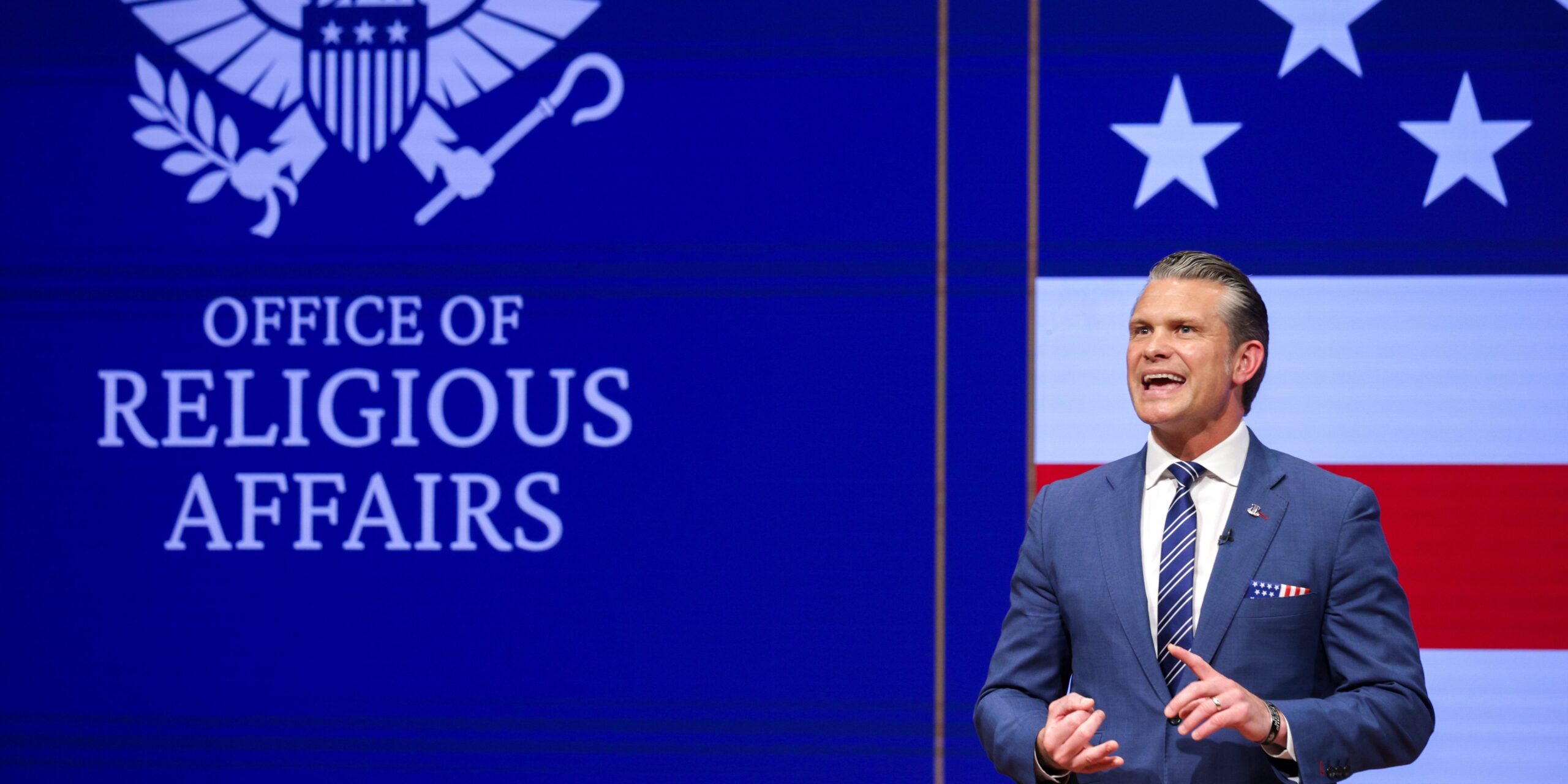
Defense Secretary Pete Hegseth has extended a line for the military’s religious leaders to reach him directly — and current and former military chaplains say they don’t want it.
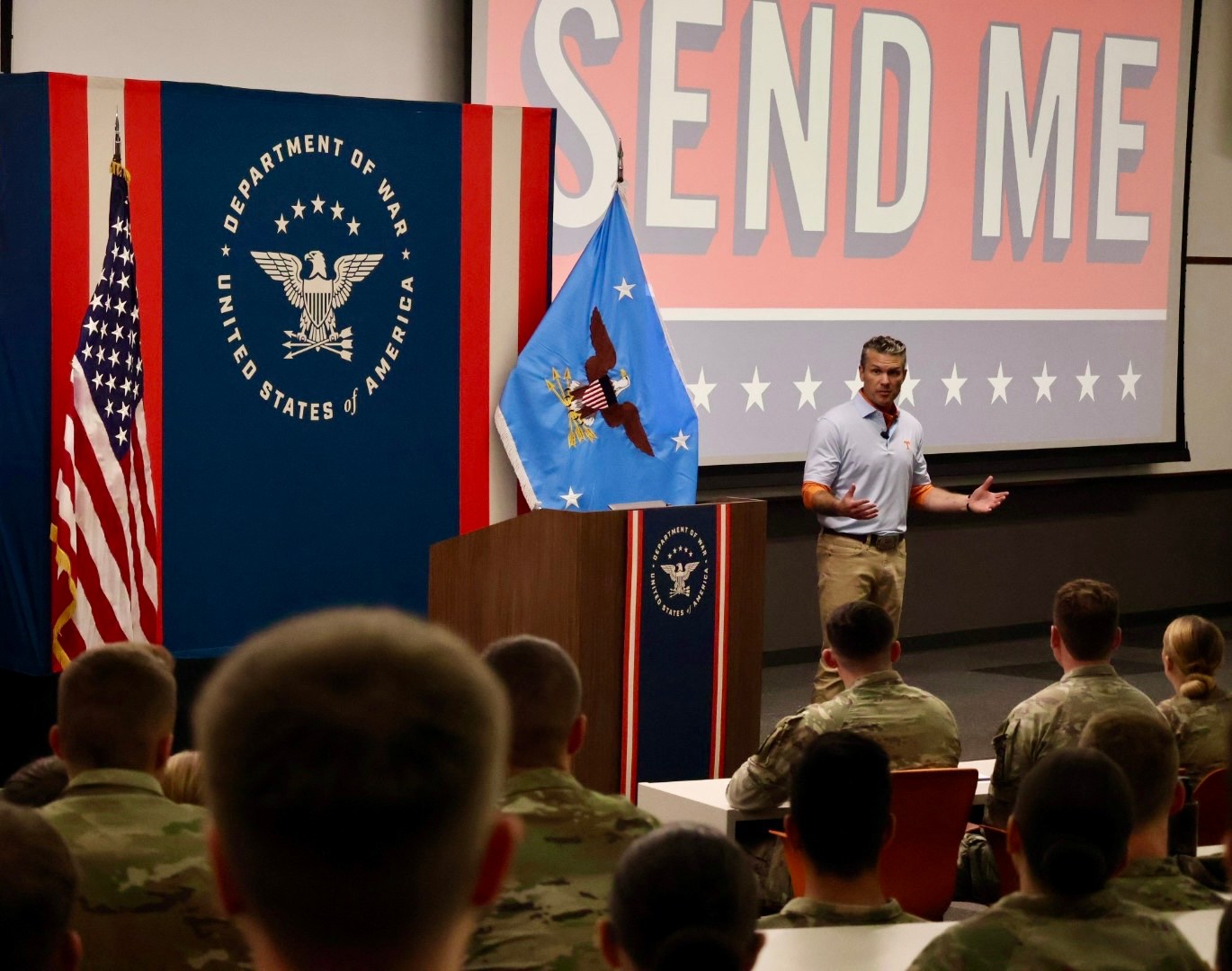
Hegseth announced the creation of a new Office of Religious Affairs on September 30, vowing that the office would give members of the armed forces’ chaplain corps access to him without “bureaucratic dilution.” It coincides with his openly Christian “Send Me” campaign, an online propaganda effort that the Pentagon launched over the summer promoting a biblical phrase widely understood as a vow to accept a divine mission.
“We should not be in the business of wrapping the state’s mission in one particular religion,” an active-duty Army captain serving as a non-Christian chaplain told The Intercept. But as Hegseth’s Pentagon increasingly pushes Christianity, the chaplain, who was granted anonymity because he feared retaliation from the Defense Department, said he and other non-Christian chaplains worry the new religious affairs office will be used to do just that.
Hegseth’s body bears an assortment of Christian and Crusader imagery, including a Jerusalem cross across his chest and the Latin phrase “Deus vult,” or “God wills it,” on his bicep — a battle cry associated with the medieval Crusades that has since been adopted by far-right extremists. His forearm bears a cross and sword referencing Matthew 10:34, in which Jesus declares that he came not to bring peace but a sword, alongside the Hebrew name for Jesus. In 2021, a fellow National Guard member flagged Hegseth as a potential security threat over his Deus vult tattoo, before Hegseth was removed from an assignment protecting Joe Biden’s inauguration.
As defense secretary, Hegseth has frequently turned to messaging that centers religion and vengeance while promoting the U.S. and Israel’s unpopular war in Iran. His “Send Me” campaign is built around Isaiah 6:8, a biblical verse commonly invoked by Christians as a call to serve God. During his 9/11 speech last month at the Pentagon, Hegseth said the “struggle against evil” that followed the attacks continues today and “will continue until Judgment Day,” before turning to the current war with Iran.
“Using specific scriptural language for a military campaign inappropriately frames state-sanctioned armed conflict and government service as a Christian religious crusade,” the chaplain said. “Once a mission is declared God’s will, every act inside it is sanctified in advance.”
The new Office of Religious Affairs, the chaplain said, could entrench this dynamic. While the Pentagon memo establishing the office says it cannot compel religious participation or diminish the free-exercise rights of service members of any faith or no faith, the office’s director will report directly to Hegseth and the deputy defense secretary, oversee the Armed Forces Chaplains Board, and work with the civilian religious organizations that endorse military chaplains. The office will also oversee efforts to assess spiritual fitness, spiritual readiness, and spiritual resilience across the force. This consolidated control, the chaplain warned, may make it difficult to maintain pluralism among the chaplain corps.
“Our chaplain corps must serve [non-Christian service members], not just the soldiers that share a faith with the SecDef,” the Army chaplain said. While it’s too early to know what that authority will mean for non-Christian chaplains, he wondered how it might change the ranks of the chaplaincy itself.
“Will this group begin accepting fewer and fewer non-Christian chaplains into our ranks?” he said. “Will we begin seeing fewer and fewer non-Christian chaplains be chosen for promotions?”
The concerns extend beyond the active-duty chaplain. Rev. Dr. Rebekah Savage, a former military chaplain who now helps oversee the Unitarian Universalist Association’s endorsement of clergy serving as military chaplains, said the organization was not consulted before the office was established.
“I am deeply concerned about how this office will serve the religious needs of the members of the service,” she said. “I can’t speak for others who are a part of the chaplaincy corps, but I know I am not alone.”
In response to questions about the new office from The Intercept, Pentagon press secretary Kingsley Wilson wrote in a statement that the department “protects the constitutional right of every service member and civilian employee to practice their faith without coercion or discrimination. This is why Secretary Hegseth recently established the Office of Religious Affairs.” She said that prayer services and religious activities are always voluntary.
“The Christian faith is woven deeply into the fabric of our nation and shared by America’s wartime leaders like President George Washington, who prayed for his troops at Valley Forge, and President Franklin D. Roosevelt, who gifted Bibles to America soldiers during WW2 and encouraged them to read it,” Wilson added. “Despite the Left’s efforts to remove our Christian heritage from our great nation, Secretary Hegseth is among those who embrace it.”
In August, when “SEND ME” could still be dismissed as a string of social media posts, the Pentagon repeatedly declined to explain what the phrase meant or whether it represented a broader communications strategy.
As scholars of religion previously explained to The Intercept, the Pentagon’s use of the passage strips away part of the biblical story. Isaiah is not being sent to destroy God’s enemies; he is being sent to preach a warning to his own people. And the commission ends not in military triumph, but judgment. Cities are left empty, the land is devastated, and God’s own people suffer the destruction.
“Secretary Hegseth’s Send Me Tour is a military outreach and recruitment initiative focused on recognizing the Americans who volunteer to serve,” Wilson added in her statement. “We are grateful for the Americans—past, present, and future–who have raised their right hand and said, ‘Send Me.’”
Hegseth addresses Reserve Officers’ Training Corps cadets during a “Send Me” tour event at the University of Tennessee in Knoxville, on Oct. 17, 2026.Photo: Capt. Tessa Lindsey/U.S. Army National Guard
Questions about the Pentagon’s treatment of minority religious traditions predate the new office.
In June, Savage joined 10 other religious endorsers in a letter to Hegseth objecting to revisions to the military’s Religious Affiliations Code list. The signatories said the changes removed or obscured the identities of several religious communities, including Unitarian Universalists, historically Black churches, and Wiccan and Pagan practitioners.
The endorsers warned that the changes could affect religious accommodations, access to clergy, and the distribution of chaplaincy resources.
“Classification is resource allocation,” they wrote.
Savage said the earlier changes, combined with the establishment of the Office of Religious Affairs, “calls the Department’s commitment to meeting the spiritual needs of all of its members into question.”
The active-duty Army chaplain questioned how the office’s stated religious-freedom protections would work in practice under a defense secretary who has increasingly incorporated Christian scripture into his public messaging.
“What oversight will exist to prevent religious bias?” he said. “When investments are made, will they be defining spiritual fitness by Christian, or by more pluralistic metrics?”
The same concerns extend to money. The office’s funding priorities include faith-based home school support for military families, faith-based suicide-reduction programs, and contracts with faith-based organizations.
“Will the Humanists, Muslims, Jews, Hindus, and other groups receive an equal, commensurate amount of support and funding for such programs?” the Army chaplain said. “Or will all or most of the funding go to Christian based organizations?”
Beyond institutional support, the chaplain said the Pentagon’s religious messaging could interfere with one of the central responsibilities of his profession: helping service members navigate questions of conscience, morality, and killing.
In reporting for Task & Purpose last month, this reporter examined how Army chaplains were preparing to address the moral and spiritual consequences of artificial intelligence in warfare. As one scholar of military ethics pointed out, moral injury can arise when service members feel responsible for actions that violate their values, even when they have little meaningful control over those decisions.
The Army chaplain raised a related concern: What happens when the military itself invokes religious authority to justify its mission?
“What can I say to a non-Christian soldier who is being ordered to kill his fellow man or risk dying himself for a god he does not believe in?”
“If my role as a chaplain is to advise soldiers and commanders of issues of morality and ethics, what can I say to them now?” he said. “How can I advise a commander on doing moral and ethical actions if the state has announced that their god has ordained their war?”
For service members who do not share the religious beliefs invoked by military leadership, the Army chaplain said, that tension could be especially difficult to reconcile.
“What can I say to a non-Christian soldier who is being ordered to kill his fellow man or risk dying himself for a god he does not believe in?” he said. “What do I tell a soldier who believes an action is immoral, but also believes that God commanded it?”