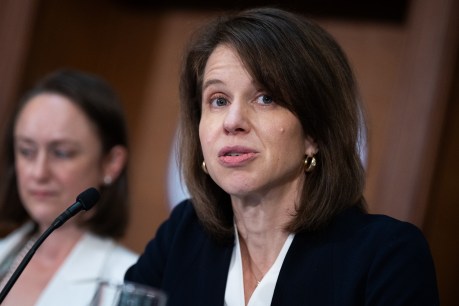
The Campaign Legal Center is calling for an investigation into whether Alicia Jackson, director of the Advanced Research Projects Agency for Health, violated ethics laws. Advanced Research Projects Agency for Health
A nonpartisan ethics watchdog group has asked for an investigation into whether a top Department of Health and Human Services official violated ethics laws after a recent ProPublica investigation revealed actions experts called “alarming” and an “obvious conflict of interest.”
Alicia Jackson, who heads the Advanced Research Projects Agency for Health, publicly endorsed a change to federal health policy on hormone replacement therapies while owning stock in a company that provides access to menopause treatments.
In a letter to the department’s inspector general, the Campaign Legal Center also questioned whether Jackson properly identified up to $400 million in underlying assets held by her husband’s investment firm. The center’s review identified an additional potential conflict — investments in a second firm that provides hormone treatments for menopause.
Jackson, who heads the HHS agency that invests taxpayer money in medical technology and research, was recently placed on administrative leave, though health officials have not publicly explained why.
At the time, Jackson owned at least $115,000 in stock and an unknown amount of stock options in Evernow, a company she founded that connects women to hormone replacement treatments, according to her financial disclosures.
It’s unclear what role, if any, Jackson played in the decision to drop the requirement to display a black box warning, the most serious type of federal safety warning. The Food and Drug Administration regulates drugs. And an FDA panel of experts had recommended ending the requirement months before Jackson became her agency’s director in October 2025.
Still, ethics experts noted that federal law prohibits government employees from participating “personally and substantially” in matters that could influence their personal finances — even making statements at a press conference or in a news release.
The Campaign Legal Center asked the inspector general to examine whether Jackson broke federal ethics laws by failing to recuse herself. Neither Jackson nor the HHS will say whether she obtained a conflict-of-interest waiver before participating in the policy announcement.
“Americans have a right to know that government decisions are not being made to benefit a federal employee’s financial interests,” the organization wrote.
The center also asked the inspector general to determine if Jackson failed to fully and accurately disclose her and her spouse’s financial interests in private investment funds.
ProPublica’s investigation found that Jackson reported she and her husband owned more than 60 venture capital and private equity funds that she said do not disclose their holdings to investors. These include at least 13 funds managed by 137 Ventures, a venture capital firm co-founded by her husband, Alex Jacobson. The company invests in a wide range of industries, including healthcare, digital health and medical device companies.
Ethics experts said the funds could pose a serious conflict of interest if the underlying businesses received grants or contracts from her agency.
137 Ventures founders Alex Jacobson, left, and Justin Fishner-WolfsonKimberly White/Getty Images for 137 Ventures
The Campaign Legal Center’s review of Jackson’s disclosures identified one of those funds — 137 Ventures IV LP — as an investor in Thirty Madison Inc., a virtual healthcare company. Thirty Madison owns a subsidiary that provides hormone replacement treatments for women experiencing menopause symptoms. Jackson’s disclosures do not show her divesting from the fund before the black box warning announcement, the center said.
Under federal law, financial disclosure forms filed by federal officials like Jackson must then be certified by ethics staff as complying with the law. But Jackson’s two financial disclosures — filed last October and two months ago — remain uncertified.
HHS’ inspector general’s office would not confirm or deny whether it is investigating Jackson. The inspector general, T. March Bell, was one of nearly 100 appointees confirmed by the Senate in a December 2025 party-line vote. President Donald Trump fired the previous inspector general just days into the president’s second term.
ProPublica also requested responses from HHS, Jackson, Jacobson and 137 Ventures, but none commented. In a statement to ProPublica last month, an HHS spokesperson said that while Jackson was on leave the agency would “assess the facts before determining any change in her status. HHS requires all officials to comply with federal ethics laws, regulations, and policies.”
Jackson was appointed by Trump as her agency’s second director and sworn in on Oct. 20, 2025. The agency, created three years earlier to spur revolutionary biomedical research and technologies, has a $1.5 billion budget. It has issued numerous contracts and grants, including $160 million for genetic medicines combating rare diseases and $144 million to study existing treatments for age-related illnesses.
Jackson’s disclosures are among 2,400 added last month to ProPublica’s Trump Team Financials database, a searchable tool launched in March. The records detail the finances of more than 2,300 officials appointed by Trump. Since last year, we’ve requested disclosure records from 127 federal agencies and the White House. Disclosures from roughly 1,500 appointees remain unreleased.
The Vineyard Wind farm off the coast of Massachusetts in May Eleonora Bianchi/The New Bedford Light
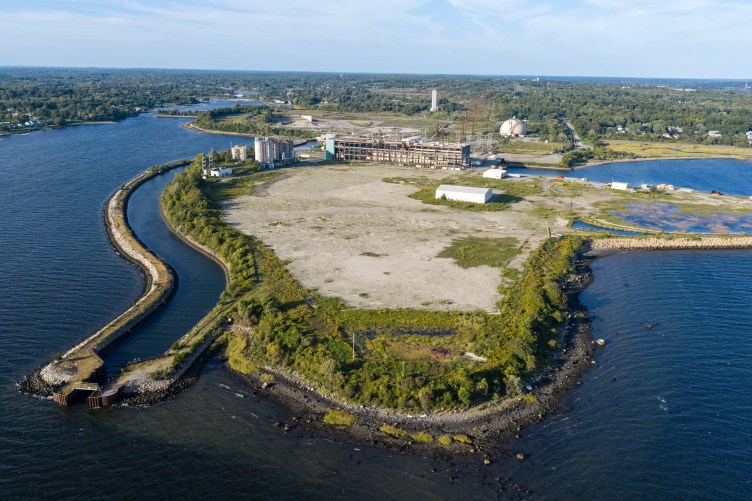
On a hot July day in 2022, then-President Joe Biden gave a speech from the ruins of a coal-fired power plant on the southern coast of Massachusetts.
Standing where ships once delivered coal for combustion, he said the same dock would soon launch components for wind power out to sea.
He praised an Italian company’s plans to build a new factory there, set to create 250 jobs and supply American-made undersea power cables to what was then a line of offshore wind projects waiting to be built along the coast.
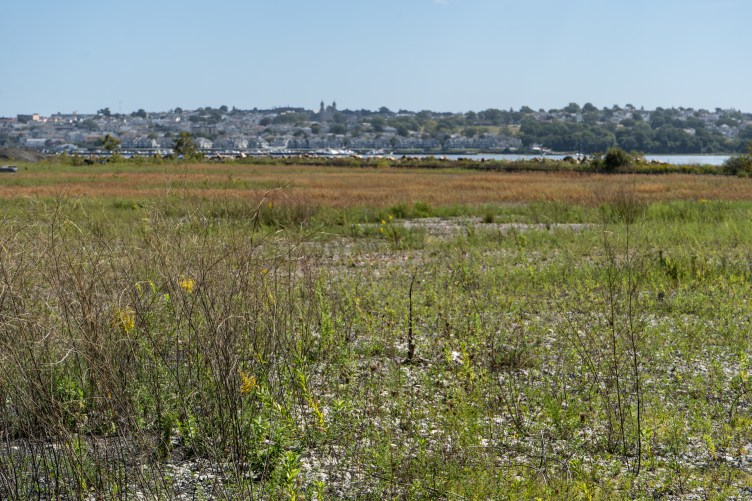
Four years later, weeds and tall grass have reclaimed the dirt lot on which Biden spoke.
The company never came.
Ben Berke/Ocean State MediaEleonora Bianchi/The New Bedford Light
Then-President Joe Biden gave a speech at Brayton Point in Somerset, Massachusetts, in 2022. Four years later, the promised factory has been canceled.
PrysmianCaleb Kenna for ProPublica
An architectural rendering of plans for an offshore wind cable factory on Brayton Point, compared with a 2026 photograph of the same area.
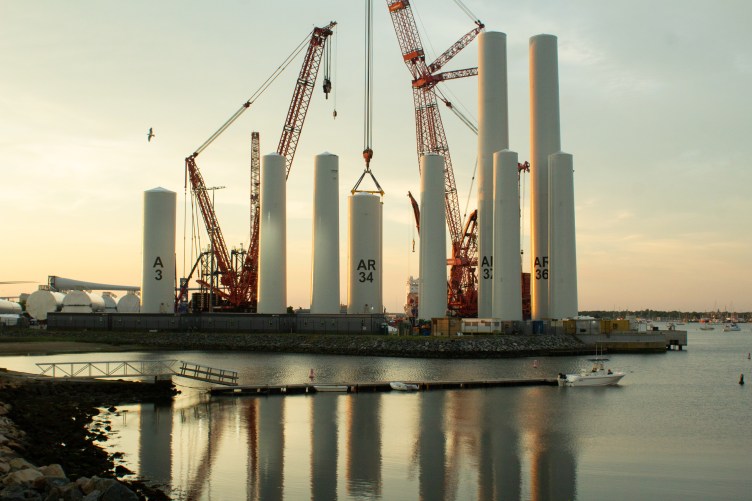
A 20-minute drive east, in New Bedford, hundreds of workers who helped assemble wind turbine parts from Canada and Europe over the last three years have given way to seagulls and geese. The birds shuffle along the now-empty pier the state of Massachusetts spent $140 million to build for offshore wind development.
In nearby Providence, Rhode Island, a newly built factory that manufactured offshore wind turbine foundation platforms has emptied out.
Ben Berke/Ocean State MediaEleonora Bianchi/The New Bedford Light
Union members worked for three years assembling turbines on New Bedford’s waterfront. The wind developer that planned to use the port facility next has instead delayed its project indefinitely.
Amid the Trump administration’s multifront war against offshore wind, the cost on the ground in New England, the launchpad of the country’s offshore wind industry, can be seen in empty warehouses, silent marine terminals and ledgers recording hundreds of millions of dollars of state investment that may not be recouped.
ProPublica partnered with Ocean State Media, The Connecticut Mirror and the New Bedford Light to document the consequences of the administration’s efforts.
James Estrin/The New York Times/ReduxEleonora Bianchi/The New Bedford Light
A factory that made turbine components on Providence’s waterfront is now sitting empty.
Many offshore wind projects faced a precarious future before President Donald Trump retook office. Rising construction costs driven by inflation and supply chain shortages forced some developers to back out of contracts to build wind farms and supply electricity to states. Various groups have also fought construction of projects saying they disrupt marine ecosystems and mar coastal views.
But last year, the administration temporarily forced five projects to stop construction, further clouding the horizon. Courts allowed the developers to proceed, but that has not eliminated the threat. Last month, the U.S. Department of the Interior asked a court for permission to reconsider a key permit for one of those five projects, Revolution Wind, which is already up and running and can power more than 350,000 New England homes at maximum capacity.
The administration also has frozen future development on all offshore wind farms, including a cluster of projects that haven’t been built but proposed to power up to 1.7 million New England homes. It has blocked or is seeking review of the permits that would allow these to be built. Meanwhile, the administration is paying other wind developers billions of dollars to sell back their leases and walk away.
At a press conference Monday, Trump said he supports a bipartisan bill that would accelerate U.S. energy development. When a reporter pointed out that the bill includes wind energy, Trump said he would not approve “wind turbines ’cause wind turbines are a major loser.”
The upheaval has had ripple effects. The cable company Biden touted decided not to build its factory, citing “long-term trends in the U.S. market.”
Port cities like New Bedford, Massachusetts, and New London, Connecticut, are left trying to hold onto the economic gains they have made building wind farms.
As recently as last winter, New Bedford, a historic whaling and textile manufacturing center, had hotels, offices and piers buzzing with offshore wind workers. Local businesses from caterers to cleaners to fuel suppliers landed new contracts servicing the wind industry.
In New London — another port once central to the whaling industry — officials worked with one of the world’s largest wind developers to pump more than $300 million of public and private funds into a state-owned pier. Despite significant cost overruns and some early construction challenges, the effort transformed the pier into a staging area for the wind industry.
Wind turbine components are stored at the State Pier in New London, waiting to be loaded onto installation vessels en route to Danish wind developer Ørsted’s offshore wind farms. The last of three consecutive projects is expected to be completed next year, but no others are fully permitted. Sarah Gordon/The Connecticut Mirror
Over the last four years, the pier has been a hive of activity. Hundreds of workers were employed loading and offloading turbine parts — with blades the length of a football field — from specially designed ships, some with names drawn from Greek mythology. Local companies also found work supporting the industry, including one that offered water rescue training for people working on construction sites offshore.
Before wind, Passero said that officials tried for years to attract different industries to the pier, which is overshadowed by larger port facilities in New York and Boston. It was often used to import and store large piles of road salt.
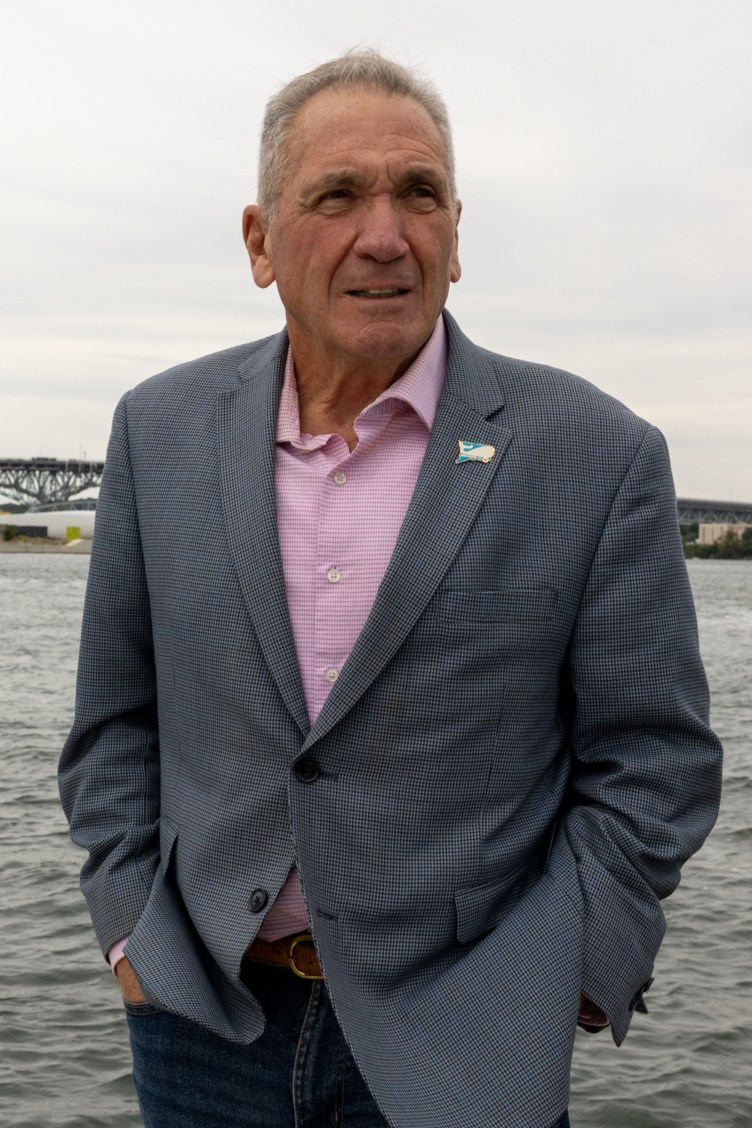
New London Mayor Michael Passero in front of the New London State Pier. Danish wind developer Ørsted is currently using the pier as a staging area for its offshore wind projects, but no tenants are lined up once that work is completed.Sarah Gordon/The Connecticut Mirror
The most recent wind project based at the pier is scheduled to finish work next year. Port officials have yet to find a tenant to occupy the space.
“They’ll be back to the old days of trying to lure cargo here,” Passero said.
Amid Trump’s war on wind, a frontline of union and nonunion workers watches opportunity disappear. One project alone, Vineyard Wind, directly employed a total of more than 3,700 full- and part-time workers — most of them from Massachusetts — over eight years of development and construction, according to the developer.
Sónia Brito, a New Bedford native, worked at the New Bedford terminal for at least two years. She is now taking classes through the Millwrights’ union in New Jersey, in hopes of staying in the wind industry. Geese and seagulls have reclaimed the space previously occupied by workers and turbine parts.Eleonora Bianchi/The New Bedford Light
During peak construction activity, as many as 300 union members worked onshore in southeastern Massachusetts for the project, the first large offshore wind farm fully permitted by the federal government. The wind farm was completed this year.
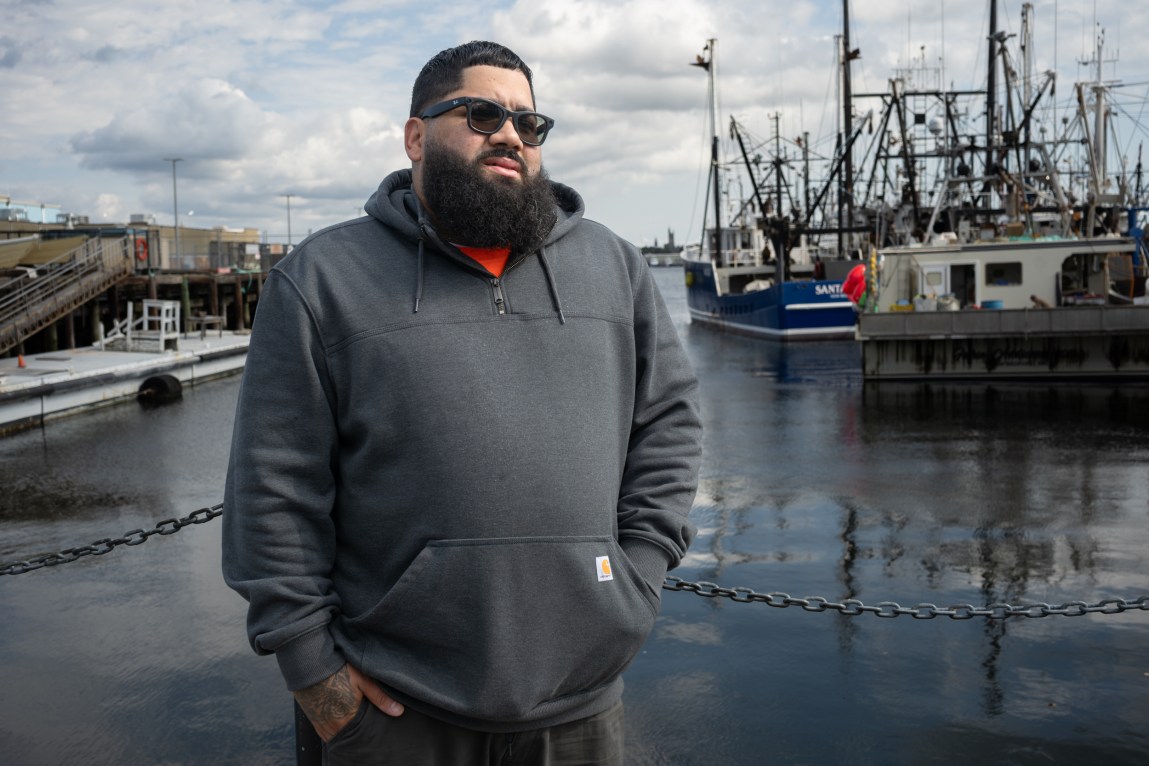
Longshoreman Onix Vazquez, 34, worked full-time tying up barges and moving turbine components on and off New Bedford’s wind pier. He grew up a few blocks away and said he had struggled to find lucrative work until Vineyard Wind began hiring from his union.
Onix Vazquez, a New Bedford longshoreman, said his hourly wage nearly doubled when he started working in the wind industry.Eleonora Bianchi/The New Bedford Light
Vazquez’s hourly wage of $50 was nearly double what he previously earned unloading occasional shipments of tangerines and juice concentrate. It allowed him and other members of his historically Black union to make down payments on houses, pay off medical bills and for the first time take their families on out-of-state vacations.
“Most of us have to get other jobs for now or collect unemployment,” said Kevin Rose, president of New Bedford’s longshoremen union, which put about two dozen members to work on the project.
The union had been planning to rebuild its nearby meeting hall, which was demolished a decade earlier when work grew scarce. But the next developer to lease New Bedford’s wind pier has delayed its project indefinitely. The union members have put the plans for their new hall on hold.
Vazquez said he now works a seasonal job in the cranberry industry for much lower pay.
“They don’t see that it affects us, the ones that work the projects,” he said.
Spinner PublicationsEleonora Bianchi/The New Bedford Light
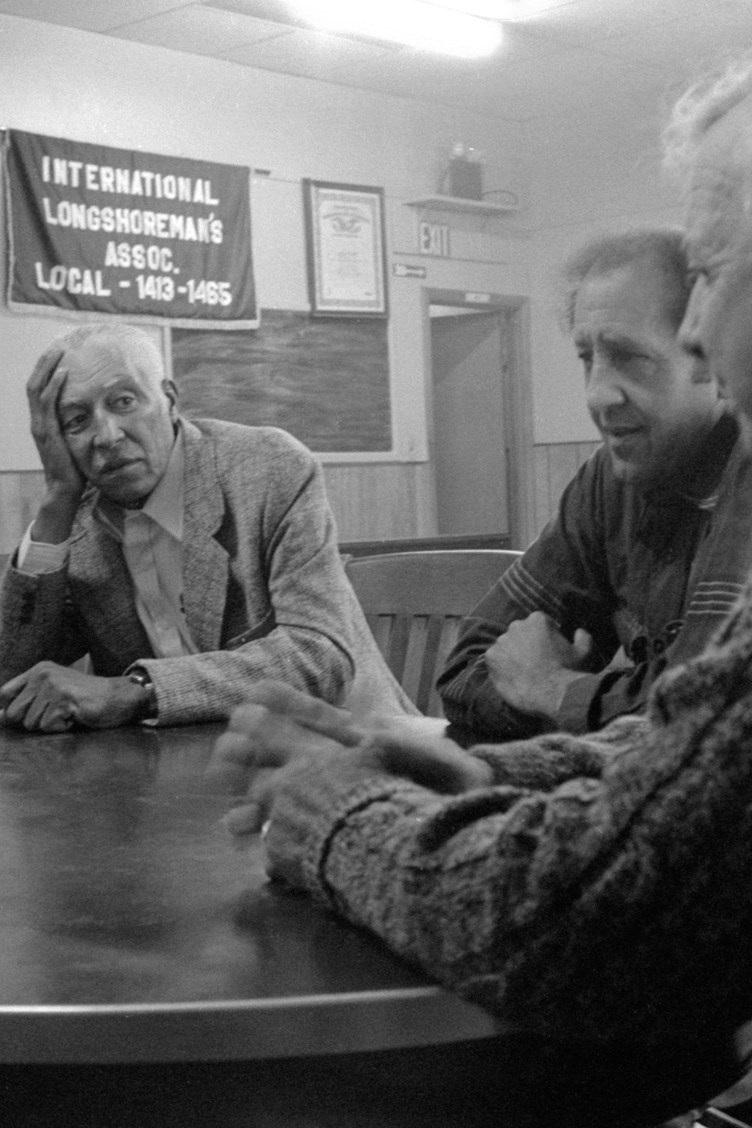
The longshoremen’s union hall in New Bedford in 1985 and the empty lot that now stands in its place. New Bedford’s longshoremen planned to rebuild it after members found work in the offshore wind industry. They’ve since put those plans on hold.
In response to questions about the impact of the administration’s actions on American offshore wind workers, a spokesperson for the U.S. Department of the Interior repeated criticisms of offshore wind as an expensive and unreliable source of energy.
“The reality is that the Biden administration lured companies into these projects with the promise of millions of taxpayer dollars in subsidies to make these offshore wind projects viable,” the spokesperson said in an email.
The view is more nuanced on the ground. New Bedford’s fishing industry is generally critical of wind farm development because fishermen worry about disruption to fishing grounds.
But fishing catch limits keep boats tied to docks for much of the year. Work for wind farms gets them out to sea and helps pay the bills.
Over the past few years of construction, Vineyard Wind paid about $11 million to 55 fishing vessels from New England and an estimated 60 to 70 fishermen, according to the developer. (The figure also covers fuel.) The fishermen look out for protected species, guard exposed underwater cable as it’s being laid and log information for the developer.
Some fishermen say they will work in offshore wind for as long as they can.
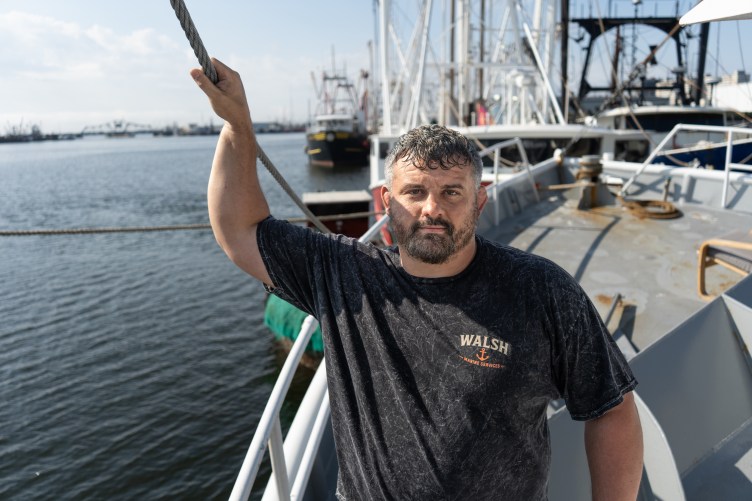
“The scallop boats need the extra revenue,” said Patrick Walsh, 37, a fifth-generation fisherman who plans to rejoin his father’s fishing business when wind work wraps up. “The worst thing for a boat is to sit. Those boats are made to work.”
Wind farm work made it possible for him to buy his first house, he said.
“Fishing would pay bills, and wind was going in the bank.”
Patrick Walsh is a fifth-generation fisherman who has pivoted to working on wind projects for the past few years.Eleonora Bianchi/The New Bedford Light
The Department of Homeland Security says it’s not detaining Americans.
In written statements, it has said that “allegations that ICE is arresting and deporting U.S. citizens is FALSE.”
It has said that “when individuals are briefly questioned under ‘reasonable suspicion’ and are found to be U.S. citizens, they are immediately released.” And it has said that “U.S. citizen agitators are only held while they actively remain a safety threat to our officers and the public.”
But ProPublica has identified more than 500 citizens detained since President Donald Trump returned to office.
They are not just numbers.
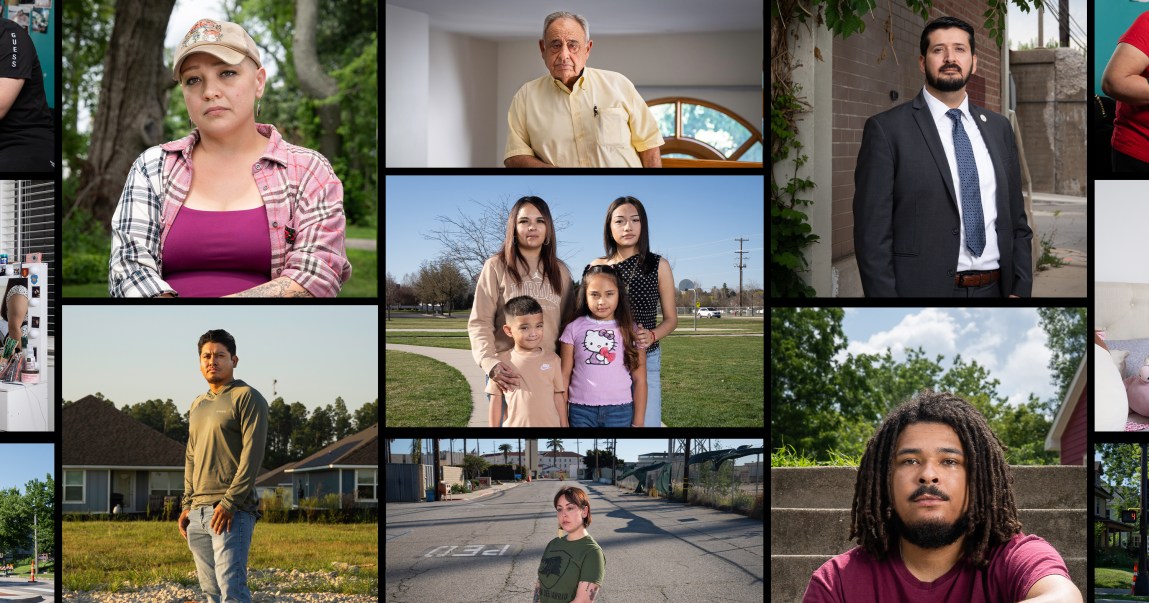
Among them is an elderly car wash owner whom agents repeatedly knocked to the ground as they detained several of his workers. A 6-year-old whose mother says still has nightmares after agents pointed guns at him and his siblings. A high school senior who was detained after she tried to stop officers from questioning her autistic younger brother. A dad who was held for several days and missed his daughter’s third birthday.
Over the past year, several of these people shared the lingering effects of what happened to them with ProPublica.
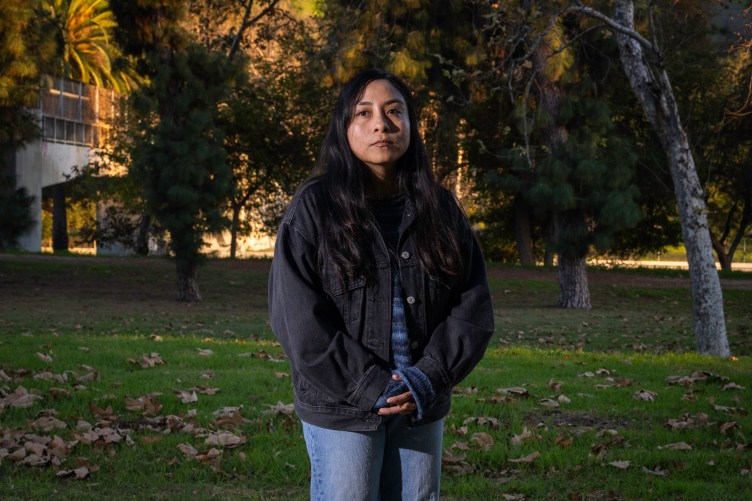
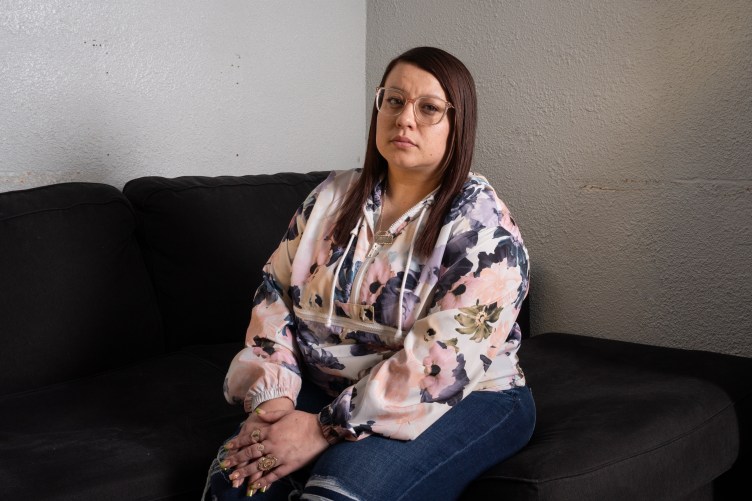
Ana Michelle Ramirez Sanan
In their own neighborhood
Photographed at their home in a Boston suburb
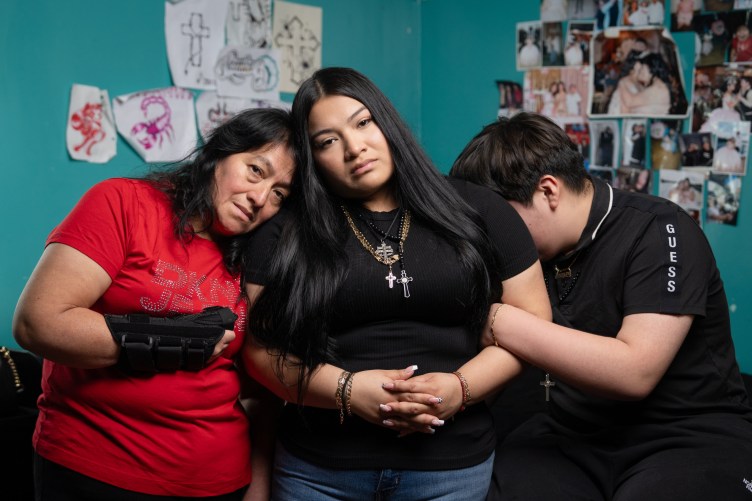
“We have so much trauma just from the 30 minutes we were held.”
Ana Michelle Ramirez Sanan
In September 2025, Ana Michelle Ramirez Sanan learned that ICE agents had intercepted members of her family as they drove one of her uncles to a court hearing. Ramirez Sanan, then 17, said she rushed to the scene and discovered agents had broken the car windows and pulled her two uncles, her mother and her younger brother out. Video of the incident showed agents kicking and slamming Ramirez Sanan’s mother to the ground and then twisting her arms to handcuff her. Ramirez Sanan said she saw other agents questioning her brother against a fence, threatening to arrest him if he couldn’t prove he had legal status.
Both she and her brother are citizens.
“Him being a 13-year-old with autism, he doesn’t understand these things like we do. He didn’t know what ‘a legal status’ is. He’s not able to tell them: ‘Yes, I have a legal status. I’m born here,’” Ramirez Sanan said. She said that when she rushed toward her mom and brother, begging agents to let them go, they detained her. “It was really scary thinking that they might have taken us and deported us to Guatemala, where we don’t have anything.”
DHS said that its agents intercepted the car in order to detain the uncle who was going to court that day, and that they “used the appropriate force necessary.” He was facing charges of sexual assault on a child and remains in ICE custody. He has pleaded not guilty.
As for Ramirez Sanan, her mother and her brother, they were released the day of the incident. Her mother, who has lived in the United States for 20 years and has a green card, was treated at a hospital for a concussion, bruising and nerve damage in one of her arms.
DHS denies that they were ever detained.
“We have so much trauma just from the 30 minutes we were held,” said Ramirez Sanan, who struggled with anxiety and depression after the incident. “I lost my whole senior year fighting this. My brother isn’t the same either.”
Andrea Velez
On her way to work
Photographed in Los Angeles
In June 2025, Andrea Velez was dropped off at work at a shoe company in downtown Los Angeles and inadvertently walked into an immigration raid on street vendors. She said one of the masked agents rushed toward her, grabbed her and slammed her to the pavement. Velez said she attempted to shield herself with her work bag.
“Throughout the whole time, I kept saying I was a U.S. citizen,” Velez recalled, saying that agents called her an “alleged U.S. citizen” even after they checked her ID. “They kept saying how many ‘bodies they got’ that day.”
Velez said that she was detained for two days, and that she was denied an opportunity to call family or a lawyer for most of that time. The government charged Velez with assault. DHS said she “made physical contact” with agents and tried to impede them. A judge ultimately dismissed the case.
After her arrest, Velez said she was so afraid of being detained again that she worked remotely and avoided going outside.
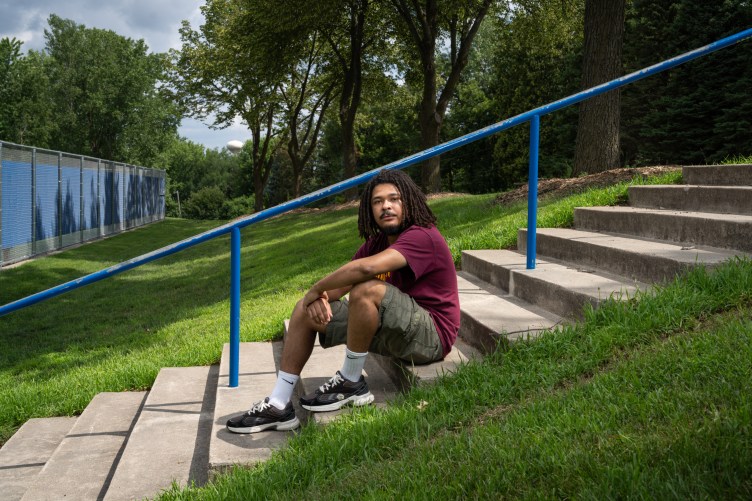
Quentin Williams
At the end of his school day as a teaching assistant
Photographed in Inver Grove Heights, Minnesota
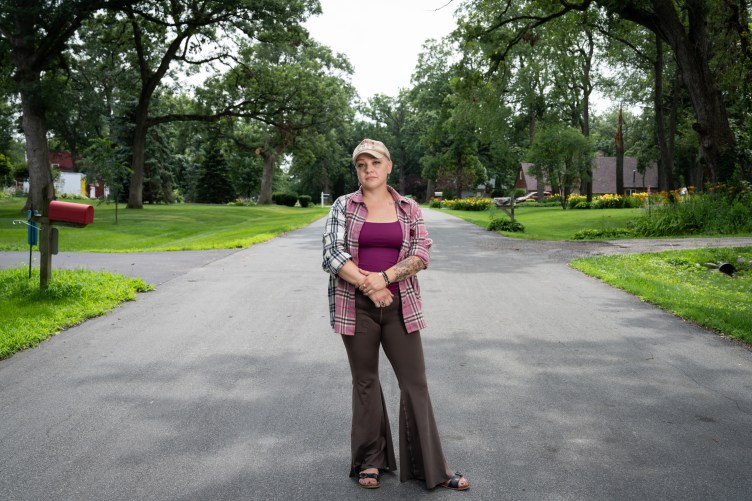
In January, not long after immigration agents in Minneapolis had shot and killed an American woman named Renee Good, Quentin Williams, a teaching assistant at nearby Roosevelt High School, was guiding students toward buses when more agents arrived outside his building.
Williams said that agents began confronting students and staff. At some point during the commotion, he said, the agents threw him to the ground and choked him so hard he couldn’t breathe.
“They didn’t even know what they were doing — just kind of being reckless [with] assault rifles out and pepper-spraying staff after they took me down,” Williams recalled.
Agents drove Williams to the Bishop Henry Whipple Federal Building, where they detained him for several hours.
Later, then-Attorney General Pam Bondi published his photo on her social media accounts, describing him as a “Minnesota rioter.” Federal authorities issued a warrant for his arrest for assaulting officers. The charges against him were eventually dismissed, and he’s filed a claim against the government for damages over his arrest.
Williams said he’s still haunted by the idea that he came close to meeting the same fates as Good and George Floyd, who was killed by a Minneapolis police officer in 2020. “I didn’t leave the house for at least up to a week,” he said. “I felt lucky to be alive.”
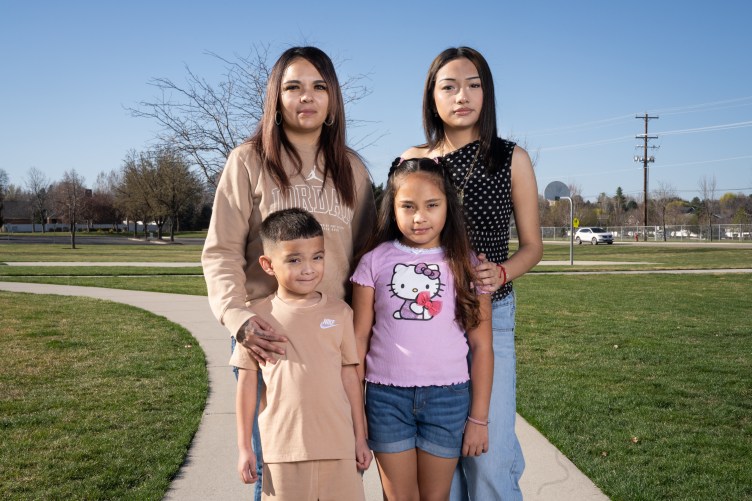
Anabel Romero, John Carter, Juana Rodriguez and their children
Attending a horse race
In October 2025, some 200 federal agents and local police officers in armored vehicles, a helicopter and on horseback conducted a raid on a racetrack in Wilder, Idaho, and detained hundreds of people, including dozens of children. Among them ProPublica identified at least 30 U.S. citizens.
Photographed at a park in Meridian, Idaho
Anabel Romero had left her kids eating in the car while she went to look at the horses. They were on opposite sides of the track when the raid began.
Romero said the agents wore camouflage and had their guns drawn. She had no idea who they were. So she ran and tried to hide. “They didn’t identify themselves,” Romero said. “I didn’t know who they were.”
She said unidentified officers tackled her, zip-tied her and threatened to “fucking blow your head off.”
On the other side of the track, Romero’s 14-year-old daughter, SueHey Tello, said officers surrounded their car, pointing guns at her brother, 6, and sister, 8. When Tello refused to exit the car without her younger siblings, agents pulled her so roughly out of the car that she fell, leaving bruises. She said agents zip-tied her hands.
Romero and Tello said the agents refused to remove the zip ties for hours, despite Tello’s age. The teenager said the incident has affected her view of law enforcement. Her mother says that the 6-year-old still has nightmares. Officers are meant “to keep us safe,” Tello said. “But yet they treated all of us like that.”
Photographed outside of La Catedral Arena in Wilder, Idaho, where they were detained
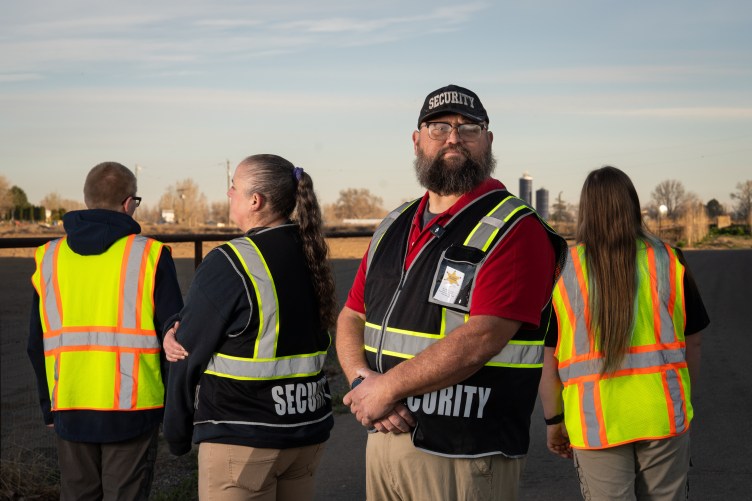
John Carter was working security at the track when the raid started. He had brought his girlfriend and his two children along with him. He recalls officers throwing a flash-bang near him and his son, and then the officers detained them. “They cinched the zip ties down as tight as they could,” Carter said. He said the officers also zip-tied his 14-year-old daughter but removed the restraints when he complained.
Carter explained that he is active in the local Republican Party and a strong supporter of law enforcement. But he said that what he saw officers doing that day was wrong.
“Things are supposed to be done humanely and correctly,” he said. “This wasn’t.”
Photographed at her home in Caldwell, Idaho
The agents also detained Juana Rodriguez, who attended the event with her family. She said that she was zip-tied beside her 3-year-old son, which left her unable to pick him up and comfort him during the long hours they waited to prove their citizenship. “He wanted me to hug him, to hold him,” Rodriguez said. She and her son are both U.S. citizens and lead plaintiffs in an ACLU of Idaho lawsuit alleging the raid illegally targeted Latinos. ICE, the FBI and several Idaho agencies have denied the charge and asked that the lawsuit be dismissed.
DHS did not respond to any specific allegations made by Rodriguez, Romero, Carter or their families. Instead, a spokesperson wrote in an email statement that the raid successfully helped dismantle an illegal gambling operation, and that ICE officers “didn’t zip tie, restrain or arrest any children.” The FBI declined to comment to ProPublica but told local media no “young children” were zip-tied. DHS, the FBI and multiple Idaho law enforcement agencies have refused to share the number of U.S. citizens held that day.
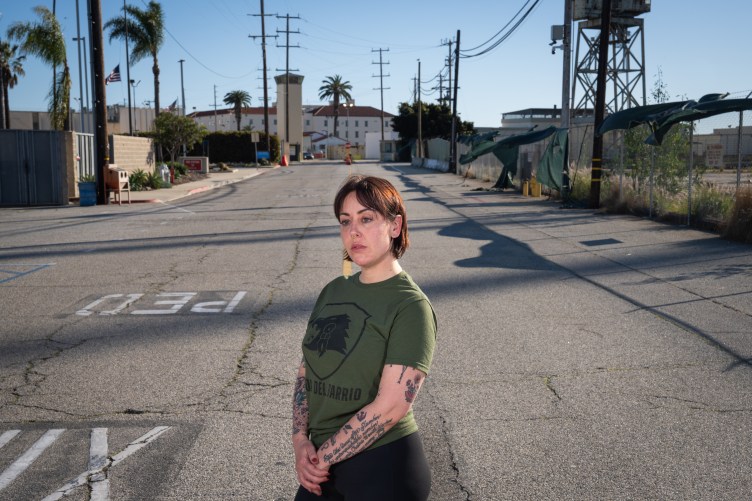
Amanda Trebach
Monitoring ICE operations
Photographed outside Terminal Island in Los Angeles, where she was detained
“I didn’t want to walk to my apartment by myself; I didn’t want to be out in the dark by myself.”
Amanda Trebach
In August 2025, Amanda Trebach, a nurse and volunteer with an immigrant advocacy organization, said she was monitoring ICE activities outside a facility that the agency was using to stage operations when agents grabbed her and pinned her to the ground, kneeling on her neck and back. They shoved her into the back of a van and held her for several hours until taking her to a federal detention facility in Los Angeles. She was not given the opportunity to speak with an attorney during the 33 hours that she was in custody. She said agents took her phone and never returned it.
DHS said Trebach was detained because she attempted to physically impede its agents’ operations by jumping in front of moving vehicles, hitting their cars with her protest signs and shouting obscenities at agents. She denies this.
She said that after the incident she felt paranoid that she was being followed.
“I didn’t want to walk to my apartment by myself; I didn’t want to be out in the dark by myself,” she said. “I didn’t know if they were going to come get me.”
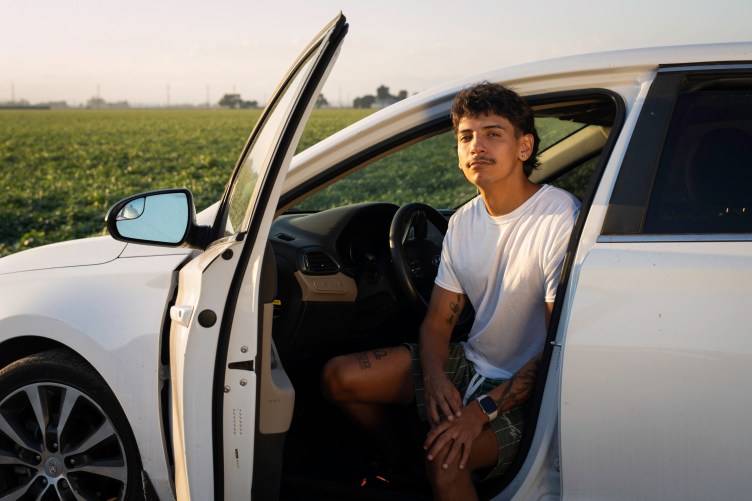
George Retes
Driving to work
Photographed in Carpinteria, California, where he was detained
George Retes, a U.S. Army veteran who served in Iraq, was driving into work at a cannabis farm in July 2025 and arrived to find the place being raided by immigration agents. Protesters had gathered outside the farm. He found himself trapped between the agents and the protesters. The agents broke his car window, pepper-sprayed him and pulled him out onto the ground. He was detained for three days, missing his daughter’s third birthday. Retes said, agents refused to explain why he’d been detained or to let him call relatives or a lawyer.
When ProPublica published Retes’ story last year, he said agents knew he was a citizen.
“They didn’t care,” he recalled. “They still sent me away to jail.”
DHS officials made statements claiming Retes had assaulted their agents. But he was never charged.
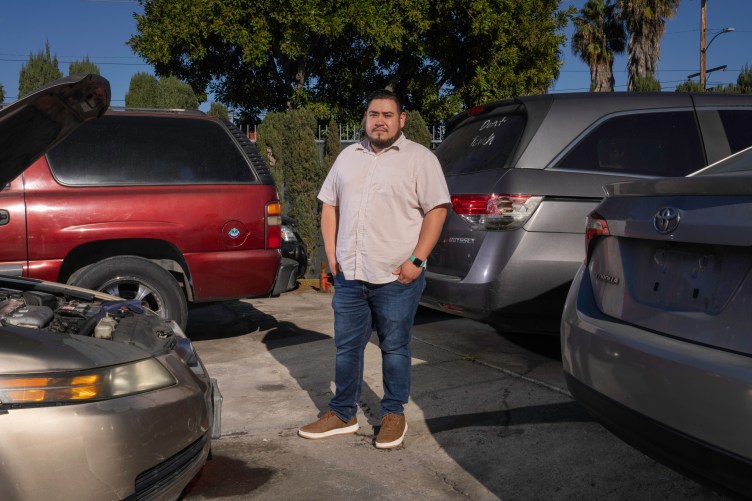
Javier Ramirez
Working at his auto shop
Photographed at his auto shop in Montebello, California, where he was detained
In June 2025, immigration agents conducted a raid on an auto shop owned by Javier Ramirez and his family. He said agents swept him up as they were detaining his workers. He recalled hearing one of the agents yell: “Hey, just get him! He’s Mexican.” He said agents tackled him and one of them put a knee on his face. He recalled hearing the agents boasting about the numbers of immigrants they were detaining across the city that day, saying: “How many did you get? I got 10, I got 15.” According to a lawsuit that Ramirez filed against DHS, he said he was held in federal custody for four days and was denied medication he needs for diabetes. DHS has not filed a response to the lawsuit, but previously the agency said that Ramirez was arrested for obstructing law enforcement, and that it never denied him medication.
Jeane Wong
Monitoring ICE operations
Photographed at her home daycare center in San Diego
When Jeane “Bleu” Wong, an operator of a daycare center and activist, heard in July 2025 that ICE agents had arrived at a nearby apartment complex, she rushed to the scene to provide assistance to people who were being detained. Agents detained her when she tried to remove one of their masks.
She was held in the San Ysidro Port of Entry, the largest and busiest land border crossing in the Western Hemisphere, and later moved to a federal prison. Wong said that during her time in custody she was strip-searched and shackled in chains that restricted her from using the restroom. Federal authorities charged Wong with assaulting a federal agent. She eventually pleaded guilty to a misdemeanor.
A little over a year later, Wong received a notice from the California Department of Social Services that her license to care for children had been revoked because of the assault. She and her wife are selling their home and relocating outside of Southern California.
“We could totally fight, and I’d probably win,” she said. “But we don’t have the money, time, energy.”
Rafie Ollah Shouhed
Working at his car wash
Photographed at his home in Tarzana, California
“I was begging them, ‘Just let me breathe!’”
Rafie Ollah Shouhed
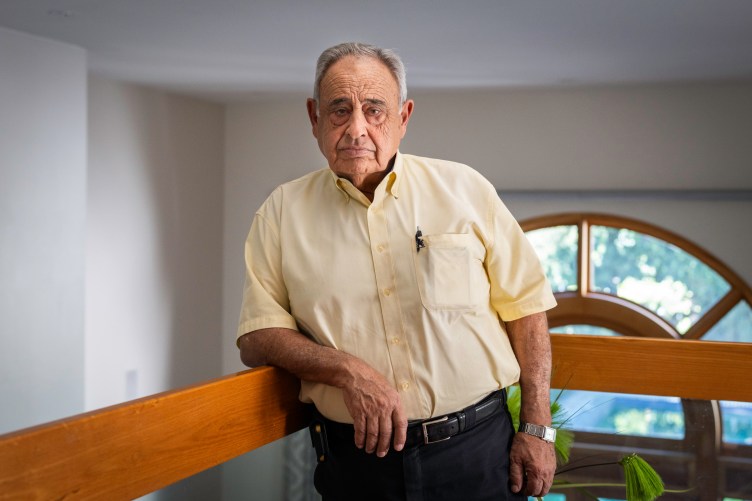
Rafie Ollah Shouhed, 79, was born in Iran, moved to Los Angeles after the Islamic Revolution and became a U.S. citizen. On Sept. 9, 2025, Shouhed, owner of Valley Car Wash, watched with alarm as immigration agents stormed into his business and attempted to detain his employees. He rushed outside to see what was going on. Security video of the incident shows agents knocked Shouhed to the ground repeatedly. He told agents that he had just had heart surgery. “They were sitting on me,” he recalled. “I was begging them, ‘Just let me breathe!’” He said in an ongoing lawsuit that the agents kept him handcuffed for 12 hours and left him with injuries to his arm, elbows and ribs. Shouhed said that he’s still receiving treatment for his injuries, and that he has quit working. DHS said Shouhed was arrested for interfering with and assaulting officers and did not answer questions about his lawsuit. He was released without charges.
Leonardo Garcia Venegas
Working construction
Photographed at a construction site in Foley, Alabama
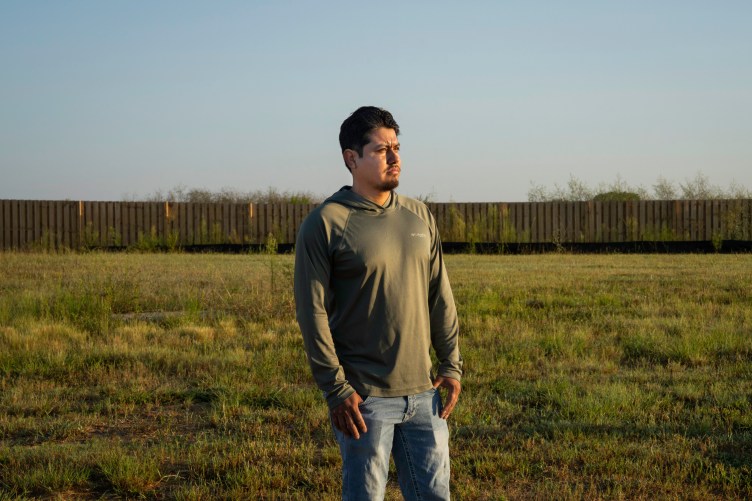
Leonardo Garcia Venegas was laying concrete with his construction crew in Alabama in May 2025 when immigration agents arrived at the site without a warrant and began detaining his co-workers, including his brother. Garcia Venegas pulled out his phone to film the agents. Videos he and other workers recorded show agents approaching to arrest Garcia Venegas while he filmed, tackling and arresting him while he yelled that he was a U.S. citizen. Garcia Venegas said that he told the agents he had his REAL ID on him, but that they dismissed the document as fake. They held him in handcuffs for an hour before finally releasing him without charges. DHS said he was impeding officers. After that first incident, immigration agents detained Garcia Venegas two more times, each time ignoring statements and identification documents that prove he is a U.S. citizen.
Garcia Venegas filed a lawsuit against DHS over its warrantless raids on construction sites. DHS responded to the lawsuit, saying that its agents didn’t need warrants to operate at construction sites because they’re open to the public. The agency also said that brief stops like Garcia Venegas’ were “reasonable.” Until the case is resolved, a judge ordered a temporary halt to the operations.
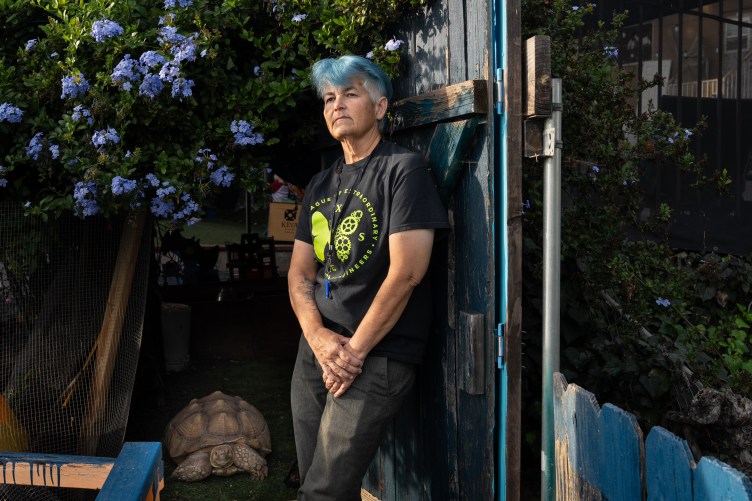
Photographed in Minneapolis near the location she was detained
“Nobody ever asked me for ID, my name or my citizenship.”
Aliya Rahman
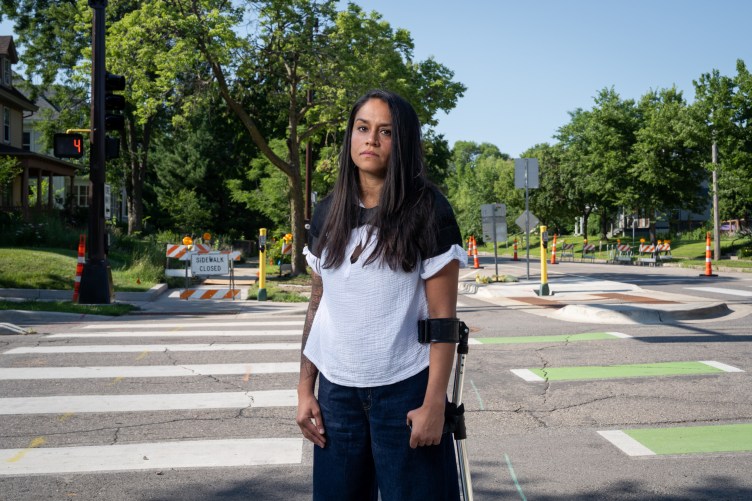
Aliya Rahman, who is autistic and disabled, was driving to a doctor’s appointment in January when she reached an intersection where protesters were confronting immigration officers. She said several agents swarmed her car and yelled at her to move out of the way. They broke her window and pulled her from the car.
“Nobody ever asked me for ID, my name or my citizenship,” Rahman said.
DHS said agents detained Rahman because she ignored their instructions. She denied that, saying that she was confused and saw no way to move without hitting someone.
She said agents then shackled her feet and held her in a detention cell at the federal building. She passed out and awoke in a hospital room. She was released without charges later that day.
Jeyli Salguero
Sleeping in her bedroom
Photographed at her house in Oakdale, Minnesota, where she was detained
In January, Jeyli Salguero awoke when she heard someone banging on her door and then the sound of the door breaking open. Federal agents, their guns drawn, rushed inside and told her family they were looking for her brother.
“We told them yes he lived here, but he doesn’t live here anymore,” Salguero said she told the agents. “They started getting a bit more angry and were like, ‘Since you’re not collaborating, we’re gonna start checking your status.’” An agent grabbed Salguero’s phone and ordered Salguero to face a wall. In an ongoing lawsuit, Salguero has said that the agents entered the home without a valid warrant. DHS said that agents were searching for a fugitive, and that it has suspended the policy of entering homes without a judicial warrant.
Her father has temporary protected status but had not received paperwork showing that his status had been renewed. He was handcuffed and then detained for a month. Salguero’s older sister, who was undocumented, was handcuffed and deported to El Salvador. The rest of her family is now planning to sell their home and move to El Salvador. “It’s been a mental toll — a very big mental toll on all of us.”
Juan Muñoz
Protesting the Broadview ICE Detention CenteR
Photographed in Oak Park, Illinois
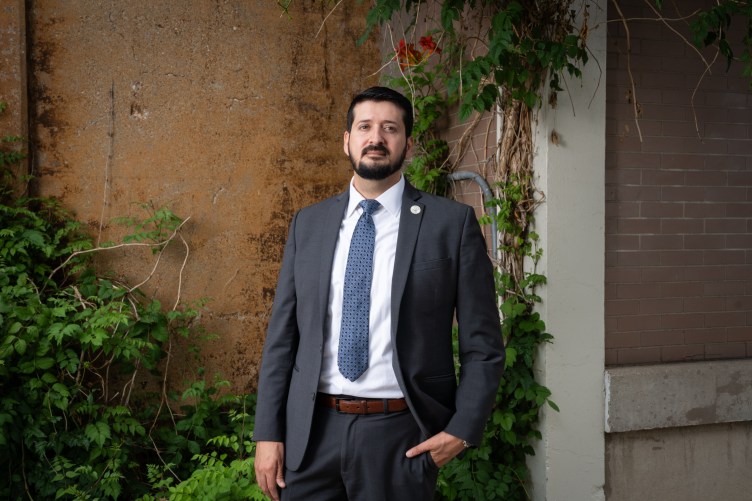
Juan Muñoz, an elected member of the Board of Trustees that governs Oak Park Township outside of Chicago, was participating in an October protest outside the Broadview ICE Detention Center when he said that he was knocked to the ground by the commander of the Border Patrol. “When I looked up,” Muñoz recalled, “it was Commander Greg Bovino who was standing over me.” In depositions, Bovino denied tackling Muñoz, saying videos of the arrests showed no “reportable uses of force.”
Muñoz said agents knocked away his phone and zip-tied his hands. “Every agent that I encountered, I told the same thing, ‘I’m an elected official.’ No response.”
Muñoz was held inside of the detention center for eight hours before agents dropped him off at a gas station, without explaining why he’d been held. “They were over capacity, keeping people for way longer than that facility was intended for,” he recalled about the detention center. “It was filthy. They don’t have proper hygiene products or are able to feed people properly,” Muñoz said. DHS did not comment on his specific detention. But, referring to Muñoz and other protesters detained with him, it posted a comment on social media, saying, “We will NOT allow violent activists to lay hands on our law enforcement.”
Jessie Fuentes
Responding to ICE in a hospital
Photographed at her office in Chicago
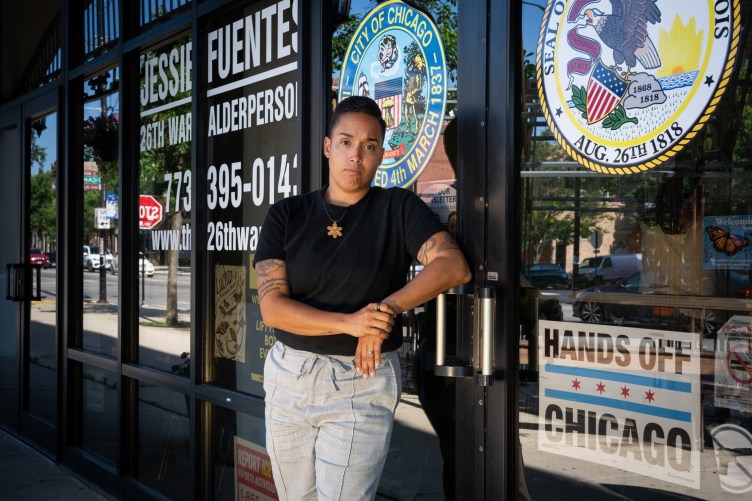
In October 2025, Chicago Alderperson Jessie Fuentes said she rushed to a local emergency room because she’d been told that ICE agents had been spotted inside. She identified herself to the agents as an elected official and began asking them whether they’d obtained a warrant. Video taken of the incident shows that agents grabbed and handcuffed her. Fuentes was held for 15 minutes, during which time members of her staff posted the video online and her supporters gathered outside the hospital to demand her release. DHS, in a written statement, told ProPublica that Fuentes was put in “handcuffs but NEVER placed under arrest.”
“These individuals are operating above the law,” Fuentes said. “They’re operating with impunity.”
Caitlin Arwen
Monitoring ICE operations
Photographed in Maple Park, Illinois, where she was detained
Caitlin Arwen was scrolling through a Facebook group for moms in October when she noticed a shared post that said immigration agents were detaining people in her town, which is about an hour’s drive outside of Chicago. Later that day she saw some of the vehicles that had been posted on Facebook and began following them, honking her horn to alert residents of their presence. One of the vehicles slammed on its brakes. U.S. marshals who were working with ICE surrounded her car, broke her window and pulled her out.
“They threw me on the broken glass, and they were all on top of me. I couldn’t breathe,” she recalled. Arwen estimates she was kept handcuffed face down on broken glass for roughly 35 minutes. “They taunted me, took photos of me, called me names, berated me and acted like I was somehow deserving of this.” DHS referred questions about Arwen’s arrest to the U.S. Marshals Service. A spokesperson for the service said Arwen’s arrest was a “task force arrest” and declined further comment.
Arwen was taken to a hospital, where marshals handcuffed her to the bed. After she was discharged, agents shackled her and moved her to a DHS detention facility, where she was not allowed to contact a lawyer or anyone else for help. “I didn’t have access to water or food the whole time,” said Arwen, adding that she was held for several hours. “Nobody showed me their badge all day. No one identified themselves. No one once read me my Miranda rights.”
Though federal officials declined to prosecute Arwen, state authorities charged her with traffic violations and obstruction of law enforcement. She has pleaded not guilty.
John Falchetto was a survivor. In Vietnam, his river gunboat came under devastating rocket fire. He was the only one to make it out alive. But this February, Falchetto, who had just turned 80, began to have piercing stomach pains. He was in distress for days. Finally, Falchetto went to the VA hospital in East Orange, New Jersey.
A CT scan of Falchetto’s abdomen suggested his appendix had not only burst, but that it was gangrenous. His gut was so filled with bacteria and pus that tissue was dying. Doctors wrote that he needed surgery immediately.
But that night, the hospital’s operating room was closed. Months earlier, the ventilation system had malfunctioned, and the repair team was short-staffed. So Falchetto lay there, his life in the balance, for seven hours.
This was not normal. But nothing had been normal at East Orange since President Donald Trump returned to office last year and set his sights on the VA.
The behemoth agency, which traces its roots to the Civil War, is both the country’s largest healthcare system and one of its most effective. It provides 9 million veterans what is essentially socialized medicine, often for free, under the cover of the American flag. The doctors, nurses and other staff are employed by the government.
But in his second term, Trump has moved aggressively to upend this system, embracing a decades-long conservative campaign to effectively kneecap the VA’s government-run healthcare and shift veterans toward private doctors and hospitals.
Under Trump,theVA has increasingly acted like an insurer, paying doctors in the community for vets’ care. This, the reasoning went, would allow the government to cut thousands of needless bureaucrats while giving veterans more choices if the VA can’t provide the care.
Do You Have Information About the VA That We Should Know?
We’re still reporting. If you know more about this topic, please contact our reporting team.
Eric Umansky
I’m looking for tips on the VA’s care of veterans, and I’m particularly interested in hearing from healthcare providers and others who work at VA hospitals. Contact me with tips by email or securely on Signal. I take confidentiality seriously.
“We love our veterans,” Trump said during an Oval Office photo op shortly after his inauguration. “We are going to take good care of them.”
Days after that pronouncement, a memo leaked showing the administration was considering sweeping job cuts at the agency. “Things need to change,” warned Doug Collins, Trump’s new VA secretary, in a video message to staff.
After pushback from vets groups and others, the administration retreated from its threat of mass layoffs. But it found another, less attention-getting way to shrink the VA.
If Trump’s appointees couldn’t lay off employees, they would make work conditions so untenable that staffers would leave on their own.
Throughout it all, the VA’s leadership said front-line medical workers would be immune from any cuts. But amid the upheaval, many left anyway.
Six months after Trump entered the White House, the VA had 3,800 fewer doctors, nurses and other “mission critical” staff than it did at the start of his term, according to the department’s own data. While the losses made up a small percentage of overall employees, the drop compounded longstanding shortages — and contrasted sharply with a hiring spree under President Joe Biden that had begun to address them. Many of the front-line workers who quit in Trump’s early days have never been replaced. Instead, the VA has eliminated thousands of open positions, including doctors, nurses and other providers.
The administration has denied that it is hurting veterans’ care. “There’s actually an excitement about what’s going on,” said Collins, a former personal lawyer for Trump, in congressional testimony this spring. A spokesperson said the eliminated jobs for healthcare providers were simply “not needed.”
That is not what we have found. Over months of reporting, ProPublica has watched the East Orange VA Medical Center — a typical agency facility — spiral downward. The hospital and its affiliated facilities in New Jersey lost nearly a tenth of the staff they had when Trump took office.
Over the past two years, a VA watchdog report shows, the number of roles with “severe shortages” in East Orange has tripled, from around 30 to roughly 90. Among them: oncologists, radiologists, surgeons, cardiologists, anesthesiologists, critical care doctors, nurses, mechanics, cleaners — nearly every job that makes a hospital run.
“It’s scary,” one East Orange administrator said in a meeting this year. “We have no one.”
It’s not just there. According to the VA’s watchdog, nearly all VA hospitals — 97% — reported having severe shortages of doctors. (The agency argues that the report — titled in part, “Staffing Shortages” — is simply about shortages of candidates and not actual staffing.)
The exodus of healthcare providers has increasingly forced veterans into the private care program — called Community Care — that the Trump administration has pushed. Amid soaring caseloads there and what a government report describes as “insufficient staffing,” many vets have been facing interminable waits.
ProPublica and other outlets have previously detailed problems with particular areas of VA care under Trump, such as mental health. But our reporting suggests far more care for veterans is being put at risk.
At East Orange, the damage wrought by the administration’s approach has cut like a scythe across nearly every area of the hospital.
Wound care is harder to get, since the nurses who specialize in it have mostly gone. The standard tests for blood clots weren’t available for most of the year, because there were no technicians. Even radiation treatment was stopped for months, after one of the key specialists left.
“Care has gotten worse for the patients,” said one doctor. “The services available. The wait times. We’re not providing the care that we wish we could.”
Another doctor, who recently quit, recalled how vets coming in with chest pains couldn’t get cardiac tests for months. “It felt dangerous practicing in a place like that,” said the physician, who, like others, declined to be named for fear of retribution. “That’s something you don’t want on your conscience.”
VA employees across the country told ProPublica they are seeing remarkably similar issues at their hospitals.
In Albuquerque, New Mexico, short-staffing forced the hospital to take many of its beds offline and stopped it from operating on severe heart attacks. Surgeries — on lungs and spines — have also been suspended for months at the VA hospital near St. Petersburg, Florida. At both hospitals, government reports found, Trump’s touted private care program was also overwhelmed and understaffed, further fueling delays in care.
“Care has gotten worse for the patients. The services available. The wait times. We’re not providing the care that we wish we could.”
East Orange VA doctor
Surgeries and other critical care have also been delayed at the Minneapolis VA. A staffer there shared a friendly looking notice tacked to a bulletin board in May: “No SOD coverage” — meaning, no surgeon on duty — “until further notice.” Radiation treatment was also suspended there because one of the machine’s operators quit. A Minneapolis doctor recalled that meant having to put a vet with cancer-riddled bones on a rattling ambulance ride every day, rather than simply wheel him down the hall. The doctor said each bump on the winter roads caused the vet excruciating pain: “It was miserable.”
A longtime oncologist who works with VA hospitals around the country told me, “Care is collapsing from the inside.”
Starting in July, ProPublica repeatedly asked the VA about evidence we’d found that short-staffing is hurting veterans’ care. We asked to interview Collins and the leadership of East Orange. The VA did not make them available. Nor did it address the specifics ProPublica shared on care.
In a general statement, the VA said care has improved under Trump. “This Administration is solely focused on measuring VA’s success by how well it serves Veterans,” said agency spokesperson Quinn Slaven. He cited a record number of appointments for both direct and private care over roughly the past year. Slaven also noted that the private care program began under the first Trump administration and was also embraced by the Biden administration.
As for East Orange, Slaven said the facility is outperforming private hospitals on certain metrics, such as diabetes care and some cancer screenings. Slaven also said more appointments were completed in fiscal year 2025 — which ran from October 2024 through September last year — than in any year of the Biden administration.
Citing privacy law, the VA noted it could not address individual cases without a waiver from the patient or appropriate family member. While ProPublica spoke with veterans’ family members and loved ones, none chose to sign.
We did, however, also ask the VA about the general issues surrounding those cases — such as East Orange’s OR being closed — and the agency did not respond.
In speaking to us, family members expressed surprise about their loved ones’ care. Falchetto’s brother, Tony, knew his brother had appendicitis, but hadn’t known that the OR in East Orange was closed. “Oh my god,” Tony exclaimed when I told him that his brother didn’t get timely care.
This story is based on internal documents, emails, agency data, recordings and interviews with more than two dozen current and former VA staffers, along with veterans and their families.
Contrary to the administration’s rhetoric, what emerges is a portrait of an institution in trauma.
“It Felt Like Bullying”
As soon as Trump was reelected, healthcare providers and other staffers at East Orange could feel the barometric pressure plummeting and the storm arriving.
The incoming administration’s plans for federal employees had long been clear. “We want to put them in trauma,” said Russell Vought in 2023, before he became Trump’s chief of the Office of Management and Budget. “We want them to not want to go to work.”
Just days into the new administration, officials imposed a rigid return-to-office policy, even as many staffers — from schedulers to radiologists reading digital scans — had shifted to remote work in recent years. An internal agency watchdog later wrote that the edict caused a “system shock” at East Orange, whose outdated infrastructure and long-mothballed rooms couldn’t handle the influx.
“I love working with vets, and I’ve never wanted to work anywhere else,” said one medical provider at East Orange who rattled off a list of edicts. “You’re this little person, and the full weight of the federal government was on you. It felt like bullying. It was very, very stressful.”
That May, Collins appeared before Congress and promised that the administration would not cut care: “We’re going to maintain VA’s mission-essential jobs, like doctors, nurses, claims processors, while phasing out nonessential roles, like interior designers and other things — DEI.”
Two months later, the agency touted the loss of nearly 30,000 staffers. “VA is headed in the right direction,” Collins said in a statement announcing the losses. It was hard to know if the remaining staff agreed, since officials canceled the VA’s employee satisfaction survey.
Among the most essential staff at VA hospitals have long been the specialty doctors, with their years of extra training. Recognizing their importance — and their potential to earn far more in the private sector — bipartisan legislation, which Biden signed into law in January 2025, allowed the VA to pay top-notch doctors more than the standard government rate.
But under Trump, the department didn’t use that authority for more than a year — even as more and more specialty doctors were leaving.
So, amid the departmental tumult, East Orange’s doctors began to exit, and they often weren’t replaced.
Six months into the administration, East Orange was down five psychologists, two of its four general surgeons and 18 nurses, among others, according to data obtained through a public records request.
The departures weren’t limited to front-line providers. So-called support staff were leaving too. The effects could be just as devastating. In East Orange, the medical physicist calibrated radiation machines. When he quit, the hospital had to suspend radiation treatment for months.
That left a veteran named Dennis in the lurch. The 72-year-old Vietnam vet had advanced colorectal cancer, which was causing rectal bleeding. Dennis’ bleeding — and his pain — could be reduced with radiation. It might also give him more time. But suddenly, East Orange couldn’t provide the treatment.
In early August, Dennis’ case was transferred to the Community Care program, which reroutes vets to private providers. Except East Orange’s Community Care office had also been losing staff and was overwhelmed with requests. Weeks passed as Dennis waited, even as his doctors messaged at least five times that he needed to be seen, as one put it, “ASAP.”
He finally got an appointment for a consultation — the first step toward radiation — for Sept. 12. But Dennis never made it.
He died on Sept. 4.
Winter Comes to East Orange
A half dozen oncologists and surgeons told me that delaying treatment by more than a month and a half was problematic. At the least, they said, the delays almost certainly made his last weeks more painful. One told me he gives patients in Dennis’ condition radiation “within hours.” (ProPublica is withholding the veteran’s last name at the request of his family, which wants to maintain their privacy.)
Other veterans at East Orange faced the same dynamics: They were shunted to private care after their VA doctors and others left — and then they got stuck in the system since the office that handles private care — Community Care — was so overloaded. “That volume just keeps going up,” one administrator said at a meeting last November. The reason for the increased referrals to Community Care? She explained: “We just do not have the providers to provide the care.”
That winter the short-staffing and its effects spread across East Orange.
Staff were told via email that because of “urgent nurse staffing levels,” eight of the hospital’s roughly 60 general admission beds were being “taken out of service.”
“That was a big chunk of our beds,” said one of East Orange’s doctors. “I don’t recall ever having to close that many.” Without beds, the doctor explained, veterans often “stay in the emergency room, which is not ideal.” Indeed, studies have shown that leaving patients in the ER is dangerous and results in higher mortality rates.
A vet at one of East Orange’s campuses wrote to Trump complaining about short-staffing. He soon received a response signed by the president. “Every American owes our veterans an eternal debt of gratitude,” Trump said in the one-page letter, “and under my leadership, they will always have the loyalty, respect, and support they have earned and so dearly deserve.”
“You’re this little person, and the full weight of the federal government was on you. It felt like bullying. It was very, very stressful.”
VA healthcare provider
Around the same time, the hospital also had to shutter its operating room.
In December, part of the operating room’s air flow system had malfunctioned, contaminating the surgical instruments. Breakdowns like this weren’t unusual. East Orange was built 70 years ago, and its infrastructure showed it. But now the hospital mechanics who kept it all running were quitting. In interviews, they cited the same downward spiral that healthcare staffers did: As coworkers left, the staff who remained had to pick up the load, further increasing the strain of their jobs.
This put even more strain on a department that was already “severely understaffed” before Trump, said Irvin Webb, who worked as an air systems technician before he left the VA in May 2025. As a result of the departures, he said, repairs ended up taking longer. (Air conditioning equipment mechanic and air conditioning equipment operator were both among the many East Orange positions categorized as having severe shortages in this year’s VA survey.)
Medical staff felt the impact. One doctor calculated that the OR has been down nine times over the past year — compared with once the year before.
After the air flow malfunction in December, theOR was out of action for roughly three weeks. It then reopened for planned surgeries but remained closed for emergency and off-hours surgery for more than another month.
Then, on Feb. 12, Falchetto came to East Orange with a burst, gangrenous appendix.
He arrived in the early evening. Doctors noted that he had abdominal pain, vomiting and diarrhea, and described the results of Falchetto’s CT scan as “worrisome.” The doctors wrote that Falchetto needed surgery, but, as one physician noted, there was a “lack of OR capability.” And so, despite his life depending on quick intervention, Falchetto had to leave the hospital that was treating him.
At about midnight, East Orange arranged for Falchetto to be transferred to the VA hospital in Manhattan. It’s less than an hour away. But Falchetto ran into yet another problem: Instead of arranging an emergency transfer, the administrators scheduled him to be moved when the transport unit started its morning shift around 7.
Falchetto was finally taken to the Manhattan VA the morning of Feb. 13. About 12 hours had passed since he had arrived at East Orange’s emergency room. The Manhattan surgeons operated on him immediately, noting “perforated appendicitis with gross fecal spillage.”
They also recognized something even more ominous: sepsis, a life-threatening reaction to infection.
Falchetto never recovered. Doctors documented “worsening septic shock.” He had a catastrophic heart attack a week later. With little brain activity, Falchetto was transferred to hospice.
He died on March 7.
“Imminent Risk to Patient Care”
It’s impossible to say for certain whether short-staffing caused Falchetto’s death. He was severely ill when he arrived at East Orange and may have died even if he got proper, timely treatment. But he didn’t get that.
“If I were the family, I’d sue everyone,” one of the doctors involved in Falchetto’s case told ProPublica. “He should have been operated on immediately.”
By last spring, managers at East Orange were sending increasingly dire alarms internally. One email in March — just a few days after Falchetto died — warned that the shortages were preventing proper care.
The crises began coming in quick succession, one more desperate than the next.
Both of the hospital’s orthopedic surgeons left. And wound care became a particular problem. The East Orange VA previously had three nurses who specialized in the area. By this spring, just one remained, according to East Orange staffers. She would have to commute dozens of miles between East Orange’s hospital and its satellite clinics and nursing home.
“I’m not going to have time for anything,” the nurse told colleagues in a meeting about the changes.
A few months later, a veteran arrived at East Orange with a diabetic ulcer — essentially an open wound — on his left foot. His records state that the wound “significantly increased in size” but that he hadn’t been seen by a wound care specialist amid shortages.
“If I were the family, I’d sue everyone.”
East Orange VA doctor
It was the VA’s nearby nursing home — which the agency calls a community living center — that raised the starkest alarm. A message to the staff on April 10 warned of an “extreme shortage of CLC nursing staff with an imminent risk to patient care.”
An administrator wrote in the message that the nursing home was taking emergency action to cut the number of veterans allowed at the facility from 192 to 180. Soon the cap was reduced again, to 170.
What that meant is that vets who qualified for spots would be mostly turned away.
Typically, the East Orange hospital could function as a kind of temporary overflow facility for the nursing home. And the nursing home could do the same for East Orange, taking some patients when the hospital was full.
But now neither could handle any more. On May 20, a notice went out to staff saying the hospital couldn’t accept patients from the nursing home that day.
What’s more, 17 veterans who needed admission were instead housed in the ER. Other hospitals also sometimes do that, but at East Orange the problematic practice went from rare to “far more common,” one doctor involved recalled. They were stuck there at least a day. “They’re in bed all day,” said the doctor. “It’s essentially a cot.”
“People Are Falling Through the Cracks”
The day after the ER pileup, Collins, the VA secretary, arrived on Capitol Hill to testify again. He bristled when he was asked about how staff cuts and eliminated positions were affecting care.
Soon after, Collins quietly imposed staffing caps. What’s more, even when hospitals do have the authority to hire, the pall hanging over the agency now has impacted recruiting. As ProPublica reported last year, many doctors have turned down VA job offers amid the ongoing turmoil. Nearly 4 in 10 of the roughly 2,000 doctors offered jobs from January through March last year rejected them. That is quadruple the rate of doctors rejecting offers during the same time period in 2024.
At the time of Collins’ testimony, the VA had around 5,100 fewer doctors, nurses and other “mission critical” staff than it did at the start of the Trump administration, a 3.4% drop. Under Biden, by contrast, the VA had been staffing up.
“There is nothing they cannot hire.”
Doug Collins, VA secretary
At East Orange, staffers told me the hospital had no vascular techs for most of this year, meaning there was no one to run tests on arteries and veins. And on the oncology ward, internal records show the team assigned to help patients navigate their treatment was down to just one nurse.
The providers who have stayed have been overwhelmed by vets’ needs — a dynamic that employees say is playing out in VA hospitals across the country. “People are falling through the cracks, and now they’re not getting help,” said one primary care physician at a VA clinic in Missouri.
“I’ve been working from 6 a.m. to 10 p.m.,” she said. “I’ve had to take mental health breaks because I’ve been so stressed. I’ve been near suicidal. It’s not normal.”
Coins, Not Care
On a late August morning, a smattering of black SUVs and police cars pulled up to a VA campus near East Orange. Collins and a gaggle of aides stepped out of the caravan and went inside.
The VA secretary visited two departments. One was the chaplains’ unit, which, like so many units within East Orange these days, is “severely understaffed,” according to an internal presentation. (Collins is an ordained Baptist minister and once served as a Navy chaplain.)
The other was the residential PTSD unit. Staffers had arranged for Collins to meet with veterans, messages show. The event was not open to the media, but, according to staff and a vet who were there that day, Collins sped through the visit and did not stay long to speak with the vets.
On his way out, Collins stopped for a moment to talk to a veteran without legs in a wheelchair. After Collins strolled away, I asked the veteran what they discussed. “He just thanked me for my service and gave me one of these,” said Willie Johnson, showing me a commemorative coin that says, “Secretary of Veterans Affairs, Douglas A. Collins.”
I asked Johnson whether he had noticed changes in care since Trump returned to office. “Oh yes,” he said, noting that even food has gotten worse (among the positions with severe shortages at East Orange: food service worker).
The day after Collins’ visit, an email went out to staff. A “particularly meaningful part” of the visit, the email from a top administrator said, was the opportunity to recognize the service of five employees with Collins’ coin.
Among the recipients was the head of the maintenance department — the diminished unit that’s struggled to keep the operating room open.
Last week, as we were preparing to publish this story, a doctor at East Orange told me of a development: a backup generator had failed, and the OR was closed yet again.
The Cybersecurity and Infrastructure Security Agency finally got a new nominee for director, with President Donald Trump on Monday nominating Michael LoSapio, chief information security officer at Palantir.
CISA has been without a Senate-confirmed director for the entirety of Trump’s second term, after his first pick, Sean Plankey, languished in the Senate before withdrawing in April.
LoSapio could face some obstacles of his own, with Palantir far from a popular company with the Democrats set to take over Congress. Democrats have scrutinized the company over its work with the Department of Homeland Security, even as Palantir has denied aiding mass surveillance of immigrants.
As of late last month, Sen. Ron Wyden, D-Ore., was also still waiting for CISA to release a public version of a report on telecommunications cybersecurity, and he had placed one of several Senate holds on Plankey pending the receipt of that report.
Republicans will still control the Senate until January, however, and a lame-duck session began Monday.
Some CISA watchers were convinced that the agency’s acting director, Nick Andersen, was likely to continue holding the role. He was running out of days to hold the “acting” position under the law, but putting forward a nominee could pause the clock on that deadline.
The administration was thought to be looking for someone from a high-profile tech company to fill the CISA director position, a bill LoSapio fits.
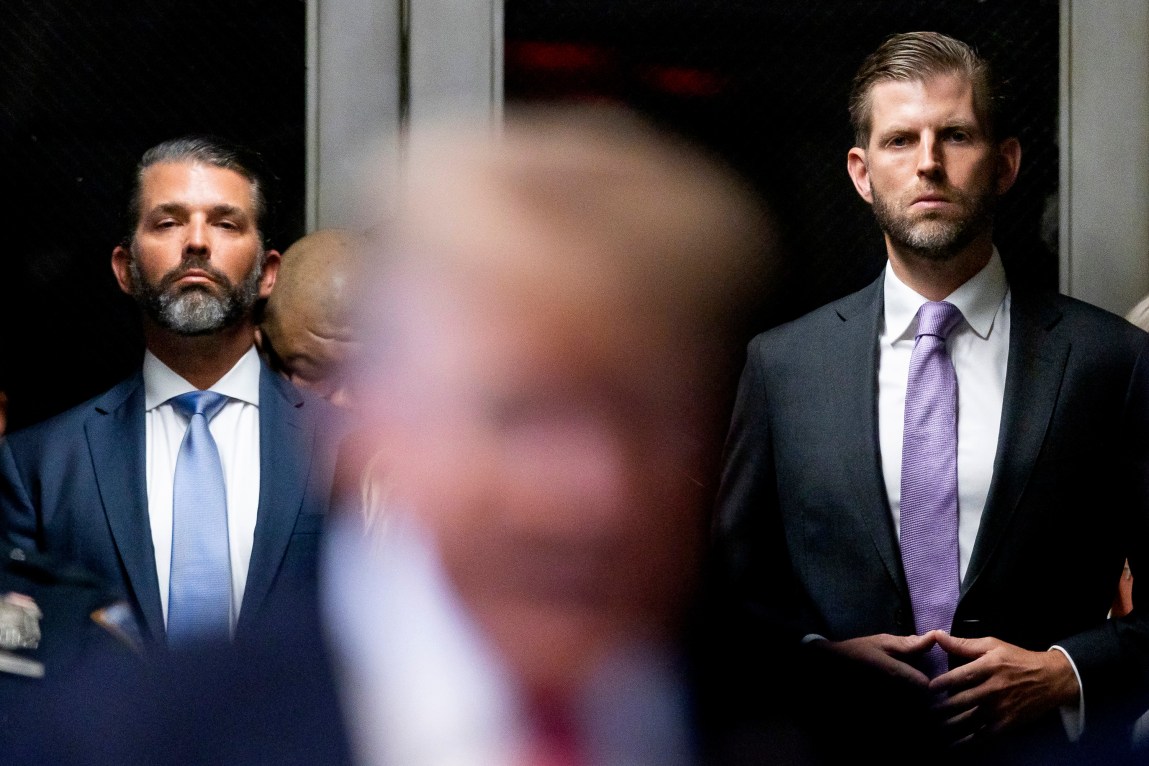
Donald Trump Jr., left, and Eric Trump, right, watch as their father, Donald Trump, center, speaks to members of the media in 2024. Justin Lane/EPA/Bloomberg via Getty Images
The Trump administration awarded a small biosecurity company nearly $40 million to screen for Ebola and other infectious diseases just months after a firm linked to President Donald Trump’s elder sons invested in its parent company, according to records and interviews.
The contracts, one to screen for Ebola in several U.S. airports and the other to respond to disease outbreaks in the Democratic Republic of Congo, are seven times the total value of government contracts the company had directly received before.
The company, XpresTest, has years of experience monitoring for COVID-19 and other diseases for the government at U.S. airports. That makes its parent, XWELL, an unusual hybrid, selling both spa treatments and biosecurity services. Last year, it made most of its money from waxing salons and airport spas that offer manicures, massages and “chakra beds.”
The contracts are the latest example of the president’s family benefiting financially from his administration’s actions. And the stakes for these deals are particularly high. In the Democratic Republic of Congo, an Ebola outbreak has killed more than 5,000 people this year, and the federal government is trying to stop the pathogen from coming to the U.S.
XpresTest has never worked with Ebola or provided biosecurity services abroad, let alone in the kind of volatile locales it’s now expected to work in. The CEO of its parent company, Ezra Ernst, said XpresTest won both contracts in a competitive bidding process and pointed to its years of experience doing screening for COVID-19 and other pathogens at American airports. But even he acknowledged that working internationally is “a new thing for us” and expressed uncertainty about being able to complete the work in the Democratic Republic of Congo.
“This is a risky contract. I’m not sure we can do it,” Ernst said in an interview.
Jeremy Konyndyk, who helped oversee the U.S. government’s response to a 2014 Ebola outbreak in West Africa, said there are some parallels between monitoring for COVID-19 and Ebola at airports, but he said it’s concerning that the government would award such a lucrative contract to a company that has no experience in Africa.
“There are countless organizations in the world that have decades of experience doing this work,” Konyndyk said. “I have to wonder why the hell they’re not going with someone who has actually done this before.”
Under previous administrations, the U.S. government addressed international disease outbreaks in partnership with the World Health Organization. But Trump withdrew from the group last year, dismantled the U.S. Agency for International Development, which handled much of this work, and dramatically scaled back the global presence of the Centers for Disease Control and Prevention.
At the same time, the State Department launched the America First Global Health Strategy, which calls for the U.S. to use aid to foreign countries to “promote American companies and American innovations abroad.” This March, the State Department announced it would be giving up to $4.5 billion in funding for various purposes, including responding to infectious disease outbreaks.
Under that program, XPresTest was awarded $20 million. Other funding went to better-known global aid nonprofits, including International Medical Corps, Save the Children and the International Federation of Red Cross and Red Crescent Societies, whose awards ranged from $25 million to $35 million.
The CDC also awarded XPresTest a contract, for $18.8 million.
In response to questions from ProPublica about XPresTest and its parent company, XWELL, the State Department noted the firm’s previous work screening for diseases at airports under a contract with the CDC and said its own award was made “through a competitive process that builds on this successful model.”
The CDC did not respond to a request for comment.
A spokesperson for the president’s sons Donald Jr. and Eric Trump said that they are “merely passive, minority investors in a fund that invested in this company,” and that they had no “involvement in or knowledge regarding the negotiation or procurement of any of its contracts, including any government contracts.”
“Both are private citizens who hold no government positions, broken no laws and who have every right to pursue lawful business and investment opportunities,” the spokesperson said.
The Trump sons’ connection to XWELL was established in February, when a fund called American Ventures invested in the company. The fund was launched by Dominari Holdings, a small financial firm with offices inside Trump Tower in New York. The leaders of Dominari hired the Trump sons as advisers after their father was elected to a second term and granted them a stake of more than 10% in Dominari.
Anthony Hayes, the CEO of Dominari Holdings, told ProPublica, “We have never seen or even heard of Don or Eric using their family name to influence the granting of a government contract.”
American Ventures has taken stakes in other companies that have benefited from Trump administration actions. The Florida-based drone company Powerus got a contract worth up to $90 million from the U.S. Air Force five months after the Trumps’ involvement was announced. Through American Ventures, Donald Jr. and Eric Trump also are acquiring a stake in a critical minerals group that has received U.S. government support to mine for tungsten in Kazakhstan. The Trumps have described themselves as passive investors who do not advocate for the companies they have stakes in before their father’s government.
XWELL was founded in 2006 as a line of airport-based spas that provided massages and facials. During the pandemic, the company, then known as XpresSpa Group, got $5.5 million from the CDC to offer travelers COVID-19 testing. It also collected waste from airplane toilets to check for new viral strains. It has done similar work for at least one other company that has received government contracts.
In January, XWELL announced that it was hiring a former senior adviser at the CDC who created and led the agency’s traveler surveillance program. The firm said the move was part of a plan to expand “its traveler-based pathogen surveillance capabilities to support international travel hubs and large-scale mass gathering events worldwide.”
The following month, American Ventures invested about $30 million in XWELL. The company had lost money the previous year. “We were so cash-strapped, close to bankrupt,” its CEO said.
Its valuation before the cash infusion was just $3 million. In exchange, American Ventures got a roughly 10% stake in the company to start, with an option to essentially print and sell millions of shares in the future.
Why American Ventures would invest so much in XWELL is unclear. In other cases, when the fund has invested in similar tiny publicly traded companies, some of those firms have moved into hot new sectors and drawn publicity for their connection to the Trumps, then Dominari has offloaded shares. In this case, there is no indication it has sold any of its stake yet.
In June, XpresTest was awarded the CDC contract for what a public notice about the grant said was “Ebola entry screening services.”
XpresTest then received the State Department grant for “rapid, effective, and coordinated outbreak response” to infectious disease threats in theDemocratic Republic of Congo, which began in September, according to a government database. The company is also planning to work in Kenya and Morocco. XWELL’s website shows it is now hiring specialists in Ebola response training and biosecurity in the U.S.
An XpresSpa at Miami International AirportKarston Tannis/Monmouth Media House
In July, after XpresTest was awarded the CDC contract, XWELL announced plans to sell the subsidiary along with its line of spas to a private facial spa company. Ernst, the CEO, said the government contracts played a role in the $13 million sale price and will follow XpresTest to the new company.
That means XWELL, the company that the Trump-linked investment fund took a stake in, will benefit financially from the Trump administration contracts if the sale closes, even though it won’t be involved in doing the work for the government.
XWELL said in a public filing that the sale was part of an effort “to pursue a new direction in the national security sector.” Ernst said he didn’t know the exact plans but thought the parent company might be looking to work with the Department of Defense.
XWELL did not announce either of XpresTest’s biosecurity contracts, which recently became public in federal contracting disclosures. Public companies like XWELL are required to report so-called material events, developments that could affect their share price, such as a large government contract. XWELL has publicized previous work for the federal government, including a $2 million, eight-week pilot program for testing COVID-19 in 2021.
When asked why his firm didn’t announce the awards, Ernst gave various reasons, including the possibility that XPresTest might wind up not being able to do the work — either because of its own inexperience working internationally or because the Trump administration might suddenly shift priorities and only pay for a fraction of the contract.
“None of these contracts are guaranteed,” he said.
The biosecurity awards add to the questions about the Trump family’s enrichment during his second term. The Trump family’s business activities extend far beyond Dominari and American Ventures. The president himself has made more than $1 billion from cryptocurrency ventures whose value has ballooned as his administration has taken a friendly stance to the industry. And other companies backed by his sons Donald Jr. and Eric have received billions of dollars in federal deals. Earlier this year, ProPublica reported that the Pentagon granted a small North Carolina startup linked to Trump Jr. a $620 million loan after a top aide to the president intervened on the company’s behalf. The Pentagon denied preferential treatment, and a spokesperson for Trump Jr. said he played no role.
The Trumps’ financial ties to government deals and actions are expected to be a primary focus of Congress in the coming months after Democrats won control of both the Senate and the House in last week’s midterm elections.
“When the government is corrupted for personal gain over the public interest, Americans lose trust and taxpayer dollars are wasted,” Robert Garcia, the top Democrat on the House Oversight Committee, wrote in a letter to colleagues last week.
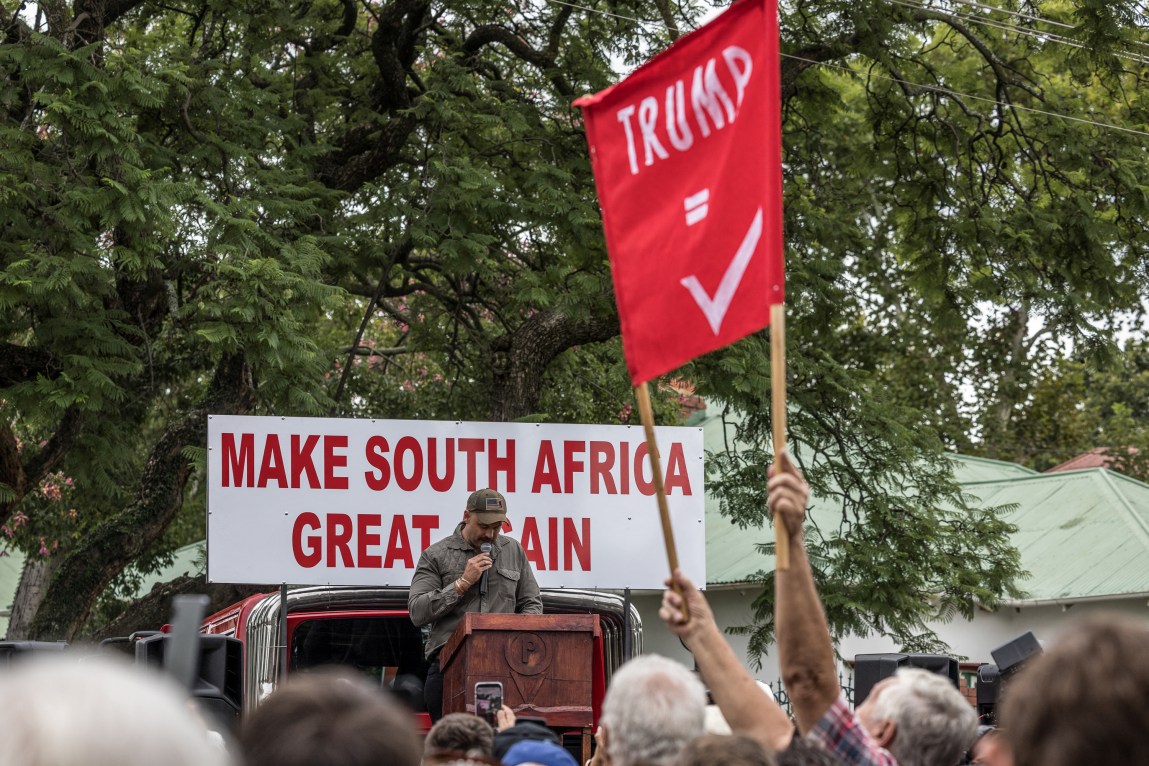
A South African farmer addresses a group of white South Africans during a demonstration supporting Trump in front of the U.S. Embassy in Pretoria in 2025. Marco Longari/AFP via Getty Images
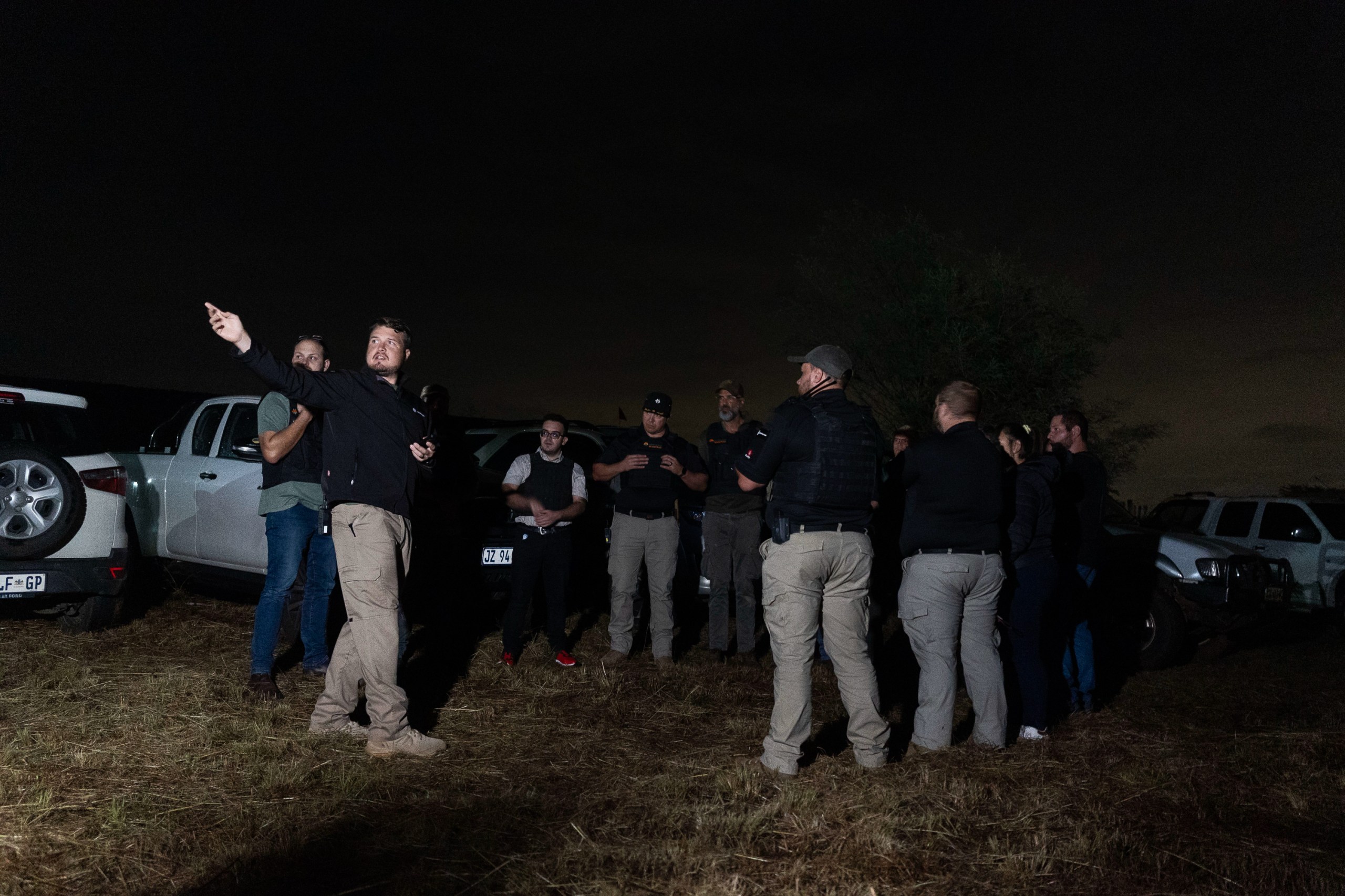
After slashing funding for programs that documented atrocities and protected human rights abroad, President Donald Trump’s State Department is now granting one of its first new human rights awards to a controversial South African organization that promotes the disputed notion that white farmers are a violently targeted, persecuted group, according to multiple sources knowledgeable about the funding.
The group expected to receive the nearly $1 million award, AfriForum, is a nonprofit that advocates on behalf of Afrikaners, a subset of South Africa’s white population. The organization says its members, who have a “God-given calling,” fight for Afrikaner interests and self-governance. The money will be used to “document hateful rhetoric and violent acts” against Afrikaners and other minority populations in the country.
The new award comes from a State Department bureau tasked with promoting democracy and human rights internationally. Until last year, those funds were mainly spent in poor and authoritarian nations — to fight corruption in the Democratic Republic of Congo, for example, or combat child exploitation and sexual abuse in Afghanistan. Since Trump returned to office, his appointees have transformed the bureau, gutting its staff, canceling programs and reorienting some of its funding toward conservative causes in Europe.
Samuel Samson, who was appointed as a deputy assistant secretary to the State Department bureau by Trump, has claimed the U.S. has a “civilizational” connection to Afrikaners, who descend primarily from Dutch migrants and predominantly speak Afrikaans. Samson, who has met with far-right leaders in Europe since joining the administration last year, has framed the U.S. government’s financial support for Afrikaners as grounded in “a common heritage, a common culture, a common way of life, shared history and ultimately a common anthropology.”
Samuel Samson Speaks at Lex Libertas Event
Samson, left, deputy assistant secretary of state in the Bureau of Democracy, Human Rights and Labor, is interviewed by Ernst Roets during a Lex Libertas press conference.Lex Libertas via YouTube
There’s a long shared political history between Afrikaner groups and white nationalists in the U.S., said Audie Klotz, a political science professor at Syracuse University who has studied those connections. But, she said, “There’s no heritage connection here. It’s pure scientific racism. In the history of U.S. immigration, there’s no direct connection between South Africa and the United States.”
AfriForum met with the Trump administration in February 2025 to plead for help. The group told officials that Afrikaners are subject to racial discrimination and murders that are more frequent and asked the administration to “act strongly against hate speech that incites violence” against them, according to a statement.
South Africa is plagued by high rates of violence, and some Afrikaners have been tortured and murdered. But independent researchers have found those killings represent a tiny fraction of murders across the country, whose victims are disproportionately people living in poor urban areas, where residents are predominantly Black. Official government statistics, and two formal inquiries into the matter, do not reveal a pattern of targeted violence against Afrikaners.
But Trump subscribes to the idea that white farmers face a “genocide” and has cited disproportionate violence against them as a reason for punishing Africa’s wealthiest nation. In February 2025, he issued an executive order that cut off hundreds of millions of dollars of aid to South Africa and welcomed Afrikaners to the U.S. as refugees. Since then, the administration has opened the doors to more than 16,000 white South Africans while halting virtually all other immigration. Officials recently told Congress they plan to invite as many as 17,500 Afrikaner refugees to the U.S. in 2027.
AfriForum did not respond to specific questions for this story but said that “our understanding is that the allocation has not yet been finalised. Should the allocation indeed be awarded to AfriForum, we will make a public announcement in this regard.”
The new award is the administration’s latest show of support for the Afrikaner cause. The white South African group governed the nation for decades under a brutal system of segregation known as apartheid, which kept the Black majority an impoverished underclass until the system was dismantled in 1994. Now, with Black South Africans governing the country, white people — of which Afrikaners are the majority — remain one of the wealthiest segments of the population.
The support has caused dismay among several former high-level diplomats, who spoke to ProPublica anonymously because they fear retribution from the administration.
Newly arrived South Africans at Washington Dulles International Airport in 2025.Chip Somodevilla/Getty Images
Two former senior U.S. officials responsible for Africa policy said that they would never have met with AfriForum, let alone funded the group, because it was considered to be politically extreme and not credible. They described the organization as cherry-picking crime statistics to create a misleading narrative. “We would certainly not have funded what we would see as a racially incendiary initiative,” said one of the officials.
The decision to direct money toward the group comes after the Trump administration halted programs that advocated for the end of violence in African countries such as Sudan, where the Biden administration determined in 2025 that there was a genocide, calling it “the world’s largest humanitarian catastrophe.”
“It’s offensive to provide funding solely to this one group after we’ve cut off funding in countries undergoing real documented crises,” said David Jandura, who managed the Africa portfolio for the State Department’s human rights bureau for several years and lost his job during the mass layoffs in 2025.
Congress has also raised questions about how the award was made. A Senate aide to Democrats told ProPublica that despite repeated requests to State Department officials, they had not received a briefing outlining the recipients of funds earmarked for democracy and human rights, which they described as “highly unusual.”
“The Trump Administration proceeded with funding fringe right-wing causes internationally despite objections from Congress,” said Sen. Jeanne Shaheen, a New Hampshire Democrat and ranking member of the Senate Committee on Foreign Relations, who described the lack of transparency as “unacceptable.”
In response to a series of questions about the AfriForum funding, a senior State Department official wrote in an email that the department does not comment on funding deliberations and that they routinely keep Congress informed of their actions, consulting extensively on this year’s programming. “The Administration has been clear about its concern about the abhorrent race-based discrimination and violence in South Africa,” the unnamed official wrote. “Human rights protections do not depend on a person’s income or ethnicity.”
In July, ProPublica revealed that the State Department originally intended to give the $1 million research award to Lex Libertas, a small organization founded last year by a former AfriForum executive named Ernst Roets. Trump officials later expanded the potential awardees to a small pool of handpicked organizations. The plan drew outrage from Congress over the content of the award as well as plans to bypass the typical competitive bidding process. After ProPublica’s reporting, the State Department released an open call for the funding opportunity, offering $986,500 to a nonprofit organization to “create a comprehensive record of violence affecting Afrikaner and other South African minority populations.” It’s this grant that is now being awarded to AfriForum.
Both AfriForum and Lex Libertas advocate for Afrikaner rights and have developed relationships with the Trump administration. Trump’s ambassador to South Africa, L. Brent Bozell III, visited AfriForum’s headquarters in September, praising the organization for its neighborhood watch programs while criticizing the South African government for not enacting policies requested by the Trump administration. AfriForum has also met with Trump officials in Washington, D.C., drawing public criticism from South African President Cyril Ramaphosa. And in September, Roets met with administration officials.
AfriForum was founded 20 years ago and, with some 300,000 members, claims to be the biggest civil rights organization in South Africa. It says it aims to “establish self-dependence and growing self-governance” and provides some local civic services, such as garbage collection and systems for reporting pot holes and broken traffic lights. The group has said it distances itself from “white supremacist and extremist groups” and that it disagrees with Trump’s assertion that white South African farmers are experiencing a “white genocide.” But it has also said the South African government is “targeting the continued existence of Afrikaners” through racial legislation and the downplaying of farm murders, among other things. Academics and former U.S. diplomats have repudiated some of the ideas the group promotes as racist.
Members of AfriForum assemble before a neighborhood patrol near Pretoria, South Africa, in 2025.Alet Pretorius/AP Photo
It unsuccessfully challenged a ban on the “gratuitous display” of the national flag flown during apartheid, which a South African court has found to be a form of hate speech. And while the group’s leader, Kallie Kriel, has said apartheid “was wrong,” he has also said it did not constitute “a crime against humanity” as the U.N. has determined, on the grounds that not enough people were killed during that time.
AfriForum has been focusing on farm attacks since at least 2009. In 2018, during Trump’s first presidency, Kriel and Roets, who was then his deputy, met with government officials in Washington, D.C., about the issue, and Roets spoke about it with Tucker Carlson on Fox News, as the chyron below him announced in all caps, “White farmers brutally murdered every week in SouthAfrica.”
Additional research on crimes against white South Africans is an unnecessary and confusing use of U.S. taxpayer dollars, said Carolyn Holmes, a professor at the University of Tennessee, Knoxville, who studies democracy in southern Africa. Holmes noted that AfriForum already produces annual reports on crimes against farming communities. “These data already exist,” she said. “You don’t need a new study. You don’t even need a far-right study, we have those.”
The U.S. support offers more than a financial boost to the organization. “For some time, AfriForum has been campaigning for recognition of their claim that white people face discrimination and persecution,” said Alex Dyzenhaus, a lecturer in international relations and African politics at the University of St. Andrews. “Before, they were only getting the Tucker Carlsons and the far right of the news ecosystem. Now they have the U.S. government on their side.”
The Trump administration has made the plight of white, rural South Africans a key foreign policy issue. In addition to the early executive order, Trump held a contentious meeting with Ramaphosa in the White House last year where Trump claimed white farmers were being executed. The administration has also considered an ad campaign focused on encouraging more Afrikaners to come to the U.S.
Roets declined to answer specific questions from ProPublica but, in a text message, described the murders of several Afrikaners that he knew personally. He also wrote, “I see the suffering of black people in South Africa, I am deeply moved by it, and I spend every day of my life campaigning to make things better for us all.”
Appearing at a press conference for the Lex Libertas event, Samson, the State Department official, showcased the sharp shift the administration has made in U.S. relations with South Africa. While apartheid has been understood globally as a symbol of racist oppression, Samson described the current South African government as having discriminatory “race-based” policies and a cautionary tale for the rest of the world.
At the end of apartheid, in 1994, South Africa was a “flourishing, prosperous society,” Samson said. Since then, the country has gone to “ruin.” He blamed the fall on a “radical ideological leftist movement that wears human rights, that wears tolerance and inclusivity, as a skin suit to advance their Marxist communist worldview.”
Part of the Trump administration’s solution to this perceived crisis, he said, was to provide the research funding.
Early reports of ballot scanner malfunctions in Westchester County, New York are a sign of the challenges election officials will face in the current online information environment as voters head to the polls Tuesday on the final day of voting.
While such equipment failures and breakdowns are not uncommon and happen in a small number of precincts every election cycle, and there is no evidence of foul play, conspiracists quickly jumped on the news.
According to Kate Starbird, a professor at the University of Washington who researches online rumors and disinformation tied to elections, the rumors are already spreading within right-wing online circles as evidence of election malfeasance.
Starbird cited metrics showing that posts on X about the scanner malfunctions grew to as many as 100 a minute in the hours after the news was reported, with established election deniers, such as The Gateway Pundit, amplifying conspiracist framings.
The Westchester County Board of Elections said the problems appear related to some ballots being too thick for the machines to accept, leading to rejections. Voters with affected ballots were told to place them in designated orange emergency ballot bags that will be secured, monitored and counted by officials in compliance with election laws.
“The Board of Elections is in constant communication with New York State officials, Westchester County Government and poll workers to address this issue and ensure that voting continues with as little disruption as possible,” the board wrote in a statement. “In the meantime, voters should continue to complete their paper ballots as instructed by poll workers.”
New York Attorney General Letitia James said her office was also monitoring the situation and “is in touch with the state and local Boards of Elections as they work on a solution.”
“Westchester voters can still safely fill out and turn in their ballots at their polling locations,” James wrote on X. “Your votes will count.”
Meanwhile, the Department of Justice issued a news release announcing charges against 63 individuals, many of them lawful permanent residents who have lived in the U.S. for decades and some who later became naturalized citizens with legal voting rights, for allegedly voting as noncitizens in a past election.
The charges are part of a flurry of last-minute actions by the Trump administration to promote the specter of widespread noncitizen voting. The administration also brought lawsuits against states, like California and Alaska, in the past week that have sought to influence how ballots are treated and counted in the upcoming Senate races. Federal courts, including the U.S. Supreme Court, have thrown them out while reiterating the executive branch has no constitutional or legal role in the administration of state-run elections.
Another federal court ordered the Justice Department and the Department of Homeland Security to stop sending lists of “potential noncitizen” voters to states, after Trump administration lawyers acknowledged in court that the data they rely on for those assertions has a “high” error rate.
Nevertheless, the department continued its aggressive posture, announcing Tuesday that it would be deploying 1,000 election monitors to precincts across all 50 states.
Quitobaquito Springs, a rare Sonoran Desert oasis imperiled by border wall construction, is located within 200 feet of the U.S.-Mexico border in Organ Pipe National Monument outside Ajo, Arizona. Anna Watts
Lorraine Eiler stood in the blazing August sun, surrounded by reporters, to offer a warning. The Trump administration was racing to erect a second border wall across Organ Pipe Cactus National Monument, southwest of Tucson. If the bulldozers came, she said, they were bound to disturb the final resting places of her family and Hia-Ced O’odham tribal ancestors.
“People used to live here,” the 89-year-old said.
Fifteen days later, her fears were realized.
ProPublica has confirmed that Native American remains were unearthed in Organ Pipe amid soil overturned by border wall contractors.
The discovery, unreported until now, was made on Sept. 8, the National Park Service said in a statement. “Following established protocols, the University of Arizona conducted an assessment and confirmed that the remains are human and align with tribal cremation practices,” the agency said.
The Native American Graves Protection and Repatriation Act governs the steps agencies must take following an inadvertent discovery of Native American remains on federal land. Those steps include halting any activity that contributed to the discovery until tribal communities are consulted.
“The National Park Service is committed to respecting tribal rights and traditions,” the agency went on to say, adding that it was “working diligently to identify the culturally affiliated tribe and ensure the respectful return of the remains, so the tribe may observe their religious and cultural practices.”
Eiler was alerted to the discovery by a cultural affairs specialist with the Tohono O’odham Nation, a larger tribe whose reservation is east of Organ Pipe, and later by the Organ Pipe superintendent’s office. Her family discussed what to do next. Ultimately, they decided to hold off on reburying the newly unearthed remains until construction in the area stops, fearing the work will disturb more sites.
“Who knows what more will come up,” Eiler said in an interview. “They’re going to find remains wherever they dig.”
Hia-Ced O’odham elder Lorraine Eiler stands in the shade of a giant saguaro cactus in Organ Pipe National Monument in 2022.Roberto “Bear” Guerra
Customs and Border Protection contractors have bulldozed a wide swath of vegetation parallel to the international divide. The agency has fashioned staging areas for heavy equipment by knocking down, uprooting and attempting to transplant select specimens of the monument’s native plants. Eiler was told the remains were found by a park service archaeologist near the base of a saguaro cactus that was still standing.
In a statement, CBP said it was advised of the discovery six days after it was made, that its cultural resource specialists examined the area and found no other remains, and that “no additional construction has occurred at this location to date.”
The discovery comes amid tensions between the Department of Homeland Security and tribal communities in the Sonoran Desert. In April, border wall contractors bulldozed through a large, well-marked earthen etching, known as the Las Playas Intaglio, that was believed to be at least 6,500 years old. (CBP said the incident was accidental.)
Soon after, the department awarded a $1.3 billion contract for construction of a 62-mile border wall across the entirety of the Tohono O’odham Nation. The tribe is fighting the project in federal court and has erected “no trespassing” signs to keep border wall contractors off its land. As ProPublica recently reported, DHS has responded by deploying masked federal agents as escorts for its work crews and conducting aerial surveillance of tribal members. The head of CBP has justified the need for a wall by describing the reservation as “one of the most dangerous smuggling and trafficking corridors on the Southwest border.”
Verlon M. Jose, the tribe’s chairman, expressed gratitude that the park service had notified his office of the discovery, but mourned the fact that it was necessary.
“When you have mass destruction and disturbance of land taking place where there are clearly sacred sites, cemeteries and other areas of cultural importance, these types of discoveries are bound to happen,” Jose said in a statement. “Every time this happens it is a wound to the heart of all members of the Tohono O’odham Nation — these are our ancestors, our family members — whose remains are being desecrated.”
U.S. Rep. Adelita Grijalva, who appeared with Eiler and the chairman at the August news conference, blasted the government for failing to heed their warnings. “Tribal leaders and elders have warned DHS about the devastating consequences of bulldozing through their ancestral lands, beginning with the destruction of the Las Playas Intaglio,” she said in a statement. “For months, those warnings have fallen on deaf ears. Now, we are seeing exactly what they feared: sacred sites destroyed and ancestral burial grounds desecrated.”
James T. Watson, curator of bioarcheology in the Arizona State Museum at the University of Arizona, analyzed the remains recovered in Organ Pipe in the field.
While he was not authorized to discuss the details of his findings without park service approval, Watson said in an email that he confirmed the remains were human. The evidence suggested they were cremated in a manner consistent with precolonial practices in the region dating back 1,500 years, he wrote.
Under NAGPRA, the graves protection act, Native American remains inadvertently uncovered on park service lands must be immediately secured, Watson explained, and the superintendent of the jurisdiction must notify “all relevant lineal descendants” with “potential cultural affiliation or ancestral ties to the land.”
“Work in the immediate discovery area must remain suspended for at least 30 calendar days,” he wrote, while the park service consults with tribal representatives “to determine the disposition and physical treatment of the remains.”
Workers clear desert flora to make way for construction of a double border wall in Organ Pipe National Monument.Anna Watts
In a region as rich with archaeological sites as the American Southwest, the inadvertent disturbance of Native American remains occurs with some regularity. What sets the discovery in Organ Pipe apart are the extraordinary powers the Department of Homeland Security wields to expedite wall construction in the borderlands.
Following the Sept. 11, 2001, terrorist attacks, Congress passed the Real ID Act, which included a provision empowering the secretary of DHS to waive any law that might slow border wall construction. In the two decades since, DHS has invoked its powers 66 times, with 60 of those instances occurring under President Donald Trump’s two administrations.
When DHS uses this authority, it typically waives dozens of laws at a time. That was the case in 2019 when the department set its sights on Organ Pipe. A waiver issued by then-acting Secretary Kevin K. McAleenan set aside more than 40 of the nation’s most stringent environmental and cultural resource protection laws, including the National Environmental Policy Act, the Endangered Species Act, the Clean Water Act and others. Also on that list was the Native American Graves Protection and Repatriation Act, the landmark 1990 law that acknowledged the nation’s long history of desecrating Native American burials and required that ancestral remains and cultural objects be returned to tribes.
In an internal 2019 report obtained by The Washington Post, park service officials identified nearly two dozen archaeological sites in Organ Pipe as at risk of damage or total destruction by government contractors.
Of particular significance is a desert oasis known as Quitobaquito Springs. Less than 200 feet from the international border, the springs provide one of the only reliable sources of groundwater and shade for miles around, and they were a longtime gathering place, grazing site and home for O’odham families.
“Archaeological evidence of human presence at Quitobaquito extends back thousands of years, at least to Archaic times,” the survey found, adding that the springs represent the “only known Hia C-ed O’odham village site in the United States.”
A park service report in 2024 noted that a cemetery at Quitobaquito holds the remains of at least two families, including Eiler’s, and 34 graves. Throughout the region, remains of 5,500 ancestors that were displaced have been made available for return to the Tohono O’odham Nation, according to ProPublica’s NAGPRA database.
“This sort of incident has happened numerous times across our homeland, and it’s always alarming to hear about a case from an O’odham point of view,” said David Martínez, a professor of American Indian and transborder studies at the University of Arizona and a member of the Hia-Ced O’odham and Akimel O’odham tribes, as well as the Gila River Indian Community.
“Those remains shouldn’t have been disturbed in the first place,” he said. “While there are protocols existing today to properly care for these remains, ultimately, whatever either the government or the corporate world is pursuing to build, we know that at some juncture that construction will continue, and it always leaves us feeling, I think, a little hollow.”
Today, Quitobaquito lies in the shadow of the border wall erected during Trump’s first term. Its construction required detonating explosives in the national monument, blasting apart an area called Monument Hill and outraging tribal leaders. According to Eiler, the remains recovered in September were not found at the springs, though government work crews are working in close proximity to the site.
This year, DHS hired Sundt Construction, an Arizona-based company, to build a second wall in the monument. The $443 million contract was finalized in May. (Sundt directed questions concerning the discovery of human remains on its job site to CBP.)
According to CBP, the 2019 waiver for Organ Pipe is still in effect, years after completion of the project that prompted it. A second waiver, exempting DHS from many of the same laws and applying to the national monument as well as a wildlife refuge to the west, was issued by Homeland Security’s then-Secretary Kristi Noem last year.
“Unfortunately, there is no end date to the effectiveness of the waivers,” said Dinah Bear, a Tucson-based lawyer who served for 25 years as a senior attorney in the White House’s Council on Environmental Quality under both Democratic and Republican administrations. What’s more, she added, “there’s nothing in the statutory language that ties the waivers to a particular project.”
The Department of Homeland Security’s waiver powers have been central to a high-profile legal fight over the department’s efforts to build a border wall through Big Bend National Park in West Texas, with a federal judge overseeing the case recently ordering a temporary halt to the project.
Borderlands advocates in Arizona are hoping for similar interventions. In Congress, Grijalva is preparing legislation to void existing waivers that have allowed DHS to disregard laws designed to protect tribal sovereignty, sacred sites and environmentally sensitive lands.
In the meantime, construction on the border continues. For Eiler, it’s not just the destruction in Organ Pipe that’s troubling. She sees the disturbance of tribal graves resulting from wall construction as reflective of a wider pattern of destruction across the border.
“It’s sad because it’s not only happening down there,” she said. “It’s happening all over the United States, and nobody’s saying much about it.”
A federal judge dismissed a lawsuit from the federal government seeking to preemptively block Democratic Senate candidate Mary Peltola from assuming office if she wins her race.
The Department of Justice sued Alaska last month, arguing that an alleged scheme by Peltola to recruit Daniel J. Sullivan, an independent candidate who shares a name with incumbent Republican Sen. Dan S. Sullivan, would confuse voters.
Peltola’s campaign, the Democratic Senate Campaign Committee and civic groups including the League of Women Voters of Alaska and Common Cause all filed motions to dismiss the lawsuit, arguing the federal government lacks standing and constitutional authority to weigh in on Alaska’s elections.
They also said the court cannot grant relief because there is no legal way to determine whether a voter mistakenly voted for one Sullivan over the other without violating the secret ballot.
U.S. District Judge Sharon Gleason reached the same conclusion, noting in an order “the absence of any explanation from the United States as to how its requested relief could redress its alleged injury while simultaneously maintaining the secrecy of the ballot.” She also wrote that she “cannot grant the United States the relief it seeks because the United States has failed to establish the redressability prerequisite for Article III standing.”
Gleason’s opinion recounts Daniel J. Sullivan’s independent candidacy. Alaska Director of Elections Carol Beecher decertified it in June, later testifying that she did not believe he was running in good faith. State courts disagreed and restored his candidacy, and the Alaska Supreme Court upheld that ruling.
Alaskan election officials still took steps to distinguish the two candidates, listing their full names and labeling them “Incumbent,” “Republican candidate” and “Independent.” Alaska’s ranked-choice system lets voters rank both Sullivans, so they are not limited to a single candidate.
State officials and election experts also noted that nearly 60,000 Alaskan voters have already cast early or mail ballots, and there is no feasible way to reissue them.
The government’s one-sentence response said the state could segregate ballots and asked the court to allow a federal investigation into whether any voters were deceived. Gleason rejected that approach, saying the government offered no explanation of how ballot segregation or a law enforcement inquiry into voters’ intent could be carried out while preserving ballot secrecy.
Gleason also questioned the government’s constitutional basis, writing that the executive branch has no legitimate role in determining which candidates appear on Alaska’s ballots. The government said it was not seeking to change the time, place or manner of the election, but Gleason noted that its requests, including limits on certification, ballot segregation and an investigation of voters’ intent, all concern those matters, which are the state’s responsibility.
The lawsuit drew heavy media attention and concern from democracy advocates, but legal experts widely viewed it as exceptionally weak.
“Today’s ruling marks a victory for Alaska state sovereignty and Alaskan voters,” said David Becker, executive director of the nonprofit Center for Election Innovation and Research and a former voting rights attorney at DOJ. “By soundly rejecting the administration’s unlawful and now unsuccessful attempt to interfere, the court concurred with the State of Alaska that this is purely a matter of state law and that, under the U.S. Constitution, the federal government has no role in determining how Alaska certifies its Senate election.”