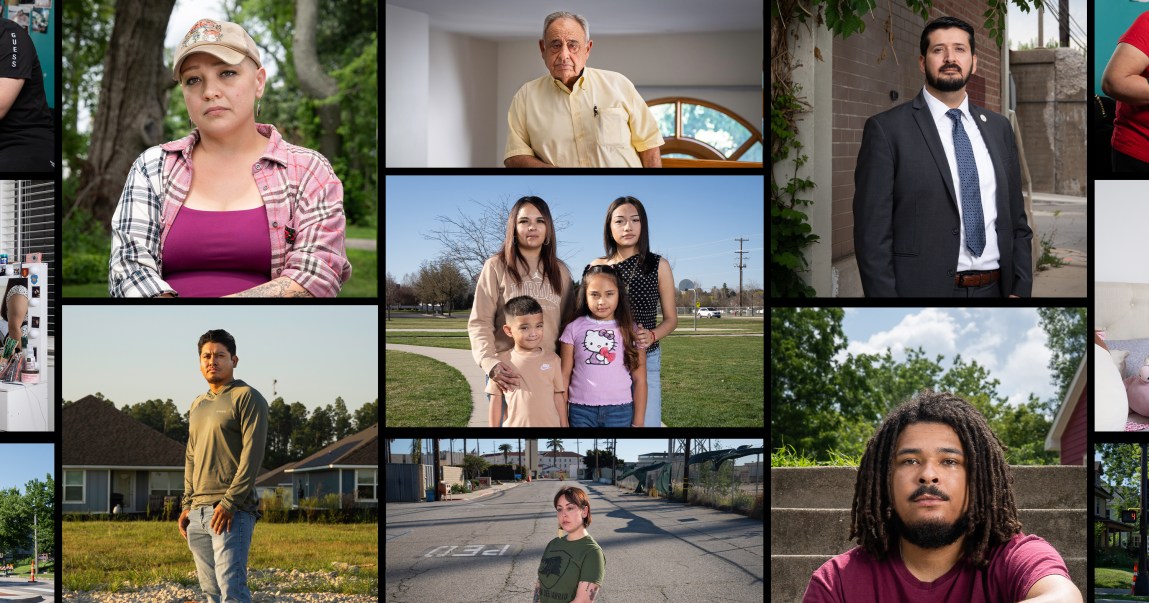
The Department of Homeland Security says it’s not detaining Americans.
In written statements, it has said that “allegations that ICE is arresting and deporting U.S. citizens is FALSE.”
It has said that “when individuals are briefly questioned under ‘reasonable suspicion’ and are found to be U.S. citizens, they are immediately released.” And it has said that “U.S. citizen agitators are only held while they actively remain a safety threat to our officers and the public.”
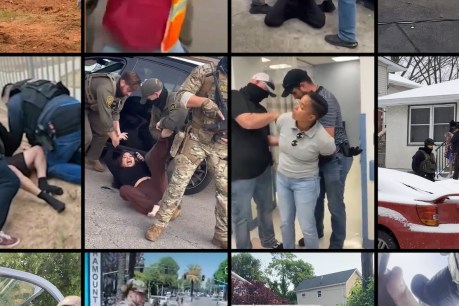
But ProPublica has identified more than 500 citizens detained since President Donald Trump returned to office.
They are not just numbers.
Among them is an elderly car wash owner whom agents repeatedly knocked to the ground as they detained several of his workers. A 6-year-old whose mother says still has nightmares after agents pointed guns at him and his siblings. A high school senior who was detained after she tried to stop officers from questioning her autistic younger brother. A dad who was held for several days and missed his daughter’s third birthday.
Over the past year, several of these people shared the lingering effects of what happened to them with ProPublica.
Ana Michelle Ramirez Sanan
In their own neighborhood
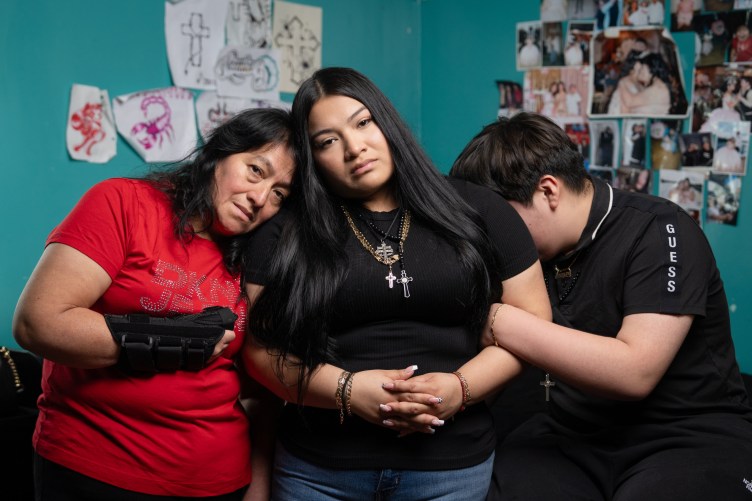
“We have so much trauma just from the 30 minutes we were held.”
Ana Michelle Ramirez Sanan
In September 2025, Ana Michelle Ramirez Sanan learned that ICE agents had intercepted members of her family as they drove one of her uncles to a court hearing. Ramirez Sanan, then 17, said she rushed to the scene and discovered agents had broken the car windows and pulled her two uncles, her mother and her younger brother out. Video of the incident showed agents kicking and slamming Ramirez Sanan’s mother to the ground and then twisting her arms to handcuff her. Ramirez Sanan said she saw other agents questioning her brother against a fence, threatening to arrest him if he couldn’t prove he had legal status.
Both she and her brother are citizens.
“Him being a 13-year-old with autism, he doesn’t understand these things like we do. He didn’t know what ‘a legal status’ is. He’s not able to tell them: ‘Yes, I have a legal status. I’m born here,’” Ramirez Sanan said. She said that when she rushed toward her mom and brother, begging agents to let them go, they detained her. “It was really scary thinking that they might have taken us and deported us to Guatemala, where we don’t have anything.”
DHS said that its agents intercepted the car in order to detain the uncle who was going to court that day, and that they “used the appropriate force necessary.” He was facing charges of sexual assault on a child and remains in ICE custody. He has pleaded not guilty.
As for Ramirez Sanan, her mother and her brother, they were released the day of the incident. Her mother, who has lived in the United States for 20 years and has a green card, was treated at a hospital for a concussion, bruising and nerve damage in one of her arms.
DHS denies that they were ever detained.
“We have so much trauma just from the 30 minutes we were held,” said Ramirez Sanan, who struggled with anxiety and depression after the incident. “I lost my whole senior year fighting this. My brother isn’t the same either.”
Andrea Velez
On her way to work
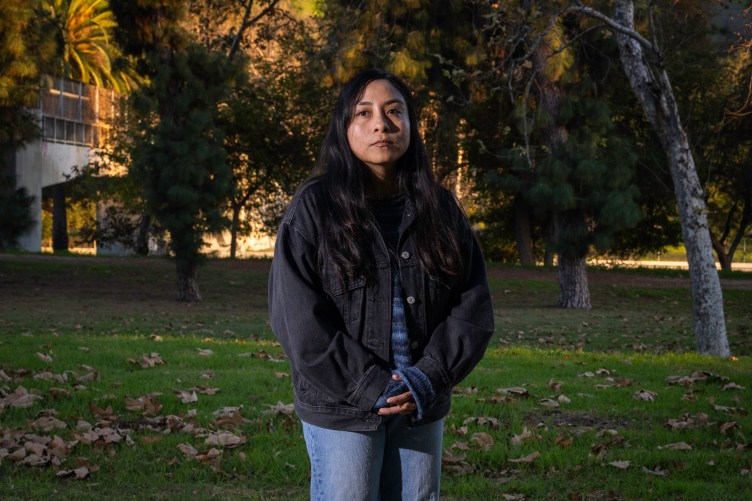
In June 2025, Andrea Velez was dropped off at work at a shoe company in downtown Los Angeles and inadvertently walked into an immigration raid on street vendors. She said one of the masked agents rushed toward her, grabbed her and slammed her to the pavement. Velez said she attempted to shield herself with her work bag.
“Throughout the whole time, I kept saying I was a U.S. citizen,” Velez recalled, saying that agents called her an “alleged U.S. citizen” even after they checked her ID. “They kept saying how many ‘bodies they got’ that day.”
Velez said that she was detained for two days, and that she was denied an opportunity to call family or a lawyer for most of that time. The government charged Velez with assault. DHS said she “made physical contact” with agents and tried to impede them. A judge ultimately dismissed the case.
After her arrest, Velez said she was so afraid of being detained again that she worked remotely and avoided going outside.
Quentin Williams
At the end of his school day as a teaching assistant
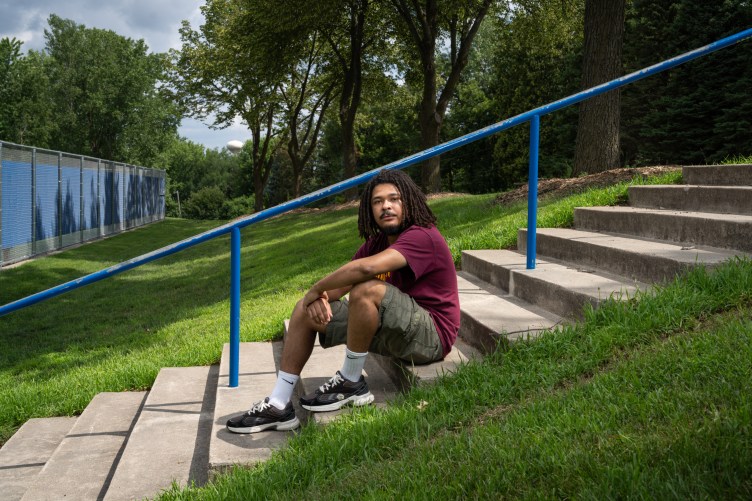
In January, not long after immigration agents in Minneapolis had shot and killed an American woman named Renee Good, Quentin Williams, a teaching assistant at nearby Roosevelt High School, was guiding students toward buses when more agents arrived outside his building.
Williams said that agents began confronting students and staff. At some point during the commotion, he said, the agents threw him to the ground and choked him so hard he couldn’t breathe.
“They didn’t even know what they were doing — just kind of being reckless [with] assault rifles out and pepper-spraying staff after they took me down,” Williams recalled.
Agents drove Williams to the Bishop Henry Whipple Federal Building, where they detained him for several hours.
Later, then-Attorney General Pam Bondi published his photo on her social media accounts, describing him as a “Minnesota rioter.” Federal authorities issued a warrant for his arrest for assaulting officers. The charges against him were eventually dismissed, and he’s filed a claim against the government for damages over his arrest.
Williams said he’s still haunted by the idea that he came close to meeting the same fates as Good and George Floyd, who was killed by a Minneapolis police officer in 2020. “I didn’t leave the house for at least up to a week,” he said. “I felt lucky to be alive.”
Anabel Romero, John Carter, Juana Rodriguez and their children
Attending a horse race
In October 2025, some 200 federal agents and local police officers in armored vehicles, a helicopter and on horseback conducted a raid on a racetrack in Wilder, Idaho, and detained hundreds of people, including dozens of children. Among them ProPublica identified at least 30 U.S. citizens.
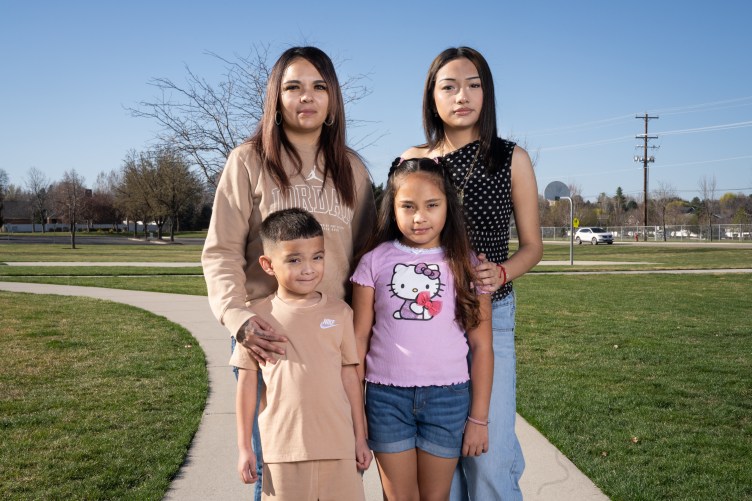
Anabel Romero had left her kids eating in the car while she went to look at the horses. They were on opposite sides of the track when the raid began.
Romero said the agents wore camouflage and had their guns drawn. She had no idea who they were. So she ran and tried to hide. “They didn’t identify themselves,” Romero said. “I didn’t know who they were.”
She said unidentified officers tackled her, zip-tied her and threatened to “fucking blow your head off.”
On the other side of the track, Romero’s 14-year-old daughter, SueHey Tello, said officers surrounded their car, pointing guns at her brother, 6, and sister, 8. When Tello refused to exit the car without her younger siblings, agents pulled her so roughly out of the car that she fell, leaving bruises. She said agents zip-tied her hands.
Romero and Tello said the agents refused to remove the zip ties for hours, despite Tello’s age. The teenager said the incident has affected her view of law enforcement. Her mother says that the 6-year-old still has nightmares. Officers are meant “to keep us safe,” Tello said. “But yet they treated all of us like that.”
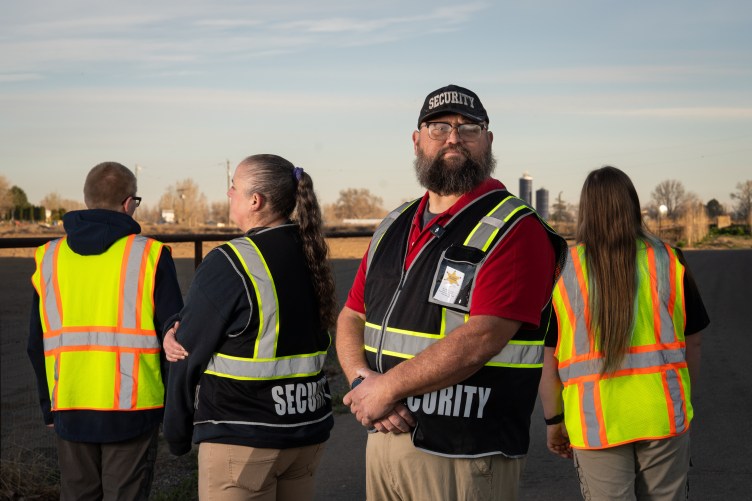
John Carter was working security at the track when the raid started. He had brought his girlfriend and his two children along with him. He recalls officers throwing a flash-bang near him and his son, and then the officers detained them. “They cinched the zip ties down as tight as they could,” Carter said. He said the officers also zip-tied his 14-year-old daughter but removed the restraints when he complained.
Carter explained that he is active in the local Republican Party and a strong supporter of law enforcement. But he said that what he saw officers doing that day was wrong.
“Things are supposed to be done humanely and correctly,” he said. “This wasn’t.”
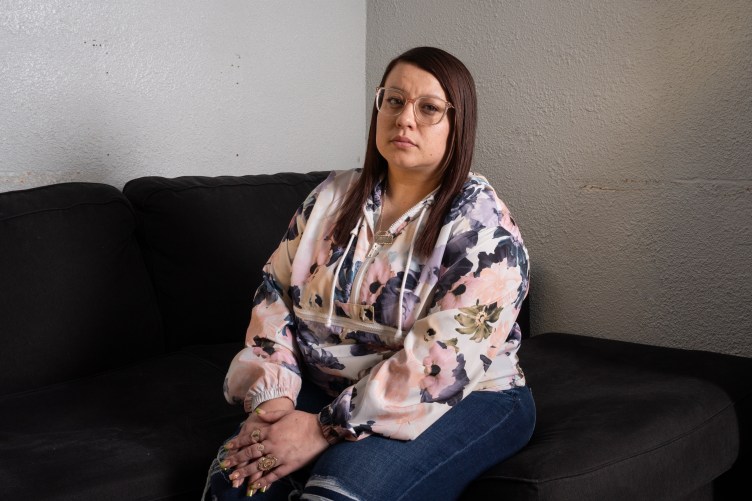
The agents also detained Juana Rodriguez, who attended the event with her family. She said that she was zip-tied beside her 3-year-old son, which left her unable to pick him up and comfort him during the long hours they waited to prove their citizenship. “He wanted me to hug him, to hold him,” Rodriguez said. She and her son are both U.S. citizens and lead plaintiffs in an ACLU of Idaho lawsuit alleging the raid illegally targeted Latinos. ICE, the FBI and several Idaho agencies have denied the charge and asked that the lawsuit be dismissed.
DHS did not respond to any specific allegations made by Rodriguez, Romero, Carter or their families. Instead, a spokesperson wrote in an email statement that the raid successfully helped dismantle an illegal gambling operation, and that ICE officers “didn’t zip tie, restrain or arrest any children.” The FBI declined to comment to ProPublica but told local media no “young children” were zip-tied. DHS, the FBI and multiple Idaho law enforcement agencies have refused to share the number of U.S. citizens held that day.
Amanda Trebach
Monitoring ICE operations
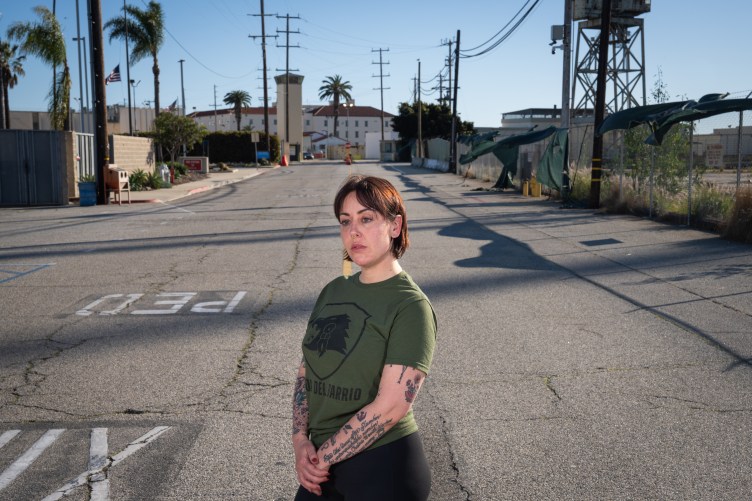
“I didn’t want to walk to my apartment by myself; I didn’t want to be out in the dark by myself.”
Amanda Trebach
In August 2025, Amanda Trebach, a nurse and volunteer with an immigrant advocacy organization, said she was monitoring ICE activities outside a facility that the agency was using to stage operations when agents grabbed her and pinned her to the ground, kneeling on her neck and back. They shoved her into the back of a van and held her for several hours until taking her to a federal detention facility in Los Angeles. She was not given the opportunity to speak with an attorney during the 33 hours that she was in custody. She said agents took her phone and never returned it.
DHS said Trebach was detained because she attempted to physically impede its agents’ operations by jumping in front of moving vehicles, hitting their cars with her protest signs and shouting obscenities at agents. She denies this.
She said that after the incident she felt paranoid that she was being followed.
“I didn’t want to walk to my apartment by myself; I didn’t want to be out in the dark by myself,” she said. “I didn’t know if they were going to come get me.”
George Retes
Driving to work
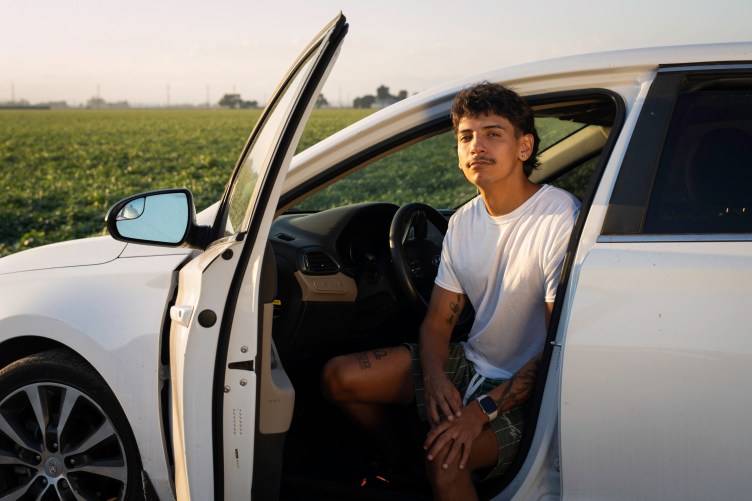
George Retes, a U.S. Army veteran who served in Iraq, was driving into work at a cannabis farm in July 2025 and arrived to find the place being raided by immigration agents. Protesters had gathered outside the farm. He found himself trapped between the agents and the protesters. The agents broke his car window, pepper-sprayed him and pulled him out onto the ground. He was detained for three days, missing his daughter’s third birthday. Retes said, agents refused to explain why he’d been detained or to let him call relatives or a lawyer.
When ProPublica published Retes’ story last year, he said agents knew he was a citizen.
“They didn’t care,” he recalled. “They still sent me away to jail.”
DHS officials made statements claiming Retes had assaulted their agents. But he was never charged.
Javier Ramirez
Working at his auto shop
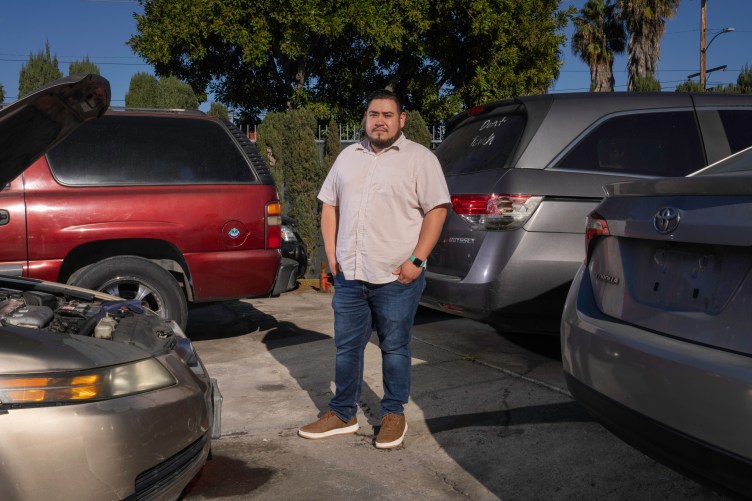
In June 2025, immigration agents conducted a raid on an auto shop owned by Javier Ramirez and his family. He said agents swept him up as they were detaining his workers. He recalled hearing one of the agents yell: “Hey, just get him! He’s Mexican.” He said agents tackled him and one of them put a knee on his face. He recalled hearing the agents boasting about the numbers of immigrants they were detaining across the city that day, saying: “How many did you get? I got 10, I got 15.” According to a lawsuit that Ramirez filed against DHS, he said he was held in federal custody for four days and was denied medication he needs for diabetes. DHS has not filed a response to the lawsuit, but previously the agency said that Ramirez was arrested for obstructing law enforcement, and that it never denied him medication.
Jeane Wong
Monitoring ICE operations
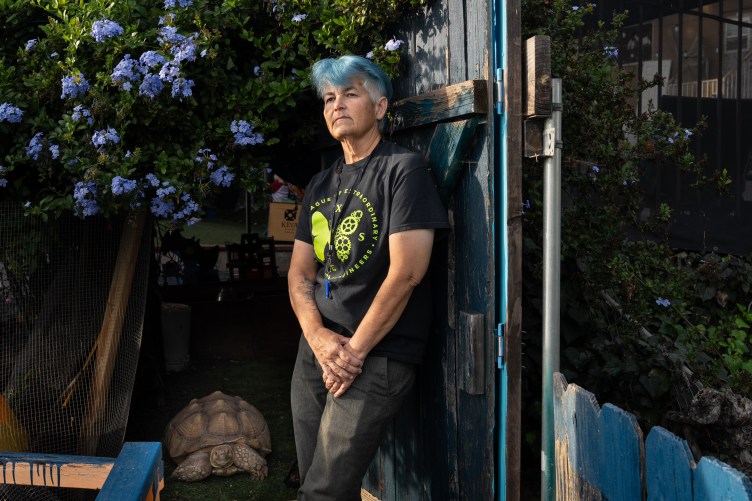
When Jeane “Bleu” Wong, an operator of a daycare center and activist, heard in July 2025 that ICE agents had arrived at a nearby apartment complex, she rushed to the scene to provide assistance to people who were being detained. Agents detained her when she tried to remove one of their masks.
She was held in the San Ysidro Port of Entry, the largest and busiest land border crossing in the Western Hemisphere, and later moved to a federal prison. Wong said that during her time in custody she was strip-searched and shackled in chains that restricted her from using the restroom. Federal authorities charged Wong with assaulting a federal agent. She eventually pleaded guilty to a misdemeanor.
A little over a year later, Wong received a notice from the California Department of Social Services that her license to care for children had been revoked because of the assault. She and her wife are selling their home and relocating outside of Southern California.
“We could totally fight, and I’d probably win,” she said. “But we don’t have the money, time, energy.”
Rafie Ollah Shouhed
Working at his car wash
“I was begging them, ‘Just let me breathe!’”
Rafie Ollah Shouhed
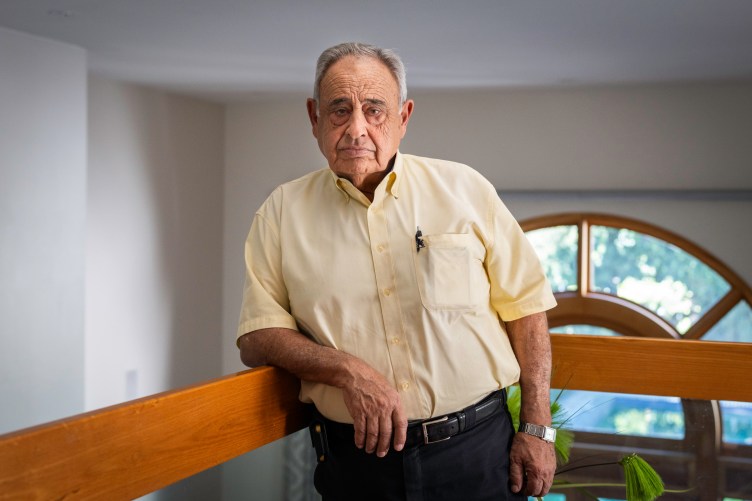
Rafie Ollah Shouhed, 79, was born in Iran, moved to Los Angeles after the Islamic Revolution and became a U.S. citizen. On Sept. 9, 2025, Shouhed, owner of Valley Car Wash, watched with alarm as immigration agents stormed into his business and attempted to detain his employees. He rushed outside to see what was going on. Security video of the incident shows agents knocked Shouhed to the ground repeatedly. He told agents that he had just had heart surgery. “They were sitting on me,” he recalled. “I was begging them, ‘Just let me breathe!’” He said in an ongoing lawsuit that the agents kept him handcuffed for 12 hours and left him with injuries to his arm, elbows and ribs. Shouhed said that he’s still receiving treatment for his injuries, and that he has quit working. DHS said Shouhed was arrested for interfering with and assaulting officers and did not answer questions about his lawsuit. He was released without charges.
Leonardo Garcia Venegas
Working construction
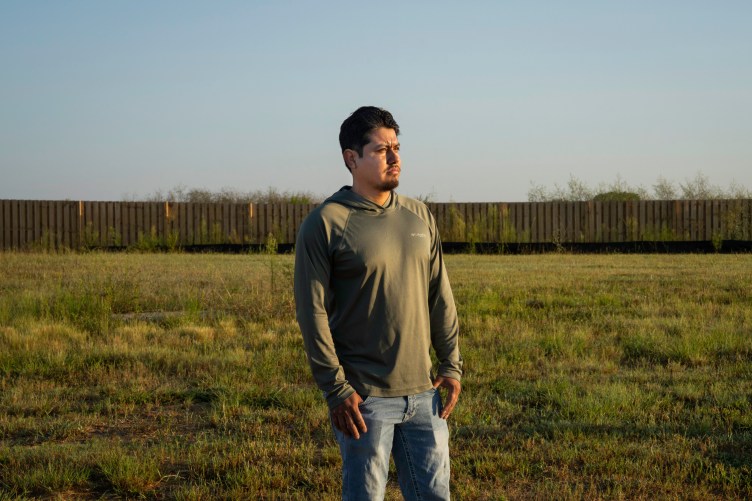
Leonardo Garcia Venegas was laying concrete with his construction crew in Alabama in May 2025 when immigration agents arrived at the site without a warrant and began detaining his co-workers, including his brother. Garcia Venegas pulled out his phone to film the agents. Videos he and other workers recorded show agents approaching to arrest Garcia Venegas while he filmed, tackling and arresting him while he yelled that he was a U.S. citizen. Garcia Venegas said that he told the agents he had his REAL ID on him, but that they dismissed the document as fake. They held him in handcuffs for an hour before finally releasing him without charges. DHS said he was impeding officers. After that first incident, immigration agents detained Garcia Venegas two more times, each time ignoring statements and identification documents that prove he is a U.S. citizen.
Garcia Venegas filed a lawsuit against DHS over its warrantless raids on construction sites. DHS responded to the lawsuit, saying that its agents didn’t need warrants to operate at construction sites because they’re open to the public. The agency also said that brief stops like Garcia Venegas’ were “reasonable.” Until the case is resolved, a judge ordered a temporary halt to the operations.
“I just want to live in peace,” he told ProPublica after his third arrest.
Aliya Rahman
Driving to the doctor
“Nobody ever asked me for ID, my name or my citizenship.”
Aliya Rahman
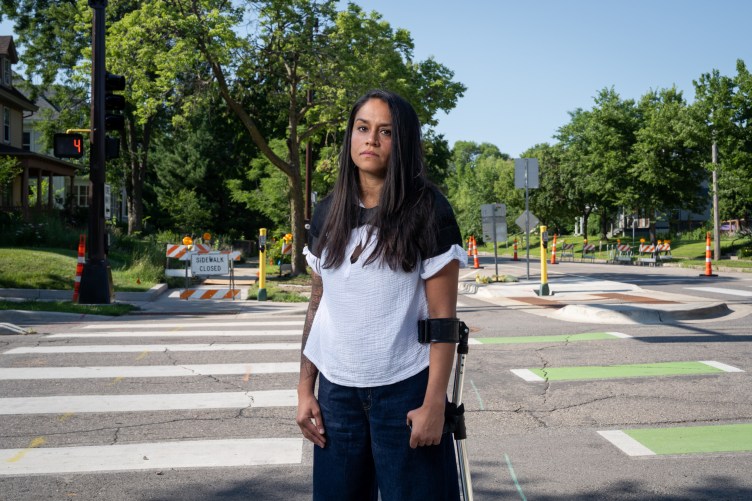
Aliya Rahman, who is autistic and disabled, was driving to a doctor’s appointment in January when she reached an intersection where protesters were confronting immigration officers. She said several agents swarmed her car and yelled at her to move out of the way. They broke her window and pulled her from the car.
“Nobody ever asked me for ID, my name or my citizenship,” Rahman said.
DHS said agents detained Rahman because she ignored their instructions. She denied that, saying that she was confused and saw no way to move without hitting someone.
She said agents then shackled her feet and held her in a detention cell at the federal building. She passed out and awoke in a hospital room. She was released without charges later that day.
Jeyli Salguero
Sleeping in her bedroom
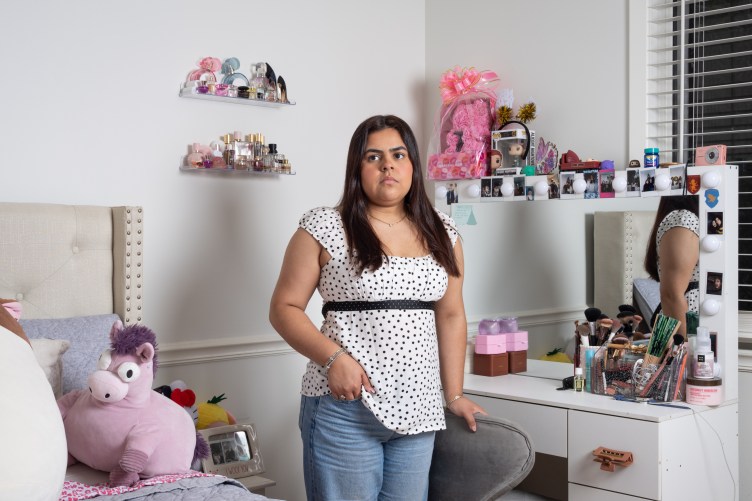
In January, Jeyli Salguero awoke when she heard someone banging on her door and then the sound of the door breaking open. Federal agents, their guns drawn, rushed inside and told her family they were looking for her brother.
“We told them yes he lived here, but he doesn’t live here anymore,” Salguero said she told the agents. “They started getting a bit more angry and were like, ‘Since you’re not collaborating, we’re gonna start checking your status.’” An agent grabbed Salguero’s phone and ordered Salguero to face a wall. In an ongoing lawsuit, Salguero has said that the agents entered the home without a valid warrant. DHS said that agents were searching for a fugitive, and that it has suspended the policy of entering homes without a judicial warrant.
Her father has temporary protected status but had not received paperwork showing that his status had been renewed. He was handcuffed and then detained for a month. Salguero’s older sister, who was undocumented, was handcuffed and deported to El Salvador. The rest of her family is now planning to sell their home and move to El Salvador. “It’s been a mental toll — a very big mental toll on all of us.”
Juan Muñoz
Protesting the Broadview ICE Detention CenteR
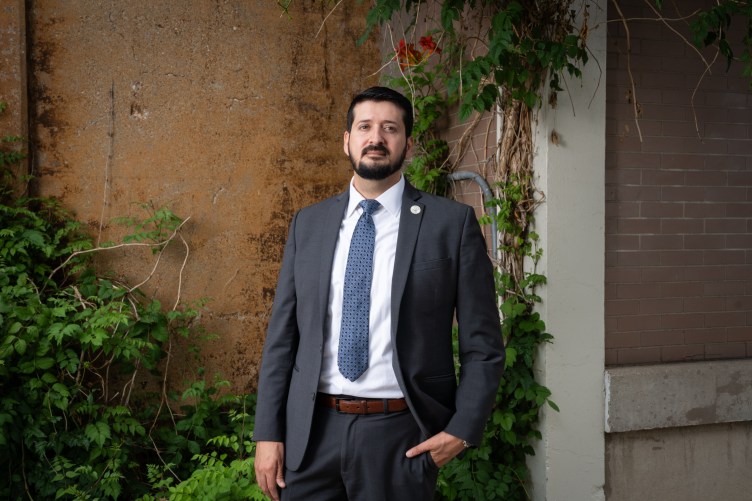
Juan Muñoz, an elected member of the Board of Trustees that governs Oak Park Township outside of Chicago, was participating in an October protest outside the Broadview ICE Detention Center when he said that he was knocked to the ground by the commander of the Border Patrol. “When I looked up,” Muñoz recalled, “it was Commander Greg Bovino who was standing over me.” In depositions, Bovino denied tackling Muñoz, saying videos of the arrests showed no “reportable uses of force.”
Muñoz said agents knocked away his phone and zip-tied his hands. “Every agent that I encountered, I told the same thing, ‘I’m an elected official.’ No response.”
Muñoz was held inside of the detention center for eight hours before agents dropped him off at a gas station, without explaining why he’d been held. “They were over capacity, keeping people for way longer than that facility was intended for,” he recalled about the detention center. “It was filthy. They don’t have proper hygiene products or are able to feed people properly,” Muñoz said. DHS did not comment on his specific detention. But, referring to Muñoz and other protesters detained with him, it posted a comment on social media, saying, “We will NOT allow violent activists to lay hands on our law enforcement.”
Jessie Fuentes
Responding to ICE in a hospital
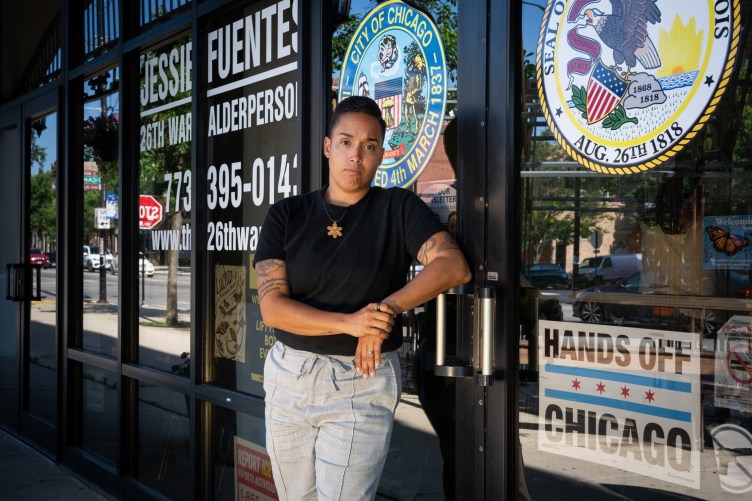
In October 2025, Chicago Alderperson Jessie Fuentes said she rushed to a local emergency room because she’d been told that ICE agents had been spotted inside. She identified herself to the agents as an elected official and began asking them whether they’d obtained a warrant. Video taken of the incident shows that agents grabbed and handcuffed her. Fuentes was held for 15 minutes, during which time members of her staff posted the video online and her supporters gathered outside the hospital to demand her release. DHS, in a written statement, told ProPublica that Fuentes was put in “handcuffs but NEVER placed under arrest.”
“These individuals are operating above the law,” Fuentes said. “They’re operating with impunity.”
Caitlin Arwen
Monitoring ICE operations
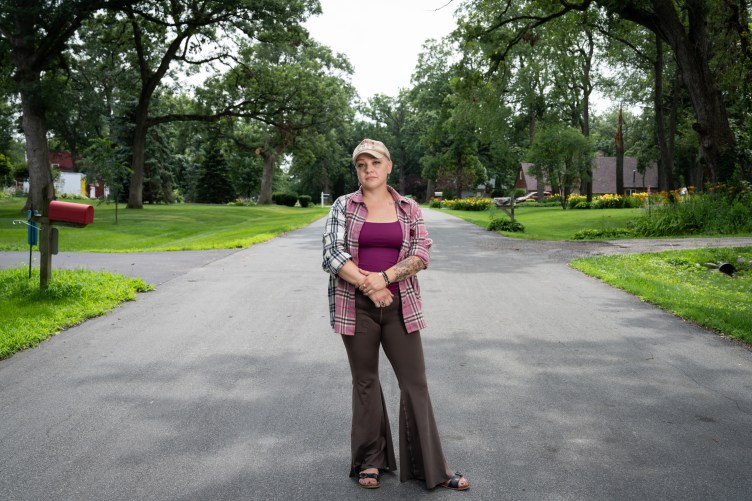
Caitlin Arwen was scrolling through a Facebook group for moms in October when she noticed a shared post that said immigration agents were detaining people in her town, which is about an hour’s drive outside of Chicago. Later that day she saw some of the vehicles that had been posted on Facebook and began following them, honking her horn to alert residents of their presence. One of the vehicles slammed on its brakes. U.S. marshals who were working with ICE surrounded her car, broke her window and pulled her out.
“They threw me on the broken glass, and they were all on top of me. I couldn’t breathe,” she recalled. Arwen estimates she was kept handcuffed face down on broken glass for roughly 35 minutes. “They taunted me, took photos of me, called me names, berated me and acted like I was somehow deserving of this.” DHS referred questions about Arwen’s arrest to the U.S. Marshals Service. A spokesperson for the service said Arwen’s arrest was a “task force arrest” and declined further comment.
Arwen was taken to a hospital, where marshals handcuffed her to the bed. After she was discharged, agents shackled her and moved her to a DHS detention facility, where she was not allowed to contact a lawyer or anyone else for help. “I didn’t have access to water or food the whole time,” said Arwen, adding that she was held for several hours. “Nobody showed me their badge all day. No one identified themselves. No one once read me my Miranda rights.”
Though federal officials declined to prosecute Arwen, state authorities charged her with traffic violations and obstruction of law enforcement. She has pleaded not guilty.
Source: ProPublica · 2026-11-12