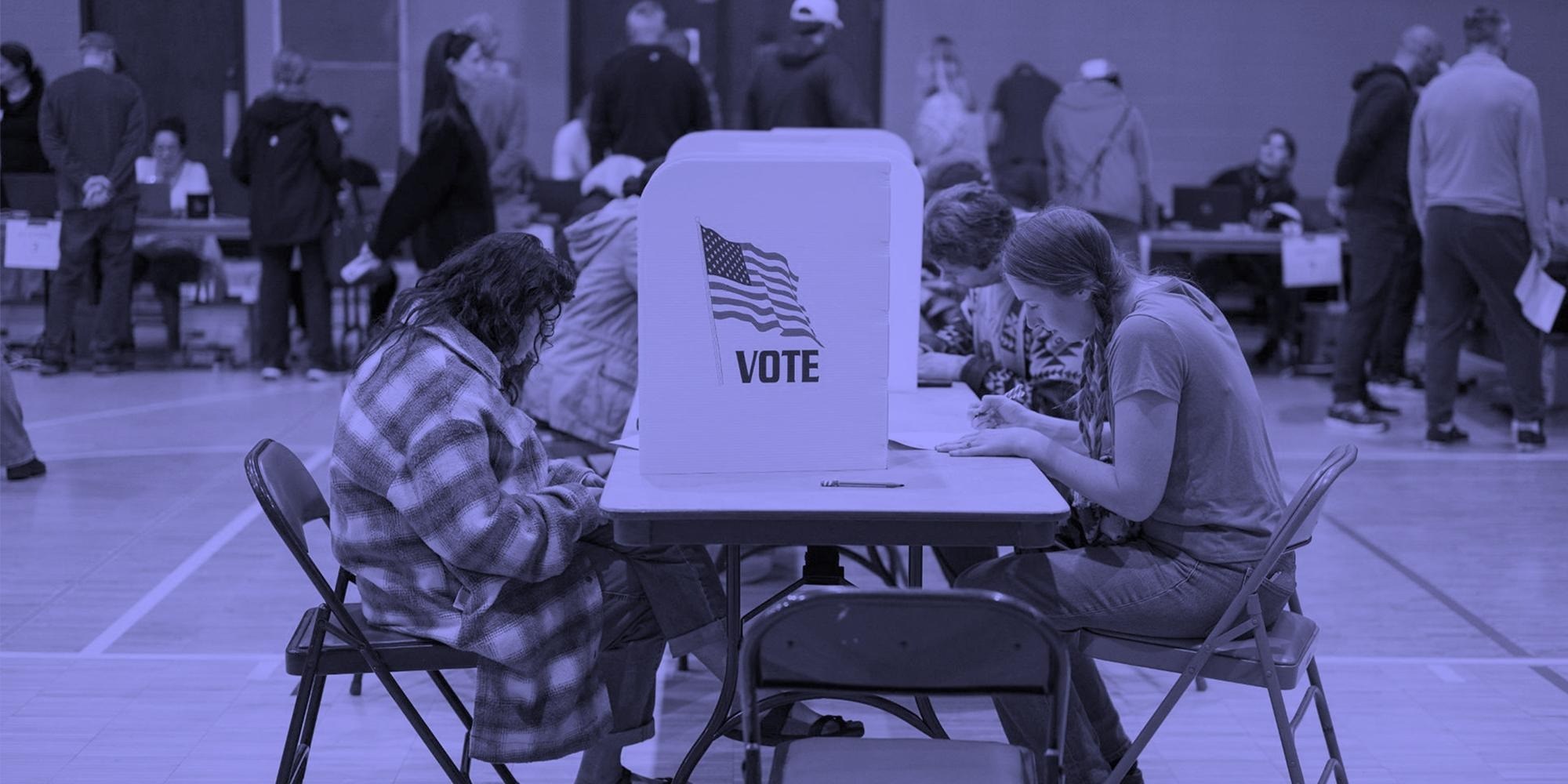
The size of the Democrats’ victory Tuesday night shattered records and even the most optimistic expectations, handing the party a governing mandate with a clear demand for change.
But what do voters want that change to look like? This week on The Intercept Briefing, politics reporter Jessica Washington and managing editor Maia Hibbett break down Tuesday night’s election and hear from voters in Maine, Michigan, and Texas about what drove them to the polls in the midterms that saw a so-called “blue tsunami.”
“The rich get richer, the poor get poorer,” said one voter in Maine. In Michigan, a voter told The Intercept that politics “feels like a game that the rich play sometimes.” A Texas voter expressed anger that President Donald Trump was “spending taxpayer money to renovate the White House and turn it into this gold sanctuary.”
Frustration with wealth inequality and money in politics came up again and again in The Intercept’s conversations with voters. So did a desire for more social welfare spending, Medicare for All, freedom for Palestinians — and responses to transphobic and Islamophobic fearmongering on the campaign trail.
“When Democrats win so far across the board, you can make an argument that any faction of the Democratic Party has the mandate,” said Hibbett, “because Democrats of all stripes won Tuesday night.”
In any case, the results indicated a clear disapproval of the way the Trump administration is governing and the use of fearmongering as a tactic of distraction.
“One lesson maybe for Democrats is there’s no point in attempting to placate people when it comes to bigotry,” said Washington. “The thing that’ll motivate voters is if you can convince them that you’re going to make their lives better, not if you can convince them that you’re playing the middle on an issue of civil rights.”
For more, listen to the full conversation of The Intercept Briefing on Apple Podcasts, Spotify, YouTube, or wherever you listen to podcasts.
Transcript
Bruce Bryan: We’re just hoping that people step up and tell Washington to go fuck itself.
Jessica Washington: Welcome to the Intercept Briefing. I’m Jessica Washington, politics reporter at The Intercept.
Maia Hibbett: And I’m Maia Hibbett, managing editor here.
JW: Over the past few days, Intercept reporters hit the ground in key states to speak to voters about the issues driving them to the polls. We went to Texas.
Jermiah Robinson: The food prices, for one, and the gas prices.
Darryl Moore: Gotta work two jobs just to make it.
Tiffany Williams: I never really understood, like, how important it is for the minority to vote.
Lenna Tasby: This election is important because this election is going to make or break whether we have a vote or not. There’s a reason why they’re shutting down these polling places.
Intercept reporter Akela Lacy: What are the issues that motivated you this cycle?
Charles Senter: Well, I love Trump.
Helen Dexter: Red ticket all the way. The stop of the Muslim influx.
Lenna Tasby: If you’re spending taxpayer money to renovate the White House and turn it into this gold sanctuary, that’s money that can be used for our military veterans. That’s money that can be used to help with this homeless population. The government needs to be held accountable.
MH: We heard from voters in Michigan.
Erin Horne: The election this year is very critical because Trump’s got two more years.
Zouheir Alawieh: Our democracy is in danger.
Noora Iskander: I believe in Medicare for All. People have a right to self-determination, especially in Palestine.
Wendy: There’s a lot of concern about, of course, the economy, but the data centers, our children’s education.
JW: And we spoke to voters in Maine.
Intercept reporter Noah Hurowitz: What mattered to you as a voter this election?
Tyler Echard: Cost for the most part. Everything keeps going up.
Bryan Golay: The rich get richer, the poor get poorer. At least 30 years ago, there was like a veneer of caring, and now there’s just blatant corruption and greed.
JW: So Maia, what a night.
MH: Yeah, it’s honestly embarrassing if you’re a Democrat and you did not win. They swept the House and the Senate by just about the biggest margins that the pollsters could have predicted. So luckily, the audience I’m concerned about, the pollsters, can rest easy. As of 11:00 a.m. [ET] on Wednesday morning, they had 228 seats in the House, Democrats did. They only needed 218 for a majority, so obviously that is more, and they’re expected to pick up some more seats as some more races get called. They had 54 seats in the Senate, which means that they have a big enough margin that they can’t be stopped from legislating by one lone senator, if one senator wanted to gum things up.
JW: And not at all surprising. The White House tried to spin Republican losses on Trump not being on the ballot and the quality of candidates, despite the fact that Trump repeatedly said at rallies across the country, “Pretend I’m on the ballot.”
Donald Trump: We’re going to ask you to pretend I’m on the ballot, because when I’m on the ballot, this has nothing to do with ego, I just get 49.2 percent more vote. And if we get even a good percentage of that, we’ll have the biggest victory that you’ve ever seen.
MH: He’s saying, “We’ll have the biggest victory ever” — and it was a very historic night. I think people will hear the word “historic” a lot in the coverage in the coming days because of this huge blue wave, not the kind of history Trump wanted, but also because there are some really surprising major firsts.
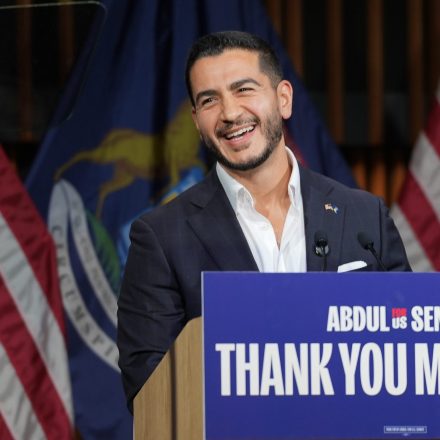
One of them was that last night, very early, like at 2:30 a.m. [ET], Abdul El-Sayed became the winner of the Senate race in Michigan, which means he will be the first ever Muslim U.S. senator.
Abdul El-Sayed (acceptance speech): To all the kids who watched this last month, to all the parents who struggled to explain why the president openly mocked someone for their name or how they pray, let them know tomorrow that the bad guys lost.
JW: That race was filled with Islamophobia, both in the primary and in the general election. His Republican opponent, Mike Rogers, just peddled in a million different Islamophobic tropes. Voters told our colleague, Matt Sledge, who was out in Michigan speaking with them, that they really didn’t like hearing all of this hate speech.
Zouheir Alawieh: They don’t have any programs for our economy, for our health, for our future. So that’s why they are attacking us as Muslims and as human beings.
Tea Edwards: Just, like, all of the Islamophobic hate campaigns that have been going around will probably sway a few people. The people who are actually researching what will be good for communities I think will see right through it.
MH: This was a campaign that was defined by so much panic about El-Sayed being Muslim. The race ended 25 years after 9/11, and there were all of these really kind of vitriolic Islamophobic tropes. It reminded me a lot of the campaign against [Mayor] Zohran Mamdani here in New York last year. There’s all this fear of the left and this fearmongering suggesting that there’s no way a Muslim candidate could represent American interests.
And of course, one of the big differences between El-Sayed and Mamdani is that El-Sayed is not a socialist.
JW: Say that again for the people in the back, because they are not going to believe you. El-Sayed has described himself as a capitalist who understands how capitalism works, so definitely not a socialist.
I’ve heard him described as much more of a [Sen. Elizabeth] Warren than someone in the Bernie Sanders mold.
MH: But he still faced millions of dollars in outside spending in this race, mostly because of his stance on the United States relationship to one other country.
We’ve heard in some of these deep-blue districts in the House races where socialists were elevated in the primaries, there was a lot of rhetoric on opposing Israel’s genocide in Gaza and fighting U.S. weapons flows to Israel. But it’s pretty rare to hear that from a U.S. Senate candidate, and now from a senator-elect.
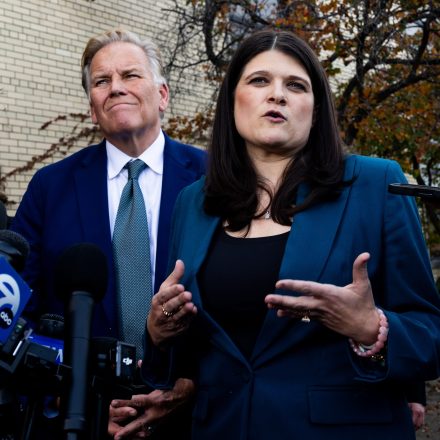
JW: It also caused some really ugly drama with his former primary opponent, Haley Stevens.
MH: Do you want to try to recap that as fast as we can, or should I?
JW: I’ll get started and see if you can add in anything that I miss.
So essentially, on the Friday right before [Election Day], Haley Stevens released a statement condemning an ad that was not even created by the El-Sayed campaign, calling on him to condemn the ad, which he did disavow. She also asked him to take back his statements on Israel.
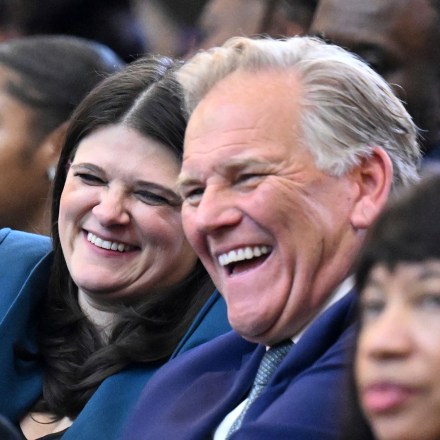
Now, things seemed fine for a second. Haley Stevens had all of these Democratic surrogates going on air saying that she promised to support him. While Haley Stevens’s staffers were at an event for El-Sayed, Haley Stevens popped up at an event supporting the Republican candidate, Mike Rogers, giving him her endorsement.
Maia, is there anything that I missed in that?
MH: Jessie, I think the only thing you missed was just how baffling and strange this episode was. So you mentioned this ad that kicked it off. It was produced by this outside group Rebellion PAC, which is the group headed by Cenk Uygur, who some listeners might know from The Young Turks. He is also famously Hasan Piker’s uncle.
Haley Stevens, as she was struggling to explain why she switched from El-Sayed to the Rogers camp, kept citing Hasan Piker and the “uncle.” It was this kind of almost incomprehensible move where Anderson Cooper, the CNN host, was pressing her at one point, saying, well, you cite his affiliation with Hasan Piker and this part of the Democratic Party you don’t like, but you knew about this before — so what changed?
It really seemed strange. So we sent Matt Sledge out in Michigan to ask some voters what they thought of it, and if they thought that this was a politically savvy move that would have any resonance. And here’s what they said.
Kathleen Britton: I’m so disappointed in Haley Stevens. I gave her serious consideration during the primary.
Jesse Craft: She fought against Mike Rogers, then said somehow he earned her vote. I don’t really understand it. I kinda think it’s career-ending for her.
Wendy: How embarrassing to use an African American church. How embarrassing for you to use our votes and then disregard them because of your own personal issues.
Intercept reporter Matt Sledge: So you don’t think it’s gonna help Mike Rogers?
Kathleen Britton: I do not.
Erin Horne: No, I think she actually helped Abdul.
[Break]
JW: Maia, before the break, you started talking about money and politics, and I want to get into how that shaped the midterms. Last week, we talked about how this election cycle became the most expensive on record. Midterms ad spending is expected to reach north of $11.6 billion. Mega-donors overwhelmingly gave to Republican candidates, including Elon Musk, who spent nearly $450 million, with large sums of that directed at boosting Ken Paxton in Texas, who, by the way, lost to James Talarico. Now, for context, the next highest donors under Musk are a Republican couple [Richard and Elizabeth Uihlein] who spent $150 million, mostly in Wisconsin and Illinois.
Jesse Craft: We all see where money is coming from. It’s coming from very, very wealthy billionaires. I don’t think we should be able to buy elections.
Tea Edwards: Politics, it just feels like a game that the rich play sometimes. Kind of feels hopeless when you’re just looking at all of these people and corporations giving money to each other.
MH: You hate to see Elon Musk throw away almost half a billion dollars. It only leaves him so many billions to go.
JW: Heartbreaking.
MH: But, I mean, in Texas, as you mentioned, that money really did not pan out. It didn’t seem to sway voters. It seemed like if anything from the voters who talked to our reporters in Texas, in Michigan, and in Maine, which we’ll get to later, people were really mad about outside election spending and don’t like the idea that billionaires or corporations can buy their elections.
And in Texas, a lot of that money went to propping up this anti-trans panic campaign that Paxton was running. But all that money was not enough to save Paxton from James Talarico. Paxton was a pretty bad candidate: He was mired in too many scandals to keep track of, including a 2015 grand jury indictment on felony securities fraud charges.
In 2020, eight of his top deputies reported to the FBI that he was potentially abusing his office to do favors for a donor and friend. And just earlier this year, he offered a plea deal in a child sex abuse case that seemed to anger Texans and voters.
JW: As it turns out, there is not enough money in the world to buy Ken Paxton out of being Ken Paxton and voters recognizing that. But Republicans tried this cycle to spend big on transphobia and to blanket the airwaves with these anti-trans advertisements.
Elon Musk’s Texas PAC spent $78 million on anti-transgender ads in Texas, which actually accounted for nearly half of all ad spending in support of Paxton. Republicans’ big play in Texas was transphobia — and that play failed.
While clearly it didn’t sway the election, some of those messages did appear to trickle down to voters. Our colleague, Akela Lacy, talked to voters in Dallas and the surrounding areas, and she did come across some voters who said they wanted to support Talarico or even some voters who did support Talarico but were concerned about his stance on trans rights, an issue that Republicans really fearmongered on this cycle yet again after doing it in 2024.
Akela Lacy: When you said you saw some stuff about James Talarico that made you unsure about voting for him, can you say more about that? What did you see, and what’s your impression of him?
Jermiah Robinson: I think I seen something about the LGBTQ+ community? I mean, I don’t really care about it, but I don’t know. People were saying a lot of bad stuff. I think they said something about him —
Canvasser: Encouraging sex change.
Jermiah Robinson: Yeah, on the children. I don’t really stand for that.
Danielle Buck: He wants to trans our kids. He believes that there are six genders.
Andrew Kolvet: They wanna indoctrinate your kids. They wanna trans your kids.
Adam Sosnick: They’re gonna trans your kids. They’re gonna Talarico your kids.
Donald Trump Jr.: Trans kids back in school, trans agendas back in school, in your classrooms, with your children.
JW: Clearly, some of that rhetoric did trickle down to voters based on Akela’s conversations, and some people even believed the misinformation being spread in those ads.
But fearmongering was just clearly not persuasive enough to distract people from their lived reality, and that lived reality is that gas prices are up, rent is unaffordable, and grocery prices are up.
I think one lesson maybe for Democrats is, there’s no point in attempting to placate people when it comes to bigotry. The right can and will distort your messages, and so you can stand in your values or not, but the thing that’ll motivate voters is if you can convince them that you’re going to make their lives better, not if you can convince them that you’re playing the middle on an issue of civil rights.
MH: We saw a parallel to this in some ways in Michigan as well, where a lot of the Republican argument was based on this perception of Islamophobia and fearmongering. Ultimately, that was not enough to elevate Mike Rogers over Abdul El-Sayed. In Texas, there’s also, of course, the strong anti-immigrant sentiment that Republicans frequently run on, and I think the statewide results showed us that that narrative really fell apart this cycle.
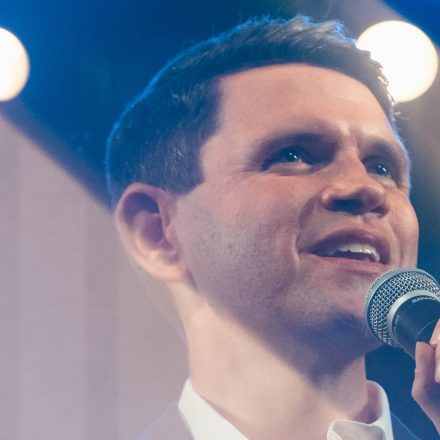
JW: To your point, clearly, attacks on trans people, attacks on immigrants didn’t work in Texas. Democrats had an amazing night. Gina Hinojosa toppled three-term incumbent Gov. Greg Abbott. The state has not had a Democratic governor since 1990.
“Attacks on trans people, attacks on immigrants didn’t work in Texas.”
MH: And speaking of toppling long-term incumbents that have been hard to get out of office, our colleague Noah Hurowitz was in Maine, where Troy Jackson defeated Susan Collins last night after many Democratic attempts to get her out of office.
This issue of disillusionment with money and politics came up quite a bit when he was talking to Maine voters.
Sharon McDonnell: It’s immoral. It is immoral to have people worried about their fuel and have that much money coming into this. It’s just wrong.
“The amount of money is more than I will probably make in my lifetime, spent in this election.”
Tyler Echard: The amount they spent on just mailers, not handed at the door but in the mail, is especially, it seems, on the Republican side of things, has been absolutely insane. The amount of money is more than I will probably make in my lifetime, spent in this election.
Charlie Dingman: It’s been extraordinary in Maine, the amount of spending in this race, particularly in the Senate race. I think there’s a lot of fatigue. I think people are tired of it. I have had some conversations with voters at the doors that lead me to think that the extremely negative and extremely untruthful ads may be backfiring.
JW: It seems like those ads backfired. The last voice you heard was Charlie Dingman, Maine Democratic Party chair.
Collins campaigned on her record of securing federal investments for state infrastructure, such as rural hospitals, and she really prided herself on being a moderate Republican who apparently breaks rank with President Donald Trump. But the reality of the situation is quite different.
The Congressional Quarterly Roll Call found that her votes aligned with Trump 90 percent of the time in both of the president’s first and second terms, and voters really noticed that. They understood the difference between what she said she was, a political moderate, and her voting record, which aligned with the really far-right Donald Trump. And that’s something that Noah heard from voters as well.
Sharon McDonnell: She has had this persona of moderate cross-party stuff that’s just really eroded. If you read every article about her, it’s like, “Moderate Susan Collins.” Like, wait a minute, she’s voted with Trump. She hasn’t used her power.
Susan Collins “has had this persona of moderate cross-party stuff that’s just really eroded.”
MH: Collins really used that line about her being a moderate and being an independent voice in Washington as a go-to for her campaign.
In past cycles, it has worked. As we alluded to a little bit earlier, the Democrats have mounted challenges against her before. In 2020, they ran a candidate named Sara Gideon, who looked somewhat likely to oust Collins. And I think this cycle, there were a lot of reasons for Democrats to be nervous about this race.
Troy Jackson, the nominee, is a former state senator, and he ran on lowering costs, really centering working-class interests. But he had jumped into the race kind of hastily. If you remember Graham Platner, Jessie, he was the former nominee for Senate in Maine for the Democratic Party, and he was really considered a rising star, but had to drop out because of a series of scandals, and Jackson had to jump in last minute and fill his place.
But ultimately, Jackson pulled it off.
Troy Jackson (acceptance speech): We did it. Working people did it.
JW: Clearly, Jackson had a disadvantage going into this race. There were people who complained and said that he wasn’t as charming as Platner, he wasn’t as polished. But in this election, the ideas and running on affordability seems to have won the day in Maine and really throughout the country.
Collins had a reputation of delivering for the state, but clearly that wasn’t enough to overcome this blue wave across the country and some frustrations with Collins as well.
But Maia, taking a step back to look at the full scope of Democratic wins, what do you make of their gains on Tuesday? Are there other races that stood out to you? What stood out to you overall?
MH: Well, there’s the spin about the spin, which is that everybody is going to be framing this election and these results in their own interests. When Democrats win so far across the board, you can make an argument that any faction of the Democratic Party has the mandate, because Democrats of all stripes won Tuesday night.
But to my view, it’s hard to see how this is a world where there isn’t a clear demand for some kind of transformational change. So I’m wondering what Democrats do with their mandate now, especially as we think ahead to 2028.
If you recall 2020 and the last time the U.S. elected a Democratic president, you might remember that the Biden campaign was the sort of centrist, moderate return to normalcy choice, but they got there after a lot of left momentum in the primary and a really serious showing of support for Bernie Sanders, who remains one of the most popular politicians in the country.
Once Biden got into office, he arguably tried to give some of that kind of left, dare we say, populist economic message some service. There was the Build Back Better plan that had a lot of social safety net spending and Covid relief. There were climate infrastructure projects. There was the elevation of Lina Khan [to Federal Trade Commission chair].
So I’m curious what Democrats have learned from the Biden years and how that will convert into the next congressional term and the next presidential election.
JW: It really feels like I’ve lived a million lives in between now and that debate that really tanked Joe Biden’s entire political career at the end there.
I will say to your point, we’re already seeing Hakeem Jeffries, who’s likely to be the House Speaker, calling for unity and saying that people don’t want to fight. But you don’t really get a blue wave like this or a political wave like this when people don’t want to fight.
Clearly, there’s anger at Republicans. There’s anger at the cost of living. There’s anger at the war. If Democrats don’t deliver, they’re likely to see a red wave come the next cycle.
But I did want to take just a little bit of a step back and talk about Black voters and what’s happened in the aftermath of the Supreme Court voting rights decision. Black voters in this election really delivered historic victories in southern states for Democrats, but Black representation in Congress thus far appears to have been slightly reduced in this election. Now, for those who remember our discussion earlier this year about the Supreme Court decision to gut the Voting Rights Act, there were a lot of deep concerns that the decision would crater Black political representation, and so far that hasn’t come to bear, but it’s worth paying attention to in cycles that are less blue, where we’ve seen really massive redistricting.
I will shout out, there was one historic victory for Black Americans: Keisha Lance Bottoms, the former Atlanta mayor, won her race for governor, becoming the first Black female governor in the country.
MH: We’ve talked a lot about these historic wins, but we would be remiss to not mention a close call in Florida, where Angie Nixon narrowly lost.
Nixon is a Black woman who’s a member of the Democratic Socialists of America and had a really shocking primary upset when she defeated the establishment favorite to get the Democratic nomination. The Democrats didn’t invest very much in her Senate race in Florida. The conventional wisdom says Florida’s not flippable, but conventional wisdom also says that South Carolina’s not flippable — and they did that.
“The conventional wisdom says Florida’s not flippable, but conventional wisdom also says that South Carolina’s not flippable — and they did that.”
Nixon ended up coming within about 2 [percentage] points to Ashley Moody, the Republican incumbent, who just won a full term after being appointed to hold the seat that used to belong to [Secretary of State] Marco Rubio. A lot of people on the left side of the Democratic Party are wondering what would have happened if Democrats had invested in a DSA candidate running statewide in Florida, which is kind of a crazy statement to make if you think of just two years ago.
JW: I mean, I listened to her [concession] speech, she is an incredible speaker, but obviously, that’s not enough to win elections. You need money, clearly, and investment from the party.
We’re going to leave it there, but there is so much more election coverage you can follow at theintercept.com.
That does it for this episode.
We want to hear from you. Tell us what you’re following or want to see more coverage of. Email us at podcasts@theintercept.com, or leave us a voice mail at 530-POD-CAST, that’s 530-763-2278.
This episode was produced by Laura Flynn. Chelsey B. Coombs is our social media producer. Ben Muessig is our editor-in-chief. Maia Hibbett is our managing editor. Thank you to all of our reporters who worked late on election night: Matt Sledge, Akela Lacy, Noah Hurowitz, Jonah Valdez, and Austin Campbell, and the rest of our team.
Nara Shin is our copy editor. William Stanton mixed our show. Legal review by David Bralow.
Slip Stream provided our theme music.
This show and our reporting at The Intercept do not exist without you. Your donation, no matter the amount, makes a real difference. Keep our investigations free and fearless at theintercept.com/join.
And if you haven’t already, please subscribe to The Intercept Briefing wherever you listen to podcasts. Do leave us a rating or a review; it helps other listeners find our reporting.
It’s a superlative achieved again and again: The current election cycle is the most expensive on record, according to AdImpact, likely to be surpassed only by the next one. North of $16 billion have been raised ahead of Tuesday’s looming elections, with ad spending in House and Senate races topping $4 billion. Mega-donors this election season have overwhelmingly backed Republicans with contributions largely flowing from AI, crypto, and online gambling interests.
The Intercept tracked how super PAC spending is flowing into the midterms and how growing public skepticism of special-interest money in politics is affecting campaign strategies. Hundreds of candidates are still taking donations from the American Israel Public Affairs Committee and its super PAC, the United Democracy Project, despite public sentiment turning against the pro-Israel lobby.
“The data overall reveals that [AIPAC is] still spending a ton of money on a lot of races, and more often than not, their candidates are still winning,” Intercept managing editor Maia Hibbett told The Intercept Briefing. “It is still quite meaningful money.”
Artificial intelligence super PACs have also poured tens of millions of dollars into this election cycle, most of it on just a few races in the primaries. The two leading AI super PAC networks, affiliated with OpenAI or Anthropic, dropped a whopping $50.7 million on the primaries, but are noticeably spending much less in the lead-up to the general election, $8.5 million — likely responding to public backlash in the same way that AIPAC has.
“The polls are just so startling on the public’s transformation on AI and data centers over the last year. … The entire life cycle of these AI super PACs, which started about a year ago, has followed that evolution of the public’s opinion,” said Intercept politics reporter Matt Sledge. “One of the things that’s been really interesting in the general election races is … candidates [trying] to paint themselves as the more pro-AI safety, pro-AI regulation candidate.”
This week on the podcast, host Jessica Washington speaks to Hibbett and Sledge about the spending trends in the most expensive election cycle to date and unpack the intended impact.
“No matter which party gets control of either or both houses of Congress, there will be a lot of people elected next week who got there on the backs of Big Tech and special interests,” said Hibbett.
“They’re backing a lot of people in safe seats who don’t really have a tight election,” Sledge added. “The goal may just be to buy themselves a few friends in Congress, because sometimes in Congress, it’s just as good to have a few people who can stop regulation as it is to have people who can shape and actually pass laws.”
For more, listen to the full conversation of The Intercept Briefing on Apple Podcasts, Spotify, YouTube, or wherever you listen to podcasts.
Transcript
Jessica Washington: Welcome to The Intercept Briefing, I’m Jessica Washington, politics reporter at The Intercept.
On Tuesday, voters will head to the polls to cast their ballots in the most expensive election cycle ever in terms of campaign ad spending, even outpacing past presidential elections. That’s according to AdImpact.
North of $16 billion has been raised this cycle, with ad spending in House and Senate races topping $4 billion. Billionaire Elon Musk has dumped hundreds of millions into races across the country, using his enormous personal wealth to sway the election in favor of Republicans. Musk, who has a home and multiple businesses in Texas, has taken a particular interest in the state’s Senate race between Republican candidate Ken Paxton and Democratic candidate James Talarico.
Most of the money from Musk and other donors has flowed not to candidates, but to powerful super PACs representing a variety of different special interests.
That super PAC spending is the subject of my colleagues, Intercept politics reporter Matt Sledge and senior politics reporter Akela Lacy’s new project, tracking how money is flowing into the midterms.
Maia Hibbett, managing editor for The Intercept, and Matt Sledge join me now to talk about the project and how big money is shaping the midterms.
Matt, Maia, welcome back to The Intercept Briefing
Maia Hibbett: Thanks for having us.
Matt Sledge: Thank you for having us, Jessie.
JW: Maia, I want to start with you. As a part of the super PAC project, The Intercept tracked how millions of dollars flow through the pro-Israel lobby in the United States.
What did the reporting reveal about how the American Israel Public Affairs Committee and affiliated groups like the United Democracy Project mask their influence in U.S. elections in a political landscape where AIPAC’s contributions and endorsements have become largely politically toxic?
MH: The reporting showed that AIPAC and its affiliated super PAC UDP are a little bit weakened, but they’re still pretty dominant.
The narrative out of this midterm cycle, especially during the primaries, was largely focused on a few high-profile races that an AIPAC-backed candidate lost — and that was a huge shock. These big upsets were AIPAC or UDP or a related group that, we can talk about a little bit later, had poured money into, and then the candidate didn’t succeed.
But if you look at it in the aggregate, what the data overall reveals is that they’re still spending a ton of money on a lot of races, and more often than not, their candidates are still winning. It is still quite meaningful money. And even though AIPAC has been discussed as going underground, they are still directly invested in a lot of races.
JW: I want to get into AIPAC’s shifting strategy and their latest announcement on that. But first, Matt, I wanted to talk about your reporting. AI super PACs have poured tens of millions of dollars into this election cycle.
What do we know about the people and companies behind these super PACs? This may seem obvious, but what are they hoping to gain with this level of spending? Are there specific examples of friendly legislation these varied interest groups are hoping their candidates will see through if they win?
MS: To answer your second question, I think it’s really more about setting the tone for future regulation at the federal level. You have two big super PAC networks. One is affiliated with OpenAI, and they broadly favor a laxer regulatory scheme for AI. Then there’s another network that’s affiliated with Anthropic that paints itself as supporting a stricter regulatory scheme.
“It’s really more about setting the tone for future [AI] regulation at the federal level.”
Skeptics will point out that these networks are both backed by big AI companies. So at the end of the day, they’re probably going to favor regulation that is favorable to the AI companies. I get into this a little bit in my story, but, just in the last few months, there’s also been this constellation of other smaller groups that are sometimes backed by individual employees at these firms or just by people concerned about AI that are pushing for stricter regulatory regimes and aren’t as directly connected to one of the big companies.
JW: Matt, I’m curious about the impact on voters here. CNBC analysis from early October found that mega-donors this election season were overwhelmingly backing Republicans with contributions largely flowing from AI, crypto, and online gambling interests: “Fourteen of the 20 largest donors and donor groups this election cycle have exclusively or nearly exclusively backed GOP candidates or aligned groups.”
Matt, are we seeing voters become more receptive to Republicans as a result of all this ad spending? Is it working on the voter base?
MS: It’s always hard to tease out the impact of an individual super PAC or industry, because you have to keep in mind that a lot of the time, if you’re a crypto super PAC, or an AI super PAC — or more recently, a prediction market super PAC — they are not running pro-crypto or pro-AI ads.
They are running ads that look very similar to everybody else’s. Often, they’re doing negative campaigning that campaigns don’t want to do themselves, and they have such vague names that they’re not associated with crypto or AI. So I do think ads have an impact on the races, but overall what we’re seeing in polls is that it’s not a great environment for Republicans.
So it may have served, just writ large, to potentially soften the blow to Republicans this time around. It does help them to have this many corporate allies, but it may still be overwhelmed by a blue tide.
JW: That makes a lot of sense in terms of just, this is a bad environment for Republicans. They have a president who is unpopular. We have an economy that is not amazing right now. It makes a lot of sense that despite all this ad spending, the baseline of the election is not in favor of Republicans.
Maia, I wanted to get back to something that you had said a little bit earlier about AIPAC and their shifting strategy. AIPAC recently announced that they would no longer officially endorse candidates or give money directly to campaigns.
Were we seeing an early signal of shifting strategies from AIPAC during the 2026 midterm elections? And what does this change actually mean for AIPAC’s influence on our elections?
MH: I’m so glad you asked, because we actually noted early in the 2026 cycle that AIPAC was starting to retreat and change its strategy. Our colleague Akela Lacy wrote a story in December 2025, and the headline was, “AIPAC is Retreating From Endorsements and Election Spending. It Won’t Give Up Its Influence.” I encourage anyone to go back and read that story because it was really prescient about what we would see in the cycle to come, which is that AIPAC used to do all of its spending behind closed doors.
After it spent so much money in that midterm cycle and in last cycle‘s 2024 races, and as public sentiment started to turn against the pro-Israel lobby’s interests and people became very critical of the U.S. support for genocide in Gaza, AIPAC started to essentially return to its roots.
I think this is really interesting because in the press it has been talked about as a very new strategy. But really, it’s more that AIPAC is returning to the way it used to do business.
JW: Is that as effective as a strategy — the old model that they had? Should we expect that it’ll have just as much influence on elections as they did previously?
MH: It’s a good question. I don’t know how effective it will be as a strategy. There’s a lot more scrutiny on AIPAC now than there was a few years ago, and so it’s much more difficult for them to hide what they’re doing because there are journalists like us who are going to try to follow the money and say, maybe you gave to something that’s called Elect Chicago Women, but it’s actually from UDP, which is the super PAC for AIPAC.
I think in some cases, they can’t get away from the public perception that now exists. But on the other hand, there are many voters who might not really pay attention to the name of the PAC that sponsored the ad that they saw, and then go look it up and see where the money came from. So it remains to be seen how effective it will be.
“It’s much more difficult for them to hide what they’re doing because there are journalists like us who are going to try to follow the money.”
JW: Not everyone is reading The Intercept before voting, as they should, but it’s fine.
Matt, I wanted to get back to you because there’s a lot happening with these big AI super PACs. You noticed in your reporting that, after spending a lot in the primaries in New York in particular, but in other places as well, the big AI super PACs have gone pretty much quiet in the general election.
Are AI super PACs responding to public backlash in the same way that AIPAC is? What have you observed in terms of why they’ve gone a little bit quieter?
MS: In response to your question about backlash, I think the answer is yes.
“It’s just a dramatic decline in spending from the primaries to the generals — even though they still have money they can tap.”
They’re on this kind of accelerated timeline going through what AIPAC went through over the course of five years but essentially in five or six months. The polls are just so startling on the public’s transformation on AI and data centers over the last year. It’s just such a rapid change in public opinion, and the entire life cycle of these AI super PACs, which started about a year ago, has followed that evolution of the public’s opinion.
It’s just a dramatic decline in spending from the primaries to the generals — even though they still have money they can tap. Leading the Future, which is the OpenAI-aligned network, they started first, and then the Anthropic-aligned network, Public First, they started a few months later as a response to the Leading the Future network.
So it seems like, from what we’ve been able to tell, Leading the Future scaled back on spending as the general election came about, and Public First responded in turn and also scaled back its operations. That doesn’t mean they’re not spending anything, and we have seen a slight uptick in the final few days of this election when ads are probably just less effective than they would have been a couple weeks ago.
“If Darline Graham narrowly gets away with winning her race in South Carolina of all places … then you can still say that Leading the Future and the AI industry played a pretty important role in the general race.”
One really notable race is now South Carolina, where Leading the Future is helping prop up Sen. Darline Graham, who hasn’t been a great fundraiser on her own. So there’s actually still a world where AI plays a decisive role in this election in terms of control of the Senate.
If Darline Graham narrowly gets away with winning her race in South Carolina of all places, and that narrowly hands control of the Senate back to the Republicans, then you can still say that Leading the Future and the AI industry played a pretty important role in the general race.
JW: Just to be clear, you’re referring to Darline Graham, Lindsey Graham’s sister, correct?
MS: That’s correct.
JW: Maia, speaking of Big Tech, you also edited a story from Intercept reporter Jonah Valdez looking at how tech leaders, including John Hering, are dumping millions into the LA city attorney race to block Marissa Roy, a DSA-backed candidate, from winning. What is going on here — why such an interest in a race most people are likely not paying any attention to?
MH: City attorneys are one of those jobs that, as you said, a lot of voters don’t pay attention to them. I think a lot of people in cities all over the country maybe couldn’t tell you who the top lawyer of whatever city they live in even is. But this is a job that is largely tasked with enforcing regulations and laws and making companies that might be based in that city or might operate in that city comply with them.
Marissa Roy, this DSA-backed candidate, is currently a deputy attorney general for the state of California, and she’s one of the people who helped the state prosecute this historic Meta settlement where Meta ended up having to pay $17 billion for harms to children using its technology.
We don’t know exactly why John Hering and other tech leaders, like the founders of Ring and Tinder and investors in Anthropic and SpaceX, are spending so heavily in this race, but you might be able to conclude that they’re interested in preventing a person who just helped carry out this huge settlement against Meta from becoming the city attorney of LA.
Some of them are funding a group that’s called Neighbors for John McKinney, which is backing the opponent in the race. John McKinney is the other candidate, and he is much less likely to win, but is propped up now by a lot of spending. They frame him as a tough-on-crime candidate; they say he’s going to restore order to LA, help clean it up is the idea.
Like Matt was saying, often these tech investments in races don’t actually foreground the interests of Big Tech, and they don’t say explicitly, “We want to stop this person from coming into office because we’re worried they’re going to regulate our industry.” Instead, they find a different issue and spend money on that.
It’s also worth noting that John Hering, his group, frames John McKinney as a lifelong Democrat and very anti-MAGA, is the language they use. But John Hering himself is a big ally of Elon Musk. He has been an eager investor in his companies. He said Musk was an “American hero” this year, and he has spent pretty heavily also to support Musk’s America PAC and the Trump campaign after previously spending on the Hillary Clinton presidential campaign.
Like many Silicon Valley types, he’s had an evolution. And although he lives in San Francisco, he also spent in favor of Spencer Pratt for LA mayor.
JW: Wow. Yeah, Big Tech has really come a long way from the ’08 years in terms of their relationship with Democrats and Republicans, and propping up Spencer Pratt.
Matt, I want to bring you in and get your perspective and kind of big picture. What has made this election cycle so popular for Big Tech?
MS: When it comes to AI and crypto and the prediction markets, it’s knowing that the next few years are really going to be critical for them in terms of regulation. These are all fairly young industries, and the rules haven’t been set yet. The Trump administration is doing its best to set them, but Congress has not had a final word on any of those industries.
They see a chance to shape the rules in a way that favors them, and they’re just using the old Washington playbook of spending a bunch of money on campaigns and a bunch of money on lobbyists to try to shape the rules in their favor.
JW: Is this just also a matter of them having more money to play with than they’ve had before? Is this something tech probably would have done years ago if they’d had this access to capital? Or is this really, like you said, just they’re aware that there is existential risks to their industry if they don’t?
MS: Tech for the last few decades has had a lot of money. It’s just been a huge part of the U.S. economy. But I think this move into more regulated spaces is maybe what’s newer.
When Microsoft is creating an internet browser or a word processor, that creates potential antitrust issues, and they have to spend political money in that sense. But they’re not playing in the same kind of highly regulated financial spaces, and nobody ever thought that Clippy posed an existential risk to humanity. So we are moving into new territory when it comes to techs.
JW: I miss Clippy. That is my one comment on that.
I want to get both of you back in here. We’ve been talking about some of the biggest donors in American politics today, and a few special interest groups in particular who’ve obviously been experiencing public backlash — AIPAC, AI, and data centers.
What do you make of this new record-level spending in a midterm election in particular? We’ll obviously have more answers on this next week, but from what you’ve observed so far, is it having the intended impact on voters? Maia, let’s start with you.
MH: I think to use the cop-out that we keep coming back to, we won’t really know if it worked with voters until after the results next week. But it’s clear in this midterm cycle and maybe this is a reminder of kind of a perpetual truth in, when it comes to money in politics, that these big spenders are always going to fund candidates on both sides of the aisle. Often election narratives and questions about special interests will really look to one party or the other and try to map this kind of spending onto partisan issues.
While some of that certainly happens, I think no matter which party gets control of either or both houses of Congress, there will be a lot of people elected next week who got there on the backs of Big Tech and special interests.
JW: Matt, I know you’ve seen some specific examples of this impacting elections. Can you talk about that a little bit?
MS: One of the things that’s been really interesting in the general election races is this race from candidates to paint themselves as the more pro-AI safety, pro-AI regulation candidate.
I’ve done some reporting in Michigan’s 7th [Congressional] District, where a co-founder of the Sunrise Movement is trying to unseat an incumbent Republican, and he has from the start really run on being an anti-data center candidate, campaigning with local activists in small towns of a few thousand people.
His Republican opponent is now also trying to paint himself as a data center skeptic — using different language, more language about local control than about big, bad companies.
But there’s been such a backlash that we’ve seen some changing tactics from the big AI super PACs in the runoff. One has donated money to a nonprofit that’s more focused on building support for data centers. Good luck with that, I guess.
And then another, the Anthropic-aligned network, has essentially handed off money to a pro-Scott Wiener super PAC in California that already existed and already has funding from other tech leaders in the San Francisco area. But that donation has generated this whole fight between Scott Wiener and his opponent, Connie Chan, over who is the more pro-AI regulation candidate now. So it’s a lot of candidates fighting to be the more pro-regulation candidate.
Just thinking back to your question about the effect on voters, I think for the super PACs and for their funders, the impact on candidates may ultimately be more important, on elected officials. They’re backing a lot of people in safe seats who don’t really have a tight election. The goal may just be to buy themselves a few friends in Congress, because sometimes in Congress, it’s just as good to have a few people who can stop regulation as it is to have people who can shape and actually pass laws.
JW: That’s a good point. Speaking of the election, which we know is just days away, what are you two going to be following closely next week? Maia, I want to start with you.
MH: There’s obviously a lot to follow next week, and more races than we can keep track of. One I think that will be very interesting that I was thinking about in terms of AIPAC spending — when Matt just mentioned this thing about AI groups backing candidates who are not in close races — is, of course, the Senate race in Maine.
One of the interesting takeaways we found in this AIPAC project is that in the primaries when AIPAC was spending, as it does in, in various races, one of the top recipients of its money was Susan Collins — who at the time did not have a primary challenger, but it spent heavily to support her primary campaign.
So we’ll obviously watch the Collins–Jackson race in Maine. We have a reporter going there. Matt’s going to go to Michigan. We also have a reporter going to Texas to track some of the big Senate races. Depending on how the results look, I think we’ll pretty quickly be pivoting to accountability for, coverage for the people who are elected, who, maybe entered office vowing not to take corporate PAC money or not to take special-interest money, and to keep an eye on those now Congress members and see if they vote like it or if they continue to have that policy once they’ve been elected.
JW: And Matt, what are you following?
MS: As Maia mentioned, I will be in Michigan. Super interested in that 7th District race that I mentioned between Will Lawrence and Tom Barrett. But then the race everybody’s going to be spinning and talking about for weeks probably: the Mike Rogers/Abdul El-Sayed race. It just is going to carry so much narrative heft going forward about what the voters were trying to say.
Where are you going to be, Jessie? What are you going to be up to?
JW: I will be in D.C., and I’ll be looking at what it means to have yet another election with the National Guard in town and essentially in an occupied city.
I’ll also be looking into what it would mean for the district to have a socialist mayor, Janeese Lewis George, who is almost certain to win on Tuesday, particularly when it comes to ICE and the Metropolitan Police Department’s collaboration with ICE. That’s going to be something I’m really keeping an eye on, not just on Election Day, but going forward to see if she can implement some of these really bold ideas that she’s proposing in a city that’s very constricted in what it can actually do because of federal law.
But that’s enough previewing from me. We’re going to leave it there. Maia, Matt, thank you so much for joining me on The Intercept Briefing.
MH: Thanks again.
MS: Thanks for having us.
JW: And thank you for listening. Next week we’ll be back in your feed early with a special midterm election episode, so stay tuned.
That does it for this episode. We want to hear from you. Tell us what you’re following or want to see more coverage of. Email us at podcasts@theintercept.com or leave us a voice mail at 530-POD-CAST, that’s 530-763-2278.
This episode was produced by Laura Flynn. Jordan Uhl is our social media producer. Ben Muessig is our editor-in-chief. Maia Hibbett is our managing editor. Nara Shin is our copy editor. William Stanton mixed our show. Legal review by David Bralow. Slip Stream provided our theme music.
This show and our reporting at The Intercept do not exist without you. Your donation, no matter the amount, makes a real difference. Keep our investigations free and fearless at theintercept.com/join.
And if you haven’t already, please subscribe to The Intercept Briefing wherever you listen to podcasts. Do leave us a rating or a review, it helps other listeners find our reporting.
Democrats may be ahead in the polls. But can they withstand billions in campaign spending by Elon Musk and other MAGA oligarchs? Will the election be safe from intimidation and interference? And even if they do prevail, what would a Democratic Congress actually do to obstruct Trump’s attacks on democracy?
For decades, former Labor Secretary Robert Reich has been sounding the alarm about rising inequality and the concentration of power in America. Having served in three presidential administrations, he’s become one of the loudest and clearest voices challenging Democrats for their failures in the Trump era.
Reich joins Intercept Briefing host Akela Lacy for a live conversation about the most pressing issues this midterm season. He is the author of numerous books, including his memoir “Coming Up Short,” out in paperback now. His media company, Inequality Media, has also made a timely new documentary, called “The Work in Progress,” exploring how everyday Americans across the country are navigating our democracy in these times.
Brazilians will head to the polls on Sunday in one of the most consequential presidential elections of the last decade. The run-off election will determine the future of the largest democracy in Latin America and the fate of the Amazon rainforest.
Incumbent President Luiz Inácio Lula da Silva is facing off against Flávio Bolsonaro, the son of former President Jair Bolsonaro. The elder Bolsonaro is currently on house arrest for his role in a failed 2023 military coup that intended to assassinate Lula, his vice president, and a Supreme Court justice. Despite his father’s attempted coup, Flavio Bolsonaro is currently the frontrunner, after coming out slightly ahead in the first round of voting.
“If they don’t win this election, then not only is Jair going to stay in jail, most likely, but Eduardo, Flávio’s brother and Jair’s son, who is in self-exile in the U.S., he has a multiyear prison sentence for his actions in the U.S. lobbying against Brazil’s foreign interests. He’s not going to be able to go home if they lose this election,” says Andrew Fishman, a Rio de Janeiro-based investigative journalist. “So they’re really just willing to do whatever they can to make sure that they win because this is their only get-out-of-jail-free card.”
Sound familiar? This week on The Intercept Briefing, host Jessica Washington speaks with Fishman, president and co-founder of The Intercept Brasil, about what’s at stake for Brazil and the planet in Sunday’s election.
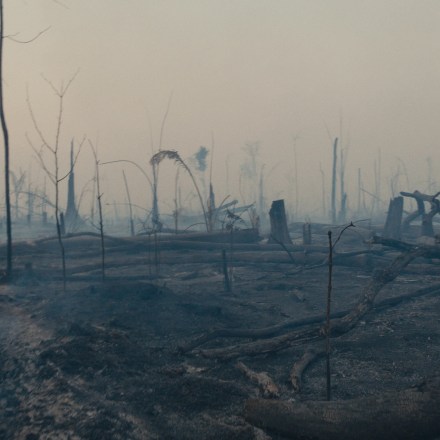
“It’s a global election. The voters in Brazil will be deciding the future of humanity,” Fishman tells The Intercept. Jair Bolsonaro oversaw significant deforestation of the Amazon rainforest, leaving the ecological and climate linchpin in danger of becoming a “savanna.” Now, he argues, his son can finish the job. “You’re going to have an international migration crisis,” says Fishman. “It’s really self-defeating because the cattle ranchers are his base. They are the ones that are wanting to do the things that will end their future profitability — the future existence of their business.”
President Donald Trump has taken a particular interest in the race, as he seeks to expand U.S. influence and control across the Western Hemisphere. “Brazil — as the biggest economy, the biggest country, the most powerful entity in the hemisphere besides the United States — if Brazil falls, then the rest falls in line,” says Fishman. “But if Brazil remains as this big island of resistance in the middle of the continent, it really messes up [the Trump administration’s] plans, doesn’t it?”
Big Tech is also looming large over the race. “There’s all these pieces of circumstantial evidence that suggest that Meta is interfering in this election, and they have every incentive to do so. They will have a much better regulatory environment if Flávio wins because of Flávio’s submissiveness to U.S. interests and his willingness to play ball with whatever Trump tells him to,” adds Fishman.
In a request for comment, Meta said, “Meta applies the same rules to every candidate, every party and every political viewpoint in Brazil, as we do in elections around the world. We do not suppress content to disadvantage one side, and we do not give preferential treatment to any side. Each of the incidents cited by Lula’s campaign has a straightforward, documented explanation. … Brazilian voters deserve facts, not a political narrative built by combining unrelated technical issues. Meta will continue to enforce its rules, comply with Brazilian electoral law, fix mistakes when they occur and provide a level playing field for everyone who uses our services.”
As U.S. leaders attempt to mold Brazil into a satellite state, Fishman argues the United States is slowly becoming more and more like its southern neighbor.
“It’s not that Brazil is becoming more like the United States, it’s that the United States is becoming more like Brazil,” says Fishman. “You have just shrinking spheres of democracy while oligarchs have increasing power and control and are able to do what they want and insist on decisions for the country that are bad for all of the society and the people, but good for their individual interests.”
For more, listen to the full conversation of The Intercept Briefing on Apple Podcasts, Spotify, YouTube, or wherever you listen to podcasts.
Transcript
Jessica Washington: Welcome to The Intercept Briefing, I’m Jessica Washington, politics reporter at The Intercept.
Akela Lacy: I’m Akela Lacy, senior politics reporter at The Intercept. Jessie, what do our listeners need to know about this week?
JW: I’ve been following a pretty disturbing story that’s actually centered on a campaign ad. Ohio gubernatorial candidate Vivek Ramaswamy released what I would argue is the ugliest campaign ad of a dark season. That is, of course, a season of campaign ads filled with Islamophobic, transphobic, sexist rhetoric, and racist rhetoric as well. But in the ad, the mother of Democratic candidate Amy Acton accuses her daughter of being a liar, claiming “she’s lied her whole life.”
Now, what makes this really dark is that Acton was removed from her mother’s care at 12 years old, after she alleges she was raped by her mother’s then-40-year-old husband.
AL: That’s horrible. Has Acton responded?
JW: Acton responded to the attack ad saying, “My brother Phil and I endured abuse, hunger, and neglect. We were often kept in a dark basement, were frequent-fliers with child protective services, and lived in fear of our birth mother’s violent and erratic temper. I’ve always known that she was deeply sick and unwell, and it’s sad to see Vivek Ramaswamy exploit her all for his own political gain.”
This is one, as I’ve said, of the darkest campaign ads in a really horrifying season of campaign ads.
Akela, I know you’ve been tracking another big election story this week on a beat you’ve covered for a really long time, and that’s [American Israel Public Affairs Committee].
AL: So we have been covering extensively the way that AIPAC’s strategy has changed over the last few election cycles since they started spending directly on campaigns.
If you’ve been following our reporting, you know that we’ve written a lot about both their super PAC, United Democracy Project, and this shell PAC strategy where there were a number of different groups that popped up throughout the midterm season, took money from AIPAC, spent against candidates that AIPAC didn’t like, and then — per filings that came out this week — shut down and gave all their money back to AIPAC.
So the idea being that, they had been trying to shield what was an increasingly toxic reputation amid the ongoing genocide in Gaza from creating backlash against their activity in these races.
Jewish Insider scooped on Wednesday that AIPAC announced that it will no longer endorse candidates or give PAC contributions through its AIPAC PAC. Now, this doesn’t mean that they will stop spending on elections. Their super PAC, United Democracy Project, will continue to spend, as it has been pouring record amounts of money into various races. But this is getting a lot of attention, both from the left and I would say from the center.
The left, Justice Democrats in particular, and candidates who are no longer in Congress, but I saw Jamaal Bowman talking about this, saying that this is the culmination of the fight that the left has been putting up against AIPAC in elections. I don’t know that I would categorize this as a win necessarily, considering that the super PAC seems like it’s going to continue to spend a lot of money. But that was the big news in my campaign finance world this week.
JW: You’ve done a lot of really interesting coverage of how AIPAC is moving their money around through these different PACs and trying to get around the fact that people really dislike AIPAC, and that it has really tarnished the reputation of candidates who take this money. Obviously, this is a maneuver to get rid of the reputational harm of AIPAC money while still giving people AIPAC money.
I’ve actually been tracking a story completely off our election cycle, and that’s what’s going on in France. I know we touched on that a couple weeks ago but, really, these protests have taken on another life.
For those who don’t know, in France, there were these protests that were initially launched by students primarily in the suburbs concerned about educational inequality. This meant staffing shortages and poor facilities. But it has exploded into a nationwide uprising about the cost of living and broader economic inequality.
Now, perhaps unsurprisingly, and not to bring it too quickly back to the U.S., but President Donald Trump has used this as an opportunity to rail against immigrants. So despite the fact that there is zero indication any of the violence has been spurred on by immigrants. At a campaign rally on Monday, he told the crowd, “If Europe doesn’t close its borders and bring the criminals out, like the people that are protesting, Europe is finished.”
So yeah, that’s just one other example of how Donald Trump has inserted himself into international politics.
AL: Trump has also inserted himself into politics in a different region in the world. We have the Brazilian elections for president heading to a runoff this week. I know you spoke, Jessie, to Andrew Fishman, an investigative reporter and president and co-founder of The Intercept Brasil, about those elections.
JW: It’s a really interesting election with a ton of parallels to the political situation in the United States, as well as, as you’ve pointed out, a ton of influence from the United States. On Sunday, Brazil will have a run-off presidential election that will determine the future of not only Latin America’s largest democracy, but also — and this is really important — the fate of the Amazon rainforest, and one could argue, the planet.
This is the first presidential election since former Brazilian President Jair Bolsonaro was imprisoned on house arrest in an attempted military coup, a sentence that his son, the current frontrunner, Flávio Bolsonaro has promised to overturn.
I talked to Andrew about the media landscape, the history of military leadership, and the outside influences that have made this a tight race, despite the fact that the perceived frontrunner is running on freeing the man who attempted a coup years prior.
President Luiz Inácio Lula de Silva is running for reelection. He’s accused both President Donald Trump and Meta of attempting to sway the election in favor of Flávio Bolsonaro.
The Intercept reached out to Meta for comment, and Meta denied interfering in the election process, saying they do not suppress content to disadvantage one side or give preferential treatment to the other.
But this is a really interesting conversation with Andrew, and I’m excited for people to get to hear it.
AL: As am I. Let’s hear it.
JW: Andrew, welcome to The Intercept Briefing.
Andrew Fishman: Hi, thanks for having me.
JW: On Sunday, Brazilians will head to the polls in a runoff presidential election between right-wing senator Flávio Bolsonaro, son of former President Jair Bolsonaro, and incumbent left-wing President Luiz Inácio Lula da Silva to determine the leadership of Latin America’s largest democracy and biggest economy.
Now, this is the first presidential election since former President Jair Bolsonaro’s supporters stormed the Capitol in 2023 and attempted to overturn the election results. Now, Flávio Bolsonaro, his son and ally, is widely considered to be the frontrunner after coming out slightly ahead in the first round of voting.
But as of Tuesday, his lead in the polls has been narrowing. Andrew, big picture, what are the major issues at play in this election on Sunday?
AF: If you want to be really direct about it, it’s the future of humanity.
You have one candidate who’s been responsible for record reductions of deforestation in the Amazon; and you have another one who’s saying, let’s chop it all down, and farmers should be able to do whatever they want on their land.
And under his father’s leadership, deforestation in the Amazon soared, as in the other regions in the area. Scientists think that there’s a major tipping point that we could be on the cusp of, that if we were to reach that, the Amazon will turn into a savanna. There would be no going back from that.
If that were to happen, all of the rain in South America comes from the Amazon, basically. [That would affect] the cattle ranching that’s doing the deforestation, no more of the soy that’s doing the deforestation — people would have trouble feeding themselves. São Paulo would probably run out of water, which it has done in the past.
It’s very precarious. So you would be having mass refugee influxes, migrations. I really do think that this election is on that scale; it’s a global election. The voters in Brazil will be deciding the future of humanity, very possibly.
JW: To your point, his father, former President Jair Bolsonaro’s administration oversaw significant deforestation of the rainforest, which houses 10 percent of all [known] species on Earth, and his son appears to be moving in that same direction.
Flávio told reporters in August that he did not believe in climate change and that “the best way to address environmental issues is what we did during the Bolsonaro administration,” referring, of course, to the senior Bolsonaro’s administration.
What is at stake for climate change when we’re talking about this massive deforestation that could potentially be happening if Flávio wins?
AF: Every ecosystem in South America is interconnected and in the world. If the Amazon collapses and turns into savanna and the rainfall stops, and you have this massive drying out of the continent — which is one of the major exporters of food in the world — you’re going to have all of those issues locally, and that’s going to impact local markets and everything. You’re going to have an international migration crisis.
But on top of that, we have no idea what the ecological knock-on effects of that could be. With that, we could be having a more rapid increase in polar ice cap melting. With the temperatures increasing, it could be exacerbating the death of the Atlantic Meridional Overturning Current, which is the thing that would put Europe back into an ice age. It’s very possible that’s already happening right now.
We’re at this really tenuous moment for the climate, for the Earth, for humanity. And you have a candidate that says very proudly [he] doesn’t believe in any of that and wants to slash all mechanisms that are used to have more responsible management of land and prevent this massive catastrophe in just this proudly Luddite sort of way.
It’s really self-defeating because the cattle ranchers are his base. They are the ones that are wanting to do the things that will end their future profitability — the future existence of their business. It’s really self-defeating in this way for the Brazilians, and these very short-term benefits for massive long-term costs.
There’s estimates that the impact that the Amazon has for the global economy is in the hundreds of billions of dollars a year, and that benefit is far larger than the profits that they get out of these extractive industries that they do with farming and mining. It’s really hard to overstate the potential impacts that this could have.
JW: Is that urgency resonating with voters?
AF: Absolutely not. That is not what people are voting about, unfortunately. It’s what the people living in the heavy agricultural regions — where their local economy depends on that — they’re voting for Flávio for that reason. But the people who are voting against him, yes, there’s many people that care about the Amazon and want to preserve it, but it’s not the issue that’s being discussed day to day on TV, in the news, on the streets.
People are talking more about more human issues of corruption and who has better communication, security, economics. They’re not talking about the Amazon, unfortunately.
JW: That’s hardly surprising in the U.S. context, which I’m a little bit more acquainted with. Certainly climate, the environment, have never been top issues for voters, even if they’ve resonated more so with young people.
I did want to talk about another issue in the election, and that is the fate of Jair Bolsonaro. His son, Flávio Bolsonaro, has promised to free him. Jair Bolsonaro has been imprisoned on house arrest since 2025 for plotting a military coup. How is that particular campaign promise landing with the electorate in Brazil, and are you at all surprised by the public’s response?
AF: It’s very clear that for the Bolsonaros, this is an all-or-nothing for them. If they don’t win this election, then not only is Jair going to stay in jail, most likely, but Eduardo, Flávio’s brother and Jair’s son, who is in self-exile in the U.S., he has a multiyear prison sentence for his actions in the U.S. lobbying against Brazil’s foreign interests. He’s not going to be able to go home if they lose this election.
For them, it’s been very clear, and they’ve even said it in moments, that’s what this is about for them: their ability to get their father out of prison and to get themselves off the hook. Also, if you’re elected president, the investigations on things you did before you got elected, they go away.
“They’re really just willing to do whatever they can to make sure that they win, because this is their only get-out-of-jail-free card.”
So then Flávio’s off the hook, and he’s so wrapped up in so many different schemes and accusations and active investigations, some of which that we have revealed, including U.S. and abroad and offshore bank accounts and money laundering and potential connections to organized crime and militias. So they’re really just willing to do whatever they can to make sure that they win because this is their only get-out-of-jail-free card. To do that, they’re going to completely change the structure of the Supreme Court, and they’ll be able to put in a majority even without impeachment. They already have the Senate and the lower house of Congress.
They would control all of the executive branch. They have the majority of governorships that are in their coalition, and they run the local police. And the executive has control over the federal police and all the investigative and regulatory agencies. So they would have just absolute lockstep control over every branch of government federally and most of local government as well.
It would be a democratically elected coup.
JW: And voters, do they care about that? Do they care about the preservation of democracy? Is this ranking as a top election issue?
AF: It’s always double speak, right? Both sides say that they’re preserving democracy. The Bolsonaristas say that Lula and the Supreme Court are running a judicial dictatorship right now because they were getting censored and put in jail for actively plotting a coup, which included active planning to assassinate Lula after he was elected, his vice president after he was elected, and a member of the Supreme Court. So that’s what they’re [Jair Bolsonaro and military officials] in jail for. That’s why they were getting pushback, and they’re saying that having the pushback against that is a dictatorship.
In the meantime, you have the Lulistas who are saying that what the Bolsonaros want to do is a coup because they actively have said year after year, over and over again, “We want a coup. We love the military dictatorship. The military dictatorship was great! When we were torturing everybody, that was good.” Jair said, “When I’m elected, we’re going to take a machine gun and shoot down all of the leftists, the petistas, the Workers’ Party [Partido dos Trabalhadores] supporters.”
Remember that the military government was going alive and strong into the ’80s. It happened in ’64, and it went through the ’80s. So it’s very recent.
The people that are in his orbit, they were actually part of the military coup government until very recently. And I think that Lula supporters are very, very concerned about this. They really do care.
The Bolsonarista supporters, which are about 30 percent lockstep — same as it is in the U.S. with Trump — they’re just in their own information ecosystem, and they want Bolsonaro to win. It doesn’t matter, and anything that he does is good because it’s him.
“They’re just in their own information ecosystem, and they want Bolsonaro to win.”
It’s not, there are people that support the Workers’ Party, and there are people that support Bolsonaro. The Bolsonaro movement is essentially anti Workers’ Party, anti-petismo. The Bolsonaros have been seen as the greatest vehicle for getting rid of the Workers’ Party, which has been so hard to do because they’ve been so popular because of all the policies they’ve put into place over the years.
But you’ve had the media saying for 30 years now, just drilling it in, that the PT [Partido dos Trabalhadores] equals corruption, the PT invented corruption. The PT is everything that is bad in Brazil, and anything that is not the PT is everything that is good in Brazil. You’ve had a generation of this narrative being repeated over and over in all these different instances that it’s really hard to shake.
JW: Could you talk more about that legacy of military leadership in Brazil, and for Brazilians, how they feel about it on the day to day? I recognize that it’s a very large country, as we’ve mentioned multiple times. I assume not everyone feels the same way, but I am curious about that legacy and how people respond to it.
AF: Brazil has been a country of negotiated solutions. So when they were the last in the Western Hemisphere to abolish slavery in 1888, it was not some sort of civil war or uprising. It was a negotiation: “OK, I think it’s time that we do this, but let’s just make sure that everyone that did own slaves is in the best possible situation, and let’s make sure that we have some sort of semi-slavery going on afterwards.”
It was really the same thing with the dictatorship. It was a moment where the economy was going into the can. It was very unpopular. It wasn’t having the economic glory years of before, and so they said, “All right, we’ll step back. We’ll let you run some elections, but we’re going to make sure that we’re never held accountable, that we’re able to continue exercising power in the way we want.”
As part of that, they were able to help control the narrative. So during the military dictatorship, there was an impression — and it continues today — that there wasn’t corruption. The reason why they had that impression, it was actually very corrupt, very corrupt. But the impression exists because there was censorship of the media, so the corruption that existed just wasn’t exposed.
When the Lula government came into power the first time in the early 2000s, they started making the federal police stronger. They made the judiciary stronger and more independent. They increased the ability of the federal government to investigate and uphold the rule of law. As a result of that, many corruption schemes started coming out of the woodwork that were legacy of the military leadership.
“It was the business elite together with the military that did the coup and ran everything.”
It was called a civil military dictatorship, technically, in Brazil, because it was the business elite together with the military that did the coup and ran everything.
So that business elite didn’t change. It’s still the same families. They were running the same corruption schemes back then. They were running it through re-democratization. Whether it’s a right-wing government or a left-wing government in power, they’re making sure that their interests are being served. That corruption is just this constant throughline. People don’t really see that because that’s not how it’s presented in the media and in the day-to-day in communications.
I know for a fact that there’s lots of people that really want us to go back to the dictatorship. There are people that really want us to go back to the monarchy because they see it as a better, simpler time when things were the way that they should be. Everyone was in the right place and things were safer and everything was just better, this idealized past, “Make Brazil Great Again” sort of thing. How far back do you want to go?
Then there are the people that, like Dilma Rousseff, who was the successor to Lula after a second term — who fought against the dictatorship — that are currently active in politics, that are still around, and they were tortured. Their friends were murdered. They know exactly what a dictatorship means and what it means for people like them, anyone that stands against those entrenched powers of the old elites that go back for centuries.
That’s why you have a lot of older voters tend to vote PT [Workers’ Party] because they came up with the workers’ struggle with re-democratization. They understand what that means. It’s this interesting dynamic now where you have more younger people that are starting to tip more to the right because they don’t have this memory.
They don’t remember what it was like in the ’80s in the northeast when there was water shortages and food shortages, and the standard of living was so much lower. You have this new narrative being rewritten in real time online.
“You have more younger people that are starting to tip more to the right because they don’t have this memory.”
JW: The parallels to the United States and Brazil are just incredibly striking in what you’re saying. This kind of the “Make America Great Again” movement and the Make Brazil Great Again, even if they’re not using those exact same phrases. There are just so many points of similarity, especially with what we’ve seen with youth even in the United States, some of whom have taken a rightward tilt.
I want to get into the relationship between Brazil and the U.S. because that’s obviously been such a big issue in this election. In a Lula ad earlier this month, his campaign called Flávio Bolsonaro Trump’s candidate, arguing that, “What Trump wants is to colonize Brazil, take our riches, steal our future, and leave us in the dust.”
Now, this comes after President Lula confirmed that Brazil denied visas to two U.S. officials over election interference concerns. The State Department has denied any claims of election meddling, telling reporters, “Any insinuation of a ‘ploy’ to undermine a democratic nation’s election is a baseless lie.”
Andrew, is there any evidence that the Trump administration is attempting to sway this election? Does it veer into election interference as we generally understand it?
AF: The answer is oh God, yes. So much so it’s overwhelming. Overwhelming evidence, and it’s the same thing they’ve been doing across the region, which is why there’s been this rightward swing in elections across Latin America.
That’s why they’re so interested in Brazil right now because Brazil — as the biggest economy, the biggest country, the most powerful entity in the hemisphere besides the United States — if Brazil falls, then the rest falls in line.
But if Brazil remains as this big island of resistance in the middle of the continent, it really messes up their plans, doesn’t it? The interference has been done on many levels. The reality is that we don’t know the full extent of it, and we won’t know the full extent of it for years. We’re still learning about things that happened in 1964 with the U.S. role in the coup.
There’s dirty tricks happening that’s being run through intelligence agencies. That’s absolutely positive. There’s very, very strong signs that they’re using U.S. companies, Big Techs like Meta, who’s been getting a lot of attention — a lot of flak — lately because of clear signs that its algorithm is favoring Bolsonaro and suppressing Lula.
Multiple instances that they even admit happens, “Oh, but no, but it was just a mistake. It was just a mistake.” Meta and the Big Techs in the U.S., they’re really concerned about what a Lula government could do for their profits. Maybe Lula wants to have more sovereignty and control over what they’re doing.
The Brazilian government doesn’t even know how much money they make in Brazil, the Big Techs. They just know how much money they send out through the tax bills that they pay and the money they send out of the country. The Big Techs in the U.S. are really concerned about getting their access on rare earths and on lithium reserves, which Brazil has the largest deposits of rare earths after China. This whole trade war with China, Brazil becomes much more important. It’s a huge market.
So you have one candidate that is just completely submissive — like painfully, embarrassingly submissive — to U.S. interests. So much so that one of his former closest allies, a general, Santos Cruz, who’s a very famous well-known general, he came out recently and said, “I’m a conservative. I’m right-wing. This is not conservatism. This is not right wing. This is just ‘voluntary submissiveness.’”
“You have one candidate that is just completely submissive — like painfully, embarrassingly submissive — to U.S. interests.”
They’re just absolutely scamming Brazilians with this level of supplicancy that we’ve never seen before, that the military dictatorship even didn’t do, which was hand in glove with the U.S. interests. This is completely next level, and it’s something that obviously the left is very concerned about.
But people like Santos Cruz, Brazilians that actually believe in Brazilian sovereignty, and that it’s important for Brazil to be able to pursue its own interests rather than the interests of foreign powers — they’re very concerned about that, which is, some segments of the elite.
Whenever you have a submissive local government in an imperialist relationship, there are people that benefit. There are local people that will get special contracts, that will get special treatment. They’ll be able to crush their enemies through these relationships. And that’s what they’re doing in Bolivia and in Peru and in Ecuador right now.
“Whenever you have a submissive local government in an imperialist relationship, there are people that benefit.”
What they did in Venezuela, where they just came in and took all of the oil and said, “All right. We’re going to take 90 percent of the oil profits, and we’ll give you a couple billion a year.” People are seeing this in Brazil. They see what Trump has done. And they’re still saying, “Well, we like Bolsonaro, so we’re going with Bolsonaro. I’m sure it’ll be fine.”
It’s a massive issue, and I really, I don’t think we know how bad it will be and how submissive they’ll be this time around. Because it always is the case that, with right-wing authoritarian governments, it’s the second term where they really take off whatever mask was left and decide, “We have a mandate and we can do whatever we want.”
You saw it in the U.S. with Trump. They saw it in Turkey with Erdoğan. They saw it in Hungary with Orbán. They saw it in India with Modi. This is what always happens. It’s the second term where they say, “OK. We showed them who we are, and everyone said it’s fine.” They’re able to smoke out all of their rivals in the first term. They map them out, and so when the second time comes around, it’s just bang, bang, bang. Let’s get rid of them. Let’s maximize our power and do whatever we want.
“With right-wing authoritarian governments, it’s the second term where they really take off whatever mask was left. … It’s the second term where they say, ‘OK. We showed them who we are, and everyone said it’s fine.’”
The result’s not going to be positive for Brazil. That’s the thing: If I were a Brazilian billionaire — which I am not — it would be in my personal interest for Brazil to follow the economic path that the Lula government is following, much more than what Bolsonaro is proposing.
Lula’s not some left-wing radical. He’s center-right. He was left, then he became center-left, and he’s moving ever more to the right. This last election, his vice presidential candidate was his former presidential rival, the center-right guy. They’re very much doing what the big banks want. They’re helping the big agro get what they want. They give tons of subsidies to major industries. But the thing that they do, they take a little bit of that money, and they spread it around to the poorest people with public services with access to education, with some cash transfers. We’re talking about 60 bucks or 80 bucks a month to families, and that is what is making the economy grow. Because if you don’t have consumers in your economy, and you have domestic industries you’re trying to build, then no one’s going to buy the things. Your employees can’t buy the things.
That’s intolerable to some people in Brazil, and they can’t see that it benefits their own economic interests.
You’re in this kind of crazy situation where it doesn’t really make sense what they’re doing. And they saw it happen with Bolsonaro, with Jair! They all supported him, and then he crashed the economy. Then they all went back to Lula begrudgingly and said, “OK, we’re going to support you in ’22 because things aren’t going very well.”
Then Lula turned it around immediately, and now they’re forgetting again and going back to Bolsonaro. Logically, it doesn’t make sense. It’s more psychological. Freud has to explain what’s going on.
“Lula’s not some left-wing radical. He’s center-right. He was left, then he became center-left, and he’s moving ever more to the right.”
JW: Again, the parallels between the United States and Brazil are very apparent in terms of some of those economic choices. You’ve already gone over what the U.S. wants to gain from involvement in this election. But there’s another foreign power that’s also interested in the election. Flávio Bolsonaro has been cozying up to Israeli Prime Minister Benjamin Netanyahu, obviously in stark contrast to President Lula, who’s been an ardent supporter of the Palestinians. What would a Flávio Bolsonaro presidency look like for Brazil’s stance towards Israel?
AF: You can’t say that Lula has been the heroic savior, but he has made statements saying, “This is a genocide. This is very bad. This shouldn’t happen.”
At the same time, he’s allowed Petrobras to ship petroleum products to the Israeli government that are being used in the genocide. He’s allowed one of the major steel manufacturers to ship steel and ore to the Israeli weapons companies that are using it to build rifles and bombs to use in Gaza.
It’s not like you’re dealing with the leader of BDS [Boycott, Divestment and Sanctions movement] versus Netanyahu’s best friend. It’s a run-of-the-mill European-style center-left social democrat leader that’s kinda disappointing on this issue, versus someone that just wants to be absolutely submissive to everything that Israel wants and does and just completely supports it.
Again, you said, there’s so many parallels to the U.S. The parallels in Brazil, why does this make sense? Why would they care about supporting Israel? Why would this be something that they would want to put their name on, like these horrible scenes that people have been seeing for years online?
Everyone’s seeing it. Why would they want to support it? They kind of want to do the same thing in Brazil. One of the things that Jair always complains about is that he’s jealous of the U.S. because their cavalry was more effective at exterminating the Indigenous population than the Brazilian cavalry was. They’re upset that they have these relatively small numbers of Indigenous people that have claims to these massive swaths of land, much of which in the Amazon, that they want to get their hands on so they can cut down the trees and throw cows in and do mining. So a colonial–settler project that involves extermination of the Indigenous population to benefit their economy.
“They’re upset that they have these relatively small numbers of Indigenous people that have claims to these massive swaths of land, much of which in the Amazon, that they want to get their hands on.”
That’s what Israel’s doing, and that’s what they want to do in Brazil: “Why don’t you give me all the fun, fancy tools of espionage and surveillance and war and suppression that you guys have developed and honed in Israel for the last decades, and let me get my hands on them too so I can do the same thing back here.”
I think that’s one of the main reasons ideologically. Plus the whole political, evangelical right-wing movement, which was a concerted project by the CIA to implant in Latin America, bringing in prosperity gospel to get rid of the Catholic Church and all their support of left and workers movements.
This is all very well documented, that they brought it in because it’s more individualist ideology, and that individualist ideology also includes the idea that all the Jews need to go to Israel for the reckoning.
There are a ton of parallels between Brazil and the U.S., and that’s because almost all of the worst ideas in the United States have been intentionally exported to Brazil as a way to make Brazil a worse country that’s more in line with U.S. interests.
That includes healthcare companies. The U.S. model of healthcare. They have free, independent public healthcare in Brazil called SUS [Sistema Único de Saúde]. It’s an incredible system that’s very popular. They want to privatize it. They want to get rid of it to create more profit. Prosperity gospel with all this right-wing ideological movements, they love it.
“Almost all of the worst ideas in the United States have been intentionally exported to Brazil as a way to make Brazil a worse country that’s more in line with U.S. interests.”
The NRA sent lobbyists down in 2002 to Brazil to work with the right-wing movements to say, “This is the game plan for how you create a gun movement in Brazil.” And what happened? It manifests itself in the Jair Bolsonaro administration, where they just opened up the floodgates for access to guns, increasing the number of guns you have, the type of guns that you could have, the number of bullets you could have, and getting rid of anything that could help prevent organized crime from getting massive amounts of assault rifles and unmarked bullets they can use in crimes. Under Bolsonaro, that’s one of the things that spread more than ever.
There’s all these little levers that they’re really just doing copy and paste, and we’ve seen these alliances with JD Vance and the Rockbridge [Network], which is a group that he created before he was vice president with a bunch of Peter Thiel and other billionaires in the U.S. They’ve created a subsidiary in Korea and now one in Brazil that they were using to do the same sort of alignment with the local elites that they did before, in the lead-up to the ’64 coup. I can go on for hours about all the different connections and ties.
JW: To your point, you’ve talked about how this is much bigger than just Brazil.
To me, the “Donroe Doctrine” is hanging over all of this. Last November, President Donald Trump released what he described as a corollary to the 1823 Monroe Doctrine, the “Donroe Doctrine,” which effectively calls for the U.S. to take an aggressive interventionist stance in Latin America under the guise of protecting the United States’ national security and economic interests in the region.
Andrew, from your perspective, what more should we understand about what the United States is doing in Brazil and kind of the wider context of the Trump administration’s actions in Latin America over the last two years?
AF: It’s pretty simple. They are fighting the Cold War against China in Latin America, just like they used to do against the Soviets. As part of that war, they are aligning with far-right upstart leaders that are seen as anti-establishment, even though they’re usually tied to billionaires or even billionaires themselves, like in Ecuador.
There’s this weird coincidence with all of them that they almost all have connections to organized drug trafficking. They’re almost all known drug smugglers or connected to them or have some sort of financial relations. While they’re doing that, they’re arguing that “We are working together with these local governments in South and Latin America to fight drug trafficking,” which is obviously a farce.
That’s what they did in Ecuador. The president of Ecuador, Noboa, he’s the son of a banana dynasty that does a lot of exporting bananas, and in those crates of bananas, they’ve also been known to export a lot of kilos of cocaine. Their allies in Colombia have always been this way, and the things that they’re doing in Bolivia, it’s the exact same thing. The [Bolivian] attorney general who was trying to push back against the corruption of this right-wing government that has allied with Trump, well Trump and Rubio came in and said listen, you need to go after this attorney general and get rid of him. So he was arrested because he was going after their allies.
They don’t care about drug trafficking, obviously. The U.S. government never cared about drugs. It’s always been a weapon or a tool for them. So they’re aligning with these people to create this lockstep union that they’re calling the “Shield of the Americas.” It’s this new alliance that they’re using instead of the existing, the U.N. or other mechanisms. They’re creating all their own, just like they did with the “Board of Peace.” They’re working to make sure that those economies just stay in their sphere of influence just a little bit longer.
They know that China’s winning. China is the main trade partner with all of these countries now. They’re Brazil’s biggest trade partner. The United States cannot absorb all of the exports that Brazil produces that goes to China. They’re not going to get Brazil to stop trading with China or stop having relations with China. They compete on corn and ethanol and soy exports. They can’t absorb what China’s buying.
“They’re really just trying to buy a little bit more time as their empire is slowly waning, but at the cost of what?”
They’re really just trying to buy a little bit more time as their empire is slowly waning, but at the cost of what? At the cost of tens of thousands, hundreds of thousands, millions of lives? It’s not clear what the indirect results of this will be. At the cost of destroying the democratic institutions in these countries that are already, many of them struggling and teetering, and potentially at the cost of massive ecological devastation, as would be the case in the collapse of the Amazon under a Bolsonaro government?
It’s uplifting, right?
JW: Very uplifting. That is my first word that comes to mind. You’ve pointed out everything that Donald Trump is doing, but we also know that tech oligarchs are involved as well. Tech tycoons like Elon Musk and Peter Thiel have taken a massive interest in Latin American politics.
What impact do you think that is having on the rightward shift we’re seeing throughout the Americas?
AF: Oh, big time. Big time. I think the biggest tycoon that’s most in the news lately is Mark Zuckerberg. He’s the guy who runs Meta. Something like 99 percent of people in Brazil use WhatsApp as their primary form of communication.
The idea of sending a text message in Brazil is like, “What are you, some sort of barbarian? What decade is this?” People only use WhatsApp. And for a lot of people, you get a cheap phone, and you get a prepaid phone plan because they didn’t have net neutrality like it was passed in the U.S. It’ll come with free credits for WhatsApp and Facebook, and it’ll come preinstalled on the phone even, and it’s part of the plan.
So for a lot of people, Facebook for many years and WhatsApp were the internet. Now Instagram as well. Instagram is really the main tool of political communication at this point. As we know, [it is] highly censored. You guys saw recently at the No Kings protests what Meta can do if it just decides to suddenly have a technical error that they fail to fix for eight hours.
That’s what they’ve been doing in Brazil for months now. So you have a young right-wing member of Congress named Nikolas Ferreira. He comes from a right-wing evangelical church, and he’s very charismatic, and he’s really good on social media, and he’s got something like 22 million followers or something. Brazil has 214 million people.
When Lula was having this dispute a year or two ago with foreign tech interests, including Meta’s interests, Nikolas Ferreira planted this fake news that Lula was trying to tax the main financial instrument that people use called Pix. It’s this free instant cash transfers that you can do that’s created by the central bank, and everyone loves it. Trump hates it because it competes against Mastercard and Visa.
So [Ferreira] created this fake news that what Lula was trying to do was tax all transactions and so therefore you were just going to get taxed even more, and you, the poor working man, was going to get screwed. In reality, there was no tax involved, and it was an anti-money laundering initiative that any transactions over 1,000 reais [Editor’s note: 5,000 Brazilian reais] would be immediately reported so they can trace questions of money laundering, which is a huge problem in Brazil.
That video was seen, the last time I checked, over 300 million times in a country that has 214 million people, and not all of them are on Instagram. That’s just Instagram — not including the other social networks. And in the last few weeks of the election, Nikolas Ferreira’s account has had greater engagement and views than every global celebrity you can name. I don’t know the exact numbers off the top of my head, but three times more than Beyoncé. Just think of the most famous person that you can think of in the world and their account, and Nikolas Ferreira — who you hadn’t heard of until I said his name just now — is crushing them.
“Just think of the most famous person that you can think of in the world and their account, and Nikolas Ferreira — who you hadn’t heard of until I said his name just now — is crushing them.”
That’s being seen as probable algorithmic manipulation by Meta in favor of the right-wing movement. OK, that’s one example, we don’t have access to the algorithm, we can’t be sure about that. Well. if you go onto the Meta’s AI in WhatsApp, and you say, “Create me a political poster for Flávio, vote Flávio,” it’ll do vote Flávio, and they’ll use his election number, 22.
And you say, “Vote for a capybara, vote for a flamingo,” They’ll say, “Vote 22.” They’ll use Flávio’s number. And then if you say, “Do another poster, but say vote Lula,” it’ll say, “We can’t do that. That’s an election interference, and we’re not allowed to do that.” And say you just did it for Flávio,” and then the AI will be like, “Oh, you’re right. That’s a mistake.” But then it keeps happening, and it’s been happening for weeks now. People have been pointing it out for weeks.
They blocked Lula’s Meta account from being able to run paid ads like 10 days before the first round of the elections. They said, oh, that was a mistake. It was my bad. Lots of left-wing accounts have seen these weird number shifts.
So they’ll have, let’s say, 20,000 comments, but it’ll say zero shares, or the views will go down to zero, or people have been talking about, “My engagement just has been completely in the tank since this election has started.” Not everybody, but some people.
There’s all these pieces of circumstantial evidence that suggest that Meta is interfering in this election, and they have every incentive to do so. They will have a much better regulatory environment if Flávio wins because of Flávio’s submissiveness to U.S. interests and his willingness to play ball with whatever Trump tells him to.
So that’s just one case. That’s just Mark Zuckerberg.
JW: Cutting in here, from the future. After our conversation with Andrew. We requested comment from Meta who sent a lengthy response, but in summary, they said, “Each of the incidents cited by Lula’s campaign has a straightforward, documented explanation. … None reflects political targeting. None reflects manipulated distribution. None reflects an effort to influence the election.”
Meta said Lula’s campaign ad account was disabled for one hour by mistake, not for political reasons. The company also claimed that issues with ad creation and video view count were global errors, and not politically motivated.
On Monday, a Brazilian court gave Meta 24 hours to prove that it was not favoring Flávio Bolsonaro over President Lula in its feeds, or it would face an escalating fine. This comes after that same judge ruled that while he could not find evidence of deliberate interference, the company had 24 hours to prove that the issues affecting the Lula campaign were solved and would not reoccur.
OK, now back to Andrew.
AF:Elon’s coming down here. Peter Thiel was just down in Argentina to hang out with Javier Milei, who’s the president who’s been destroying the economy and businesses are shuttering, unemployment’s up, costs of living have gone through the roof, but he’s this anarcho-capitalist, hyper-libertarian that’s just been cutting everything with a literal chainsaw. He came on stage with a chainsaw saying, just like Elon Musk did, I’m going to cut through all the regulations and the red tape.
That’s what they want, and Flávio Bolsonaro said, I’m going to do that. I want to follow the Milei model. In the last debate that they had, the first debate, which was just the other night, Lula asked Flávio about this: Are you going to be Milei?
He was just sort of refusing to answer the question. Eventually OK, what model are you going to follow? [Lula] said, I’m going to follow the Lula model, the one that I’ve been doing that’s been working. What are you going to do? Answer the question. But, outside of that debate, [Flávio] had been saying that he loves Milei.
Milei gave him an official endorsement, just like Benjamin Netanyahu did an official endorsement for Flávio, which is something that doesn’t happen in international relations. Foreign leaders just as a matter of course don’t endorse a candidate in a foreign election. So they’re being very overt in this, and they’re all working together with their billionaire buddies who have controls over huge levers of power in Brazil because of how Big Techs work in the world.
That’s one of the main issues for leftist voters in Brazil right now. They want sovereignty for their country. They want Brazil to be able to govern Brazil under Brazilian law and have control over Brazil to serve Brazilian interests.
Flávio Bolsonaro does not care about that. Trump and Musk and Zuckerberg do not want that because it would be a limitation on their ability to exert power in Brazil and in the world. They don’t want it to be a model for the rest of the world.
“That’s one of the main issues for leftist voters in Brazil right now. They want sovereignty for their country.”
JW: Listening to everything you’re saying, obviously, we’re not going to fix the issue of tech oligarchs meddling in foreign elections by Sunday. But are there any final thoughts that you have just about this election?
AF: I would say that this election is so important and relevant for the United States and for the world. For many years, there’s been this concept called the Brazilification of the United States.
Brazil wants to become, or, people that vote for Flávio at least, they want Brazil to become the United States. They see the U.S. as the country where everything works, where everything is perfect and goes well, and they don’t see all the bad stuff that listeners and readers of The Intercept know all about far too well.
But in reality, it’s not that Brazil is becoming more like the United States, it’s that the United States is becoming more like Brazil.
The middle class is getting squeezed and disappearing. In Brazil, 90 percent of the country makes $1,200 or less a month. The middle class would be considered extremely poor by U.S. standards, and what it does exist of a U.S.-style middle class is just teeny-tiny. You have just shrinking spheres of democracy, while oligarchs have increasing power and control and are able to do what they want and insist on decisions for the country that are bad for the society, bad for all of the society and the people, but good for their individual interests.
It’s just this more polarized, divided, K-shape economies, what you guys call it in the U.S. That’s where things are going. So you should really pay attention to this Brazilian election because the things that are happening here and the things that are going to happen in the next few days are very likely to be happening in the United States in the near future, if they’re not already happening.
JW: The Brazilification of the United States is a really good way to put it. I think so often people in the U.S., and, I can include myself, we think about the impact that the United States has on other countries, but we rarely think about the mutual shared relationships and larger shared ideas that people have between countries, between continents. So I think that’s a really good point.
We’re going to have to leave it there, but Andrew, thank you so much for joining me on The Intercept Briefing. You can find more of Andrew Fishman’s reporting at The Intercept Brasil.
AF: Thank you. Keep up the good work.
JW: That does it for this episode.
We want to hear from you. Tell us what you’re following or want to see more coverage of. Email us at podcasts@theintercept.com or leave us a voice mail at 530-POD-CAST that’s 530-763-2278
This episode was produced by Laura Flynn. Jordan Uhl is our social media producer. Ben Muessig is our editor-in-chief. Maia Hibbett is our managing editor.
Nara Shin is our copy editor. William Stanton mixed our show. Legal review by David Bralow.
This show and our reporting at The Intercept do not exist without you. Your donation, no matter the amount, makes a real difference. Keep our investigations free and fearless at theintercept.com/join.
And if you haven’t already, please subscribe to The Intercept Briefing wherever you listen to podcasts. Do leave us a rating or a review, it helps other listeners find our reporting.