Tag: News

  • Iraq Cracks Down on Oil Smuggling in Area Controlled by Iran-aligned Shiite Militias

    Iraq Cracks Down on Oil Smuggling in Area Controlled by Iran-aligned Shiite Militias

    In a rare bid to assert state authority inside a paramilitary-controlled enclave, the Iraqi government has launched a campaign to dismantle oil smuggling networks in Jurf al-Nasr, a stronghold of Iran-backed militias along the Euphrates River, roughly 30 miles southwest of the capital.

    The crackdown takes direct aim at an illicit fuel trade operating inside an area that has long functioned outside of Baghdad’s authority.

    The move followed the leak of an intelligence report, seen by OCCRP, that detailed the smuggling operation and included satellite imagery showing container truck movements between pipelines and local storage facilities from 2022 to 2026. The report cited evidence of perforated oil pipelines and makeshift storage facilities, adding that the armed groups controlling the area smuggled the fuel along three suspected routes leading into Baghdad province.

    On Saturday, Iraqi Prime Minister Ali al-Zaidi announced on Facebook that he had ordered all suspects referred to the judiciary and dismissed nine police, intelligence and government officials—including the commander of the Popular Mobilization Forces (PMF) in Babil province. The dismissals followed a Friday inspection by a special government committee created by Zaidi, which uncovered indications of oil smuggling in the area, according to government spokesperson Haider al-Aboudi.

    The leaked intelligence also triggered political fallout in Babil province, where Governor Ali Turki al-Jamali resigned last week without an official explanation. Meanwhile, Iraq’s Integrity Commission said on Sunday that authorities have recorded 152 criminal cases tied to oil smuggling nationwide over the past two years; 53 remain under investigation, and 11 have been referred to the courts.

    Jurf al-Nasr is a district in central Iraq’s Babil province that Iraqi security forces and PMF factions recaptured from the Islamic State group in 2014. The PMF, an umbrella organization comprising dozens of mostly Shiite militias, remains the dominant authority in the district, which is largely closed off to regular Iraqi troops.

    “Although the PMF are legally a state institution, in practice they retain highly autonomous control and influence,” a 2024 EU Agency for Asylum report said. “The PMF are heterogeneous in nature and maintain different alliances, with some prominent militias receiving orders from Iran.”

    While the intelligence report did not name the specific groups controlling the enclave or clarify where the smuggled oil went once it reached Baghdad, retired Iraqi army commander and security expert Safaa Diyaa al-Asam told OCCRP that “the continued presence of ‘resistance factions’—specifically Kata’ib Hezbollah—in the region has persisted far longer than necessary.”

    Kata’ib Hezbollah, or the Hizballah Brigades in Iraq, is a U.S.-sanctioned militia described as “the most significant player” inside the PMF in a 2024 report by the Washington Institute for Near East Policy.

    Asam said curbing the smuggling is critical to Iraq’s ability to ensure stability and attract much-needed foreign investment—goals undermined as long as Iran-linked armed groups maintain control over parts of the country. He added that he expects the standoff in Jurf al-Nasr to end following “the bold move taken by the prime minister.”

    In a statement to an Iraqi television channel on Friday, however, a Kata’ib Hezbollah official denied the allegations, denouncing what he called “malicious information” regarding oil smuggling operations.

    Source: OCCRP · 2026-11-16

  • ‘He used Pornhub as the gun’

    ‘He used Pornhub as the gun’

    Late on a Tuesday night in September 2019, Tina’s phone pinged with a message. The subject line read, in part, “fuck you slut!!!!!” The message contained a link to Pornhub, the world’s most popular porn site.

    At the time, Tina — who spoke to the International Consortium of Investigative Journalists on the condition that her last name not be used — had recently ended a relationship with an abusive boyfriend. When she had tried to break up with him months earlier, Tina said he coerced her into making sexually explicit videos. It was his way, she told ICIJ, of controlling her.

    Tina’s ex-boyfriend had now published those videos on Pornhub. It was the beginning of a months-long campaign of harassment and death threats: He posted videos and photos of her more than 100 times on Pornhub, according to emails reviewed by ICIJ, using accounts created in her name and including her address, phone number and employer.

    He also posted photographs of her underage daughters at the beach in bikinis, along with their names and contact information. He emailed one daughter with a link to the videos of Tina and told her to ask her mother “why she put you all in danger from weirdos all over the country.”

    “My ex wanted to kill me,” Tina said. “And he used Pornhub as the gun.”

    Pornhub’s owner, the Montreal-based company Aylo, runs some of the world’s most popular websites. Its network of over 100 sites — including Pornhub, YouPorn and RedTube — attracts more than 100 million visits every day and has generated hundreds of millions of dollars in annual revenue, according to the most recent available data.

    Aylo’s profits were built in part on some of the most heinous material on the internet. At the time of Tina’s abuse in September 2019, anyone could create a free account on Pornhub and upload videos; Pornhub did not require verification of the uploader’s identity.

    Aylo has long employed moderators, whose job includes the identification of instances of sex trafficking, as well as photos and videos of minors. But the company was overwhelmed by the deluge of content: More than 6.8 million videos were uploaded to Pornhub in 2019; the company bragged in its 2019 “year in review” that if a viewer started watching all of them in 1850, they would still be watching.

    Tina is just one of the many individuals victimized on the company’s websites. In 2020, Aylo removed more than 347,000 videos for nonconsensual content, according to a complaint filed by the Federal Trade Commission and the state of Utah. Aylo has made numerous changes since then — such as verifying the identity of uploaders — but its own reports show that potentially abusive and exploitative content continues to be published on Pornhub.

    ms because, in the words of one employee in an email to a colleague, they were used frequently in BDSM and staged blackmail videos, and thus “relatively compliant” with the company’s terms of service (Pornhub told ICIJ that “blackmail” and “forced” are currently banned on all Aylo platforms).

    This exchange was included in court documents reviewed by ICIJ from a class-action lawsuit against Aylo filed in Alabama in February 2021. The documents, which were supposed to be sealed, inadvertently became publicly accessible on the court’s electronic docket for eight months because of a filing error. A judge recently granted preliminary approval to a settlement agreement in that case and a related California class action. As part of the settlement, Aylo committed to the single largest known payout to victims in the company’s history.

    Aylo does not want the world to see what these records reveal about its business practices. After ICIJ approached the company for comment for this article, Aylo asked a federal judge in Alabama to bar ICIJ from publishing “any information learned or derived from” the documents. This extraordinary request threatened to muzzle ICIJ’s reporting on Aylo’s behavior, far beyond the contents of the court filings.

    The judge rejected Aylo’s motion to prevent ICIJ from publishing an article based on the records.

    blurred out laptop screen in the background on the Pornhub website” width=”1138″ height=”640″ srcset=”https://media.icij.org/uploads/2026/11/Pornhub-GettyImages-2194231473-1138×640.jpg 1138w, https://media.icij.org/uploads/2026/11/Pornhub-GettyImages-2194231473-760×427.jpg 760w, https://media.icij.org/uploads/2026/11/Pornhub-GettyImages-2194231473-768×432.jpg 768w, https://media.icij.org/uploads/2026/11/Pornhub-GettyImages-2194231473-1536×864.jpg 1536w, https://media.icij.org/uploads/2026/11/Pornhub-GettyImages-2194231473-1109×624.jpg 1109w, https://media.icij.org/uploads/2026/11/Pornhub-GettyImages-2194231473.jpg 1920w” sizes=”(max-width: 1138px) 100vw, 1138px” /> An age-restriction warning screen on the Pornhub website.

    Image: Leon Neal/Getty Images

    The documents, which largely concern abusive content posted in 2020 and earlier, show a company that often fell short of those standards. Even notification from law enforcement of CSAM on the company’s sites was no guarantee that the illegal content would be promptly removed. In one instance, according to a deposition of an Aylo employee included in the court filings, Pornhub kept a video featuring the abuse of a 12-year-old boy online for more than a month after being informed of it by an Alabama law enforcement special agent.

    In an internal email, an Aylo employee wrote that there was a request in this case “NOT to remove the content.” A separate civil complaint filed by the abused boy’s mother alleged that law enforcement officers informed Aylo that the illegal content was on its site three times, over a period of multiple weeks, and requested that it be removed.

    Other CSAM videos remained on the site for years. And when discovered, some Aylo employees viewed their presence more with bemusement than horror.

    “You guys want to laugh,” one moderator wrote to colleagues in 2020, as the company tested new CSAM detection software. “It caught a cp [child pornography] video from 2009 … a full on cp video on the site for 11 yrs.”

    Another employee described a former moderator as “almost blind,” and wrote that he “put through so much stuff loool.”

    Pornhub’s victims described a cycle of trauma as they struggled to scrub their name and images from the internet. Tina said Pornhub was too slow to take down the accounts with her name and contact information. And when they were finally removed, she said, her ex-boyfriend would simply create a new account and post the videos again.

    The Pornhub email address used by victims to submit takedown requests included an automated response stating that an employee would respond within two days. Perversely, the response also promoted a program enabling users to “make money from your homemade videos.”

    Tina would often realize the videos had been reposted because men would deluge her with lewd calls. Pornhub notified Tina that it “fingerprinted” her videos, a technology that generates a unique digital signature of a video to prevent its reupload, seven months after she first notified the company of them, according to emails reviewed by ICIJ.

    Even before Tina’s videos first appeared, Pornhub had publicly touted its “state-of-the-art” fingerprinting technology to prevent revenge porn from being reuploaded. As Tina was struggling frantically to get her videos offline, Pornhub’s executives formulated a policy that called for victims of revenge porn to be offered fingerprinting services. But Tina says Pornhub did not tell her that her videos had been fingerprinted until she sent an all-caps email notifying the company that she was a crime victim. “DO BETTER PORNHUB!!!!,” the email read.

    But Tina’s nightmare was still not over. Even after Pornhub removed the videos, it would sometimes leave the page on which they resided that included her personal information, emails reviewed by ICIJ showed. To this day, a Google search of her name brings up Pornhub results, though not the videos themselves ; other porn sites also include her address at the time.

    Tina eventually moved to a new city because she no longer felt safe in her neighborhood. She became anxious if someone looked at her too long or when she was around large groups of men. She wasn’t in a relationship for years.

    “I wish I had been raped physically because then it would only have been once,” she said. The reuploading of the videos, the online comments about her body by strangers, the lewd calls, she said, “felt like a rape every single time.”


    https://www.icij.org/news/2026/07/dating-app-scam-models-influencers-social-discovery-group/

    Accountability Inside the Matrix: How models, influencers and engagement quotas power the Social Discovery Group’s dating machine and global profits Jul 23, 2026

    https://www.icij.org/news/2026/10/new-us-law-requires-dating-apps-to-include-warnings-on-romance-scams/

    ROMANCE SCAMS New US law requires dating apps to include warnings on romance scams Oct 21, 2026

    https://www.icij.org/news/2026/09/trump-administration-gave-firm-with-ties-to-ballroom-donor-the-green-light-to-do-business-with-a-sanctioned-russian-bank/

    Accountability Trump administration gave firm with ties to ballroom donor the green light to do business with a sanctioned Russian bank Sep 21, 2026

    Recommended reading Accountability Inside the Matrix: How models, influencers and engagement quotas power the Social Discovery Group’s dating machine and global profits Jul 23, 2026 ROMANCE SCAMS New US law requires dating apps to include warnings on romance scams Oct 21, 2026 Accountability Trump administration gave firm with ties to ballroom donor the green light to do business with a sanctioned Russian bank Sep 21, 2026

    GettyImages-1983625964-760×427.jpg 760w, https://media.icij.org/uploads/2026/11/Friedman-GettyImages-1983625964-768×432.jpg 768w, https://media.icij.org/uploads/2026/11/Friedman-GettyImages-1983625964-1536×864.jpg 1536w, https://media.icij.org/uploads/2026/11/Friedman-GettyImages-1983625964-1109×624.jpg 1109w, https://media.icij.org/uploads/2026/11/Friedman-GettyImages-1983625964.jpg 1920w” sizes=”auto, (max-width: 1138px) 100vw, 1138px” /> Canadian lawyer, co-founding partner of Ethical Capital Partners and owner of adult website Pornhub’s parent company Aylo, Solomon Friedman.

    Image: Joel Saget/AFP via Getty Images

    The documents in the Alabama case also cast doubt on the company’s assurances about its methods to prevent the spread of CSAM. In a 2020 blog post, for example, the company touted its use of fingerprinting technology, which meant that any CSAM videos it found “cannot be re-uploaded,” it wrote.

    But a few months before that blog post was published, Aylo executives drafted a policy covering how to respond when law enforcement officers report the existence of CSAM to the company. Aylo would not “communicate fingerprinting action back to complainant unless asked,” the document stated, “because we do not want to be seen as offering a guarantee” that the content would not reappear. This was necessary because the contractor providing fingerprinting services “has its limitations.”

    Aylo’s then-CEO also told a Canadian parliamentary committee that requiring uploaders to provide government-issued identification to verify their age and identity meant that “every piece of content on our websites can be traced back to its uploader.” But the court documents show that the contractor tasked to verify the IDs of uploaders warned Aylo that “sophisticated and determined fraudsters” could defeat its technology.

    This requirement would also not have thwarted some of the previous abusers mentioned in the Alabama court documents. The person who abused the Jane Doe at the center of the Alabama class-action lawsuit was verified. The abuser who victimized the 12-year-old boy was not only verified but allegedly sold videos of the abuse for $5 to $20 through Pornhub’s revenue-sharing program, according to the civil complaint filed by the boy’s mother. Some of the videos remained for sale for almost seven months and attracted more than 180,000 views and 1,100 subscribers — meaning that Aylo profited directly from the abuse, the complaint alleges.

    The internet is terrestrial. It’s people going into buildings every day and making decisions. — Justine Li, cyber exploitation victims’ advocate

    Tina and other victims described to ICIJ obsessively searching their names on Google, agonizing over the continued presence of their abuse online. For them, one of the most important interventions is the erasure of their names and intimate images from the internet. But it is often relief that remains out of reach.

    Justine Li, a sex trafficking survivor herself, launched the National Center for Victims of Internet and Cyber Exploitation last year to offer victims a single portal through which they can manage takedown requests.

    Li’s strategy is to target what she calls the “internet iceberg.” At the top are the operators of the sites that host the illegal content. Below the surface are other companies — hosting providers, payment processors and advertising networks — that keep the sites operational and making money.

    She works to identify all of the companies that are supporting a site hosting illegal content, along with their contact information — pressure points on an industry that she says is too callous to act.

    Li tells victims she will never stop fighting to get their images off the internet. But she is careful not to offer them any guarantees. “We can’t promise that things will come down,” she said. “That’s not the reality.”

    Even failure, Li believes, has a purpose. She can use evidence that the options for victims are not working to push for new laws.

    “People think the internet is this celestial realm where laws cannot be enforced,” Li said. “No, the internet is terrestrial. It’s people going into buildings every day and making decisions. … There’s a lot we can do that’s still on the table.”

    Source: ICIJ · 2026-11-16

  • Italian regulator fines Meta $886 million for violating data privacy law

    Italian regulator fines Meta $886 million for violating data privacy law

    The crackdown on Meta’s Facebook platform involved the company’s alleged use of its “camera roll” suggestions option, launched in 2023, to browse Android users’ photo galleries to recommend posts they could enhance with personal photos and videos.

    Source: The Record · 2026-11-16

  • King Charles opens new HQ for National Cyber Force, UK’s offensive hacking unit

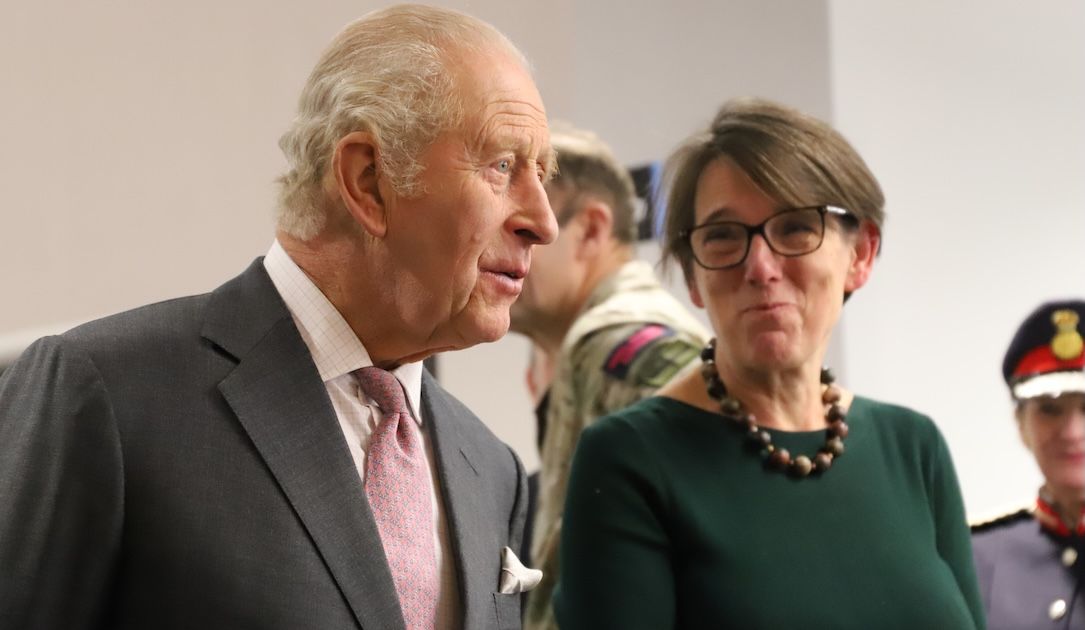
    King Charles opens new HQ for National Cyber Force, UK’s offensive hacking unit

    A building near the Lancashire village of Samlesbury in northwest England is officially the headquarters for the secretive unit that runs the Britain’s offensive cyber operations.

    Source: The Record · 2026-11-16

  • Russia denies intercepting Romanian government emails

    Russia denies intercepting Romanian government emails

    Russia has denied accusations that its state-backed hackers targeted a Romanian government institution in an attempt to intercept emails exchanged with NATO and the European Union.

    Source: The Record · 2026-11-16

  • UK leaves client-side scanning out of new child safety rules

    UK leaves client-side scanning out of new child safety rules

    The regulator Ofcom said it does not have the power to make technology companies scan people’s personal devices for child abuse images.

    Source: The Record · 2026-11-16

  • How an AI Content Mill Put a Real Musician Through Copyright Hell

    How an AI Content Mill Put a Real Musician Through Copyright Hell


    How an AI Content Mill Put a Real Musician Through Copyright Hell

    When writer and musician Samantha Shokin noticed her cover of a public domain Bulgarian folk song had been copyright struck on YouTube, she assumed it would be easy to fix. It wasn’t. And trying to figure out what happened led her to discover an AI content mill that is running 500 slop-filled channels and abusing YouTube’s automated copyright detectors.

    “Any human would agree with me that there’s something clearly wrong here that needs to be fixed, but I can’t get in touch with a human being,” Shokin said.

    Shokin’s journey is a modern nightmare that highlights the ways AI can be weaponized against human creators, and the ways people fall through the cracks of big tech’s automated systems.

    During the pandemic, Shokin recorded a 50 second version of the Bulgarian folk song ‘Bre Petrunko’ and uploaded it to SoundCloud, where it didn’t get much traction. Two years later, she uploaded it to YouTube and watched as her cover grew in popularity, gaining 125,000 views in four years.

    Last summer, she noticed an uptick in comments on the video. Unbeknownst to Shokin, her version of “Bre Petruinko” had become popular among DJs and electronic artists and had been sampled in dozens of songs. Someone in the comments pointed her towards one of the more popular tracks. “I look up this video and it’s something that has millions of hits […] and 30 seconds into this track I hear my own voice and I was utterly shocked. I didn’t know how to react,” she said (the video has more than 4 million views).

    “The first thing that comes to mind is, ‘Oh my god, someone stole my voice and didn’t credit me,’” she said. Shokin said she talked to a lot of DJs and figured out how they’d gotten her voice. They’d purchased a pack of samples from a company called Loopmasters that was selling her version of “Bre Petruinko” as part of its “Folk Legends” set.

    “I got in touch with the distributor and they were deeply apologetic. They were unaware that this had happened and they immediately tried to make right of the situation and granted me royalties on the sample pack,” Shokin said. “At that point, countless DJs and music producers had been using my voice for their own tracks, unbeknownst to me. At least I’m aware and at least I was making something off of it and I was satisfied with that. I didn’t love the way that it came about, but whatever, they tried to make right of the situation.”

    But Shokin’s “Bre Petruinko” saga wasn’t over. Last month, she opened YouTube and noticed her original recording was gone. A company called Media Nov Records had issued a copyright strike against her song, and YouTube had taken it down.She thought it would be easy to get this reversed. It’s a public domain folk song and she had the original recordings and a history with a distributor. “If I just explain it to YouTube, they’ll understand,” she thought.

    Media Nov Records advertises itself as a “distribution company” that that partners with artists to release their music on digital platforms. But a lot of its website focuses on rights management and copyright protection. “At Media Nov, we go above and beyond to safeguard your musical creations. Our comprehensive rights management system leverages cutting-edge technology and legal expertise to ensure you receive the royalties you deserve,” it said on its website.

    YouTube uses automated systems to work through copyright claims. When someone files a claim against a video, the company tends to automatically approve it. The original uploader can file a “counterclaim,” where they argue that the video should stay up, or that it should not be demonetized.

    Shokin filed two counterclaims, but neither worked. “It’s unclear to us whether you have a valid reason for filing a counter notification, so we won’t be able to honor your request,” YouTube said in its last denial. It told her to contact the copyright holder; in this case, it was a public domain song and so there was no actual “copyright holder,” just Media Nov, which was claiming to hold it.

    “I tried emailing them,” she said. “I tried calling them. There doesn’t appear to be a working phone line. I got in touch with [Loopmaster, which was selling her recording]. They tried getting in touch. I’m being ignored by everybody, by YouTube, by this media company that, like, the website seems to be entirely AI-generated, and all I want is to talk to a human about this.”

    Media Nov’s site boasted about its use of automated DMCA takedowns, YouTube content ID management, and AI-powered content recognition. “Our advanced AI identifies your music across platforms ensuring accurate tracking and protection,” it said. The company says it has been in existence since 1996, but Archive.org’s Wayback Machine doesn’t show much of a web presence until last year. Its website is basic and barebones. 

    The company has two addresses on its website. One is an apartment building in Los Angeles on Marina Del Rey. The other is the Black Church in Dublin, Ireland — a cathedral that’s been converted into an office space. The site listed a Los Angeles phone number that was busy every time 404 Media tried to call it. 

    According to corporate paperwork filed in Ireland and reviewed by 404 Media, Media Nov Records was founded a little more than a year ago. Its listed address is the Black Church in Ireland but both of its shareholders gave addresses in Turkey.

    404 Media found four different YouTube pages managed by Media Nov Records. Each contained hundreds of videos — many with AI-generated art assets and music. The songs are sometimes cross posted between the different channels and are mostly looping electronic beats. Think low effort “lofi beats” knock offs. The art assets are footage of sports cars, anime girls, and AI-generated pictures of women. The songs are cross posted on multiple channels and often generate fewer than 100 views. Each also has few YouTube shorts that revolve around “random acts of kindness.” A Douyin (the Chinese version of TikTok) watermark is present in some of these videos.

    For example, recent YouTube shorts on its flagship page include a basic beat playing over an AI-generated woman mopping the floor of a store while being berated by her AI-generated boss. Another features an AI-generated woman crying over a well, and a crew of men rescuing her child. One of its other pages looks like this:

    How an AI Content Mill Put a Real Musician Through Copyright Hell

    Media Nov Records told 404 Media that it operates 500 of these channels and “works with various artists, content creators, and music partners.” The company did not initially return emails or phone calls from Shokin or Loopmaster, but responded to an email from 404 Media.

    It said it would look into its copyright claim of Shokin’s track. “We remain willing to review the relevant ownership documentation, original audio files, and supporting evidence to investigate the copyright claim thoroughly. If an error is identified, we are committed to taking appropriate corrective action promptly,” it said.

    After 404 Media requested comment, Media Nov Records responded to Shokin and asked her to provide “relevant documentation supporting her ownership of the recording, including original audio files, recording evidence, original publication dates, and any other supporting materials,” which is a wild request considering that it has nothing to do with her recording and does not own the copyright.

    The company told 404 Media that Shokin and Loopmaster’s emails had gone to its spam folder. “Regarding ‘Bre Petrunko,’ we would like to clarify that the musical composition and arrangement rights associated with Philip Koutev’s work must be distinguished from the rights in any individual sound recording. Media Nov Records also holds certain rights relating to the relevant musical content,” the company told Shokin in an email reviewed by 404 Media.

    “Bre Petrunko” is an old folk song with no known writer. It’s primarily sung and most performances of it do not use instruments. Philip Koutev is a Bulgarian composer who popularized a version of the song in 1963. He died in 1982 and the copyright for that particular version is held by the Smithsonian. There are also many other versions of the song on YouTube, some with millions of views. 

    “Recording your own cover or performance does not automatically establish ownership of the underlying composition or arrangement. Likewise, rights in the underlying musical work do not automatically establish ownership of your particular recording,” Media Nov  said. 

    “It’s ironic that they’re in the copyright business,” Shokin said. “It’s not the arrangement that’s in question. It’s the voice and performance […] they clearly have no clue what they’re talking about.”

    It’s unclear why Media Nov Records brought Koutev into the conversation. 404 Media asked which song or work in its catalog triggered the copyright notice against Shokin but Media Nov Records did not respond. 

    “That makes it really ridiculous,” Alfred Steiner, an artist and copyright lawyer, told 404 Media. “If it’s her voice and her playing instruments, what could she possibly be infringing if it’s a folk song from the 19th century?”

    The situation between Shokin and Media Nov Records sounded odd to Steiner. “I’ve seen lots of providers where you say ‘I have the rights’ and basically say nothing more than that, and they put it back because they’re taking a risk now. They’re harming her. If they just put it back, they’re at no risk,” he said. 

    “It sounds, to me, like a small company — despite the fact that they represent or run 500 YouTube channels — that are understaffed and is using a lot of different tools, probably a lot of AI, to identify tracks that are ostensibly owned by its clients and then automatically filing takedown requests,” he said. “They’re probably taking down far more than they have the right to take down.”

    Minutes after it sent Shokin an email asking for proof she’d recorded the song, Media Nov Records followed up in an email addressed to both 404 Media and Shokin. “Following our review, Media Nov Records has decided to retract the copyright removal request for Samantha Shokin’s video. We are taking this step because the video has not generated revenue or received views, and we do not consider maintaining the removal request necessary at this stage,” it said. “However, this decision does not constitute a waiver of any rights we may hold. We intend to initiate appropriate legal proceedings regarding the underlying copyright dispute.”

    Around 24 hours later, Shokin’s original video was back up. A spokesperson for YouTube confirmed that it reinstated the video after the claimant withdrew their complaint. 

    “It sounds like they got scared and feel like this is not a battle worth fighting,” Shokin said after seeing the email from Media Nov Records.

    “Submitting a takedown request for rights that you don’t have can subject you to liability which includes actual damages and costs and attorney’s fees,” Steiner told 404 Media. “Doing this on a slipshod, shotgun approach is inadvisable from my perspective. Of course, if all of the people you end up offending are small parties and don’t have the resources to respond through the court system, and you are a fly-by-night entity that is hard to pin down and nobody knows who you are […] it can be difficult to get a remedy.”

    Shokin said she felt vindicated but was unhappy that it took a journalist emailing Media Nov Records to get them to listen to her. “They got my emails and they got Loopmaster’s email and they were just ignoring it because they only decided to respond because they got scared that it’ll be bad press,” she said. “It’s just not great all around. The whole system is broken. It feels like a broken system.”

    Source: 404 Media · 2026-11-16

  • British government ‘complacent’ on cyber threats from hostile states, peers warn

    British government ‘complacent’ on cyber threats from hostile states, peers warn

    The National Resilience Committee’s report, published eight days before a major vote on Britain’s landmark Cyber Security and Resilience Bill, warns that the legislation falls short of introducing the necessary security standards needed to protect the country.

    Source: The Record · 2026-11-16

  • EU sanctions pro-Russia hackers, two dozen staff at Kremlin disinformation contractor

    EU sanctions pro-Russia hackers, two dozen staff at Kremlin disinformation contractor

    The European Union sanctioned a pro-Russian hacktivist group and two dozen employees of the Moscow firm behind the Doppelgänger disinformation campaign.

    Source: The Record · 2026-11-16

  • Lithuanian customs agency restores services after cyberattack, possible data breach

    Lithuanian customs agency restores services after cyberattack, possible data breach

    A November 10 attack prompted Lithuanian Customs to temporarily shut down its main user management portal. It made progress on fixing the problem over the weekend.

    Source: The Record · 2026-11-16