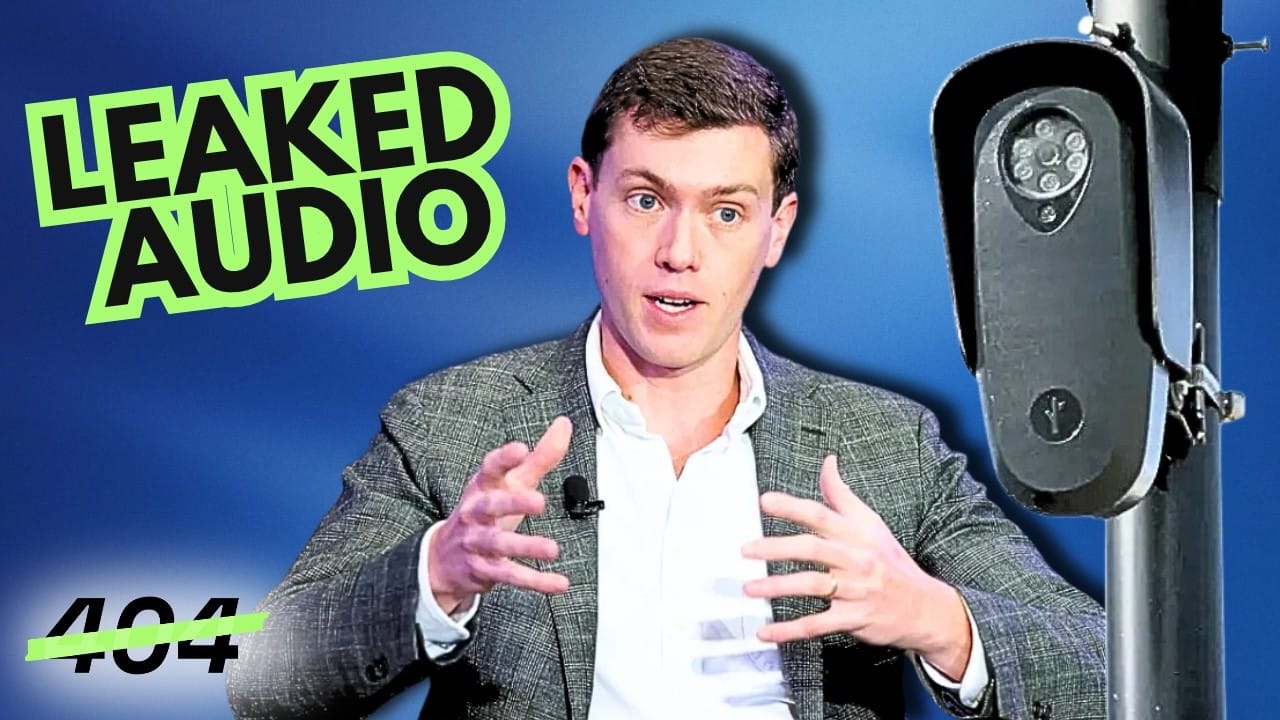
Andy Yen, the CEO of Proton, had a message for an employee in the company’s security Slack channel who urged the company to at least take a few days to pentest newly written code before pushing it live. “That’s bullshit and loser thinking. Of course it’s possible to be fast and secure,” Yen wrote in the channel at the end of August. “Stop thinking always of how to be slower, and focus more on how to be faster.”
In a follow-up message, Yen reiterated his point: “only losers think like that.” His ultimate message for the team was to “stop lovingly handcrafting all our code and use AI more.”
That exchange was just one of many that showed how Yen and other company executives are aggressively pushing Proton towards AI. Proton is a Swiss company that famously makes the encrypted email service Proton Mail and a suite of privacy and security-focused products, including an encrypted drive service, an authenticator app, a password manager, and more.
In the last few months, Yen set up an email address for employees to contact if they come across anything blocking adoption of AI at Proton, so leadership can “ruthlessly smash everything that stands in the way of AI velocity;” Proton installed software on workers’ computers that track how much AI code the company is generating; and Yen said this is the last year that Proton will hire engineers at all, and instead only hire people to build things with AI.
That AI push came to head this week when 404 Media reported Proton said it would re-interview staff about their use of AI, with the clear implication that those interviews, and employees’ willingness to embrace AI, could decide whether a worker is fired or not.
404 Media spoke to eight current and one former Proton employees and reviewed Slack chats, meeting recordings, and an AI manifesto written by the company’s CTO. Our reporting reveals a culture of fear inside Proton, where many employees are hesitant to even mildly critique Yen’s views or discuss engineering problems. Workers describe an environment where employees have genuine concerns about security or being asked to develop security products with AI, but feel unable to voice them, lest Yen berates them in front of everyone or threatens their employment at the company.
“The CEO is in full AI psychosis and has been for a while now,” one of the sources told 404 Media.
Our reporting also paints a picture of Proton that is likely very different to the public’s perception of a company with a goal of carefully protecting privacy: one that in reality is barreling ahead with AI as quickly as possible so it can achieve the explicit goal of more annual revenue.
“Due to insufficient velocity,” Proton is not on track to achieve its annual recurring revenue target by the end of the year, one internal document obtained by 404 Media reads. Proton’s year-over-year growth is also “far away from what the market today considers to be good,” and, “By all metrics that matter, we’re an underperforming company.”
In response to detailed questions from 404 Media, a Proton spokesperson did not dispute any of our reporting or characterization of what’s happening inside of the company.
“It’s clear that some people at Proton are unhappy with our direction, or misunderstand it, and many people are anxious,” they said. “In our determination to move fast, we have sometimes been too blunt or too slow in explaining ourselves to our people. We will work on that, as their questions are the ones we most need to answer.”
💡
Do you know anything else about Proton? I would love to hear from you. Using a non-work device, you can message me securely on Signal at joseph.404 or send me an email at joseph@404media.co.
Yen, a former CERN particle physicist, projects a measured approach in public, but internally he acts more like what one employee described as a “petulant child.” In May, Proton announced it was implementing post-quantum cryptography which should protect against future attacks from quantum computers. The work took years of effort, with one caveat that it would not work on older emails, only those written after the feature’s launch, at least for the moment. Yen was not happy that Proton was drawing attention to this limitation.
Source: 404 Media · 2026-10-29