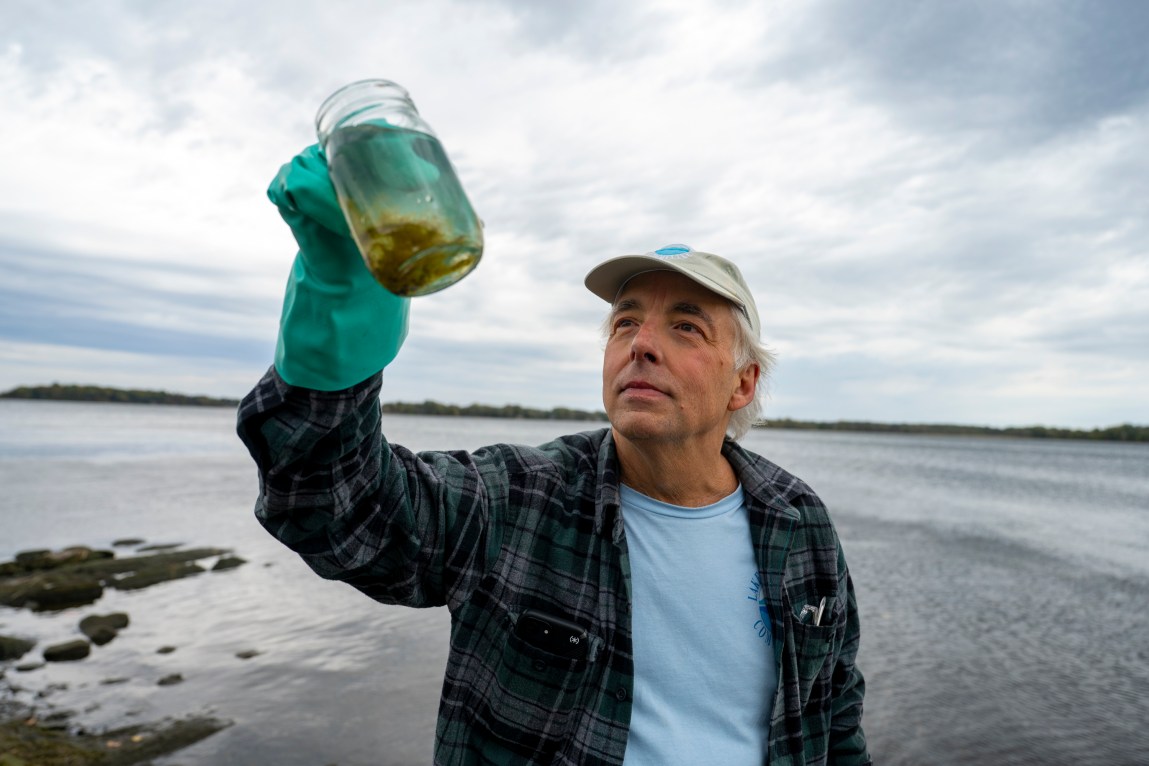
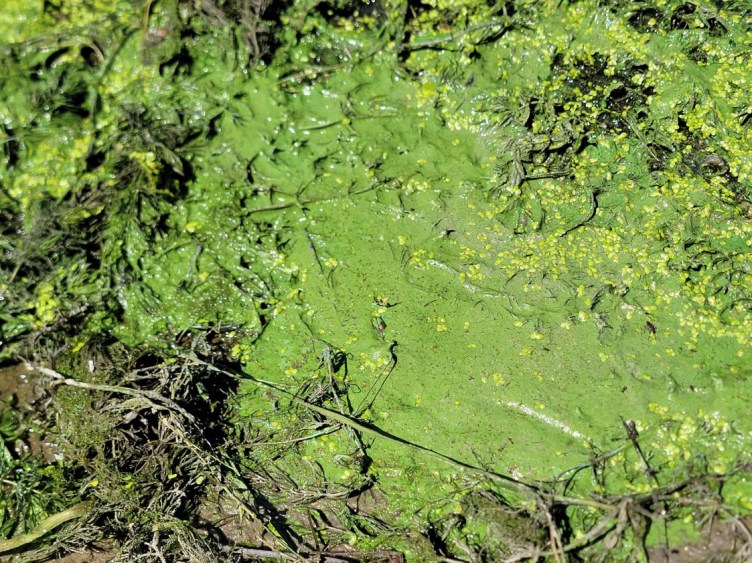
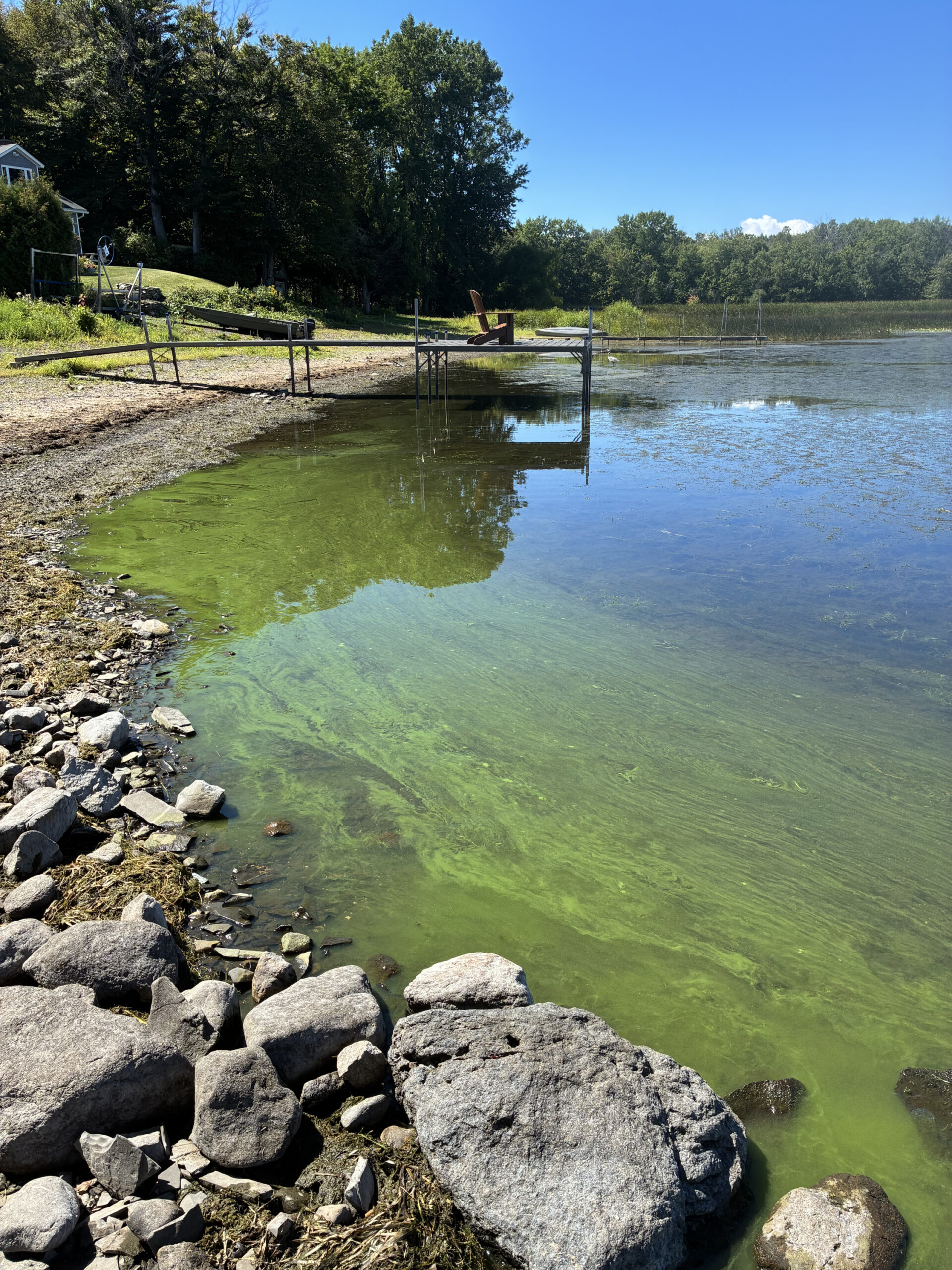
On the last day of August, Jeff van den Noort spotted thick swirls of neon green film coating the water just steps from his home in Vermont. He waded in up to his ankles and dipped a jar to get a sample of the scum.
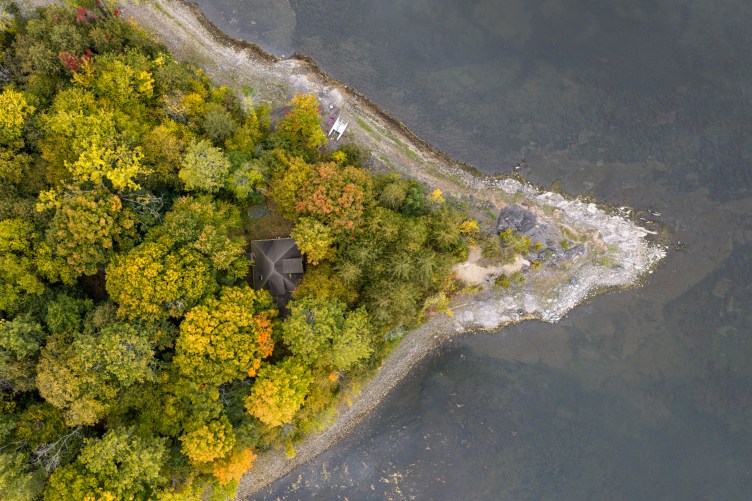
It wasn’t the first time he’d seen the slime. Since his parents bought the house on an island in Lake Champlain in 1966, van den Noort has spent part of nearly every summer in this quiet spot. Back then, the lake was clear.
But he began to witness the water’s deterioration as he grew older, especially after he moved into the home full time in 2010 to care for his ailing mother. That day in late August was the worst he’d seen all summer.
Later that week, van den Noort grabbed a bucket, a few Mason jars and a smartphone and got into his rusty Saab. He drove past the boat launches, frozen-in-time general stores and windswept pastures of the lake’s islands in northern Vermont and stopped at four other spots along the shore. Each time, he collected some murky water, gauged how thick the muck was, took a few photos and jotted down the weather conditions. He then uploaded his report to an online database.
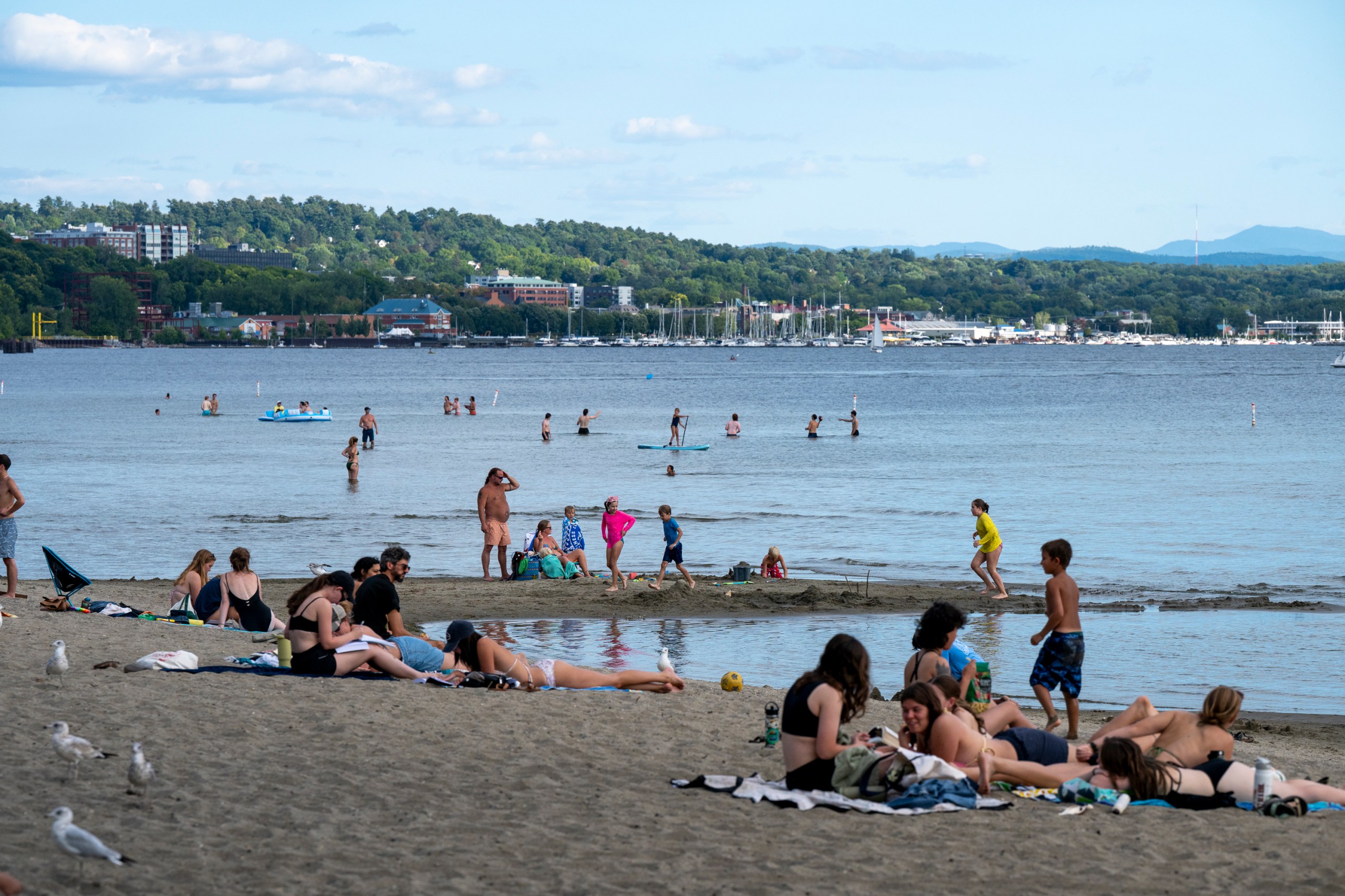
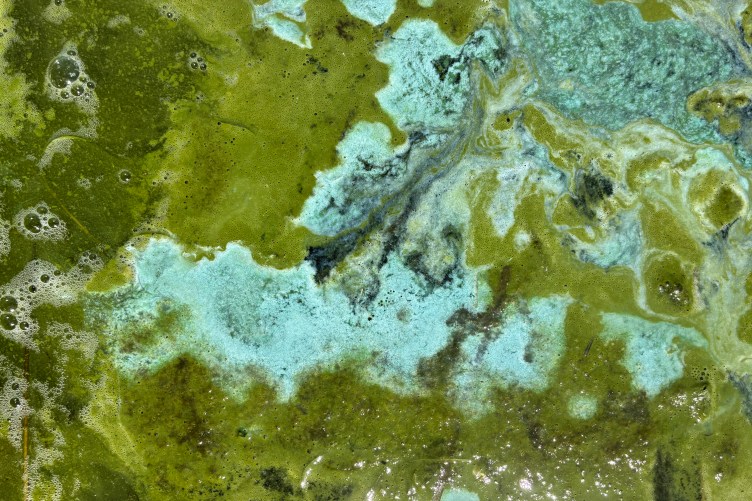
Van den Noort was one part of a large volunteer effort to monitor a problem that has plagued Lake Champlain, which supplies drinking water to about 200,000 people. In recent decades, blooms of potentially toxic cyanobacteria, often called blue-green algae, have killed pets, forced beaches to close and hurt business and property values along the shores of this iconic Vermont feature.
“I just don’t feel like enough is being done,” van den Noort said. “And I think the state needs to take this seriously.”
Just over a decade ago, state leaders seemed to be doing just that. In 2015, then-Gov. Peter Shumlin stood a few feet from Lake Champlain by the Burlington waterfront and signed Vermont’s Clean Water Act. It promised to tighten limits on pollution and provide funding to clean up the state’s waterways.
The move was a response to ratcheting pressure from environmentalists and the U.S. Environmental Protection Agency. The EPA had been telling Vermont officials for years that they needed to take much stronger action. In 2016, the agency finalized tougher cleanup targets that the state must meet by 2036.
But after 10 years and nearly a billion dollars spent on water quality projects and programs, Vermont’s cleanup effort is faltering. In a little-noticed letter to the head of Vermont’s Department of Environmental Conservation last year, the EPA’s regional administrator warned that the state was “not on track” to meet its cleanup goal and would need to more than double its annual pace.
Halfway through the two-decade timetable, Vermont has achieved only 35% of the goal, according to the state’s most recent estimates. And the steps that Vermont has taken to get there, such as upgrading sewage treatment plants, represent “low-hanging fruit,” Eric Perkins, a former EPA official involved in setting the target, wrote in an email in response to questions from Seven Days and ProPublica.
The culprit behind these blooms is phosphorus, an element that is an essential building block of life, present in all organic matter. But too much of it has been pouring into the lake from farm fields saturated with fertilizer and manure, dirty stormwater, and raw sewage from treatment plants overwhelmed by heavy rains. That has tipped the lake’s ecosystem out of balance, spurring the growth of microorganisms that turn shallow bays and shorelines into no-go zones.
Ingesting cyanobacteria-laden water can cause vomiting, diarrhea, dizziness and liver damage, while skin contact can lead to rashes. Researchers have also detected possible links between chronic exposure to cyanobacteria and heightened risk of Parkinson’s disease and ALS, also known as Lou Gehrig’s disease. The algae blooms can also deprive fish and other aquatic life of oxygen.
While some areas of Lake Champlain have seen incremental improvements in phosphorus concentrations and cyanobacteria blooms, other parts of the lake are getting worse. Seven of the lake’s 15 sampling stations have exceeded the EPA’s annual phosphorus limits every year since 2015, a Seven Days and ProPublica analysis of lake monitoring data through 2025 shows. Four stations recorded higher average phosphorus levels over the past decade than in the decade before, including in the southern part of the lake and its northeast arm.
In September, the Department of Environmental Conservation reported to the EPA that in two northeastern sections of the lake most chronically plagued by phosphorus runoff, the state is not nearly on track to meet its targets. The department specifically acknowledged that it was not making enough progress in addressing stormwater runoff and that reductions in farm pollution in the Missisquoi River watershed have slowed since 2023.
Vermont shares the 120-mile-long lake with New York and Quebec, but it’s the source of about two-thirds of the phosphorus that flows into the water body. Agriculture is the largest polluting sector, while stormwater runoff from development, like urban parking lots and rural roads, contributes the highest amount of phosphorus per acre.
State agencies have repeatedly delayed taking more difficult and politically fraught action to crack down on pollution from farms, businesses and housing developments. Policies around them have encountered resistance from the dairy industry, property owners and lawmakers sympathetic to their interests.
The challenges in cleaning up Lake Champlain raise a salient question: If a small, conservation-minded state like Vermont can’t tackle this problem, what does that mean for other areas of the United States grappling with algae blooms in the Great Lakes, the Chesapeake Bay and the Gulf of Mexico?
State officials counsel patience as they remind Vermonters it will take more time to solve the problem.
“We are moving apace with the commitments we’ve made, in terms of the projects, but it isn’t manifesting itself nearly as quickly in the lake monitoring data,” said Julie Moore, Agency of Natural Resources secretary. “This is a complex ecosystem, and we need to come at this work with a whole lot of humility.”
Leaders of the Agency of Agriculture, Food and Markets said it will take time for investments, such as programs to reduce soil erosion and help farmers upgrade their manure storage equipment, to pay off.
“The first five years, we were really developing an enormous amount of programs,” said Laura DiPietro, the agency’s water quality program director, but implementing them “doesn’t happen overnight.” She said she expects to see greater phosphorus reductions resulting from them in the coming decade.
But for van den Noort, the blooms are increasingly hard to ignore.
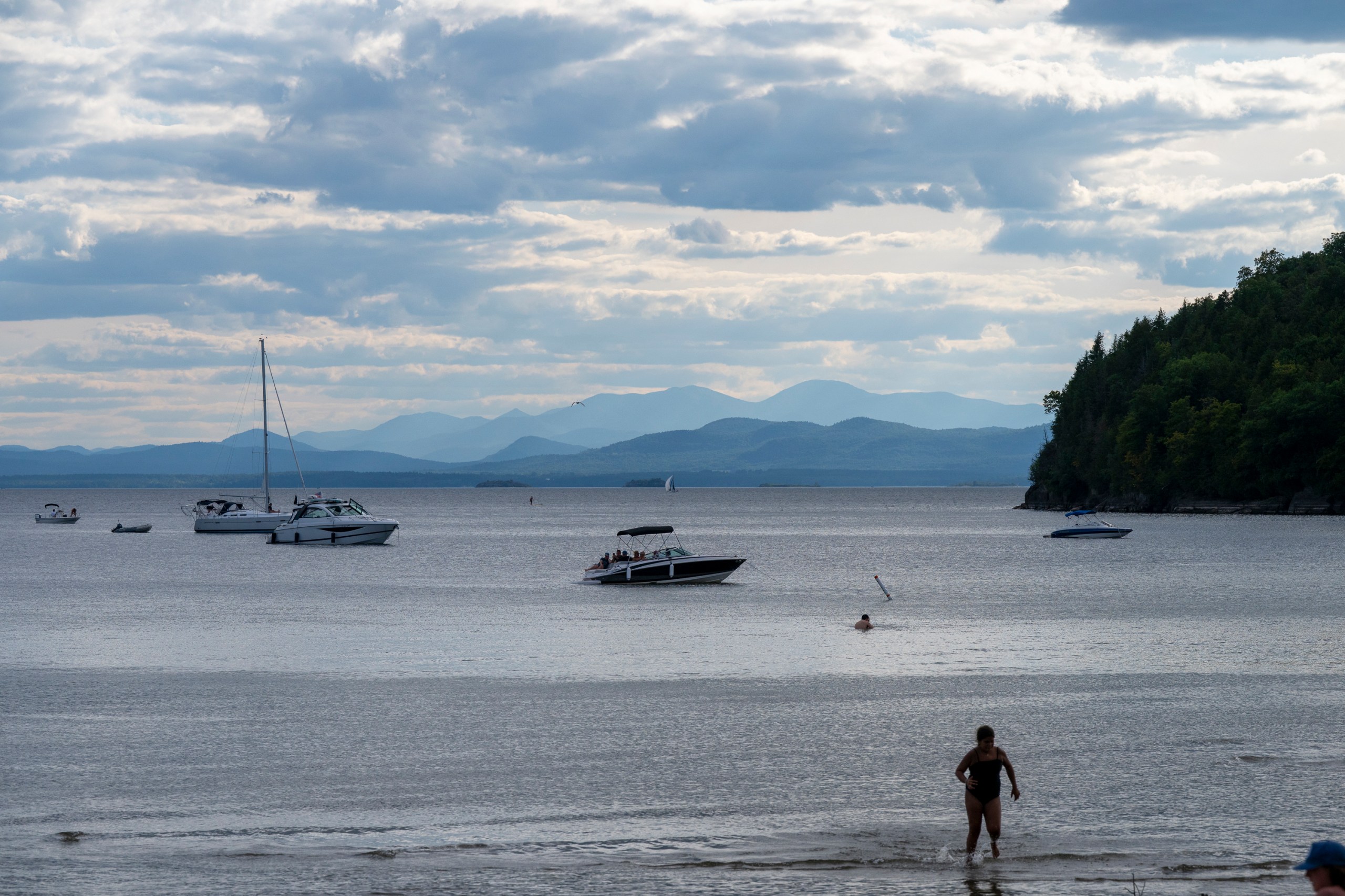
“The worst days ever are really, really bad,” he said. “Just as far as you can see, the whole bay is green.”
Pushing the Limits
Unlike chemicals and heavy metals, which can be removed from lakes and rivers with dredging, phosphorus isn’t technically or economically feasible to extract.
So environmental regulators focus instead on limiting the amount of phosphorus that flows into the water each day. It’s like putting the lake on a diet. The EPA sets what’s known as the total maximum daily load, a target based on the agency’s determination of how much phosphorus the lake can absorb and remain healthy. To meet that goal, the state must cut pollution from agriculture, stormwater drains, roads, forests and wastewater treatment plants.
The EPA had set previous targets for Lake Champlain in 2002, but, concerned that Vermont wasn’t taking strong enough measures, the agency set tougher ones in 2016. For the first few years after those targets were updated, Perkins, who was then the EPA’s Vermont water quality coordinator, felt that the state was generally on the right track.
During his tenure, state agencies and lawmakers set up the Clean Water Fund to finance water quality projects and dedicated tax revenue streams to support it. They put in place stronger rules for fertilizer use and manure storage on farms. They created permit programs to limit stormwater runoff from roads and municipalities. That progress was reflected in a 2020 report card the EPA issued, acknowledging that Vermont had checked off all the milestones up to that point.
“Overall, I was very impressed with the level of commitment demonstrated by the state,” Perkins wrote to Seven Days and ProPublica.
By the time Perkins retired in 2021, he and colleagues at the EPA had become concerned about signs of lagging commitment by Vermont’s agencies to water quality enforcement on farms.
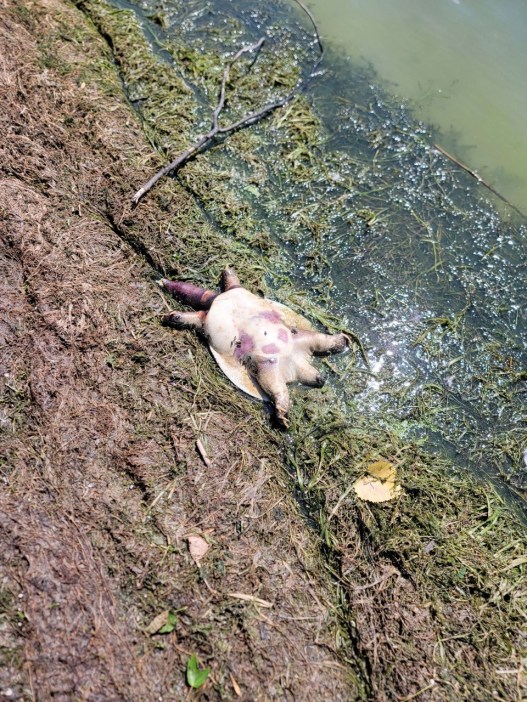
One clear opportunity to speed up phosphorus reductions, according to Perkins, is to ensure farms comply with required agricultural practices and avoid spreading manure before anticipated rainstorms, which has caused “major phosphorus runoff events.”
If the state and farm operators were to make that a priority, “it could likely make a big difference,” Perkins wrote. And the state could encourage that practice by overhauling its permitting system to tighten water quality requirements and enforcement for farms that keep animals confined in barns for long periods of time. Those farms are called concentrated animal feeding operations, or CAFOs. In recent years, many small family dairies in Vermont have closed or consolidated into larger operations that would be considered CAFOs under federal law.
Yet Vermont has delayed action on an EPA directive to strengthen its approach to regulating CAFOs. Just across the lake, New York has used such permits for decades to ensure better environmental practices on larger farms. In Vermont, a recent state task force report recommended working to develop this program for another five years.
A second, related reform the EPA has recommended is to change who leads regulation of those farms.
Vermont has two different agencies that oversee farm pollution. The Agency of Agriculture regulates how farms handle waste on site, while the Agency of Natural Resources is responsible if runoff from that waste leaves the farm. This split responsibility has caused oversight problems, including lapses in following up on reported water quality violations with inspections and enforcement actions. Environmental advocates have long maintained that the agriculture agency has a conflict because it also has a mandate to promote the state’s farm sector.
This arrangement frustrates farmers, too. In a letter to Gov. Phil Scott earlier this year, owners of one Vermont dairy farm wrote that “the lack of alignment and clear communication between these agencies” places farmers in an uncertain position. “Many in the farming community feel caught in the middle of interagency disagreements, unsure which standards will ultimately govern their operations or how enforcement will proceed,” they wrote.
In interviews, officials at the two agencies acknowledged those communication problems but said that they have taken steps to improve how they share information on potential violations and coordinate more closely on inspections.
In 2024, the EPA ordered Vermont to consolidate the regulation of agricultural pollution under the Agency of Natural Resources, Vermont’s main environmental agency, which the EPA says has sole authority to administer federal Clean Water Act rules.
In a letter that year to Moore, the agency’s secretary, EPA Region 1 administrator David Cash noted that the EPA had monitored the situation in Vermont for well over a decade. “And despite having had ample time and opportunity to cure longstanding program deficiencies,” he wrote, “ANR has failed to do so.” Cash noted that the state has failed to give ANR “sufficient resources or operational authority” to regulate runoff from farms.
Hovering over this back-and-forth is the threat that the federal government could take over enforcement of water pollution rules from Vermont.
Do You Live Near Lake Champlain? Help Seven Days and ProPublica Investigate Algae Blooms.
Seven Days and ProPublica have teamed up to investigate the cleanup of Lake Champlain. Have you been affected by this issue? We’d like to hear from you.
Following the letter to Moore, the divisions between the two agencies were on display as they discussed their regulatory approach in internal emails obtained under Vermont’s Public Records Act by Seven Days and ProPublica. In a 2025 email, Agency of Natural Resources general counsel Catherine Gjessing reminded her counterpart at the agriculture agency and legislative counsel staff that “there are a significant number of farms that are in fact discharging without a permit” in violation of the federal Clean Water Act. She added that the two agencies had been working under this split responsibility arrangement, with the agriculture agency taking the lead, “for decades now and we are still not in compliance.”
In an interview, the agriculture agency’s general counsel, Steve Collier, said there was never “a Wild West situation where farms were not being regulated” and that his agency’s rules protected the environment. “Whether or not the Clean Water Act was being administered exactly as it should be is a different issue,” he said.
Outside of agriculture, Vermont has yet to fully implement a third EPA demand as well as the directives of its own Clean Water Act. That 2015 law mandated the Department of Environmental Conservation to require properties with 3 or more acres of paved surface, such as parking lots, to install systems to slow and capture stormwater runoff.
Five years later, when the department still hadn’t finalized this “3-acre rule” permit system, the EPA warned Vermont that it would have to give the state “a failing grade” if it didn’t do so by Sept. 4, 2020. Vermont met the EPA’s deadline but in 2025 passed a law pushing the date for getting permits to 2028 for properties in the Champlain basin.
And those property owners don’t need to make the stormwater upgrades until 2033.
Treading Water
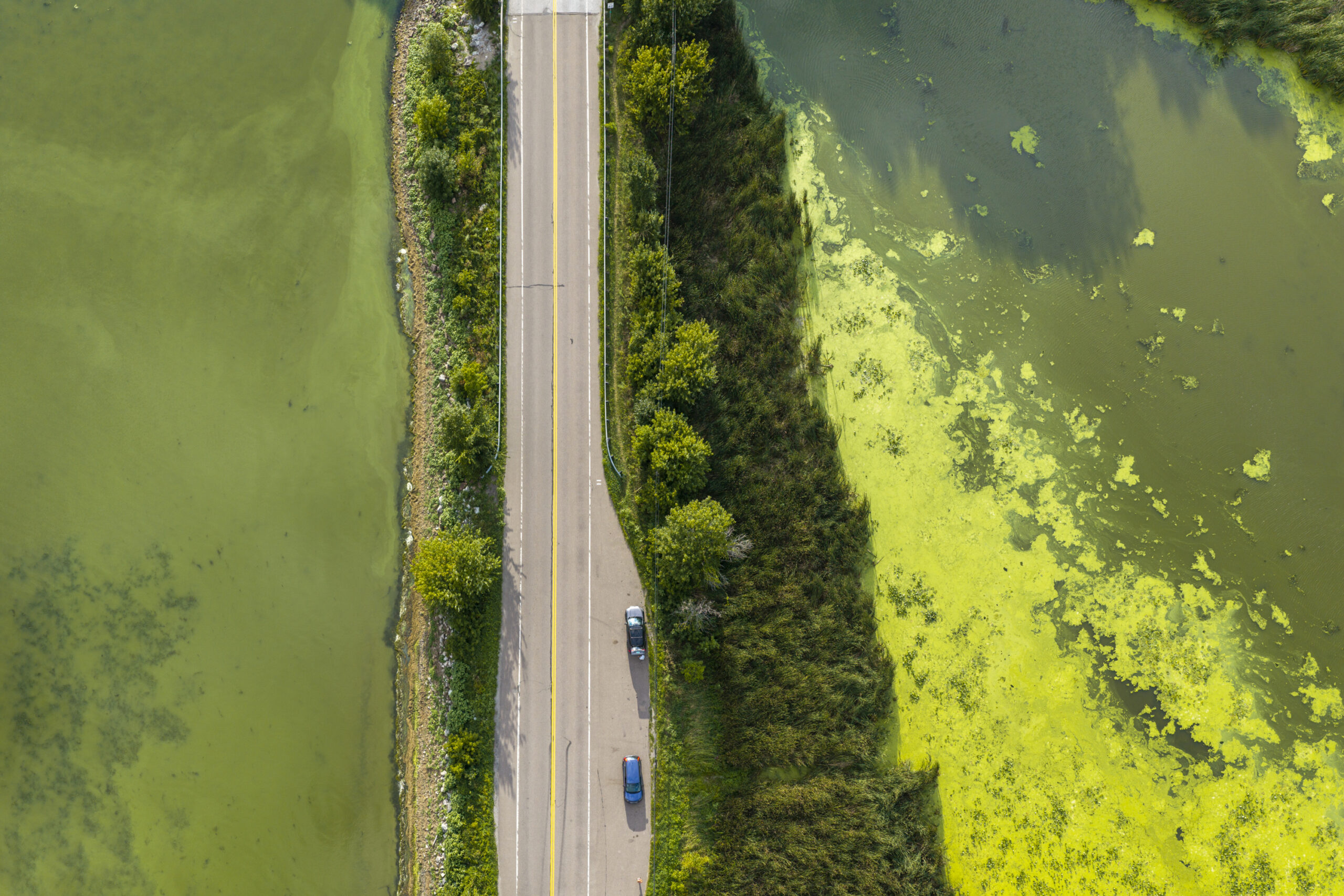
For a quarter century, Steve Cushing has been advocating to clean up St. Albans Bay in the northeast part of Lake Champlain near the epicenter of Vermont’s dairy industry. Throughout that time, he listened as federal and state environmental officials came through town and pledged to act. “Expect a lot of progress 10 years from now in many segments of the lake,” one EPA official told him and his neighbors in 2015.
A decade later, this summer’s cyanobacteria blooms in the shallow bay were some of the worst he’s seen in several years, he said. Since June, the public beach in the St. Albans Bay Park has mostly been closed to swimming.
“Overall, you can’t really see a big improvement in water quality in the bay,” Cushing said.
Public data supports that notion. Every three years the federally funded Lake Champlain Basin Program, which coordinates research and grantmaking across the lake’s watershed, issues a report summarizing its water quality monitoring.
Its most recent edition, from 2024, revealed “deteriorating” trends in the northeast arm of the lake for both phosphorus and cyanobacteria and no progress in Missisquoi Bay, a shallow stretch spanning the U.S.-Canada border that frequently suffers intense blooms.
That’s troubling, scientists and advocates say, because the failure to address new pollution is exacerbated by both historical pollution and the effects of climate change.
What scientists call “legacy phosphorus” has accumulated in soils and lake sediments after many decades of fertilizer use, manure spreading, deforestation and unregulated septic and wastewater systems.
“We are working on a system that’s been impacted by human activities for the past 150-plus years,” said Matthew Vaughan, the chief scientist of the basin program.
Climate change poses another headwind for the lake cleanup. Since 2003, cyanobacteria blooms have appeared earlier in the spring and later in the fall as temperatures rise, and even at lower phosphorus levels. The drought that hit Vermont in 2025 led to a spike in blooms, thanks to the combination of heat and low water levels. Meanwhile, downpours are turning Vermont’s streams and rivers into fire hoses of phosphorus-laden sediment: In just one week in July 2023, record-shattering floods pumped six months worth of phosphorus into the lake.
“All of this just makes it more urgent to do our part to address these water quality challenges,” Vaughan said.
Some state officials and researchers contend that phosphorus deposited in the lake bed and soil decades ago might play as significant a role in fueling algae blooms as today’s runoff.
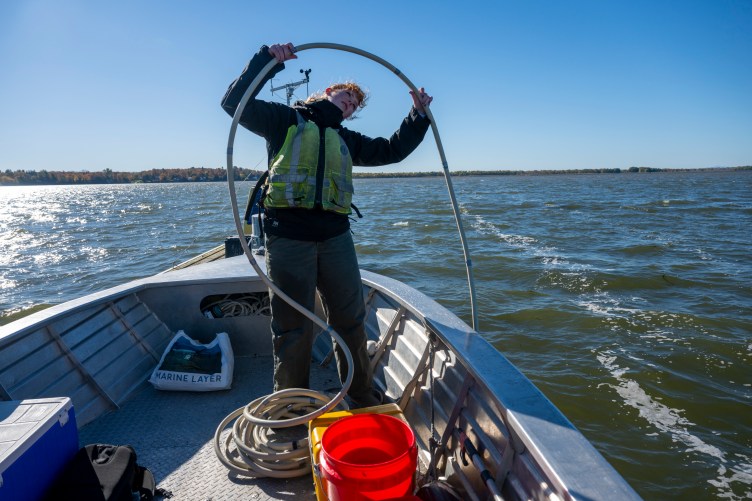
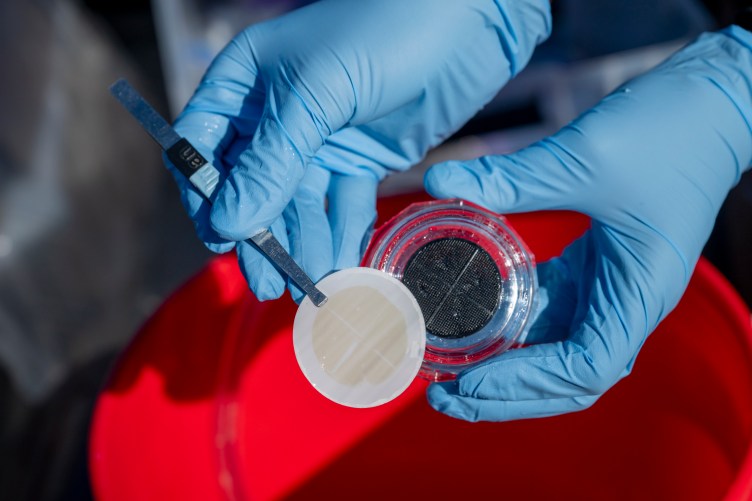
But while legacy phosphorus remains a challenge, “I think it’d be wrong to just rely on that as the excuse,” said Eric Smeltzer, who worked for the Department of Environmental Conservation for 35 years, including as the state limnologist who monitors the health of Vermont’s lakes and ponds.
“The most important technical question about the Lake Champlain phosphorus cleanup is: Are these practices working? And if not, why not?” Smeltzer said. “How can it be done better? I think you can’t just explain it away based on time lags and legacy phosphorus forever.”
In reviewing the state’s data recently, one detail in particular jumped out to him, he said. Wastewater treatment still garners an outsize share of Vermont’s clean water spending, even though it has been clear for years that it’s not a major contributor of phosphorus, while agriculture and stormwater are.
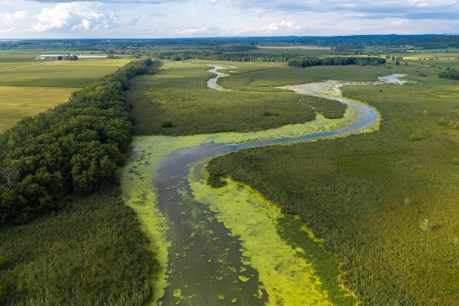
Cushing traces the algae blooms back to the dairy farms that dominate the watershed and to regulators’ failure to “put any teeth behind” restrictions on manure spreading and other water quality rules.
Cushing, a former dairy farmer, has pushed for policy changes as a volunteer with the St. Albans Area Watershed Association and has led an effort to mechanically remove vegetation that contributes to the phosphorus problem in his overburdened bay.
At 78, he is now searching for someone to take over the weed removal effort. “I’m getting a little burned out,” he admitted.
Seven miles to the west, on the island of North Hero, van den Noort questioned this summer whether all the data he gathers is making any difference.
“If we really wanted to solve the problem, I think we’d have to make some tough choices,” he said. “I don’t think anybody wants to do that. It’s a head-in-the-sand thing.”
Every week, van den Noort drives up the western edge of Isle La Motte on his monitoring circuit, looking out over a stretch of water that is supposed to be one of the cleanest parts of Lake Champlain. On the worst days, a pea green broth of blooms stubbornly hugs its entire shoreline.
Source: ProPublica · 2026-11-04