
Tag: Sports

  • SafeSport Will Now Alert Schools, Clubs if Coaches Sanctioned for Abuse Continue to Work With Kids

    SafeSport Will Now Alert Schools, Clubs if Coaches Sanctioned for Abuse Continue to Work With Kids

    A collage of a grainy image viewed through a net that shows volleyball players on an indoor court in front of an exit sign on top of a grainy photo of a blue and red gymnasium floor.
    Photo illustration by ProPublica. Photos by Sarah Blesener for ProPublica.

    The U.S. Center for SafeSport is taking steps to stop coaches banned over allegations of sexual abuse from working with children, part of an initiative that the organization said it is launching because of reporting by ProPublica and The Washington Post about gaps in the child protection system in youth sports.

    Charged by Congress with investigating allegations of sexual abuse in sports, SafeSport has the power to suspend or permanently bar coaches from contact with athletes and place their names on a public disciplinary list. But the center has authority only over the country’s national sports governing bodies, which are overseen by the U.S. Olympic and Paralympic Committee. Elementary and high schools, colleges and many independent youth sports leagues are not required to follow SafeSport’s bans, though some opt to do so. Parents and other caregivers only know if a coach has been sanctioned if they check the list.

    SafeSport’s new initiative encourages people to find and report banned coaches who are continuing to work with children, SafeSport said, with a publicity initiative that includes a video with its CEO.

    It is also launching a new “internal process” to notify schools and other organizations that coaches are on the SafeSport list. Hilary Nemchik, SafeSport’s vice president of external affairs, said the organization would send a form letter when it learned coaches were still working with kids, either as a result of its own investigation or in response to a report.

    “When SafeSport imposes a sanction for abuse or misconduct, the community should be aware,” Benita Fitzgerald Mosley, SafeSport’s CEO, said in a statement. “Someone could be on the SafeSport Database for abuse but go on to work at a school or coach for a league outside of our jurisdiction.”

    ProPublica and The Post discovered several coaches who had been banned by SafeSport but continued to work with children. One story highlighted the case of a volleyball coach, Ryan Richardson, who SafeSport found to have committed sexual misconduct with a minor but who has continued coaching teenage girls in the Rio Grande Valley in Texas. An independent volleyball league allowed Richardson to coach at several of its tournaments even after his name appeared on SafeSport’s database. Videos posted online showed Richardson on the sidelines.

    The reporting showed that Richardson continued coaching in part by allowing a former assistant, Gavin Rudder, to take over the volleyball club after Richardson was banned by USA Volleyball, the sport’s governing body, in 2024. ProPublica and The Post found that Rudder allowed Richardson to coach the teams for years after the ban, a violation of the SafeSport code.

    After the story was published, SafeSport added Rudder’s name to its public database, listing him as temporarily restricted from unsupervised coaching or training.

    Rudder is currently listed as the coach at Weslaco High School, near McAllen. Abel Aguilar, the Weslaco district’s deputy superintendent, said in an email that the district “does not comment on personnel matters.”

    In a text message, Rudder said the SafeSport ban “has nothing to do with high school volleyball” and that he had not “done anything wrong.” He said he was no longer associated with Richardson’s club volleyball team following the end of the 2026 season.

    Richardson has not responded to requests for comment on ProPublica and The Post’s reporting. When he was first suspended in 2024 by Lone Star Region Volleyball, the organization overseeing volleyball in South Texas, Richardson told the local news website MyRGV that complaints about him were an effort to “retaliate and defame someone’s character,” and said he “would never do anything to risk the physical or mental wellbeing of these strong young ladies.”

    In announcing the changes, SafeSport also nodded to a bipartisan inquiry into a major youth sports organization launched last month by the powerful House Energy and Commerce Committee, which also oversees SafeSport.

    The lawmakers said they were launching a probe of the Amateur Athletic Union after ProPublica and The Post reported that the nonprofit does not follow SafeSport bans and has become a haven for coaches who are banned for abuse. The committee asked AAU President Jo Mirza for details on its child safety policies and training, setting a deadline of Oct. 21.

    Committee representatives this week didn’t respond to questions about the status of the investigation. The AAU, which has said in a statement that it is “committed to protecting its athletes through comprehensive protection policies overseen by our Compliance Department,” said it would “cooperate fully” with any inquiry.

    Source: ProPublica · 2026-11-05
  • Federal and State Officials Ramp Up Scrutiny of DraftKings, Other Sports Betting Apps

    Federal and State Officials Ramp Up Scrutiny of DraftKings, Other Sports Betting Apps

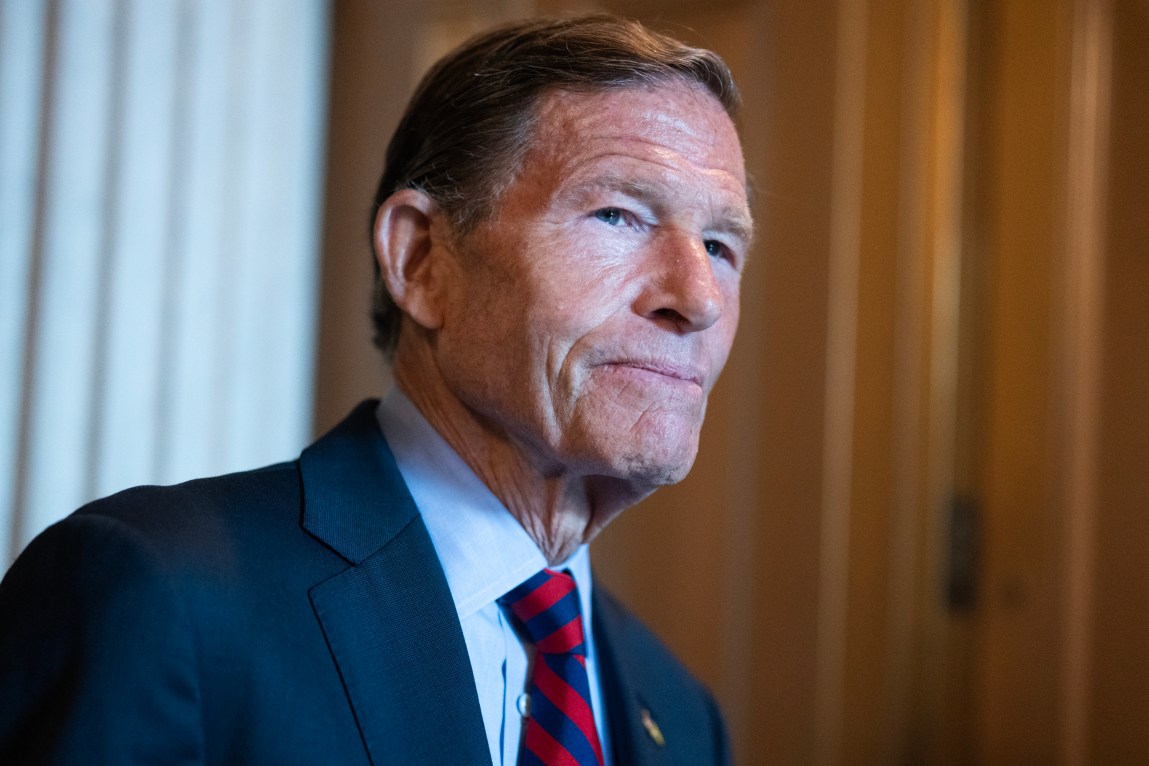
    A man with brown hair wearing a blue suit and striped tie stands inside a room and looks off in the distance.
    Connecticut Sen. Richard Blumenthal, one of three federal lawmakers who recently cited ProPublica reporting in a letter asking sports betting companies for more information about their business practices. Tom Williams/CQ-Roll Call, Inc via Getty Images

    State and federal officials have ramped up scrutiny of online sports betting companies in recent weeks, launching inquiries, demanding information and, in one case, proposing a new rule that would limit when companies like DraftKings can pitch their users to bet more.

    The moves — by gaming regulators, government lawyers and federal lawmakers — follow an investigation last month by ProPublica that tested the guardrails DraftKings and other sports betting companies have in place to protect users from spiraling out of control. That system is called responsible gaming, and executives say it’s integral to their companies’ long-term success.

    The ProPublica article showed how DraftKings bestowed VIP status on a reporter who deliberately bet like a problem gambler. The report detailed the ways in which the app’s user design and promotions encouraged more betting — even after the reporter opted into responsible gaming tools designed to slow users down. A week earlier, The New York Times reported that DraftKings had used machine learning and artificial intelligence to target promotions to losing bettors.

    Those articles were the focus of an Oct. 15 meeting of the Louisiana Gaming Control Board, which, partly in response to the stories, tabled the renewal of DraftKings’ five-year license. Instead, the board granted the company a temporary four-month permit while investigators look into the issues raised in the reports as well as other paperwork concerns.

    The board’s chair, Christopher Hebert, said the Times had raised some “very serious questions” and called ProPublica’s reporting “very troubling.”

    While news stories “are not findings of regulatory violations,” Hebert said, “as regulators we have a responsibility to examine these matters that could affect the integrity of gaming operations and the protections of our citizens here in Louisiana.”

    State health officials say the number of Louisianans believed to have a gambling disorder has risen in recent years amid the surge in popularity of online gambling and prediction market sites. One top official reported this summer that gambling addiction was among the health department’s “top three priorities.”

    What Does Your Data Reveal About Sports Betting Apps? Help ProPublica Find Out.

    If you’ve bet on sports with FanDuel or DraftKings, you can help ProPublica understand how these apps work. Use our browser extension to download your betting history, then upload your files.

    Paul Liberman, who co-founded DraftKings and serves as its president of operations, told the regulators: “We do not use artificial intelligence to target losing gamblers by any means.”

    DraftKings previously told ProPublica that it proactively closes the accounts of suspected problem gamblers “all the time” but declined to provide specific figures. Yet when asked by a Louisiana board member for those same specifics, Lori Kalani, DraftKings’ chief responsible gaming officer, said 175 accounts in the state had been shut down this year. She told the board she didn’t know how many total users DraftKings had in the Pelican State.

    “We’re not physicians, we’re not clinicians and that’s not our role, but we certainly want to help people enjoy the service, the platform that we’re offering them,” Kalani told the board. “I know that we’re doing our job and that when we see something, we say something and we engage. I just can’t tell you if 175 is the right number. I wish it was zero.”

    In a statement, a DraftKings spokesperson said: “As a legal, regulated operator, DraftKings values an open and ongoing dialogue with regulators and regular conversations and check-ins with regulators are normal course of business.”

    In response to ProPublica’s original investigation, Kalani said DraftKings’ responsible gaming system — which consists largely of in-app messages about the company’s tools — “worked the way it was supposed to.” She cautioned against “drawing broad conclusions” from one user’s experience.

    The day after the Louisiana meeting, regulators in Ohio proposed an amendment to the state’s sports gaming rule that would bar companies like DraftKings from sending direct ads or marketing to bettors for 48 hours after they’d opted into responsible gaming tools or updated their current settings.

    The proposed amendment speaks directly to a finding in ProPublica’s reporting: After blowing nearly $4,500 betting on tennis in 24 hours, the reporter used such tools to limit the amount of time and money he could spend on the app. Just 30 minutes later, though, he received the first of four push notifications promoting new betting opportunities. It wasn’t until he opted into a far more restrictive tool, called a “cool-off,” that the notifications temporarily stopped.

    Andromeda Morrison, the interim executive director of the Ohio Casino Control Commission, said that though her office had been working on its proposal for some time, ProPublica’s story illuminated the issue. “Hopefully this is something that is fairly easy for the industry to see as a common sense restriction to make sure those consumers are making good choices without those push notifications,” she said.

    But Keith Whyte, a former director of the National Council on Problem Gambling who now consults for industry and nonprofit groups, said the proposed amendment could unintentionally disincentivize users from using tools like deposit limits. “I think the implication is that using a responsible gaming tool is a sign of a gambling problem,” he said. The measure faces a long rulemaking process, including more rounds of public hearings and comments.

    Sports betting operators are also feeling the heat at the federal level.

    Citing ProPublica’s reporting, three Democrats who have long called for industry reforms are now demanding more information from major sports betting and prediction market companies about how the businesses entice their customers.

    The letters are signed by Connecticut Sen. Richard Blumenthal, New York Rep. Paul Tonko and North Carolina Rep. Valerie Foushee. They asked the companies to answer a series of questions, including how many customers are enrolled in their VIP programs and how much revenue is generated by them.

    “As repeated stories from exploited gamblers and media reports have vividly documented, VIP programs are driving the gambling industry’s most susceptible customers into debt and addiction through rewards tied to waging ever increasing amounts of money,” the lawmakers wrote.

    DraftKings conferred VIP status on a ProPublica reporter after he lost close to $6,000 in three weeks on the app by chasing losses with long-shot bets, playing late into the night and firing risky wagers on fast action, like whether a major league baseball player will take a strike, a ball or connect for a hit — betting behavior that experts say are clear red flags of problem gambling.

    In a statement, DraftKings said it would “respond accordingly once we have had a chance to review” the letter. Its biggest competitor, FanDuel, which has been trading letters with the lawmakers for months, wrote on Oct. 20 that the company was committed to responsible gaming and said “the VIP program is intended to provide enhanced service and encourage customers who chose to wager to use FanDuel rather than another platform.”

    The companies are likely to face further scrutiny.

    In New York, investigators for the state’s attorney general have contacted former DraftKings employees about issues raised in the Times’ story, the newspaper reported, citing people familiar with the probe and messages it had reviewed. A spokesperson for the office declined to comment.

    That inquiry follows proposals earlier this month by state gaming officials that they say will strengthen New York’s own standards governing the use of artificial intelligence and responsible gaming guidelines.

    Regulators in Maine, Massachusetts and Michigan have also said that they’re reviewing some of those same issues.

    DraftKings, the spokesperson said, “does not market to customers based on indicators of potential problem gaming.”

    Still, there are signs that yet more states may be interested in vetting those claims.

    Jennifer Davenport, New Jersey’s attorney general, recently told the RG Journal, a publication that focuses on responsible gaming and industry matters, that “we are monitoring recent press reports alleging certain sports books are ignoring our consumer safeguards and chasing customers who are clearly exhibiting signs of problem betting.”

    “Let them be warned, our office stands ready to take action against anyone who violates our gaming regulations and tries taking advantage of New Jerseyans and those who gamble here,” she said.

    A spokesperson for Davenport declined to comment.

    Source: ProPublica · 2026-10-30