What did you last record on your iPhone? A lecture, perhaps, a call with your landlord, or notes…
Source: HackRead · 2026-11-02
What did you last record on your iPhone? A lecture, perhaps, a call with your landlord, or notes…
Source: HackRead · 2026-11-02
Type your name and town into a search engine, and there’s a good chance a people-search site will show your home address, phone number, age and the names of your relatives. Some of it is free; the rest costs a few dollars.
These sites are part of the data broker industry: companies that collect personal information about people they have no relationship with and sell or share it. You can get your information removed, and in some places it has recently become much easier: since 2026, California residents can send one deletion request to every registered data broker at once. But removal is rarely a one-time job.
This guide explains how data brokers work, how to find and remove your listings, which legal rights you can use in the US, the EU and the UK, and how to keep your information from coming back.
Source: Privacy Affairs · 2026-10-31
You open a newsletter, glance at it and close it. The sender now knows that you opened it, when, roughly where you were, and what device you used. You didn’t click anything. An invisible image did the work.
These images are called tracking pixels, or spy pixels, and they’re in most marketing emails. In 2026, France and Italy started requiring senders to get consent for most of them. This guide explains what email tracking pixels reveal, what your email app already does about them, and how to block them.

Source: Privacy Affairs · 2026-10-31
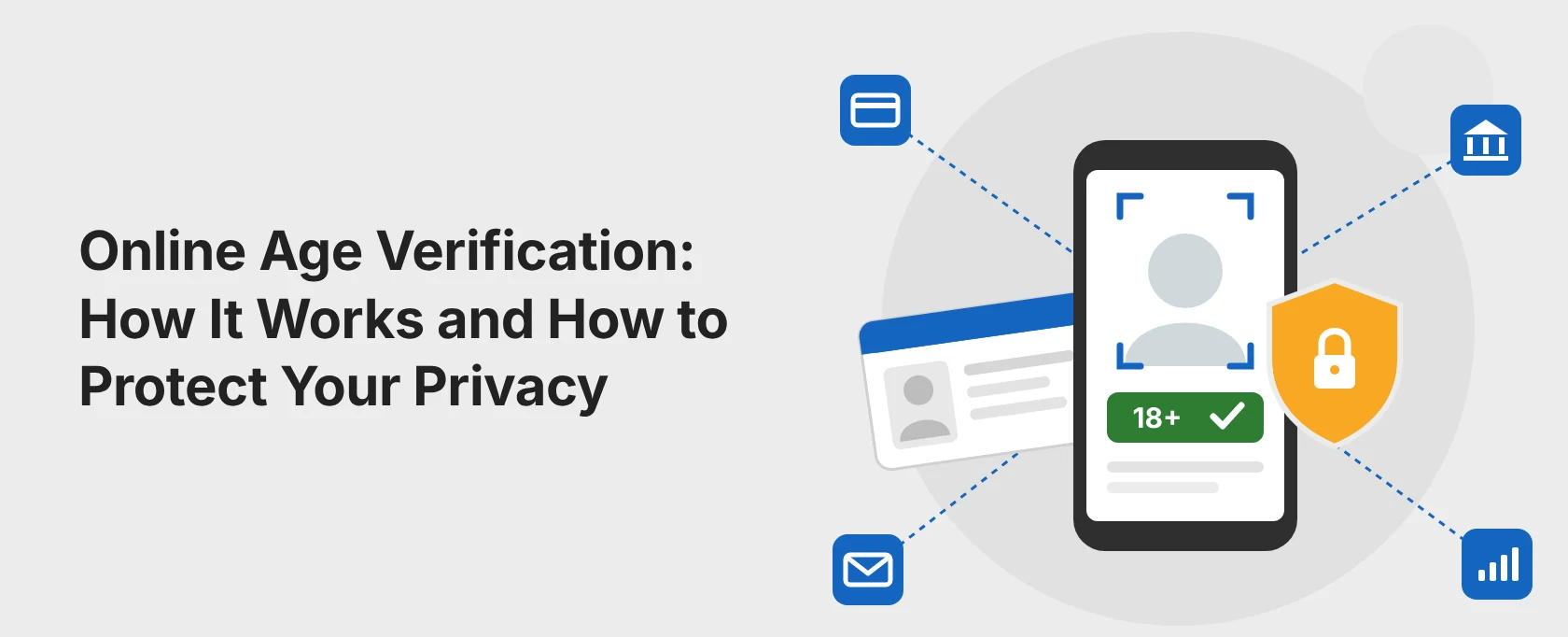
More and more websites and apps ask you to prove your age before you can get in. A social network wants a selfie, a music app asks for an ID, an adult site sends you to an outside company to scan your face or check your credit card.
These checks exist to keep children away from content and services that aren’t meant for them, and in many countries they’re now required by law. But every check also means handing over personal data, sometimes to a company you’ve never heard of. This guide explains how online age verification works, what each method reveals about you, and how to protect your privacy when a site asks for your age.
Source: Privacy Affairs · 2026-10-31

Two people open the same shopping app, look at the same product from the same store at the same moment, and see different prices. This isn’t a glitch. The price may have been set using data about each of them.
This practice is called surveillance pricing. It has moved from academic papers into lawmaking: several US states have banned it for groceries or retail, the EU requires stores to disclose it, and in October 2026 the US Federal Trade Commission ordered nine major companies to explain how they set prices. This guide explains how surveillance pricing works, how to test whether it’s happening to you, and what you can do about it.
Source: Privacy Affairs · 2026-10-31

The DOJ’s Executive Office for U.S. Trustees said a consumer privacy ombudsman is needed to advise the court on how to regulate what data from Character.AI can be sold and under what terms.
Source: The Record · 2026-10-30
A vulnerability in TeamViewer could let attackers run code on an IT support technician’s computer when the technician…
Source: HackRead · 2026-10-30
Apple has sent new notifications of mercenary spyware infections to almost 100 countries, with recipients including journalists and documentary filmmakers.
“Today’s notification is being sent to targeted users in 99 countries, and to date we have notified users in over 150 countries in total,” the company said. “The extreme cost, sophistication, and worldwide nature of mercenary spyware attacks make them some of the most advanced digital threats in existence today. As a result, Apple does not attribute the attacks or the notice you’re receiving to any specific attackers or geographical regions.”
Apple didn’t immediately respond to a request for comment Friday about the countries targeted. Researchers and groups that work on spyware said the notifications were significant, however.
“This again promises to be an important set of notifications with a bunch of cases, based purely on what we see publicly,” said John Scott-Railton, senior researcher at The Citizen Lab at the University of Toronto. He also posted on social media about how potential victims could defend themselves, warning people to be cautious about companies that offer paid solutions to spyware infections.
He cautioned that the lack of notification doesn’t rule out an infection. The steps Apple recommends, which Scott-Railton seconded, were to enable Lockdown Mode and to get in touch with the digital rights group Access Now.
“The number of Apple threat notifications we are seeing from countries around the world indicates that the fight against the scourge of spyware abuse is far from over,” said Natalia Krapiva, senior tech-legal counsel with Access Now. “While we have increased our capacity to investigate spyware abuse, and companies like Apple have done a lot to notify and protect people from it, repressive states continue to use these powerful surveillance technologies, including against civil society actors and opposition figures.”
Apple sent its last major batch of notifications in August. The notifications frequently lead to victims approaching Access Now, The Citizen Lab and other groups seeking further assistance and prompting deeper investigations.
The notifications come shortly before the final rounds of negotiations over industry standards for commercial hacking tools being developed under the voluntary Pall Mall Process. The industry guidelines follow an earlier set of guidelines catered to governments.
“The states that will ultimately adopt these guidelines must come to terms that the current system is not working, and that the spyware industry must face some real consequences for the uncontrolled sale of these tools and refusal to curb the abuses,” Krapiva said.
Source: CyberScoop · 2026-10-30
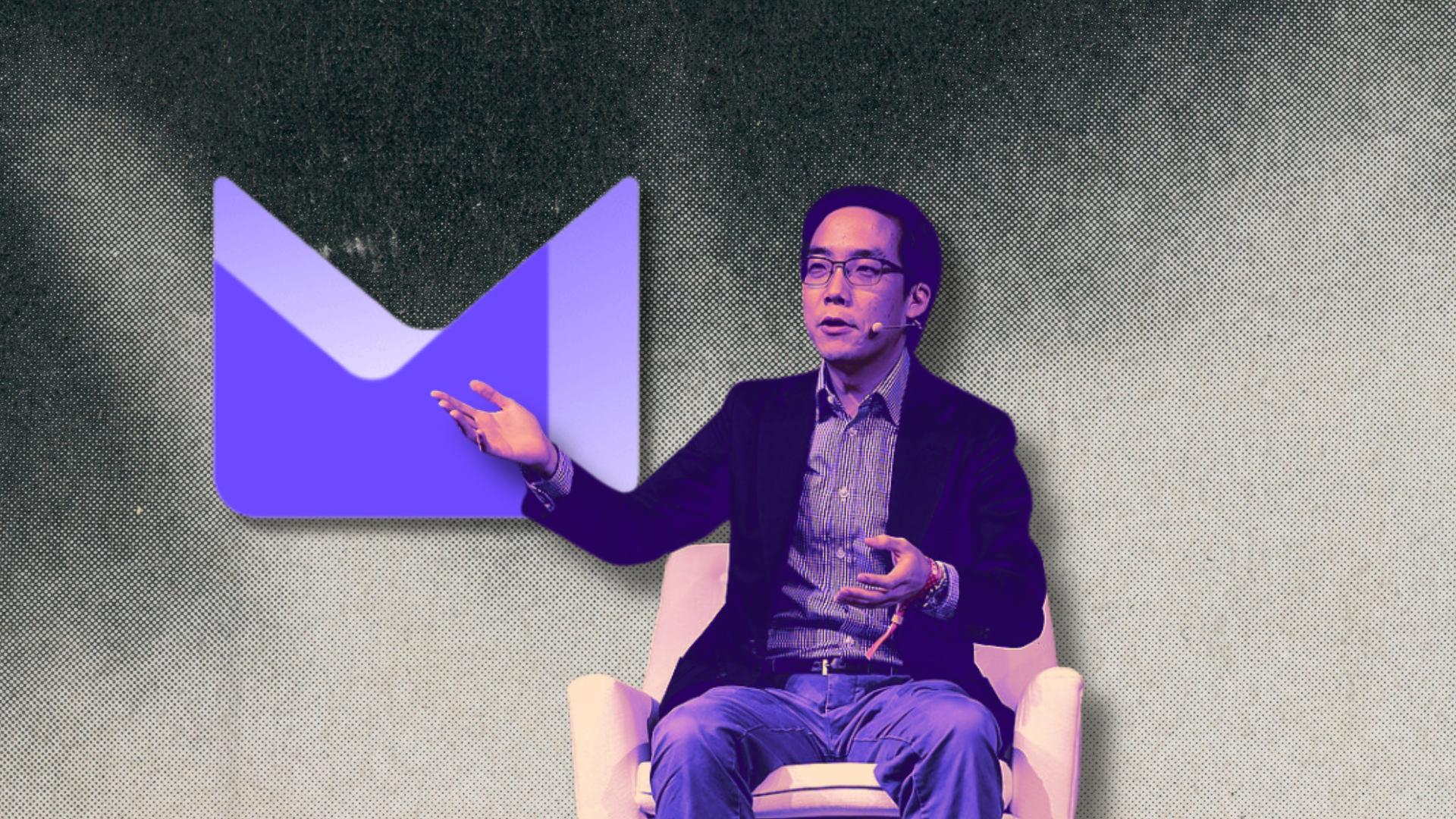
On Friday, Andy Yen, the CEO of Proton, cancelled a series of nearly company-wide ‘re-interviews’ that would have forced employees to explain how they are using AI, with the clear intention that they may be fired if not using it enough in the eyes of Proton leadership, according to six current Proton employees and audio of an around two hour all-hands meeting obtained by 404 Media.
The move came after 404 Media published an investigation on Thursday, which showed how Yen was aggressively pushing AI across Proton, in some cases despite security concerns from employees. In one exchange, an employee in the company’s security Slack channel urged Proton to at least take a few days to pentest newly written code before pushing it live. “That’s bullshit and loser thinking. Of course it’s possible to be fast and secure,” Yen wrote in the channel at the end of August. “Stop thinking always of how to be slower, and focus more on how to be faster.” Yen added, “stop lovingly handcrafting all our code and use AI more.”
The re-interview cancellations likely don’t address the concerns of many Proton users, who are more focused on Proton’s deprioritization of security; many Proton users have blasted the company’s leadership on social media over the last 24 hours and explicitly called for Yen to resign.
The investigation was based on conversations with eight current and one former Proton employees, Slack chats, meeting audio, and an AI manifesto written by the company’s CTO Bart Butler. It painted a picture of Proton that is very different to the public’s perception of a company carefully protecting privacy. Instead, Proton is barreling ahead with AI in large part to achieve more annual revenue. The investigation also found a culture of fear across Proton, where employees have genuine concerns about security or being asked to develop security-focused products with AI, but feel unable to voice them because Yen mocks or insults employees in front of everyone else.
“I don’t think he will change anything, and I think the only reason we had this meeting is because he has a rebellion on his hands,” one employee told 404 Media after the all-hands meeting on Friday.
Near the start of the meeting, Yen said, “I want to acknowledge myself, personally, that there was a communication failure on my part and there are many things that probably could and should have been communicated differently, and this is something that I’ll have to reflect on and improve over time. So I will do that.”
“So what does that mean going forward? Going forward, I’m still going to push,” he added.
Yen said leadership gathered in the last couple of days to talk about the re-interviews, and spoke to the Proton board too. “They’re closely monitoring the situation,” Yen said. (Proton is owned by the Proton Foundation, whose board of trustees includes Yen, Sir Tim Berners Lee, Prof. Carissa Veliz, Dingchao Lu, and Antonio Gambardella.)
After those discussions with leadership and the board, “We’ve decided to actually cancel the re-interviews,” Yen said. “Why? Well, I think actually in a, let’s say, unintentional way, they have actually already served their purpose.” As in, employees are now talking and learning about AI.
Yen also mentioned “org changes,” and said that part of this is “redistributing talent across teams.” He said that the reorganization will happen next month, “but there will be no loss of jobs from AI.”
Later in the call, Butler said Yen “needs to, and he has committed to, doing better” regarding how he communicates with his employees. “Using AI effectively and pragmatically does not mean that we’ve given up on security, or good architecture, or sound software engineering principles,” he added.
“We fucked up, we know we fucked up,” Butler later said in response to an employee’s comments in the meeting.
“Your old job is gone,” Butler’s AI manifesto, posted to Slack, told engineers, 404 Media reported on Thursday. He wrote that not embracing AI posed an “existential threat to the success of the mission itself.”
Reactions to the re-interview cancellations were split across the Proton employees 404 Media spoke to. One said, “Some are happy as it’s progress. Others believe that this won’t change anything because there isn’t any consequence for Andy [Yen].” The employee added they “would have preferred real accountability from the leadership team.” They said they felt not much could have happened due to Yen having the majority of Proton’s shares.
Another employee said, after Proton canceled the re-interviews, “They said in the next breath they want to continue pushing AI and that the things that were to be measured in the re-interviews would become a component of the performance reviews.”
“They have said clearly the direction had not changed. As a Proton user that doesn’t reassure me,” the employee said. “As an employee, the re-interviews weren’t cancelled until this became public despite concerns raised by many of us. I think it goes beyond communication issues and growing pains.”
“Right now, everything seems consistent with it being damage control,” they said.
Another employee said they were “mostly happy with how this was addressed including by Andy [Yen].”
Proton did not respond to a request for comment.
After 404 Media published the investigation on Thursday, Yen took to Reddit. Users downvoted his response more than 1,200 times. Many Proton users on social media said they were cancelling their paid Proton plans.
Source: 404 Media · 2026-10-30

The state’s Department of Education (FLDOE) said on Thursday it became aware of a data breach involving the Florida Student Financial Aid website on October 19.
Source: The Record · 2026-10-30