Tag: Politics

  • In a Newly Drawn District, Black Voters May Get a Representative Who Spent Years Undermining Their Interests

    In a Newly Drawn District, Black Voters May Get a Representative Who Spent Years Undermining Their Interests

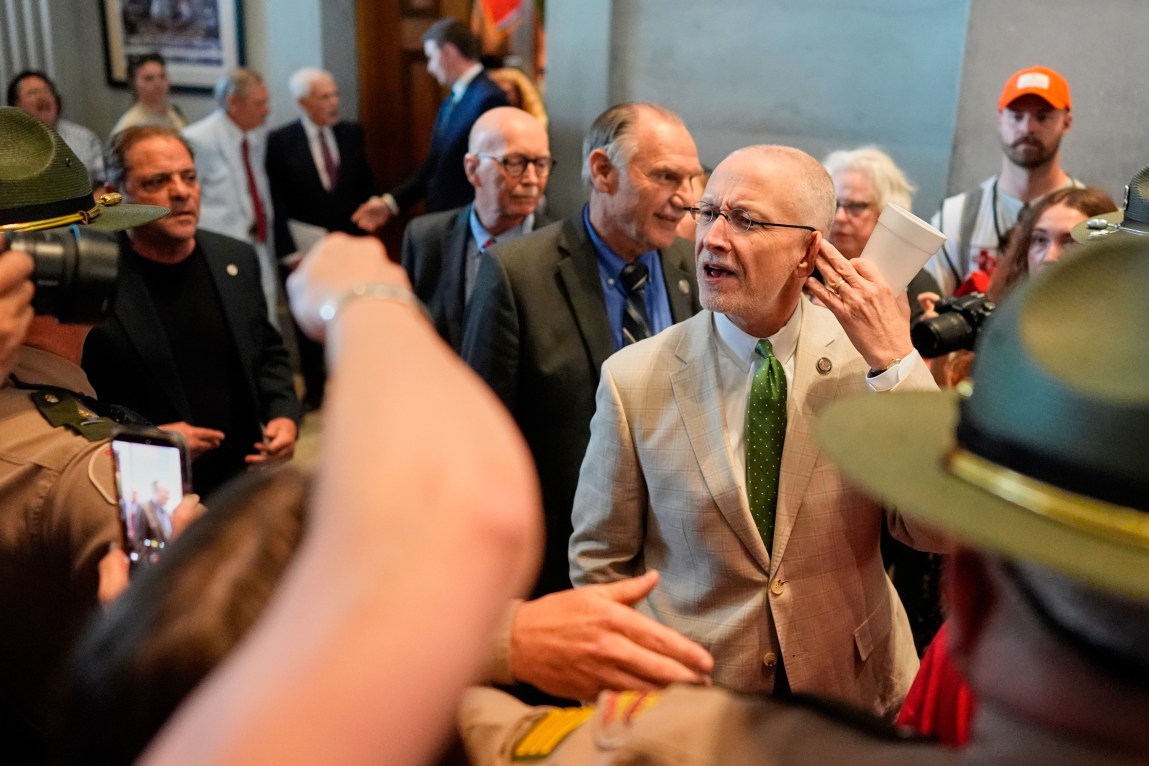
    A man in a suit holds his finger to his ear in an “I can’t hear you” motion as he walks through a government building. In the foreground are a crowd of people raising their arms at him, cameras pointing at him and people in uniform holding the crowd back.
    State Sen. Brent Taylor, R-Memphis, interacts with protesters as he leaves the Senate chamber after a special session of the state legislature to redraw the U.S. congressional voting map in Nashville, Tennessee, in May. George Walker IV/AP

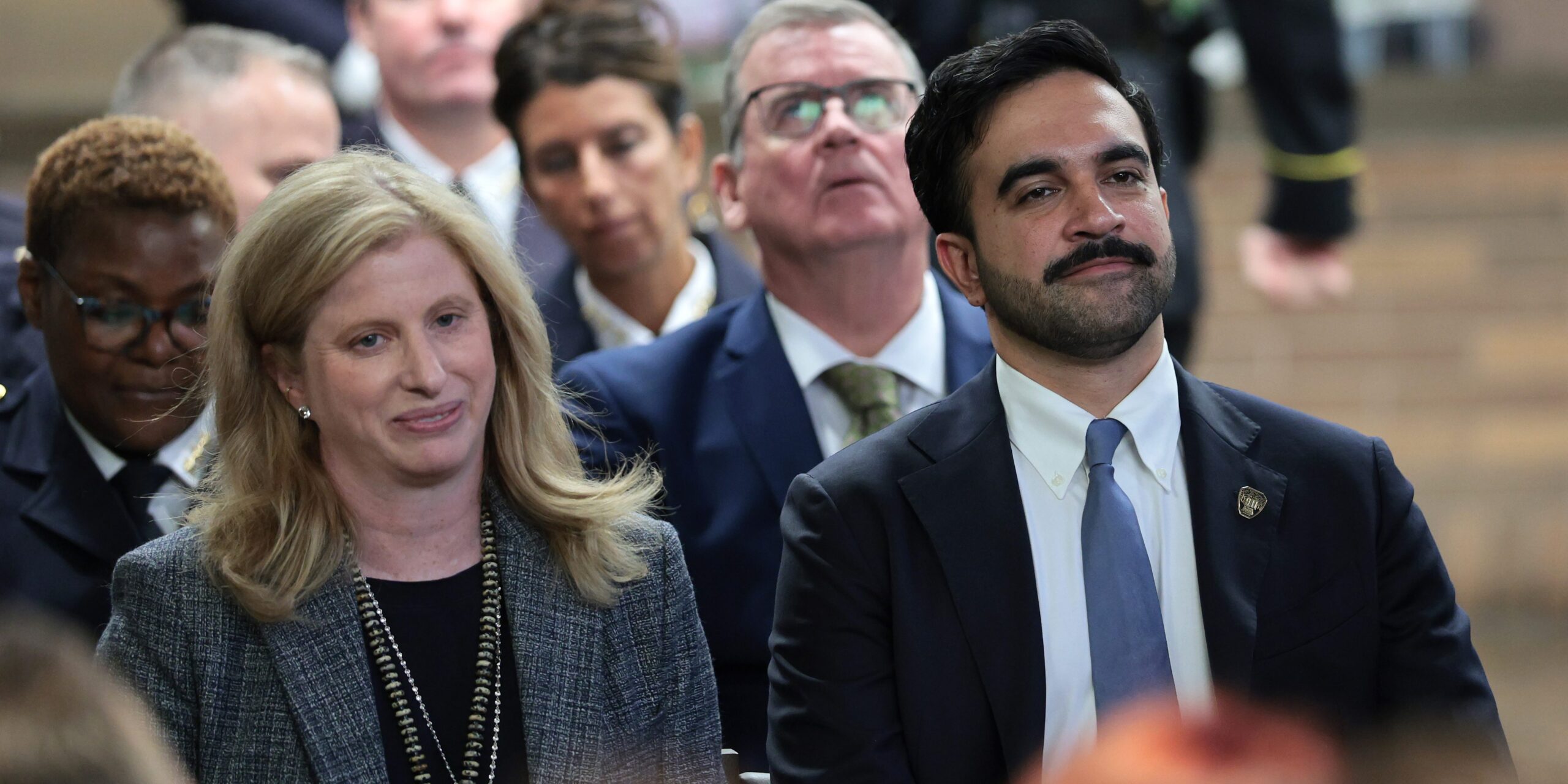
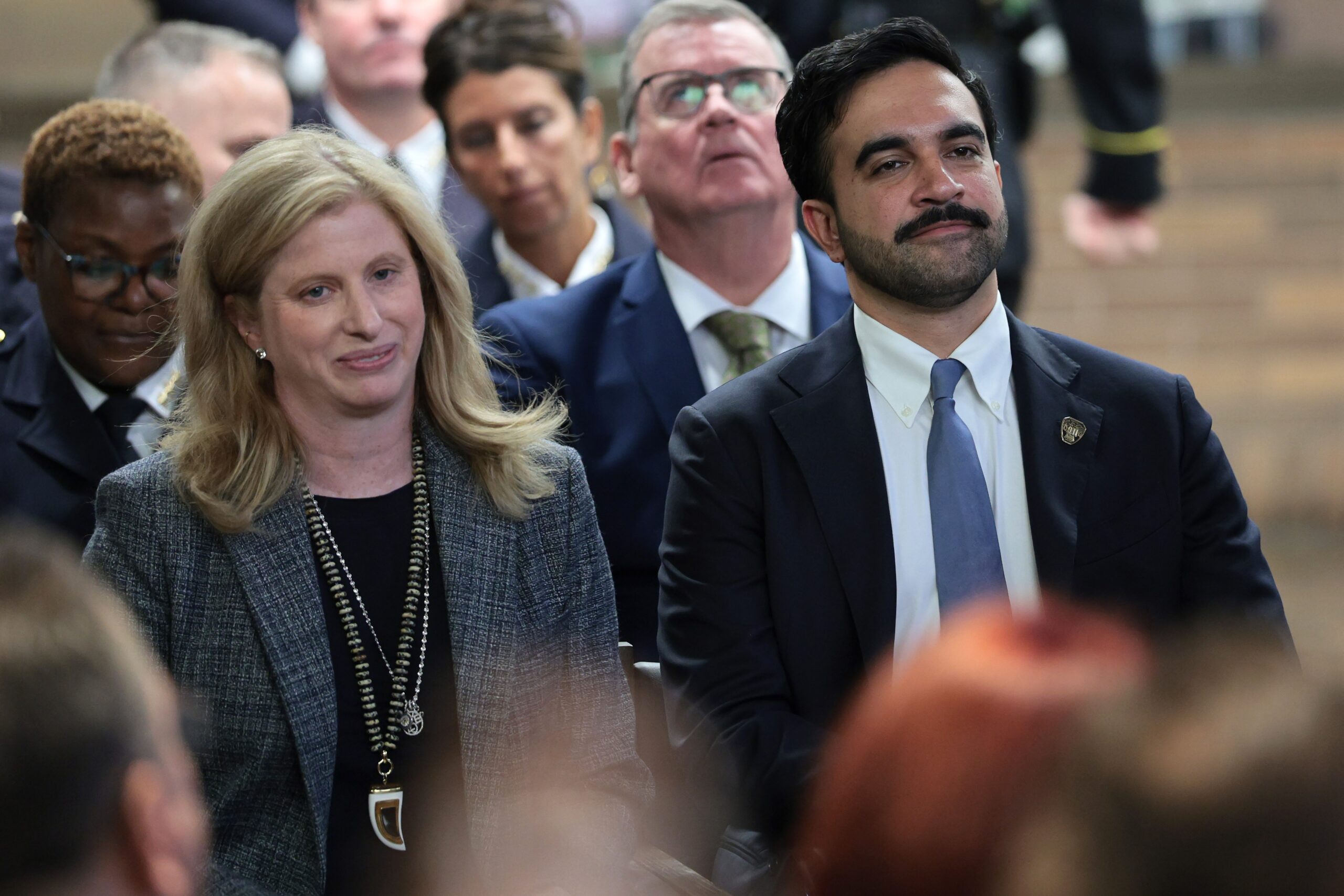
    Not two weeks after the Tennessee legislature carved Memphis into three congressional districts this spring, in a move designed to eliminate Democratic representation, Republican state Sen. Brent Taylor made his electoral expectations clear in a photo posted on social media. 

    Taylor and U.S. Rep. Tim Burchett, a fellow Republican, sat side by side on the U.S. Capitol steps. “My friend Tim Burchett showing me the dadgum ropes,” Taylor wrote in a Facebook post.

    On May 7, the same day that the new districts were approved, Taylor had announced his bid to represent the redrawn Congressional District 9, which for more than four decades had stood as the state’s sole majority Black district. During that time, it covered mostly the Memphis area; it now stretches across half the state and is majority white.

    Taylor, 58, already has a track record with many of the voters he is now seeking to represent in Washington, D. C.: In his nearly four years as a state senator, he has taken steps to strip authority from local officials elected by many of those same voters. With the backing of a Republican supermajority, Taylor, who is white, pushed through half a dozen laws that superseded the power and priorities of local politicians.

    Around the country, state legislatures from both parties have used preemption laws to control local governments. That tactic has been embraced by Republican-dominated statehouses in recent years as a way to restrict the ability of Democratic-led cities to enact policies state leaders disagree with, including protections for civil rights, public health and workers. 

    Memphis has long struggled with high rates of violent crime that have begun to fall only in the last couple of years. This is where Taylor focused his legislative efforts. He led the charge to prohibit judges from considering a defendant’s ability to pay when making bail decisions. He has tried to oust Steve Mulroy, the first Democrat elected as Shelby County district attorney in 25 years, and pushed through legislation authorizing the state to review every decision made by his office. And he co-sponsored a law that voided the Memphis City Council’s ban on police stops for minor traffic infractions, which had been passed after the 2023 beating death of Black motorist Tyré Nichols.

    The question of how to keep communities safe has drawn divergent political approaches in Memphis — from Mulroy’s focus on rehabilitation as part of his effort to lower violent crime, to Taylor’s emphasis on aggressive prosecution and incarceration. Those approaches can mean very different experiences for the people of Memphis, which makes up most of Shelby County. Some elected officials and criminal justice experts warn that the laws Taylor has championed will embolden police to detain drivers without justification and the criminal justice system to lock up more people for longer periods in the already overcrowded county jail, where more than 65 people have died since 2018. 

    “I think he’s very dangerous for Shelby County, and he’s going to be very dangerous for the Ninth District if he gets elected,” said former Shelby County General Sessions Court Judge Bill Anderson, referring to how Taylor’s policies could especially harm Black men. Anderson retired in May 2025 after clashing publicly with Taylor over bail reform measures. (Anderson supported them; Taylor opposed them.)

    Taylor is favored to win because of redistricting by Tennessee Republicans after a U.S. Supreme Court ruling in April made it harder to challenge gerrymandering that dilutes the Black vote. The Mississippi native, who lives in an antebellum-style mansion in a tiny and heavily white community east of Memphis, has loaned his congressional campaign $1.5 million. The candidate made millions after selling his funeral home businesses to a private equity firm. 

    Taylor’s opponent is state Rep. Justin J. Pearson, a 31-year-old Black Democrat who has taken a very different approach to what the district needs. Pearson has called for addressing the root causes of crime by improving schools and economic opportunities instead of a singular focus on incarceration. He first made national headlines for his role in stopping the construction of an oil pipeline in a Black Memphis neighborhood. He is also one of two Democratic legislators expelled by the Republican supermajority after leading a protest calling for gun control following a 2023 school shooting. With deep family roots in southwest Memphis, Pearson has positioned himself as the better fit for the historically Democratic Ninth Congressional District. He has also received support from national Democrats and has outraised Taylor in campaign donations.
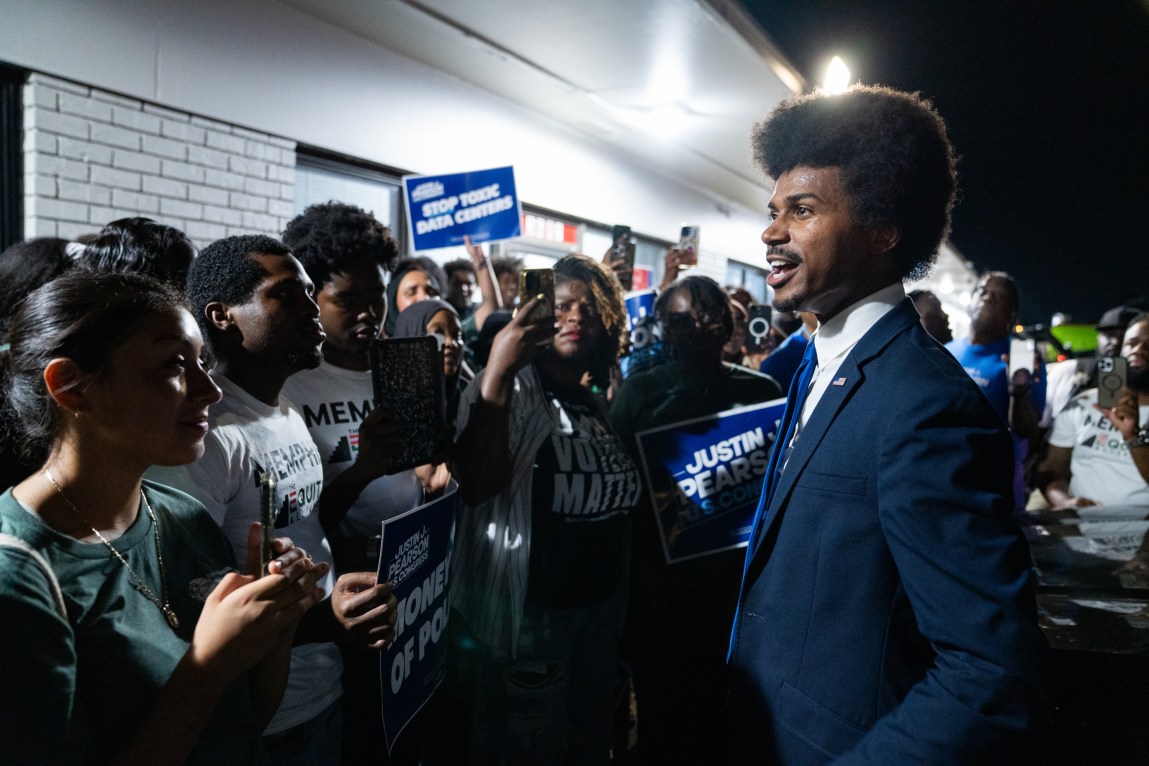
    A man wearing a suit speaks to a crowd of people who are holding signs that say, “Justin Pearson” and “Stop Toxic Data Centers.”
    Democratic congressional candidate state Rep. Justin J. Pearson speaks to supporters after an election night watch party for the state’s primaries in Memphis, Tennessee, in August. Kevin Wurm/MLK50/CatchLight Local/Report for America

    Taylor, who declined to be interviewed for this story, has said that the laws he has championed prioritize public safety. He did not respond to detailed questions.

    But John Pfaff, a professor at Fordham School of Law who has studied how state preemption laws impact prosecutors, said tough-on-crime laws like the ones Taylor helped pass have historically been “a form of social control against disliked minority groups” under the guise of public safety.

    Non-urban voters, Pfaff said, “do feel, however incorrectly, sort of victimized by expanding civil rights” that urban voters choose. While these voters cannot cast ballots in city elections, he said, they have another path by which to exert power: “If the suburbs and rural areas control the governor’s mansion and the state legislature, they then can use their power there through preemption laws that finally tell Memphis what they want Memphis to do.”

    Prohibiting Limits on Police Traffic Stops

    In January 2023, the month Taylor took office, the nation was shaken by video of violent policing in Memphis.

    A street surveillance camera and police body cameras captured what happened after undercover Memphis police officers pulled over 29-year-old Nichols just a few blocks from his mother’s home. For three minutes, officers repeatedly punched the unarmed man in the face, hit him with a baton and kicked him as he screamed for his mom. Nichols would die from his injuries in the hospital three days later.

    After pressure from Nichols’ family and community organizers, the Memphis City Council unanimously passed an ordinance in April of that year barring police from pulling motorists over for minor traffic violations, such as a broken tail light, as a pretext for investigating an unrelated, more serious crime. Research shows that these stops are disproportionately used to detain Black drivers, undermine the public’s trust in police and create unnecessary police encounters that can turn deadly. 
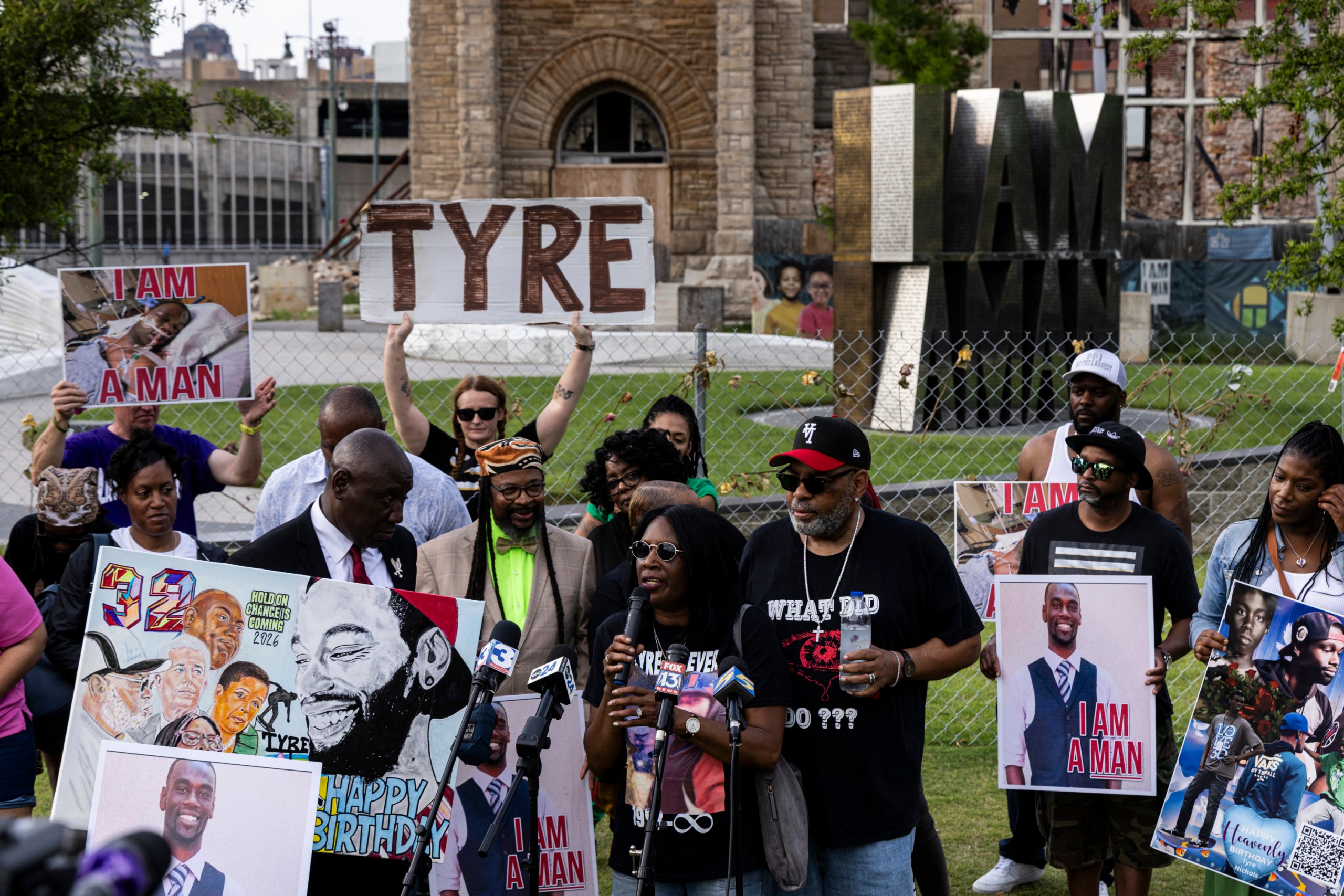
    A woman speaks into numerous microphones. She is in the midst of a crowd of people outdoors. The other people hold signs that say, “Tyre” and “I am a man.” Behind them, a large sculpture spells out the words “I am a man.”
    RowVaughn Wells, center, with family, friends and supporters during a community rally and celebration of what would have been Tyré Nichols’ 32nd birthday outside of the I Am a Man Plaza in Memphis in June 2025. Brad Vest for MLK50

    Taylor, who had been in the state Senate for a few months when the city ordinance passed, said it made the public less safe by limiting the potential for police to investigate more serious crimes. The next year, he and state Rep. John Gillespie, a Shelby County Republican, sponsored legislation that prohibited local government from curbing law enforcement’s ability to conduct traffic stops, effectively undoing Memphis’ ordinance.

    Nichols’ mother, RowVaughn Wells, pleaded with lawmakers to drop the bill. Speaking on the Senate floor, Taylor responded, saying that as a funeral home director, he empathized with the Nichols’ family, but “we can’t let that empathy, Mr. Speaker, cloud our judgment in protecting 7 million Tennesseans.”

    Taylor’s intervention suggests “that Memphis voters don’t know what their best interests are,” said Martavius Jones, who was chair of the Memphis City Council when the city ordinance passed. “What we were trying to do would not jeopardize the safety of anyone — not even in Memphis, but much less the rest of the population of Tennessee.” 

    Tennessee Gov. Bill Lee, a Republican, told reporters before signing the law that no one should limit police in their enforcement methods and officers should be held accountable for their actions.

    “I think what’s most important for us to remember is that we can give law enforcement tools,” Lee said, “but we’ve got to hold law enforcement to a standard of using those tools appropriately, where there’s an appropriate interaction with the public.” 

    Eight months after Tennessee lawmakers passed Taylor’s preemption bill, the U.S. Department of Justice released its investigation of the Memphis Police Department, finding that its aggressive traffic enforcement had harmed Memphians. The Justice Department recommended that the city limit the use of pretextual stops. Such police activity enabled the “regular use of excessive force with impunity” and unlawfully discriminated against Black residents, the Biden administration’s report said. When President Donald Trump took office in 2025, his Justice Department retracted those findings. 

    Over the last year, law enforcement has ramped up the use of such stops, especially in immigration enforcement, as Trump’s Memphis Safe Task Force — a collection of more than two dozen state and federal law enforcement agencies, including the National Guard — descended upon the city. Taylor supported the effort, testifying before the U.S. Senate days before it began that the task force would “succeed in doing the hard work to infiltrate gangs and arrest more routine criminals.”

    Unprecedented Scrutiny of a District Attorney

    Since his first year in the state Senate, Taylor had also been working to displace the decision-making authority of another locally elected office: district attorneys, especially Mulroy, one of Tennessee’s two Democratic county prosecutors. Taylor called him a “far-left zealot” who “has the potential to make the scourge of violent crime even worse.”  
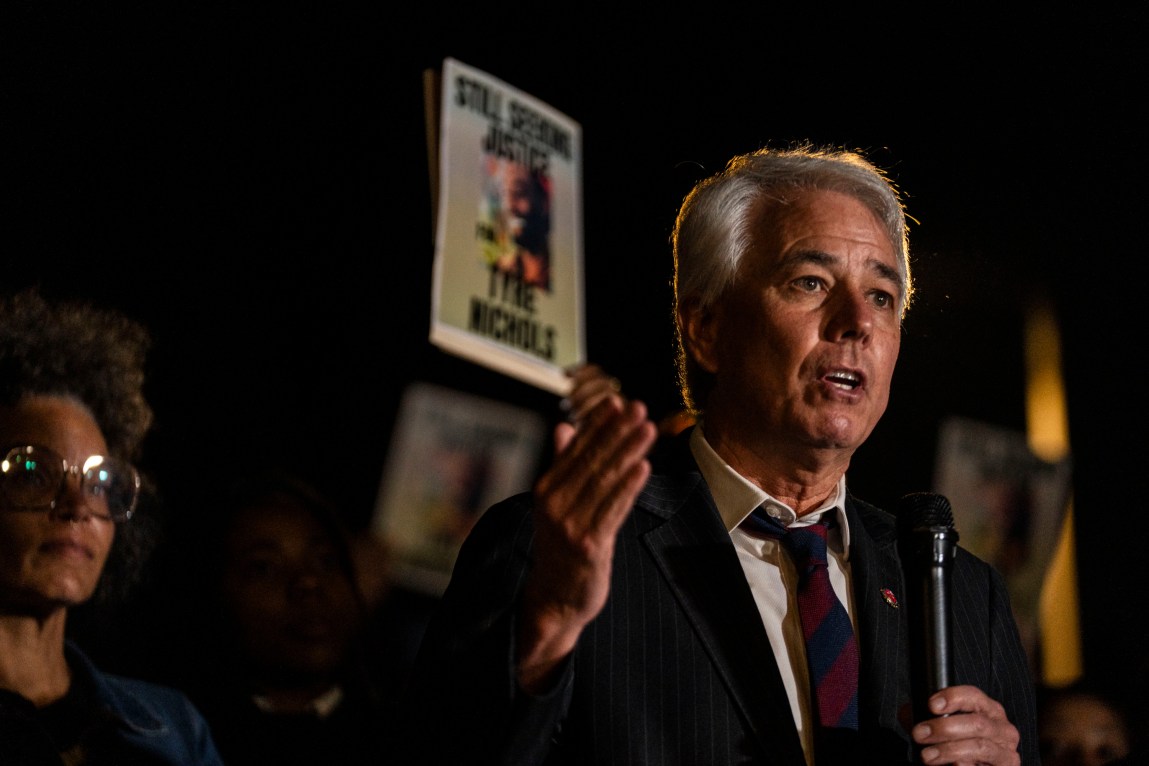
    A man holding a microphone gestures with his hand as he speaks. In the background, a crowd is holding signs that say, “Still Seeking Justice. Tyre Nichols.”
    Shelby County District Attorney Steve Mulroy speaks at a vigil for the third anniversary of Nichols’ death in Memphis in January. Andrea Morales/MLK50

    In 2023, Taylor sponsored a law that transferred the power to review certain death penalty cases from county prosecutors, who are elected, to the state attorney general, who is appointed by the state Supreme Court. While the law applied statewide, it disproportionately impacted Shelby County, where half of the state’s 40 death row prisoners were prosecuted. The law, Mulroy said at the time, “effectively disenfranchises the voters” who chose their district attorney. 

    Taylor would go on to further weaken Mulroy’s office following Trump’s 2025 deployment of his crime task force to Memphis. As arrests soared, Taylor worked to place the district attorney’s decisions under unprecedented scrutiny, saying he wanted to ensure that the prosecution of task force cases was as aggressive as the task force itself. 

    One new law, co-sponsored by Taylor, authorized the state attorney general to review every case that comes through Mulroy’s office, including those that stem from arrests made by Trump’s task force, “to ensure the proper administration of justice necessary to protect the safety of the community.” The dispositions of each case, along with bail recommendations, would be reported to legislative leaders. 

    Republican state Rep. Andrew Farmer, who introduced the bill in the House, noted that it is designed to ensure that “all crimes that deserve to be prosecuted are prosecuted.” 

    Mulroy is “just going to have to work harder and ensure that people are continuing to stay safe,” Farmer said on the House floor. “We want Memphis to continue on the path that it’s going —  up.”

    The state’s district attorneys general conference, led by Republican former District Attorney Stephen Crump, opposed an early version of the bill, which would have applied to district attorneys across the state, because it could lead prosecutors to second-guess their decisions. He dropped his objections after the bill was narrowed to apply to only Mulroy.

    That law has another provision aimed at Mulroy as well: If he declines to prosecute specific categories of crime, the state attorney general can ask the state Supreme Court to intervene by installing a temporary district attorney who would then decide whether to prosecute. Taylor has long sought to limit Mulroy’s authority, and the provision would be a way to do so. Mulroy said the effect would be “an unelected shadow DA operating in parallel to the duly elected DA.” 

    “Prosecutorial discretion and prosecutorial independence is a key fundamental part of our criminal justice system,” Mulroy said. “It’s clear under both the text of the Tennessee constitution and Tennessee Supreme Court case law, and this bill does great violence to those principles.”

    Taylor co-sponsored a second law, passed in May, that requires Mulroy’s office to report to the state and the U.S. Department of Justice within 10 business days every time it has entered into a plea deal, or dismissed or lowered the charges on a felony offense that resulted from a task force arrest. 

    “Memphis residents deserve confidence that the significant investments being made to combat violent crime are matched with accountability at every level of the justice system,” Gillespie, who co-sponsored the bill in the House, said at the time. 

    Taylor argued the reporting requirements were necessary to give the federal government an opportunity to prosecute cases Mulroy dismissed. In a post on X and a statement made before the U.S. Senate Judiciary Committee, he called Mulroy “the weak link” in the task force’s efforts. He’s also claimed, without evidence, that Mulroy refuses to prosecute crimes.

    In a rebuttal, Mulroy noted that more than 40,000 defendants are prosecuted by his office each year.

    Mulroy has sued to stop both laws, claiming they are unconstitutional because they unfairly single out Shelby County and create an administrative burden. The lawsuit is pending in state court. Meanwhile, Mulroy has objected to his staff spending time on the reporting requirements, which he called “pointless busywork.” 

    Mulroy’s election in 2022 as the county’s first Democratic district attorney in more than two decades came on the heels of a year with a record number of homicides. But Republicans’ tough-on-crime approach had grown unpopular with voters, and Mulroy vowed to be an alternative. He promised to deprioritize the prosecution of low-level offenses such as marijuana possession and shoplifting; emphasize rehabilitation such as drug treatment, mental health counseling and job training; and establish a unit to examine the validity of convictions.

    One of the people who campaigned for him was William Arnold, who had spent nearly seven years in state prison before his conviction was dismissed following examination by a Davidson County conviction review unit. The community organizer said he saw Mulroy’s candidacy as a way to “support someone who could help Memphians in a different way.”

    To see Mulroy’s power being muted by Taylor is disheartening, Arnold said. But that is not surprising to him, given how the state legislature has long treated the predominantly Black city, including replacing the Memphis Shelby County Schools’ elected board with a state-appointed one.
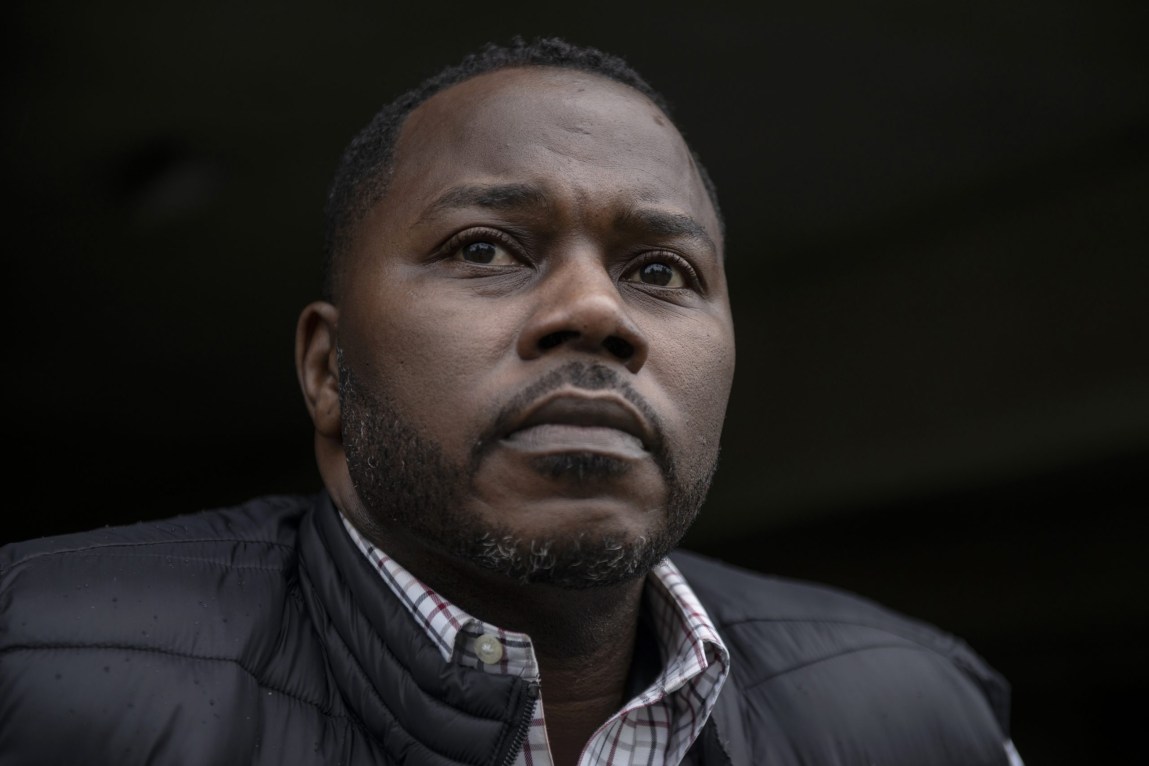
    A close-up photo of a man with a serious expression.
    William Arnold, who spent nearly seven years incarcerated for a crime he did not commit, is now a community organizer and a supporter of Mulroy. Brandon Dill for MLK50

    Bail Calculator Scrapped

    Among the preemptive legislation Taylor has sponsored, a 2023 effort stood out: the dismantling of a bipartisan effort to ensure Shelby County’s bail practices did not discriminate against poor people, who are disproportionately Black.

    Under state law, magistrates are to “impose the least onerous conditions” when deciding bail and should set bail “as low as the court determines is necessary” to assure the defendant returns to court.

    But in practice, hundreds of people were being detained at the Shelby County Jail simply because they couldn’t afford bail, according to Just City, a Memphis criminal justice reform organization, which along with the American Civil Liberties Union threatened to sue the county in 2021 for violating existing state law. Being jailed while awaiting trial can cause arrestees to lose jobs and child custody, the organizations argued.

    In August 2022, the organizations and county officials — including Mulroy’s predecessor, Republican District Attorney Amy Weirich — agreed on a new bail order that included an “ability to pay” calculator. 

    That tool quickly drew Taylor’s ire, and by the following January he had co-sponsored a bill to kill it, characterizing the calculator in a Senate Judiciary Committee meeting as a way of “essentially asking defendants how much money they happen to have in their pocket so that they can make bail.”

    The bill’s supporters said judges should prioritize public safety when deciding whether to release defendants. “There is blood running in the streets of Memphis today because they’re letting people out,” state Rep. William Lamberth, a Republican, said on the House floor.

    State law requires judges, when setting bail, to consider several factors, including a defendant’s financial condition. And Josh Spickler, executive director of Just City, said that’s exactly what the tool helped judges do. 

    Under Taylor’s law, however, “the defendant’s ability to pay shall not be considered.”

    “That tied our hands as judges,” Anderson, the former Shelby County judge, said in an interview. 

    A 2025 University of Memphis study found that the median bail amount increased after Taylor’s law took effect. And the law’s impact falls hardest on Black residents, Anderson said, because they are more likely to be low-income and make up a disproportionate share of Shelby County jail occupants. 

    “To those of us in the system, it’s obvious what he’s doing,” said Anderson, who resigned in 2025 with six years left of his eight-year term. “He called them reform acts, but they’re not reform.”

    Source: ProPublica · 2026-10-26
  • The Spirit of “Party Unity, My Ass” Is Back and Coming for the DSA (and El-Sayed)

    The Spirit of “Party Unity, My Ass” Is Back and Coming for the DSA (and El-Sayed)

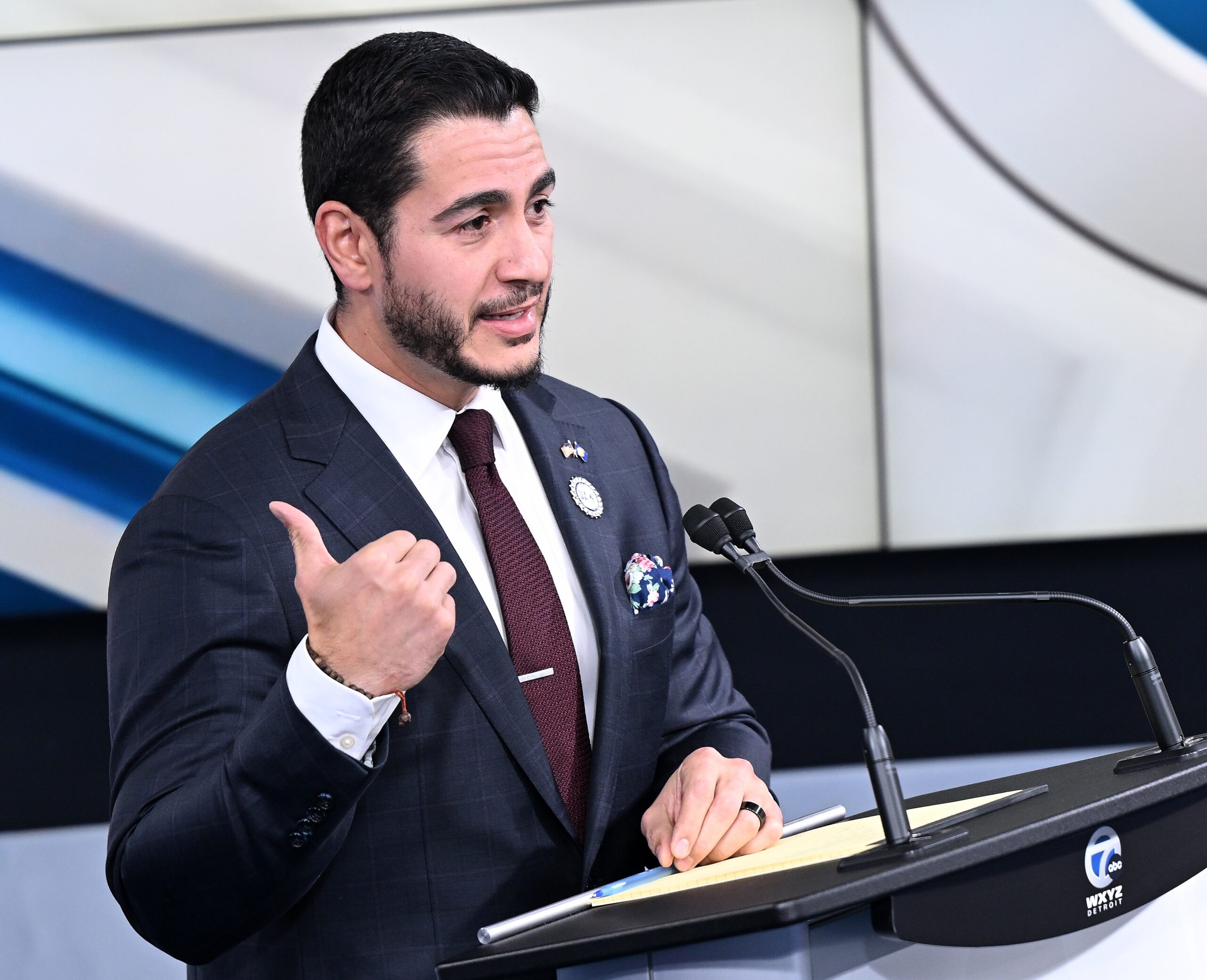
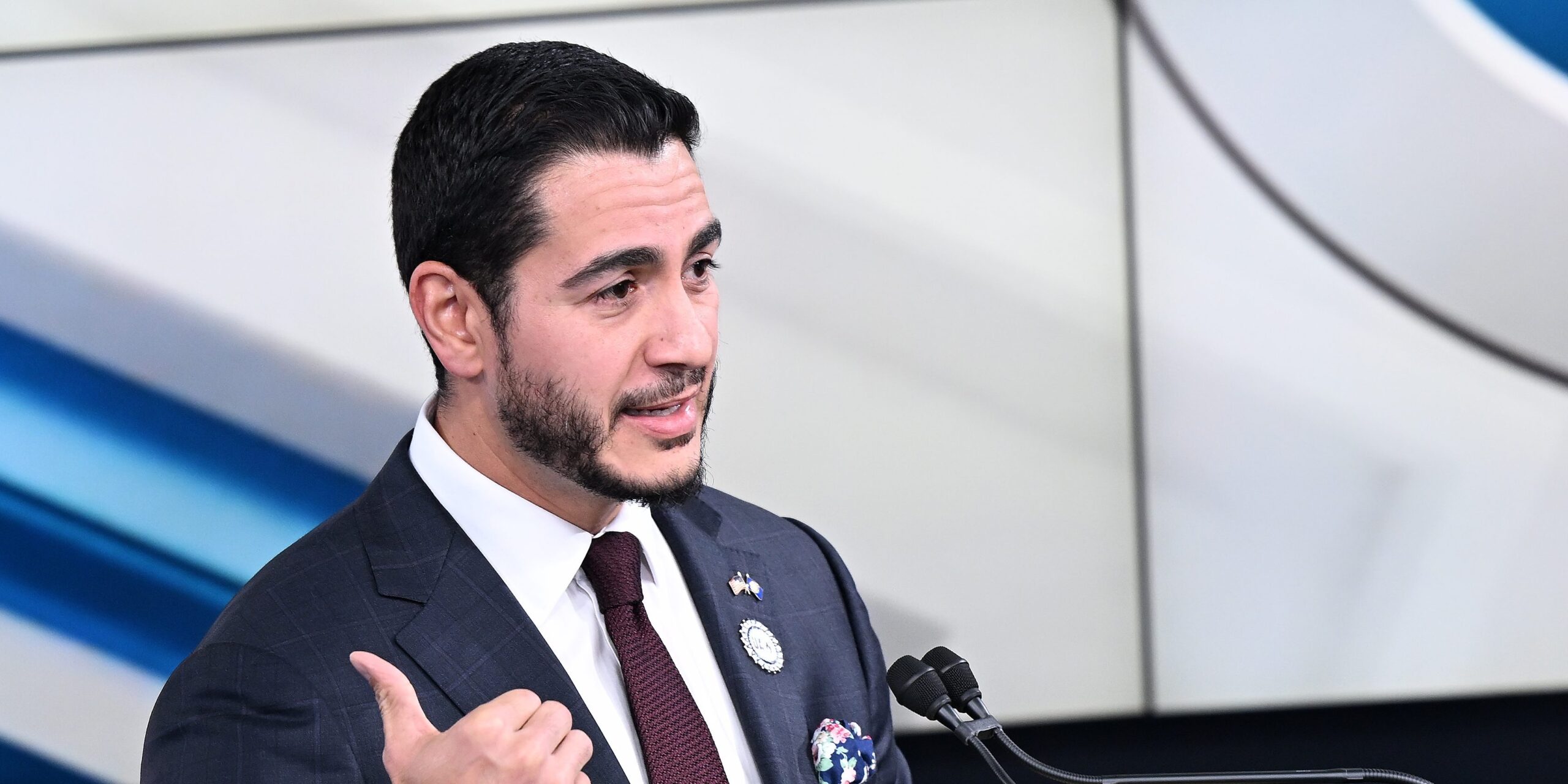
    SOUTHFIELD, MICHIGAN - OCTOBER 21: Democratic Senate Candidate Abdul El-Sayed speaks during the debate on October 21, 2026 at WXYZ Channel 7 in Southfield, Michigan. (Photo by Robin Buckson-Pool/Getty Images)
    Democratic Senate candidate Abdul El-Sayed speaks during the WXYZ Channel 7 debate on Oct. 21, 2026, in Southfield, Mich. Photo: Robin Buckson-Pool/Getty Images

    The PUMA spirit is back. The 2008 Democratic Party protest movement, inflamed by what Hillary Clinton supporters viewed as Barack Obama stealing the nomination from their primary candidate, scorned his general election campaign and embraced the mantra “Party Unity, My Ass.” 

    This time, that energy is aimed at the candidates preferred by the Democratic Socialists of America.  

    DSA-aligned progressives have won a number of party primaries and are set to help Democrats take the majority in Congress. But once in power, they’re likely to make demands — the kinds of demands that could upend decades of carefully crafted donor-friendly policymaking. 

    For moderate Democrats, “party unity” is only a goal worth pursuing to bully the left wing of the party to fall in line with their preferred candidate.

    For moderate Democrats, “party unity” is only a goal worth pursuing to bully the left wing of the party to fall in line with their preferred candidate. When it’s on them to step up and vote for someone who might have different goals, that’s another story completely, and some centrists are even hoping for Republicans to win the House this November if the alternative is an empowered DSA Democratic wing. 

    James Carville, the fossilized Cajun strategist who was part of exactly one successful national political campaign, Bill Clinton’s 1992 White House victory, said on The Bulwark podcast last Sunday that he’d prefer a tight GOP hold on Congress over a narrow Democratic majority. 

    “I would be disappointed if it comes in at 225 House seats,” Carville told host Bill Kristol. “I would rather the Republicans keep the House by five than the Democrats to win by five, because, if that happens, they’re hostage to the DSA.”

    To his credit, Kristol — who, in a sign of how people can change when they know which way the wind is blowing, spent the PUMA moment promoting Sarah Palin but is now a self-proclaimed Democrat — pushed back, saying he’d rather win. 

    Carville is the first of his cohort to explicitly call for a GOP victory rather than the left flank of the party getting more power, but he’s not the only centrist deprioritizing his party’s prospects in November.

    Maine Gov. Janet Mills has yet to endorse the Democratic Party’s Senate nominee, Troy Jackson, after she lost to now-disgraced Graham Platner. (Mills and Jackson have a long and bitter history from state government, which may be playing a role here.) 

    Perhaps most consequentially, in Michigan, Democratic Senate nominee Abdul El-Sayed has faced an uphill battle since winning his party’s grueling primary. He’s now focused on winning in the general election and becoming the first Muslim U.S. senator, but resistance to his candidacy remains a concern.


    Related

    Centrists Are Soft-Launching the Idea That We Have a Little Too Much Democracy


    Much of the difficulty has come from members of his own party and other liberals. Their antipathy toward a candidate whose positions aren’t so out of step with other members of the caucus has raised questions about what exactly is so objectionable about him. El-Sayed may skew to the progressive side of the party, but he’s not a socialist and not a member of the DSA; his positions on domestic policy should place him companionably among the likes of Sen. Elizabeth Warren’s wing. 

    Until recently, most of the anger after El-Sayed’s primary in early August was confined to X and occasional cable news hits. 

    That changed on October 16, when two Michigan Democratic Party power players, David Kramer and Lon Johnson, urged voters in a Detroit News op-ed to leave El-Sayed’s place on the ballot blank — effectively handing the Senate seat over to Republican Mike Rogers, an election denier and a lockstep Trump ally. 

    The piece tied El-Sayed to extreme elements of Islam and suggested his opposition to Israel’s genocide, war crimes, and occupation was based in hatred for the Jewish diaspora.

    “Our gravest concerns involve El-Sayed’s associations with figures who have excused or minimized terrorism, his reluctance to unequivocally condemn dangerous rhetoric, and his support of extreme policies,” Kramer and Johnson wrote. “At a time of rising antisemitism, Democrats deserve leadership that unequivocally rejects rhetoric threatening Jewish communities.”

    Comedian Mike Drucker accurately described on Tuesday the centrist rejection of El-Sayed as less “blue no matter who” and more “blue unless brown.”

    But Democratic leaders like Carville, Kramer, Johnson, and others are panicked beyond their obvious Islamophobia — they can see the writing on the wall goes well past Michigan. It’s a full-on existential crisis.

    Former Intercept writer Jon Schwarz once opined on what he termed the iron law of institutions: “The people who control institutions care first and foremost about their power within the institution rather than the power of the institution itself.” 

    What we’re seeing now is the iron law’s white blood cells fighting a threat they don’t believe can be easily assimilated into the existing power structure. It’s a danger to their status and power.

    Their attacks on the left are going to backfire, leaving the Democrats’ centrist wing even less empowered than before. 

    That outcome is ideal for the party, the base, and the country. For centrists, it’s a disaster — but if the way to stop their coming irrelevance is to vote for a progressive American Muslim who opposes genocide, they’re incapable of taking that step. 


    Related

    Mike Rogers Spent $100K on Private Jets and Luxury Travel Last Quarter


    Ultimately, all their griping may not matter. El-Sayed is regularly polling slightly ahead of Rogers, and 95 percent of Michigan Democrats said they intend to vote for him. Much like Jackson in Maine, should he win, El-Sayed will be even less beholden to the elements of the party power structure who are so desperately trying to prove he needs them, rather than the other way around.

    Source: The Intercept · 2026-10-24

  • Ken Paxton Says He’s Tough on Crime. His Trust Invested $600,000 in a Convicted Fraudster’s Company.

    Ken Paxton Says He’s Tough on Crime. His Trust Invested $600,000 in a Convicted Fraudster’s Company.

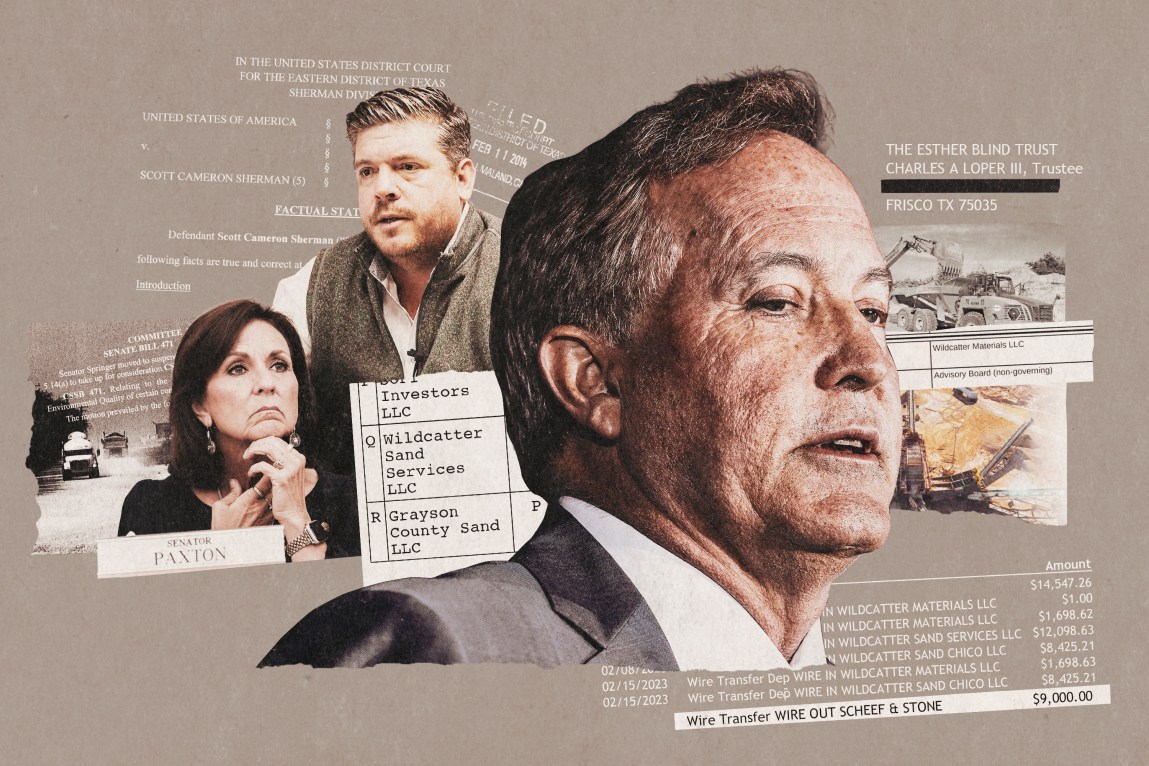
    A photo collage featuring a large portrait of Ken Paxton on the right alongside portraits of Angela Paxton and Scott Sherman. The background includes overlays of court documents from U.S. District Court, legal papers addressed to Esther Blind Trust and financial snippets listing entities like Wildcatter Sand Services LLC and photos of industrial earthmoving equipment.
    Photo illustration by Emily Scherer for ProPublica and The Texas Tribune. Source images: The Texas Tribune, documents obtained by ProPublica and The Texas Tribune, and YouTube.

    Four years after North Texas home builder Scott Sherman completed a federal prison sentence for mortgage fraud, his new construction materials business received a $600,000 cash infusion.

    The financial boost came from a blind trust set up to prevent Texas Attorney General Ken Paxton and his wife, state Sen. Angela Paxton, from any overlap in their personal investments and their actions as elected officials. But previously unreleased records from the attorney general’s 2023 impeachment investigation show the trust was far from blind and did not shield the Paxtons from its business dealings, including the investment in Sherman’s business.

    Before long, Wildcatter Sand Services and Grayson County Sand and Gravel, which Sherman built with his father, grew into a vast enterprise with various locations and subsidiaries. And along the way, some of those businesses stopped paying taxes to local governments, including school districts. 

    But as their tax debts stacked up, Wildcatter companies wired the Paxtons tens of thousands of dollars in the months leading up to and during the attorney general’s impeachment on charges of corruption and bribery. Paxton was eventually acquitted by the Legislature and is now in an expensive and tight race for a U.S. Senate seat against Democrat James Talarico, a state lawmaker.

    While Paxton has been in public office for more than two decades, the blind trust he established upon becoming attorney general has largely obscured his business dealings. The Paxtons’ investment in Wildcatter through that trust offers a new, previously unreported look at both the limits of that trust and the attorney general’s financial association with the very type of business executives whose prosecutions he typically celebrates.

    “In Texas, we fight fraud head-on and will not rest until every last corrupt actor is brought to justice,” Paxton said in a news release last year. In a recent social media post linking to a newly released campaign ad, he wrote, “As Attorney General, I’ve made big pharma and fraudsters pay billions.”

    Doing business with a recently convicted felon undermines that narrative and erodes public trust in his role as the state’s top anti-fraud watchdog, ethics experts told ProPublica and The Texas Tribune.

    Richard Painter, who served as the chief ethics lawyer for President George W. Bush, said he would have thought “the attorney general of Texas would have the good sense not to be dealing with a convicted felon.”

    “They’ll pay out their friends while they’re not paying their taxes, run up debt,” said Painter, who has been critical of staunch Paxton ally President Donald Trump. “But the question is, why is the attorney general of Texas dealing with those kinds of people?”

    Ken Paxton did not answer detailed questions from the news organizations about the Wildcatter investment or whether he knew of Sherman’s conviction. He has previously defended his business dealings, saying he follows ethics laws. A spokesperson for Angela Paxton, who filed for divorce last year, said that she was not aware of Sherman’s criminal history. 

    Sherman ran a homebuilding firm, Artisan Operating LP, when he pleaded guilty in 2014 for his role in a mortgage fraud conspiracy. The scheme involved artificially inflating home prices to obtain larger loans for more than two dozen properties in cities across the Dallas-Fort Worth area. Sherman did not respond to calls made to his cellphone and company or to emailed questions. 

    Paxton’s connection to Sherman is the second revelation in recent weeks of the attorney general engaging with people charged with federal crimes. Last week, The Wall Street Journal reported that Paxton celebrated New Year’s Eve 2024 in Dubai with two Americans who failed to return to the U.S. after being indicted months before on federal healthcare-fraud charges. A spokesperson for Paxton didn’t address his association with the defendants but said in a statement to the Journal that the attorney general has been “politically persecuted for years.” 

    ProPublica and the Tribune found the Paxtons’ investment in Wildcatter by reviewing records collected by impeachment investigators.

    The records show that Ken Paxton had at least some knowledge of the blind trust’s investments, which could violate terms the Paxtons set when establishing the trust. 

    It would also run afoul of U.S. Senate rules, which Paxton would be bound by if elected, said Donald Kettl, an ethics expert and former dean of the University of Maryland’s School of Public Policy. Those rules, Kettl said, require senators with a blind trust to have no knowledge of its investments.

    “It’s reasonable to ask whether a candidate for the U.S. Senate has followed the ethics rules for financial reporting of blind trusts that would be required if the candidate became a senator,” he said.

    In setting up the blind trust, the Paxtons agreed that their friend Chip Loper would manage the assets without consulting with them or taking “any instructions regarding investment matters,” according to incorporation documents. Loper did not respond to a request for an interview and did not answer questions about the Paxtons’ involvement in selecting investments.

    Text messages that emerged during the impeachment probe, however, showed he and Ken Paxton discussed certain investments. Mortgage and deed records show that Paxton purchased eight properties between 2015 and 2026 and then transferred them into the trust. 

    The Wildcatter investment also appears to have slipped past the required firewall.

    Angela Paxton served for years on a Wildcatter advisory board beginning in 2022. ProPublica and the Tribune could not find any documents describing her responsibilities in the role, which she described as “non-governing” on her personal financial disclosures. While on the board, she voted for legislation that shielded a subsidiary from certain environmental complaints.

    The Paxtons also claimed more than $93,000 in itemized losses from Wildcatter Sand Services and Grayson County Sand and Gravel on their 2020 federal joint income tax return. 

    “That is proof positive that there’s nothing blind about this trust,” said Kathleen Clark, a law professor at Washington University in St. Louis who specializes in legal and government ethics. If Ken Paxton “can report on his tax return a transaction, then he is not blind to the transaction.”

    A Board Seat and a Vote

    After Wildcatter received the cash injection from the Paxtons’ blind trust, Sherman went on a shopping spree.

    He purchased a sand mine in the North Texas town of Denison and a concrete plant 40 miles down the road in Gunter, a city of about 2,000 residents. Both are in Grayson County near the Oklahoma border.

    Neighbors complained to Texas environmental regulators about clouds of dust from Wildcatter and other companies located at the Gunter site that they said coated their properties for up to 12 hours a day. 

    In 2021 and 2022, the Texas Commission on Environmental Quality issued violation notices to Wildcatter Redi-Mix, the company that runs the Gunter plant. At least one dust-related violation was resolved when a road leading to the plant was paved in 2022, according to TCEQ documents. TCEQ did not respond to a request for comment.

    Neighbors continued to raise concerns about the plant.

    Angela Paxton joined the advisory board of Wildcatter Materials, which owns Wildcatter Redi-Mix, a year later. The IRS defines advisory boards as lacking legal and financial authority over companies. She was still serving on the board in 2025 as of her last financial disclosure. 

    Complaints against the company continued. At one point, Gunter resident Deirdre Diamond, a respiratory therapist and lead advocate for a local group created to fight pollution from concrete batch plants, reached out to her representative in the Legislature, then state Sen. Drew Springer.

    Despite the TCEQ’s previous violation notices, Springer concluded that the neighbors’ complaints were “abusive” and filed a bill that he said at the time would prevent efforts to “weaponize the system.” He made similar comments in a recent interview with the news organizations. Springer’s bill allowed the TCEQ to ignore residents after more than five unsubstantiated complaints in seven years.

    Diamond and other opponents believed the bill was an attempt to keep residents from exercising their rights and argued that the language was too vague. They said the legislation did not make clear what would constitute an unsubstantiated complaint and that some complaints may be repeated over the years because of TCEQ inaction. 

    When the bill reached the Senate floor, Angela Paxton voted for its passage.

    Matt Welch, a spokesperson for Angela Paxton, pointed to the measure’s bipartisan support in the Senate, saying it was needed “to stop a small group of environmental activists from wasting taxpayer dollars by weaponizing the complaint process.” 

    He said that between 2019 and 2023, the group filed more than 100 complaints against Dallas-area industrial sites that did not result in findings by the state environmental agency. “These frivolous complaints divert state resources from legitimate violations.”

    Angela Paxton did not recuse herself from voting on the bill because it did not relate to any specific company, Welch said. He added that Paxton’s role on the advisory board “carried no decision-making authority” and that she was unaware of any complaints or violations against Wildcatter.

    Ethics experts said she should have disclosed her relationship with the company and recused herself. State law bars lawmakers from voting on bills that benefit them or their businesses. The prohibition does not, however, apply to legislation that regulates an entire industry, Senate Secretary Patsy Spaw said. 

    Because lawmakers write the laws governing what they must disclose and when they should recuse themselves, “a good amount of the time, the guardrails that they create for themselves are not enough,” according to Andrew Cates, a San Antonio ethics lawyer, who said this is one such instance. 

    Meanwhile, neighbors of Wildcatter’s Gunter plant said the new law left them demoralized and convinced that lawmakers were not interested in protecting them or their land. Diamond moved away after the bill passed. She said she feared the plants’ impact on her children’s health and believed the regulators were on the side of the company. 

    She was stunned to learn about the Paxtons’ investment in the company.

    “You can’t pretend to be about protecting the people when you directly profit from it,” Diamond said in an interview.

    A Prosperity Bank statement dated Feb. 26, 2023, for The Esther Blind Trust with Charles A. Loper III as trustee. Six wire transfer deposits under the “Deposits/Other Credits” section are highlighted in yellow, showing incoming transfers from Wildcatter Materials LLC, Wildcatter Sand Services LLC and Wildcatter Sand Chico LLC totaling $32,347.30.
    A bank statement from the Paxtons’ blind trust checking account shows various deposits from Wildcatter in early 2023. Obtained, highlighted and redacted for privacy by ProPublica and The Texas Tribune

    Wildcatter Helps Paxton in Difficult Times

    In the months leading up to the bill passing the Legislature, four Wildcatter companies wired more than $73,000 to the Paxtons, according to bank statements reviewed by the news organizations that were part of the previously unreported impeachment documents. 

    About $10,000 arrived in the two weeks before Angela Paxton voted on the environmental bill. An additional $12,000 was wired the week after the legislation passed in the Senate.

    Because the records ProPublica and the Tribune reviewed are limited, the news organizations cannot say with certainty why the payments were made and how they were accounted for on the companies’ books.

    The payments came as some Wildcatter companies were failing to pay local property taxes.

    At the time, Wildcatter Sand Services, the company the Paxtons’ trust had invested in, already owed more than $31,000 in back taxes, according to Grayson County public records.

    Several Wildcatter companies also owed hundreds of thousands of dollars in local taxes in 2023 that soon became delinquent.  

    That year, Ken Paxton was facing his own troubles as allegations of bribery and corruption reached a fever pitch.

    Early in 2023, the U.S. Justice Department’s public integrity unit, known for handling high-stakes political corruption cases, took over an investigation into allegations by Paxton’s senior advisers that he abused his office. (It was later dropped in 2025.) 

    Paxton also reached a tentative $3.3 million settlement with some of those employees. They had accused him of firing them after they went to authorities with allegations that he had used his office to go after the enemies of an Austin real estate investor and donor. The proposed payout required legislative approval, drawing the ire of lawmakers who questioned why taxpayers should be on the hook. After the Legislature took no action, a judge awarded the whistleblowers $6.6 million in 2025. Paxton called the ruling a “bogus judgment in support of baseless claims by rogue employees.”

    Some of the Wildcatter payments came while a House committee was investigating the whistleblowers’ claims about the attorney general’s conduct.  

    On May 19, a week before Paxton was formally impeached, the blind trust wired $9,000 to attorney Mitch Little’s firm. Little later represented both the trust and Paxton in his impeachment trial. It’s unclear whether the money from Wildcatter was used to pay for the legal representation. The trust’s checking account would not have had enough money for that payment without deposits from the companies earlier in the month, records show. At the time, the trust also had an investment account with $9,300 in cash and just under $1 million in securities, but records do not show any distribution from that account to the checking account in that period.

    Neither Loper nor Little, now a state representative, responded to questions about the transaction. Angela Paxton’s spokesperson said she has no knowledge of any payments for impeachment lawyers.

    Craig Holman, ethics lobbyist for consumer-advocacy group Public Citizen in Washington, D.C., said it would be particularly problematic if any of the money was used as a “passthrough” for Paxton’s legal fees. 

    All told, Wildcatter companies wired the Paxtons’ trust 15 payments between January and June 2023 totaling more than $83,000. It is unclear whether payments continued after that date because the records collected by impeachment investigators ended in June. 

    The following year, two of those companies became delinquent on nearly $200,000 in 2023 property taxes to local schools, cities and counties. 

    The governments had to sue to recover what they were owed.

    Source: ProPublica · 2026-10-23

  • Giant Crypto Super PAC Funnels Big Money to Former Trump Official’s Firm to Support… Democrats?

    Giant Crypto Super PAC Funnels Big Money to Former Trump Official’s Firm to Support… Democrats?

    The Fellowship PAC, a super PAC fueled by crypto industry cash that once lavished praise on Donald Trump, is making a surprising pivot.

    When it was founded a year ago, news reports suggested that Fellowship PAC would concentrate on supporting Republicans.

    Since June, however, the only candidates Fellowship PAC has spent on have been Democrats, including those who have criticized the president’s meme coin, and it is getting help from a former Trump administration official’s company.

    Since June, the only candidates Fellowship PAC has spent on have been Democrats.

    Fellowship PAC funneled $600,000 since this summer through a firm co-founded by former Trump crypto adviser Bo Hines to help reelect Rep. Ritchie Torres of New York; Rep. Maggie Goodlander of New Hampshire; and Sen. Mark Warner of Virginia. The Democrats are considered crypto allies, and none of them are facing competitive elections this fall.

    All those advertising dollars have been spent through a vendor called Nxum Group, which was co-founded by Hines, a former Republican congressional candidate and Trump administration official.

    Hines did not return a request for comment, and it is not known whether he has personally been involved in the Nxum Group’s work on behalf of Fellowship PAC. In congressional races in 2022 and 2024, he presented himself as a Trump-loving MAGA acolyte.

    There is a thick web of ties between Hines, Fellowship PAC, and one of the biggest players in the crypto industry, a stablecoin company called Tether.

    Before Trump’s election, Hines was involved in promoting a Trump-themed meme coin that made a handful of investors millions before plummeting in value. After Trump’s election, the president tapped Hines to serve as the head of the White House Council of Advisers on Digital Assets. In that role, Hines helped pass a law that created stablecoin regulations that benefited Tether.

    As Hines served in the Trump administration, Tether was paying money to the firm that Hines co-owned, Nxum Group, according to a report last week in the Wall Street Journal. Nxum Group told the news outlet that Hines had no involvement in the company’s business dealings with Tether during that time. Hines said in a June 2025 ethics disclosure that he had only a “passive investment interest” in the company.

    Hines left the Trump administration in August 2025 and, a month later, Tether announced that he would serve as the CEO of its U.S. branch.


    Related

    Who’s Spending in Your Congressional Election? We Tracked the Front Groups Fueling the 2026 Midterms.


    Tether also has ties to Fellowship PAC. The newly created Fellowship PAC received a $10 million donation in January from Tether’s U.S. banking firm, Cantor Fitzgerald. In April, Fellowship PAC announced that Tether’s vice president of regulatory affairs would serve as its chair.

    Although it launched with a splash last year by claiming that it had a $100 million war chest, the PAC has never reported as much as that in official campaign finance disclosures. The PAC’s last receipt was in January, and its cash on hand dwindled to $250,000 as of October 14.

    Throughout the midterm elections, Fellowship PAC has leaned heavily on Nxum Group to spend advertising dollars on various congressional races.

    Fellowship PAC spent exclusively on Republicans until its first expenditure on behalf of a Democrat, Torres, in June. That spending coincided with public polls showing increasingly dismal fortunes for Republicans in the midterm elections. Since then, the PAC has spent exclusively on Democratic candidates.

    Torres’s and Warner’s campaigns did not respond to requests for comment. Goodlander’s campaign said she had nothing to do with the $150,000 that Fellowship PAC spent on digital advertising in her race. The money, the PAC disclosed in filings, had been routed through Nxum Group on August 31.

    “Congresswoman Goodlander has been one of the strongest advocates in Congress for cracking down on Big Tech and crypto profiteering and getting dark money out of politics,” her campaign said in a statement. “Like all campaigns, we’re legally barred from coordinating with outside groups like these, so you’d need to ask them why they’re spending in this race.”

    The PAC did not return a request for comment.


    Related

    Crypto Darling Gillibrand’s 11th-Hour Flip-Flop Helps Block Trump Crypto Bill


    Goodlander, Torres, and Warner are all rated as strong supporters of the crypto industry on an industry scorecard. Still, all three have been critical of Trump’s personal dealings in the industry though his $TRUMP meme coin, which has helped make him $1.4 billion from crypto ventures.

    Warner recently ran an ad of his own attacking Trump over the meme coin.

    “That’s not governing. It’s grifting,” the Democratic senator said. “The corruption needs to stop.”

    Source: The Intercept · 2026-10-23

    Documents

  • Mamdani’s High-Wire Balancing Act Between ICE and NYPD Can’t Last

    Mamdani’s High-Wire Balancing Act Between ICE and NYPD Can’t Last

    NEW YORK, NEW YORK - SEPTEMBER 09: NYPD Commissioner Jessica Tisch and New York City Mayor Zohran Mamdani attend an unveiling ceremony for a new 9/11 Memorial Wall at One Police Plaza on September 09, 2026 in New York City. Mayor Mamdani joined NYPD Commissioner Jessica Tisch, family members of first responders, and other NYPD officers as they unveiled a new wall display that honors first responders who lost their lives during the September 11th World Trade Center terror attacks and since. (Photo by Michael M. Santiago/Getty Images)
    NYPD Commissioner Jessica Tisch and Mayor Zohran Mamdani attend an unveiling ceremony for a new 9/11 Memorial Wall on Sept. 9, 2026, in New York City. Photo: Michael M. Santiago/Getty Images

    The October 8 shooting of Oscar Belgal by Immigration and Customs Enforcement agents in front of his 5-year-old son in Manhattan forced into the open a question that had been on many New Yorkers’ minds: What would the New York Police Department do when ICE broke the “rule of law” in the city, and how would Mayor Zohran Mamdani, the person who has the power to hire and fire the NYPD commissioner, respond? 

    Shortly after the shooting, Mamdani addressed the incident with an appropriate amount of outrage, declaring ICE “rotten to its core,” and calling for the department to be abolished. His frustration was visible, but he was much less expressive when it came to his appraisal of the city’s response to the situation. He had nothing substantive to discuss with respect to his police department’s involvement, despite NYPD officers arriving on the scene only to find unidentified ICE agents holding guns, wearing plain clothes and disguises and masks, in apparent violation of federal laws requiring identification. (A recently passed New York state law prohibiting federal agents from wearing masks and other face coverings was temporarily blocked by a judge.) NYPD officers applied first aid and transported Belgal to NewYork-Presbyterian Allen hospital.

    According to many eyewitness accounts and widely circulated video, members of the NYPD appeared to assist ICE agents by forcefully helping with crowd control — at one point, an NYPD officer shoved congressional candidate Darializa Avila Chevalier, whom Mamdani personally stumped for, to the ground. Later, NYPD cleared a path for federal agents to whisk Belgal away from the hospital to a federal detention facility downtown. 


    Related

    ICE Shooting in NYC Inflames Mamdani’s Policing Problem


    After the shooting, the Democratic Socialists of America, several legislators, and Avila Chevalier all called on Mamdani to fire NYPD Commissioner Jessica Tisch and demanded the mayor uphold his campaign pledge to disband the NYPD’s infamous Strategic Response Group. Mamdani repeatedly refused to fire Tisch but said he was reviewing the 24-hour period around the shooting. When asked directly about Avila Chevalier being thrown to the ground, the mayor called it unacceptable, saying, “That is not something I will look to justify.” He reminded New Yorkers to be patient with efforts to reform the NYPD, ordered a review of the department’s use-of-force policies, and added funding for the inspector general’s office. But once again, he stood by his commissioner, citing “her record of uprooting corruption from the upper echelons of the NYPD while lowering crime across our city.”

    Noticeably absent from any of Mamdani’s public remarks about the NYPD or Tisch was any public acknowledgment of the NYPD officers in relation to ICE agents during the Belgal incident.

    Federal and city law enforcement occupy similar spaces but never really interact with each other. Mamdani made no mention of the ways in which the actions of federal agents put pressure on the NYPD as mediators — the primary function of police — to liaise in moments of conflict.

    The NYPD typically relishes this role, which is why the department consumes so much of New York’s budget and shuns any attempts to redirect funds to other services that might reduce the need for police mediation to begin with. ICE forces local police to make choices in policy and in practice about how to deal with violent (often illegal) immigration operations.

    If the NYPD believes itself to be the thin blue line, on which side of order and chaos do New York’s force and Mamdani believe these federal outside agitators to be?

    When it comes to ICE, Mamdani’s rhetoric and policies haven’t always aligned, which has opened him up to questions about the kind of mayor he really is.

    This omission — or evasion, depending on how you look at it — of this predicament is strange considering Mamdani’s willingness to speak with moral clarity about even the most contentious issues and confront them head-on. It’s also bizarre considering his penchant for weaving shared experiences together and for putting the lived experiences of New Yorkers front and center.

    On the campaign trail, one of Mamdani’s most alluring traits was his ability to speak to the actual problems of everyday residents. It wasn’t just because he possessed once-in-a-generation oratory skills; candidate Zohran achieved this because, as a proud democratic socialist, there was an analysis — an explanation of the material conditions of life — baked into his politics. His rhetoric seemed in line with, or at least not alienated from (see: establishment Democrats), how fast reality was moving and how it was impacting the lives of everyday New Yorkers.

    When it comes to ICE, however, Mayor Mamdani’s rhetoric and policies haven’t always aligned, which has opened him up to questions about the kind of mayor he really is. On one hand, he has shown that he will speak out against Trump’s fascist and inhumane immigration efforts. On the other hand, Mamdani hasn’t moved with the same level of force as his words. Many have pointed out that Mamdani seems to be engaging in realpolitik in an effort to get his extensive progressive agenda passed. It’s certainly not easy to bring the machine of the New York government up to speed while also being transparent about the ways in which he is moving the needle. But that’s exactly what he was elected to do.

    Had Mamdani got into office and done nothing different than previous mayors — or even been exceptionally corrupt, pro-cop, and willing to help the Trump administration like predecessor Eric Adams — he might have been able to avoid his current moment of reckoning. But his administration’s genuine efforts on immigration set into motion a future where the NYPD and ICE would come into conflict.

    One of Mamdani’s first moves as mayor was to take stock of how the city’s many agencies were upholding existing sanctuary city laws. In February 2026, he signed Executive Order 13, his first major order pertaining to immigration, to create the Mayor’s Office of Immigrant Affairs and establish baseline guidance, such as explicitly prohibiting ICE and other non-local law enforcement agencies from using city-owned garages and vacant lots. Crucially, EO 13 also required an audit of several agencies, including NYPD, to review their immigration-related policies.


    Related

    Local Cops Flout Sanctuary Law to Help ICE Deport Immigrants


    NYPD already has a problematic history dealing with immigration enforcement. During the Adams administration, there were documented cases where the NYPD assisted or collaborated with immigration enforcement, sometimes in accordance with NYPD policies. A December 2025 report by Jocelyn Strauber, then-commissioner of the New York City Department of Investigation, found at least one incident in which “an officer violated local law by providing assistance to federal authorities in connection with enforcement of the federal civil immigration law,” as well as evidence that NYPD did “not fully comply with documentation and reporting requirements concerning requests for assistance with federal civil immigration enforcement.” The report also found that there were numerous examples of NYPD policies and practices that elevated the “risk of improper information sharing or assistance to federal authorities for purposes of civil immigration enforcement.”

    The resulting audit, which was released on May 22 by Mamdani’s deputy mayor, built on those findings and recommended NYPD (and other city agencies) update its reporting requirements. But the audit also left a lot of open questions, which numerous legal advocates attested to, about areas in which NYPD protocols and policies keep avenues open to potentially collaborate with ICE. The NYPD was “not being held to a high standard of accountability or scrutiny for collusion,” the audit found, and there were significant “gaps” in documenting potential violations of department policies. The question of what the city and its mayor could do to ensure compliance also remained unanswered.

    Sanctuary laws prohibit using city resources for immigration enforcement, and a January 2025 NYPD internal memo specifically barring officers from facilitating street closures to enable immigration enforcement seemed to solidify that directive. But several high-profile incidents involving the NYPD have tested the department’s compliance with sanctuary laws. In October 2025, before Mamdani was elected, during an immigration raid in Chinatown, eyewitnesses and viral videos showed NYPD officers establishing perimeters to create a path for federal law enforcement agents. In another instance in May 2026, ICE reportedly “dragged” a Nigerian immigrant out of a Brooklyn hospital after agents used force in his arrest; NYPD officers brutalized and arrested numerous protesters and cleared debris from the road to enable ICE to escape the crowds and abscond with their target.

    When the NYPD arrives at an ICE raid or at a protest against an immigration abduction, what are officers supposed to do?

    Both of these incidents happened under the watch of Tisch, who has insisted again and again that the department follows all sanctuary laws. When asked about the Brooklyn incident, Mamdani insisted NYPD was responding to 911 calls about the protest, not helping ICE. “Our laws leave nothing, no room for interpretation about the fact that our NYPD will not participate in civil immigration enforcement,” he said. NYPD told the Guardian US: “Upon arrival, officers observed numerous individuals acting in a disorderly manner, obstructing vehicular traffic, and blocking emergency entrances and exits at Wyckoff Heights medical center.” 


    Related

    LAPD Won’t Do Immigration Enforcement — But Will Shoot You With Rubber Bullets for Protesting ICE


    When the NYPD arrives at an ICE raid or at a protest against an immigration abduction, what are officers supposed to do? On this point, NYPD and Mamdani have offered little clarity. But October 8 doesn’t pass the smell test for anyone who lives in overpoliced neighborhoods or closely observes the activity of police and their behavior.

    NYPD officers were responding to an unrelated call nearby when they heard the report of shots fired. When they arrived, they encountered several men in various forms of attire, including some in construction-style vests, face masks, and at least one carrying a long gun, which officer body camera footage released by the Department confirms. The official account of the NYPD’s interaction offers no mention of ICE. There are no additional insights or explanations of department protocol that might shed light on how officers are supposed to act given the circumstances. Curiously, what those officers thought when they encountered several masked men with guns, and the conversations that took place between the ICE agents and the police, is a mystery, too. All we know is that officers agreed at some point that the NYPD would place Belgal in a vehicle, apply aid, and take him to the hospital. 

    Since that evening, Mayor Mamdani has stood firm in his condemnation of ICE and their operations. “We will not normalize ICE’s viciousness,” he said, calling for the agency to be abolished. That’s the least he could say to reassure New Yorkers he understands the stakes they feel in their bones already. The shooting of Oscar Belgal and his subsequent inhumane treatment — his lawyers say Belgal is still in solitary confinement with a bullet in his neck — is a reminder of how normalizing ICE operations in New York City is already well underway. 


    Related

    Bill de Blasio Promised to Change the NYPD. His Courage Failed Him, and Us.


    There have been more lower-profile ICE sightings and kidnappings, which echoes what has been the case in other parts of the country. What Mamdani will do to bring the city’s response into alignment with the needs of New Yorkers in this moment still remains an open question, including clarifying the NYPD’s role in the city’s ongoing fight against the Trump administration’s gestapo tactics.

    If this month’s incident offered a lesson for Mamdani, it is that clearly articulating what is right is a full-time job that requires an unwavering willingness to confront reality. It’s not enough to say the thing on one issue — calling a genocide by its name, publicly dragging FIFA for pandering to wealthy elites, or deriding the inhumane practices of slumlords — but not stand on business when it comes to the reality that New Yorkers are seeing on their own streets. 

    Sometimes, an actual seismic event can reveal what needs to be done and that there are alternatives that may not have been fully realized before. Hope isn’t lost. There is still time for Mamdani to update his analysis. But in this moment, the mayor must make a choice: renew his commitment to the truth, or be defined by its absence. 

    Source: The Intercept · 2026-10-22

  • The US is letting a convicted Bolsonaro spy chief stay in Florida. Brazil wants answers.

    The US is letting a convicted Bolsonaro spy chief stay in Florida. Brazil wants answers.

    It was an unusual request. On Nov. 21, 2025, the owner of an apartment in a luxury complex north of Miami drafted a message asking the building’s management to remove his houseguest immediately, the same man his family had vouched for in writing two months earlier.

    The guest was Alexandre Ramagem, a Brazilian congressman and spy chief under former President Jair Bolsonaro. In September, Ramagem had fled Brazil days before being sentenced to 16 years in prison for his role in Bolsonaro’s plot to overturn the 2022 election. The message was drafted the same day the country’s Supreme Court ordered Ramagem’s arrest and two days after a Brazilian news site published photos of him and his wife strolling through the Miami complex in workout clothes, causing outrage back home.

    The message was written in the name of Rodrigo Martins de Mello, who was convicted of running an illegal mining operation on protected indigenous land in the Amazon. De Mello claimed he had only just learned from the press that his guest was barred from leaving Brazil. “In order to avoid any issues for the condominium or for myself, I hereby request that the condominium IMMEDIATELY notify him of my directive for him to leave my property,” De Mello wrote.

    But Brazilian investigators say De Mello and his family knew all along that Ramagem was on the run. Messages, notes and photos from confidential records reviewed by ICIJ and Agência Pública show that they housed Ramagem for months, vouched for him to building management and sought paperwork needed to obtain a Florida driver’s license for him, including a lease drafted to make it look as if he was renting a room.

    The records, obtained by Agência Pública and shared with ICIJ, are part of a sealed investigation by Brazil’s Federal Police into Ramagem’s escape, conducted within the Supreme Court’s sprawling investigation into the plot to overturn the 2022 election.

    The Federal Police had an officer in Miami working alongside the U.S. Immigration and Customs Enforcement. With the officer’s help, the confidential records say, ICE found Ramagem, who Brazil wants to extradite, and arrested him in Orlando in April for overstaying his visa.

    Then the case took an unexpected turn. After two days, ICE released Ramagem while he pursues asylum. Days after that, the State Department told the Brazilian officer who had helped locate Ramagem to leave the country, accusing him of trying to extend “political witch hunts” to U.S. soil.

    There’s a lot of favoritism and discrimination and double standards in the immigration system now. — Tessa Petit, Florida Immigrant Coalition

    Six months later, Ramagem remains free in Florida. Officials in Brazil declined to say whether the U.S. has responded to its extradition request.

    Ramagem’s treatment stands in sharp contrast with that of thousands of asylum seekers who have been deported since Trump returned to office.

    “There’s a lot of favoritism and discrimination and double standards in the immigration system now,” said Tessa Petit, executive director of the advocacy group Florida Immigrant Coalition.

    Most immigrants don’t get the break Ramagem got, said Petit, who fled Haiti in 2001 and was initially denied asylum before winning her case in immigration court. “The reality for the majority of people is: Be vigilant, be careful, and hopefully be lucky enough to not get picked up.”

    Neither Ramagem nor the De Mellos responded to requests for comment for this story.

    In Brazil and in the U.S., supporters of Jair Bolsonaro, a close ally of President Donald Trump, praised the White House for Ramagem’s release.

    On Oct. 25, Brazilians will vote in a presidential runoff in which the narrow front-runner, Flavio Bolsonaro, a son of the former leader, has promised pardons for everyone convicted in the coup plot.

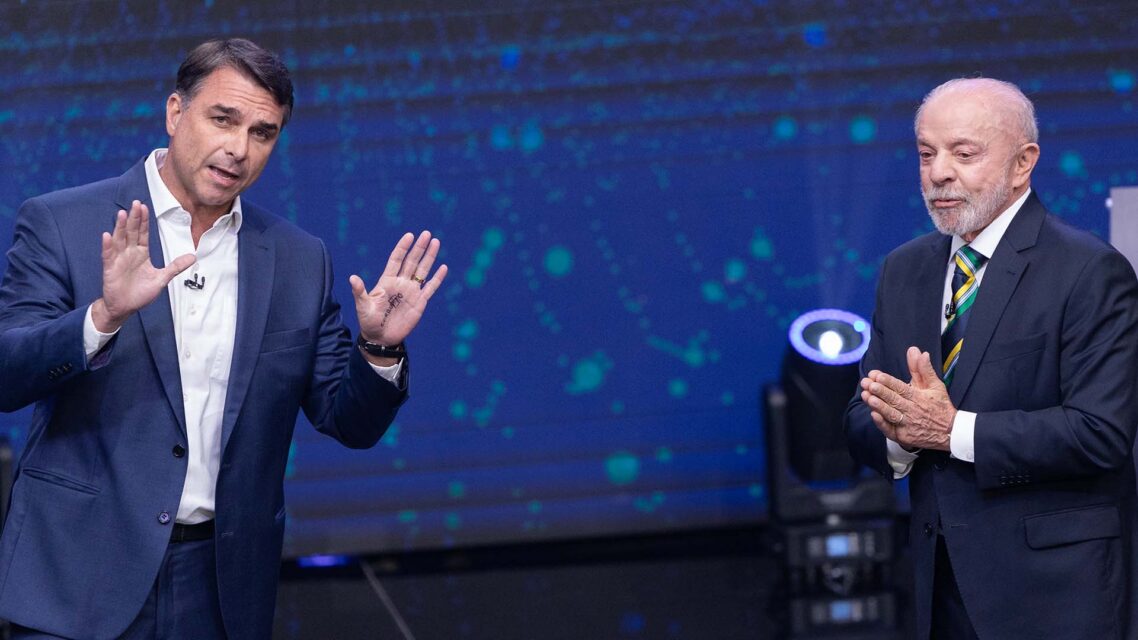
    Photo of Flavio Bolsonaro and Luiz Inacio Lula da Silva

    Brazilian presidential candidates Flavio Bolsonaro, left, and Luiz Inacio Lula da Silva attend a presidential debate ahead of the national election in Sao Paulo, Brazil, on October 18, 2026.

    ‘An illegal alien from Brazil’

    Ramagem’s only known run-in with U.S. authorities came after months of living in plain sight in Florida and publicly accusing the Brazilian government of persecution.

    Ramagem entered the country legally on Sept. 11, 2025, with permission to stay six months, the Department of Homeland Security, which oversees ICE, told ICIJ. But he “chose to illegally overstay his welcome in violation of our nation’s laws,” the agency said, calling him, “an illegal alien from Brazil.”

    Brazil filed a formal extradition request with the State Department on Dec. 30, 2025, according to Brazil’s Justice Ministry.

    On April 13, police detained Ramagem in Orlando during a traffic stop and handed him over to ICE. Two days later, ICE let him go, pending the outcome of his removal proceedings, the agency said. He paid no bail, according to Paulo Figueiredo, a U.S.-based Brazilian commentator and Bolsonaro ally who said his immigration consulting firm has assisted Ramagem. Detained immigrants usually must go before a judge to seek release, but ICIJ found no record of Ramagem petitioning the court for his freedom. ICE told Brazilian police at the time that the release was an administrative decision and that Ramagem could remain free while his asylum claim was reviewed, according to Brazilian media reports citing police sources.

    Ramagem’s allies credited Washington for his release. “Thank you, President Trump and everyone in the administration,” Figueiredo wrote on X. Eduardo Bolsonaro, another son of the former president, thanked Trump and Secretary of State Marco Rubio. Sóstenes Cavalcante, a leader of Bolsonaro’s party in Brazil’s Congress, said Rubio had helped speed up the release, which he said would otherwise have taken at least two weeks.

    RAMAGEM IS FREE AND BACK HOME!

    My deepest thanks go to Donald Trump @realDonaldTrump and @SecRubio for their sensitivity and attention in addressing the case of this true national hero, who, even under persecution, has never wavered.

    Alexandre Ramagem deserves asylum in the land of freedom, alongside his courageous wife – tireless in fighting for his liberty – and their beautiful daughters.

    — Eduardo Bolsonaro🇧🇷 (@BolsonaroSP) April 15, 2026

    Ramagem himself suggested he had U.S. government support. In November, after the publication of photos showing him in Miami, Brazil’s Supreme Court had ordered his arrest. The next day, in a livestreamed interview, Ramagem said he was safe in the United States “with the consent and knowledge of the American government.”

    On April 20, five days after Ramagem’s release from immigration custody, the State Department asked Marcelo Ivo de Carvalho, the Brazilian Federal Police liaison officer posted in Miami to work with ICE, to leave the country. “No foreigner gets to game our immigration system to both circumvent formal extradition requests and extend political witch hunts into U.S. territory,” the department’s Bureau of Western Hemisphere Affairs wrote on X.

    The government in Brasília retaliated and suspended the duties of a U.S. immigration agent posted there, who then left the country on April 22. In a statement, the Foreign Ministry said the U.S. had failed to consult Brazil first, as the two countries’ agreement on police liaisons requires, and ignored “good diplomatic practice of dialogue between friendly nations, such as Brazil and the United States, over more than 200 years of relations.”

    Neither the State Department nor the White House responded to multiple requests for comment. In its statement, DHS did not explain why Ramagem was released, saying only that he was freed “pending the outcome of his removal proceedings” and “will receive due process.” It added that a pending application “does NOT confer any type of legal status in the United States” and that “illegal aliens are not welcome in our country.”

    The handling of Ramagem’s case stands out among those of hundreds of thousands of asylum seekers in the United States.

    Since Trump returned to office, immigration judges have ordered more than 440,000 asylum seekers removed, more than in the previous eight years combined, according to a recent Washington Post analysis. Release from ICE detention has also become the exception. By late 2025, ICE was deporting more than 14 people directly from detention for every one it released to await a hearing, according to the American Immigration Council, an advocacy group that analyzed ICE data. In December, the administration paused decisions on all asylum applications pending with U.S. Citizenship and Immigration Services.

    Ramagem’s release was not just an immigration matter. A career federal police officer, he headed Bolsonaro’s security when Bolsonaro was president-elect. He was then appointed head of Brazil’s intelligence agency, becoming part of the inner circle of a president whose prosecution the Trump administration has criticized. In July 2025, Trump imposed 50% tariffs on Brazilian goods, calling Bolsonaro’s trial a “witch hunt,” and his administration sanctioned Alexandre de Moraes, the Supreme Court justice who oversees the coup case against Bolsonaro and Ramagem. A White House executive order that month accused Brazilian officials of politically persecuting the former president.

    Brazilian President Luiz Inácio Lula da Silva, a leftist who defeated Bolsonaro in the 2022 election, has accused Washington of meddling in Brazil’s affairs. Last month, Lula used his speech at the United Nations General Assembly to warn against foreign interference in the upcoming election there.

    Court, the Federal Police arrested Rodrigo’s son Celso, on suspicion of helping Ramagem flee. In a statement, the family said Celso is innocent. Moraes also ordered Rodrigo’s arrest, and Rodrigo remains a fugitive. (This week, another Supreme Court justice rejected Rodrigo’s request to overturn the order, the Brazilian news site Amado Mundo reported.)

    Ramagem has denied that Celso helped him. In an Instagram post after the ICE arrest, he said he didn’t know “a certain” Priscila or Celso. “They arrested a young man, a kid, who only met me when I was already in the U.S.,” he said. “In fact, this young man is American.”

    Celso now wears an ankle monitor while the investigation, which is under seal, continues.

    The confidential records show the De Mello family’s alleged involvement began early. Since June 2025, Ramagem, then a member of Brazil’s Congress, had been barred by court order from leaving Brazil and was required to surrender all his passports while on trial. He was charged with using the country’s intelligence agency to help Bolsonaro discredit its voting system. (Ramagem’s defense told the Supreme Court that the evidence against him was “extremely timid.”)

    On Sept. 9, while on medical leave from Congress, he crossed from the northern town of Bonfim into Lethem, Guyana. A photo found on the phone of Priscila Freitas de Mello, then Rodrigo’s wife, shows him there the next day, smiling, at what appears to be an immigration post in Guyana. Brazilian Federal Police investigators say Rodrigo took the picture, according to the records.

    On Sept. 11, as Brazil’s Supreme Court convicted him, Ramagem flew to the United States on a diplomatic passport that he had kept.

    On Sept. 15, Celso messaged Priscila asking for a utility bill in his father’s name so Ramagem could apply for a Florida driver’s license, the confidential records show.

    “Hi Pri, good evening,” Celso wrote to his stepmother. “Can you send me a bill for your apartment in my dad’s name? Water, electricity, phone, internet… We’re going to try to get Alexandre’s driver’s license tomorrow at the DMV.” He had drafted a lease, Celso wrote, to make it look as if Ramagem “had rented the room.”

    “Let me see,” Priscila replied.

    Two days later, Priscila wrote to the condominium’s management asking for a new gate access card. “Since we are traveling, we won’t be able to pick it up,” she said. “Therefore, we authorize a friend of ours, Alexandre Rodrigues Ramagem, to collect the new card on our behalf.” Celso also contested parking fines Ramagem had run up at the complex, the records show.

    On Nov. 17, Ramagem’s spouse and daughters joined him in the apartment, according to the wife’s social media posts.

    Investigators in Brazil allege in the confidential records that the De Mello family played a key role in keeping Ramagem hidden, both by housing him and by helping him deceive U.S. authorities with false documents. It is unclear whether a driver’s license was ultimately issued.

    Rodrigo, the De Mello patriarch, has denied helping Ramagem escape. In November, he called the escape story a “fallacious narrative” meant to persecute the right, and said that when Ramagem was with him, he faced no conviction or legal impediment to leaving Brazil. The two men appeared together publicly in March 2025, when Rodrigo posted a photo of Ramagem’s visit to Boa Vista, De Mello’s longtime base in the state of Roraima, near the Guyana border, calling him “a great ally” of Bolsonaro.

    https://www.icij.org/inside-icij/2023/01/how-investigating-political-fanatics-became-one-of-the-most-dangerous-jobs-in-brazil/

    MEET THE INVESTIGATORS How investigating political fanatics became one of the most dangerous jobs in Brazil Jan 08, 2023

    https://www.icij.org/investigations/fincen-files/white-house-pick-to-run-venezuela-oil-deal-under-investigation-in-two-countries/

    FINCEN FILES White House pick to run Venezuela oil deal under investigation in two countries Sep 03, 2026

    https://www.icij.org/news/2026/04/arizona-gun-shop-owner-is-first-to-face-terrorism-related-charges-after-allegedly-selling-high-caliber-weapons-bound-for-mexican-cartels/

    Accountability Arizona gun shop owner faces terrorism-related charges for allegedly selling high-caliber weapons bound for Mexican cartels Apr 30, 2026

    Recommended reading MEET THE INVESTIGATORS How investigating political fanatics became one of the most dangerous jobs in Brazil Jan 08, 2023 FINCEN FILES White House pick to run Venezuela oil deal under investigation in two countries Sep 03, 2026 Accountability Arizona gun shop owner faces terrorism-related charges for allegedly selling high-caliber weapons bound for Mexican cartels Apr 30, 2026

    Source: ICIJ · 2026-10-22

  • New US law requires dating apps to include warnings on romance scams

    New US law requires dating apps to include warnings on romance scams

    A new U.S. law signed by President Donald Trump Tuesday will require online dating services to notify users when someone they’ve been talking to is banned from the platform for fraud.

    The bipartisan Romance Scam Prevention Act, backed by senators Marsha Blackburn of Tennessee (R-Ten) and John Hickenlooper of Colorado (D-Colo), was passed unanimously by the Senate in late September and went to the president for signature earlier this month.

    Romance fraud schemes accelerated during the COVID-19 pandemic when more seniors turned to dating sites for companionship, followed by scammers. Romance scams incurred record-high losses in 2025, with Federal Trade Commission data showing over 70,000 reports and a staggering $1.47 billion lost in the U.S. Losses also reportedly surged in the U.K., South Korea, Australia and across Africa.

    Some dating sites already remove fraudsters’ accounts but a victim may continue talking to a scammer off the app long after a scammer’s profile has been deleted. The Romance Scam Prevention Act aims to close that gap by requiring dating platforms to send a fraud ban notification to anyone who has communicated with someone with a fraudulent account.

    https://www.icij.org/news/2026/07/dating-app-scam-models-influencers-social-discovery-group/

    Accountability Inside the Matrix: How models, influencers and engagement quotas power the Social Discovery Group’s dating machine and global profits Jul 23, 2026

    https://www.icij.org/news/2026/09/tinder-swindlers-plan-for-a-dating-app-sparks-industry-backlash/

    Collaborative Journalism ‘Tinder Swindler’s’ plan for a dating app sparks industry backlash Sep 18, 2026

    https://www.icij.org/investigations/coin-laundry/crypto-giant-circle-rebuffed-efforts-to-help-scam-victims-police-say/

    CRYPTOCURRENCY Crypto giant Circle rebuffed efforts to help scam victims, police say Jul 08, 2026

    Recommended reading Accountability Inside the Matrix: How models, influencers and engagement quotas power the Social Discovery Group’s dating machine and global profits Jul 23, 2026 Collaborative Journalism ‘Tinder Swindler’s’ plan for a dating app sparks industry backlash Sep 18, 2026 CRYPTOCURRENCY Crypto giant Circle rebuffed efforts to help scam victims, police say Jul 08, 2026

    Source: ICIJ · 2026-10-21

  • Kremlin payment firm A7 has been pumping billions in ‘untraceable’ cash into global financial system

    Kremlin payment firm A7 has been pumping billions in ‘untraceable’ cash into global financial system

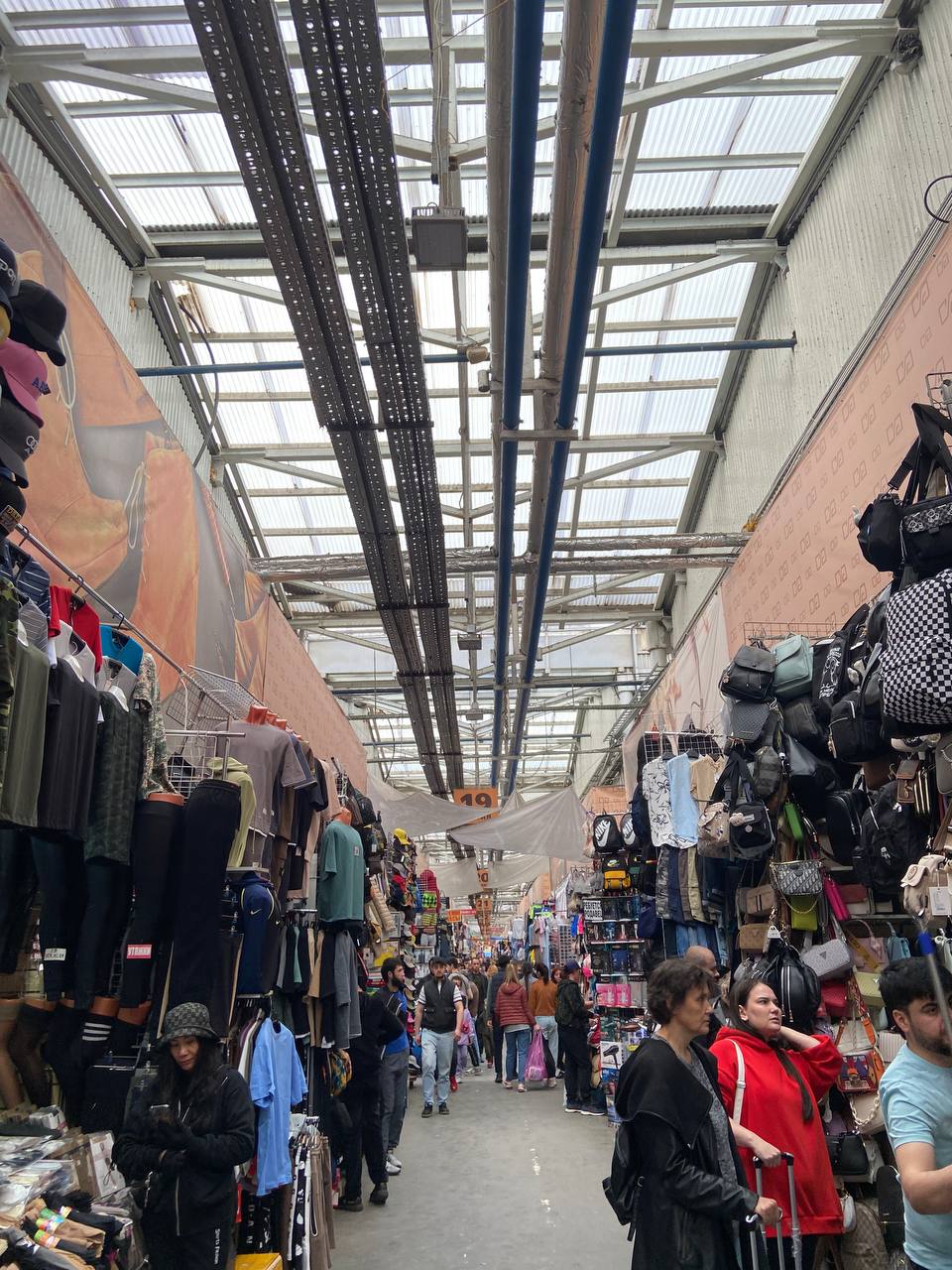
    At the sprawling Sadovod market in southeast Moscow, among the 160 acres of clothing, jewelry and appliance booths, at least eight teams are spotted, working apart from the everyday hustle and bustle of the market.

    Throughout a business day, these teams, known in confidential records as “departments,” receive a steady stream of customers, almost always carrying bags of various shapes and sizes.

    And inside the bags are piles and piles of cash — Russian rubles. These departments, staffed by payment brokers, are a key intake point for one of the largest, and most secretive, cash-processing operations in the world.

    The inside of the sprawling, 160-acre market. Image: Natalia Senatorova / Wikimedia

    Welcome to the industrial cash machine that is A7, the payments giant backed by the Russian state.

    Between November 2024 and July 2025, A7 processed at least 283 tons of cash rubles, worth more than $14 billion, an investigation by the International Consortium of Investigative Journalists and Russian independent media outlet Proekt has found.

    For A7, ICIJ discovered, cash is king, the jet fuel for a firm now under scrutiny as a “shadow banking network” designed to evade Western sanctions at scale, according to U.S. authorities.

    On Oct. 1, the U.S. Treasury sanctioned A7 as a “significant transnational criminal organization,” which “utilizes money laundering methodologies to fraudulently move vast sums of money in violation of sanctions and other laws in the jurisdictions in which it operates.”

    But while Western governments and banks scramble to trace A7 money flows through the international financial system, ICIJ’s investigation reveals that the origins of the bulk of A7 transmissions are, in fact, untraceable.

    According to internal A7 records seen by ICIJ, and people familiar with the matter, a huge portion of A7’s payments do not stem from conventional bank transfers by clients inside Russia, but literally from hundreds of tons of cash rubles.

    Leaked internal records allowed ICIJ to identify that a handful of wholesale markets and other businesses around the Russian capital, including Sadovod, where much of the business is done in cash, made up a significant share of the cash A7 processed.

    The records show that while the source of the cash is untraceable, its destination is not: Most of the cash is bound not for Western markets, but for China.

    A fountain in Sadovod market in southeast Moscow. Image: Nikita Andreev / Wikimedia

    A7 did not return ICIJ’s requests for comment.

    In public statements, A7 has strongly rejected the U.S. allegations of wrongdoing, saying that it “employs a modern, multi-tiered compliance system” and that it was “established to ensure uninterrupted settlements for the Russian market, which has been subjected to unlawful restrictive measures.”

    “All clients undergo screening to identify risks and prevent the servicing of individuals or organizations whose activities violate regulatory requirements,” it continued.

    Experts say the fact that cash drives A7 raises the spectre of a money laundering operation limited only by the size of the market and A7’s capacity to physically handle the cash. As such, A7’s cash-based model presents challenges not previously understood both to the conventional banking system and to law enforcement.

    “Cash is considered one of the highest risk methods of payment and store of value because it’s anonymous, it can travel across borders, and it doesn’t attach to any specific individual or company,” George Voloshin, an expert at ACAMS, a global training body for anti-financial crime, told ICIJ in an interview.

    “The A7 network not only helps Russia circumvent Western sanctions and export controls,” Voloshin continued. The fact that A7 takes massive volumes of cash from Moscow’s wholesale markets suggests that the company “is also likely to facilitate cash-based money laundering by effectively legitimizing potential proceeds of crime,” he said.

    Voloshin added that international banks bear an additional burden of tracing payments emanating from A7. “The main risk is that [foreign] intermediary or beneficiary banks become complicit in [a] form of criminal activity that they know nothing about, because they don’t have any visibility into what’s happening in Russia where the money originates from.”

    Cash by the ton, bound for China

    On its launch in late 2024, A7 touted itself as a sanctions-proof payments system, and has come under increasing scrutiny for its role as one of the Kremlin’s principal channels for laundering billions of dollars worth of payments out of Russia and into the global financial system, via a global network of shell companies, often with accounts at major international banks.

    As part of its launch, A7 integrated into its business a hodgepodge of informal payment brokers at Moscow markets, including Sadovod, according to internal A7 records seen by ICIJ.

    “For [A7], Sadovod is simply a big client base — a big, aggregated pile of clients,” a person familiar with the matter, who requested anonymity due to security concerns, told ICIJ. “And that’s exactly what they go there for: the money and the profit.”

    For years, this ecosystem of market brokers converted importers’ cash into conventional bank transfers or crypto, most often bound for China. This informal system was upended by Western sanctions, which barred Russian businesses from the SWIFT system, the international messaging network that allows banks to exchange transactions. The threat of U.S. secondary sanctions — which target entities for doing business with sanctioned states or businesses — made Chinese banks more cautious when dealing with Russia.

    The informal cash payment system at Moscow’s wholesale markets “depends on trusted intermediaries, established relationships and confidence that money will arrive,” Ilia Shumanov, managing partner of Russia-focused due diligence firm Tri-Trace Investigations, told ICIJ. “Its international reach can be extensive, while outsiders have limited visibility into the underlying transactions.”

    Under A7’s new, supercharged system, a platoon of market brokers takes in the bags of cash brought by vendors and makes an initial count.

    The brokers then stuff the rubles into numbered bags to be loaded, along with clients’ payment orders, into vans bound for an A7 processing office elsewhere in the Russian capital, according to leaked internal payment and cash management records.

    A review of cash deposit and internal payment records shows that a small army of 50 or so A7 cashiers feeds the cash into a counting system where the amounts are verified; A7 enters the bag number, ruble amount and the client’s payment order into a bespoke payment management system, then trucks the cash on to Promsvyazbank, or PSB, the Russian state defense bank, a co-owner of the company. PSB puts it in a vault and credits A7 accounts. PSB acknowledged ICIJ’s request for comment, but did not provide a response.

    Photo of an industrial complex with tanks and pipes, including Gunvor's logo.

    https://www.icij.org/investigations/china-capital/gunvor-publicly-condemned-russias-war-but-continued-to-do-business-with-russian-energy-firms-records-show/

    CHINA CAPITAL Gunvor publicly condemned Russia’s war but continued to do business with Russian energy firms, records show  Oct 01, 2026

    https://www.icij.org/news/2026/09/trump-administration-gave-firm-with-ties-to-ballroom-donor-the-green-light-to-do-business-with-a-sanctioned-russian-bank/

    Accountability Trump administration gave firm with ties to ballroom donor the green light to do business with a sanctioned Russian bank Sep 21, 2026

    https://www.icij.org/news/2026/02/hong-kong-firms-feed-european-tech-to-russias-war-in-ukraine-report-says/

    SANCTIONS Hong Kong firms feed European tech to Russia’s war in Ukraine, report says Feb 18, 2026

    Recommended reading CHINA CAPITAL Gunvor publicly condemned Russia’s war but continued to do business with Russian energy firms, records show  Oct 01, 2026 Accountability Trump administration gave firm with ties to ballroom donor the green light to do business with a sanctioned Russian bank Sep 21, 2026 SANCTIONS Hong Kong firms feed European tech to Russia’s war in Ukraine, report says Feb 18, 2026

    Source: ICIJ · 2026-10-21