Tag: Justice

  • “Offensive Driving”: ICE’s Deadly Weaponization of Vehicles Against Civilians

    “Offensive Driving”: ICE’s Deadly Weaponization of Vehicles Against Civilians

    As Miguel Parra Hernandez, a Mexican national, was fleeing from U.S. Immigrations and Customs Enforcement on foot last month, he turned into a parking lot. An unmarked government vehicle came screaming into the lot after him and struck him.

    When a grand jury in Harris County, Texas, charged the U.S. Immigrations and Customs Enforcement officer behind the wheel last week, the indictment pointed to a broader pattern in the Trump administration’s crackdown on immigrants and activists. The charge was assault with a deadly weapon; the weapon was the vehicle.

    The Department of Homeland Security, ICE’s parent agency, claimed Parra Hernandez ran in front of the government vehicle; surveillance footage of the incident shows him running away from the car moments before he is hit. (An attorney for the ICE officer accused of assault against Parra Hernandez told The Associated Press his client had not committed any crime.)

    In the same month, an unmarked ICE vehicle speeding the wrong way down a one-way street in Long Beach, California, struck a bicycle ridden by Ricardo Gonzalez, whose daughter later said he was a U.S. citizen. An agent immediately drew their gun on Gonzalez, who was later hospitalized for his injuries. The government said the man was not struck, but video released by the New York Times showed the ICE vehicle swerving into the bicycle.

    Three days later after the collision in Long Beach, Antonio Moreida stood in the street in Woodland, California, outside Sacramento, documenting an unmarked ICE vehicle when the black Chevy Tahoe accelerated toward him. When the SUV hit him, Moreida told a meeting at Woodland City Hall last week, he was knocked to the ground — and the driver of the Tahoe did not stop to check on him.

    The Department of Homeland Security said Moreida jumped onto the hood of the unmarked car, but when video of the incident showed him standing in place, local police and the mayor publicly disputed ICE’s account.

    Weaponized Vehicles

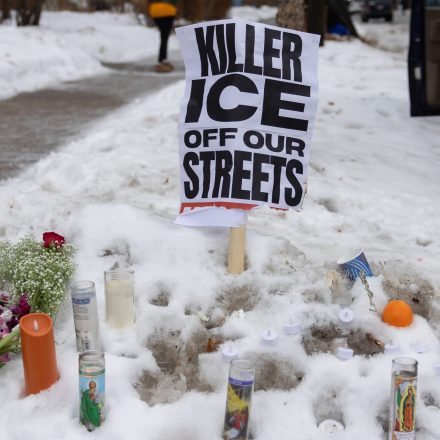
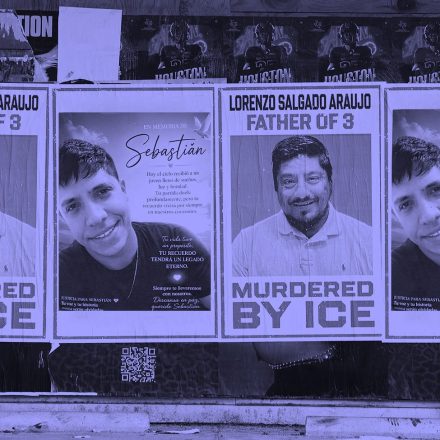
    In the national conversation about ICE’s heavy-handed crackdown on immigrants across the country, much has been made of the Department of Homeland Security’s claims that immigrants and activists “weaponized” their vehicles against federal agents. After immigration officers shot and killed Lorenzo Salgado Araujo, who was targeted by ICE, and community defender Renée Good in separate incidents, the government said the civilians had used their cars to attack agents — allegations that have not been borne out in criminal charges, or were called into question by witness accounts and video analysis.

    What happened to Parra Hernandez, Gonzalez, and Moreida, however, was the opposite of what the government said about Good and Salgado Araujo: It was ICE agents who weaponized their vehicles against civilians.

    Related

    Trump’s National Killer Police Force


    As the Trump administration ramped up deportations over the last year, federal agents have effectively turned their cars into massive, deadly blunt objects. Common tactics, known collectively as “offensive driving techniques,” include ramming the cars of immigrant targets and activists; “brake-checking” volunteers trying to observe ICE activity; and, in some cases, outright driving into civilians. The Intercept reviewed two dozen cases of ICE using vehicles against civilians in these ways, including multiple incidents where victims were hospitalized or even died from their injuries.

    “Vehicles are another tool ICE agents are using with unchecked force, just like their guns, Tasers, and pepper spray.”

    “Vehicles are another tool ICE agents are using with unchecked force, just like their guns, Tasers, and pepper spray,” said Hannah Stauss, co-director of Hands Off NYC, a group that opposes ICE’s presence in New York City. “ICE’s deranged use of vehicles effectively weaponizes them against our immigrant neighbors and rapid responders, and will continue to kill people. We are witnessing in real time the results of a federal agency being allowed to operate with impunity, in secrecy, and with unfettered violence.”

    In a statement to The Intercept that compiled past responses to the incidents in this article, a spokesperson for the Department of Homeland Security said, “ICE is instituting additional training including, crowd control measures, additional training for high-risk vehicle stops, a live-fire cover course for officer safety, and medical training.”

    The spokesperson did not respond specifically to allegations about the incident involved Parra Hernandez; said Gonzalez was not struck by an ICE car; and blamed Moreida for the accident because he was in the roadway.

    “Offensive Driving Techniques”

    In federal policies and memos, the maneuvers used in the incidents reviewed by The Intercept, along with testimony from rapid responders, are referred to by federal agents as “offensive driving techniques.” They are part of a wider patten of aggressive driving by law enforcement officers across the country, but especially by federal agents with little accountability and nearly blanket backing from the Trump administration.

    Last October, Leo Martinez was monitoring immigrations agents’ activity as a volunteer with VC Defensa, a community defense group in Ventura County, California, when an unmarked ICE car rammed his pickup truck. ICE agents arrested Martinez and later released him without charge.

    Related

    Documenting ICE Agents’ Brutal Use of Force in LA Immigration Raids


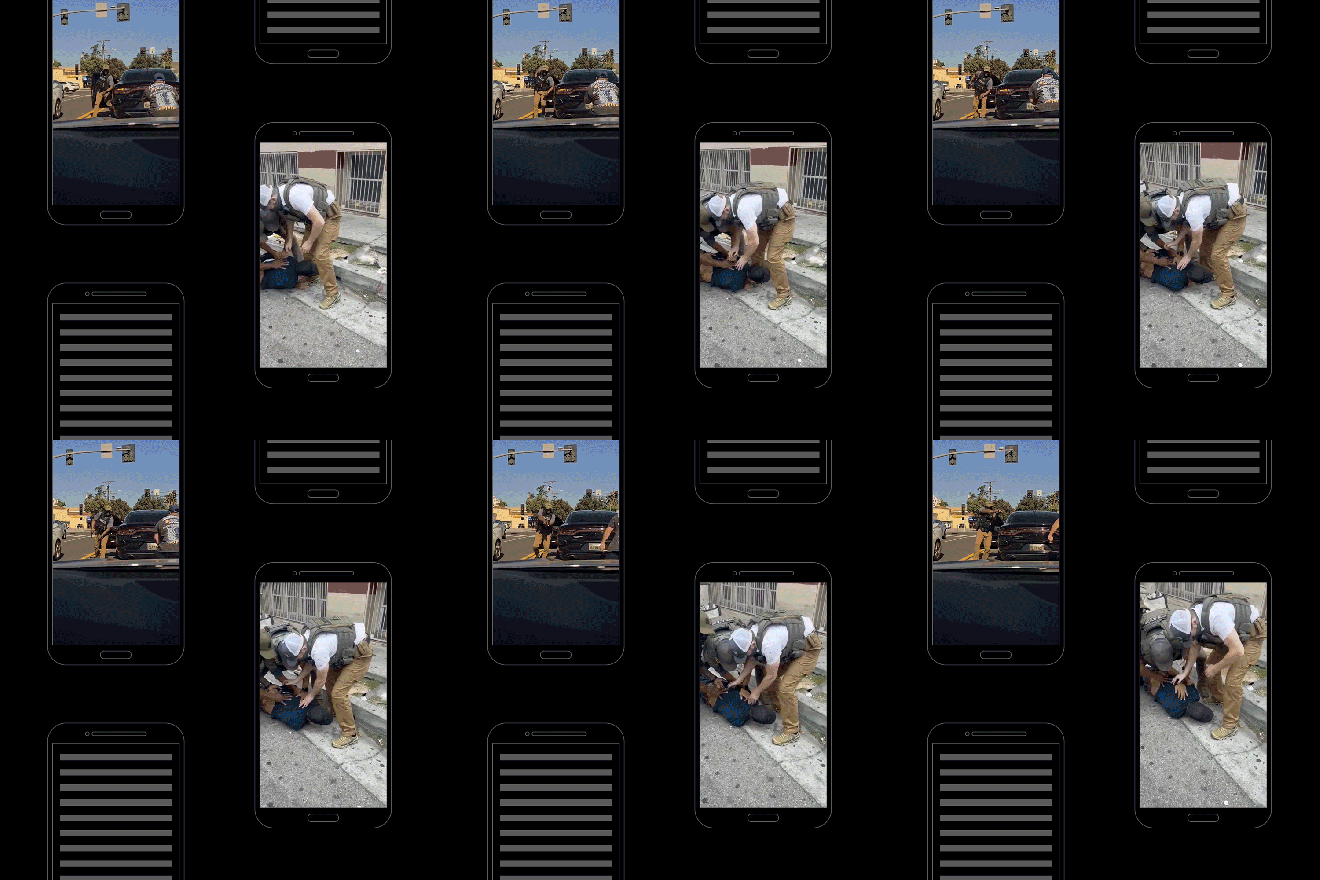
    In March, they did it again: Three unmarked government vehicles rammed Martinez’s car as he sought to reverse away from them. The federal agents broke his window and dragged him out. Martinez, who was hospitalized from his injuries, was again released without charge. (The Department of Homeland Security spokesperson did not respond specifically to questions about the incidents involving Martinez.)

    “They run stop signs, red lights, they’ll cut off complete intersections, and they rarely turn on their lights,” Martinez told The Intercept. “They’ll slam on their brakes in the middle of the freeway, in the middle of the street. Sometimes they’ll do sudden U-turns in the middle of nowhere and cut off traffic in both directions.”

    When activists are monitoring federal agents, one of the most common ways for ICE to leverage their vehicles as physical threats is the “brake check,” a move where a car suddenly breaks to cause the car behind it to slow down — or slam into its rear bumper.

    “Brake-checking” doesn’t appear in official guidelines as an “offensive driving technique” with good reason: It is considered to be illegal in all 50 states, covered by various statutes like reckless driving or other anti-road-rage laws. Yet VC Defensa volunteers, who like Martinez monitor ICE activity, said that when they follow ICE vehicles to alert the community with horn-honking, they keep a distance of two to three car lengths because federal agents so frequently brake-check volunteers.

    Federal agents use “offensive driving techniques” so often in Ventura County that VC Defensa volunteers sometimes identify the unmarked cars by the body damage that characterizes them.

    Customs and Border Protection, another agency that, like ICE, is under the umbrella of the Department of Homeland Security, expanded its agents’ discretion and ability to use these techniques during abduction operations after President Donald Trump took office for a second term.

    A previous 2023 Customs and Border Protection pursuit policy largely prohibited officers from boxing in vehicles or making vehicle contact with another vehicle in motion. A partially redacted 2025 CBP directive gives officers broader discretion to use offensive driving techniques and ignore traffic laws.

    “Most federal agencies are not well trained in police-citizen interactions, traffic stops, and pursuits.”

    “Most federal agencies are not well trained in police-citizen interactions, traffic stops, and pursuits,” said Geoffrey Alpert, a criminology and criminal justice professor at the University of South Carolina who helped Customs and Border Protection rewrite their car-chase policy under the Biden and Obama administrations.

    In December, ICE agents in Elgin, Illinois, chased a Venezuelan man until his car and the ICE vehicles crashed. State investigators found the ICE agents likely conducted an “unskilled precious immobilization technique (‘PIT maneuver’) and lost control of the vehicle.” (The Department of Homeland Security spokesperson said the target of the raid rammed an ICE vehicle into a tree.)

    In January, Christian Molina, a U.S. citizen, was preparing to pull over for an ICE traffic stop in Minneapolis when the agents rammed the back of his car, injuring his back. The agents said they would pay for the damage, but left without providing contact information. (The Department of Homeland Security spokesperson did not respond specifically to questions about the incident involving Molina.)

    In June, agents conducted a high-speed chase through a residential neighborhood of Chicago, blowing through intersections until finally ramming their target’s car. (The Department of Homeland Security spokesperson blamed the target of the immigration enforcement action for the accident because he fled from ICE.)

    “It’s disheartening to see some sort of federal agents or law enforcement driving so aggressively in a residential area,” one neighbor told Block Club Chicago. “I have a kid who’s two and we go out for walks all the time. We could have been crossing the street when they came through the intersection.”

    High-Speed Chases

    Following the killings of Lorenzo Salgado Araujo and Johan Sebastián Durán Guerrero in July, the Department of Homeland Security ordered a temporary halt to traffic stops.

    The day the directive was issued, ICE chased a group of roofers in Texas, blowing through a stop sign and over a speed bump without sirens. A mother driving her son to the theater was forced to swerve into a ditch to avoid a collision.

    “They speeded right next to me,” the mother told the Texas Observer. “They hit the speed bump so bad that, when they got in front of me at high speed, I had to go to the right.”

    If she had not swerved, she said, “they would have hit me.”

    Some of these car chases have turned deadly in the very places where local police are restricted from chasing suspects because of the attendant dangers.

    In February, agents undertook a high-speed chase in pursuit of Oscar Vasquez Lopez outside of Savannah, Georgia. Vasquez Lopez’s car struck a teacher, killing her.

    The Savannah Police Department only allows pursuits when the suspect has committed or is attempting to commit a forcible felony, and the risk of not capturing someone outweighs the risk of the chase. Vasquez Lopez had no criminal record, only a civil deportation order from 2024.

    Two immigration car chases in New Jersey, where police face similar restrictions at the statewide level, resulted in hospitalizations. (In the Texas case, the Georgia case, and the New Jersey case, the Department of Homeland Security spokesperson blamed the target of the immigration actions for causing unsafe conditions by fleeing.)

    “They are not required to follow local agency policies (the same as other agencies), but they must be held responsible for their actions under state and federal law,” Alpert, the criminology professor, said. “The failure to evaluate these behaviors in a full, complete and transparent manner leaves us all in the dark.”

    Earlier this month, the AP reported on an internal memo to ICE’s Enforcement and Removal Operations division that banned agents from conducting high-speed car chases. The directive still allows trained agents to make traffic stops and undertake offensive driving maneuvers.

    Ramming Pedestrians

    ICE agents’ vehicles are not just recklessly pursuing and ramming vehicles driven by who they thought were targets for immigration enforcement. In multiple filmed interactions, agents have driven into pedestrian rapid responders and protesters.

    Related

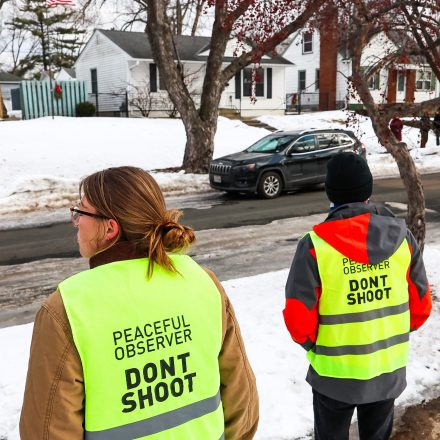
    Federal Agents Are Intimidating Legal Observers at Their Homes: “They Know Where You Live”


    In Woodland, California, ICE agents crashed into Moreida as he sought to collect their license plate information. After a major workplace raid in Los Angeles in June 2025, a news helicopter filmed the moment a protester walked in front of several ICE vehicles. One slowly sped up until it knocked him to the ground.

    “It’s a disproportionate use of force. An individual is not going to win a fight with a vehicle,” Alpert, the criminology professor, said. “I’ve never seen any state or local law enforcement ever use a vehicle properly to hit or to run into a civilian.”

    In other incidents, federal agents have weaponized their vehicles against crowds of activists. (Asked about the protests incidents mentioned in this article, the Department of Homeland Security spokesperson blamed “anti-ICE agitators.”)

    In the aftermath of an ICE shooting this month in the New York City neighborhood of Marble Hill, immigration agents were seeking to move a man with a gunshot wound — whose car, with his 5-year-old son in the back, smashed into a concrete barrier during the incident — from a hospital to a detention facility. As government vehicles left the hospital in a speeding caravan, a bicycle was nearly hit by an federal agent in a black vehicle, which honked its horn, according to video of the incident. In another social media post, an ICE agent in an unmarked vehicle continued driving even with six protesters walking in front of it.

    In July 2025, in San Francisco, after ICE clashed with protesters while moving detainees from the immigration courthouse to unmarked vehicles, several protesters clung to the hood of the car until they were physically thrown off when the vehicle sharply accelerated.

    “It is honestly only a matter of time until an ICE agent seriously injuries or kills a cyclist or pedestrian in New York City.”

    “I absolutely worry about ICE agents hurting people or killing people with these aggressive driving maneuvers,” said a New York rapid responder. “In order to avoid having their movements in vehicles documented, ICE agents will dramatically accelerate far beyond safe speeds for a dense urban environment like New York City.”

    The organizer, who requested anonymity to avoid retaliation from the government, reported that agents drive at high speeds into oncoming traffic, run red lights, and abruptly turn without signaling. They rarely use emergency lights or sirens. These tactics align with the pattern of behavior described by Martinez in California — but in a city where rapid responders and neighbors are more often on foot or riding bicycles, not in their own vehicles.

    Related

    Trump Wanted Minnesota 15 Case to Be Another Prairieland. Instead, Twin Cities Rallied Behind Anti-ICE Activists.


    When ICE agents brought a detainee to a Brooklyn hospital after a violent arrest in May, hundreds protested outside the hospital. One TikTok video from the night captured the moment an unmarked ICE vehicle drove into several gathered people, accelerating sharply until they leapt out of the way.

    “Given the frequency with which these agents are engaging in aggressive maneuvers to try and lose rapid responders or prevent documentation of their movements,” the organizer said, “it is honestly only a matter of time until an ICE agent seriously injuries or kills a cyclist or pedestrian in New York City.”

    Source: The Intercept · 2026-11-02
  • Fergie Chambers Faces Extradition to U.S. Despite Never Being Indicted, Says Lawyer

    Fergie Chambers Faces Extradition to U.S. Despite Never Being Indicted, Says Lawyer

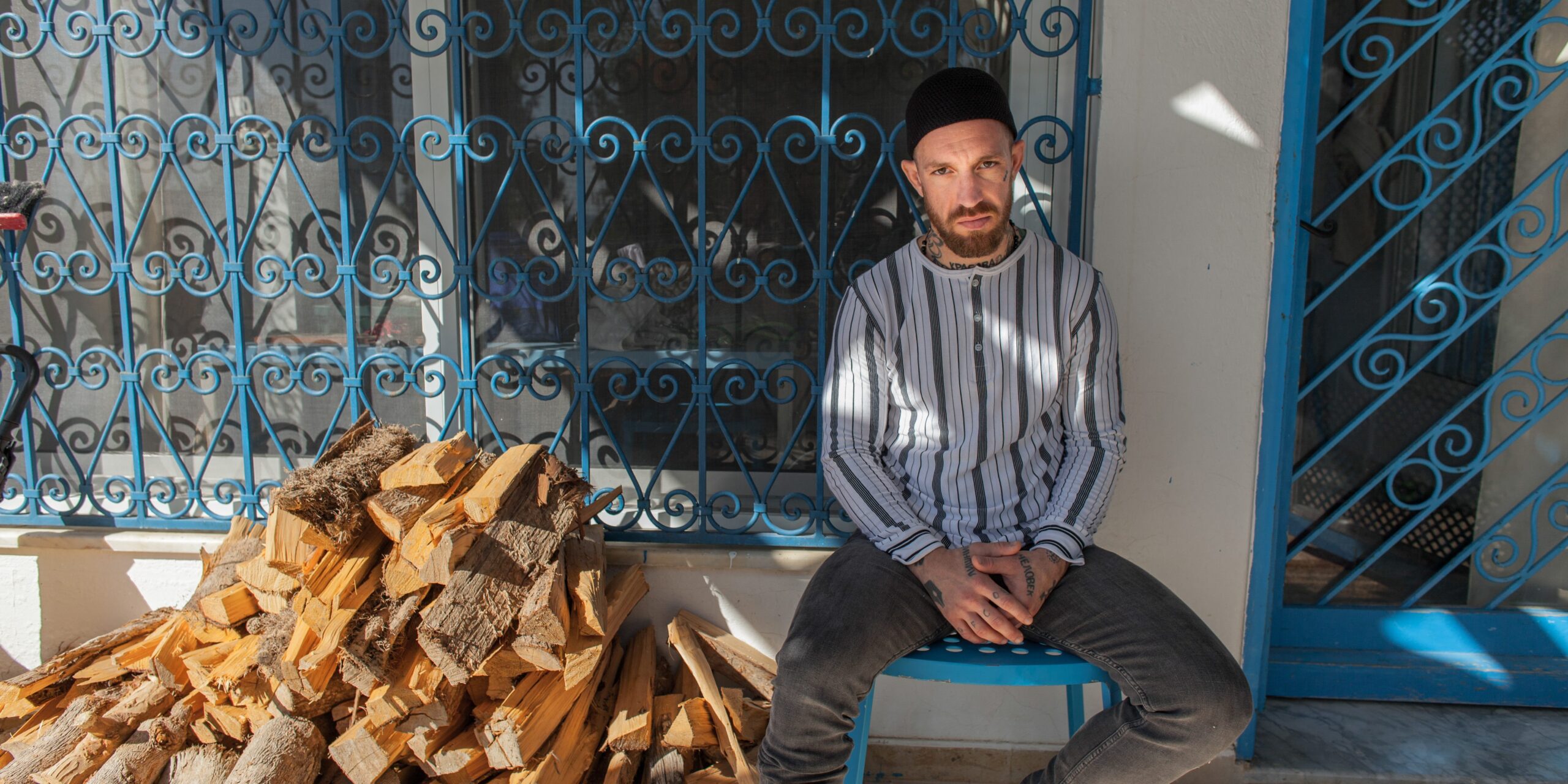
    The Trump administration’s extradition case against millionaire left-wing donor James “Fergie” Chambers, detained in Spain since July, ran into an apparent hurdle when two witnesses called before a federal grand jury announced their intention last week to refuse to testify.

    Several observers familiar with the case said the grand jury is likely related to the extradition effort.

    The refusal of the grand jury witnesses to testify takes on added importance because the U.S. is pursuing Chambers’s extradition based on a criminal complaint, not an indictment, according to his Spanish lawyers. The criminal affidavit, signed by a single FBI agent, includes three charges related to his support for pro-Palestine causes.

    The distinction, critics of the extradition case say, highlights how the case is hung on one agent’s complaint, which remains under seal, rather than a grand jury investigation to determine if the state had sufficient evidence to indict Chambers.

    “The complaint is not only vague and weak, it’s not normal,” said Aitor Martínez, one of Chambers’s Spain-based lawyers. “In 20 years of practice, I’ve never seen a U.S. extradition request based on a criminal complaint.”

    Martínez pointed to a statement from a summary of the complaint contained in an international arrest order reviewed by The Intercept and directed at Spanish authorities that says, “If Chambers’ extradition to the US is granted, another charging document called an indictment will be sought from a federal grand jury.”

    “In 20 years of practice, I’ve never seen a U.S. extradition request based on a criminal complaint.”

    Xavier de Janon, the executive director of the U.S.-based National Lawyers Guild and who is not working directly on the Chambers case, said, “Seeking an extradition without there being an indictment puts the cart before the horse.”

    “If he is extradited under a criminal complaint,” said de Janon, “he can’t even fully challenge the charges, because he hasn’t been indicted.”

    The State Department referred questions to the Department of Justice, which declined to comment.


    Related

    They Got 60 Days in Jail for Protesting Israel’s Largest Arms Maker — and Say That’s a “Huge Victory”


    Two of the three charges underpinning the extradition request against Chambers — riot and incitement to riot — are related to allegations that he helped fund a late-2023 protest in Merrimack, New Hampshire, against an Israeli weapons manufacturer, according to the summary of the complaint contained in the arrest order. The summary says Chambers provided funds for demonstrators used to purchase materials such as smoke bombs and to help cover protesters’ legal fees.

    The third charge is international money laundering related to more than $7 million he transferred to bank accounts in Tunisia, where he was living in 2024. The Trump administration, according to the international arrest order, says the money was used to fund Hamas, which is a proscribed terror group in the U.S. The order does not say he is charged with material support for terrorism.

    Chambers’s family and supporters and multiple representatives of Club Africain, a Tunisian soccer club, have said the money was used to pay the club’s debts and related expenditures such as training grounds. The club’s fan base has long supported Palestinians.

    Grand Jury Refusal

    Two women who participated in the 2023 protest against a factory operated by the Israeli weapons manufacturer Elbit Systems recently announced their intentions not to cooperate with a November 4 grand jury hearing where they have been summoned as witnesses.

    “If they are being summoned now, this suggests that the grand jury seems to be linked to Chambers’s case,” said Martínez, his lawyer. “It seems like a fishing expedition against him.”

    Kira Kelley, an attorney for the two women, said, “Context clues suggest this is about Fergie.”

    If the pair don’t answer questions from a federal prosector before the New Hampshire federal grand jury, they could risk a possible jail sentence for contempt.

    Nonetheless, the two women — Bridget Shergalis and Sophie Ross — shared a statement with The Grayzone Thursday announcing their intention to refuse to testify. In an interview on the same day with The Intercept, the women recounted being under investigation for a year over the protest and being threatened with felony charges that carried potential sentences of decades in prison.

    Shergalis and Ross said they turned down several deals for their cooperation. By the end of the ordeal, they were found guilty of misdemeanor offenses and received 60-day jail sentences.

    Following that experience, said Ross, the pair decided to reject the subpoena to testify before a grand jury.

    “It was an easy decision for both of us,” Ross said.

    Shergalis and Ross are slated to testify on Wednesday, at which time they plan to assert their Fifth Amendment rights and decline to answer any questions from the federal prosecutor.

    At that point, a hearing before a judge may be scheduled, to determine whether to hold Shergalis and Ross in civil contempt, which could result in up to 18 months of prison, according to Kelley.

    Martínez, who also worked on WikiLeaks founder Julian Assange’s defense team, said the decision by Shergalis and Ross recalled that of Chelsea Manning, who twice refused to testify against Assange before a grand jury, serving time in prison in both instances. 

    “It’s like Chelsea Manning, years later,” he said.


    Related

    Trump Wanted Minnesota 15 Case to Be Another Prairieland. Instead, Twin Cities Rallied Behind Anti-ICE Activists.


    Shergalis and Ross decided to go public with their plans after speaking with organizers behind the recently-launched NSPM-7 Defendants Union, a nationwide project for protesters targeted by the Trump administration’s efforts to criminalize dissent as laid out in last year’s National Security Presidential Memorandum-7. The document, part of a broader effort to paint left-wing activism as terrorism, directs the FBI to go after “violent and terroristic activities” associated with “anti-fascism.”

    The NSPM-7 Defendants Union is centered around signing a pledge to follow practices such as not cooperating with law enforcement, adopting collective legal strategy when possible, and publicly announcing those strategies — a goal that runs against the secrecy surrounding federal indictments.

    While secrecy benefits prosecutors before a grand jury, said Shergalis, “It’s good for all of us to be as transparent as possible.”

    “We’re seeing NSPM-7 result in unprecedented levels of prosecution against protesters.”

    Shergalis, Ross, and Chambers have each signed the pledge, and the grand jury decision appears to be the first public test case of the union’s ideas.

    “We should celebrate people across the country deciding to assert their legal rights boldly against the federal government and its NSPM-7 policy,” said de Janon, of the National Lawyers Guild. “We’re seeing NSPM-7 result in unprecedented levels of prosecution against protesters.”

    “This Is Bad Faith”

    Meanwhile, Chambers remains imprisoned in Madrid, as the Spanish courts decide whether to grant the U.S. extradition request or not.

    Chambers has applied for asylum in Spain and, if his application is granted, he would be released and the U.S. extradition request would be denied. He cannot be extradited until the asylum case runs its course.


    Related

    Trump Goes After Anonymous Email Provider in Italy. The Real Target Is Free Speech in the U.S.


    A self-described communist and anti-imperialist, Chambers is heir of the Cox family, owners of Atlanta-based telecom giant Cox Enterprises. As part of a settlement in which his family severed ties with him at the time, he sold stock back to them in mid-2023 worth about $250 million.

    Since then, he has been funding an estimated 100 humanitarian and left-wing projects in 20 countries, according to his partner, actress and activist Stella Schnabel, including aid projects in the Occupied Gaza Strip.

    “I believe this is part of the persecution against pro-Palestine protest.”

    As for the Trump administration’s case, Martínez, the Spanish attorney, underscored how the criminal complaint against Chambers raises charges related to the protest against the New Hampshire factory for Elbit Systems, Israel’s largest arms manufacturer, but leaves out how federal prosecution efforts ended up with minor convictions for Shergalis, Ross, and other activists.

    “The people who carried out the acts received a minor sentence,” he said. “They leave this out. This is bad faith.”

    “Why don’t they tell this to Spain?” he said. “It’s likely that Spain won’t turn someone over based on actions that got 60-day sentences.”

    Martínez said Chambers’s opposition to the Israeli genocide in Gaza is the real reason behind the case. “I believe this is part of the persecution against pro-Palestine protest. The U.S. has even sanctioned the International Criminal Court because of this.”

    Of Chambers’s case, Martínez said, “This is one more attack.”

    Source: The Intercept · 2026-11-02
  • Trump Vows to Send Election “Monitors” to Maine After Far-Right Conspiracies Spread

    Trump Vows to Send Election “Monitors” to Maine After Far-Right Conspiracies Spread

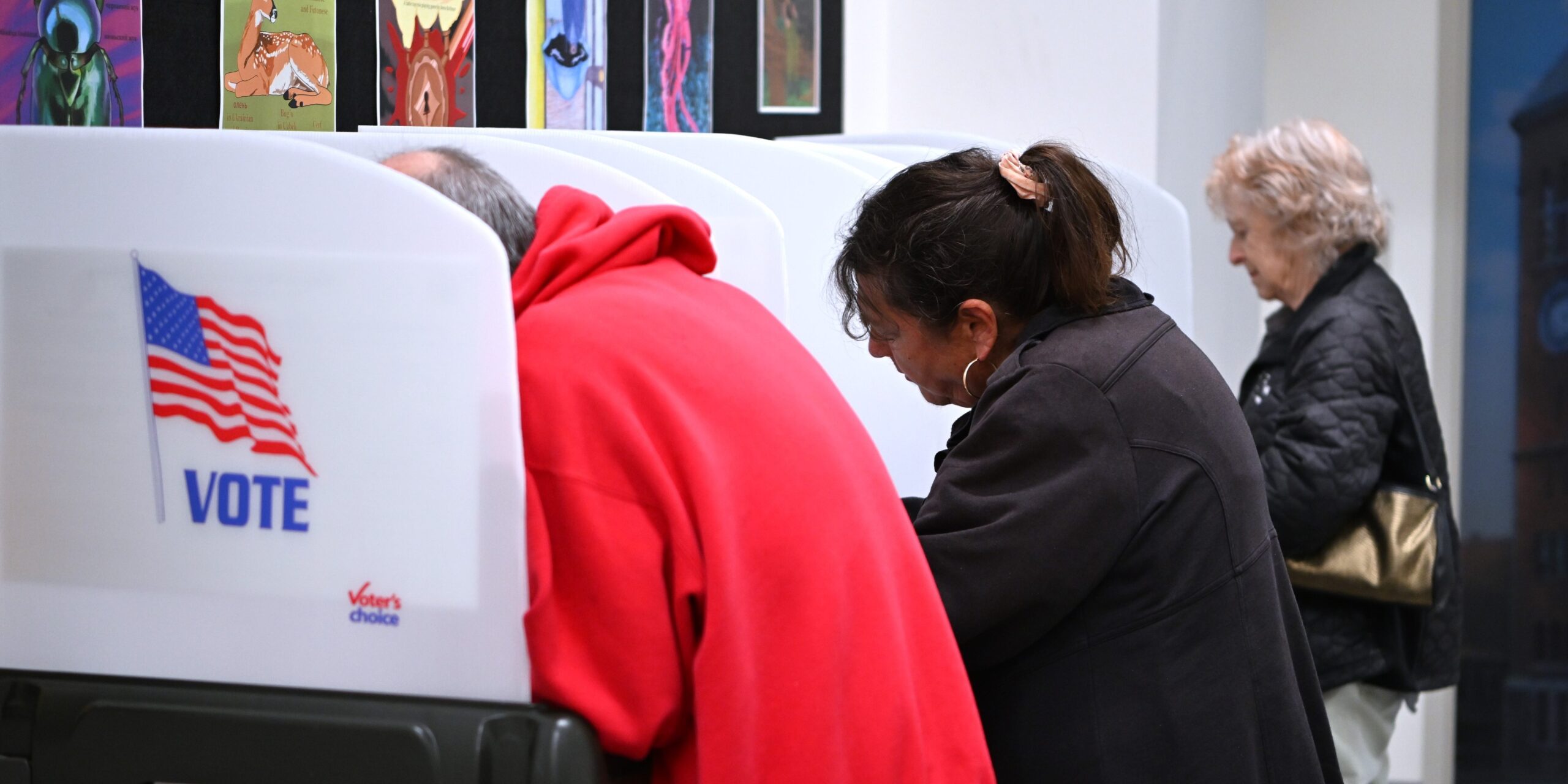
    With voters set to cast ballots in two critical races that could help determine control of both chambers of the U.S. Congress, fears of potential voter suppression are running high in Maine.

    Officials in the state have prepared for months against the possibility of election interference from federal officials, and the state remains on high alert in the run-up to the general election on November 3.

    Training materials were updated this year to include references to federal statutes barring armed federal agents from polling sites.

    Training materials for law enforcement officials in the state, obtained by The Intercept through a public records request, were updated this year for the elections to include explicit references to federal statutes barring armed federal agents from polling sites. 

    In an interview with the New York Times this week, Maine Secretary of State Shenna Bellows said the inclusion of such references was a direct defense in response to the fearmongering around election integrity from President Donald Trump and his administration.

    “This is the first time ever that we have had to engage in scenario planning to safeguard against potential federal interference in elections,” Bellows said. “It seems like the federal government is now adversarial to the states.”

    Bellows’s office offered up the training slideshow, which cites a U.S. law that bars armed civil or military officers from posting at voting sites, to law enforcement personnel in the run-up to Maine’s primary election in June and again in the lead-up to the general election on November 5.

    Nationwide, Democratic officials have expressed fears that the Trump Administration might weaponize U.S. Immigration and Customs Enforcement or other federal agencies to undermine the rights of voters. In New York, state Attorney General Letitia James issued a reminder to voters that federal officials may not “police the polls,” and the Arkansas chapter of the NAACP called out the assignment of federal election monitors to two counties in the state as potential intimidation.


    Related

    DHS Was Designed as a Weapon


    The Trump administration, meanwhile, has sounded the alarm about the alleged scourge of non-citizens on the voter rolls, sending agents from the FBI and ICE’s Homeland Security Investigations division to probe alleged fraud. A handful of people in California, New York, and North Carolina have been indicted for allegedly voting as non-citizens, but a review of similar cases by the Washington Post found that such cases were often the result of honest mistakes.

    In Maine, worries about federal interventions at polling places flared when — following a slew of social media videos from Trump allies suggesting that fraud is already taking place among the state’s Somali American community — a local outlet reported that the Department of Justice would be sending election monitors to the state.

    Jon Fetherston, a journalist with the far-right Maine Wire, which is funded by conservative megadonor Leonard Leo, was seen following people in and around an early voting site at Lewiston City Hall and aggressively questioning them. (The Maine Wire did not immediately respond to a request for comment.)

    Critics said the moves were tantamount to voter harassment, but Maine Wire editor-in-chief Steve Robinson later defended them as an act of election transparency. Robinson, who has led a crusade against what he alleges to be a network of fraud in the state’s Somali American community, questioned the role of interpreters tasked with helping “jobless Somali bums” cast their ballots.

    In the wake of the Maine Wire controversy in Lewiston, Bellows confirmed to the Maine Morning Star that a wave of federal election monitors would be headed to polling sites in Lewiston and Portland.


    Related

    GOP Megadonor Leonard Leo Is Bankrolling a Website on the Warpath Against Somalis


    The Department of Justice on Tuesday confirmed to The Intercept that it intends to send election monitors to Maine for Election Day, but did not elaborate or respond to specific questions about where the monitors were to be sent. 

    “We will have around 1,000 monitors in counties throughout the United States, but we will not share the full list until Election Day,” a Justice Department spokesperson told The Intercept in an email Tuesday. “All monitors must meet the same legal and ethical requirements, including that they not interfere with the voting process. Every monitor has the same role: observe for potential violations of federal law and report concerns to the Department, which the Department will review after Election Day and act where appropriate.”

    Robinson did not immediately respond to a request for comment.

    Collins Takes Right-Wing Bait

    With Maine a key battleground state for control of Congress — Democratic challenger Troy Jackson is seeking to topple long-serving GOP Sen. Susan Collins, and the Democratic House candidate Matt Dunlap is seeking to best former Gov. Paul LePage in Maine’s 2nd Congressional District — temperatures are running high in the state.

    Progressives in Maine worry that even without a robust federal presence at voting places — whether monitors are armed or not — activist campaigns like the one undertaken by the Maine Wire journalists could pose a potential threat to voters’ rights.

    “Basically, if you were walking into City Hall and you were Black, you could expect to have this guy come up to you with his phone and ask you all sorts of rude and obviously racist questions,” said Ben Chin, co-director of the progressive Maine People’s Alliance. “We’re trying to encourage everyone to come out to vote, but it makes sense why that might give people pause. You hear a guy like that is outside a polling location, it’s reasonable to wonder, ‘Should I go down there right now?’”

    “We have received complaints about the intrusive filming, photography, and harassment of voters in the City of Lewiston by political operatives.”

    In a statement to The Intercept, Bellows said the state and the city of Lewiston were taking steps to ensure that voters could cast a ballot free of harassment.

    “We have received complaints about the intrusive filming, photography, and harassment of voters in the City of Lewiston by political operatives,” Bellows told The Intercept in a statement. “All voters should be able to exercise their right to vote without feeling watched, questioned, or harassed, and we take these allegations seriously, particularly when it appears that voters were targeted for no other reason than their race or ethnicity. We understand the City of Lewiston has taken steps to address the problem, and we will continue to monitor the situation.”

    Collins, meanwhile, took the Maine Wire’s reporting seriously after Fetherston asked the senator at a campaign event about the role of interpreters, which he and the Maine Wire cast as “electioneering.”

    “I’m unaware of those allegations, but certainly only Americans should be voting in American elections,” Collins said. “And it is troubling to me if people are being accompanied into voting booths and handling ballots in a way that is not sanctioned by law.”

    Source: The Intercept · 2026-10-28

  • Prosecutors Want to Keep a Man in Prison for His Wife’s Murder — Despite Judge Saying Their Evidence is Junk

    Prosecutors Want to Keep a Man in Prison for His Wife’s Murder — Despite Judge Saying Their Evidence is Junk

    Alabama attorney Larry Grissett was checking Facebook in late September when he saw a news story about a man he represented in a murder trial more than 40 years ago. According to the article, a federal judge had just vacated the conviction of that client, Charles McCrory.

    Grissett was stunned. He later summed up his reaction: “Vindication.”

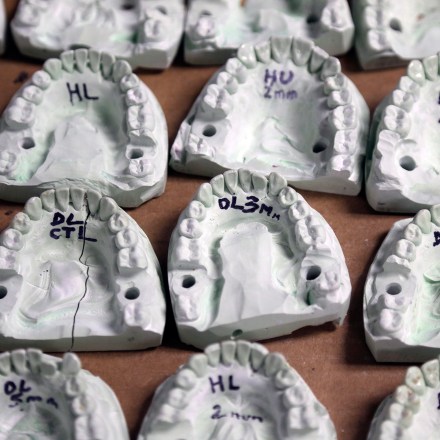
    McCrory was 26 years old when he was accused of brutally killing his wife in the small town of Andalusia. He insisted he was innocent — and Grissett believed him. There was no evidence connecting McCrory to the crime; prosecutors seized on a supposed bite mark found on his wife’s body, which a state expert claimed to match to McCrory’s teeth.

    Grissett was never convinced by the so-called bite mark. At McCrory’s 1985 trial, he said, Grissett’s own dentist sat through the expert testimony and found it preposterous. “He says, ‘There’s no way that guy can say that,’ Grissett recalled. “I mean, anybody with common sense would know that.”

    In a September 21 ruling describing the case against McCrory as “thin,” Trump-appointed Judge R. Austin Huffaker Jr., zeroed in on this junk forensic science. Not only would the alleged bite mark not be allowed into evidence today, Huffaker wrote, bite-mark analysis itself “is grossly unreliable and unsupported by relevant scientific bodies. It amounts to nothing more than rank speculation.”

    Unless the state moves to retry him within the next six months, Huffaker concluded, McCrory must be released from prison.

    The ruling was not only momentous for McCrory, who has insisted on his innocence for more than four decades, but it also marked a new victory in the long legal battle against junk forensics — and the discredited discipline of bite-mark analysis specifically.

    “Everybody sees this was junk science. You don’t have to be a scientist to understand that.”

    Yet more than a month after the decision, McCrory remains behind bars with no sense of when he might walk out. Although his lawyers asked the court to free him on bond pending the state’s decision to release or retry him, the Alabama attorney general’s office filed a motion last week asking Huffaker to reconsider his order overturning the conviction. The state’s appeals will likely drag out McCrory’s ordeal through the holidays and into next year.

    In a statement, McCrory’s current legal team praised Huffaker’s “explicit acknowledgment that criminal convictions based on discredited bitemark evidence cannot stand.” Mark Loudon-Brown, senior attorney at the Southern Center for Human Rights, and Chris Fabricant, director of strategic litigation for the Innocence Project, said they are “grateful for the decision and look forward to continuing our fight to bring Mr. McCrory home.”

    In 2022, The Intercept published a lengthy investigation into McCrory’s case, detailing the flaws in the state’s conviction. The case attracted additional media coverage, highlighting the problem of junk forensic science. Despite the glaring problems with the evidence against McCrory, Alabama courts have routinely rejected his appeals and in 2023, the state’s parole board denied McCrory release.

    Julie Bond McCrory’s body was found inside her home in Andalusia on May 31, 1985. Her head was bashed in, and she’d been repeatedly stabbed in the chest. The couple’s son Chad, then 3 years old, was found unharmed in his bed. Police quickly pointed to McCrory as their only suspect: He and Julie were separated, and McCrory had been having an affair. At trial, the theory seemed to be that he’d savagely murdered Julie to be free from her.


    Related

    A Bogus Bite Mark Sent Him to Prison for Murder. Alabama Wants to Keep Him There.


    The police investigation was cursory at best. Detectives found no physical evidence to connect McCrory to the bloody crime. Meanwhile, they ignored some evidence altogether, including two windows in Julie’s bedroom that were found open, but which investigators failed to dust for fingerprints. Police also failed to consider an alternate suspect, a man who worked at an excavating company bordering the McCrorys’ backyard and who, just weeks after Julie’s murder, committed a home invasion rape of another local woman. He was convicted and sent to prison for that crime. 

    Ultimately, the state latched onto a single piece of physical evidence against McCrory: a pair of small indentations on the back of Julie’s right arm, which prosecutors concluded was a bite mark made by McCrory’s teeth.

    To sell this theory, the state employed famed forensic dentist Richard Souviron, a star prosecution witness in the recent and sensational trial of serial killer Ted Bundy. Although Souviron initially said he couldn’t definitively link the two marks on Julie’s arm to McCrory’s teeth, at trial he was unequivocal that they matched.

    Skin, with its malleability, is a terrible medium for accurately recording any injury.

    Bite-mark analysis is based on a two-pronged foundation. First, that the shape and arrangement of our teeth are unique, like DNA, and second, that skin is a suitable substrate for recording this uniqueness. As it turns out, there’s no science backing either assertion. In fact, research into the discipline has routinely found the opposite — that human dentition is not unique and that skin, with its malleability, is a terrible medium for accurately recording any injury. This makes bite-mark analysis a random and entirely speculative practice.

    Still, after taking center stage at the Bundy trial, bite-mark analysis took off in the 1980s and ’90s and, despite not having any basis in actual science, made its way into courtrooms around the country, turning forensic dentists like Souviron into newsmaking, swashbuckling crime fighters.


    Related

    Whistling Past the Graveyard: Why It’s So Hard to Rid the Courts of Junk Science


    In the years that followed, however, bite-mark analysis was increasingly called into question and ultimately exposed as junk science, a subjective pattern-matching practice that has led to dozens of wrongful convictions. At least four of those, including McCrory’s, are cases in which Souviron served as the prosecution’s expert.

    In 2019, Souviron recanted his testimony in McCrory’s case, providing an affidavit to Fabricant and Loudon-Brown, who presented it at a 2021 evidentiary hearing in Andalusia. “As a forensic odontologist I no longer believe the individualized teeth marks comparison testimony I offered in his case was reliable or proper,” Souviron wrote. “I no longer believe, as I did at the time of trial, that there is a valid scientific basis for concluding that the injury found on the skin of the victim in this case, assuming that the injury is in fact teeth marks, could be ‘matched’ or otherwise connected to a specific individual, such as Mr. McCrory.”

    Despite the fact that their key witness had disavowed the evidence they used to send McCrory to prison for life, prosecutors fought to preserve their conviction. At the 2021 hearing, they insisted that McCrory was guilty, based on the same evidence they presented at trial. They recast the supposed bite mark as “teeth marks,” implying that, while bite-mark analysis may be discredited, the study of “teeth marks” is a separate and valid discipline. Even if Souviron had not testified for the state, they argued, jurors could have looked at photos of the marks on Julie’s body and the dental molds taken from McCrory and decided for themselves that McCrory inflicted the wounds.

    Covington County Circuit Court Judge Lex Short, who presided over the hearing, agreed with the prosecutor. So did the Alabama Court of Criminal Appeals, which upheld his ruling in favor of the state. But Huffaker did not.

    Huffaker took exception to the notion that analyzing “teeth marks” is somehow separate from bite-mark analysis. It is clear, he wrote, “that bitemark identification is based on analysis of individual teeth markings.”

    But “most importantly, the state court unreasonably determined that, even without Dr. Souviron’s expert testimony, a reasonable jury could compare the bitemark evidence with McCrory’s dentition themselves and find that it belonged to McCrory,” Huffaker wrote. “This finding blinks reality in light of the evidence presented by McCrory at the postconviction evidentiary hearing.” In a footnote, he added that “if an expert could not testify about bitemark identification because it is junk science, a jury should not have been allowed to consider it either.”

    McCrory is not the only person who is still fighting for his freedom decades after being convicted based on discredited junk science. Last year, Chris Duncan was declared innocent nearly 30 years after being sent to Louisiana’s death row based on bogus bite-mark evidence. He was released one day before Thanksgiving. In his case, a video showed the state’s supposed bite-mark expert manufacturing the evidence that was used to convict Duncan.

    As in McCrory’s case, Louisiana prosecutors have nevertheless continued to insist their case against Duncan is solid. And as in McCrory’s case, this has not gone over well with some judges. Earlier this year, Louisiana Supreme Court Chief Judge John Weimer wrote that bite-mark evidence “should be discarded and no longer have a place in the realm of forensic science.”

    “Long ago, some who were thought to have the best and brightest minds of that time endorsed ‘trial by water’ as a means of determining a person’s guilt or innocence. We now look back at those practices as asinine and absurd, since those who fell victim to those practices often did not survive, regardless of whether they were found guilty or innocent,” Weimer wrote. “Thankfully, as scientific knowledge evolved, there was a realization that these practices had no basis whatsoever in logic, reason, or the search for truth, and the practices were discarded.”


    Related

    There’s a Junk Science Crisis in Criminal Convictions. Sonia Sotomayor Calls It Out in Alabama Bite-Mark Case.


    As the holidays approach, McCrory’s family remains hopeful that he will soon walk out of prison. His son Chad, who is now in his 40s, has attended a dozen parole hearings with the hope of one day seeing his father released.

    Grissett, McCrory’s former lawyer, reached out to Chad to share his hope that McCrory will finally come home. While memories have faded in the tight-knit community of Andalusia, many people remember McCrory’s case, he said.

    “Everybody sees this was junk science,” Grissett said. “You don’t have to be a scientist to understand that.”

    It’s “sad that it’s taken this long,” Grissett said. It haunts him that “somebody’s still out there who murdered this lady. And I’m afraid that they’re not gonna look into that.”

    Source: The Intercept · 2026-10-28

    Documents

  • Pentagon Records Missed Almost Half of Troops’ Domestic Abuse Killings

    Pentagon Records Missed Almost Half of Troops’ Domestic Abuse Killings

    Angelina Resendiz’s voice on the phone was frantic. She was calling a friend from the barracks room of Jermiah Copeland, a fellow sailor at Naval Station Norfolk in Virginia. They had spent the evening together, kissing and drinking, and now Resendiz, 21, needed to leave.

    It was the last time anyone would hear from her. When Resendiz’s friend arrived at the barracks 15 minutes later, the pair was nowhere to be found.

    “The Navy failed her,” Resendiz’s mother, Esmerelda Castle, told The Intercept. After her daughter’s disappearance, friends and family spent a week scrambling to find Resendiz. Castle found the Navy’s reports in that time unclear, delayed, or downright false.

    A first-of-its-kind Intercept investigation has found critical shortcomings in the U.S. military’s procedures for documenting and preserving records of homicides that result from domestic abuse, including intimate partner violence. The Pentagon’s mandated reports to Congress appear to substantially undercount these killings, omitting nearly half of cases.

    In the six years before Copeland’s murder of Resendiz, the Pentagon recorded 41 domestic abuse-related homicides committed by service members. The Intercept identified nearly twice as many: at least 73 potential cases involving 79 victims — almost all of them women — during the same period. Reports for fiscal year 2025, when Resendiz was murdered, are due in November.

    The Intercept examined publicly available news articles, obituaries, court records, memorials, and other data to investigate the specifics behind the Defense Department’s numbers. Reporters also used data obtained through a Freedom of Information Act request on Army noncombat fatalities to match names, because some news coverage did not mention the victims’ and alleged perpetrators’ military service.

    A killing qualified for the dataset if it occurred in fiscal years 2019 to 2024; if the perpetrator was a member of the military at the time of the crime; and if the case involved a homicide. The database only includes cases where a victim of the violence had dated or was in a romantic relationship with the suspected perpetrator, and it includes multiple women living abroad who were foreign citizens dating American troops.

    In the fiscal years since the second Trump administration took power, The Intercept found at least 10 service women or women working for the Defense Department have died from intimate partner and domestic violence, six of them killed by male co-workers. An additional 10 civilian women have been killed by male military personnel in intimate partner violence-related homicides during the same period.

    A Pentagon spokesperson acknowledged The Intercept’s queries about the discrepancy in homicide rates but did not respond to detailed questions before publication.

    “At this moment in our country’s history, I am afraid these numbers are going to increase even further,” said Jacquelyn Campbell, a professor at Johns Hopkins University’s School of Nursing who has been studying domestic violence in the military for decades. “We need primary prevention for everyone in the military and their partners.”

    The findings come in the wake of President Donald Trump’s August announcement of a Military Spouse Commission, led by Jennifer Hegseth, the wife of Defense Secretary Pete Hegseth, and other high-level military leaders. The commission’s mandate is to guide policy around issues affecting military families. Though intimate partner violence and spousal abuse have concerned military family advocates for decades and thousands of new cases are reported each year, the commission does not mention the issue as one of its areas of focus.

    The Navy and DoD have said in public statements and communication with members of Congress and Castle that while “proper procedures were followed” following the death of Resendiz, they have identified several processes that require further review.

    “What Are the Statistics?”

    Copeland killed Resendiz on May 29, 2025. In the days after Resendiz’s disappearance, her friends filed missing person reports and called Castle in Texas, who in turn called the Navy. None of them knew that Resendiz was dead.

    The Navy’s official timeline of events says it did not start investigating her disappearance as a crime until a missing person’s report was filed on the 31st, and that Castle did not reach out until that day. Phone records she shared with The Intercept and members of Congress show she started calling on the 29th.

    “I was told she was found, and that the original missing person’s report was exaggerated,” Castle recalled. “I didn’t think for a second that the Navy would lie to me.

    “I was told she was found, and that the original missing person’s report was exaggerated.”

    Technically, Resendiz had been found — a Navy chief searching for her had seen Resendiz’s body packed under the covers in Copeland’s bed around 10 a.m. on the day of her disappearance. They assumed she was asleep, according to evidence later revealed during trial. But as Castle tells it — including in a congressional inquiry she wrote requesting a deeper investigation— a Navy chief claimed on the phone to have spoken to her daughter in Copeland’s room.

    She had been dead for hours.

    “He had Angie wrapped up in a blanket on his bed,” said Castle. “It was against policy for her to be in the barracks. And they just turned their backs and left.”

    Intimate partner violence in the military has long been a problem with unclear signs of progress. Killings in the 1990s on bases such as Fort Campbell made national headlines, leading Congress to establish the Defense Task Force on Domestic Violence in 2000.

    Campbell, the nursing professor, was part of the effort, which issued over 200 suggestions for improvement by 2003. “Most of the recommendations we made a long time ago were never implemented,” she said. For one, she’d repeatedly requested better recordkeeping.

    “One of the things I kept asking was, ‘What are the statistics on intimate partner homicide in the military?’ We could never get them,” Campbell said. “And in the military’s suicide reports, you cannot determine how many suicides were part of homicide–suicides, where a service member killed a civilian wife or partner before killing himself.”

    This lack of clarity sounded familiar to Priscilla Rodriguez, who spent 10 years in the Marine Corps before working in strategic communications for the Navy.

    “The command chose not to pursue military legal action.”

    Rodriguez experienced domestic violence that met the Defense Department’s criteria from her husband, an active-duty Marine at the time, according to documents reviewed by The Intercept. Her husband pleaded guilty to misdemeanor child abuse in civilian courts, and military legal authorities recommended domestic violence charges. “The command chose not to pursue military legal action,” Rodriguez said.

    The Intercept’s analysis of the rates of domestic abuse reported in Pentagon data found intimate partner violence among married military couples was at least four times higher than the civilian rate. The Pentagon does not report the rate of abuse involving unmarried intimate partners, like Resendiz and Copeland.

    Gaps like these make it difficult to have a thorough reckoning of the problem’s scale. “When accountability is inconsistent,” Rodriguez said, “it sends a message that abuse can and will remain hidden.”

    Secretary of War Pete Hegseth and his wife, Jennifer, share a moment while serving Thanksgiving meals to service members supporting Joint Task Force–District of Columbia in Washington, D.C., Nov. 28, 2025. Leaders, families, and volunteers came together to honor troops working through the holiday. (U.S. Air Force photo by Master Sgt. William Blankenship)
    Defense Secretary Pete Hegseth serves Thanksgiving meals to service members in Washington, D.C., on Nov. 28, 2025. He was joined by his wife, Jennifer Hegseth. Photo: Master Sgt. William Blankenship/U.S. Air Force photo Joint Task Force DC

    “I Knew My Kid Was Not Coming Back”

    Copeland kept Resendiz’s corpse hidden in his barracks room for four days, until June 2, 2025, when he put her body into a duffel bag and dumped it in a wooded area behind a nearby elementary school.

    By then, he was being questioned by the Naval Criminal Investigative Service on her whereabouts, and Castle was still wondering about her daughter’s safety. She’d asked naval authorities to have her daughter give her a call, and when it never came, she contacted the base again.

    A Navy official suggested her daughter may have gone AWOL.

    “I didn’t believe that,” Castle said. “My kid is scared to miss work. She won’t take off.”

    Castle flew to Virginia herself.

    Resendiz had been dead for a week. Castle felt she wasn’t getting the information she needed after the Navy and local authorities had put out a statewide missing person’s alert. She requested that she be let into her daughter’s barracks room.

    “I didn’t want anyone else touching her stuff,” Castle said. “It was how she left it. There was still paint out; she had started painting again. Her yoga mat was still out. She had planned on returning. I knew my kid was not coming back.”

    She spent two more days in Virginia searching for her daughter, talking to local news, and asking naval authorities to give more updates.

    “They didn’t declare her AWOL or dead,” Castle said. “They said she was duty status unknown. I was worried they were going to wash their hands of her.”

    On June 7, Castle flew back to Texas. Police found Resendiz’s body in the duffel bag two days later.

    A History of Violence

    Jermiah Copeland was convicted of Resendiz’s murder on June 8, 2026. According to evidence entered into court records in his murder trial, he had also been accused of two instances of domestic violence, three sexual assaults, indecent recordings, and other crimes from during and before his Navy service.

    “He had a history of violence against women starting in high school,” Castle said. “And was still allowed to join with the charges against him. Then he was accused of raping another service member, and he was transferred. There were no safeguards in place at the new command.”

    The absence of safeguards against intimate partner violence in the military is part of a broader set of structural and cultural failings, experts told The Intercept.

    “There are many disincentives for a couple, particularly when one or both partners are on active duty, to seek help,” Campbell said. “Active-duty women who were being abused told us: ‘If my commanding officer knew, I would never get the next promotion.’ There is considerable stigma, even for the victim. That makes the violence much more likely to escalate and makes it more likely that we eventually end up with homicides.”


    Related

    Hegseth Is Pushing Testosterone. The VA Has Already Struggled With the Treatment.


    Research indicates that the military’s hypermasculine culture and systematic mistreatment of women play a role in the increased risks of intimate partner violence. Some studies suggest that veterans offend at higher rates than those on active duty.

    A previous Intercept investigation found active-duty Army women were more likely to be killed by fellow service members than by enemy combatants and had a higher per capita risk of homicide than their fellow male soldiers between the years 2011 and 2025.

    More than 70 percent of the victims had an intimate relationship with the perpetrator at some point. Army women faced an intimate partner homicide rate at least three times higher than women nationally; controlling for those killed by service men and male veterans alone, it was double.

    The military’s systems for identifying and responding to abuse, meanwhile, have come under repeated scrutiny. A 2021 Government Accountability Office report found the department “has not collected and reported accurate data for all domestic abuse allegations received,” leaving it unable to assess the scope of alleged abuse.

    The same can be said for homicides.

    Almost a third of the 79 victims The Intercept found were killed in murder–suicides. Firearms were used in over two-thirds of the fatalities. Twenty-five of the victims were service members. Multiple homicides involved corollary victims who were not partners, including children, who research shows make up a sizable amount of intimate partner violence-related deaths.


    Related

    Women in the Army Are More Likely to Be Killed by Fellow Soldiers Than Enemy Combatants


    In response to The Intercept’s questions, the Department of Defense stated that data in its domestic abuse reports does not constitute estimates, as it is only using aggregated data from the Family Advocacy Program Central Registry, a database run by the DoD. It further stated it did not have any more information to share on the matter.

    “Right now, unless an incident is reported to the Family Advocacy Program,” said Campbell, “nobody knows about it. Those reports are only the tip of the iceberg.”

    Data tracking failures have had deadly consequences. The Air Force failed to submit the criminal history of a former service member convicted of assaulting his wife and stepson to a federal database that could have prevented him from purchasing firearms. In 2017, he killed 26 people in Sutherland Springs, Texas.

    When Rodriguez reported her own abuse to the DoD, she felt that they didn’t consider the previous information they had available. Installation-level committees review reported allegations and determine whether they meet criteria to be input into the central registry. But the process is plagued with issues, experts who spoke to the Intercept revealed, from investigation procedures to data tracking.

    “I was terrified to disclose the full extent of the abuse I was experiencing,” Rodriguez said. “What stands out to me now is that the Family Advocacy Program already had access to my husband’s history. Given that history, I believe the conversation should have been much broader than simply asking whether I wanted to report anything. I left that initial interaction without understanding what support existed or how I could safely leave.”

    While navigating her own case, Rodriguez was also watching the same problem surface through her communications work for the Navy.

    “It felt completely disconnected from the reality my family and so many others were living.”

    “Headlines I monitored involved active duty and Marine veterans accused of intimate partner homicide,” Rodriguez said. “At the same time, I reviewed serious incident reports that were elevated to senior leadership. … The narrative often indicated that intimate partner violence or domestic violence was a contributing or co-occurring factor.”

    Navy criminal investigative data showed domestic violence-related deaths increasing as Rodriguez was trying to raise the issue in 2022. She tried to compile domestic violence awareness resources, but she recalled being told the need wasn’t there.

    “I was told there was ‘no demand signal,’” Rodriguez said. “It felt completely disconnected from the reality my family and so many others were living.”

    Castle feels that the knowledge of Copeland’s history of abuse could have saved her daughter’s life.

    “No one knew anything about him,” Castle said. “The leadership created an environment that allowed him to harm women.”

    Winnable Cases

    Since her daughter’s murder, Castle has been at work pushing the Navy and Defense Department to strengthen their responses to intimate partner violence. Her work led to the Navy changing its policies in July on how it transfers sailors with allegations of sexual violence.

    Her wins, including potential plans by the Navy to change how it classifies missing sailors, are the latest in a long string of limited efforts toward progress.

    “Records are important,” said Castle. “With my daughter, they didn’t want to classify her case properly at first. For the military, if something isn’t in a database, it doesn’t exist.”

    Following the high-profile 2020 murder of Army Spc. Vanessa Guillén at Fort Hood — and two years after domestic violence became classified as a crime under the Uniform Code of Military Justice — Congress gave independent military prosecutors the power to decide which cases to bring to trial.

    Domestic violence prosecutions climbed, with charges brought in 359 cases last year alone, up from dozens of cases four years earlier. But Pentagon data identified at least 25,000 intimate partner and spouse abuse victims, and 37,000 cases, from 2021 to 2024.


    Related

    Pentagon Considers Cutting Its Sexual Assault Rules


    And while domestic violence prosecutions increased, military prosecutions of sexual assault — often related to intimate partner violence — fell by almost 60 percent in the past five years, based on data from its annual sexual assault prevention reports. A 20 percent drop occurred from 2024–2025 alone, and The Intercept’s analysis of military court data shows the trend is continuing into 2026.

    “In the Pete Hegseth era, sexual assault prosecutions have dropped significantly. Domestic violence is essentially filling that gap,” said Paul Newell, an Army veteran and activist who tracks military suicide, sexual assault, and domestic violence while engaging with members of Congress on the issue.

    “In the Pete Hegseth era, sexual assault prosecutions have dropped significantly.”

    Newell thinks the trial counsel’s office is “going for what they feel are stronger, more winnable cases,” he said. “They’ll tell you that their conviction rates at trial are still high, which shows that really, they’re just getting rid of the bad cases,” he said. “But we’re not down 60 percent in sexual assaults happening.”

    The Pentagon stated in response to The Intercept’s questions that it does not have any additional information to share on why prosecution rates for certain crimes are dropping.

    The Intercept also discovered preferential treatment in trial outcomes: Analyzing over 650 military court cases with guilty verdicts from 2021 on, reporters found less senior Navy, Marine, and Army service members had higher chances of losing their benefits and received more jail time after being convicted for domestic violence. Senior ranks closest to retirement received the best conviction outcomes, even compared to those of the same rank as them who had fewer years in service.

    Newell feels that these discrepancies give perpetrators increased power over their victims. “The justice system should not take time in service into consideration since that’s prioritizing the perpetrator. If the punishment for domestic violence is a discharge where you lose benefits, it should be applied equally.”

    In April, Hegseth directed installation commanders to allow service members to request permission to carry privately owned firearms on bases while off duty. He framed the change as a way to protect service members from attacks on military installations.

    Campbell disagrees.

    “I have reviewed far too many domestic violence homicide records,” Campbell said. “It is clear to me that, in many cases, there might have been a fight, and somebody might have been hit, but nobody would have died if there had not been a gun right there.”

    Rodriguez, who is now studying public health, is calling for recurring anonymous surveys using specific questions to measure the prevalence of intimate partner violence, standardized tracking, independent evaluation, and public reporting.

    Castle is still mourning her daughter and still pushing the Navy to reveal the full details about the investigation into her death. To add to the insult, she remembered the shock she felt late last June, when the Navy sent Resendiz home to Texas in a casket. Naval officials had told Castle that everything was taken care of, she recalled, including cleaning the body.

    The Navy acknowledges that it failed to clearly inform Castle of her daughter’s true state. She was returned to Texas in decay, her body crawling with maggots.

    “There’s nothing that can be done for her,” said Castle. “That’s injustice, and that’s what drives me. None of these women volunteered to be violated in this way.”

    How we analyzed the data

    Reporters searched through multiple databases to identify the number of potential victims of intimate partner violence, using definitions provided by health and policy research alongside government organizations, comparing it to the last six years of available DoD reporting from 2019 through 2024. The case of a U.S. Air Force airman who kidnapped and murdered a Mennonite woman in 2020 didn’t meet criteria because evidence revealed no previous or current relationship. The case of a soldier who was convicted a year later of the murder of a woman in Texas did, as evidence indicated they had a relationship before the woman’s death.

    Cases were broken down by the year of the offense, gender of the alleged perpetrator and victim, and branch of the perpetrator and victim, if applicable.

    To analyze court data, reporters from The Intercept pulled all court cases pertaining to domestic violence from the years 2021 to 2026 from the websites of the Air Force, Navy/Marines, and U.S. Army. Navy/Marine data was only available starting in 2021.

    Data included the offense type, rank of the accused, and whether the cases ended in acquittal, dismissal, or conviction. For those convicted, the analysis included the amount of jail time given and whether offenders received a punitive discharge, which costs them military retirement and other benefits.

    Retirement eligibility was calculated based on pay information provided in court documents, which in the military is based on years served. Air Force data could not be used for this analysis due to a lack of documentation and apparent discrepancies between the number of cases reported to Congress and those available on the Air Force portal.

    To obtain the number of cases the DoD is prosecuting for sexual assault, reporters utilized Annex B of the DoD’s Annual Report on Sexual Assault in the Military to calculate the number of unrestricted reports made to military authorities and the amount sent to the military justice system to begin the judicial process. 


    The 988 Suicide & Crisis Lifeline offers 24-hour support for those experiencing suicidal thoughts or for those close to them, by chat, text, or telephone. Service members can dial 988 and press 1 to reach the Military and Veterans Crisis Line. Support is free and confidential.

    Source: The Intercept · 2026-10-26

  • Bodycam: Cop Was Not in Danger When He Fired Shots That Killed 1-Year-Old Kohen Wiley

    Bodycam: Cop Was Not in Danger When He Fired Shots That Killed 1-Year-Old Kohen Wiley

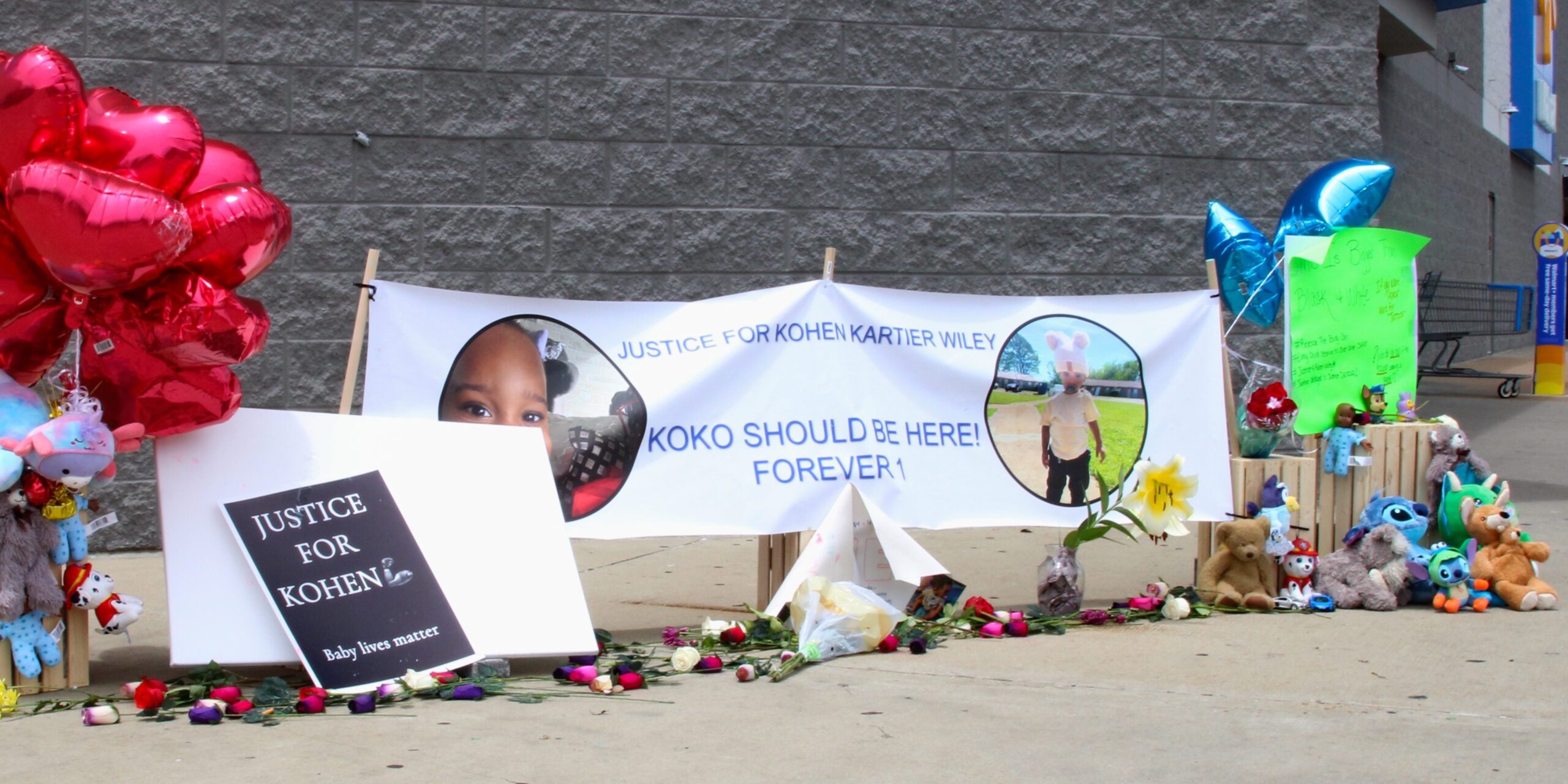
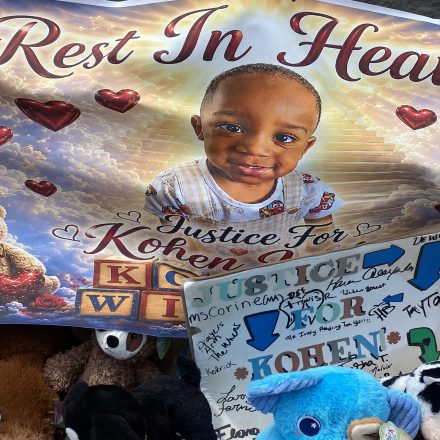
    After the Mississippi attorney general cleared a white cop for firing into a car and killing a Black toddler in a Walmart parking lot, video footage released by the Mississippi Department of Public Safety has revealed the fullest picture to date of what happened.

    The videos, provided to The Intercept in response to a public records request, come on the heels of leaked footage that exposed how a needlessly aggressive and reckless police confrontation of two suspected shoplifters led to 1-year-old Kohen Wiley’s violent death in his mother’s arms.

    While the newly released videos include redacted versions of the previously leaked footage — including body camera footage for some of the officers, as well as Walmart surveillance video — the new footage reveals for the first time the body camera video belonging to the Senatobia police officer who fired the shots that killed Kohen Wiley: Sgt. Hunter Foster.

    While the state concluded that the shooting was “justified” based on a probe by the Mississippi Bureau of Investigation, the videos show how police escalated a non-life-threatening situation — one that could have ended with a mere shoplifting charge — by pursuing Kohen’s mother, Vel’lesiya Wiley, and the driver, Latoya Ferrell, after they ran from the store and tried to drive away.

    Foster’s body camera footage makes clear that he positioned himself in front of the vehicle, aimed his gun at the car, and fired the fatal shot into the passenger side window after the car was moving past him and posed no threat.

    This is consistent with the conclusions of Dr. Roger Mitchell, a forensic pathologist hired by Kohen Wiley’s family, who determined in June that the fatal bullet was most likely fired into the side window, entering his small body on his right side and exiting his left.

    The release also includes a 10-page, heavily redacted investigative report by the Mississippi Bureau of Investigation, which the state attorney general relied upon in concluding that the shooting was justified.

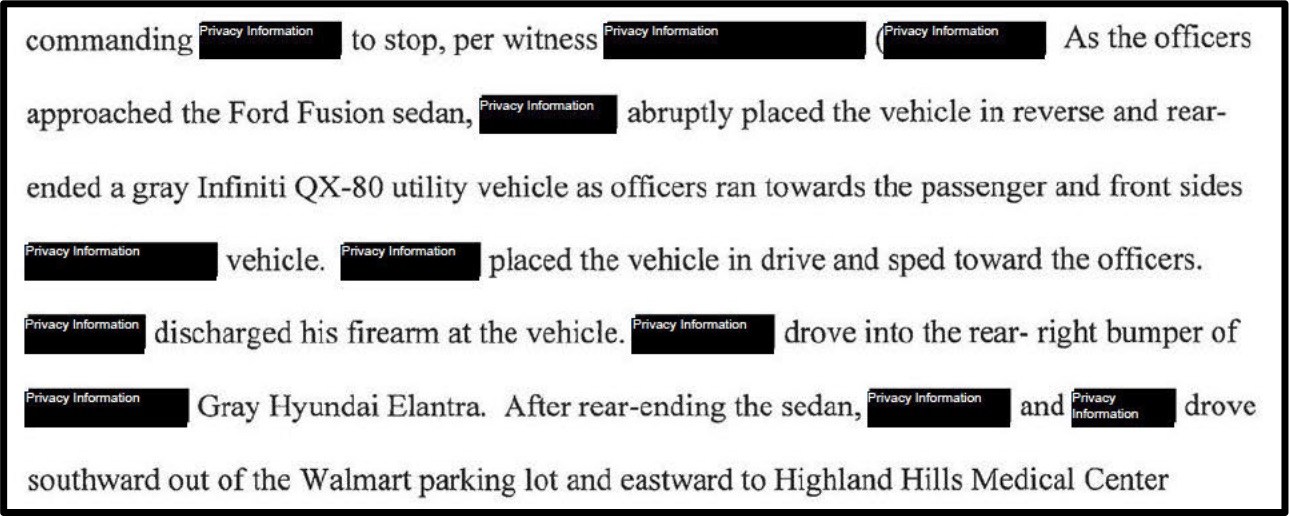
    The report’s narrative is misleading: Its only description of the shooting is that one officer “discharged his firearm” after the car “sped toward the officers.” The report does not discuss the fact that the firing officer was beside the car when he first fired, which is clear in Foster’s body camera footage. The report also redacts Kohen Wiley’s cause of death.

    An excerpt of the report on the police shooting of Kohen Wiley from the Mississippi Bureau of Investigation released on Oct. 22, 2026, through a public records request. Screenshot: The Intercept

    Foster resigned from the Senatobia police department on Wednesday. Afterward, Foster’s lawyer told CNN, “The driver of the vehicle was attempting to kill those 5 officers, and Hunter Foster had no choice but to discharge his weapon.” (Neither Foster nor his lawyer responded to The Intercept’s requests for comment.)


    Related

    Kohen Wiley’s Family Says Investigators Didn’t Contact Them Before Concluding Cops Did No Wrong


    Residents of Senatobia had called for months for the body camera footage and Walmart surveillance videos to be released. After the state attorney general announced that the police had been cleared, a spokesperson for the Mississippi Department of Public Safety, which houses the state’s Bureau of Investigations, told The Intercept that the videos would be released after the family had a chance to watch them.

    Instead, as with the attorney general’s announcement, the family first saw the leaked videos on social media. By the time Kohen Wiley’s parents and grandparents met with state officials to view the videos on Thursday morning, most of the footage had been circulated online. At a press conference on Thursday afternoon, Kohen’s maternal grandmother, Veronica Roberson, called it “a slap in the face.”

    Roberson said she’d been haunted by the word “justified” all week, slamming the idea that Foster fired the lethal shots because he feared for his life.

    “You shot my grandbaby from the side of the car,” she said. “How are you in danger?”

    “Get the Car!”

    The incident began with what appeared to be a routine occurrence in retail outlets all over the country: a shoplifting allegation.

    The earliest footage is from a Walmart security camera. An apparent Walmart employee dressed in a black hoodie is stationed by the store entrance when Wiley and Ferrell approach, carrying a child and a box of diapers. They pause at the door and appear to have a brief exchange with the Walmart employee before breaking into a run toward the parking lot.

    In body camera footage, which begins moments later, the staffer in the hoodie appears in the doorway of a small security room, where other Walmart employees, three Senatobia police officers, and two Tate County sheriff’s deputies are gathered around a pair of computer monitors. According to the MBI report, the officers had been called to the store in response to a complaint that a man was sexually harassing customers.

    The employee in the hoodie tells the cops and Walmart staffers that two people are running and gestures toward the store entrance.

    Moments later, the five officers dash from the room and out into the parking lot, running toward a gray sedan. A sheriff’s deputy reaches the driver’s side door and puts his hand on the hood of the car while someone yells “stop.” The car backs up and starts to turn, but hits a parked SUV. Someone yells, “Stop the car!”

    As the officers continue to run toward the car, it begins to move forward. At one point, two officers are directly in front of the vehicle, including Foster, the police sergeant identified as the shooter, who aims his gun at the front windshield.

    The car starts to turn left, away from the three officers on the vehicle’s right side, and either narrowly misses or grazes Foster, who stumbles to the passenger side and aims his gun at the window. He then appears to fire three shots in rapid succession.

    As the car pulls away, the officers continue their pursuit.

    “Get the car! Get the car! Get the car!” one of them yells.

    The gray sedan pauses briefly before taking off again.

    The records released by state officials do not include any footage of what happened after the officers return to their vehicles. But the leaked footage, which was compiled into a nearly 7-minute long video, shows Foster pacing next to a police vehicle outside the nearby Highland Hills Medical Center an hour and 20 minutes after the shooting.

    “I didn’t even see a fucking baby in her lap,” Foster says.

    His colleague responds that nobody else did either: “All I saw was two females in the car.”

    Reckless and Aggressive

    As the leaked video began to circulate on social media on Tuesday, much of the attention focused on the moment the car moved toward Foster.

    The Senatobia Police Department claimed from the start that the car drove toward officers and nearly hit one, suggesting the shots were fired in self-defense. Darkhorse Press, the independent Mississippi outlet that first published the leaked footage, even stated in a headline that the car “actually hit at least two officers.”

    Among those who have repeated a version of this story is Republican Gov. Tate Reeves, who said the driver tried to “run over the policeman,” despite admitting that he had not actually watched the footage.


    Related

    In the Aftermath of a Police Killing, the Justifications Begin Immediately


    What the videos show is that the police officers themselves needlessly escalated a shoplifting incident into the scenario that they claim put them at risk. Almost immediately after being informed that two people were “running,” the five armed officers sprinted out to the parking lot, surrounded the car, and, at various points in the confrontation, drew their guns. They also positioned themselves in a way that cut off any escape route for the driver.

    These are reckless, aggressive tactics in response to a minor shoplifting charge. They also violate best practices in policing.

    Most departments today prohibit officers from standing in front of the possible escape route of a car when someone inside is suspected of only minor offenses. Many also require officers to get out of the way of a vehicle if it drives toward them. While most departments authorize a police officer to use deadly force if they “reasonably” believe it’s necessary to protect their or others’ lives, this generally does not excuse using lethal force if the “reasonable” fear arose from a cop’s own violation of department policy.

    The police officers themselves needlessly escalated a shoplifting incident into the scenario that they claim put them at risk.

    Policies and best practices, however, don’t establish the bounds of legal liability; they are related but separate. Under the landmark Supreme Court case Tennessee v. Garner, a police officer can use deadly force if he “has a good-faith belief that the suspect poses a significant threat of death or serious physical injury to the officer or others.” The law is less clear about criminal liability when an officer’s own illegal or ill-advised actions caused the circumstances that led him to fear for his safety.

    Other examples of self-defense law hold people criminally liable if their own actions put them in harm’s way. In general, those cases indicate that a person can’t argue self-defense after killing someone if they instigated the altercation that led to the killing — even if it was reasonable to deploy lethal force when they did.


    Related

    Cops Are Already Unleashed. Trump Is Telling Them to Run Wild.


    By that standard, if an officer puts themselves in the path of a moving vehicle, they shouldn’t be able to justify lethal force by claiming to fear for their life because the vehicle was about to hit them. The law, however, isn’t crystal clear on this, and there’s at least some indication that the current Supreme Court may adopt a more lenient standard for police officers.

    Moving Vehicle

    Most police departments prohibit officers from shooting into moving vehicles unless someone inside poses a direct threat to the safety of others unrelated to use of the vehicle itself — for instance, if the person is armed and shooting at people. The reason is simple: Killing the driver of a moving car does not stop the car and can therefore exacerbate threats to public safety.

    Like many other departments, the Senatobia police department’s policy contains vague language warning officers that firing into moving vehicles is dangerous to bystanders and unlikely to stop a car; it reads more like guidance than prohibition. One portion of the policy, however, is much clearer: Officers “will not” discharge firearms into a fleeing vehicle — with “will not” underlined for emphasis.

    It seems clear from the leaked footage that Ferrell, the driver, maneuvered the car in what appeared to be an attempt to flee rather than to kill or injure officers. The video shows her at first trying to reverse away from police. After striking the SUV, however, she then appears to try to drive around and then between the officers. She then strikes another car while trying to drive away.

    The videos depict a driver showing far more awareness for the officers’ safety from behind the wheel than Foster showed for the occupants of the car — or the surrounding bystanders.

    Foster’s actions aren’t consistent with any reasonable concept of self-defense. Footage shows that he fired at least three shots into the passenger side of the car. This was already apparent in the leaked body camera footage. It’s even clearer in the newly released video from Foster’s camera. By the time he fires the first of the three shots, he is clearly beside — not in front of — the car. By the time he fires the last shot, the car has passed him.

    Even if Foster wanted to claim that he fired to disable the driver — and, again, his own department firmly prohibits shooting at a fleeing car — he fired through the passenger side window. He did so despite being told that there were two people inside, which means that whatever the driver was doing, he was also putting the other person at risk. 


    Related

    Trust What You Can See With Your Own Eyes


    Ultimately, the videos depict a driver showing far more awareness for the officers’ safety from behind the wheel than Foster showed for the occupants of the car — or the surrounding bystanders.

    Police policies should reflect how people behave in the real world, and people accused of stealing tend to flee. For armed officers to quickly escalate a shoplifting allegation puts everyone nearby at risk. Amid the frenzied response from the cops, Ferrell struck two other cars while attempting to escape. Anyone in or near those cars could have been injured or killed. Foster also fired his gun in a crowded parking lot. That, too, could have resulted in additional death or injury.

    The police had other options. They could easily have written down the car’s license plate or obtained the plate number from the numerous surveillance tools at their disposal: their body camera footage, Walmart security footage, or one of the many Flock cameras nearby.

    If they had to arrest the women, they could have done so later, at home and under less duress. They may not have caught Wiley or Ferrell red-handed with the alleged stolen goods, theoretically making a shoplifting prosecution more difficult. Creating an obstacle to prosecuting a shoplifting case, however, should be an easy tradeoff for not putting lives at risk.

    Walmart’s Role

    Finally, the leaked video footage raises important questions about Walmart’s role in Kohen Wiley’s death. The company has yet to publicly comment about the incident — and has not responded to repeated inquiries from The Intercept.

    When the Walmart employee in the hoodie entered the room where officers were viewing security monitors, he told them that two people were fleeing the store. He did not say that one of them had a baby in her arms, even though surveillance footage showed Wiley carrying Kohen as she passed him. This would prove consequential, as Foster said in video footage that he had no idea there was a baby in the car.

    Does Walmart policy require staff to tell police when a suspected shoplifter is accompanied by children? And how often does Walmart call on police for such minor crimes?


    Related

    Congress Might Give ICE the Power to Go After Shoplifters


    This isn’t the first time aggressive policing of shoplifting at a Walmart has resulted in the death of an unarmed person. Earlier this year, deputies shot suspected shoplifters in two separate incidents at Walmarts in Florida. When police tackled a fleeing shoplifter in Anchorage, Alaska, recently, he pulled a gun and shot two officers before they returned fire, killing him.

    Over the last 10 years, police have also shot suspected shoplifters at Walmarts in Miami; Decatur and San Antonio, Texas; Tempe, Arizona; Colorado Springs, Colorado; Chester, South Carolina; and Lake Forest, California. Most of the suspects were armed, but gunfire erupted only after police confronted them for shoplifting.

    Even the best policing policies are useless if they aren’t enforced when officers violate them.

    Walmart seems to have wavered over the years between aggressive crackdowns on suspected shoplifters and more lenient policies that factor in whether the suspect has been accused before, the necessity of the items they’re accused of stealing, and the value of the stolen goods.

    Like many national retailers, the company’s policy when it comes to its own employees is to avoid confrontations with suspected shoplifters. A previous lawsuit revealed that the company’s stated policy as of 2010 was “PUT PEOPLE FIRST” (all caps in original) and prioritized “the physical well-being of suspects, customers and Walmart associates.”

    That policy means little if the store simply outsources enforcement to police who take a far more aggressive approach. Walmart itself has also been criticized by police groups, who claim that cost-saving reductions in staff have made the store a more attractive target for shoplifting, which then leads to more calls to police.

    And in Senatobia, the last high-profile incident of police violence before Kohen Wiley was killed took place in 2025 — at the same Walmart parking lot.

    Even the best policing policies are useless if they aren’t enforced. And officers are rarely prosecuted, period. Foster’s resignation is at least some form of accountability, but the insistence from state officials that police did nothing wrong means there will be little to stop similar killings from happening again.

    This week, residents of Senatobia returned to the Walmart for a vigil in honor of Kohen Wiley, in the same place where a makeshift shrine once stood. A community gathering has also been scheduled next weekend to mark what would have been his second birthday.

    At the press conference Thursday, family and activists vowed to keep fighting for justice. As with so much police violence, however, the most pressing question isn’t whether Foster himself is punished. It’s whether we’re willing to tolerate more deaths like that of Kohen Wiley — whether Senatobia, Walmart, and the state of Mississippi will do anything to make clear that a 1-year-old’s life is more important than a pack of diapers.

    Source: The Intercept · 2026-10-23

    Documents