Tag: Features

  • Defanging Laws and Bringing Home Billions: How Trump Has Rewritten the Corruption Rulebook At Home and Abroad

    Defanging Laws and Bringing Home Billions: How Trump Has Rewritten the Corruption Rulebook At Home and Abroad

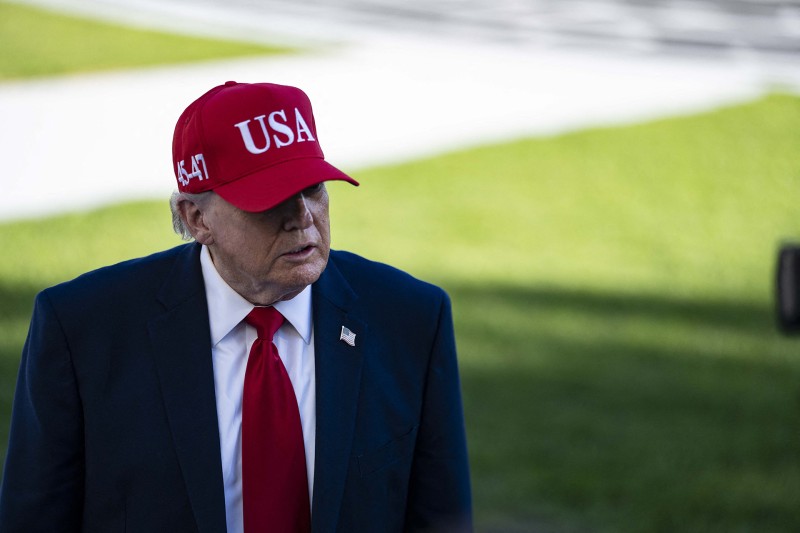
    During his first term in office, U.S. President Donald J. Trump drew criticism for profiting from events held at Trump-branded golf courses and housing foreign delegations at his pricey Washington hotel. 

    But upon his return, he has blown past all precedents on personal enrichment while also overseeing the systematic unraveling of American anti-corruption laws, institutions, and norms. 

    While many of these moves have been enforced by the U.S. government’s executive branch, the Republican-led Congress has done little to stop the slide — and, in some cases, has even encouraged it.

    So when U.S. voters head to the polls on November 3 for midterm elections, it is not just control of the House of Representatives and the Senate that is at stake, but the future of efforts to contain corruption at home and abroad. 

    On the eve of the election, OCCRP spoke to experts to take stock of the state of U.S. corruption — and the fight against it —  today, whether Democrats have a plan to reverse course, and what the repercussions of Trump’s actions have been at home and abroad. 

    The White House did not respond to requests to comment in time for publication.

    How has the U.S. approach to fighting corruption at home changed under Trump?

    Since returning to the White House in January 2025, Trump has taken a wrecking ball to anti-corruption programs and policies that have long been a source of bipartisan consensus. 

    One of the president’s first moves involved the mass firing of 17 inspectors general — non-partisan officials whose job it is to investigate misconduct, waste, fraud, and abuse across different government agencies and report back to Congress. 

    At least 22 inspectors general were removed during Trump’s first 18 months, and as of a week before the midterm elections, 27 posts remained vacant.  

    The administration didn’t provide a reason for their firing or notify Congress at the time, which a federal judge later ruled was unlawful.

    The administration has also paused and weakened several key pieces of anti-corruption legislation, including a landmark 2021 law that sought to combat the flow of illicit finance through the U.S. by requiring companies to report their ultimate beneficial owners, known as UBOs.

    Known as the Corporate Transparency Act, the law was meant to prevent criminals and kleptocrats from secretly stashing their wealth behind anonymous shell companies. 

    But this past August, the Treasury Department issued a new rule that dropped the disclosure requirement for U.S. companies and individuals, calling it a “burdensome reporting requirement.”

    (This week, more than 20 U.S. states sued the administration over the rollback, arguing that laws passed by Congress can’t be undone by rulemaking.)

    Erica Hanichak, co-director of the FACT Coalition, which advocates for rules to combat financial crime, describes the curtailing of the law as one of the ways the U.S. has “undeniably stepped back its fight against dirty money” over the past two years.  

    The consequences are far-reaching — and run contrary to the goals of law enforcement and other national security officials, she said. 

    When UBO information is kept secret, it makes it “harder for law enforcement and intelligence officials to follow the proceeds of financial crime, thereby handing a major win to cartels, U.S. adversaries, corrupt politicians, and fraudsters.” 

    In one recent example, the U.S. watchdog on federal spending noted that the lack of such data is hampering the ability to detect fraud in government contracting, leaving “hundreds of billions of federal dollars” vulnerable to “beneficial ownership-related fraud risks.”

    Last year, the Justice Department prosecuted 11 people tied to a Russian transnational criminal organization that exploited the weak ownership reporting requirements to fraudulently bill the Medicare system, stealing almost $1 billion. 

    The Trump administration has also watered down the Foreign Corrupt Practices Act (FCPA), a 1977 law that makes it illegal for American businesses to bribe foreign officials, and which has also allowed the U.S. government to prosecute and fine foreign companies engaging in bribery if they list their stocks or debt instruments in U.S. financial markets. 

    Arguing that the restriction put U.S. companies at a competitive disadvantage, the administration initially paused enforcement of the law and then later published new guidelines that called for focusing on cases that undermine U.S. interests.

    According to Richard Nephew, a scholar at Columbia University’s School of International and Public Affairs, the real danger goes beyond what he notes has been a significant decrease in fines and convictions. 

    More worrying, he has written, is what “the overall picture signals about whether the United States takes bribery seriously, and how that signal changes the risk calculus for companies deciding whether to comply.”

    He pointed to Trump’s own embrace of controversial gifts while in office — the most notable of which has been a $400 million jet from Qatar set to serve as Air Force One.

    “When the President of the United States is accepting a gold bar as a gift, it is reasonable to ask whether similar gifts given to other foreign heads of state will be seen as grounds for investigations, much less prosecutions,” Nephew wrote in the law and policy journal Just Security. 

    What about U.S. anti-corruption efforts abroad? 

    Dating back to the 1960s, successive U.S. administrations have pioneered transparency, good governance, and programs to combat corruption around the world, even if their implementation was uneven and imperfect. But the Trump administration has actively retreated from efforts to curb graft abroad in ways both big and small. 

    For instance, it quickly dismantled the U.S. Agency for International Development (USAID), one of the main instruments for funding anti-corruption efforts overseas, and froze the disbursement of foreign funding.

    (OCCRP formerly received grants from USAID, and became a plaintiff in a lawsuit against the Trump administration for illegally terminating funding that had been allocated by Congress.)

    The State Department’s Office of the Coordinator on Global Anti-Corruption — a post created in 2021 to integrate anti-corruption efforts with Washington’s foreign policy goals — was also eliminated soon after Trump took office, as was the Task Force KleptoCapture, a unit created by the Justice Department in 2022 to go after sanctions evaders, especially Russian oligarchs. The Justice Department said the latter was part of a policy realignment to focus on fighting cartels. 

    The administration has also stepped away from smaller but symbolic efforts to stamp out corruption overseas, such as no longer including information about corruption in the State Department’s annual country reports on human rights. (The State Department did not respond to requests to comment). 

    And then there’s the controversial use of the Magnitsky Act, which was passed in 2012 to allow the U.S. government to sanction foreigners who engage in corruption or human rights abuses.

    The president shocked anti-corruption crusaders last year when he used the Magnitsky Act to sanction a Brazilian Supreme Court justice who oversaw the trial of  Brazil’s former president Jair Bolsonaro, a Trump ally later convicted of plotting a coup after losing the 2022 election.

    (The conviction prevented Bolsonaro from running for office, leading his son Flavio to take up the family mantle and narrowly lose a presidential runoff election this past Sunday. Facing a money laundering investigation in Brazil, Flavio fled the country for the U.S.)

    “Global Magnitsky was a huge win when it passed … and the human rights community and the anti-corruption community celebrated,” said Gary Kalman, director of Transparency International U.S. 

    “Never in our wildest imagination would we have dreamed that a president of the United States would use the Global Magnitsky Act to go after a judge in another country for enforcing anti-corruption laws.”

    What about Trump and his family? Have they engaged in corrupt behavior?

    U.S. presidents have historically stepped away from their personal business interests to avoid conflicts of interest, or even the perception of a conflict.

    Yet Trump’s latest annual financial disclosure — which runs 927 pages long and covers his first year back in office — shows a significant increase in his income while president. Last month, Forbes estimated he was $2.7 billion richer than when he won the 2024 election.

    The source of this wealth comes from cryptocurrency enterprises, Trump-owned resorts and real estate, his social media platform Truth Social, and a range of other business ventures, many of which are rife with potential conflicts of interest.

    “I don’t think that there’s any president who has so brazenly used their office to create a web of foreign entanglements that enriches himself, his family, and some of his closest advisors and their families,” said Matthew Dallek, a historian specializing on presidential politics at George Washington University.

    The examples to choose from are numerous. For instance, the collective Trump fortunes soared earlier this year when an investment firm reportedly connected to the United Arab Emirates’ ruling family bought nearly half of a Trump family-connected cryptocurrency company. 

    A company backed by Trump’s sons has also sought to sell drone interceptors to Gulf countries while they were under attack by Iran following a war started by their father. 

    Trump and other officials’ frequent visits to the president’s properties, meanwhile, generate advertising and revenue for those businesses — and open up avenues through which others can use their wallets to try to curry favor with the president.  

    Taken together, experts have described it as an unprecedented level of political profiteering that raises the risk of the president putting his business interests ahead of those of the country.

    It’s also a problem that won’t be easy to fix. 

    Trump’s second term has exposed just how much the U.S. presidential system depends on “an adherence to norms and a set of expectations and values…rather than strict rules and laws preventing a president from corrupt actions,” Dallek said. 

    In previous comments to the press, a White House spokesperson has stated that “neither the president nor his family has ever engaged — or will ever engage — in conflicts of interest.” When asked about his lucrative year following the release of his financial disclosures this June, Trump attributed the profits to the stock market “going up” and said he never spoke to the people who manage his money.

    “We are experiencing what happens when you have an individual who dismisses ethical norms,” said Kalman of Transparency International. “People are now trying to figure out how you close these kinds of gaps in our ethics rules at the highest levels of our government.”

    One avenue, he said, is to secure the roles of state actors that could provide a counterweight to the Justice Department, whose independence has been called into question as it has pursued investigations against the president’s opponents and dropped cases involving allies. 

    “I think there’s a lot of district attorneys and law enforcement officials that are concerned about what they’re seeing as the weaponization of the Justice Department,” said Kalman. “If the U.S. Justice Department gets taken over by the executive, you have what we have now, which is a lack of accountability or unwillingness to enforce any of the violations that we’ve seen happen.”

    The Justice Department did not respond to requests to comment.  

    Democrats are trying to take back Congress. What is their plan if they succeed? 

    Polls show voters cite corruption as a major concern, and Democrats have pledged to investigate corruption if they regain control of one or both chambers of Congress.

    Should they win back at least the House of Representatives, they would be in a position to legislate and hold oversight hearings. They’ve already signaled plans to spotlight the business entanglements of the Trump family and friends, and say they won’t be shy about using their power to subpoena witnesses.

    “We can bring in members of the Cabinet and ask them questions and perhaps see if there’s any way we can get rid of some of them,” Rep. Dina Titus, a Nevada Democrat on the House Foreign Affairs Committee, told OCCRP. Her panel will “look at some of this corruption that’s going on around the rest of the world involving the administration and some of their buddies and relatives,” she added. 

    Much of what Democrats will be able to do hinges on the size of their victory, and some of their plans have yet to be spelled out in detail. 

    “Democrats are running on corruption, but they’re not running on a specific platform of how they’re going to reform or fix the system or address many of Trump’s egregious acts,” said Dallek, the historian. 

    In a recent interview with the TV outlet MS Now, New York Democrat Hakeem Jeffries, the current House minority leader, outlined plans for the first 100 days of the next Congress that included empowering two committees to look into corruption.  

    He has said the Judiciary Committee and the House Oversight Committee would be tasked with accountability and looking into the Trump family business entanglements.

    “We’re going to follow the facts, apply the law, be guided by the Constitution and then let the chips fall where they may,” he said. 

    Congressional Republicans, for their part, have prominently used their oversight powers to investigate people named in or associated with the Epstein files, including Commerce Secretary Howard Lutnick. The committee has also investigated tax breaks given to politically opposed non-profit organizations, while their anti-corruption agenda has largely been focused on reversing the “Censorship Industrial Complex,” a term used to describe those they say are suppressing right-wing viewpoints online under the pretense of limiting disinformation. 

    Hanichak, from the FACT Coalition, called on the next Congress — regardless of who holds the reins after Tuesday — to “strengthen guardrails to prevent public officials from profiting from power.”

    “We are what we tolerate: in most cases, the recent reticence of both Republicans and Democrats to denounce corruption by colleagues in their own parties has bred public distrust about the sincerity of reform,” she said. 

    “We need more transparency and accountability — in elections, in our financial system, in government contracts and services — to restore faith that democracy can deliver for ordinary people.”

    Source: OCCRP · 2026-10-30
  • Five Questions About Trump’s ‘America First’ Approach to Fighting Corruption

    Five Questions About Trump’s ‘America First’ Approach to Fighting Corruption

    Shortly after taking office in early 2025, the administration of U.S. President Donald Trump paused the enforcement of the Foreign Corrupt Practices Act (FCPA), the nearly 50-year-old law that prohibits American citizens or companies from bribing foreign officials for business.

    When the FCPA was resumed six months later, the U.S. Department of Justice was ordered to narrow its focus to limit “undue burdens” on American companies operating outside the country. That action was in line with the Trump administration’s “America First” unilateral approach to foreign policy, which has seen the U.S. withdraw from dozens of international organizations on the grounds that they are inefficient and not in line with the country’s priorities. 

    Lorenzo Crippa, a lecturer at the University of Strathclyde who quantitatively studies how recorded instances of corruption affect financial flows, discusses the repercussions of these changes and worrying trends that have emerged under the new U.S. approach to global anti-corruption enforcement.

    The U.S. has changed the way it applies the Foreign Corrupt Practices Act, and last month it was announced it will officially withdraw from GRECO, the Council of Europe’s anti-corruption body. U.S. officials reportedly said the government would instead use unilateral tools like sanctions and visa restrictions to fight corruption, which they described as more effective. Based on your research, do you think the rejection of collaborative global standards in favor of mechanisms a country controls itself can be more effective?

    I would say hardly so. In the anti-corruption space, likely the opposite is true. It’s just enough to look at history: the U.S. adopted the FCPA (Foreign Corrupt Practices Act) in 1977, and for 20 years, the law was basically silent until a global regime on anti-corruption was passed at the OECD (Organisation for Economic Co-operation and Development) with the OECD Anti-Bribery Convention. 

    The law was on the books, but it was effectively not enforced, because the fear was that enforcing the law would disadvantage American companies at a time when German competitors and French competitors could even deduct bribes from tax statements.

    That all changed with the OECD Anti-Bribery Convention. At the end of the ‘90s, that’s the moment we see enforcement of the FCPA, effectively for the first time.

    The same could be said when we think of other areas of governance, more generally. There’s research in political science and international relations that clearly shows that coordination among countries is the most effective way to address global issues, rather than unilateral actions. So, I’m at the very least skeptical that that could be the case.

    In unrelated research of mine with some co-authors, we looked at the effect of American sanctions on financial markets, and we find that they can actually backfire for American firms that are connected to the sanctioned entities. So there’s even evidence that a multilateral solution could probably be more desirable.

    You co-authored an article in Foreign Affairs this year on how Washington may now be weaponizing anti-corruption law. Many critics of the U.S. say that its laws were hardly neutral before, and often applied for geopolitical or economic leverage, or even amounted to a form of imperialism. How would you respond to that line of argument?

    Certainly it’s true that the FCPA had been enforced in the past also for geopolitical reasons. I’m sympathetic to these claims. What has changed is that the approach of the Trump administration seems to be one where American firms get a free pass, and non-American firms would be subject to harsher enforcement. Or at least the expectation seems to be this one. And if that’s the case, this is a significant change from the past.

    If we compare it from the past situation, [despite] the fact that non-U.S. firms might have been significantly charged under the FCPA, American firms were still subject to this policy to a full extent. Whereas here, what we’re observing is the possibility of a double standard. That could genuinely be concerning, because that would be outright weaponization.

    Like I said, I’m sympathetic with these critics of the FCPA but it did manage to get some massive cases of corruption brought to justice — even of American firms. I think the largest fine in FCPA history is Goldman Sachs. It was certainly far from ideal, but probably closest to the best that was realistically adoptable as an anti-corruption policy. So its reshaping under the Trump administration is, to me, concerning.

    What are your specific concerns? What could be the broader effects on corruption around the globe if they don’t target U.S. firms and selectively target non-U.S. firms?

    When Trump initially halted enforcement of the FCPA in 2025, I was initially puzzled. The FCPA has been used as a tool of foreign policy as well, so getting rid of this or pausing it altogether, was puzzling to me.

    But when the period of pause was over and enforcement resumed, under new revised guidelines, what seems to be the case is that it’s going to be enforced primarily with the purpose of defending American foreign interests. At the moment we just have a handful of new cases after this change in enforcement, which makes it a little bit difficult as of now to understand if that’s really the direction that this is going.

    What my co-authors and I found was that at the very least markets seem to have priced in that expectation. We found that the moment the FCPA was suspended, firms that had been targets of FCPA actions in the past significantly experienced a boost in their stock price, which reflects the idea that probably investors expected a lax enforcement environment coming, for the rest of the Trump administration at least. That essentially means putting a bonus on the possibility of corrupt activity. It’s a very robust change that we observe from the moment enforcement was made laxer.

    In the past decades, we got used to the idea that corruption was bad for business, that investors would prefer a cleaner firm. These results, at least in this historical moment, seem to indicate the opposite: That these market actors would be willing to bet on more corruption. This is somewhat of a step change when it comes to corporate governance and good governance of business. Then again, this gain in stock price was concentrated on American firms. Non-American firms saw no improvement to their valuation, which seems to reflect this idea that there’s going to be weaponization going forward.

    With those same co-authors, you published another paper this year studying the effects of the OECD Anti-Bribery Convention, finding that the drop in bribery by companies who comply with the convention was basically offset by an increase in bribery from non-signatory competitors. What can we conclude from this? Is it casting doubt on whether the OECD convention or any “supply side” treaty targeting bribers can work?

    That’s a tricky question, because that paper clearly shows two faces of the same coin. On the one hand, it shows that these treaties are working because they generate strong incentives for those outside the treaty to make the most out of the advantage that they can get. That shows firms covered by the treaty that cannot bribe with impunity. The other face of the coin, that this is offset by corruption from firms outside the treaty, is really concerning. It means that something should be done.

    We had a meeting with the OECD working group on bribery about this when we were disseminating the results of our findings. I think they’re very aware of this problem. My main takeaway from this is that the solution is [an] expansion of these treaties. As long as there are double standards, as long as there are firms outside of the treaty who can bribe with impunity, the risk of this leakage (that’s what we call it where corruption sort of leaks to the group of firms outside of the treaty) becomes larger.

    Historically, the way this has been solved was by trying to expand participation to the treaty. 
In the ‘90s, that meant having France, Germany, and Japan in the treaty. Right now, probably that means trying to expand to China, Singapore, Taiwan — jurisdictions with firms that are very heavily involved in business, but who can bribe with impunity. I understand that calling for more multilateralism these days seems idealistic, but really that’s the only way that we can ensure that these supply side treaties can work in a sense. 

    My research doesn’t do much on this, but existing research of others does show that in the past a strategy has been to use domestic anti-corruption needs of countries. When the OECD Anti-Bribery Convention was signed, the U.S., who was heavily pushing for this treaty, managed to sort of exploit the fact that European countries were facing their own domestic corruption scandals. In Italy, for example, the Mani pulite [“clean hands”] scandal was a big thing in the ‘90s, and that was a significant reason why the U.S. managed to put pressure on this treaty to exist. So if treaty members were able to exploit the fact that, domestically in other parts of the world, there might be a need for more anti-corruption reforms, this could be one lever to try and extend participation. 

    I wouldn’t be certain that these [multilateral treaties] are the ideal solutions, but of the ones that have been tried, they seem to have been quite effective. At least in the shape that they used to have, with a multilateral agreement, and within that agreement, the United States playing a significant role in enforcement, for the good and bad that that was. This role as a global sheriff, in a sense, has managed to reduce corruption and bring large cases of bribery to justice. Now, whether that is the ideal solution, I’m not sure. There certainly is evidence that this was working, and jeopardizing that with the recent moves of the Trump administration makes me somewhat worried.

    Could the U.S. look to resume its role as “global sheriff” if U.S. President Donald Trump’s Republican Party suffers the kind of losses currently being predicted in polling for next week’s U.S. midterm elections?

    There’s a group of senators led by Elizabeth Warren who are trying to propose a bill called the FCPA Reinforcement Act. The idea is to extend the statute of limitations of the FCPA so that it could effectively be protected by future political decisions to halt enforcement again. This specific bill is very unlikely to pass — it’s mostly like a signalling device. 


    But under a flip [of congressional power in next week’s elections]  … that’s a hypothetical. [but] Mmy expectation would be that it would counteract the negative effect that we saw on stock market movements at least. By protecting the FCPA from political swings it should reinforce the idea that enforcement is going to happen, and that good anti-corruption governance is the expectation, and that companies and investors shouldn’t deviate from that. So at the very least, I would expect it should reassure markets of that and prevent investors from betting on corruption. I’m not sure this would do much to change this idea of enforcing the FCPA more strongly on non-American companies. I’m not sure that would be something that the bill itself could address. But at the very least, it should remove part of the problem. 

    Source: OCCRP · 2026-10-30

  • Manifestos, Fear, and ‘Loser Thinking’: Inside Proton’s AI Reckoning

    Manifestos, Fear, and ‘Loser Thinking’: Inside Proton’s AI Reckoning


    Manifestos, Fear, and ‘Loser Thinking’: Inside Proton’s AI Reckoning

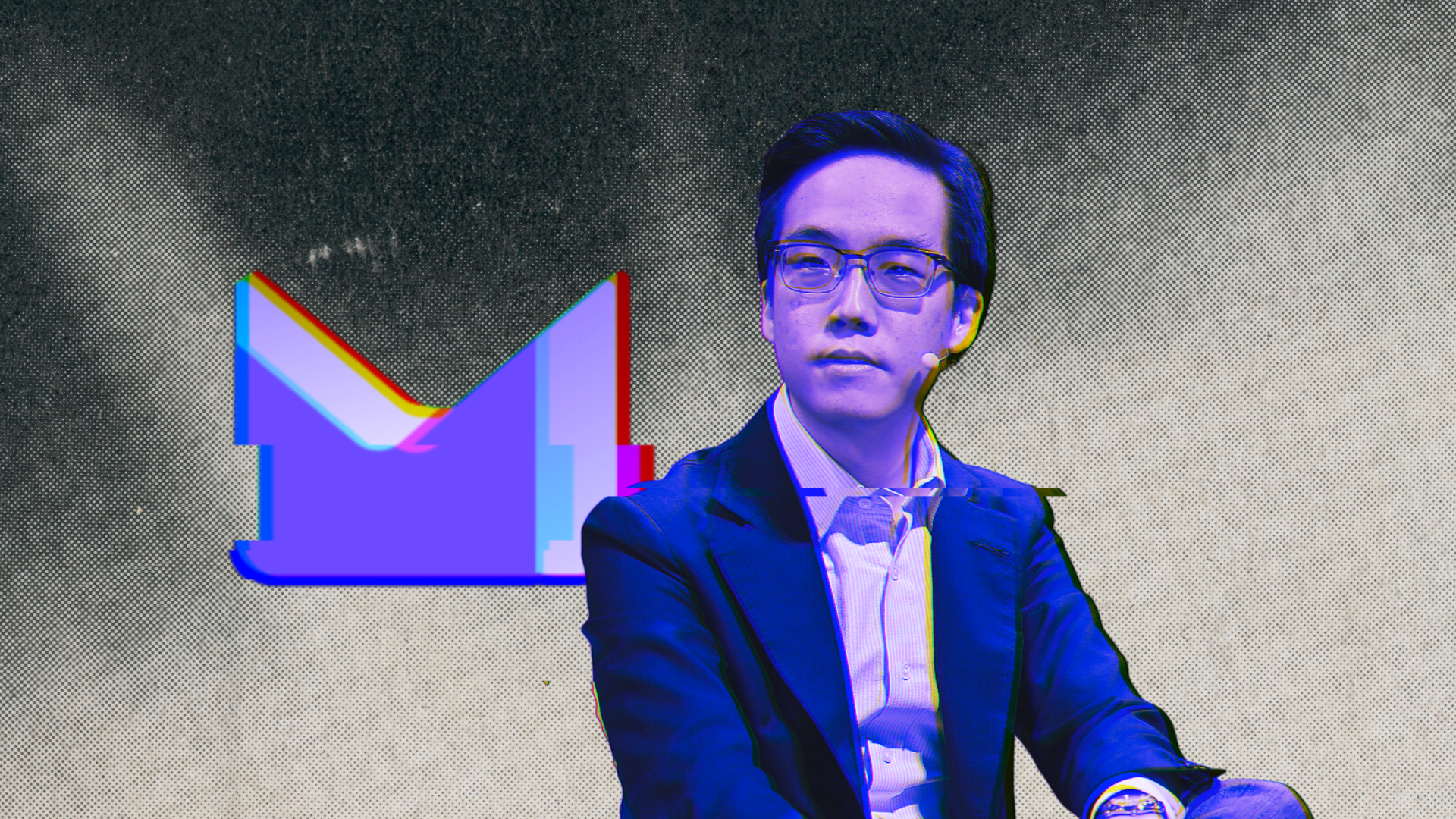
    Andy Yen, the CEO of Proton, had a message for an employee in the company’s security Slack channel who urged the company to at least take a few days to pentest newly written code before pushing it live. “That’s bullshit and loser thinking. Of course it’s possible to be fast and secure,” Yen wrote in the channel at the end of August. “Stop thinking always of how to be slower, and focus more on how to be faster.”

    In a follow-up message, Yen reiterated his point: “only losers think like that.” His ultimate message for the team was to “stop lovingly handcrafting all our code and use AI more.”

    That exchange was just one of many that showed how Yen and other company executives are aggressively pushing Proton towards AI. Proton is a Swiss company that famously makes the encrypted email service Proton Mail and a suite of privacy and security-focused products, including an encrypted drive service, an authenticator app, a password manager, and more.

    In the last few months, Yen set up an email address for employees to contact if they come across anything blocking adoption of AI at Proton, so leadership can “ruthlessly smash everything that stands in the way of AI velocity;” Proton installed software on workers’ computers that track how much AI code the company is generating; and Yen said this is the last year that Proton will hire engineers at all, and instead only hire people to build things with AI.

    That AI push came to head this week when 404 Media reported Proton said it would re-interview staff about their use of AI, with the clear implication that those interviews, and employees’ willingness to embrace AI, could decide whether a worker is fired or not.

    404 Media spoke to eight current and one former Proton employees and reviewed Slack chats, meeting recordings, and an AI manifesto written by the company’s CTO. Our reporting reveals a culture of fear inside Proton, where many employees are hesitant to even mildly critique Yen’s views or discuss engineering problems. Workers describe an environment where employees have genuine concerns about security or being asked to develop security products with AI, but feel unable to voice them, lest Yen berates them in front of everyone or threatens their employment at the company.

    “The CEO is in full AI psychosis and has been for a while now,” one of the sources told 404 Media.

    Our reporting also paints a picture of Proton that is likely very different to the public’s perception of a company with a goal of carefully protecting privacy: one that in reality is barreling ahead with AI as quickly as possible so it can achieve the explicit goal of more annual revenue.

    “Due to insufficient velocity,” Proton is not on track to achieve its annual recurring revenue target by the end of the year, one internal document obtained by 404 Media reads. Proton’s year-over-year growth is also “far away from what the market today considers to be good,” and, “By all metrics that matter, we’re an underperforming company.”

    In response to detailed questions from 404 Media, a Proton spokesperson did not dispute any of our reporting or characterization of what’s happening inside of the company. 

    “It’s clear that some people at Proton are unhappy with our direction, or misunderstand it, and many people are anxious,” they said. “In our determination to move fast, we have sometimes been too blunt or too slow in explaining ourselves to our people. We will work on that, as their questions are the ones we most need to answer.”

    💡
    Do you know anything else about Proton? I would love to hear from you. Using a non-work device, you can message me securely on Signal at joseph.404 or send me an email at joseph@404media.co.

    Yen, a former CERN particle physicist, projects a measured approach in public, but internally he acts more like what one employee described as a “petulant child.” In May, Proton announced it was implementing post-quantum cryptography which should protect against future attacks from quantum computers. The work took years of effort, with one caveat that it would not work on older emails, only those written after the feature’s launch, at least for the moment. Yen was not happy that Proton was drawing attention to this limitation.

    Source: 404 Media · 2026-10-29

  • How IRL Story Lab is Reimagining What Journalism Can Do

    How IRL Story Lab is Reimagining What Journalism Can Do

    The team at the Investigative Reporting Lab (IRL) in North Macedonia carried a frustration familiar to many newsrooms: They would spend months, sometimes a year, unraveling a complex system of corruption and then ask readers to sit through thousands of words to understand it. The information mattered, but the format didn’t always do it justice. So they decided to try a new approach.

    “We started experimenting with documentary, video, and social storytelling, and we saw very clearly that when you change the way you tell a story, you also change who is willing to engage with it,” says IRL editor in chief Saska Cvetkovska.

    That experimentation has now taken IRL somewhere few investigative newsrooms have gone: narrative fiction. Through IRL Story Lab, a production company built inside the newsroom, the team is adapting reporting into film — starting with “The Bench,” a dark comedy inspired by characters in “Spooks and Spin,” a 2017 investigation by IRL and OCCRP into information warfare in the Balkans.

    “Fiction can show you what these damaging systems do to people. It can enter a family, a friendship, a marriage, and show how corruption or institutional failure changes the way people live with each other,” says Cvetkovska.

    The Power of Fiction

    “The Bench” didn’t begin as a plan to adapt an investigation. It began with a conversation with her staff, when Cvetkovska described a family she’d reported on years earlier: two brothers, once inseparable, who stopped speaking after ending up on opposite sides of a political divide.

    The team brought on Director Trifun Sitnikovski and Chief of Production Gorjan Atanasov — both already with IRL before joining the Story Lab — who immediately saw a film in the story. 

    “We didn’t need the film to reproduce every fact from the investigation. OCCRP and IRL had already done that journalism. The film had a different job,” Cvetkovska explains.

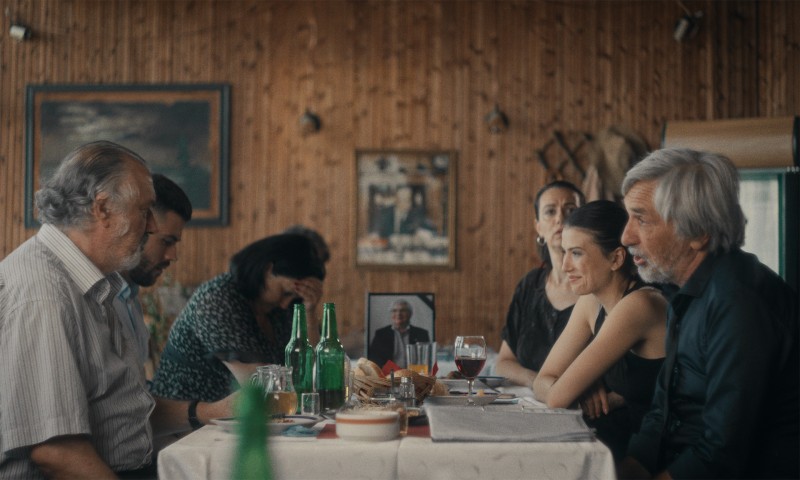
    What the team captured was a family divided by media polarization, forced together by a family event, where the tension finally breaks open. The dialogue and humor were written for the screen — compressed, exaggerated, sharpened into dark comedy.

    “Political polarization often is absurd when you see what it does to ordinary human relationships,” Cvetkovska notes. “Fiction gives you freedom, but the research underneath it still has to be rigorous. We are not inventing social problems for dramatic effect.”

    A New Source of Funding

    Story Lab isn’t just an artistic detour — it’s a response to a structural problem facing independent media everywhere. Investigative journalism is expensive to produce and hard to monetize; the public benefits from it, but rarely pays for it directly. That, Cvetkovska says, is exactly why nonprofit journalism exists. But over the years, IRL built out a visual-oriented team well beyond a traditional newsroom — producers, cinematographers, editors, and designers. Today, half of IRL’s staff of 13 works with video.

    “That is creative capacity with value outside traditional journalism,” she explains.

    Story Lab lets IRL accept commissioned productions and eventually its own intellectual property that can travel to festivals and streaming platforms. Any profit generated is reinvested into investigative journalism.

    This model became urgent this year when the freeze of U.S. media assistance cost IRL nearly one-third of its annual budget. The team is looking to Story Lab and other innovative approaches as a new way to tell stories while also filling the gap in funding.

    “If we can build a model in which public-interest storytelling generates income that protects the independence of the journalism behind it,” Cvetkovska explains, “then funding this kind of experimentation is an investment in its survival.”

    Reaching a New Audience

    IRL learned this lesson once before, with young audiences.

    “We were told that young people didn’t care about politics, corruption, or public institutions. We never believed that,” IRL’s Assistant Managing Editor Denica Chadikovska says. “They cared about what these things did to their lives; they simply weren’t going to consume them in the formats journalism had decided were important.”

    The newsroom began making documentaries and social videos, and young people ages 25-34 now make up a significant part of its audience.

    Story Lab is the next step. Viewers of “The Bench” don’t necessarily need to know that it came from an investigation. They can come for the dark comedy, or because they recognize their own family at that dinner table.

    “If someone watches a 20-minute film about two brothers destroying their relationship over politics who would never click on an investigation about information warfare in the Balkans, we have reached someone journalism did not,” Cvetkovska says.

    “The Bench” has only just begun screening at festivals, but it opened strong: an Audience Award for Best Film and a Special Jury Mention for Best National Short Fiction Film at the Drim Short Film Festival, an annual film event in North Macedonia that serves as a platform for emerging European filmmakers to showcase their work.

    “An audience choosing the film tells us something about whether the story connects beyond our own newsroom and media community,” Chadikovska says.

    The production mirrored priorities IRL has held for years. More than 60 film and media professionals worked on “The Bench,” many of them young creatives from North Macedonia, a small media market where talented people often feel their only path to a serious career is to leave the country. All of the producers were female, reflecting an organization founded and led by women. “Building local filmmaking capacity and creating public-interest cinema are part of the same idea,” Chadikovska explains.

    IRL Story Lab is already developing its next project: a feature film, also inspired by “Spooks and Spin.” It is being developed by Sitnikovski through the Mediterranean Film Institute’s Script 2 Film program, with Academy Award-nominated filmmaker Tamara Kotevska as producer. 

    “Culture shapes how societies understand themselves,” said Cvetkovska. “Journalism can expose corruption, propaganda, and institutional failure. Film can make people recognize what those forces have done to their families, their communities, and their sense of what is normal. We believe both are forms of public service.” 

    Source: OCCRP · 2026-10-29

  • ‘Is This Real?’: A Serbian Investigative Journalist Reflects on the Country’s Stunning Election

    ‘Is This Real?’: A Serbian Investigative Journalist Reflects on the Country’s Stunning Election

    Sunday’s election marked a turning point in Serbia, with the ruling SNS party of Aleksandar Vučić handed a resounding defeat by a student movement that capitalized on mounting public anger over years of corruption and criminality.

    Many of those abuses had been exposed by KRIK, an award-winning Serbian investigative outlet and OCCRP partner that has spent years covering the country’s criminals, its corrupt officials, and the connections between them. In return, its young journalists have withstood pressure most people can scarcely imagine: personal attacks by pro-government tabloids, an endless stream of lawsuits, and even death threats.

    Now, a new era is dawning. The seemingly unbreakable control exercised by Vučić — who served as information minister under dictator Slobodan Milošević — has been broken.

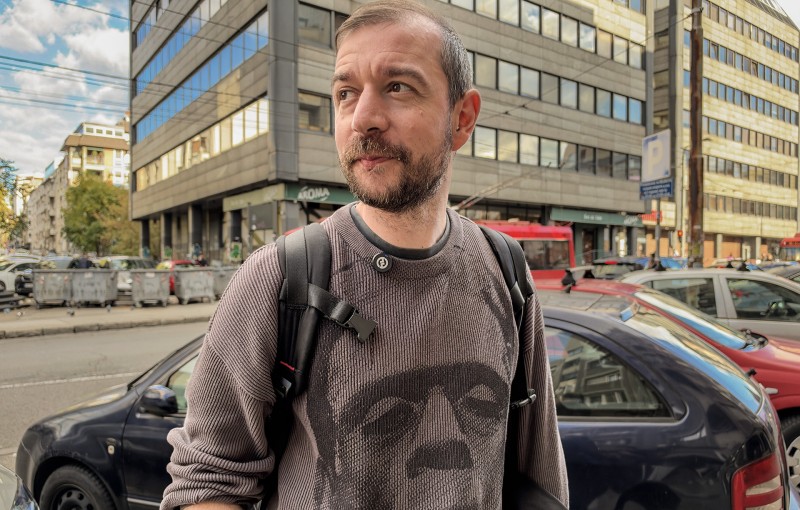
    In this interview, KRIK editor-in-chief Stevan Dojčinović reflects on what the last few days have meant for him, how the students did it, and what challenges lie ahead. As he spoke with OCCRP late at night, the sounds of celebration filtered in from the street.

    This interview has been edited for length and clarity.


    Stevan, what was it like on election day?

    First of all, I didn’t expect this. I’ve never experienced such energy on the street. It was so high energy, like everybody was happy. And you couldn’t find any Vučić supporters.

    Clearly, people were [openly] supporting the students, which was not the case before. Because, you know, Vučić was putting pressure on the media, and even on what people tweeted. So people were not really free to talk. But now, I went to my hometown, and there was all this energy in the street, and everything was bright.

    When I went to the voting site with my mother, I talked with the guys who were controlling the voting on the student side, and they showed me the numbers, and they were huge. I was there around noon, and an insane number of people had already turned out.

    In the end, almost 70 percent voted. There was never a case like this. Basically, Vučić can’t reach any new voters, so he was always fighting not to have a big turnout. So when it went up to 50 percent, you know, and then up to 70, it was done. It was completely clear.

    But I thought, and everybody was expecting, that he wouldn’t give up so easily. My idea was that he would do his best to rig the elections. Even with these big numbers, I thought he would just rig more and declare victory.

    And I thought, if this happened, it would be a nightmare. People would be on the street, and there would be violence, and somebody could die.

    When the electoral places were shut down, it was going in this direction. Because suddenly, Vučić started bringing a lot of armored riot police to the center of Belgrade. And, in parallel, which was a really bad signal, he started bringing these thugs, these criminals who protect him. They were coming in big numbers to meet in this park in front of the presidential building.

    And then it turned out that he lost by so much — like, half-a-million votes. And nobody can rig half-a-million. So, I believe what happened is that he figured out that nothing would work.

    When he started the press conference on election night, did you think he was about to say that he had really won?

    Yeah, I was expecting he would say he won, because of how the police and the hooligans [had been brought out]. But he immediately said, we lost. And when I heard this, I literally couldn’t believe it. Is this really happening? Is he serious?

    But it was real. And yet I didn’t even feel happy. I felt empty. I was like: Why do I not feel any euphoria?

    People started gathering in big numbers in the center of my hometown to celebrate. In every town, the whole center was full of people. I was going there to meet friends and celebrate. But I still had this kind of weird feeling. I really couldn’t enjoy it fully.

    I realized, I must have developed some PTSD. You know like when you’re kidnapped, and then you flee. And you can’t really celebrate and enjoy it. I was  like, okay, I need to process all of these 10 years of what was fucking going on and what he did to us.

    And, it was not only me. It’s interesting. Everyone who was around my age or older, it’s the same story. Especially for the people who fought against [Slobodan] Milošević in the 90s. They were like, I’m so empty. I feel like a victim who escaped, you know?

    So I thought, I need to process all of this shit. What happened during Vučić, what he did to us, and to journalists in general. It has been such a big trauma. I think he did it to the whole nation.

    Part of it is that he was always present. He was appearing on TV all the time. He was everywhere and putting pressure on everyone. Before the protests started [in 2024], that last year was really heavy. People were afraid to speak.

    But in the morning, I was finally okay. I woke up and I was happy.

    How’s the newsroom? Are your colleagues at KRIK relieved, now that the pressure on you guys will ease?

    All of us are happy. But we also feel like we’re in a parallel timeline. It’s like, is this real?

    We’re sitting in our office and talking freely. For 10 years, our rule was never to discuss any important stories in the office, because we understood that the secret service was spying on us all the time. We didn’t trust our office, it could have bugs. Usually we would go out to some place where we felt safe to discuss things.

    I never trusted my apartment in Belgrade. I was censoring what I could say in there. Because, I knew my apartment was definitely bugged. So you never really had a safe space where you could even talk.

    But, today, we can just sit, and we can really communicate in our office. It’s a completely different life than yesterday. And that was our first journalistic day of working in freedom.

    KRIK was founded in 2015. We were founded in Vučić’s time. And, every day we worked, it was in Vučić’s time. So now we’ll see what it’s like to work in freedom, which is something we never really had. So, it’s strange now, for everyone, this is new, new, new.

    If you had to boil down the reason for people’s dissatisfaction with Vučić, would you say corruption was the main thing?

    Yeah. He was connected to organized crime, but corruption was the first thing. You could feel the corruption, that’s the thing.

    Because people couldn’t get any jobs. Only members of his party could get jobs. People couldn’t start their own businesses. The financial inspectors would come and shut them down. But the party people can open businesses. So, people could really feel the corruption.

    Unfortunately, too, a lot of people died. When this rail station [in the city of Novi Sad] collapsed, people died.

    People didn’t just feel that they were losing money, that they weren’t living a good life. They saw people die, and that everybody who lives in Serbia could have been standing in that spot. In the end, they thought, we’re going to die because these people are stealing money.

    What did the student movement do? Is it correct to call them a student movement? Because, obviously, it’s not just students.

    Yeah, it’s not just students. Besides them, professors deserve credit, scientists, journalists, many others. But, still, the students were at the center of it. They’re the ones who started it.

    And, they’re the ones who now have a chance to make a political change. So, I mean, I still call it the students.

    Why do you think they succeeded? What happened this time that was different?

    I mean, there was no student movement before. When they started two years ago, they succeeded. The ones who didn’t succeed were the [traditional] opposition [parties in Serbia].

    I think this is a really good model for the world. It’s cool that, after Hungary, we have this in Serbia, a second big victory against the populist powers. I think that other populists are scared. I saw the tweets of AfD, the very extreme right-wing German party. They were tweeting, ‘now we lost Vučić. We need to rethink how we operate.’ This was their reaction to what happened in Serbia.

    So, I think this is a really good model. What you need is to have completely clean, uncompromised people. And part of [the problem in Serbia was] that the whole opposition were ‘old people’ — not by age, but people who already had some level of power. And they lost and then they tried to compete against Vučić.

    There were also a lot of connections between them. People felt that it was the same group of people. People understood that it’s not just about changing Vučić, you need to change the whole system. And they never felt the opposition were the ones [to do it].

    The opposition was really lousy. They never really went outside of Belgrade. They didn’t visit many Serbian villages — somewhere where you need to go to win. They were very elitist, which people didn’t like. And some people from the opposition were already in power, and had some scandals. So over the years, it looked like the opposition didn’t really have the power to take down Vučić.

    And then what happened is that the students were young, without any experience in politics, and completely clean. They didn’t have any history, any scandals. So the citizens trusted them. This was the first element that was really important: To have some new, fresh faces.

    The second element was that the students had this idea of unity, that all ideologies and politics should be put to the side. We needed now to have only one goal: to take down this corrupt and criminalized government.

    This is so powerful. And I agree with this, because also as a journalist, I believe that corruption is the first problem. And then we can talk: Are you in the center, more to the right, more to the left? Don’t do it now.

    Vučić was always trying to put them in a position to voice their opinions on different topics, because he knew that he needed to narrow them down. But if you look at their program, their program is anti-corruption. That’s it. And everything else we will deal with later.

    I’ve seen some people from abroad commenting that they don’t have anything in their program about how they’re going to deal with Russia.

    Russia, the EU, literally nothing. But that was super smart, because that’s the only way to gather so much support. I think that was maybe the most important element.

    And the third element was that the students were very open to learning. They know that they’re new. They don’t have much experience. But they were communicating. They were calling journalists, civil society organizations, everyone they could find who had some expertise, and asking them about how things work.

    That was really important. We’ve never witnessed such a perfectly executed system of monitoring the polls. The students managed to cover all the voting places in Serbia. And the monitors did perfect work. They caught a lot of people who were trying to carry out some abuses.

    They are not self-taught, they were getting help from other organizations who had expertise in this. I would say that these three elements for me are a kind of model, which managed to bring such a huge, huge victory.

    You mentioned that the established opposition would stay in Belgrade and not go to the villages. Did the students make an effort to go to smaller places? I remember that was also a big deal in Hungary, with Péter Magyar’s campaign.

    Yeah, that’s the fourth element … the students, they had a campaign called “a student in every village.”

    And Vučić, of course, put a lot of lies about the students, saying that they work for the Secret Service and this and that. But when you see them going to the villages and talking with the grannies, with peasants, with farmers, when you have this real life experience, that really changed people and helped them to earn huge support.

    I think that was one of the main focuses of their campaign. More than doing stuff in Belgrade. Belgrade is easy. You have the most progressive people, and it’s easier to win. You don’t need to really be there.

    So that’s one way of defeating a situation where the media is controlled by the government — you have to reach people in person, because otherwise the only thing they hear is the pro-government media.

    Yeah, exactly. But usually, nobody will do that.

    The typical opposition in Europe is complaining about social media. They complain that they cannot reach people because of these troll campaigns, but they will not actually go [in person]. But you really need to go to every village.

    And that’s nothing new. That’s like old school politics, right? We just have to literally get back to the ways of how politics was done, and not allow social media to make you lazy.

    The social media algorithms will always boost content that helps populists, right? All the hate speech, the anti-immigrant things, will always be pushed. So you have to literally meet people and talk. We in KRIK have a bit of experience, because we do a lot of crowdfunding, we have connections with our audience. So we understood how important it is to do that stuff.

    So I hope, at least in Europe and the U.S., politics will return to this old-school way a little bit.

    Turning to the future, what do you expect will happen now?

    Now we have a lot of work to do. Now comes the really tough period. I think it’s important to learn from history.

    There’s a chance to change things, but Vučić left a really strong system. All the big businesses, the whole economy is in the hands of his oligarchs. Organized crime is powerful. So this will not be easy.

    And we need to learn from what happened in the past. After Milošević was gone, [reformist Prime Minister Zoran] Đinđić was killed two years later, basically by a joint venture of the Secret Service and organized crime, because they didn’t want to allow the country to reform.

    So we can celebrate tonight, but tomorrow it’s the beginning of a really big job. Now it’s really important that everyone really does their part of the work. We as journalists should continue to investigate.

    I believe it will happen like in Milošević’s time — as we speak now, they’ll start destroying evidence and documents, bribing witnesses. In the next three months, we’re in a defining period where we need to discover as much as we can. And when the students constitute the assembly and the government, I hope that they’ll start prosecuting these people.

    But it won’t be easy. Now the very difficult part is coming.

    Who are the main entrenched forces that have to be defeated? Is it the security services? Is it organized crime?

    Yes, the security services are one of the most difficult parts. And I think that was the biggest mistake [in the past].

    [Đinđić] didn’t ever really reform them. He basically just changed the bosses and kept on working with them. And in the end, they were the part of the group that killed him.

    I think the students will do much stronger, deeper reforms, because the secret service we have now have been inherited from Tito and Milošević’s time. The people change, of course, but in a way it’s the same structure, even with older people bringing their sons and daughters into the service.

    It’s kind of like the state within the state. When they say “deep state,” it really does work that way in Serbia. I think they’ll be able to really cut and reform it completely, which is important.

    The second really difficult part is that it’s easy to remove the director of this or that state-owned company, or change ministers. But I’m really afraid about what will happen with the judiciary. Because this is a kind of a trick that Vučić performed with the judiciary. He adopted all the EU laws that offer really big protection to prosecutors and judges, so that they cannot be touched by politics. But the catch is he put his people in there. So what will happen now? Whoever comes, he’ll really have a hard time changing the corrupt judges and prosecutors, because they’re so protected that only the prosecutions and judges can change themselves. You will need to find a way to really clean them. I think you will need to kind of work with them. That will be really a hard thing to do.

    Then, another really hard thing will be the Vučić oligarchs. They bought everything in Serbia. If you go from my office to the center of Belgrade, literally along the main street, and you look right and left, 90 percent of the businesses that you see — doesn’t matter if it’s a small coffee shop or some big company selling computer equipment — everything is owned by his people. In these 14 years, they bought everything, and they all opened businesses because they were harassing everybody who’s not part of his party to prevent them from opening any business.

    So now the question is, you take power, but the whole economy is in the hands of his people. There it will also be really hard to find a solution.

    Of course, they will prosecute these people and they can seize their illegal money, but there’ll be a lot of actual legal businesses still in the hands of his people. So he will go, but after so many years, everything from the business structure, secret services, judiciary, are [run by] his people.

    Is it just about taking out his people and replacing them with your people? Don’t you have to change something about the rules of the game?

    Yes, the point is to change the rules, not just replacing people. That’s why people didn’t like the [old] opposition. The opposition defeated Milošević and put in their people, who could be better than Milošević’s people, but the system still worked to their advantage, not for society.

    So the whole idea of the students is that they will really try to change the system, which means not putting in our people to serve us, but trying to make the country really work. And I think they have a chance to do it for one simple reason — because they don’t have their own people. They’re just students.

    We won’t have a government with all students. Now that they won the election, they gathered a list of people [to become members of parliament]. And none of them are actually students. They gathered different experts and professors. And many of them are not connected to the students. They were just picking people who they believe are clean.

    It was really amazing because everything was built on trust that all of the students are honest and not corrupted. That’s very powerful. If they use this model to change the system, that will work. I believe they will scan the system and pick the best people. There were still good people in the police. In every place, there are still good professional people. So I hope the students will recognize these people, who are not tied to them, and help them actually reach the top positions.

    It will be based on a clean foundation. That’s the kind of thing that I’m relying on most.

    What about the criminal groups? They were heavily embedded in the Vučić regime. You’ve done a lot of reporting on that. Are they scared now? Are they running? Are they going to fight?

    They will do what they always do. They will not run. I believe the criminals are now thinking of finding a way to approach the students. I believe they will not succeed, but that’s how criminals work. They don’t care, in the end, for Vučić.

    But I need to say, this is really funny to see. So like I said, last night Vučić brought these strong police forces to the center of Belgrade, and all of these hooligans and criminals, a really big number of them, to this park next to the presidential building.

    And in the moment when he declared defeat on TV, and people started gathering in the center of town to celebrate, there is a video, the criminals who in the moment start running, you know, and you have like tens of them just running, literally running from this park. They’re only strong when they have protection, and when the police are working with them.

    You sound pretty optimistic, because it seems like you really trust the students, is that fair to say?

    I trust the students because I completely trust their intentions, in those terms I’m optimistic. But I’m realistic in what’s going to happen now, it will be really hard.

    Like I said, you need to reform entire structures — the oligarchs, the money side, the secret services, crime. I know they have good intentions, but it’s really hard to do it. We need to remember that Đinđić died and failed.

    And the second thing, I’m really afraid what would happen — this also happened in the time after Milošević, when the democratic [forces] won — I think that we will feel in the following years a lot of the damage which Vučić did to the economy. I think it will be a hard period.

    And I’m afraid of how people usually react — everywhere, not just in Serbia — if the economy isn’t perfect in two years, which is completely logical because we just now see how much devastation he left, if people aren’t happy in a year or two, they will not be able to make the connection to Vučić, they’ll most likely then blame the new power in Serbia.

    And that was how Vučić came to power the first time, right? Taking advantage of disappointment with the democratic generation before him.

    Exactly. They needed to deal with the country left by Milošević, which was under sanctions and embargos and completely devastated. But people will say, the ones now in power are the ones to blame. So I think this is a big danger.

    The problem is also that journalists need to change how they operate. I don’t think we can do old-school journalism anymore. So I think journalists can help, but also we need to find other ways to communicate these things and inform the audience. There’s a lot of fighting to be done.

    But literally everything changed — the atmosphere on the streets. Before the protests there was this kind of this dark atmosphere, cynical and dark, like there was no hope. Now it’s like living in a completely different country. It is insane and very refreshing.

    Source: OCCRP · 2026-10-27

  • Cambodia Cracked Down on Banks Allegedly Linked to Cyber-Scams. The IMF Says the Problem Persists.

    Cambodia Cracked Down on Banks Allegedly Linked to Cyber-Scams. The IMF Says the Problem Persists.

    Amid mounting international pressure to clean up its financial system, Cambodia’s central bank published a statement earlier this month accusing unnamed actors of waging a campaign of “economic sabotage” against the country.

    “Rumors and unverified information have been circulating on social media, claiming that a number of banking and financial institutions are facing issues or heading toward collapse in the near future,” the National Bank of Cambodia (NBC) said.

    The NBC did not clarify who might be behind such a campaign, or which institutions were targeted. But the regulator warned that such “baseless” information could undermine “trust in the overall banking system.”

    The banking system has taken a beating recently, as international attention turned to Cambodia’s role as a major hub for cyber-scams targeting victims around the world. Proceeds from scams have allegedly flooded into financial institutions.

    The government has lurched into damage control, forming an “Ad-Hoc Commission for Combating Online Scams” which recently stated that a year of law enforcement actions had achieved “the complete eradication of large-scale online scam operations.” The NBC has shut down half a dozen banks since last year.

    But the blows just keep coming. 

    In its annual review of Cambodia, published last month, the International Monetary Fund (IMF) flagged “persistent scam activities” as a threat to economic growth.

    “The authorities need to urgently identify and address potential links between criminal activity and banks and close significant gaps in the licensing frameworks,” the IMF said, using uncharacteristically strong language. 

    The U.S. Treasury Department has also flagged such links, slapping sanctions over the past year on Cambodian financial institutions it alleged were laundering money from cyber-scams. Five of those sanctioned institutions were among the six closed down by the NBC. 

    But at least two other major lenders continue to operate, despite having been owned by well-known Cambodian businessmen accused of links to cyber-fraud operations. 

    ‘Limited Reform’

    Kok An is a Cambodian senator and tycoon whose business interests have included casinos and resorts, as well as Anco Specialized Bank Ltd. The U.S. Treasury Department sanctioned Kok An in April, alleging that his properties housed “scam centers whose occupants have stolen money from Americans.”

    Kok An owned 70 percent of the shares of Anco Specialized Bank, according to the financial institution’s 2021 annual report. Reporters were unable to obtain more recent documentation showing current ownership of the bank, which is named after him.

    Anco Specialized Bank operates today, and official records show that it holds an active license from the NBC. An Anco representative hung up the phone after being asked about the bank’s operations post-sanctions. 

    Reporters were unable to reach Kok An through phone numbers listed for him in corporate records. Speaking to RFI’s Khmer-language service following the U.S. sanctions, Kok An reportedly rejected the allegations and said he did “not know about scamming.” 

    Another institution under scrutiny was previously called B.I.C (Cambodia) Bank Plc, but rebranded last year as iBank (Cambodia) Plc. It was acquired in 2020 by Cambodian tycoon Yim Leak, who is facing allegations of money laundering in neighboring Thailand.

    Thailand’s Anti-Money Laundering Office earlier this year froze about $590 million in assets linked to Yim Leak and an associate as part of an ongoing investigation. The country’s Securities and Exchange Commission separately filed criminal complaints against Yim Leak in June and August, accusing him of failing to disclose a share acquisition and a sale within the required deadline.  

    Neither Yim Leak nor iBank responded to requests for comment. 

    The NBC did not respond to questions about U.S. sanctions, the IMF allegations of potential links between Cambodian banks and criminal groups, and the roles of Kok An and Yim Leak in the financial sector.

    Yim Leak has hired Seiden Law, a U.S. firm that said he and his family “are the apparent victims of guilt by association and political persecution.” The firm said in a June statement that Yim Leak had also been falsely identified to the U.S. Congress “as being associated with scam centers in Asia.” 

    Separately, the U.K. Treasury named B.I.C. Bank as a subsidiary to a Cambodian company sanctioned for alleged involvement in cyber-scams and human trafficking.

    “Mr. Yim has never been convicted of a crime in any country and is repulsed by illegal cyber-crime centers in Asia. Mr. Yim is also not sanctioned,” Seiden Law stated. 

    Cambodia’s business registry shows that Yim Leak remains chairman of iBank. Since the rebrand, branches carry iBank signage and the commercial license has been transferred to that name. But the institution’s SWIFT code remains unchanged.  

    The ongoing presence in the financial system of banks that have been backed by people facing arrest warrants or international sanctions highlights the limits of Cambodia’s clean up efforts, said George McLeod, a partner at the security and intelligence advisory firm Critical Risk Team.

    “The United States and other countries continue to pressure Cambodia to strengthen oversight of its banking sector, but meaningful reform has been limited,” he said.

    ‘Criminal Links’

    While the NBC has not moved against iBank and Anco Specialized Bank, six other Cambodian institutions have been shuttered amid accusations of dirty money in the financial system.

    In August, the NBC pulled the licenses and ordered the liquidation of CCU Commercial Bank Plc., HH Bank (Cambodia) Plc. and Heng Feng (Cambodia) Bank Plc.

    The U.S. had sanctioned HH Bank in September 2025. The Treasury Department added Heng Feng to its sanctions list in April this year, and CCU Commercial Bank in June.

    The Treasury Department cited alleged links to cyber-scams for each of the banks it sanctioned. However, the NBC did not mention such links when announcing the banks would be delicensed and liquidated. The central bank said only that the “decision is based on non-compliance with applicable laws and regulations.”

    Earlier this year, the NBC revoked the license for Panda Bank, saying its “financial condition” had “continuously deteriorated, leading to an inability to provide normal banking services.”

    Panda Bank had not been sanctioned, but the U.S. did target two other institutions that the NBC shut down last year: Prince Bank Plc. and Huione Pay.

    Both institutions were targeted as part of sweeping sanctions related to the Prince Group, a Cambodian conglomerate that the U.S. alleged ran “industrial scale cyberfraud operations” out of “compounds reliant on human trafficking and modern-day slavery.”

    The Prince Group has adamantly denied allegations of any illegal activity. A spokesperson previously told OCCRP that the conglomerate was “not a criminal syndicate but a collection of legitimate businesses serving millions of people and employing tens of thousands of people across the globe.” 

    The U.S. accused the conglomerate’s companies, including Prince Bank, of laundering the proceeds of scams. Prince Group companies mixed “illicit revenues with the legitimate Cambodian economy,” the U.S. Treasury Department alleged.

    While the Huione Group was sanctioned alongside “146 targets within the Prince Group,” the Treasury Department did not allege that it was part of the Cambodian conglomerate. Huione Pay, also known as H-Pay, was part of the Huione Group, which the U.S, alleged had laundered the proceeds of “virtual currency investment scams.”

    The NCB stated it had ordered the liquidation of Huione Pay after having “observed transactions involving the purchase, sale, or payment using crypto assets,” which violated Cambodian regulations. The NBC did not provide a specific reason for its decision to liquidate Prince Bank.

    Rath Sophoan, chairman of the Association of Banks in Cambodia — which includes all licensed lenders in the country, but not crypto institutions like Huione Pay — argued that accusations against a handful of institutions should not be overstated.

    He noted that the four lenders on the U.S. sanctions list accounted for less than 1 percent of the roughly $100 billion in assets held across the country’s 59 commercial banks as of December.

    “Allegations involving individual institutions should not be generalized to Cambodia’s wider banking sector, which remains broad, diverse, and subject to licensing and supervision by the National Bank of Cambodia,” Rath Sophoan said.

    In its statement earlier this month, the NBC attempted to counter what it said was “the dissemination and intentional fabrication of false information aimed at causing economic sabotage.”

    But the IMF and others are urging the NBC to do more to build trust in the financial sector.

    “An immediate priority is for the NBC, with support of other regulators, to identify banks with potential links to criminal activity and take action to address them,” the IMF said in its review last month.

    Jacob Sims, a visiting fellow at Harvard University’s Asia Center and a leading expert on transnational crime in Southeast Asia, was even more direct in comments to OCCRP.

    “The National Bank of Cambodia can complain about unfair reputational damage, but the most effective way to defend the reputation of the sector would be to show that regulations and enforcement standards are being applied seriously,” he said. “That simply hasn’t occurred.”

    Source: OCCRP · 2026-10-23

  • Five Questions About What’s Behind Nigeria’s Romance Scam Industry

    Five Questions About What’s Behind Nigeria’s Romance Scam Industry

    In February, OCCRP tracked down a 31-year-old man to his mansion in Nigeria’s capital Abuja. He had allegedly posed as the Crown Prince of Dubai to con a Romanian businesswoman out of more than $2.5 million in a romance scam, according to his victim and two accomplices. 

    This is a well-trodden profession in Nigeria, where large numbers of young men, often facing extreme poverty, have taken to swindling lonely victims in wealthier countries to fill their pockets.  

    Yet most of the romance scams originating in Nigeria are not particularly complex or lucrative, says journalist Carlos Barragán.

    His recently published book, “The Yahoo Boys,” explores what drives the country’s teenage fraudsters — whose nickname comes from the Yahoo email addresses used for “Nigerian prince” scams in the early days of the internet — and the repercussions of their scams in Nigeria and abroad.

    How did you come to write your book?

    My own mom ten years ago was trying to find a partner online after I told her that she should try a dating app. And after she met this wonderful American soldier called Brian, my mother fell in love. But Brian was, I discovered after a month, not an American soldier based in Syria, but actually a Nigerian scammer who was trying to lure in my mom so he could get some money.

    After a few years of seeing my mom struggling with loneliness, I traveled to Nigeria trying to find Brian. Of course, I couldn’t find Brian, but I was still very fascinated by the Nigerian romance scam industry. So instead of writing a personal memoir about my mom’s scammer, I decided to investigate further and answer some of the questions I had.

    Nigeria is infamous for internet scams perpetrated by so-called Yahoo boys. Would you mind giving a quick summary of how this problem took root?

    In the ‘70s, Nigeria was so rich, there was a statistic about it being the leading importer of champagne in the world. A general said something along the lines of, “Nigeria’s problem is not the money but how to spend it.” But then we had the oil crisis and by the end of the ’70s, Nigeria’s debt ballooned. Suddenly, you had millions of people out of work, and many of them emigrated to the U.S. [and] to the U.K.

    Nigerian historians say that it was during the ’80s when the Nigerian scam industry started. [Scammers] started sending letters, then these well-known emails to Americans and to Europeans saying, “I’m a Nigerian prince, but I need your help to access this money.”

    During that time they were not targeting loneliness as they do now. During the ’90s … they would send you these letters telling you that if only you collaborated with them, you could access this incredibly huge amount of money. I think it’s also a mirror of our own societies: In the ‘90s, capitalism was riding high. But then after the turn of the millennium, we get to social media, we get to smartphones, and [the scammers] move to target loneliness. And that’s how we get to this position. Of course, we shouldn’t forget that the economic situation in Nigeria, especially after the pandemic years and inflation, becomes dramatic to a point where many young people in Lagos start doing these scams.

    Within Nigeria, there’s a perception that Yahoo boys are bringing much-needed cash to a local economy hollowed out by corruption. A Lagos resident tells you that “scammers steal from foreigners and spend their money here, politicians steal from us and send the money abroad.” How much is really going into the Nigerian economy from these scams?

    In the book, I just focus on four Yahoo boys who in the big scheme of things are not making much money, except for [the one named] Chibuike. It’s really difficult to get a sense of how much money is coming in, but in places like [the Lagos neighborhood where they live] Ikotun — a place where most people, if not struggling … live day by day — it’s staggering to see the effects of Yahoo money.

    You see it in so many stores, clubs, hotels, [and] businesses that probably wouldn’t exist. In the book, I mention some Nigerians talking about how the economy could crumble without the Yahoo money, [although] I think that is probably a bit exaggerated.

    For me, the most interesting thing is not the actual numbers because they don’t exist (there isn’t an economist who has studied that — probably there’s no real data). But it is the perception — to actually find Nigerians who tell you, “After oil, the scams are the biggest contributor to the Nigerian economy.” The perception really mattered for me and told me that I was in front of a very huge story.

    You contrast scams coming from Southeast Asia, which are big, industrial-like operations, with the low-level scams coming from Nigeria, which are mostly teenagers working alone or in little clusters together. There’s a common misperception that Nigerian scammers operate as large criminal groups. You write that the leader of an American scam victim support group once called you a terrible reporter and threatened to hang up the phone on you when you suggested that Nigerian scammers don’t work as a big criminal syndicate. Why do you think that myth persists so strongly?

    I had been reporting for less than a year. So when he said that, I doubted my own reporting. I thought maybe they were lying to me. And that was after one or two trips to Nigeria.

    Why was he so keen on not actually wanting to hear the truth? I still don’t have the answer.

    I think that we want to believe that something bigger is behind these scams, because if it is a very sophisticated criminal enterprise behind my mom’s scam, for example, I would accept reality easier. But if it’s a teenager who is 15 and whose English is not very good, and maybe that day he couldn’t have lunch because he doesn’t have a single dollar, then I think that acts as a kind of twisted mirror, and it gives me back the responsibility for what’s happening in my own family, in my own city, in my own society.

    When I was talking to the head of this romance scam support group, he didn’t want to talk at all about the responsibilities we have as a society. 

    You write that corrupt local Nigerian police are more interested in extorting Yahoo boys than stamping out the problem, and peer pressure and lack of job prospects have spurred anywhere from 50% to 80% of Nigerian students into scamming. Tackling the problem from within Nigeria will obviously require enormous social and economic reforms. But what about the infrastructure Yahoo boys rely on? For example, you describe in your book how vendors in China help them turn the gift cards they get from their victims into cash. Are there ways to prevent scams at scale? 

    I think Big Tech [companies] can do much more than they’ve done so far. Some of these scammers used to populate dating apps. None of the scammers I talked to were using dating apps because there were so many controls — background checks that they couldn’t use them. Those [controls] can be checking your ID and checking that the ID matches your face, or maybe your location.

    Of course, that taps into a bigger question about privacy … I was always amazed by the fact that many of the scammers I talked to were not even using a VPN. That tells you that Big Tech can know what is happening. And I wonder why they don’t do anything.

    It’s a difficult problem because what does that mean? That you’re going to stop people in Nigeria from talking to people in the U.S.? … Tech companies could give more information [about scams] for the elderly in America and in Europe — that would help.

    There are different ways [to go after scam infrastructure], and those require solving matters of laundering money. If you’re a Nigerian scammer, you cannot tell your victim, “Oh, transfer the money to this Nigerian bank account.” First, they will know that you’re in Nigeria. Second, they will see that your name is a different name than the one you’re using. So the way they do it is they ask the victim to buy a gift card.

    Throughout the book, I wondered why this gift card economy is still working. It’s not very good for consumers. First, consumers sometimes forget about their gift cards, so that’s money left unspent. Second, some of these gift cards don’t even work. But when you look at the numbers, it’s tremendously profitable for the companies. And that’s why absolutely every single company has their own gift card. So it is a matter of protecting consumers, probably.

    And then you have something that requires international regulation, which is cryptocurrencies … That would require a level of international coordination that probably nowadays seems so far-fetched that it’s difficult to imagine.

    But [in reporting] I thought it was quite telling of our times that while Biggy was there smoking his joint, scamming $50 from a victim, sometimes he would FaceTime with a Chinese man in a corporate office, probably in Hong Kong or in Shenzhen. And just the idea of those two having a conversation because someone had been scammed in Mississippi — and that person in Mississippi had gone to Walmart to buy a gift card — is just mind-blowing.

    This interview was lightly edited and condensed for clarity.

    Source: OCCRP · 2026-10-19