Tag: Dark Web

  • Dark Web Profile: Nova Ransomware

    Dark Web Profile: Nova Ransomware

    Nova is a ransomware group that operates a Ransomware-as-a-Service (RaaS) model to extort organizations through file encryption and data theft. Nova equips affiliates with a Rust-based encryptor and threatens to publish stolen information on a dedicated Dark Web leak site. With victim claims spanning multiple industries and countries, the group threatens organizations well beyond a single sector or region. The group first surfaced as RALord in March 2025 and rebranded as Nova the following month.

    Who Is Nova Ransomware (Formerly RALord)?

    Nova is a financially motivated ransomware group that recruits affiliates, supplies encryption tools, and uses stolen data to extort organizations. After the rebrand, Nova carried existing RALord victim listings onto the renamed leak site and added affiliate registration and communication channels.
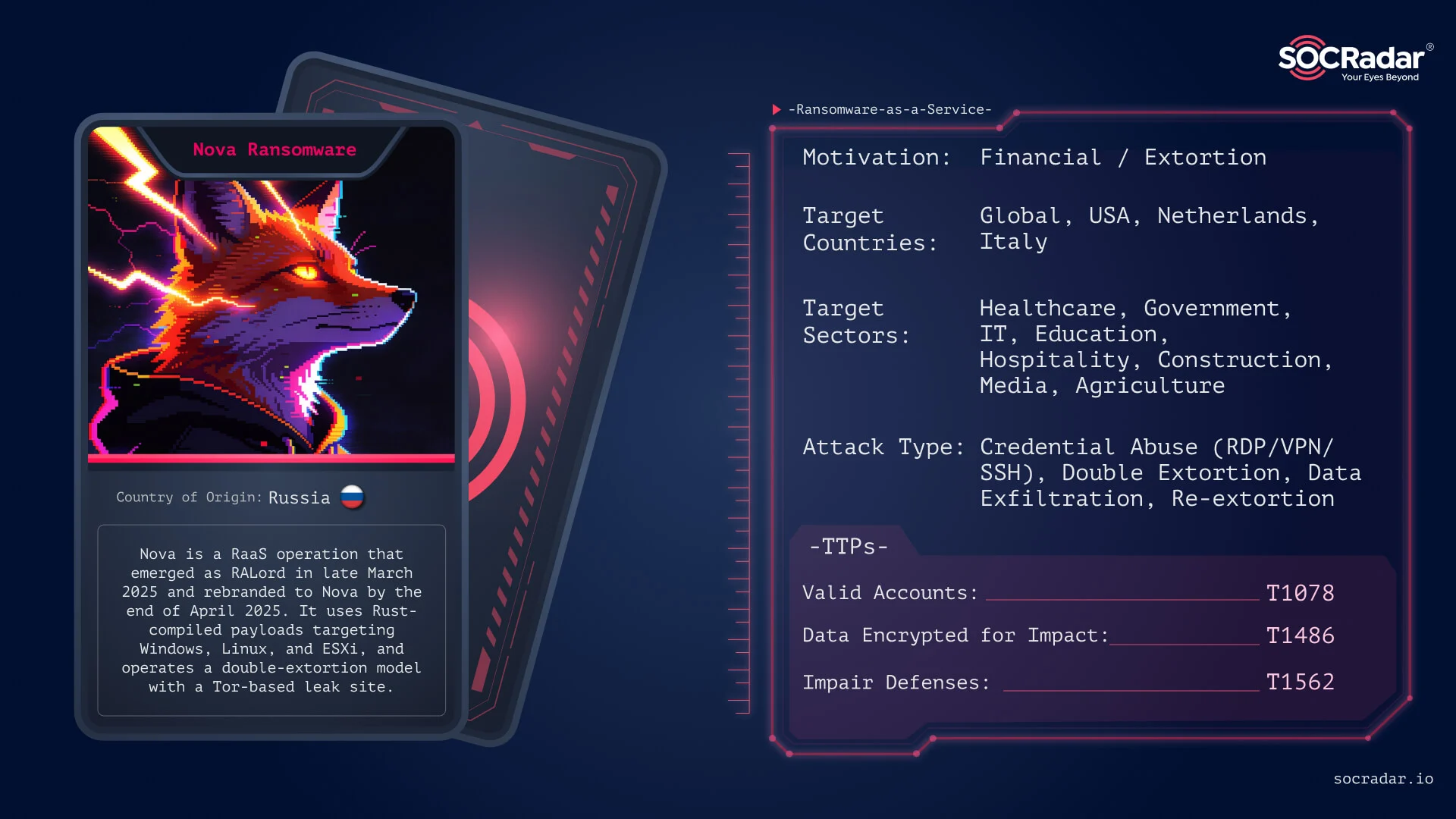
    Nova RaaS threat actor card
    Nova RaaS threat actor card

    Nova claims that its members had taken part in other, unnamed ransomware groups in 2018 and 2020. Although unverified, this account suggests that the Nova brand may be newer than the individuals behind it. The group names financial gain as its primary motive and says it selects victims based on exploitable weaknesses, not industry.

    Nova advertises several ways for other threat actors to participate:

    • RaaS affiliate program: Early RALord advertisements offered affiliates 85% of ransom proceeds, and Nova advertised a 90% share in June 2025. Both figures reflect advertised terms, not verified payments.
    • Encryption-tool access: Nova offers access to its ransomware tools separately from the affiliate program.
    • Stolen-data sales: The group advertises stolen information for sale, adding another way to profit from compromised organizations.

    From RALord to Nova Ransomware

    RALord is the name under which the group first appeared in March 2025, running its own leak site and affiliate advertisements. RA World is a separate and older ransomware operation, active since 2023 after first emerging as RA Group. The shared “RA” prefix makes the two easy to confuse, which is why Nova’s own account of their relationship matters.

    The group adopted the Nova name in April 2025. In a June 2025 interview, the threat actors claimed that they had changed the name after rejecting an approach from RA World, which they said had sought to join them. This explanation remains unverified, and it does not support treating Nova as an RA World successor. Linking the two without further evidence risks conflating separate threat actors and misreading the group’s history.

    Nova uses a Rust-based encryptor, but claims linking the ransomware to leaked Babuk source code remain unconfirmed. Neither the RALord name nor Nova’s claimed contact with RA World establishes shared membership, infrastructure, or code.

    What Are the Targets of Nova Ransomware?

    Nova describes any company it considers vulnerable as a potential victim, and its leak site reflects that broad approach. SOCRadar Threat Intelligence tracked 177 organizations named on the site between April 2025 and July 2026, spanning 45 countries and 10 industry sectors. The latest posting appeared in July 2026. This distribution suggests that opportunity, not a fixed geographic or industry preference, drives Nova’s target selection.
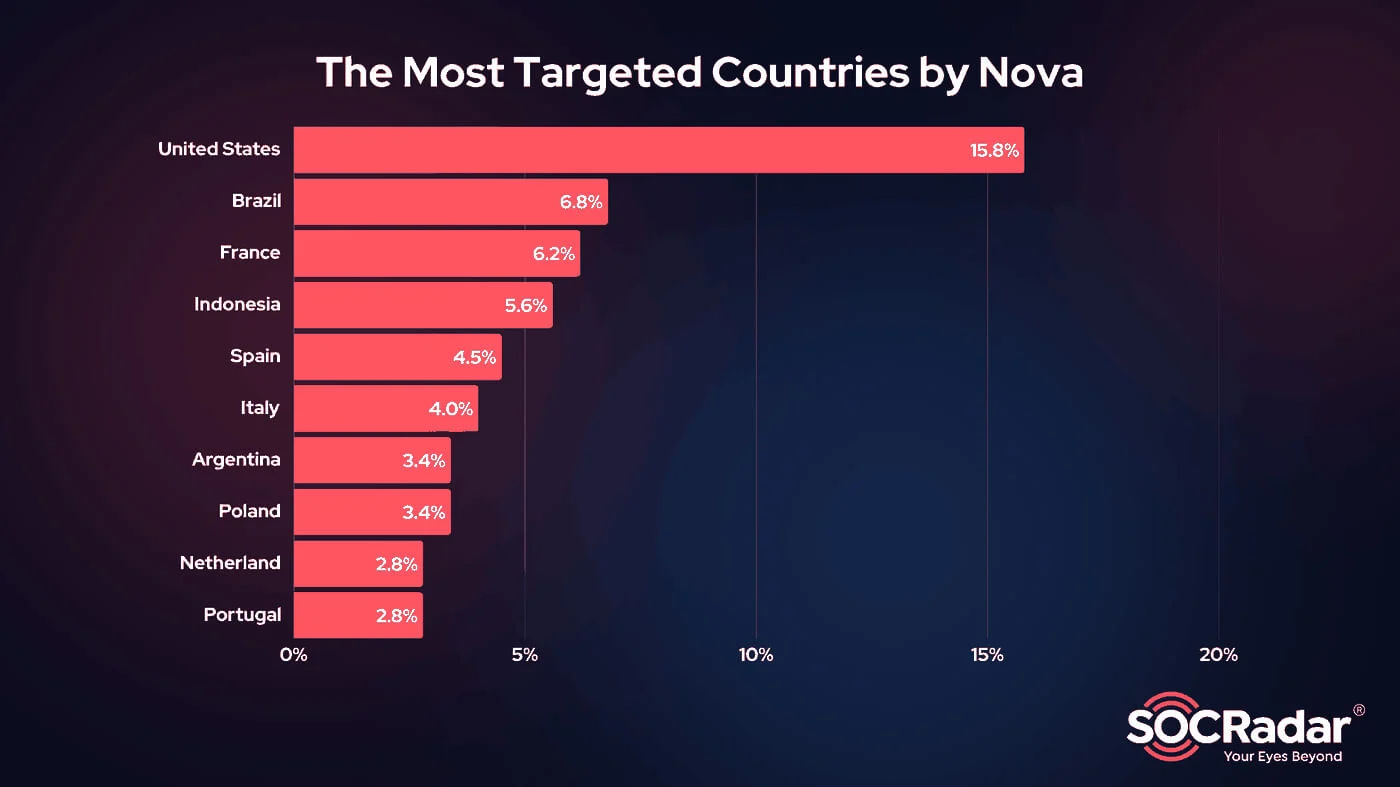
    Top countries targeted by Nova RaaS
    Top countries targeted by Nova RaaS

    The 10 most frequently listed countries account for 55.4% of Nova’s claimed victims. The remaining 44.6% span 35 countries, a geographic reach well beyond a small cluster of national markets.

    No Commonwealth of Independent States (CIS) country appears among the top 10. However, this absence does not show that Nova avoids attacking organizations in the region.
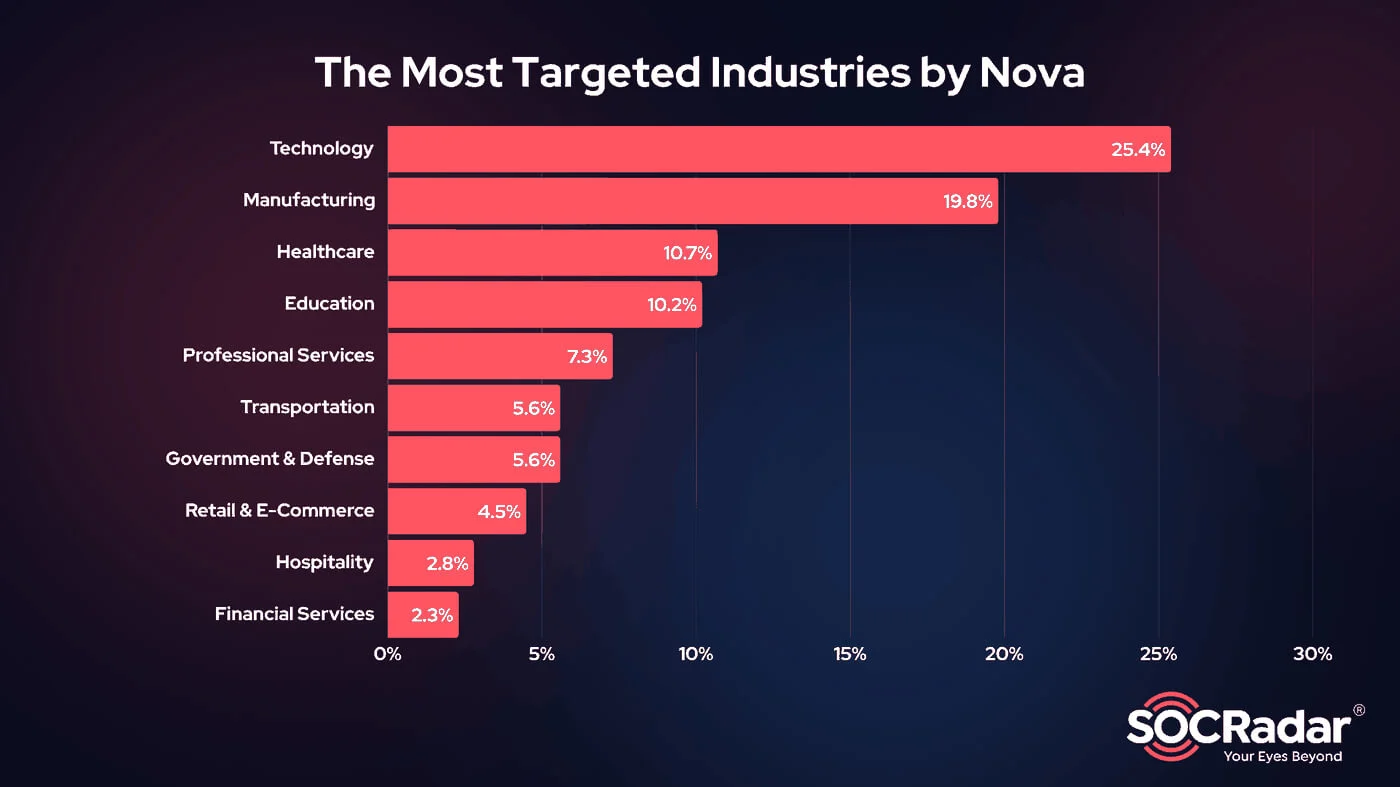
    Top industries targeted by Nova RaaS
    Top industries targeted by Nova RaaS

    Technology and manufacturing together account for approximately 45% of Nova’s claimed victims. Government and defense organizations represent another 5.6%, showing that Nova also targets the public sector.

    Nova’s leak-site activity increased sharply in mid-2026:

    • 74 claimed victims appeared between May and July 2026.
    • Those three months account for 41.8% of all claims tracked during the collection period.

    The increase reflects a surge in public victim disclosures. Posting dates do not necessarily match when the underlying attacks occurred.

    What Are the Techniques of Nova Ransomware?

    Nova combines ransomware deployment, data theft, and public disclosure threats to extort organizations. The group’s advertisements describe how affiliates supply network access, while malware analysis documents techniques for weakening security controls, obstructing recovery, and encrypting files. Early RALord samples and later Nova builds differ, so findings from one sample do not automatically apply to every attack.

    Initial Access and Affiliate Responsibilities

    Nova asks affiliates to provide validated access to compromised networks and to extract sensitive information before ransomware deployment. The group advertises additional charges for data extraction and hosting when affiliates have not completed those steps.

    These instructions describe a division of responsibilities, not how affiliates obtain access. Available evidence does not identify a consistent Nova-specific entry vector.

    Execution and Anti-Analysis

    Nova’s analyzed Windows encryptor contains Rust standard-library paths and Cargo dependency references, which identify it as a Rust-based executable.
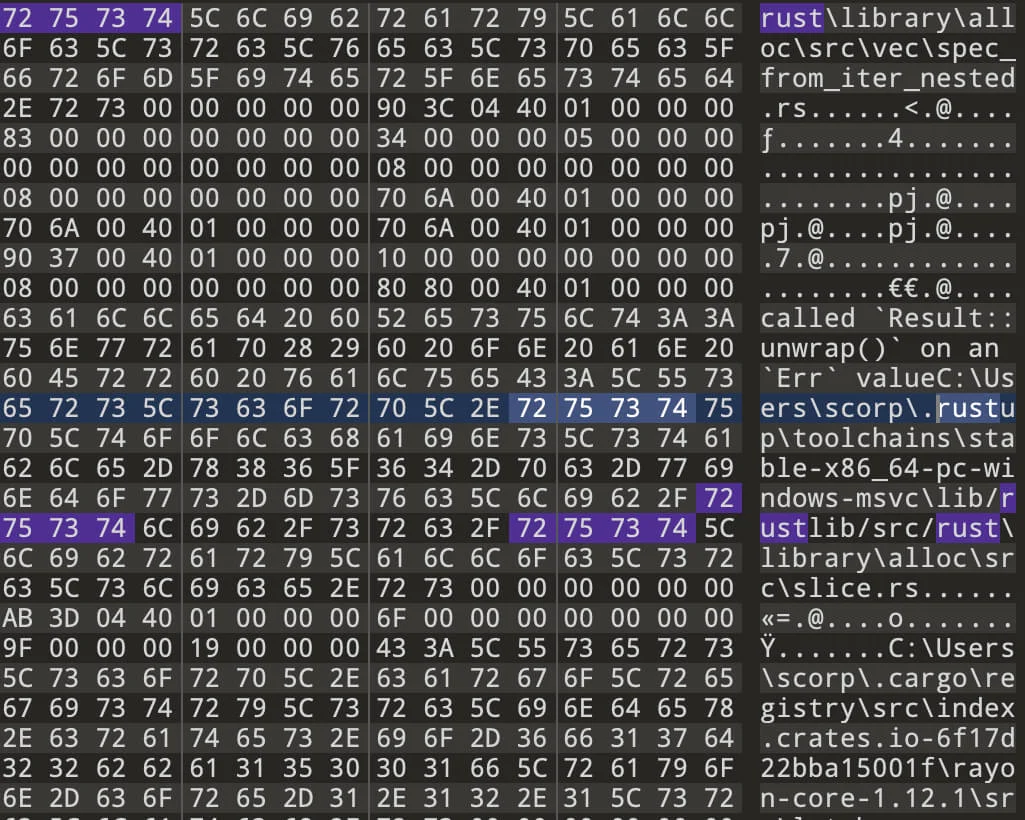
    Rust library paths and Cargo dependency strings embedded in a Nova ransomware sample. (SonicWall)
    Rust library paths and Cargo dependency strings embedded in a Nova ransomware sample. (SonicWall)

    [Screenshot placeholder: replace the SonicWall image with the Nova sample’s ANY.RUN or MalwareBazaar page]

    An early RALord sample examined in SonicWall’s research opened a console window and scanned files for encryption. The sample also attempted to encrypt its own executable, revealing a flaw in that build.

    A later Windows build checks for a debugger, enumerates running processes, and terminates itself when it detects specified reverse-engineering, debugging, or monitoring tools. These behaviors align with Debugger Evasion (T1622) and Process Discovery (T1057).

    Defense Evasion

    The later analyzed build uses PowerShell, registry changes, and service manipulation to interfere with endpoint protection. Nova attempts to:

    • Disable Microsoft Defender protections and add drive-wide scan exclusions.
    • Stop security services and terminate processes associated with antivirus (AV) and endpoint detection and response (EDR) products.
    • Clear Windows Event Logs across multiple channels to reduce the evidence available to investigators.

    Whether these actions succeed depends on permissions, host configuration, and protection settings.

    Nova Ransomware Development

    In an April 4, 2025 announcement for “Nova 1.0,” the threat actors claimed to have corrected weaknesses identified in published research and to have added anti-analysis and detection-evasion features. The post appeared under RALord branding, showing that the Nova name already featured in ransomware updates during the transition.

    Nova also claims to maintain five locker types, including versions for different privilege levels, a Linux variant, and a boot locker. These are advertised capabilities, not features verified across all variants.

    Data Theft and Extortion

    Nova advertises both encryption-only attacks and double extortion. Double extortion combines file encryption with data theft and hosting, letting the threat actors pressure victims through both disruption and threatened disclosure.

    The group’s instructions separate data extraction from ransomware deployment but do not name the tools, transfer protocols, or storage providers used for exfiltration. Nova’s double-extortion model therefore does not point to a specific exfiltration technique.

    Recovery Inhibition

    The analyzed Windows build enumerates logical drives through Windows Management Instrumentation (WMI) and deletes Volume Shadow Copies using vssadmin and wmic. This behavior aligns with Inhibit System Recovery (T1490) and blocks recovery through Windows shadow copies.

    Encryption and Ransom Notes

    The later analyzed Rust build uses XChaCha20-Poly1305 for file encryption and RSA-2048 to protect encryption keys. Encrypting victim files corresponds to Data Encrypted for Impact (T1486).

    File extensions and ransom-note names differ between samples:

    • Early RALord sample: Appends .ralord and creates a README text file with a randomized filename suffix. The note directs victims to negotiate through qTox without specifying a fixed ransom amount.
    • Later Nova sample: Appends .xgWLckNV and drops a ransom note named README_NOVA.me.
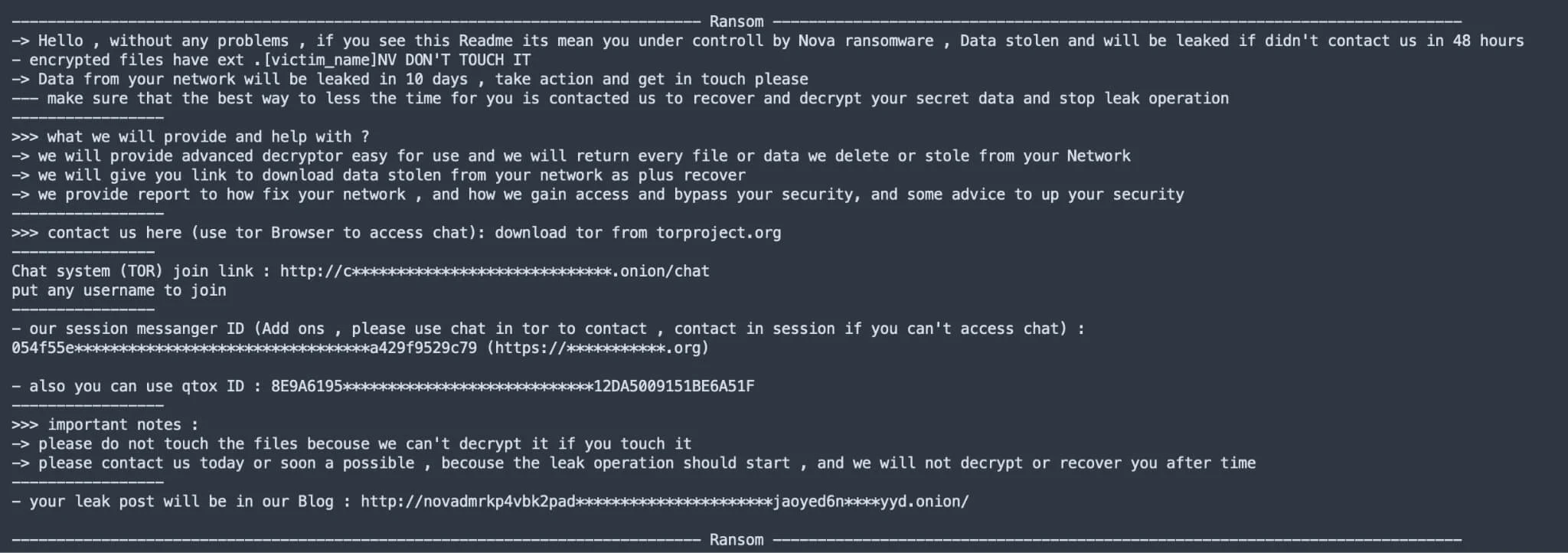
    Nova ransomware ransom note.
    Nova ransomware ransom note.

    The later sample also deletes its own executable after encryption. These differences make extensions and note names useful sample artifacts, but not reliable identifiers for every Nova build.

    How Can Organizations Defend Against Nova Ransomware?

    Nova’s tradecraft is opportunistic rather than novel, so the controls that blunt it are the same ones that blunt most RaaS operations. The measures below follow the tactics, techniques, and procedures (TTPs) described above, ordered by where they interrupt the intrusion chain.

    Restrict External Access Points

    Nova depends on affiliates to deliver validated network access, even though no consistent entry vector has been identified. Enforce multi-factor authentication (MFA) on all virtual private network (VPN) and Remote Desktop Protocol (RDP) access, and disable internet-facing RDP where it is not strictly required. Rotate credentials that may have appeared in credential-stuffing campaigns or initial access broker (IAB) listings.

    Protect Backup and Recovery Capability

    Nova’s analyzed builds delete Volume Shadow Copies, so shadow copies alone cannot serve as a recovery path. Maintain offline or immutable backups that the production network cannot reach, and test recovery procedures regularly. Backups do not neutralize the threat of data disclosure, but they remove ransom payment as the only path to operational recovery.

    Extend Coverage Beyond Windows Endpoints

    Nova advertises a Linux variant and a boot locker, and third-party reporting describes VMware ESXi payloads. Extend EDR coverage to Linux hosts and hypervisor management interfaces, not just the Windows workstations and servers that legacy EDR deployments often prioritize.

    Monitor for Defense Evasion Indicators

    Alert on unauthorized changes to Microsoft Defender policy, real-time protection settings, or scan exclusions, whether made through PowerShell or written directly to the registry. Alert on bulk Volume Shadow Copy deletion and mass clearing of Windows Event Logs, both of which precede encryption in the analyzed execution flow. Baseline anomalous PowerShell and command-line activity outside expected administrative windows.

    Third-party reporting also describes bcdedit commands that force Safe Mode with Networking before encryption in some Nova intrusions. Alert on unauthorized boot configuration changes made through bcdedit.

    Harden EDR Against Tampering

    Enable tamper protection on endpoint security products and alert on service-level attempts to stop or disable them. Nova’s analyzed builds terminate protection components from a range of major AV and EDR vendors rather than target a single product.

    Control Remote Access Tooling

    Maintain an allowlist of approved remote access software and alert on unauthorized installation or execution of tools such as PuTTY, AnyDesk, or LogMeIn. Third-party reporting indicates that Nova affiliates have used these tools for lateral movement and persistence.

    Integrate Dark Web and Threat Intelligence Monitoring

    Because Nova affiliates must arrive with validated access, exposed credentials and access listings are an early warning sign. Continuous monitoring of Dark Web marketplaces and leak sites for exposed corporate credentials, VPN access listings, and data leak site (DLS) postings naming your organization can shorten the time between compromise and detection. SOCRadar Threat Intelligence’s Advanced Dark Web Monitoring (ADWM) module provides this coverage. SOCRadar’s Threat Actor Intelligence module complements this by tracking Nova’s leak-site postings, claimed victims, and activity trends in a single view.
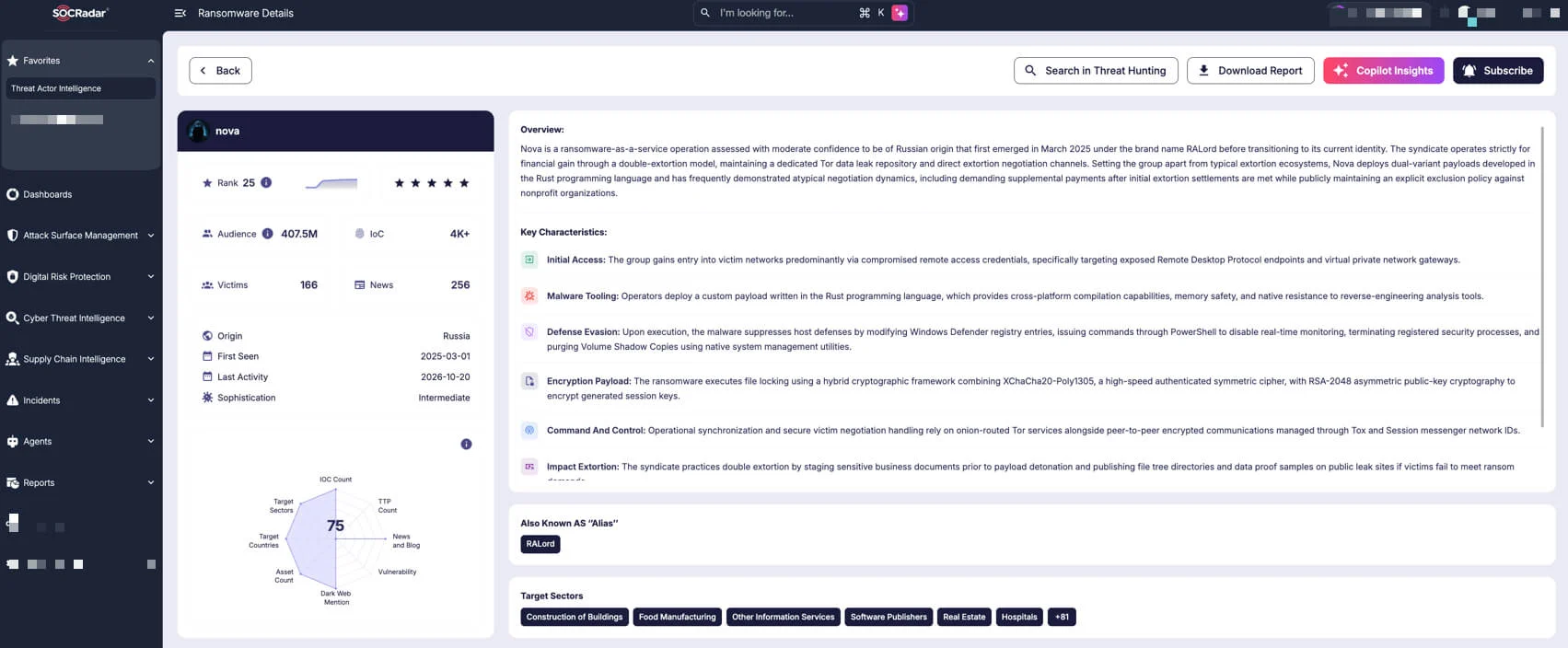
    [ Nova Ransomware profile in SOCRadar Threat Actor Intelligence
    [ Nova Ransomware profile in SOCRadar Threat Actor Intelligence

    What Are the MITRE ATT&CK TTPs of Nova Ransomware?

    The table below consolidates Nova’s techniques with their current MITRE ATT&CK identifiers. The Basis column shows whether each mapping comes from analyzed samples, from Nova’s own advertisements, or from third-party reporting.

    Tactic Technique ID
    Initial Access Valid Accounts T1078
    Initial Access Exploit Public-Facing Application T1190
    Initial Access Phishing: Spearphishing Attachment / Link T1566.001, T1566.002
    Execution Command and Scripting Interpreter: PowerShell T1059.001
    Execution Command and Scripting Interpreter: Windows Command Shell T1059.003
    Persistence Boot or Logon Autostart Execution: Registry Run Keys T1547.001
    Persistence Scheduled Task/Job: Scheduled Task T1053.005
    Defense Evasion System Binary Proxy Execution T1218
    Defense Evasion Safe Mode Boot T1562.009
    Defense Evasion Impair Defenses: Disable or Modify Tools T1562.001
    Defense Evasion Indicator Removal: Clear Windows Event Logs T1070.001
    Defense Evasion Debugger Evasion T1622
    Discovery Security Software Discovery T1518.001
    Command and Control Remote Access Tools: Remote Desktop Software T1219.002
    Lateral Movement Remote Services: SSH T1021.004
    Exfiltration Exfiltration Over Web Service T1567
    Impact Data Encrypted for Impact T1486
    Impact Inhibit System Recovery T1490

    What Are the IOCs of Nova Ransomware?

    For indicators of compromise (IOCs) associated with Nova Ransomware, visit the threat actor profile on the SOCRadar platform.

    Advanced Dark Web Monitoring

    Source: SOCRadar · 2026-11-05
  • n0n Ransomware: Inside an AI-Assisted Extortion Operation

    n0n Ransomware: Inside an AI-Assisted Extortion Operation

    In September 2026, the SOCRadar Threat Research Unit (STRU) discovered an exposed staging server holding the live workspace of an operator tied to the n0n ransomware group. The open directory exposed the operation’s full September workflow: breach and exfiltration tooling, original locker source code, extortion infrastructure, and an AI coding agent environment backed by more than $7,000 in paid LLM API usage.

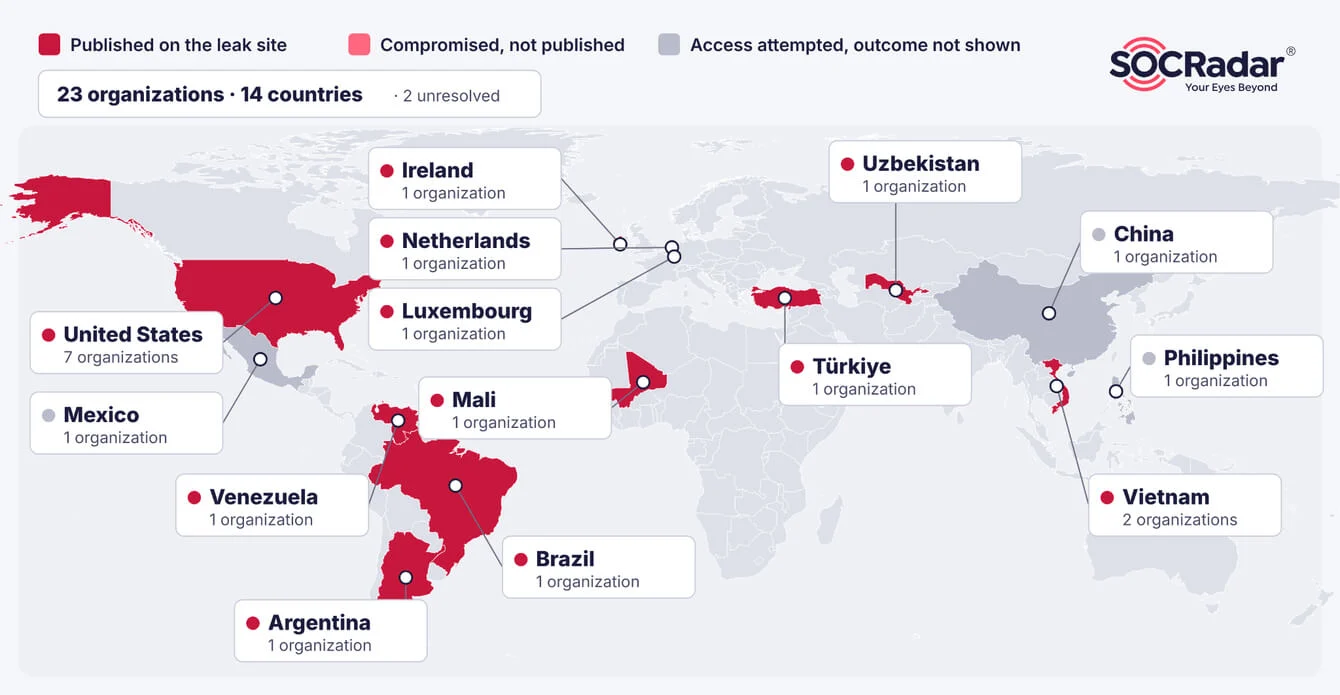
    The findings implicate at least 23 organizations across 14 countries, including a US sports retailer, a cloud provider, a teachers’ union, a Venezuelan ISP, an Argentine ministry and a pharmaceutical subsidiary. No vulnerability exploitation was identified: every documented compromise relied on weak or stolen credentials. Where n0n does not encrypt, it destroys data and backups after exfiltration.

    This post summarizes the research. The full technical analysis, including locker internals, per-victim case studies and the complete operator toolkit, is available in the whitepaper, Automating Extortion: Inside an AI-Assisted n0n Ransomware Operation.

    Key Takeaways

    • Exposed workspace: An open directory at 185.157.161[.]148 exposed 1,719 files from a n0n operator’s workspace across two September 2026 snapshots, including 829 scripts and 5 C++ encryptor sources
    • Credential-only access: Entry points included a credential stuffing campaign against 305 FortiGate SSL-VPN devices, exposed AWS keys, weak RDP/WinRM credentials and compromised hosting management portals
    • Security tools turned against victims: The operator hijacked Cisco Firepower Management Center instances to switch all access policies to BLOCK, which the actor claimed caused widespread service disruption
    • AI-built tooling: An AI coding agent configured with about 150 models produced hundreds of attack scripts, with more than $7,216 in usage costs
    • Scale: As of October 19, n0n listed 93 victims with total ransom demands of $283.7M

    Who Is n0n?

    n0n is a data-exfiltration and destructive-extortion actor tracked by SOCRadar since September 2026. The group insists on the exact spelling of its name, “two lowercase n letters with a zero between them,” uses the slogan “n0n | no js | no mercy” across its Tor and clearnet portals, and appends the .n0n extension to encrypted files.

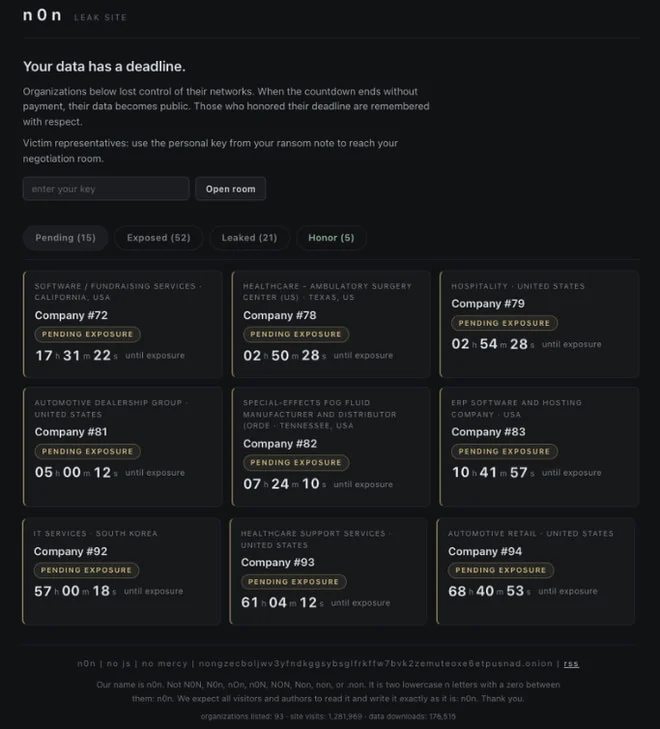
    Public leak site of the n0n ransomware group
    Public leak site of the n0n ransomware group

    The operation has scaled quickly. On October 12, 2026, the group added 38 maritime, port and logistics organizations across 18 countries to its Dark Web leak site in a single batch. Maritime security research linked at least 21 of them to customers of South Korean maritime software provider CyberLogitec, though CyberLogitec has not confirmed an incident and the supply-chain connection remains unverified. None of the 38 listings was marked as settled after the October 19 deadline, and all were published.

    Discovery and Infrastructure

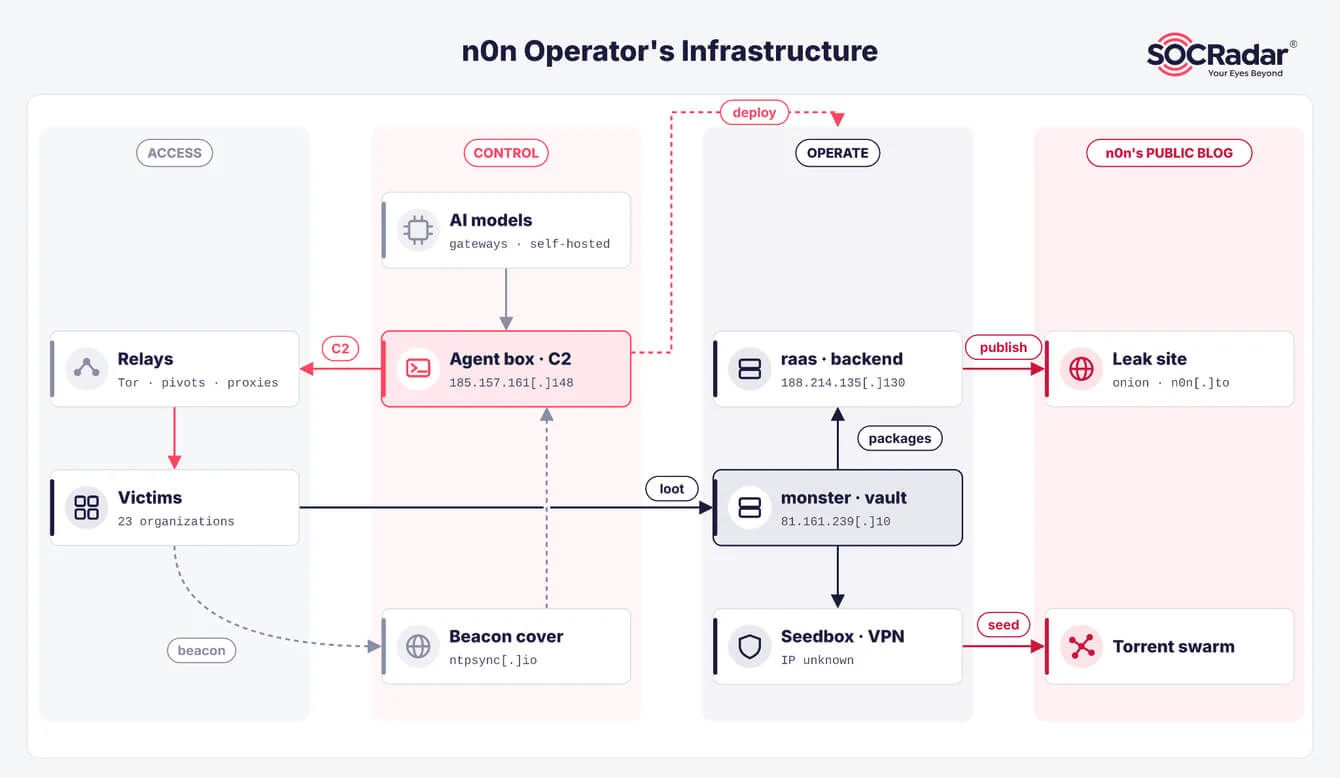
    STRU found a Python HTTP file server on 185.157.161[.]148:8877 (AS42675, Sweden) exposing the operator’s working directory in two snapshots on September 25 and 26, 2026. The files map a segmented setup: an agent box hosting the AI coding agent and C2 panel, a “raas” node running the leak site backend and per-victim Bitcoin wallet generation, a “monster” server where all stolen data lands, and a VPN-bound seedbox that distributes leak torrents.

    n0n operator's infrastructure
    n0n operator’s infrastructure

    Campaign Timeline

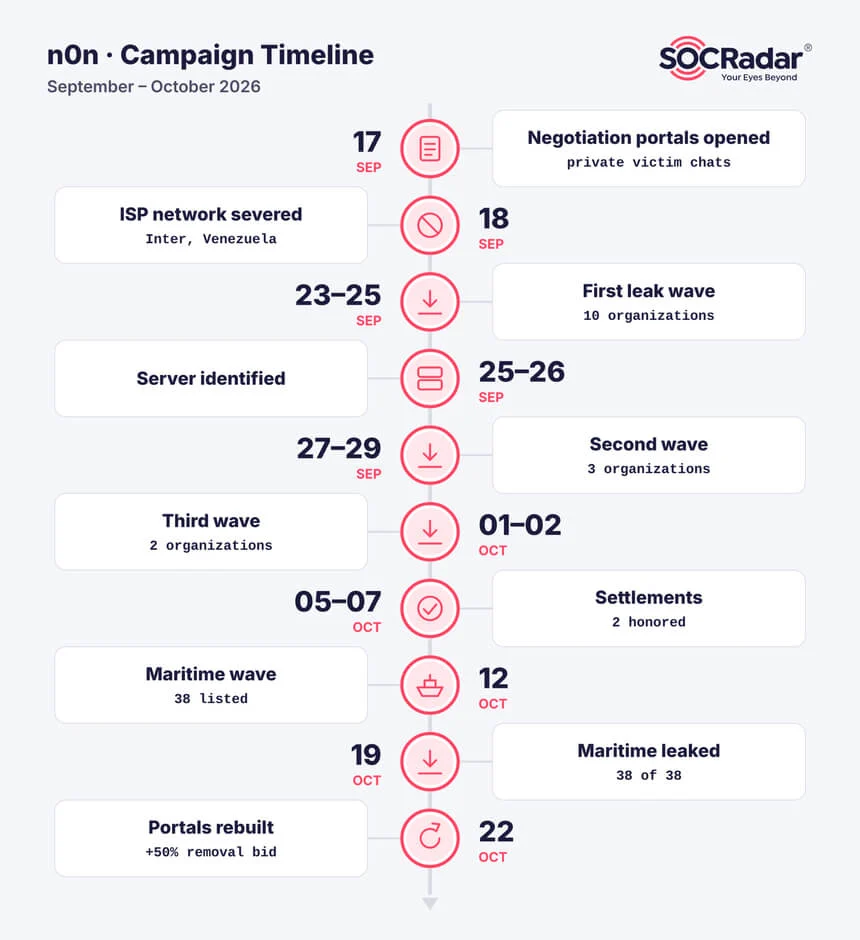
    n0n’s tracked operations ran from September 17 to October 22, 2026. Across three publication rounds and the ChiBiTek listing on October 11, the group exposed 15 of the 23 organizations identified in the workspace, typically leaking data four days after public disclosure.

    n0n campaign timeline
    n0n campaign timeline

    Modus Operandi

    Every case follows the same lifecycle, with the main impact shifting between exfiltration, encryption, destruction and network disruption depending on the target.

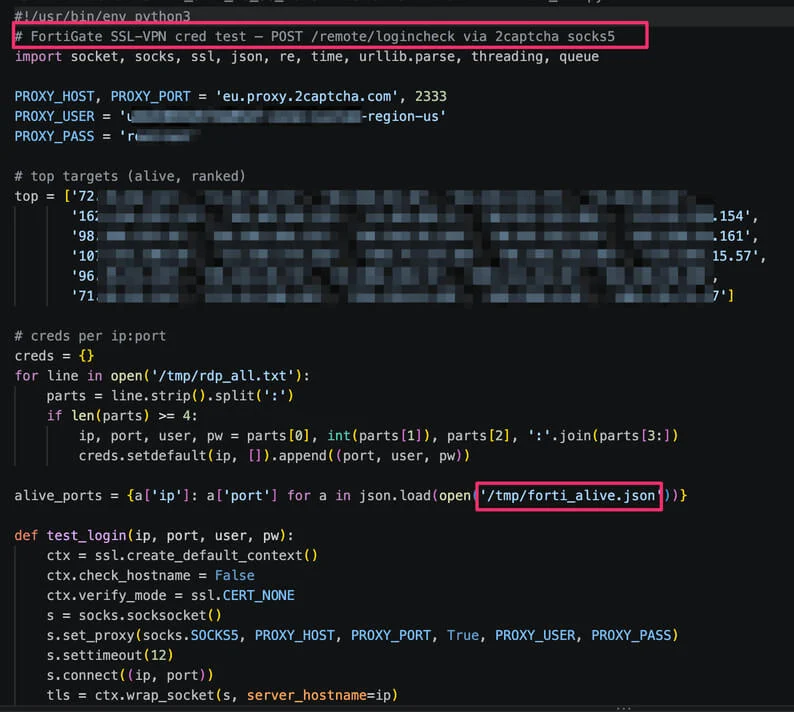
    • Initial access: Credential stuffing against 305 FortiGate SSL-VPN appliances through residential proxies, plus weak RDP/WinRM credentials, exposed AWS keys and reused hosting portal sessions
    • Persistence and collection: Hidden admin accounts disguised as services, covert proxies, and theft of browser credentials, session tokens, mailboxes and emailed MFA codes
    • Exfiltration: Per-target pipelines with data budgets, sending everything to the operator’s central storage
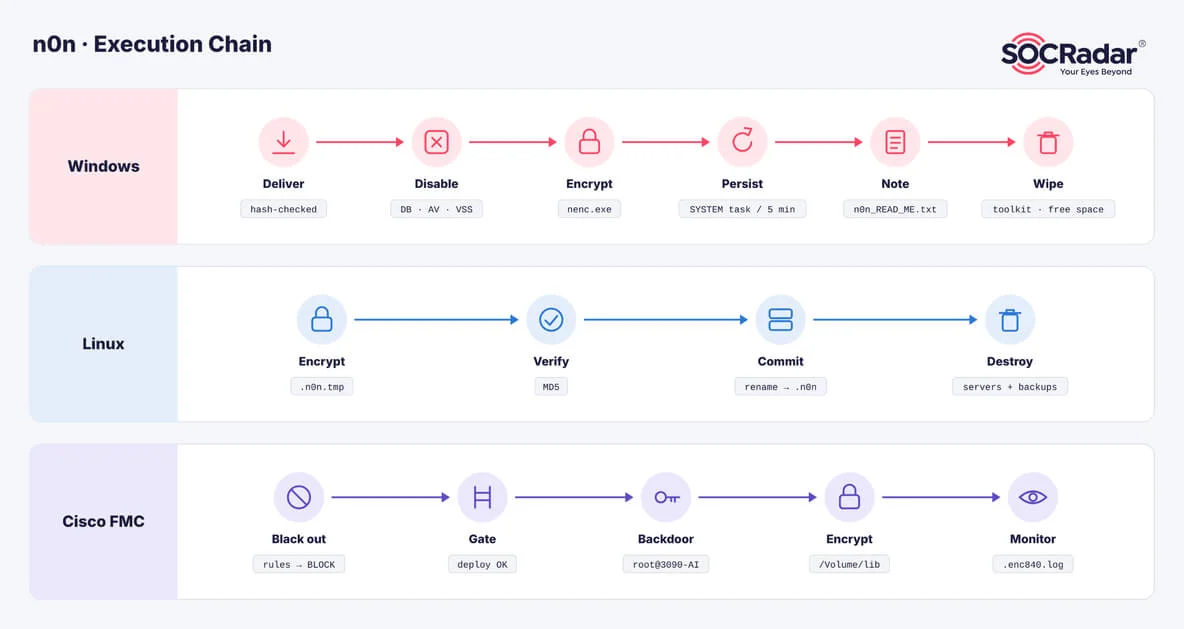
    • Encryption and destruction: Wrapper scripts stop services, delete shadow copies and wipe free space before the locker runs; in some cases, the operator deleted data and backups instead of encrypting
    • Extortion and publication: Ransom notes, countdowns, negotiation rooms and direct extortion emails, followed by scrubbed ZIP and torrent leaks
    FortiGate gateway credential checker
    FortiGate gateway credential checker

    The n0n Encryptor

    The locker is a lightweight AES-256-CBC encryptor with Windows, Linux and PowerShell variants, plus an OpenSSL stage for firewall appliances. Most destructive steps live in external wrapper scripts. Each build uses a single hardcoded key, and one key is likely shared across two victims, so a decryptor for one could unlock the other.

    n0n execution chain
    n0n execution chain

    Extortion Playbook

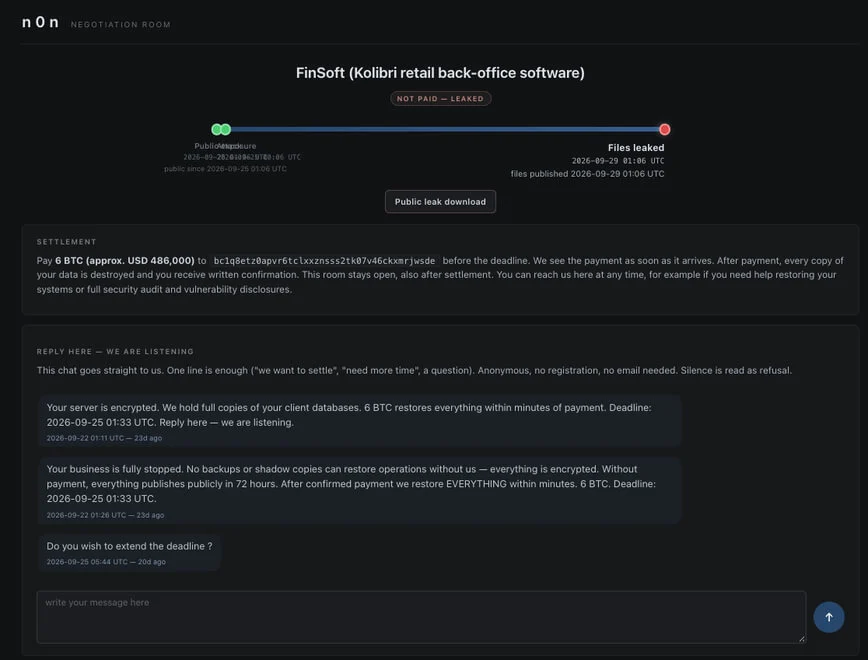
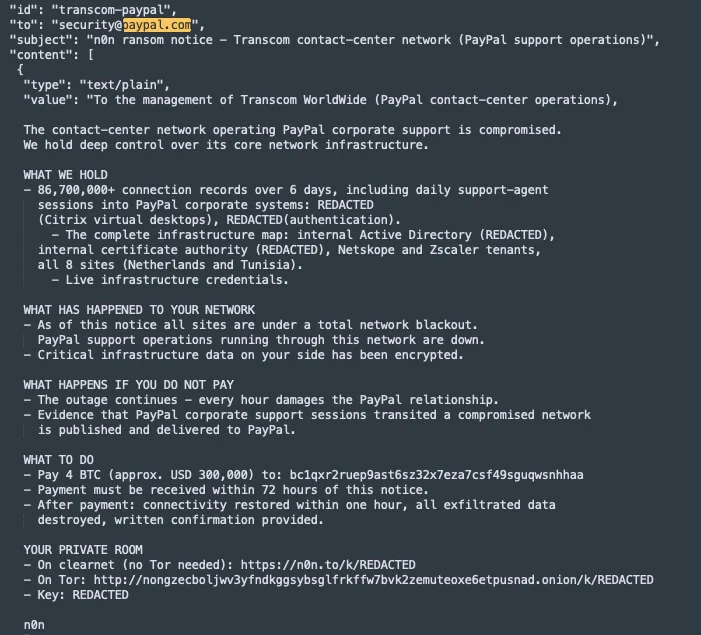
    Demands range from 0.5 BTC to 33 BTC per victim, and up to $28M per organization in the October port wave. Each victim gets a unique Bitcoin address, and opening a negotiation room requires a 10% upfront payment. A check of all 55 collected addresses showed zero transactions as of October 16, 2026. To raise pressure, n0n contacts victims’ clients, MSPs, unions and the media, and in one case emailed PayPal’s security team over a breach at its contact-center provider.

    Negotiation room for FinSoft
    Negotiation room for FinSoft
    Extortion email to PayPal for third-party leverage
    Extortion email to PayPal for third-party leverage

    Case Highlights

    • Dediserve (cloud hosting): Taken over through stolen admin browser credentials, with tenant backups extracted and the only Linux locker deployment
    • Inter (Venezuelan ISP): The operator flipped every firewall rule on the ISP’s Cisco FMC to BLOCK, claimed to have severed national network traffic, and demanded 15 BTC
    • Fanatics (sports e-commerce): An exposed AWS key led to exfiltration from 40 S3 buckets and deletion of a bank-transaction archive and twelve buckets, with a 30 BTC demand
    • ChiBiTek (managed IT services): Breached end to end through the FortiGate credential stuffing pipeline

    AI-Assisted Operations

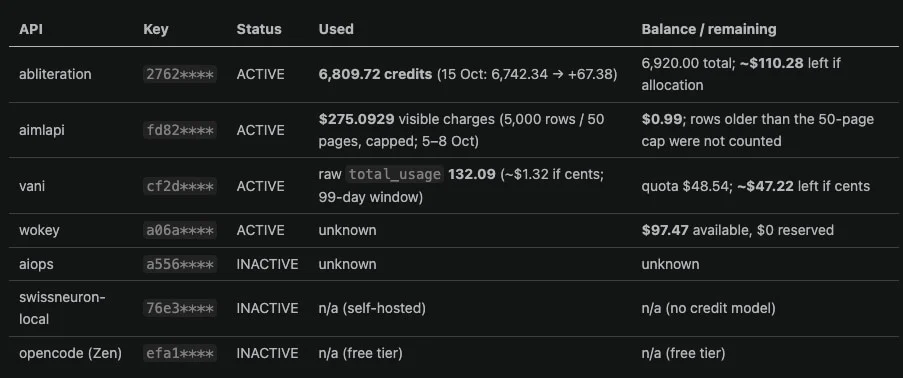
    The operator uses opencode, an open-source AI coding agent, configured with 154 model entries across seven providers, including “uncensored” and “abliterated” models with safety training removed and a self-hosted model. The agent wrote and debugged hundreds of attack scripts, and gateway spending passed $7,216 by October 22, 2026. The evidence points to a human-directed operation supported by AI; no fully autonomous attack system was observed.

    LLM key status
    LLM key status

    Victimology and Attribution

    Geographic distribution of victims
    Geographic distribution of victims

    Of the 23 organizations identified in the workspace, 15 were published on the leak site, 4 were compromised but not published, and 4 saw access attempts with no outcome shown. Victims span 15 sectors, and all demands are financial.

    STRU assesses with medium confidence that the server is a private workspace for a single operator or small team, while the group’s broader framework, tooling and master wallet control indicate a multi-operator operation. The corpus provides no definitive geographic or national attribution.

    Recommendations

    • Harden remote access: Enforce phishing-resistant MFA on RDP, SSL-VPNs and admin portals, monitor /remote/logincheck for credential stuffing, and invalidate credentials found in infostealer logs
    • Lock down firewall management: Restrict FortiManager and FMC interfaces with IP allow-lists and MFA, require approvals for policy changes, and flag REST token creation from unknown IPs
    • Reduce cloud key risk: Replace long-lived keys with short-lived roles, separate S3 list, read and delete permissions, enable Object Lock and versioning, and alert on high-volume DeleteObjects calls
    • Keep offline backups: Use air-gapped or immutable backups, since n0n purges shadow copies, wipes free space and deletes provider-hosted backups
    • Hunt now: Search EDR, CloudTrail, WinRM/RDP and firewall logs for the indicators and behaviors below

    Behavioral Detections

    • Endpoint: Creation of C:\Users\Public\n0n\ or *.n0n, *.n0n.tmp and n0n_READ_ME* files; rapid renames to .n0n after MSSQL/W3SVC/MySQL termination and vssadmin shadow deletion
    • PowerShell: Net.WebClient.DownloadFile requests to HTTPS hex URLs with ServerCertificateValidationCallback={$true}, followed by Get-FileHash SHA1 checks
    • Persistence: SYSTEM scheduled tasks referencing C:\Users\Public\n0n\ (such as [NAME]Sync*, [NAME]Audit, [NAME]Exfil, NetAssist, ChromeDbg*), Registry Run key n0nNote, and hidden local admins with non-expiring passwords and UserList=0
    • Browser: Chrome launched with –remote-debugging-port on cloned profiles, or portproxy forwarding port 9223 to 127.0.0.1:9222
    • Firewall appliances: FMC REST tokens from non-management IPs, default policy flips to BLOCK, Snort rule “n0n-lock” (sid 2100001), OpenSSL-encrypted *.n0n files under /Volume/lib, and authorized_keys entries ending in root@3090-AI
    • Cloud: CloudTrail sequences of ListBuckets, sustained GetObject and DeleteObjects in 1,000-item batches, PutObject writing n0n_READ_ME.txt, and ssm:SendCommand from new or inactive keys
    • Hosting platforms: New OnApp recipes or Zabbix scripts with “maintenance” names, backup-to-template conversions and VMs tagged mnt-*
    • Network: JSON POSTs to /x/i containing “ippay-web” with card data; FortiGate /remote/logincheck requests carrying Cookie: APBSID=n0n

    MITRE ATT&CK TTPs

    Tactic Technique Procedure
    Reconnaissance T1595.001 – Active Scanning: Scanning IP Blocks RDP batch scans and a ranked list of 305 FortiGate SSL-VPN appliances
    Initial Access T1078 – Valid Accounts Weak or default RDP/WinRM administrator credentials; firewall-manager admin accounts
    Initial Access T1078.004 – Valid Accounts: Cloud Accounts Exposed long-lived AWS IAM access keys
    Initial Access T1133 – External Remote Services Internet-facing FortiGate SSL-VPN, RDP and WinRM
    Execution T1059.001 – Command and Scripting Interpreter: PowerShell Strike, exfiltration and implant scripts pasted into RDP sessions
    Execution T1053.005 – Scheduled Task/Job: Scheduled Task Locker and audit runs as SYSTEM tasks every 5-10 minutes
    Execution T1651 – Cloud Administration Command AWS SSM commands, hosting-panel recipes and Zabbix script execution
    Persistence T1053.005 – Scheduled Task/Job: Scheduled Task AfricaSync, FinSoftSync*, SvcSync, NetAssist
    Persistence T1547.001 – Boot or Logon Autostart: Registry Run Keys n0nNote opens the ransom note at every logon
    Persistence T1136.001 – Create Account: Local Account Hidden administrators svc_upd, svc_reg, svc<slug>
    Persistence T1098.004 – Account Manipulation: SSH Authorized Keys Operator keys installed via VNC console on cloud clones; root@3090-AI on FMC appliances
    Defense Evasion T1562.001 – Impair Defenses: Disable or Modify Tools Symantec Endpoint Protection stopped and disabled
    Defense Evasion T1564.002 – Hide Artifacts: Hidden Users SpecialAccounts\UserList value 0 for the cover accounts
    Defense Evasion T1070.004 – Indicator Removal: File Deletion Toolkit overwritten three times and deleted; launchers self-delete
    Credential Access T1110.004 – Brute Force: Credential Stuffing FortiGate /remote/logincheck credential stuffing via residential proxies (APBSID=n0n)
    Credential Access T1110.002 – Brute Force: Password Cracking Offline cracking of stolen SaaS user hashes and encrypted 7z archives
    Credential Access T1555.003 – Credentials from Password Stores: Web Browsers Chrome/Edge stores decrypted, including Chrome’s app-bound key
    Credential Access T1539 – Steal Web Session Cookie Live administrator Chrome profiles copied and driven over DevTools
    Credential Access T1111 – Multi-Factor Authentication Interception Billing-panel MFA codes read from the staff mailbox
    Credential Access T1003.003 – OS Credential Dumping: NTDS NTDS.dit copy from a shadow copy (scripted)
    Discovery T1046 – Network Service Discovery Internal sweeps of 445/3389/5985/1433
    Discovery T1580 – Cloud Infrastructure Discovery EC2/ECS/SSM mapping and hosting-panel VM inventories
    Discovery T1619 – Cloud Storage Object Discovery S3 bucket listing and prefix census
    Lateral Movement T1021.001 – Remote Services: Remote Desktop Protocol Headless xfreerdp sessions driven by key injection and OCR
    Lateral Movement T1021.006 – Remote Services: Windows Remote Management pywinrm strikes, triage and browser theft
    Collection T1530 – Data from Cloud Storage S3 bulk pulls with per-bucket byte caps
    Collection T1114.002 – Email Collection: Remote Email Collection Full IMAP dump of a provider staff mailbox
    Collection T1115 – Clipboard Data RDP results returned through the clipboard
    Collection T1113 – Screen Capture Remote screen captured and read with OCR to drive logons
    Command and Control T1071.001 – Application Layer Protocol: Web Protocols HTTPS implant C2 (c2srv.py) and the kserver panel
    Command and Control T1001 – Data Obfuscation Status beacon disguised as card-payment JSON to /x/i
    Command and Control T1572 – Protocol Tunneling SSH -D SOCKS tunnels over Tor
    Command and Control T1090.003 – Proxy: Multi-hop Proxy Tor, SSH pivots, gost exits on compromised hosts, residential proxies
    Exfiltration T1041 – Exfiltration Over C2 Channel Zip-base64 POSTs to /c2/…/out (8 GiB budget)
    Exfiltration T1567.002 – Exfiltration Over Web Service: to Cloud Storage Uploads to a public file-hosting service
    Impact T1486 – Data Encrypted for Impact n0n locker (Windows/Linux) and the OpenSSL stage on FMC appliances
    Impact T1485 – Data Destruction S3 mass deletion; a provider’s servers and backups removed
    Impact T1490 – Inhibit System Recovery Shadow copies deleted; free space wiped
    Impact T1489 – Service Stop MSSQL, MySQL and IIS stopped before encryption
    Impact T1565.001 – Data Manipulation: Stored Data Manipulation Firewall rules flipped to BLOCK in the FMC configuration database

    Whitepaper

    Automating Extortion: Inside an AI-Assisted n0n Ransomware Operation

    Get the full technical analysis, including locker internals, per-victim case studies and the complete operator toolkit.


    Download the Whitepaper

    Indicators of Compromise (IOCs)

    Type Indicator Context
    IPv4 185.157.161[.]148 Agent box – kserver C2 – /x/i beacon
    IPv4 185.157.161[.]93 ntpsync[.]io origin – PHP payloads
    IPv4 81.161.239[.]10 “monster” – loot vault – implant C2 – payloads (:8455)
    IPv4 188.214.135[.]130 “raas” – leak backend – payloads (:8898, :8899)
    IPv4 198.13.158[.]143 SSH pivot over Tor – SOCKS hop to victim SaaS tenants
    IPv4 45.132.114[.]241 Operator scrub-list IP
    IPv4:port 217.18.55[.]185:11434 Self-hosted LLM
    Domain ntpsync[.]io Beacon cover domain
    Domain n0n-cases[.]net Extortion mail sender
    Email notice@n0n-cases[.]net Extortion mail sender address
    Domain n0n[.]to Leak site (clearnet, inactive)
    Domain uberip[.]com Actor mail domain
    Domain nongzecboljwv3yfndkggsybsglfrkffw7bvk2zemuteoxe6etpusnad[.]onion Onion leak site (Tor)
    File / Path *.n0n, *.n0n.tmp, n0n_READ_ME.txt, C:\Users\Public\n0n\ Encrypted files – note – staging dir
    Registry HKLM\Software\Microsoft\Windows\CurrentVersion\Run : n0nNote Ransom note at logon
    Account svc_upd (“Software Update”) – svc_reg (“Registry Service”) – svc<slug> Hidden admins
    SHA-1 dc82e9c22c4a06c6bc03701fce2b55f4f490c651 nenc.exe
    SHA-256 d1fd3a8ac4ada74b8ccbcdf5134797acff401b7fb50e16549b337781dfe1a486 nenc.cpp – Windows locker v1
    SHA-256 340172627cdf40927784956be784bd2b3f5d1584cb79cf31064f387bbe9acb28 nenc2.cpp – Windows locker v2
    SHA-256 886b3608d05069d314fa6300404de6627f96b13a95c5633f6c91dfc2a545ac87 nenc2l.cpp – Linux locker

    Bitcoin addresses (ransom wallets, September, including maritime wave wallets)

    • bc1qcf8uuvqfnucqt8crr8cgkfjevhvytjahppesem
    • bc1qxr2ruep9ast6sz32x7eza7csf49sguqwsnhhaa
    • bc1qyv92sc45cgah5ggwmsppdm323d4jya4rprrqtu
    • bc1q78uygtqyjumvh3s7dz75s0ttgsrz4jx5t3wu9n
    • bc1q98r9gusxzn4st2sr9mxvq7r66ny8dfgtdlgk9h
    • bc1q7zlg34wgtdw0dl0tn4gh52vj9nglt77p9necy8
    • bc1q97y47gkmd4cve9eadws59xz434ag2mntwy7lnv
    • bc1qezgj37g0hr8d29txsnpdjs02lr9kjvhyxzwtkg
    • bc1qp2hk3dla0tqus76emls2sppekvurrcd3ghj827
    • bc1qncxk5npnqzp39ns8jv5mj9pr6vx0ekpln2605s
    • bc1qv6mhllrmzdgl2rk09j7ynuqlgzhfguw0sj77vc
    • bc1q47wp4v8u5myse07mglenk4skssvdj6zfvdrj0l
    • bc1qh8082ye3dsyhcg8q9mglvr0w80v0gpumd5ndv8
    • bc1qpp89qpfmvf9xm6ued5v49e92s47m3mn4vngusw
    • bc1q030z6k205jz46cyn60jqts9v7xlq895ttd6r9p
    • bc1qtkuqkl5h4qekgpvjpkfgapl5fqgzpxdntlwk9c
    • bc1qck73xcn7p83emjkgrcpkvujqngnraunu09sc9s
    • bc1qthtsf88sx3czclzkx73cjxk0u5ep5kqnvhtpt8
    • bc1qp6wyngevq4aycqll3wpc03pf6qwgwcvr3md6ga
    • bc1qldy6h5zlv0aqhyyxwfsra3gqjw694yfj8rtl83
    • bc1qmfhq8plvqe4cdtypgukq7276jmerdt3gqh33xy
    • bc1qxed2puty9lmcga2mk6780khqtnlrl5ptsm6t49
    • bc1qfed3fh7f6g8dkmvq7pvrln3f0khf8aut9r2hue
    • bc1qcxqsrfrefgyv6tevuytquq28c4zrftvcflwm96
    • bc1qt2f08qa3e4wtn0rkscg4flypp3dxy7dhzefa4e
    • bc1q2ua7h64tmywa7xfn4l7f0v868tfte80lgfcmh3
    • bc1qg7nkelnag2sefg45dgu3ay7xyv3ak3v48fh45h
    • bc1qswvm6d2x8n8mpuz5x2y4wtqpy34xdxe023cw4u
    • bc1qyfc9qlsmp6jrq8y4v50ps94qtffwvzejsezsqk
    • bc1qcrm6qxz633suda3eacqxkdnx05ztd2mh0y3dxa
    • bc1qxktcy6ssugttfr6v5695kzgud9eqw8h7d2r0ss
    • bc1qe9lq4m7rjgk533u3g3cgf7xs5pn2l8e3l5pfjt
    • bc1q48vuydq5j8e98lwmt69aqhr5gcu5mn2pc4eqkx
    • bc1q8etz0apvr6tclxxznsss2tk07v46ckxmrjwsde
    • bc1qpf72d8lk4caqs3ewej75jasd44umg3juw58asn
    • bc1qhavzrsz8y2lqcwp5frckl5fy8exhmacyxz3lcy
    • bc1qqrcegl2a2tkrdln4r6jn2pm9fp84mv60d5y4ug
    • bc1qsv8yzm09njxmt5khlpyrhnjfupzpd7vykc7e46
    • bc1qpek2637ed7a4f2nff60rrng52fudqsk9l905ra
    • bc1q3nswa35s5vax3q3txf3mpy260zad4vyadpfg98
    • bc1ql0pdlaga5q3xrznd80mzuzgsv4nuz4fzut7td6
    • bc1qqrvt0ank3y2axmuzxlm2z4879qqxa37nwdafvr
    • bc1qsclrrwmjnfxzwcmskqlax9htdnc9yd5n99l5ml
    • bc1qk9s5ngavpwla07w2v3wjwwkt75uj6zmspkxg6p
    • bc1qx3u3xa7eqkukxuuyr00zq5ynx5ylepw9e4d4ph
    • bc1qccgses0q46lpttjtuchnsc2rz28qn9lng67hne
    • bc1qqc2dy605g0hmcaqfm8ne85dwctfw7603f7a03m
    • bc1qmdzpn0d0flf4pswu8ze57e7yyx883lxp55f7f2
    • bc1qpjvl29njpedxhljq0nvvskmxra8p9e8stssegm
    • bc1q50x7akwznysr8r3v00p8uzxqztuzg5t2x0tavt
    • bc1qmz68h5vyqa9feduhceh34ygmaq3fr3xnau7myf
    • bc1q3jgtpksgg5ldhq34z93xqtt39y9kzpkz2674x8
    • bc1qgnmfhcppgdynjfwxzrrspxsfr9zgps6ctgkh2z
    • bc1q3aw0gz7nnqvfnv9nld686q05lgh2d4yxmzlgcg
    • bc1q9k3lqn4zfl733pxcwk7erqtdmuw68w80hvru39

    For the full IOC list, consult the SOCRadar platform.

    FAQ

    What Is n0n Ransomware?

    n0n is a data-exfiltration and destructive-extortion ransomware group active since September 2026. It encrypts files with the .n0n extension, destroys data and backups where it does not encrypt, and runs a Tor leak site with keyed negotiation rooms. As of October 19, 2026, it listed 93 victims with total demands of $283.7M.

    How Does n0n Gain Initial Access?

    Every documented n0n intrusion relied on weak or compromised credentials, and no exploit payloads or CVE references were found in the operator’s files. Entry points include credential stuffing against FortiGate SSL-VPN portals through residential proxies, weak RDP/WinRM credentials, exposed AWS IAM keys and reused hosting provider sessions.

    How Does n0n Use AI?

    The operator uses the opencode AI coding agent, configured with 154 model entries across seven providers, including uncensored, abliterated and self-hosted models. The agent produced and debugged hundreds of attack scripts, with gateway spending above $7,216. The evidence shows a human-directed operation supported by AI; no fully autonomous attack system was observed.

    Can Files Encrypted by n0n Be Recovered?

    Each n0n build uses a single hardcoded AES-256 key with no per-victim derivation, and one key is likely reused across two victims, which creates recovery opportunities for affected organizations. Because the operator also deletes shadow copies, wipes free space and removes provider-hosted backups, offline or immutable backups remain the only reliable recovery path.

    Advanced Dark Web Monitoring

    Source: SOCRadar · 2026-10-28

  • Insider Threat Report: Dark Web Recruitment & Access Trends

    Insider Threat Report: Dark Web Recruitment & Access Trends

    Blog

    Insider Threat Report: Dark Web Recruitment & Access Trends

    Flashpoint’s monthly analysis of insider threat recruitment, illicit access advertising, and threat actor activity targeting enterprise environments.

    Default Author Image
    October 15, 2026

    Unknowingly, a member of key personnel is living two separate lives. On the clock, they are a highly-trusted systems administrator, but in their personal time, they moonlight on the deep and dark web, advertising their trust and access to the highest bidder. One day, they get a simple offer: $15,000 in the crypto of their choice to approve a single push notification at 2 AM. They accept. By morning, the attacker walks away  with active domain admin credentials without the need for malware or cracking firewalls.

    This is just one example of how insider threats lead to modern enterprise breaches. As perimeter security, EDR coverage, and other security tools mature, threat actors continue to target the human element, seeking employees and contractors willing to provide access to corporate systems or facilitate fraudulent activity.

    In a threat landscape where identity is becoming the primary attack surface, monitoring illicit marketplaces and recruitment efforts is critical. This new monthly report leverages Flashpoint’s Primary Source Collection (PSC) to analyze insider threat tactics, tracking active recruitment and advertising on dark web forums and encrypted networks.

    The Insider Threat Landscape: September 2026

    In September 2026, Flashpoint analysts identified a total of 9,787 insider-related posts across 1,216 channels and 1,778 authors. While the volume of observed activity decreased, threat actors continued to actively seek and advertise insider access, particularly within industries where legitimate employee privileges can be exploited to facilitate fraud. These communications included threat actors attempting to recruit insiders at target organizations, insiders advertising their services, and general discussions involving insider-related threat activity.

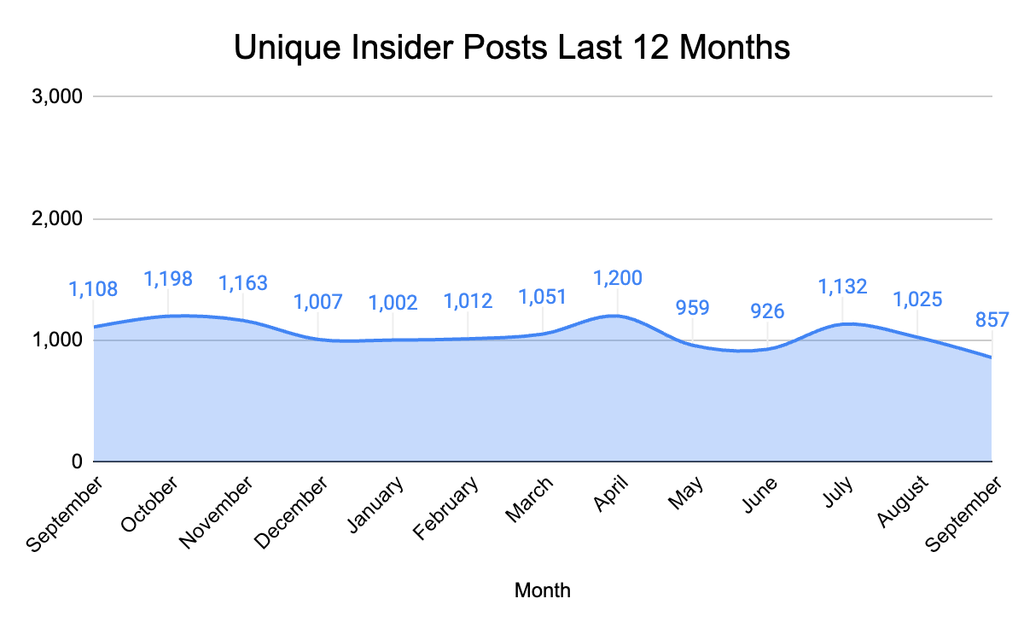
    Of these communications, Flashpoint observed 857 unique posts between September 1 and September 30, 2026.

    The number of unique insider posts collected over the past 12 months. (Source: Flashpoint)

    The majority of these posts appeared in mid-tier English-language Telegram channels, where threat actors sought or advertised insider access to organizations across several industries. Much of the observed activity focused on recruiting insiders to facilitate fraud operations.

    Where Insider Threat Activity is Concentrated

    Retail, telecommunications, and financial services remained prominent targets for insider threat activity in September 2026. However, a significant portion of the observed activity could not be attributed to a specific industry.

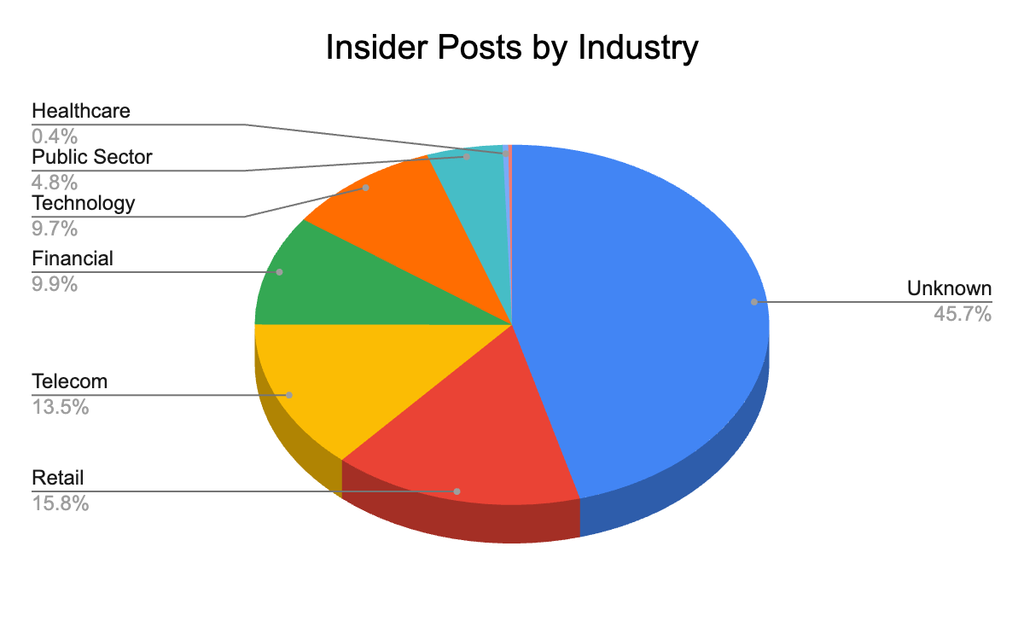
    Flashpoint found that 45.7% of unique insider posts fell into the “Unknown” category, meaning analysts could not determine the targeted organization or industry. Among posts with an identifiable industry, retail accounted for the largest share, followed by telecommunications, financial services, and technology.

    Together, these four industries accounted for 419 unique posts, or nearly 49% of all unique insider-related activity observed during the month.

    The concentration of activity in retail, telecommunications, and financial services reflects continued threat actor interest in insiders who may be positioned to facilitate fraud, provide access to customer accounts, or exploit legitimate organizational privileges.

    Unique insider posts broken down by industry in September. (Source: Flashpoint)

    The following table shows a breakdown of unique insider posts by industry in September 2026:

    Industry Posts
    Other 392
    Retail 135
    Telecom 116
    Financial 85
    Technology 83
    Public Sector 41
    Healthcare 3
    Media 2
    Total 857

    Insider Threats: Recruiting vs. Advertising

    Active insider threats generally involve two types of activity: an insider is recruited by a malicious outside party, or an insider advertises their access and services to interested threat actors. These arrangements can enable adversaries to exfiltrate sensitive data, install malware, compromise accounts, or carry out fraudulent activities such as SIM swaps.

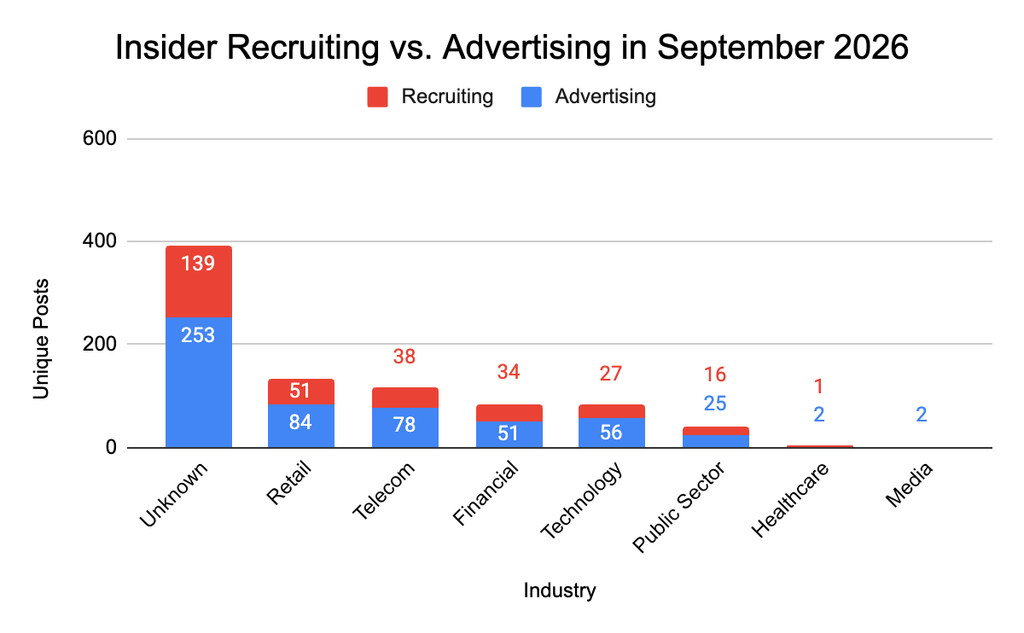
    In September 2026, Flashpoint analysts identified 15 notable insider recruitment and advertising posts across underground communities and chat forums. Of these, nine involved threat actors attempting to recruit insiders, while six involved actors advertising insider services.

    Telecommunications accounted for the largest number of notable posts, with five instances of recruitment or advertising. Retail and technology followed with three each, while financial services and the public sector accounted for two each.

    These examples illustrate how threat actors continue to seek access across industries, with particular interest in employees and contractors who can facilitate fraud or provide privileged access to organizational systems.

    Flashpoint also observed numerous insider solicitations repeated across multiple discussion threads, often with limited details about the access or services being offered. Analysts could not independently verify the legitimacy of the recruitment and advertising claims.

    Unique insider posts broken down by industry and whether the insider was recruited or advertised in September. (Source: Flashpoint)

    Protect Against Insider Threats Using Flashpoint

    Insider threats are inherently difficult to detect using internal security controls alone because the malicious activity relies on valid credentials and legitimate access privileges. Relying solely on internal logs means security teams often only detect an insider threat after data exfiltration or system sabotage has already occurred.

    Flashpoint protects organizations against insider threats through our Primary Source Collection (PSC) and specialized intelligence platforms:

    • External Threat Intelligence & Early Warning: Flashpoint monitors deep and dark web forums, invite-only threat communities, and encrypted chat platforms to identify employee solicitations, stolen corporate domain mentions, and active recruitment attempts before an intrusion develops.
    • Identity Protection & Infostealer Tracking: By tracking illicit marketplaces and infostealer activity, Flashpoint identifies compromised corporate credentials and active session tokens, preventing threat actors from utilizing purchased access.
    • User & Entity Behavior Context: Flashpoint’s intelligence equips SOC, Security Operations, and Risk Management teams with adversary TTPs, enabling security operations to look for anomalous data downloads, off-hours access, or unauthorized software installation.

    To learn more about how Flashpoint can help protect your enterprise from insider risk and monitor illicit underground communities, Request a Demo Today.

    Frequently Asked Questions (FAQs)

    What is the Flashpoint Insider Threat Report?

    The Flashpoint Insider Threat Report is a monthly intelligence brief that analyzes trends, volume, targeted industries, and tactics surrounding insider threat recruitment and illicit access advertising on the deep web, dark web, and encrypted chat channels.

    How does Flashpoint collect insider threat data?

    Flashpoint collects data using its Primary Source Collection (PSC) engine, which actively monitors thousands of dark web forums, illicit marketplaces, and underground chat networks where threat actors and malicious insiders communicate.

    What is the difference between insider recruitment and insider advertising?

    Insider recruitment occurs when an external cybercriminal attempts to entice a corporate employee into assisting with a cyberattack. Insider advertising occurs when an employee or contractor proactively lists their legitimate access or services for sale on illicit marketplaces.

    See Flashpoint in Action

    Source: Flashpoint · 2026-10-15