Category: Security News

  • Syrian Electronic Army hacker gets prison time for attacks on Western targets

    Syrian Electronic Army hacker gets prison time for attacks on Western targets

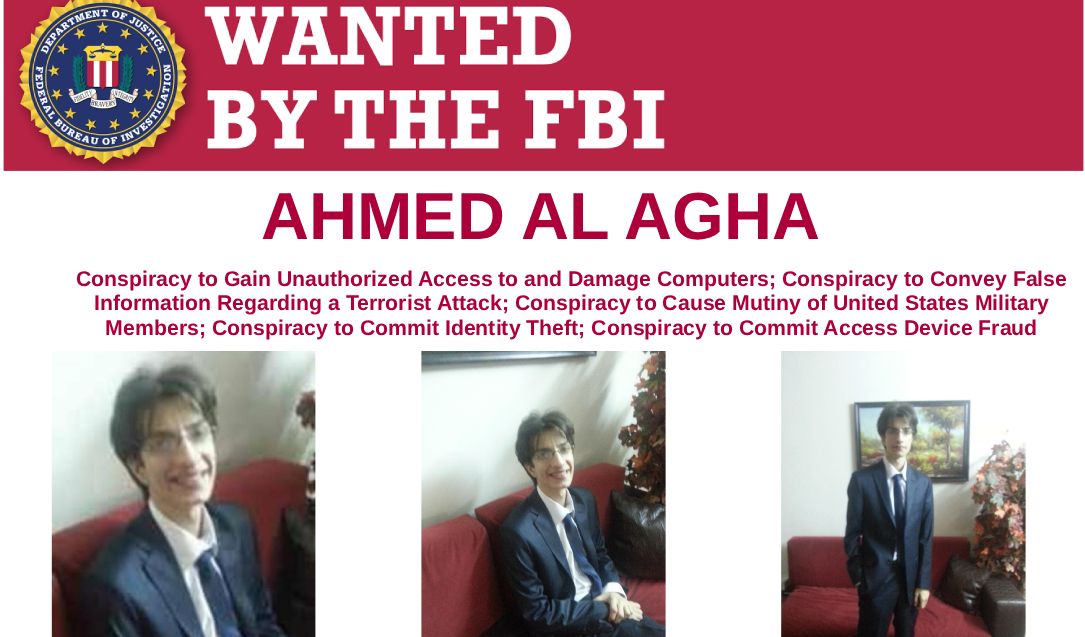
    Ahmad Umar Agha, known online as “Th3Pr0,” was sentenced Thursday in federal court in Virginia to 42 months behind bars for his role in a conspiracy that was organized by former Syrian President Bashar al-Assad’s closest advisers.

    Source: The Record · 2026-10-30

  • Undead Software Projects Continue to Raise Security Risks

    Undead Software Projects Continue to Raise Security Risks

    A security firm patched a decade-old app to prevent the takeover of millions of machines, highlighting that abandoned domains remain a boon to attackers.

    Source: Dark Reading · 2026-10-30

  • WordPress RCE Flaw Draws Nearly 63,000 Attack Attempts in Just 24 Hours

    WordPress RCE Flaw Draws Nearly 63,000 Attack Attempts in Just 24 Hours

    Threat actors have been observed attempting to exploit a high-severity security flaw in WordPress Core shortly after patches were released.

    The vulnerability, which does not have a CVE identifier, relates to a case of remote code execution impacting WordPress Core versions 4.7 through 7.1.3. It carries a CVSS score of 8.1 on the CVSS scoring system. Patches for the flaw were released on October

    Source: The Hacker News · 2026-10-30

  • SS7 and Diameter Attacks: How Signaling Flaws Expose Your Phone

    Flaws in SS7 and Diameter signaling protocols can allow attackers to track phone locations, intercept calls and SMS verification codes, and impersonate subscribers without compromising their devices. Cape explains how these attacks exploit trust between networks and how its security-focused mobile service helps defend against them. […]

    Source: BleepingComputer · 2026-10-30

  • Passkeys Are Better Than Passwords. But They Are Not Enough.

    As organizations eliminate passwords, attackers will adapt. Instead of attacking the authenticator directly, they will look for opportunities around it.

    Source: SecurityWeek · 2026-10-30

  • Bulletproof Host Virtualine Loses Its Domain to FBI Seizure

    It allowed customers to host hack-for-hire services, supported ransomware and infostealer operators, and accepted crypto payments.

    Source: SecurityWeek · 2026-10-30

  • Assad regime hacker who caused $136 billion market drop sentenced to 42 months

    A Syrian man who used a hijacked news agency Twitter account to post a fake report of explosions at the White House has been sentenced to 42 months in prison, the US Department of Justice has announced. Ahmad Umar Agha, also known as “Th3Pr0”, was sentenced on Thursday by a federal court in the Eastern District of Virginia for his central role in a hacking conspiracy organized and led by members of former Syrian President … More →

    Source: Help Net Security · 2026-10-30

  • CISA says max severity GitLab flaw now exploited in the wild

    Attackers have started exploiting a maximum-severity GitLab vulnerability patched earlier this month, according to the US Cybersecurity and Infrastructure Security Agency (CISA). […]

    Source: BleepingComputer · 2026-10-30

  • Photo ID, bank checks, face scan? The UK’s age-check options

    As preparation for the UK’s planned social media ban, Ofcom has set out four ways social media platforms could check whether users are aged 16 or over. The government and Parliament will decide how the ban works in practice.

    Ofcom is the regulator for the communications services in the UK. The BBC reports that Ofcom identified four ways to check someone’s age that it considers “highly effective.”

    Here’s what those checks would involve:

    • Photo ID matching: Comparing a live image of you with the photo on an identity document, such as your passport, and checking the age information on that document.
    • Bank-based checks: Using age information your bank already holds about you, with your consent.
    • Facial age estimation: Using technology to estimate your age from your face. Ofcom says this technology has improved recently.
    • Digital ID services: Using a digital identity service to prove your age, rather than presenting a physical document.

    Let’s think through what those checks could mean.

    Challenges

    The challenge isn’t simply checking someone’s age. It’s doing so without turning everyday internet use into an identity check.

    Photo ID matching brings highly sensitive documents and facial images into the process, which raises questions about how that information is handled and protected. The risks aren’t hypothetical: as I reported last year, a breach at a third-party support provider for Discord exposed government ID images belonging to around 70,000 users.

    Banking-based checks can be more privacy-preserving if they return only confirmation that someone meets the age threshold, rather than exposing financial information. But the important questions are what information each party receives, what gets retained, and whether the check can be linked to someone’s activity.

    Facial age estimation can avoid uploading an identity document, but it still processes a sensitive image and makes an imperfect prediction. Ofcom acknowledges that some technologies can be wrong by a few years around age 16, so people near the threshold may face an additional verification check.

    I would expect these checks to stop some underage access but not eliminate it.

    Previous restrictions have been followed by workarounds, including increased VPN use, borrowed credentials, and migration to services outside the restrictions. The danger is treating a successful age gate as proof that children are now safe, when it might push them into less regulated spaces.

    The effectiveness depends on how the checks are implemented. A VPN may help someone avoid a check triggered by their apparent location; it won’t, by itself, bypass an identity or facial check that is still required.

    Similarly, Ofcom says matching a live image to an ID is intended to make it harder to borrow someone else’s document. We shouldn’t assume every workaround defeats every method. But Ofcom accepts that some motivated children will get through. The meaningful test is how much harm these measures prevent, weighed against the privacy risks and barriers they introduce— not whether every user has completed a check.

    My personal preference is double-blind verification: a provider confirms that you meet the age requirement without learning which service you’re accessing, while the service receives proof of age without learning your identity. Proving you’re old enough shouldn’t mean revealing who you are.


    Scammers don’t need to hack you. They just need you to click once. 

    Malwarebytes Identity Theft Protection catches suspicious activity before it becomes a problem.

    Source: Malwarebytes Labs · 2026-10-30
  • Shufti ties AI agent actions to verified owners and permissions

    Shufti launches Know Your Agent (KYA), an AI agent verification solution designed to verify autonomous AI agents acting on behalf of individuals and businesses. Agentic commerce enables AI agents to open accounts, place orders, and move funds for their owners. A business receiving one of these requests needs to know whether the agent is genuine, who is accountable for it, and whether the action falls within what that person approved. A valid access token alone … More →

    Source: Help Net Security · 2026-10-30