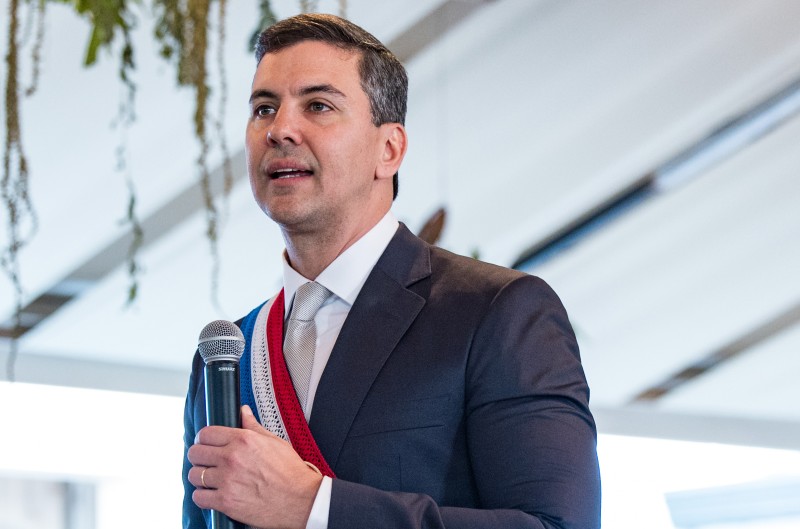
Paraguayan President Santiago Peña has been impeached and arrested amid a financial crisis that triggered mass protests, and turned his own Colorado party against him.
The crisis was sparked by a major digital bank being ordered into insolvency earlier in the week. Peña previously had shares in the holding company that owned the digital lender, Ueno Bank. Peña has denied allegations that he helped protect Ueno from scrutiny.
In addition to holding public funds, Ueno banked millions of private citizens who have now been left without access to their accounts.
In a Thursday statement announcing his resignation, posted to Facebook, Peña said his “greatest wish” was that funds would be returned to Ueno customers. He said he was resigning in order to “bring calm to the population.”
By that time, the streets of downtown Asunción, the nation’s capital, were teeming with protesters. In the Chamber of Deputies, both his allies and opponents rejected Peña’s resignation, and instead proceeded with an impeachment process.
The matter then fell to senators who held an extraordinary session on Friday. Peña did not appear in person for his defense in the Senate, though he sent his lawyer, Ricardo Preda.
Preda argued that Peña was “accused of actions that correspond to institutions, such as the Central Bank of Paraguay and the Social Security Institute, over which the president has no power or influence,” according to a report published by the Senate.
The Senate rejected Peña’s resignation, voting unanimously in favor of impeachment on the grounds of malfeasance in office, according to the report documenting the proceedings.
Under the Paraguayan Constitution, the distinction between accepting a resignation and conducting an impeachment trial is fundamental. Had the Senate accepted his resignation, Peña would have retained his immunity, which would have shielded him from any judicial investigation.
Following the impeachment, the National Police immediately issued an arrest warrant for Peña, who is charged with breach of trust, influence peddling, and misappropriation of funds.
Peña was placed under house arrest, and police were posted around his home as a large group of protesters gathered outside.
Peña will be succeeded by Pedro Alliana, who must complete the remainder of the presidential term that began in 2023 and runs until August 2028. Alliana will now have to address the economic crisis that has plunged the country into turmoil.
“Compatriots who are now going through a difficult time as a result of the financial collapse will be fully compensated,” Alliana reportedly said.
Source: OCCRP · 2026-11-07