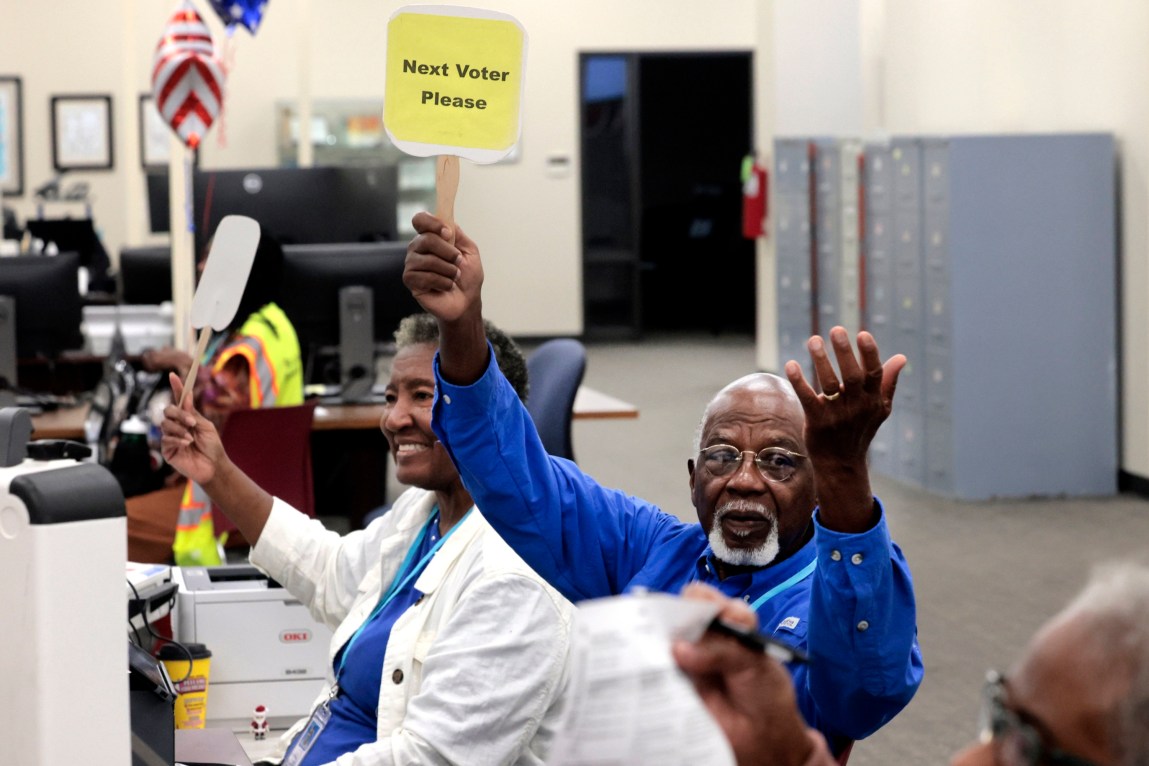
Across the country on Tuesday, voters delivered a wave of Democratic victories, flipping seats in Congress as well as state legislatures, and weakening a number of Republican majorities.
Missouri was no exception. Democrats made significant gains in the state House, picking up 16 seats, though Republicans still hold every statewide office and maintain control of the legislature.
Nonetheless, the election was more than just a rebuke of President Donald Trump. It reflected a long-simmering frustration with Missouri politicians who, time and again, have sought to override the will of voters — a practice that has intensified under years of Republican control. What’s more, voters went beyond weakening the Republican majority. They approved a constitutional amendment that curtailed the powers of the legislature and shifted more authority directly to the people.
Amendment 6, approved by a decisive margin, sharply limits the legislature’s ability to overturn laws and constitutional amendments enacted through citizen initiatives, and its ability to revive laws voters rejected through referendums.
Missouri Republicans have only themselves to blame, according to political observers who have watched the conflict between lawmakers and voters intensify. They resisted a voter-approved Medicaid expansion, repealed paid sick leave protections and sought to reverse abortion rights. They sometimes packaged their efforts with unrelated culture-war provisions, like limiting healthcare for transgender minors, that were intended to appeal to conservative voters.
Then they tried to persuade voters this summer to surrender some of their own power by changing the constitution to make it harder to pass initiatives in the first place. Voters rejected that proposal by more than a 4-to-1 margin.
“I think the people of Missouri are trying to wrest control back from our legislature because our legislature at this point does not seem to really be representing the majority view in the state,” said Jayne Woods, a professor at the University of Missouri law school who has written about the tension between direct democracy and legislative power.
Benjamin Singer is the co-founder and executive director of the Respect Missouri Voters campaign, which helped organize the push for Amendment 6. He said the frustration stretched back decades, including periods when Democrats controlled the legislature. He said when the campaign began organizing in late 2024, many volunteers were still angry about lawmakers’ decision in 2011 to weaken restrictions on puppy mills that voters had approved just a year earlier.
The campaign, he said, had already built a substantial volunteer operation before Republican lawmakers moved in 2025 to undo voter-approved measures that were intended to mandate paid sick leave and protect abortion rights. Respect Missouri Voters ultimately gathered enough signatures to put Amendment 6 on the ballot, seeking not only to protect the initiative process but to strengthen the electorate’s power over the legislature.
With the passage of that amendment, lawmakers now must get 80% support in both the House and Senate before they can propose changing or repealing measures enacted through citizen initiatives, or move to revive laws voters rejected through referendums. Even then, voters must approve any change in a statewide election. The restriction applies to measures voters have approved since 2010, including the constitutional amendment protecting abortion rights that voters approved in 2024.
Republican lawmakers put a measure on Tuesday’s ballot to restore abortion restrictions, but voters rejected that, too. With the passage of Amendment 6, abortion opponents don’t have a clear path to try again.

Amendment 6 also strengthens the referendum process. In addition to restricting lawmakers’ ability to reenact laws similar to those voters have rejected, the amendment explicitly protects the right of citizens to enact laws and constitutional amendments with a simple statewide majority, rejecting the higher threshold Republican lawmakers had sought to impose earlier this year. And it safeguards the power of Missouri’s courts to rewrite misleading ballot language, a power that Republican officials have repeatedly tried to strip away.
The result, political observers said, could make the legislature less consequential than it once was. Republicans still have the votes to pass most laws, but when voters reject those laws at the ballot box or enact their own measures or constitutional amendments through citizen initiatives, lawmakers will now face significant obstacles to overriding them.
Denny Hoskins, the secretary of state and one of Amendment 6’s most prominent Republican opponents, acknowledged how profoundly it would change the balance of power. Before the election, he told the Missouri Independent that if the amendment passed, “it will basically cut our legislature off at the knees as far as being able to pass laws to reduce crime and cut taxes.”
In text messages on Wednesday, Hoskins said that Amendment 6 weakens the legislature and governor “regardless of party” and predicted that it would be challenged in court. He said that “giving power back to the people” might be a great slogan but that the amendment’s sponsors “have no idea what this actually will do.”
Hoskins himself had tried to keep Amendment 6 off the ballot. In August, he refused to certify the initiative petition, arguing that it violated constitutional restrictions on ballot measures. He also rejected a separate petition seeking a statewide referendum on a newly gerrymandered congressional map that Republican lawmakers, working at Trump’s behest, had approved to give their party another seat in Congress.
The Missouri Supreme Court overruled him in both cases, ordering that the measures appear on the ballot. The court found Hoskins in contempt when he sought to use the map in spite of its ruling. Hoskins backed down and the justices did not have him arrested.
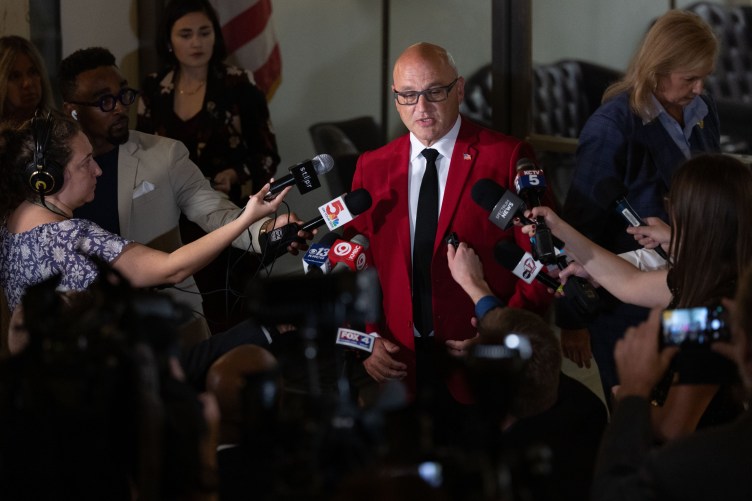
On Tuesday, voters rejected the map too. With Amendment 6 now in place — and Democrats significantly bolstering their numbers in the House — Republican lawmakers aren’t likely to gather enough support to override the voters’ rejection of their map.
Travis Crum, a law professor at Washington University in St. Louis and an expert on voting rights and election law, said he knew of no other state with a restriction quite like Missouri’s 80% threshold. But he said the amendment was understandable given the legislature’s repeated attempts to reverse voter-approved policies and its unsuccessful effort this summer to make citizen initiatives harder to pass.
“I think that there’s just been this boiling frustration with how the legislature has ignored the initiative process and then sort of tried to rewrite it to its own ends,” he said.
John Hancock, a former Missouri Republican Party chair and longtime GOP consultant, acknowledged that Republican lawmakers had brought some of the backlash on themselves. But he warned that Amendment 6 could make Missouri a magnet for well-financed out-of-state interest groups seeking to enact laws through ballot initiatives — possibly on taxation or gun policy.
That concern about wealthy outside interests was also central to the Republican-backed proposal to restrict citizen initiatives that voters rejected in August. Gov. Mike Kehoe had spent months warning voters about out-of-state special interests trying to rewrite the state constitution, even while a campaign supporting his proposal to phase out the state income tax benefited from funding from a Delaware nonprofit with undisclosed donors.
Woods said the defeat suggested voters weren’t persuaded by that argument. Regardless of who finances an initiative campaign, she noted, Missourians are the ones organizing, gathering support and ultimately deciding whether to approve the measures.
“I think that the people of the state pretty resoundingly said, ‘No, we don’t believe that that’s true,’” Woods said. “‘We believe this is our citizens who are doing this. This is what we want as citizens.’”
Source: ProPublica · 2026-11-05