In a rare bid to assert state authority inside a paramilitary-controlled enclave, the Iraqi government has launched a campaign to dismantle oil smuggling networks in Jurf al-Nasr, a stronghold of Iran-backed militias along the Euphrates River, roughly 30 miles southwest of the capital.
The crackdown takes direct aim at an illicit fuel trade operating inside an area that has long functioned outside of Baghdad’s authority.
The move followed the leak of an intelligence report, seen by OCCRP, that detailed the smuggling operation and included satellite imagery showing container truck movements between pipelines and local storage facilities from 2022 to 2026. The report cited evidence of perforated oil pipelines and makeshift storage facilities, adding that the armed groups controlling the area smuggled the fuel along three suspected routes leading into Baghdad province.
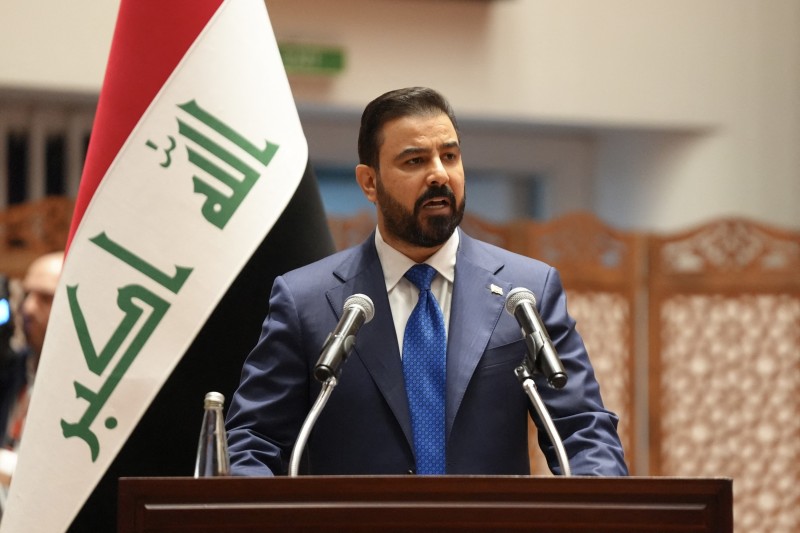
On Saturday, Iraqi Prime Minister Ali al-Zaidi announced on Facebook that he had ordered all suspects referred to the judiciary and dismissed nine police, intelligence and government officials—including the commander of the Popular Mobilization Forces (PMF) in Babil province. The dismissals followed a Friday inspection by a special government committee created by Zaidi, which uncovered indications of oil smuggling in the area, according to government spokesperson Haider al-Aboudi.
The leaked intelligence also triggered political fallout in Babil province, where Governor Ali Turki al-Jamali resigned last week without an official explanation. Meanwhile, Iraq’s Integrity Commission said on Sunday that authorities have recorded 152 criminal cases tied to oil smuggling nationwide over the past two years; 53 remain under investigation, and 11 have been referred to the courts.
Jurf al-Nasr is a district in central Iraq’s Babil province that Iraqi security forces and PMF factions recaptured from the Islamic State group in 2014. The PMF, an umbrella organization comprising dozens of mostly Shiite militias, remains the dominant authority in the district, which is largely closed off to regular Iraqi troops.
“Although the PMF are legally a state institution, in practice they retain highly autonomous control and influence,” a 2024 EU Agency for Asylum report said. “The PMF are heterogeneous in nature and maintain different alliances, with some prominent militias receiving orders from Iran.”
While the intelligence report did not name the specific groups controlling the enclave or clarify where the smuggled oil went once it reached Baghdad, retired Iraqi army commander and security expert Safaa Diyaa al-Asam told OCCRP that “the continued presence of ‘resistance factions’—specifically Kata’ib Hezbollah—in the region has persisted far longer than necessary.”
Kata’ib Hezbollah, or the Hizballah Brigades in Iraq, is a U.S.-sanctioned militia described as “the most significant player” inside the PMF in a 2024 report by the Washington Institute for Near East Policy.
Asam said curbing the smuggling is critical to Iraq’s ability to ensure stability and attract much-needed foreign investment—goals undermined as long as Iran-linked armed groups maintain control over parts of the country. He added that he expects the standoff in Jurf al-Nasr to end following “the bold move taken by the prime minister.”
In a statement to an Iraqi television channel on Friday, however, a Kata’ib Hezbollah official denied the allegations, denouncing what he called “malicious information” regarding oil smuggling operations.
Source: OCCRP · 2026-11-16