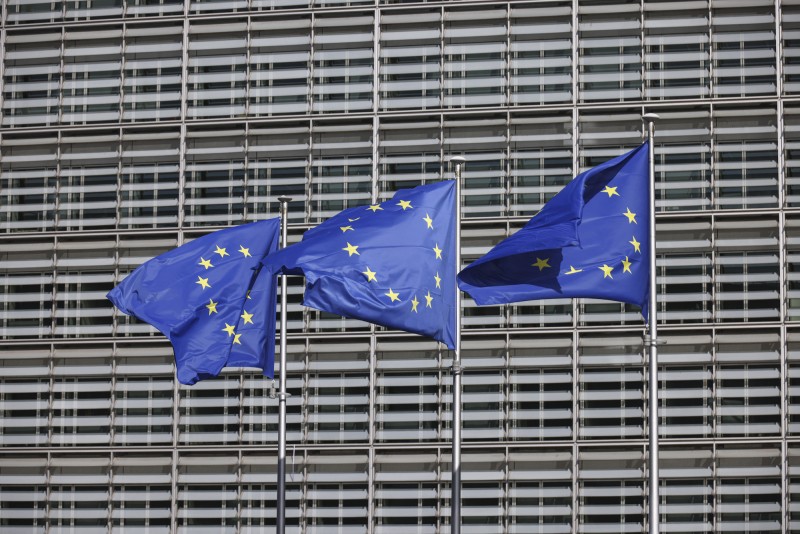
The European Union adopted its largest-ever single set of sanctions against Russia to date on Monday, blacklisting 1,569 individuals and companies within the country’s military-industrial complex.
The measures blacklist 826 Russian companies and 743 chief executives, bringing the total number of listings under the EU sanctions regime protecting Ukraine’s territorial integrity to nearly 4,600. The designated entities face immediate asset freezes and funding blocks, while the targeted individuals are now barred from entering the bloc.
The package specifically targets mid-level suppliers that form the “core” of Russia’s defense sector, which together generate an annual turnover of at least 20 billion euros ($22.32 billion) and employ more than 250,000 people.
According to the European Council, the designated companies supply critical components for advanced weapons systems, including semiconductors, radars, satellite systems, explosives, and optics. Notably, more than half of the new listings address the production chain for the ballistic missiles Russia uses in its daily strikes against Ukrainian infrastructure.
“Bombing Kyiv’s bridges, ships transporting grain, and the National Academy of Sciences are not the actions of a country seeking peace,” said Kaja Kallas, the EU’s High Representative for Foreign Affairs and Security Policy.
The sweeping European measures come just three days after U.S. President Donald Trump announced an agreement on Truth Social with Russian President Vladimir Putin for Moscow to supply millions of tons of diesel fuel to American and global markets in an effort to lower domestic fuel costs.
Further commenting on the latest EU sanctions, Kallas, however, stressed: “This is not the time to ease pressure on Moscow but to increase it.”
The new listings follow the European Council’s June 2026 directive to intensify pressure on Moscow in response to an escalating military campaign that has deliberately targeted civilian infrastructure and, according to the Council, aims to undermineUkraine’s resilience.
Source: OCCRP · 2026-10-12