Tag: Security News

  • SMS of Death: Android under attack, an invisible SMS can block calls and emergency services

    SMS of Death lets attackers crash Android call services with a hidden, zero-click message, blocking phone calls, even emergency calls too.

    A specially manipulated SMS message is enough to crash Android’s phone service, interrupt ongoing calls, and temporarily render the smartphone unusable. The attack requires no interaction from the victim and can even compromise the ability to contact emergency services.

    The vulnerability, dubbed the SMS of Death, is bringing renewed attention to the security of the messaging system in Android smartphones. The issue, documented by independent researcher Mark Blaszczyk, allows a remote attacker to cause a disruption in phone service by sending a single, specially crafted WAP Push message.

    WAP Push (Wireless Application Protocol Push) is a particular message transmitted over the mobile network, generally in the form of a binary SMS, which contains structured data and is processed automatically by the smartphone without requiring user intervention. Unlike a traditional SMS, it can carry notifications, links to Internet resources, and configurations for mobile services.

    The most worrying aspect is the execution method. It’s a zero-click attack, in which the recipient doesn’t have to open the message, select a link, or authorize any action. The content is automatically processed by the operating system and can cause the process responsible for phone functionality to crash.

    The vulnerability affects “WapPushOverSms“, an Android framework component located in the “frameworks/opt/telephony” path, responsible for interpreting and managing WAP Push messages received by the device.

    The technical cause lies in the incorrect handling of a numeric value used during message interpretation. Specifically, the “decodeWapPdu()” function, the researcher explains, reads the length of the WSP header through a value encoded as “uintvar” , initially returned as a 64-bit number. The value is subsequently converted to a 32-bit integer without prior range checking. This operation can transform a seemingly valid number into a negative value, which is then used to determine the size of an array. The consequence of this is a “NegativeArraySizeException” exception, thrown when Android attempts to allocate a negative-sized array. The exception is not handled correctly in the processing path and causes the “com.android.phone” process, responsible for telephony functions, to terminate.

    The researcher demonstrated that a five-byte WSP header can generate the value “-2147483648“, which is sufficient to trigger the issue. Therefore, it is not necessary to transmit particularly large amounts of content to cause the issue.

    “A 5-byte uintvar of 88 80 80 80 00 decodes to 0x80000000. Cast to a signed 32-bit int, that is -2147483648. Allocating new byte[-2147483648] throws an uncaught NegativeArraySizeException on the telephony main thread, killing com.android.phone:” reads the analysis.

    An invisible attack that also interrupts emergency calls

    The message is transmitted as a data SMS via the WAP Push channel on port 2948. Unlike a regular SMS, it isn’t displayed in the message inbox and doesn’t generate a user-recognizable notification. The sender’s number isn’t normally visible in the conversation, and when the device receives the message, Android automatically starts processing it. A crash in the phone process causes a temporary loss of connectivity and interrupts active voice calls, including those to emergency services.

    According to the researcher’s published evidence, each message processing can cause a disruption in telephone service lasting about one to two seconds, during which the component is rebooted. However, the problem can become much more serious if the message is processed repeatedly.

    One of the most significant aspects of SMS of Death is the ability to transform a simple crash into a persistent Denial of Service condition. The malicious message can remain in the incoming SMS queue and be reprocessed during subsequent delivery attempts. The telephone operator’s retransmission mechanism can also contribute to a repeat of the event, causing further service disruptions.

    The researcher reports observing intermittent crashes for up to a week after receiving a single message. Sending around twenty specially crafted messages can render the device unusable for an extended period. In more severe cases, the phone process can continue to crash during system startup, triggering a condition similar to a boot loop. Recovery may require using the Android Debug Bridge (ADB) on a computer, directly intervening in the queue of messages waiting to be processed. For a typical user, this is far from a simple procedure.

    A threat to communications availability

    SMS of Death demonstrates how a cyberattack doesn’t necessarily have to involve information theft, code execution, or device control to have significant consequences. In this case, the target is phone service availability, a crucial feature especially when contacting emergency services. The ability to interrupt communications without any user interaction makes this vulnerability particularly sensitive. To reduce exposure, it’s important to check the Android security patch level installed and apply available updates, paying particular attention to devices no longer receiving manufacturer support.

    Testing conducted by Mark Blah has shown that the issue is reproducible on several devices, including the Google Pixel 9 and Samsung smartphones from the Galaxy and Galaxy A families. The vulnerable code appears to be present on Android versions ranging from Android 12 to Android 17. However, the availability of the fix is ​​not uniform across all generations of the operating system.

    According to documentation published by the researcher, Google has distributed a fix via the October 2026 security update for Android 14, 15, 16, and 17. Older devices, such as those running Android 12 and 13, may remain exposed if they do not receive corrective updates.

    About the author: Salvatore Lombardo (X @Slvlombardo)

    Electronics engineer and Clusit member, for some time now, espousing the principle of conscious education, he has been writing for several online magazine on information security. He is also the author of the book “La Gestione della Cyber Security nella Pubblica Amministrazione”. “Education improves awareness” is his slogan.

    Follow me on Twitter: @securityaffairs and Facebook and Mastodon

    Pierluigi Paganini

    (SecurityAffairs – hacking, SMS of Death)

    Source: Security Affairs · 2026-11-01

  • Attackers Exploit Critical Drupal Commerce Core Vulnerability CVE-2026-118539

    Drupal warns that attackers are exploiting a critical authorization flaw in Commerce Core, putting vulnerable online stores at risk.

    Drupal warns that threat actors are exploiting a highly critical security flaw, tracked as CVE-2026-118539, in its Commerce Core module. The vulnerability is caused by missing authorization checks.

    “This module enables you to sell goods and services to customers through an included shopping cart and checkout form or through decoupled applications via APIs. The module doesn’t sufficiently protect certain routes and entity fields, leading to an access bypass that may financially impact the vendor.” reads the advisory. This vulnerability is being actively exploited in the wild.”

    The module allows websites to sell products and services through shopping carts, checkout forms, and APIs.

    “Missing Authorization vulnerability in Drupal Commerce Core allows Forceful Browsing. This issue affects Commerce Core versions: from 0.0.0 to 2.41, from 3.0.0 to 3.3.13.” reads the advisory.

    Researchers Dan Puccetti (dpuccetti), Marcus Johansson (marcus_johansson), and Robert Snyder (rsnyd) reported the vulnerability.

    The maintainers at the open-source project confirmed that the vulnerability is being actively exploited in the wild.

    Drupal recommends that users update their installations to the latest available release. Those running the 3.x branch should upgrade to version 3.3.13, while users on earlier releases should move to Commerce Core 8.x-2.41.

    In May, Drupal warned that attackers were exploiting an SQL injection flaw, tracked as CVE-2026-9082, in its database abstraction API. The vulnerability could allow attackers to gain higher privileges, access sensitive information, and execute malicious code remotely.

    The US Cybersecurity and Infrastructure Security Agency (CISA) added the flaw to its Known Exploited Vulnerabilities (KEV) Catalog.

    Follow me on Twitter: @securityaffairs and Facebook and Mastodon

    Pierluigi Paganini

    (SecurityAffairs – hacking, CVE-2026-118539)

    Source: Security Affairs · 2026-10-31

  • How to prioritize remediation after a pentest: a practitioner workflow

    A practical pentest workflow combines CVSS, EPSS and business impact to validate findings, prioritize fixes and document remediation decisions.

    Remediation prioritization after a pentest is the process of ranking and ordering security findings based on their risk, exploitability, and business impact. A penetration test can produce any number of findings, ranging from the very low (zero) to the very high (hundreds).

    The security of the tested organization depends on the findings management processes addressing the most important results first.

    • CVSS alone misranks risk. Accurate prioritization relies on combining CVSS, EPSS, and business context.
    • 68.4% of practitioners say a 500+ candidate finding set would strain the team or be unmanageable, so it’s important to validate first.
    • 81.7% of practitioners see AI-generated findings that need significant manual validation, so validation with concrete proof remains essential.
    • Document every deprioritization, because that record counts as audit evidence.

    Why aren’t CVSS scores alone enough to inform remediation?

    When prioritizing pentest results, some practitioners rely solely on frameworks like the Common Vulnerability Scoring System (CVSS). The logic is sound: the higher a vulnerability’s CVSS score is, the more risk it poses, and the sooner you should fix it, right?

    Unfortunately, the reality is much more complicated. Boiling down a complex ecosystem of risk into a one-dimensional number means ignoring the wider business context. In the end, that means you fix vulnerabilities that pose serious theoretical risk first, while genuine exposures get pushed to the back of the queue.

    Lets use two hypothetical vulnerabilities as an example.

    • Vulnerability A is an RCE flaw, CVSS 9.8, on an isolated intranet site.
    • Vulnerability B is a BOLA flaw, CVSS 6.5, on a public facing production payment API.

    Now think about which one you would fix first.

    Would you prioritize the“critical” flaw on an intranet site, containing no sensitive data that attackers could only reach if they’d already compromised your internal network? Or would you prioritize the “medium” flaw on an API that processes live credit card transactions, and that any script kiddie could manipulate?

    Across an entire organization, or multiple organizations if you’re a consultant or MSP, those critical flaws can really pile up. In one AI pentesting survey of 158 base practitioners by Pentest-Tools.com, conducted in June 2026, 68.4% of respondents said a 500+ candidate finding set would strain the team or be unmanageable.

    Approaching risk prioritization by trying to fix every “Critical” finding is going to exhaust you and your team. That’s when people make mistakes, and you end up with a major incident on your hands.

    What separates a validated finding from a candidate?

    That same distinction, in part, separates a candidate finding from a validated one. For example, vulnerability with a high CVSS score but near-zero exploitability should remain a candidate. To graduate a vulnerability from a candidate to a legally and technically validated finding, it must pass through a strict filter that involves three processes.

    The first step is to eliminate as much administrative noise as possible. That means deduplicating findings and removing any that are obviously non-exploitable. 

    Then, you need to confirm exploitability. That typically means executing a safe, controlled attack path against the target environment to prove that a state change, data exposure, or privilege escalation can actually occur.

    Finally, you need concrete evidence. A validated finding cannot rely on a generic tool’s “confidence score.” It must include comprehensive proof that a developer or auditor can immediately follow:

    • Technical proof tends to include HTTP request/response traces or specific error payloads.
    • Proof of impact includes things like screenshots or server-side telemetry demonstrating unauthorized data access.

    Now, many vendors are going to claim that AI-generated findings ease the strain of exploit validation. In many cases, they’re telling the truth. But as with any AI technology, a healthy level of skepticism is important. According to the same study, 81.7% of respondents encounter AI-generated findings that need significant manual exploit validation at least sometimes.

    How do CVSS, EPSS and business context combine into a ranking?

    Together, CVSS, Exploit Prediction Scoring System (EPSS) scores, and business context create a single risk ranking that reflects real-world danger to the tested organization.

    CVSS, as mentioned earlier, measures theoretical severity. It tells you how bad a flaw is in a vacuum, but is entirely blind to context. EPSS measures probability. It tells you how likely an attacker is to exploit a flaw in the wild over the next 30 days, but doesn’t measure the potential impact of an exploitation.

    Business context measures operational impact. It tells you the value of the affected asset, how easily an attacker can reach a flaw, and what they can steal. It tells you nothing, however, about the threat itself. Ultimately, business context is expressed as residual risk, the danger left over after you factor in your existing defenses. Calculating it relies on measuring four factors:

    • Exposure: Whether a server is open to the public internet.
    • User count: How many people use a system.
    • Data sensitivity: Whether the system holds sensitive information.
    • Compensating controls: Whether you have firewalls or antivirus tools actively blocking the attack path.

    By checking these boxes, you won’t waste time fixing a “Critical” bug locked in an empty, disconnected server. Instead, you’ll prioritize the “Medium” bug on your public checkout page that hackers are actively trying to breach.

    What goes first when dev time is limited?

    Sometimes, you’re not going to have much time for remediation. That’s natural. In those situations, prioritize validated findings with high threat activity (EPSS score) and critical business exposure. They’re the findings that pose the most threat to your organization.

    Prioritization done well is itself evidence. A ranked, validated list, with a written reason for what was deprioritized, is what a team can defend later.

    You’ll need to record the owner (the specific individual accepting the risk), the date of the decision, the technical operational basis for deprioritization (such as an active compensating control), and a hard review date for re-evaluation.

    Why does the ranked list count as audit evidence?

    A prioritized ranking list counts as valid audit evidence because it proves compliance alignment with several major security frameworks. For example:

    • ISO 27001 A.8.8 demands that organizations evaluate real-world exposure, take targeted corrective actions, and retain objective evidence that the remediation loop has successfully closed.
    • PCI DSS 11.4 mandates that penetration testing actively validates and exploits findings, with formal retesting conducted after significant organizational changes.
    • SOC 2 CC7.1 relies on this documentation to confirm that an organization maintains systemic operational consistency and rigorous vulnerability triage over time.

    A ranked, validated list also gives MSPs and MSSPs a clear, auditable record of truth that clients can either accept or challenge with their own evidence. This transparency ensures both sides agree on which real-world risks need to be addressed first.

    What does a defensible ranking record contain?

    A defensible ranking record contains the validated asset identification, its technical CVSS severity, its real-world EPSS probability, the active compensating controls defining its residual list, the formal sign-off from the risk owner, and the targeted review schedule.

    About the Author: Josh Breaker-Rolfe is a Content writer at Bora. He graduated with a degree in Journalism in 2021 and has a background in cybersecurity PR. He’s written on a wide range of topics, from AI to Zero Trust, and is particularly interested in the impacts of cybersecurity on the wider economy.

    Follow me on Twitter: @securityaffairs and Facebook and Mastodon

    Pierluigi Paganini

    (SecurityAffairs – hacking, pentest)

    Source: Security Affairs · 2026-10-30

  • Binance Investigates Suspicious Crypto Transfers Worth Up to $5.8 Billion

    Binance Investigates Suspicious Crypto Transfers Worth Up to $5.8 Billion

    Binance probes suspicious crypto transfers worth up to $5.8 billion as Tether and Circle freeze $1.79 billion in stablecoins linked to the activity.

    Binance is investigating a potential security incident after billions of dollars in cryptocurrency moved from wallets linked to the exchange on October 29. The transfers raised concerns about a possible hack, while Tether and Circle moved to freeze stablecoins linked to the suspicious activity. The full scope of the incident remains unclear, and the reported outflows shouldn’t automatically be treated as confirmed losses.

    According to The Block, blockchain analyst Spreek identified approximately $3.55 billion in incoming transfers to an initially unidentified wallet.

    “Onchain data flagged by analyst Spreek shows about $3.55 billion in incoming transfers to the unlabeled wallet, with nearly $900 million subsequently moved across other wallets.” The Block reports. “Conor Grogan, a senior director and product leader at Coinbase, says the amount is up to $5.8 billion.”

    Coinbase executive Conor Grogan estimated that the total value of the movements could reach $5.8 billion.

    These figures come from blockchain tracking and different estimates, so they don’t necessarily represent the amount stolen.

    Binance acknowledged the reports and said its security team was investigating. The company had not publicly confirmed a breach in the initial reports, making it important to distinguish between suspicious transactions and a verified compromise.

    “We are aware of reports of a potential security issue and we are actively investigating.” He wrote in a post on X. “Our security teams are reviewing all relevant information with urgency, and we will provide updates through official Binance channels as soon as we have verified information. Users should remain cautious of scams and should not trust unofficial links, messages, or requests for account information.”

    This statement, reported by The Block, reflects the company’s position at the time. Binance also urged users to be cautious of unofficial messages and links, a relevant warning whenever a major security incident attracts public attention.

    Blockchain records showed large transfers from Binance-linked hot wallets to a wallet that wasn’t previously identified as belonging to the exchange. Hot wallets hold cryptocurrency in systems connected to the internet, allowing exchanges to process withdrawals and other transactions quickly. Their online availability also makes their security controls particularly important.

    The transfers involved Ethereum, stablecoins and other cryptocurrencies. Some funds were later moved to additional wallets, making it harder to track all the transactions.

    Investigators must determine who initiated the transfers, whether they were authorized and whether an attacker gained control of the wallets. They also need to establish whether the funds belonged to customers or Binance itself.

    Large transfers alone don’t prove a hack. However, unusual movements involving large amounts of cryptocurrency require immediate investigation.

    One of the most significant developments was the response from the companies behind two major stablecoins, USDT and USDC. According to The Block and Forbes, Tether and Circle froze approximately $1.79 billion in stablecoins associated with the suspicious transfers in the initial reports.

    The figures subsequently changed as the investigation developed. Tether CEO Paolo Ardoino later said the company had frozen more than $1.567 billion in USDT linked to a potential Binance exchange hack. These amounts reflect reported actions at different points in time and shouldn’t be combined without checking whether they refer to distinct assets and addresses.

    The freezes demonstrate an important feature of centralized stablecoins: their issuers can restrict transfers from addresses they control through their token contracts. This can help contain suspected theft, but it doesn’t provide the same control over assets such as Ether or Bitcoin. Nor does freezing a balance guarantee that every transferred asset can be recovered.

    The incident also highlights a practical tension in crypto security. Stablecoins offer the convenience of blockchain transfers, but their centralized issuers retain powers that can make a difference during an investigation.

    Binance maintained that customer funds were safe, while co-founder Changpeng Zhao, widely known as CZ, said the activity appeared to be a hack. Zhao no longer manages Binance’s platform, but said he expected customers’ funds to be fully covered.

    The company said its user funds were “completely safe.”

    “Our teams are aware of reports of a potential security issue and are actively investigating. User funds are completely safe. Our security teams are reviewing all relevant information with urgency, and we will provide updates through official Binance channels as soon as we have verified information.” the company states. “Users should remain cautious of scams and should not trust unofficial links, messages, or requests for account information.”

    That assurance is important, but it doesn’t replace a technical explanation of how the transfers occurred or independent confirmation of the final impact.

    A security investigation must establish more than whether an exchange can cover a potential loss. It should determine how the activity was authorized, whether credentials or signing mechanisms were compromised, which systems were involved and whether the attacker retained any access.

    For customers, the immediate priority is to avoid becoming a secondary victim. Attackers often exploit uncertainty around a major incident to distribute fake announcements, impersonate support staff and direct users to fraudulent websites. Users should rely on official Binance communication channels, avoid unexpected links and never disclose passwords, authentication codes or wallet recovery phrases in response to unsolicited messages.

    Security teams should also watch for phishing emails that use the incident to demand urgent account verification. Attackers may exploit the situation to launch a separate scam.

    The key lesson is that blockchain transparency does not guarantee operational security. Public ledgers show transactions, but they don’t reveal who authorized them, how attackers may have gained access or whether an exchange’s internal security controls failed.

    As the investigation continues, it’s important to distinguish between reported transfers, confirmed theft and funds that can be recovered. The figures may change as analysts trace more wallets and stablecoin issuers take further action.

    Follow me on Twitter: @securityaffairs and Facebook and Mastodon

    Pierluigi Paganini

    (SecurityAffairs – hacking, Binance)

    Source: Security Affairs · 2026-10-29

  • US Probes Suspected Hack Behind Military Base Freezer Failures

    US Probes Suspected Hack Behind Military Base Freezer Failures

    The Pentagon treats August freezer failures at US military bases as a suspected hack and is working with French investigators after a supermarket attack.

    The Pentagon is investigating freezer failures that spoiled food at US military bases in August as a suspected cyberattack, according to four officials who spoke to Reuters. One official said US investigators are also in contact with French authorities about a similar attack on commercial freezers that disrupted supermarkets in France earlier this month. This is the first time Reuters has reported that the US incident is being treated as a suspected cyberattack.

    “The Pentagon is ​treating the spate of mysterious freezer malfunctions that spoiled food at military bases across the United States in August as a suspected hack, according to four officials familiar ‌with the matter.” Reuters reports.

    “One of the officials said the military investigators were in touch with their French counterparts about a similar cyberattack on commercial freezers that disrupted supermarkets there earlier this month.”

    It is still unclear who is behind the attacks. Reuters could not determine how far the investigation has progressed or whether investigators have identified the cause or those responsible. The Pentagon said a unit of US Cyber Command is working closely with other government agencies and law enforcement. The Army’s Criminal Investigation Division confirmed that its Cyber Field Office is involved and is working with French law enforcement to investigate the freezer outages in Europe.

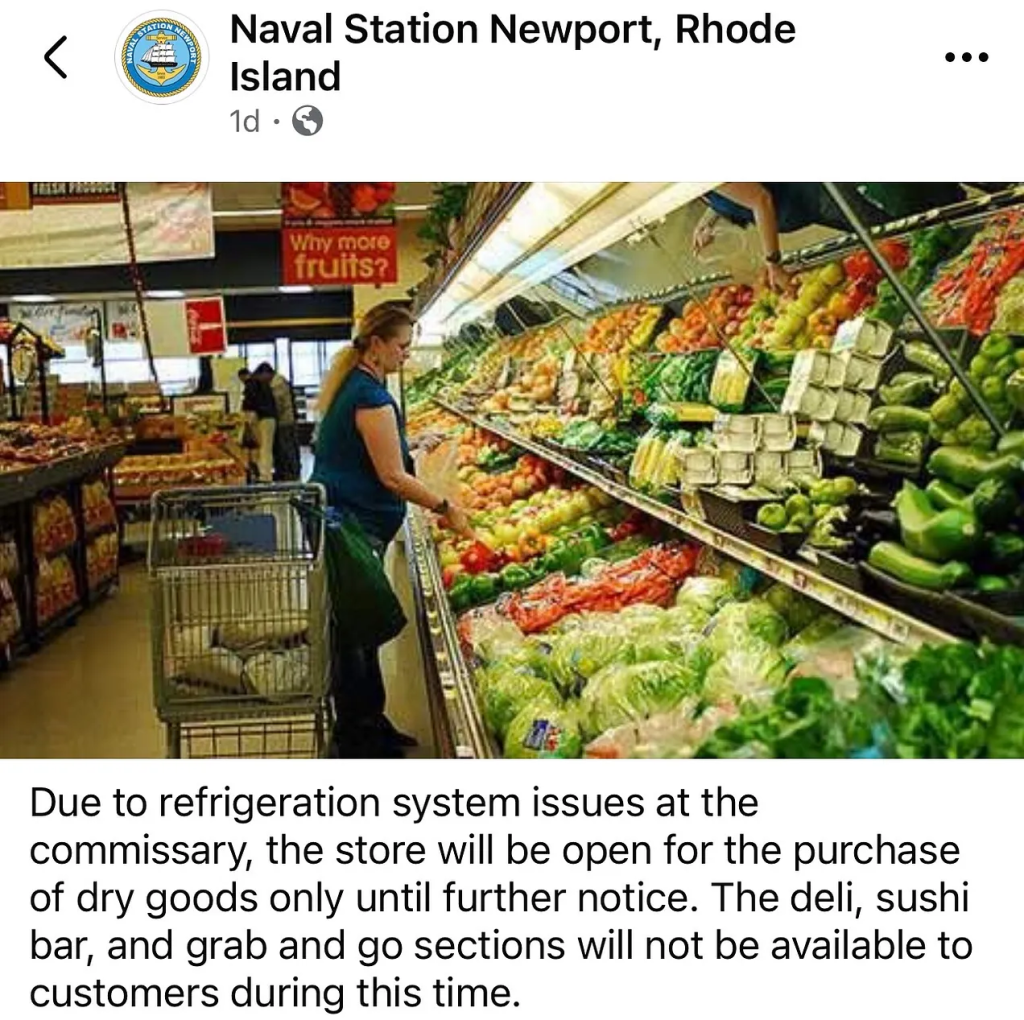
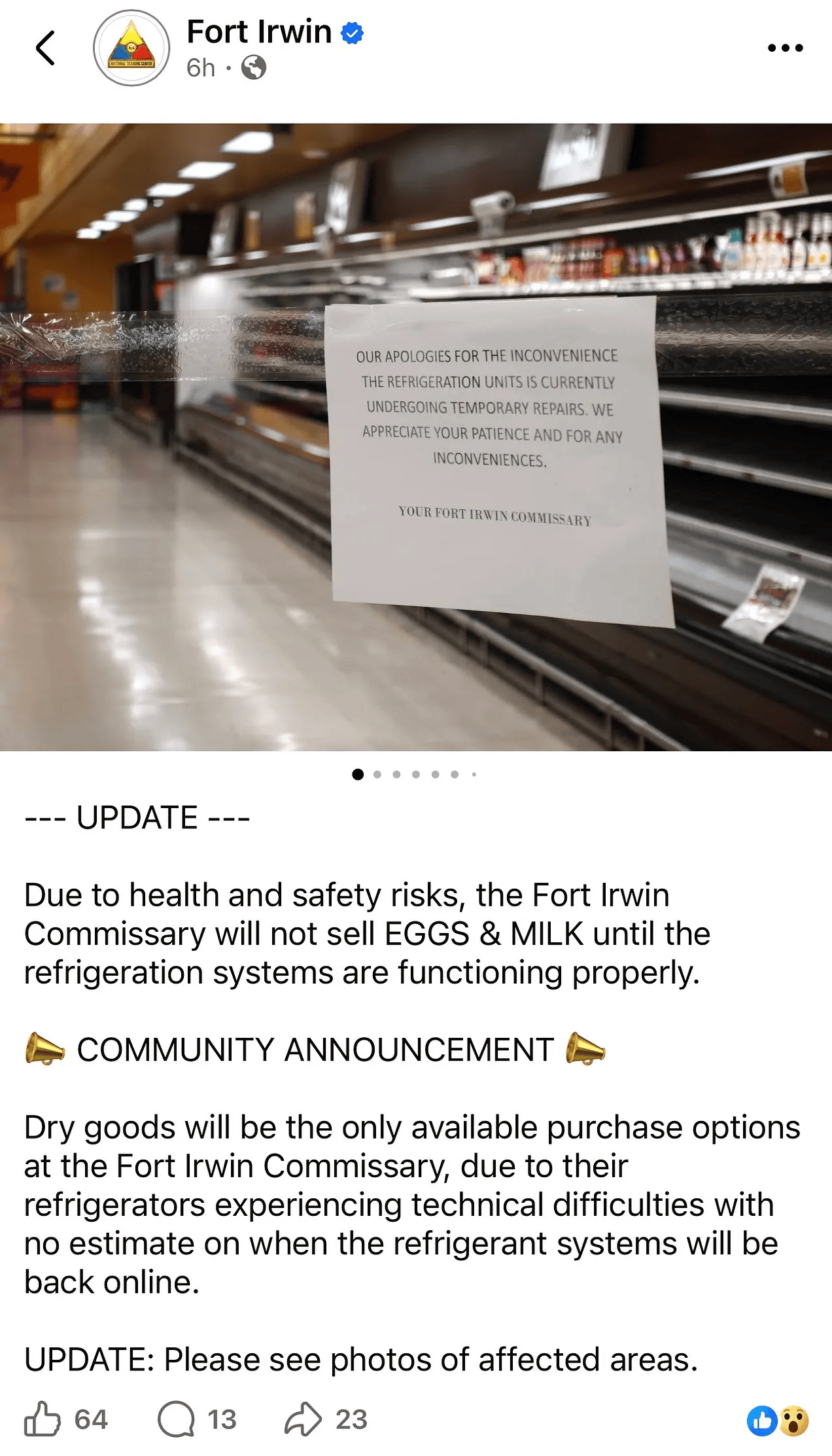
    The incidents hit commissaries, the on-base stores where military personnel buy food. At least six were affected in late August, according to Reuters’ review of the bases’ Facebook posts and website updates. Stars and Stripes named Fort Irwin, F.E. Warren, Naval Station Newport, Columbus and Travis among the confirmed stores, and some outlets count up to 14 sites in 11 states, though not all are confirmed.

    In at least one case the freezers didn’t just stop. Their temperatures were cranked up overnight, which left mounds of wilted or melted food in the morning. Fort Huachuca in Arizona said on August 26 that its freezer went into defrost mode and heated up all the food, adding that trust us when we say it was spoiled.

    The Pentagon wasn’t the first to speak. A recently created blog called Signal and Silence reported the freezer failures and the possibility of sabotage on August 28, while Stars and Stripes reported the involvement of military investigators and Britain’s Daily Telegraph reported the contacts with the French. The French Embassy in Washington had no comment. Frozen food is the one asset where damage takes hours and evidence takes the form of puddles.

    The French attack is the clearest example. Hackers took control of the cooling units in more than 350 stores and raised the temperatures. Frozen food aisles were emptied, and some units got so hot they caught fire. One supermarket owner said the total cost could reach tens of millions of euros.

    The same thing happened in Arizona: attackers made the units hotter instead of just turning them off.

    Reuters could not tell which brand was used at the US bases, and Danfoss, which is the manufacturer targeted in French supermarket attacks, did not reply. A public research report on Danfoss controllers came out before the incidents, but nothing shows a link to the bases.

    There is a history of attacks on refrigeration systems. Danfoss reports that hackers targeted supermarkets in Russia and Israel in 2022 by exploiting outdated cooling controllers. In December 2025, US prosecutors accused a Ukrainian woman of belonging to a hacking group that disrupted refrigeration at a meat plant in 2024, ruining more than 2,000 pounds of meat.

    Earlier this year, the Global Food Safety Initiative urged food safety experts and IT leaders to work together to protect refrigeration systems.

    Follow me on Twitter: @securityaffairs and Facebook and Mastodon

    Pierluigi Paganini

    (SecurityAffairs – hacking, Military Base Freezer)

    Source: Security Affairs · 2026-10-29