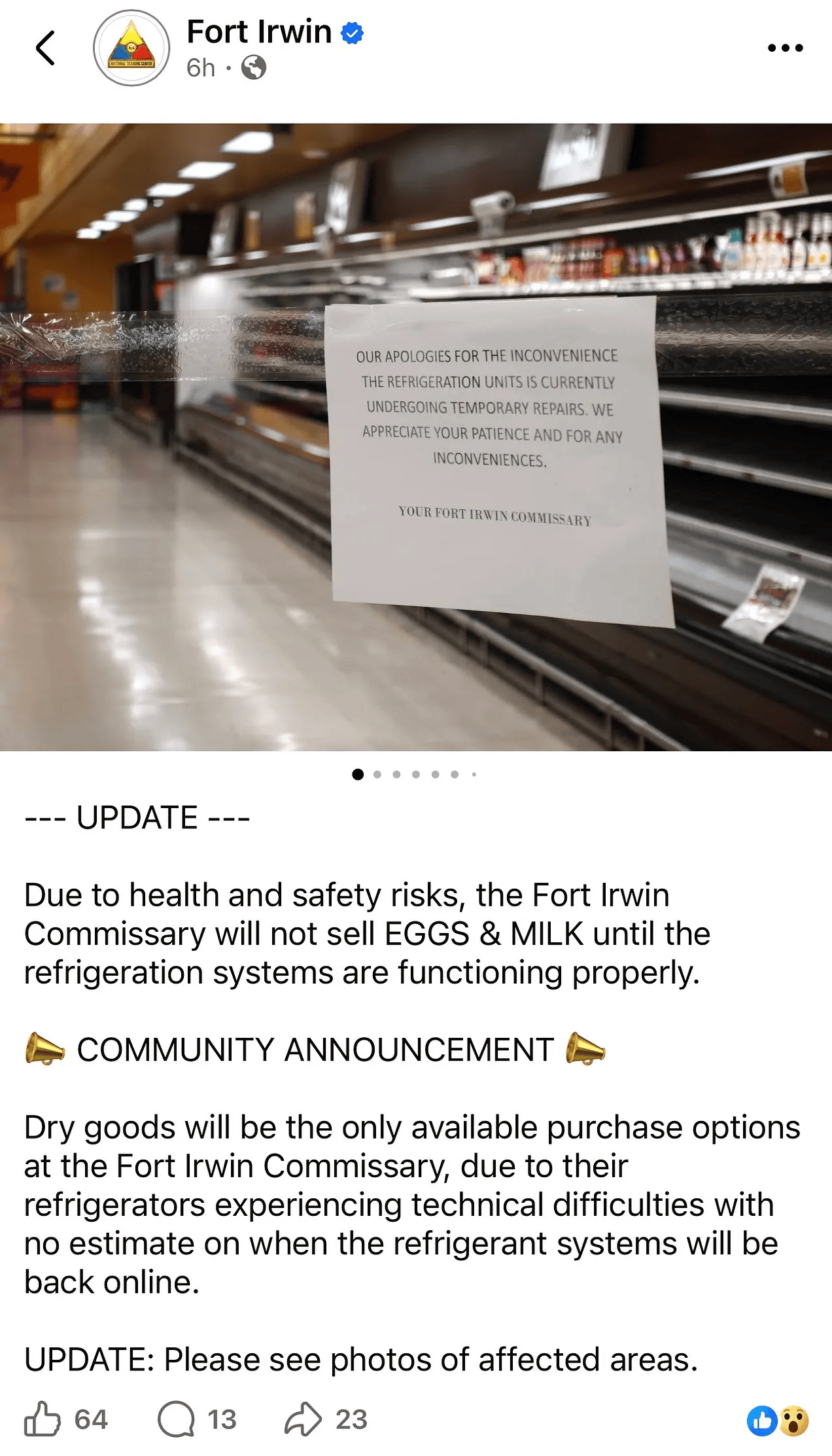
A new wave of fridge cyberattacks hit supermarket refrigeration systems across five European countries, raising temperatures and causing food losses.
A new wave of fridge cyberattacks has affected supermarket refrigeration systems in several European countries. Fridges and freezers suddenly rose in temperature overnight, with some incidents suspected to be caused by hackers. On Monday, November 2, Ahold Delhaize and Colruyt reported an IT incident affecting dozens of stores in Belgium and Luxembourg. Swedish supermarket chains ICA and Coop also reported similar problems.
“Ahold Delhaize and Colruyt said on Monday that an IT incident overnight hit fridges and freezers in dozens of stores in Belgium and Luxembourg, while Swedish grocers ICA and Coop reported similar temperature spikes, with one store blaming a cyberattack.” Reuters states.
BREAKING:
Swedish grocery giant ICA, one of Sweden’s largest supermarket chains, says several of its stores have been hit by a cyberattack overnight, causing refrigerators and freezers to be remotely set to 50°C.
The incident has likely resulted in large quantities of food… pic.twitter.com/wrcmGHw1qV
— GeoInsider (@InsiderGeo) November 2, 2026
“Problems were discovered at several grocery stores in Sweden overnight Monday.” reported Sweden Herald.
“We are aware that a limited number of stores were affected by an incident overnight that affected their refrigeration and freezer systems. Ica is providing support in handling the incident, Ica Group press officer Gustaf Nilsson tells TT.”
The latest incidents follow a similar wave of fridge cyberattacks in France last month. In mid-October, a large cyberattack hit the refrigeration systems of hundreds of French supermarkets, BFMTV revealed. The attackers targeted equipment from the Danish maker Danfoss that many French stores use to regulate their cold. Fresh and frozen stock was destroyed, and the Paris prosecutor says there were also fires.
The method is simple and nasty. Refrigeration systems have a forced defrost function that clears ice buildup, and the attackers appear to have triggered it remotely in a continuous mode, with a temperature setting of 50 degrees. The equipment heated for several hours instead of keeping goods cold, and when staff opened the fridges and freezers in the morning, a sector source told BFM, “a wave of heat” came out.
The attack caused fires and food losses. However, cybersecurity consultant Emil Olofsson of Integrity 360 told Swedish news agency TT that temperatures reached 80°C in some cases and several units caught fire. This figure differs from the one reported by police.
ICA Kvantum in Sjöbo said on Facebook that a cyberattack caused the refrigeration problems. ICA Hägerstensåsen in Stockholm was also reportedly affected. According to the Sjöbo store, the temperature inside its fridges and freezers rose to 50°C.
In Belgium, Delhaize detected unusual temperature increases in its refrigeration systems on Monday. Spokesperson Sarah De Meester said the company is investigating the incident.
Stephan Moelans, CEO of Sabcobel, the company that manages Delhaize’s refrigeration systems, told news agency Belga that hackers had switched the units’ evaporators to defrost mode. His office declined to comment to Reuters. Colruyt Group, which operates Spar stores in Belgium through a franchise system, said five stores had suffered attacks on their refrigeration systems. Meanwhile, Belgian newspaper Le Soir reported that dozens of Delhaize and Carrefour stores were affected.
IN SWEDEN:
• At least 6 ICA supermarkets affected by suspected refrigeration system hacks.
• Coop has now CONFIRMED that 6 of its stores in central Sweden are also affected.
• Freezer… https://t.co/a3oGMrGdmz pic.twitter.com/8Q3CFDDLhT— Coffe Report (@CoffeReport) November 2, 2026

It follows a similar attack in France last month. Police said hackers seized control of the cooling units at hundreds of supermarkets and raised temperatures as high as 50 degrees Celsius (122 Fahrenheit), which caused fires and food losses. Cybersecurity consultant Emil Olofsson of Integrity 360 told TT, Sweden’s news agency, that temperatures there reached 80 degrees and some units caught fire, a figure that differs from the police number.
In Belgium, Delhaize noticed temperature increases in its cooling systems on Monday, spokesperson Sarah De Meester said, and the company is investigating. Stephan Moelans, CEO of the refrigeration firm Sabcobel, which runs Delhaize’s systems, told the news agency Belga it was a cyberattack that switched the units’ evaporators to defrost mode. His office declined to comment to Reuters. Colruyt Group, which runs Spar stores in Belgium under a franchise system, said five shops had their fridge systems attacked, and Le Soir reported that dozens of Delhaize and Carrefour stores were affected.
Ahold also reported a cybersecurity incident to Dutch police last month, after it detected suspicious activity in its infrastructure. Nothing in the reporting ties that report to Monday’s incident.
Delhaize said about 40 of its Belgian stores were affected… pic.twitter.com/qzw6uDybWb
—
The Informant (@theinformant_x) November 2, 2026


In Sweden, John Billow, head of the national cybersecurity centre, told Reuters his team was working on several incidents involving refrigeration systems in grocery stores around the country. An ICA Kvantum store in Sjöbo said on Facebook that a cyberattack caused its problems, and an ICA store told its followers that its temperatures had been “hacked” overnight and set to 50 degrees. Fifty degrees is fine for a beach and poor for ice cream. That store later said it had opened.
At ICA Baronen in Stockholm, a notice said all the freezers were broken because of a cyberattack. The sales manager said the attack came at 2 a.m. and staff noticed it at 5:30 a.m. ICA Hägerstensåsen in Stockholm was reportedly hit too.
ICA said only a limited number of stores were affected and that it is helping them deal with the incident. However, press officer Gustaf Nilsson did not say how many stores were involved.
Coop told Swedish news agencies Aftonbladet and TT that six stores in central Sweden had similar problems. Press manager Carlos Cancino said it was still unclear whether any food would need to be thrown away or whether the refrigeration units had simply stopped working or had switched to heating mode. He also did not rule out further incidents affecting other stores.
An Estonian supermarket chain was also affected. Its refrigeration systems were reportedly set to 50°C, technology provider Kitman Coldtech told public broadcaster ERR. CEO Jann Mutso did not reveal the name of the supermarket chain, saying: “This is very recent. It happened this morning.”
How did the attackers get in? In France, Olofsson says they obtained login details for the control systems, which were exposed directly to the internet. He says the attack targeted a product that controls the cooling systems and that the hack isn’t very complicated, so amateurs may have carried it out.
Billow says Swedish authorities have noticed in recent weeks that quite a lot of exposed operational technology devices exist in Sweden, and they’ve been clear that these must be updated or patched.
Refrigerators and heating systems, security cameras and alarm networks were once largely mechanical, and now they can be monitored and controlled remotely. That gives cybercriminals new openings. Authorities haven’t said who was behind last month’s incidents, and nobody has claimed responsibility.
The Sweden Herald reported that the cause of the attacks on Swedish supermarkets remains unknown.
Follow me on Twitter: @securityaffairs and Facebook and Mastodon
(SecurityAffairs – hacking, fridge cyberattacks)
Source: Security Affairs · 2026-11-02