Tag: Investigations

  • EU Satellite Imagery Delayed Over Gaza and Parts of West Bank by 24-hours

    EU Satellite Imagery Delayed Over Gaza and Parts of West Bank by 24-hours

    Sign up here to receive Bellingcat’s biggest investigations by email as soon as they are published. Become a member and support our work here.

    Imagery captured by the European Space Agency’s freely available Sentinel-2 and Sentinel-1 satellites appears to be delayed over Gaza and parts of the West Bank, a Bellingcat analysis has found.

    While the delay remains relatively short at just 24 hours, this can still impact the speed at which analysts and researchers can observe what is happening in the region.

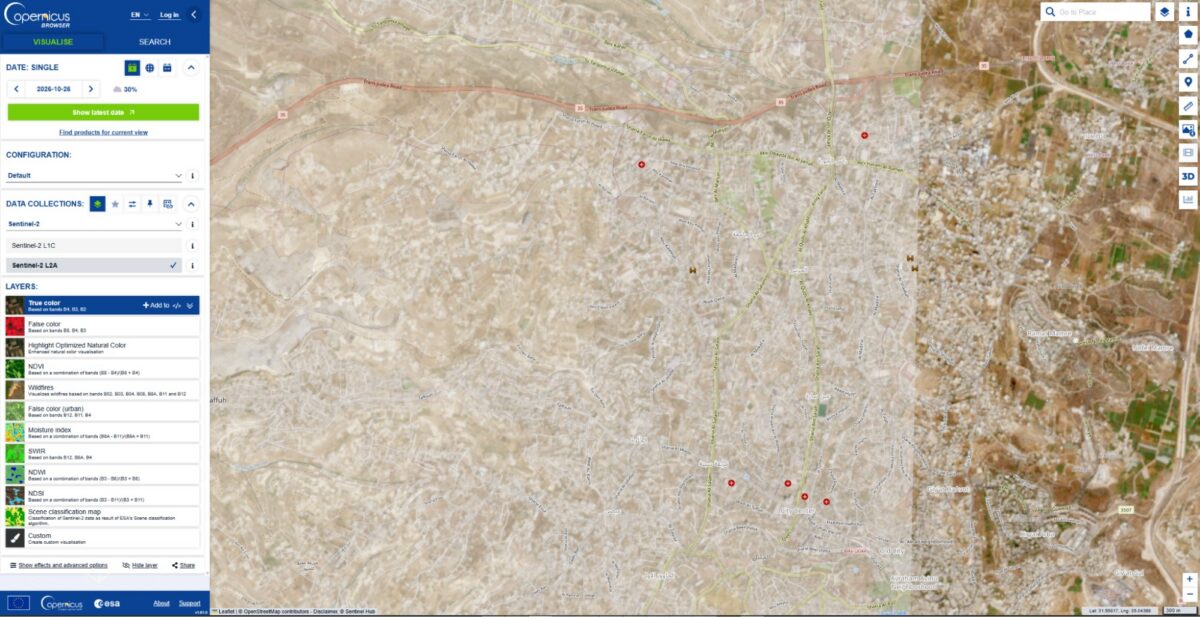
    For example, the Israeli Defence Forces demolished homes in the West Bank Palestinian city of Hebron in recent days. New imagery captured on October 26, which included Hebron, would allow open source researchers to quickly confirm the demolitions, assess the impacted area and observe any unreported IDF activity. But imagery for the western half of Hebron was not available until October 27 due to the Sentinel-2 delay, inhibiting real-time fact-checking and reporting on this evolving situation.

    A spokesperson for the European Union told Bellingcat that the delay was not related to events in Gaza but to “mitigate possible threats” due to the war in the Middle East “including Iran’s attacks on its neighbours and possible threats to European interests”. The delayed region of Sentinel tiles that cover Gaza as well as parts of Israel and the West Bank also extends over the Eastern Mediterranean Sea.

    The European Union ordered a 24-hour delay on Sentinel satellite imagery over the Gulf of Oman earlier this year during US and Israeli strikes on Iran. However the delay impacting Gaza and parts of the West Bank has not been announced or previously reported.

    “Such decisions are taken unanimously by all EU Member states and will stay in place as long as necessary,” the spokesperson said. They also said that while the Copernicus program, which includes the Sentinel satellites, operated a free and open data policy there were limitations to this for security. 

    When asked if the delay, which began in late March, was related to the presence of US vessels in the Eastern Mediterranean or if there were other areas of delay, the spokesperson said they had no further comment.

    Sentinel Delays

    The Sentinel-2 and Sentinel-1 satellites provide an invaluable source of imagery for open source researchers. This has been especially true this year, as commercial satellite imagery providers restricted access to imagery in the Middle East, including areas of active human rights concern, such as Gaza. 

    However, in July, the European Union published Council Decision 2026/1716, which ordered a 24-hour delay on Sentinel imagery over the Gulf of Oman, after a request from the US government which was involved in strikes on Iran at that time.

    Just two weeks later, the European Union issued a corrigendum that unpublished decision 2026/1716 and removed it from the Council of the European Union record, although satellite data shows the delay has remained. 

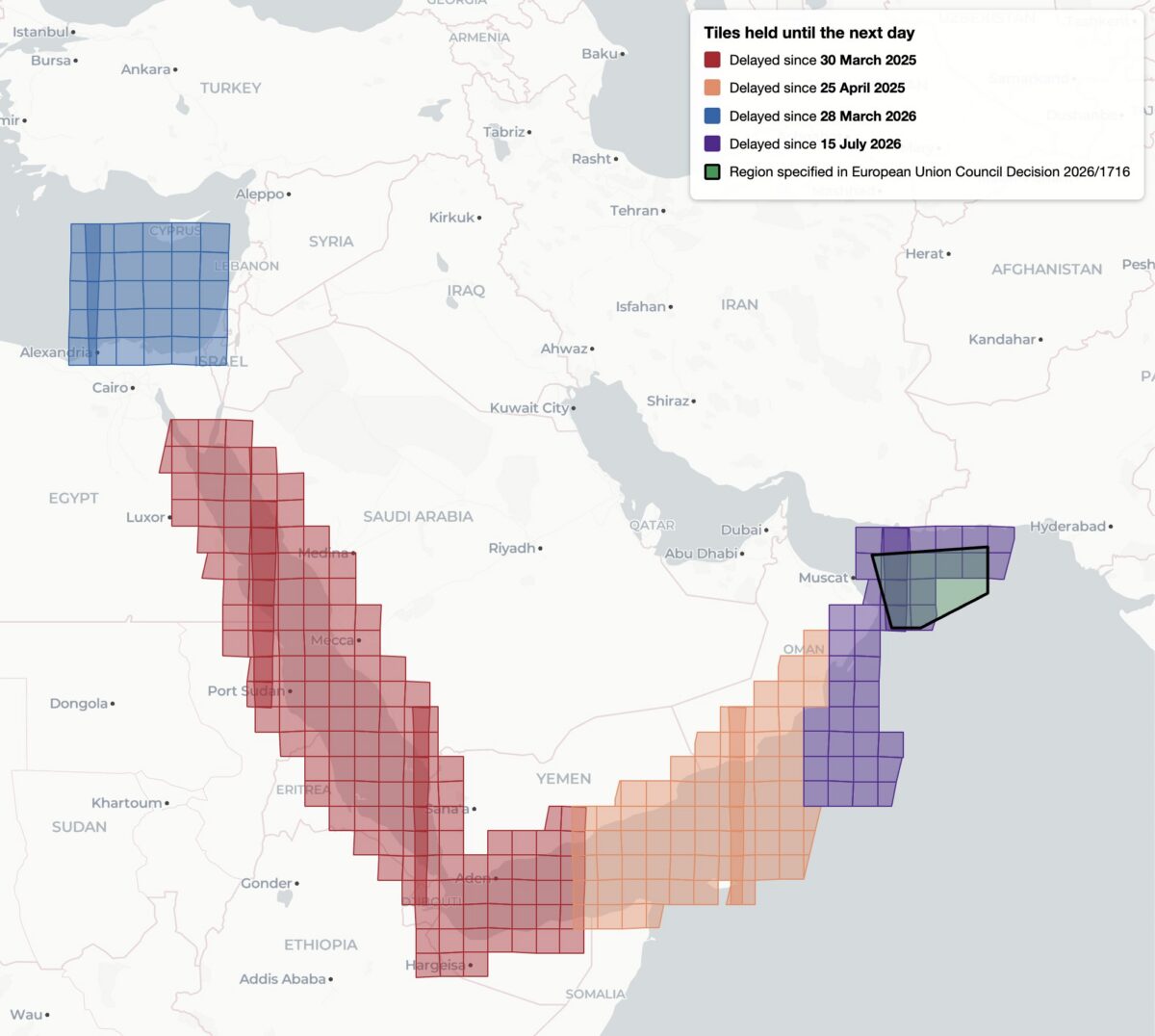
    This decision, while it was available, was reportedly the first public notification of delayed Sentinel imagery. Yet it was not the first time that Sentinel imagery has been restricted, analysis shows. Bellingcat found four distinct regions of delayed satellite imagery during 2025 and 2026: the Gulf of Oman, the Gulf of Aden/western Arabian Sea, the Red Sea as well as the previously unreported delay in the Eastern Mediterranean Sea and parts of Israel, the West Bank and the entirety of Gaza.

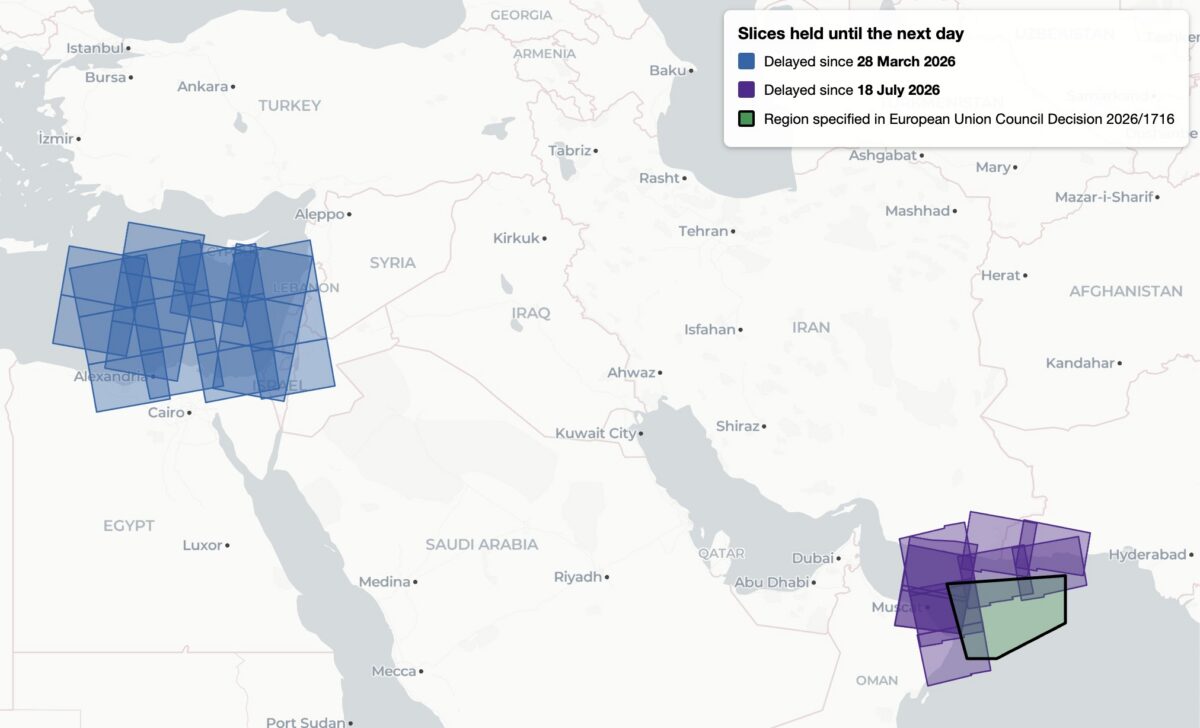
    Bellingcat’s analysis shows the regions where Sentinel-2 imagery is subject to a 24-hour delay, and when the delay was imposed. Only the July 15, 2026 delay over the Gulf of Oman was referenced by European Commission directives and the region referenced in 2026/1716 encompasses only a portion of the delayed tiles.

    Bellingcat’s analysis shows that these delays have been implemented in stages. Twenty-four hour delays of Sentinel-2 imagery were first observed by open source researchers in March and April 2025 after the US launched a naval and air strike campaign against Houthi targets in Yemen. 

    The previously unreported imagery delay in the Eastern Mediterranean began on March 28, 2026, the same month that commercial American space imaging company Planet Labs also restricted imagery across the Middle East. The Gulf of Oman delay began on July 15, 2026, two days after the publication of Council Decision 2026/1716.

    Decision 2026/1716 also specified that the delay be implemented for both Sentinel-2 and Sentinel-1 radar imagery. Bellingcat’s analysis of Sentinel-1 image availability shows that this is the case for both the Gulf of Oman region and the unreported region over the Eastern Mediterranean Sea. However, the 2025 restrictions on Sentinel-2 imagery in the Red Sea and Gulf of Aden are not implemented in Sentinel-1. 

    Sentinel-1 imagery uses “synthetic aperture radar” to capture lower resolution radar images that can collect data at night and on cloudy days. This differs from Sentinel-2, which captures optical satellite imagery at higher resolution.

    Bellingcat’s analysis shows the regions where Sentinel-1 satellite imagery is subject to a 24-hour delay and when that delay was imposed.

    A Tale of Two Tiles

    Sentinel satellite imagery is most commonly accessed by open source researchers through Copernicus Browser, a free online platform, but it is also distributed as large tiled files in the Copernicus Data Space Ecosystem. These tiles are numbered using the Military Grid Reference System, and can be listed using APIs that provide information on each tile, including the capture and publication time. By comparing the capture and publication time, the publication delay can be computed.

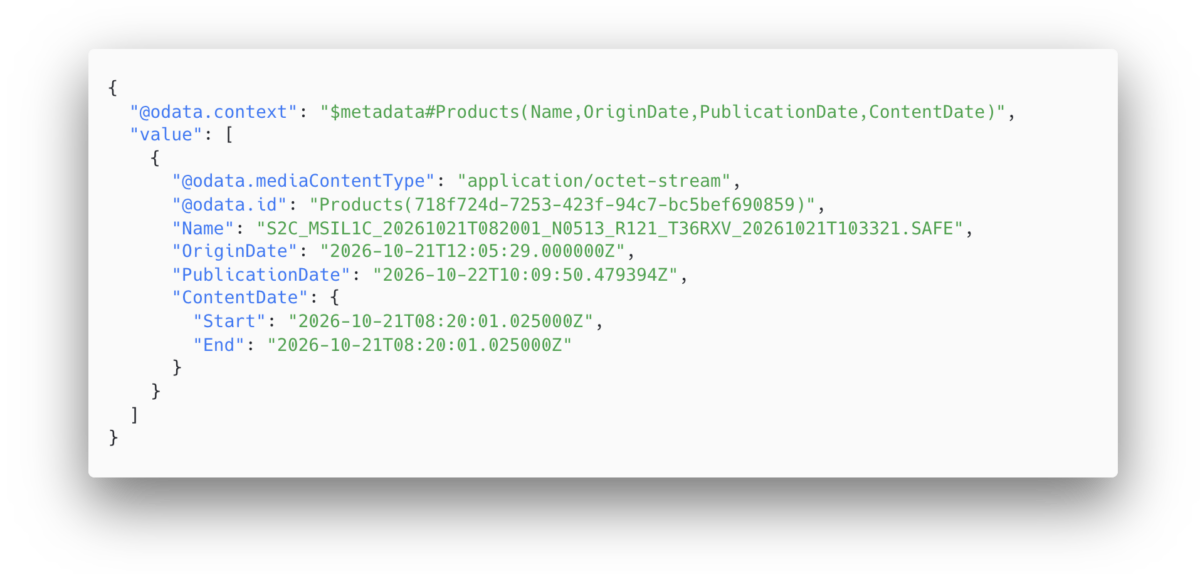
    For example, the catalog information for the tile T36RXV, which includes Gaza and portions of the West Bank, Negev and Egypt, provides the following metadata for the October 21, 2026 capture.

    Metadata from tile T36RXV, which includes Gaza and portions of the West Bank, Negev and Egypt.
    Metadata from tile T36RXV, which includes Gaza and portions of the West Bank, Negev and Egypt.

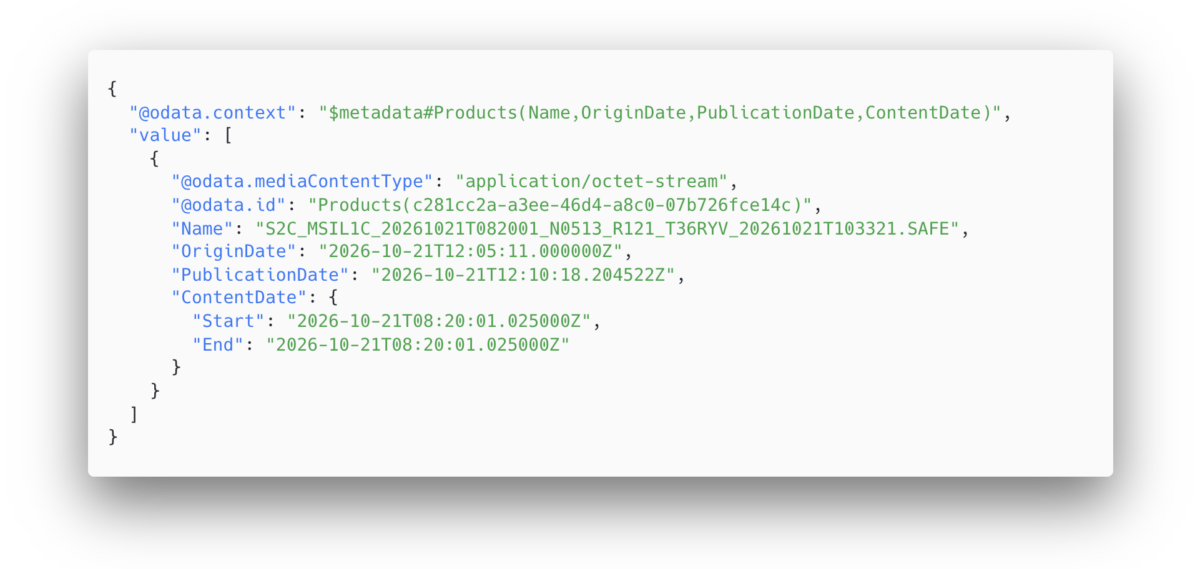
    This shows that while the image was captured at 08:20 UTC on October 21, it was not published until 10:09 UTC on October 22 — almost 26 hours later. This is in contrast to the neighboring tile T36RYV, which includes parts of the West Bank, Israel, and Jordan. API data for this tile shows that the image was published at 12:10 UTC on October 21, just under four hours after the capture time.

    Metadata from tile T36RYV, which includes parts of the West Bank, Israel, and Jordan.
    Metadata from tile T36RYV, which includes parts of the West Bank, Israel, and Jordan.

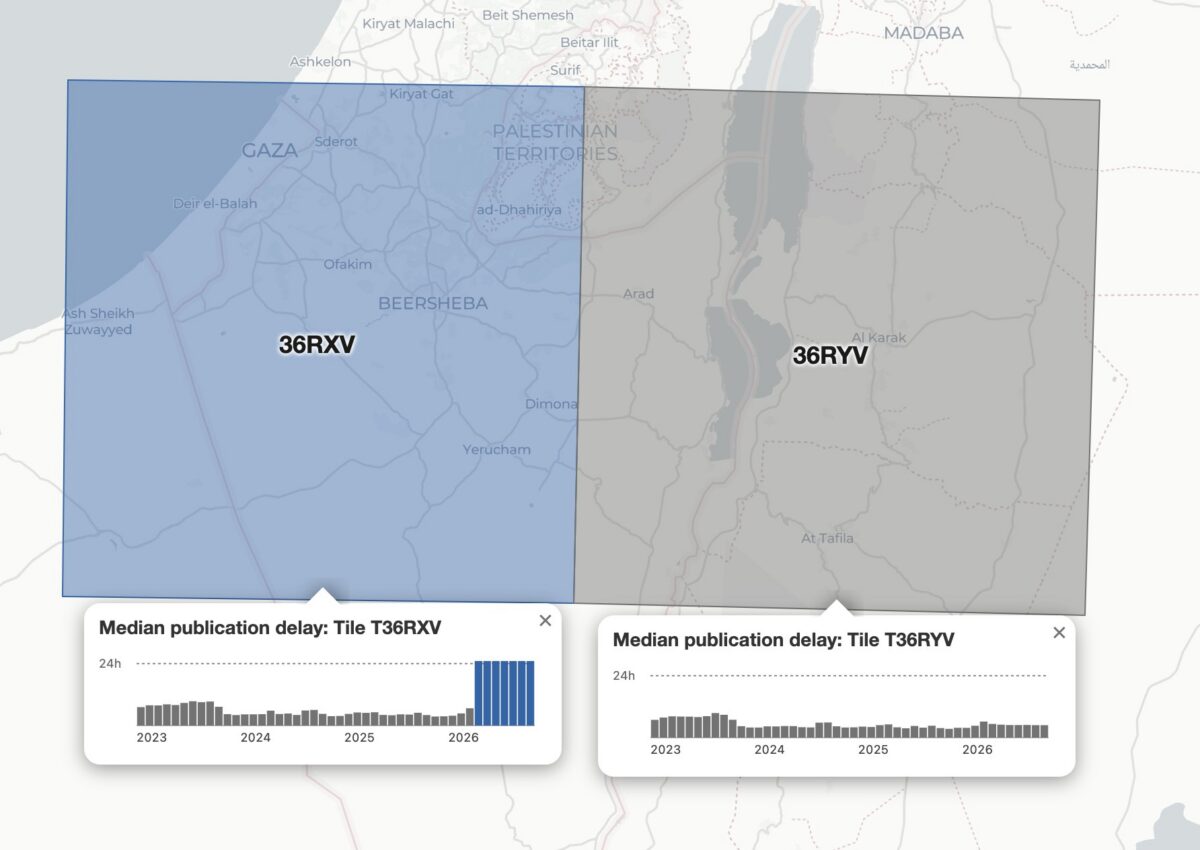
    This difference is not unique to this date either. Bellingcat’s analysis shows that this tile has been consistently delayed by one day since March 28, 2026.

    Graphing the publication delay for two adjacent Sentinel-2 tiles shows a clear difference beginning March 28, 2026.
    Graphing the publication delay for two adjacent Sentinel-2 tiles shows a clear difference beginning March 28, 2026.

    This method can be extended further, and by analysing every tile with valid publication date timestamps, Bellingcat identified all global Sentinel-2 and Sentinel-1 delays since 2023. The only consistent delays visible were those identified in the Gulf of Oman, the Gulf of Aden/western Arabian Sea, the Red Sea and Eastern Mediterranean in 2025 and 2026.

    Impact on open source investigations

    While the 24-hour delay on certain Sentinel imagery is a less severe restriction than other satellite providers have imposed, it can still impact the open source research process in fast moving situations. This is especially so in recent months as the European Space Agency’s Sentinel satellite data has emerged as a refuge as other satellite data is censored.

    The image below shows how imagery for the eastern half of Hebron was visible on October 26, but not the western half where demolitions took place earlier this week.

    The city of Hebron, Palestine, seen in Copernicus Browser on October 26, 2026. While imagery is available for the eastern half of the city, there is no recent imagery of the western half.
    The city of Hebron, Palestine, seen in Copernicus Browser on October 26, 2026. While imagery is available for the eastern half of the city, there is no recent imagery of the western half.

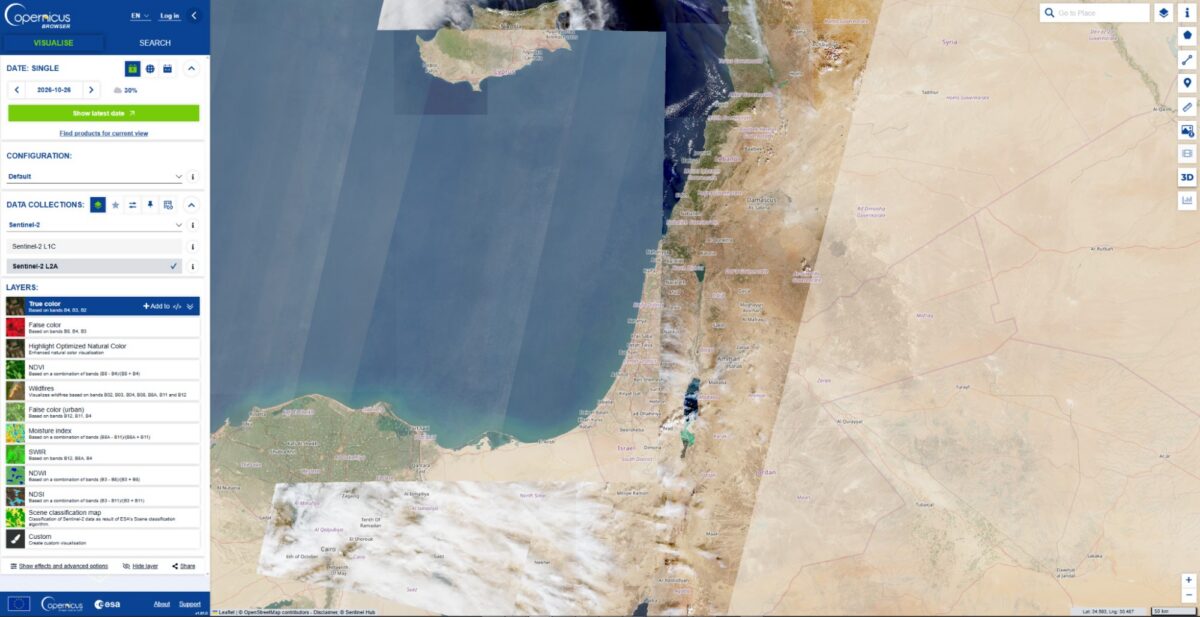
    The shape of the missing tiles can be seen by zooming out within the Copernicus browser, demonstrating how imagery of Gaza and other parts of Israel and the West Bank are also delayed.

    The missing tiles also include Gaza, parts of Israel, Egypt, and Cyprus, and the Eastern Mediterranean Sea.
    The missing tiles also include Gaza, parts of Israel, Egypt, and Cyprus, and the Eastern Mediterranean Sea.

    Sentinel imagery covering western Hebron after the demolitions took place was published on October 27. However, the delay prevented local reports from being verified with satellite imagery while the situation was still ongoing.

    Some Sentinel-2 users have previously described the challenges of covering fast-moving issues in the Gulf of Oman when the Sentinel delay was announced in March.


    Bellingcat is a non-profit and the ability to carry out our work is dependent on the kind support of individual donors. If you would like to support our work, you can do so here. You can also subscribe to our Newsletter and follow us on Bluesky here, Instagram here, Reddit here and YouTube here.

    Source: Bellingcat · 2026-10-29

  • How Beijing’s Africa ambitions, financed by China’s mega banks, triggered a crisis in Zambia

    How Beijing’s Africa ambitions, financed by China’s mega banks, triggered a crisis in Zambia

    As Kanangwa Newlove walked through her 10-acre farm just outside Lusaka, Zambia, one day in October 2025, she felt as if her dreams were withering away in front of her. The spinach, lettuce and mustard wilted in the heat. Tomatoes shriveled on their vines. She uprooted entire rows of organic vegetables — once sought-after by discerning customers, now rotting in the sun — and fed them to her pigs. “The crops that suffered the most without water were our mainstay,” she told a reporter for the International Consortium of Investigative Journalists. “There was nothing we could do. There was no water for the crops because there was no electricity.”

    Every few days, she needed nearly 8,000 gallons of water from borehole pumps to keep her farm going. The pumps required a reliable supply of electricity, but since March 2024, Zambia’s rolling blackouts had left swathes of the country without power, turning everyday tasks into Herculean struggles. Sometimes she had only four hours of power a day.

    The blackouts had a “cascading effect,” Newlove said. Without electricity she couldn’t refrigerate the few meager vegetables she could harvest. She stopped breeding and slaughtering animals. She was unable to sell to many of her regular customers, like local “mom and pop shops.” She had to drastically reduce the area she farmed and cut back on planting, and she couldn’t hire seasonal workers.

    The rolling blackouts affecting Newlove’s farm were a result of “load shedding,” scheduled power cuts meant to reduce demand on the grid. ZESCO, the state-owned power company supplying almost all of Zambia’s energy needs, alerted its customers to the load shedding schedule, but these schedules weren’t consistent or reliable, Newlove told ICIJ, making it hard to plan how to maintain — or save — her crops. “One week you’d get a schedule from, say, morning to midday and you’d make a plan based on that,” she said. “Then, without prior notice, it would change.”

    She couldn’t run a farm on four hours of electricity. For the first time since she’d started the farm over a decade earlier — a labor of love she launched while working for a social enterprise — she began to wonder if she’d need to shut it down. “Farmers are optimistic people until that is obliterated entirely by reality. …  It’s a mammoth thing to fathom, that you’re going to kill a business that you’ve worked so hard for for so many years,” she said.
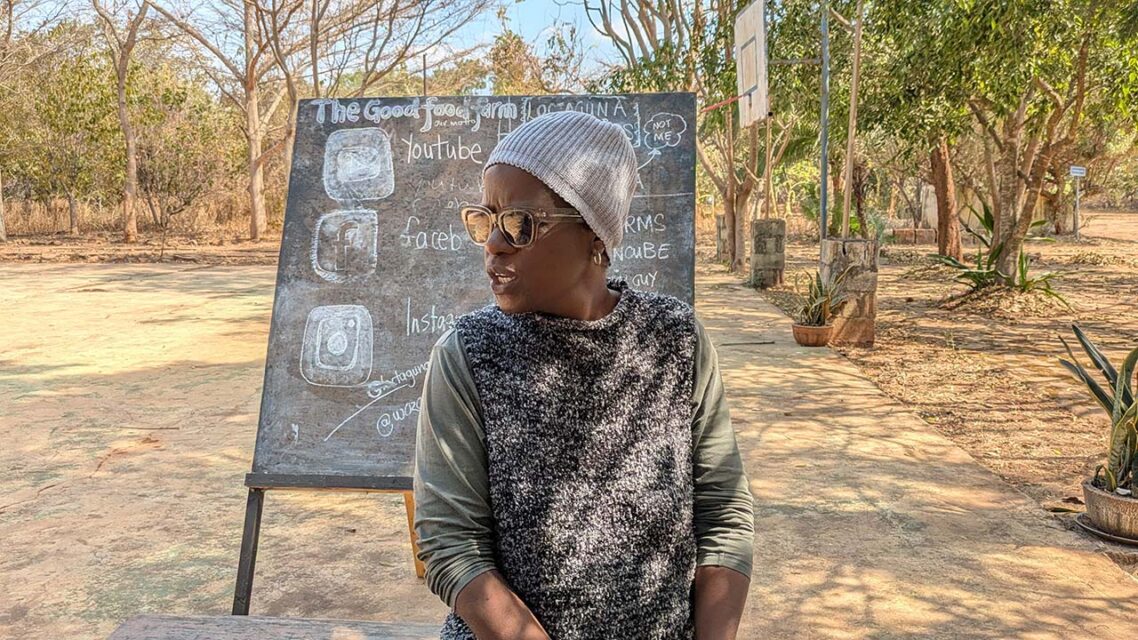
    Photo of a woman sitting in front of a chalkboard in an open field on a farm in Zambia.

    Kanangwa Newlove started farming just outside Lusaka in 2012, selling organic produce to local businesses. Image: Micah Reddy / ICIJ

    Newlove and other small-business owners across Zambia faced collapse amid a perfect storm in which environmental and economic shocks were exacerbated by the country’s deep-seated financial problems. Zambia — where roughly 60% of the population lives in poverty — is overwhelmingly dependent on hydropower, but a severe drought in 2024 left dams empty and forced ZESCO to ration electricity usage. While Zambia is drought-prone, ZESCO’s financial woes left it uniquely ill-prepared for the drought, the worst in decades.

    The company was sinking financially. Among its biggest expenses was a long-term loan of nearly $285 million from the Industrial and Commercial Bank of China (ICBC) with tough repayment terms. The loan was signed more than a decade before, in 2011, and in the following years, ZESCO had taken on more and more debt from ICBC and other Chinese lenders. Beholden to Chinese creditors, the power utility mirrored Zambia, one of the world’s most indebted countries and the first in Africa to default on its sovereign debt during the COVID-19 pandemic. As the country’s largest state-owned company, ZESCO was a significant contributor to Zambia’s overall debt.

    Now, newly revealed documents show how Chinese lenders, working with Chinese contractors in Zambia, piled loans onto the country and its ailing state-owned enterprises. When it came time for ZESCO to pay, ICBC adopted what analysts see as a hardball stance to recover debt from a struggling borrower.

    These documents form part of China Capital, an ICIJ-led investigative collaboration with 23 media partners. Based on a trove of 4.8 million documents, including client dossiers, due diligence reports, loan agreements, meeting minutes and internal emails in English and Chinese, China Capital exposes the inner workings of ICBC’s U.K. subsidiary and London branch, and the crucial role ICBC London has played in advancing Chinese interests in Africa.

    China Capital lays bare what experts describe as the bank’s muscular lending tactics, which burdened some of Africa’s most economically vulnerable states — claims the Chinese Embassy in Zambia denied. The project reveals the complex picture of Zambian debt arrangements and the role played by lenders such as ICBC, which presents itself as a commercial bank but acts as a foreign policy tool of the Chinese state, advancing Chinese strategic interests in resource-rich countries like Zambia.

    Although China became a vital lender for Zambia and helped the country fill an enormous infrastructure gap, Chinese objectives were not always aligned with Zambia’s best interests. Chinese lenders like ICBC were willing to make onerous and high-risk loans to a country that could not afford them. Meanwhile, Chinese companies seeking infrastructure contracts urged Zambian state entities to take on new debt to fund those projects. Zambia’s government, eager for easily accessible credit to fund its infrastructure plans, needed little encouragement. These factors combined to push Zambia into a disastrous debt spiral in which it was unable to service its debt, followed by years of sluggish recovery.
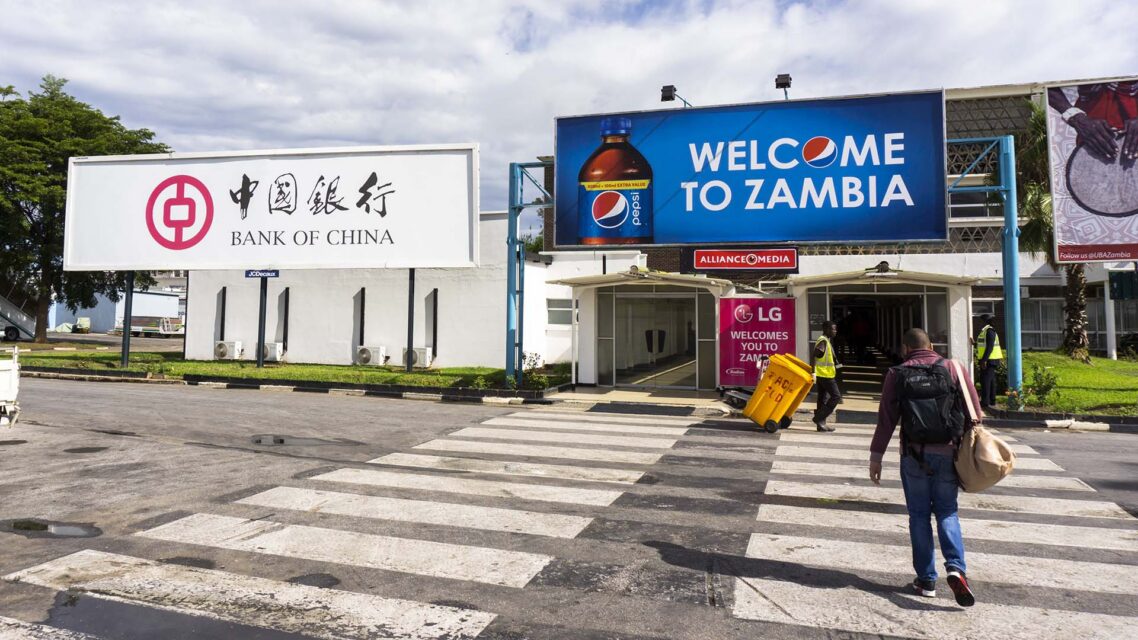
    Photo of a man walking past a sign at the airport in Lusaka that reads Welcome to Zambia beside an advertisement for the Bank of China

    A Bank of China billboard, left, and a PepsiCo Inc. advertisement stand outside the arrivals area at Kenneth Kaunda International Airport in Lusaka, Zambia, on Tuesday, Dec. 11, 2018. Chinese funding was behind many major infrastructure projects, including parts of the airport. Image: Waldo Swiegers/Bloomberg via Getty Images

    A $285 million loan

    Zambia’s economic outlook was positive in 2011, the year ZESCO signed its $285 million loan agreement with ICBC.

    The country had emerged from successful debt relief programs involving the World Bank, the International Monetary Fund and other international lenders years before. Relatively debt-free, it began to focus on funding new infrastructure projects, such as power lines, highways, stadiums and airports. To do so, it turned to the international financial market. Between 2012 and 2015, Zambia issued three international bonds worth $3 billion to foreign investors chasing high yields in the developing world.

    At the same time that Zambia was eagerly courting foreign infrastructure investment, China was rapidly expanding its interests in Africa. In 2013, Chinese President Xi Jinping announced China’s Belt and Road Initiative, a strategy to bolster the country’s connectivity with the rest of the world through infrastructure and development. Chinese companies were encouraged to invest abroad, accompanied by a surge in Chinese foreign lending. To poor, landlocked countries like Zambia, China portrayed itself as an alternative to Western funders, untainted by accusations of paternalism and willing to engage developing nations as equals. It offered fewer economic policy conditions on its loans than its Western counterparts, whose legacies were associated with painful economic reforms forced onto indebted African countries.

    Chinese investors were also willing to go where others were not. For Western companies, Zambia came with a risk premium that drove up the cost of capital and meant that they would invest only if high returns made up for the perceived risk. Barbara Dutzler, an economist with Germany’s main development agency and head of the agency’s Good Financial Governance in Zambia program, told ICIJ that, with China, there was “an alignment between state and industry” and an overarching geostrategic plan. That meant China could direct investment where it wanted and fund projects that would not hold up in purely commercial terms.

    Although it presents itself as a commercial bank, ICBC remains majority state-owned and is driven not only by the profit-maximizing interests of shareholders but also the political prerogatives of the party-state. Documents from China Capital show that ICBC bankers routinely weighed Chinese strategic policies like the Belt and Road Initiative when considering loan decisions around the world.
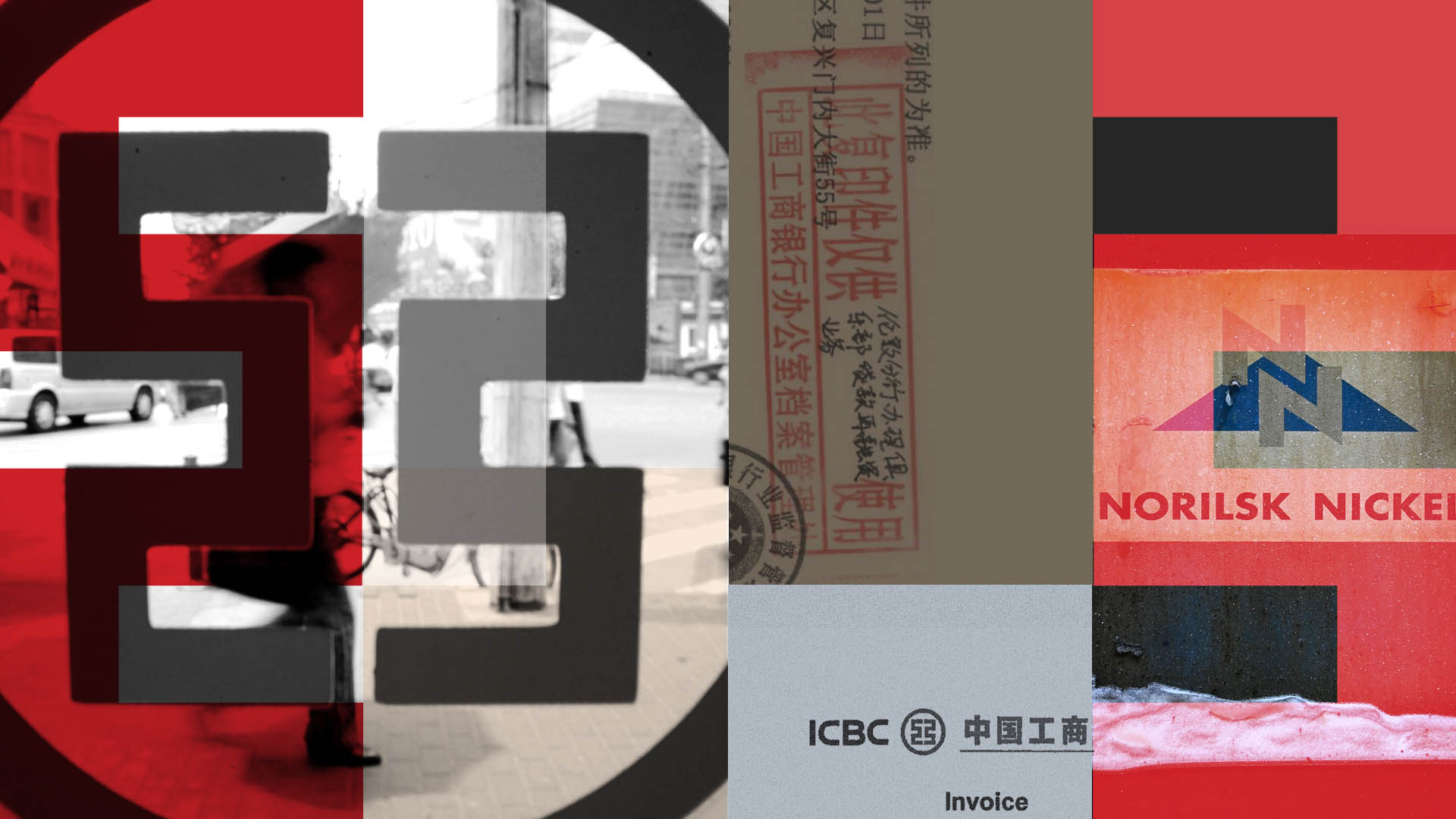
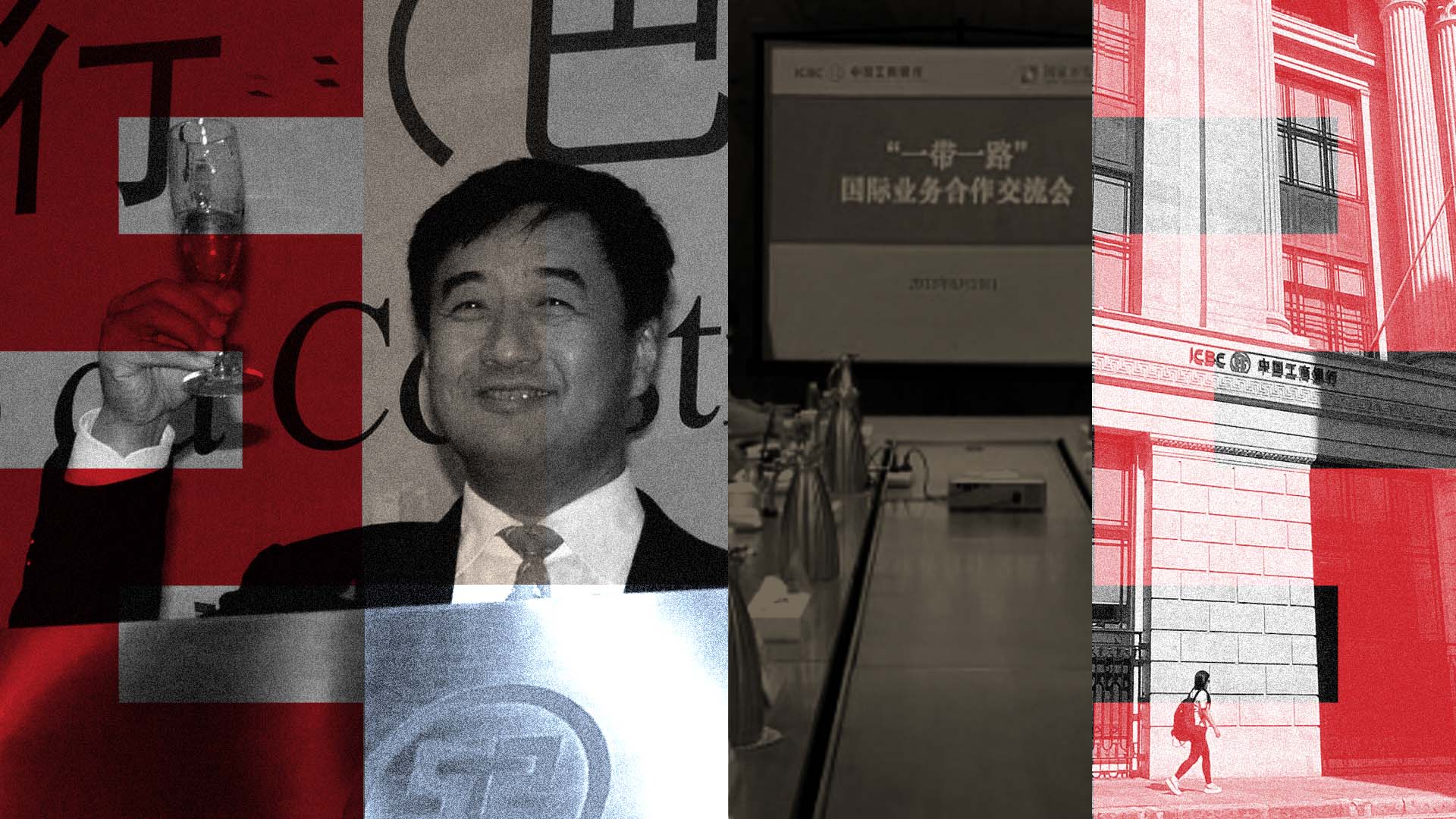
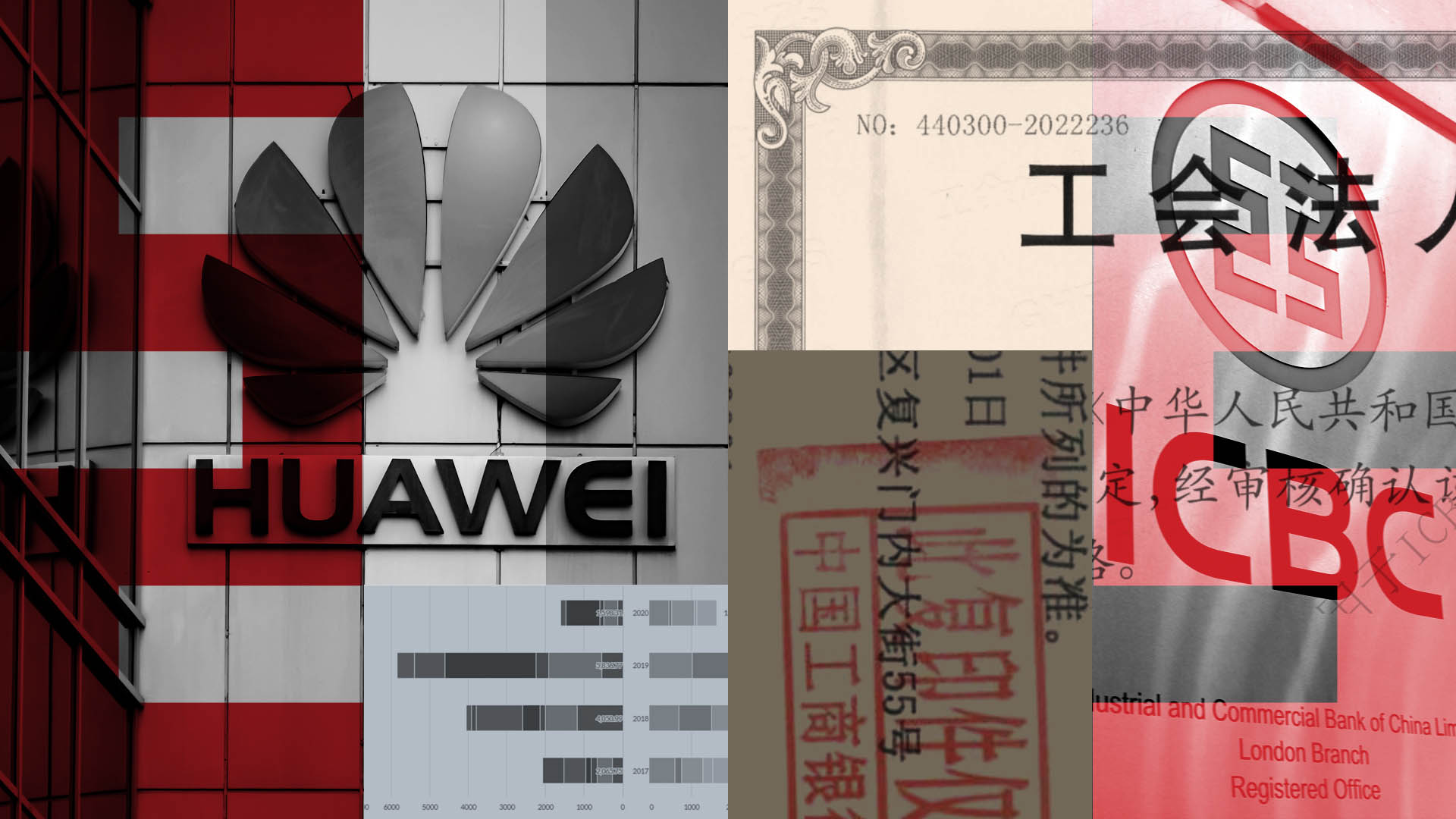
    Illustration showing ICBC logo, portions of leaked documents, and a Norilsk Nickel sign

    Illustration with photo of Zhang Hongli overlaid with ICBC logo details and images of ICBC bank and boardroom.

    https://www.icij.org/investigations/china-capital/china-banking-icbc-oligarchs-sanctions-london/

    OVERVIEW Chinese banking giant serves firms linked to oligarchs and autocrats to push Beijing’s agenda Sep 14, 2026

    https://www.icij.org/investigations/china-capital/zhang-hongli-icbc-executive-corruption-employee-misconduct/

    CORRUPTION ICBC promoted corrupt executive, ignored employee misconduct as it pursued global expansion Sep 14, 2026

    https://www.icij.org/investigations/china-capital/huawei-icbc-banking-us-court-beijing-london/

    HUAWEI Chinese bank helped Huawei spirit $1B out of London days after US indictment of the tech giant Sep 14, 2026

    Recommended reading OVERVIEW Chinese banking giant serves firms linked to oligarchs and autocrats to push Beijing’s agenda Sep 14, 2026 CORRUPTION ICBC promoted corrupt executive, ignored employee misconduct as it pursued global expansion Sep 14, 2026 HUAWEI Chinese bank helped Huawei spirit $1B out of London days after US indictment of the tech giant Sep 14, 2026

    jiang region specializing in power transmission and renewable energy projects, arranged the financing for a project it was contracted by ZESCO to undertake: construct power transmission lines and infrastructure to supply electricity to Zambia’s Northern Province on the border of the Democratic Republic of Congo and Tanzania, and Eastern Province bordering Malawi and Mozambique.

    This sort of “contractor-facilitated lending” became institutionalized in Zambia, where the government found it convenient to start “outsourcing much of the financing and mobilization process directly to Chinese contractor partnerships,” according to a paper by researcher Tianyi Wu at the Global China Initiative, part of Boston University’s Global Development Policy Center. Besides ICBC, the funds came from an array of Chinese financial institutions that were all too willing to provide high-risk loans. In these transactions, China benefited on both ends — as lender and contractor — while Zambia assumed the repayment obligation and much of the financial risk.

    The former Finance Ministry official told ICIJ the ministry was supposed to oversee borrowing, but “a lot went on outside the Ministry of Finance, and they’d find out that ministry X had signed with Y company from China and organized the finance. It was a bit of a free-for-all for a while.”

    Researchers at CARI found that among African countries with Chinese loans, Zambia had the highest number of lenders and the second-largest number of Chinese contractors securing Chinese-financed infrastructure projects. “Only Angola, which has borrowed four times as much from Chinese lenders, has more contractors, and even Angola has fewer Chinese lenders,” the researchers found.

    Many analysts agree that widespread corruption, patronage and institutional weaknesses helped fuel Zambia’s debt spiral. The country’s bureaucracy lacked capacity to negotiate, evaluate and monitor its high levels of debt, while politicians had perverse incentives to keep accumulating it. The money was easily available for large infrastructure projects from which political elites could derive kickbacks and other illicit gains: “Patronage is part of the political landscape of Zambia,” the former Finance Ministry official said. “People were seeing things like roads being built, a new airport and stadium. Things were getting better in terms of infrastructure but at a very high price because of rent-seeking behavior.”

    Chinese banks loan billions to Zambia

    Sources: The China Africa Research Initiative (CARI) at the School of Advanced International Studies, Johns Hopkins University and the AidData research center at the College of William & Mary. The CARI data includes 2015-2019 loan commitments to ZESCO and 2000-2020 loan commitments to the Zambian central government.

    An IMF report noted both that “large public investment projects were often transformed into vehicles for political patronage and rent seeking opportunities,” and that “embedded governance weaknesses cannot be overestimated in accumulation of sovereign debt and the subsequent crisis.”

    Zambia was an increasingly risky prospect, but ICBC continued expanding its interests there. In 2016 and 2017, ICBC committed to finance three other ZESCO electricity supply projects worth over $100 million and, together with the Export-Import Bank of China (known as China Eximbank), was a joint lender in the $1.5 billion syndicated loan for the 750 megawatt Kafue Gorge Lower Hydropower Station, for which ICBC claimed $15 million in management fees from ZESCO. It also signed six additional loans with the central government between 2016 and 2018, committing over $1 billion to a range of projects, from police and defense force housing to the construction of a hospital and an international airport, not all of which were fully implemented. Borrowing “mushroomed during the [Lungu] administration … to the degree they couldn’t even disburse the loans,” said Dutzler — a view backed by findings of Zambia’s auditor general. This led to growing alarm among Zambian opposition politicians and civil society groups over alleged Chinese predatory lending, as well as international headlines warning of “debt-trap diplomacy” — where a creditor country overloads a borrower with debt with the intention of extracting concessions.

    Meanwhile, Gerald Soko, the butcher, was still trading on Zambia’s good years and focusing on expanding his business, unaware of an approaching debt cliff and the years of economic strain ahead.

    r the $20 million from a reserve account it held on behalf of ZESCO. This caused a stir among ICBC London staffers when they “later learned that [head office] had pushed [the London branch] to make the payment” without the necessary documentation being in place, according to an internal ICBC report in the China Capital documents.

    The reserve account was firmly under ICBC’s control. “What this means is a bank doesn’t have to go to a separate bank, to ask for permission to touch the money in the [debt service reserve account]. They’re like, ‘I am the escrow account bank, I can do whatever the hell I want with this money,’ ” said Bradley Parks, executive director of AidData, a research center at the College of William & Mary that has tracked Chinese lending globally.
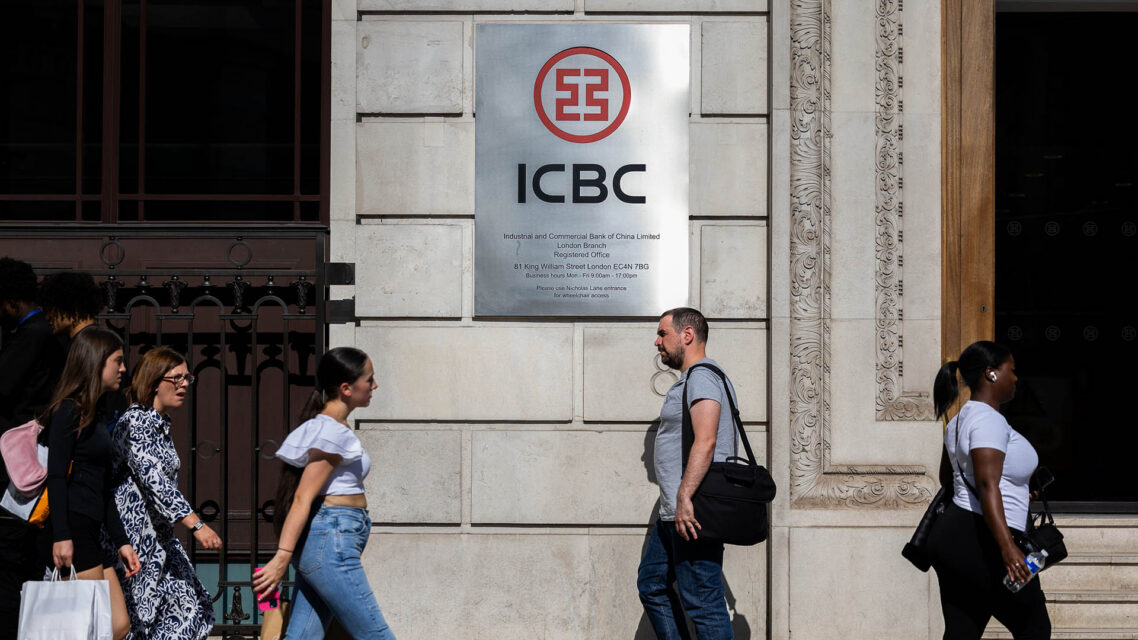
    Photo of people walking past a building with a sign that reads ICBC

    ICBC’s London branch was pressured to transfer $20 million from a ZESCO reserve account without securing the proper paperwork first, according to confidential bank records. Image: May James/SOPA Images/LightRocket via Getty Images

    Later that year, S&P Global again downgraded Zambia “on rising fiscal deficits and debt burden.” In its analysis, it referred to mounting government arrears “to contractors involved in the construction of new roads and to ZESCO … which had to import emergency power to replace a shortfall of hydro-generated power.” It added that “the increase in debt accumulation has also been accompanied by rising debt service payments.” Between 2014 and 2019 the government’s debt to foreign creditors as a percentage of GDP more than quadrupled.

    The effects of a severely strained economy soon reached ordinary Zambians. Zambia’s currency, the kwacha, depreciated, inflation rose and high interest rates made borrowing more expensive. “This has affected the ordinary person, this high inflation without GDP growth that can match the cost of living,” said Hambayi, the Zambian financial analyst.

    By 2019, ICBC was “reportedly reluctant” to release funds because Zambia began defaulting on payments to other creditors, according to an AidData analysis. In 2020, a ZESCO subsidiary defaulted on its repayment obligations for the $1.5 billion China Eximbank-ICBC hydropower loan. ZESCO — which had guaranteed higher electricity prices from independent power producers than the tariffs it charged its customers — was insolvent. So was the country, after defaulting on its debt that year. Lungu’s government had run out of options and had begun talks to restructure its debt.

    Among other measures to recover costs and reduce losses, the government began cutting subsidies, including for fuel, and increasing electricity tariffs. The escalating cost of living weighed heavily on Soko’s butchery business. “People complain about the cost of electricity … and are struggling to make ends meet. They keep asking for meat on credit, the same people who used to spend a lot,” he said, before listing the many neighboring businesses that had closed in recent years: barbers and salons, welders and fast-food franchises.

    Zambia’s weakened fiscal position left it extremely vulnerable to the worst drought in four decades, which began in 2023 and led to the relentless power cuts that nearly ended Newlove’s farming business. During the most intense period of cuts, as her crops wilted, she and the farm supervisor scrambled to find a generator and eventually found someone willing to rent them an old one. It sputtered and shook and looked as if it would give out, but it got her through those difficult days. The generator’s high costs ate into her dwindling margins, though, forcing Newlove to use her personal savings to keep the business afloat. “If we didn’t have that reserve of money, we would have sunk,” she told ICIJ.
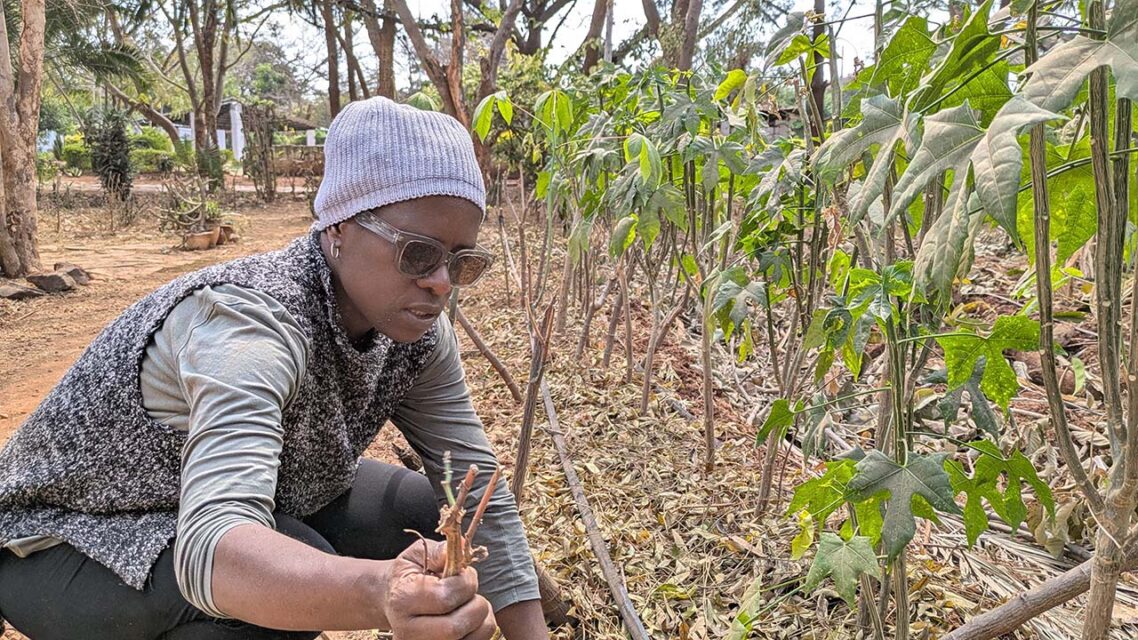
    Photo of a woman farming.

    A crippling drought that began in 2023 wilted crops and led to rolling electricity outages, which made it difficult for Newlove to run pumps for irrigation and pushed her business to the brink of collapse. Image: Micah Reddy / ICIJ

    The electricity crisis also dealt a heavy blow to Soko’s butchery, leaving fridgefuls of rotting meat. Customers stopped buying in bulk, worried that they would face the same problem, what Soko called the “trickle-down effects” of load shedding. He said that burglars twice took advantage of the darkness during power cuts to target his shop. To get through the worst of the outages, Soko too had to fork out for a generator he could barely afford to run. Sales from the butchery these days is less than half of what it was before load shedding, and he has had to put all his plans for expanding his business on hold. “There is no profit,” he told ICIJ.

    Negotiating the future

    After China became the world’s largest source of bilateral official lending to developing countries, it faced a critical test in Zambia: How would it negotiate to restructure an unusually complex mountain of debt? How would it work with other external creditors? As a creditor nation, China has not joined the Paris Club — an informal group of mostly high-income lending countries that coordinates solutions to heavily indebted developing countries — and Chinese creditor loan agreements often contain provisions to exclude them from collective debt-restructuring initiatives. Chinese lenders also had a reputation for taking a hard line and refusing to accept markdowns on their loans, “a core Chinese position,” said Dutzler of Good Financial Governance in Zambia. “They don’t give a haircut.” Among those at the negotiation table, she said, “China was the big unknown.”

    The restructuring efforts began on shaky ground, as the negotiating parties — numerous governments and private lenders — went through back-and-forth talks that dragged on for years, hamstringing Zambia’s development and economic recovery.

    The true scale of the country’s debt remained hidden, adding to the tension. Researchers at CARI, which had been tracking Chinese lending to Africa for almost a decade, found that “Zambia’s outstanding external debt to all Chinese financiers, official and commercial, was approximately $6.6 billion in August 2021.” This was nearly double the highest figure cited by the Zambian government. Part of the problem stemmed from the structure of the Chinese loans, which were cloaked in confidentiality clauses.

    debt restructuring.” At the time, holders of Zambia’s bonds were “refusing to proceed with debt renegotiation, citing insufficient information about China’s claims on the country.”

    In an email to ICIJ, the Chinese Embassy in Zambia said that claims about opaque lending were “baseless” and that China’s “overseas financing cooperation is fully open and transparent.”

    Ultimately, the worst fears of Chinese predatory lending, rumors of China seizing national assets like ZESCO and screaming international headlines about debt-trap diplomacy turned out to be alarmist. China agreed to co-chair Zambia’s official creditors’ committee alongside France, signaling a willingness to work with others rather than go it alone. An important milestone came in 2024, when Zambia reached agreements in principle to restructure debt with Chinese commercial lenders, including ICBC. As of 2026, debt-restructuring negotiations were largely concluded, with most of the talks occurring under the government of Lungu’s rival and successor, Hakainde Hichilema.

    Ordinary Zambians still feel the lingering effects of years of intersecting crises that battered the economy and shifted perceptions of China’s role in Zambia. At Soko’s spartan butchery, the long queues of customers have been reduced to a trickle. Turnover is less than half of what it was, he said, leaning against a mostly empty display cabinet. Survey data shows that Zambians have grown increasingly skeptical of China’s role in their country. In 2014, 72% of those polled by Afrobarometer — an independent public opinion research network — viewed China’s economic and political influence positively. By 2022, that figure was down to 42%. China too was burnt by the debt troubles of developing nations; that’s part of the reason it has shifted focus to what it calls a “small and beautiful” approach to infrastructure projects, with smaller loans and shorter repayment windows.
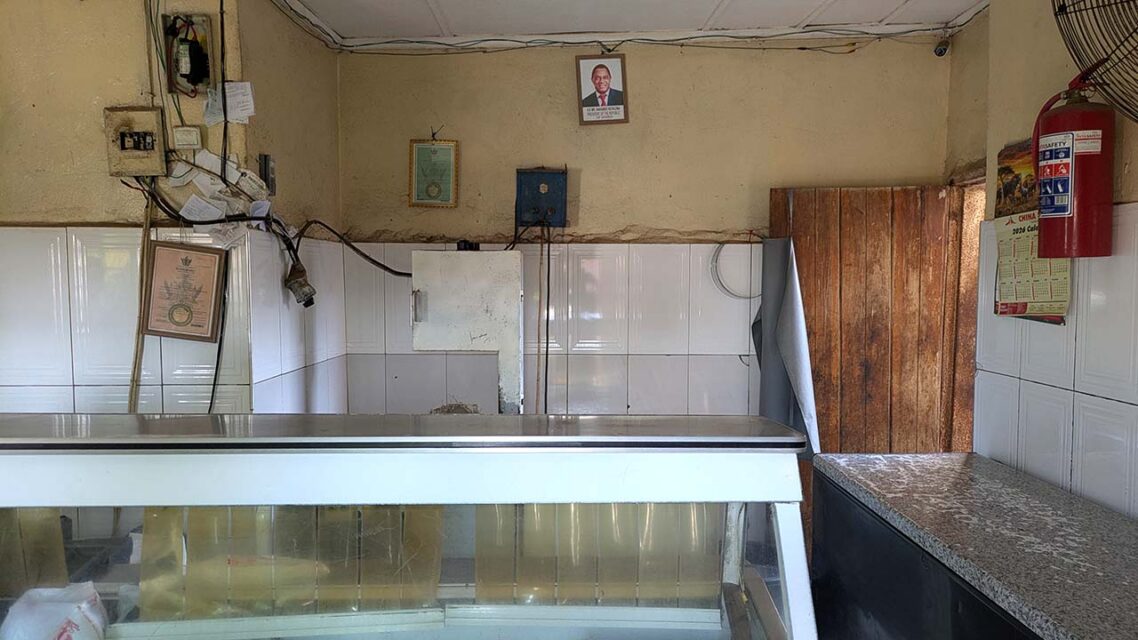
    Photo of an empty butcher shop, with a picture of Zambian president Hichilema hanging on the wall.

    A photo of Zambian President Hakainde Hichilema hangs on the wall of Soko’s butcher shop, which was a thriving business until the country’s electricity crisis hit and the economy stalled. Image: Micah Reddy / ICIJ

    Newlove, the farmer, told ICIJ that she feels she has made it out of the crisis intact. Her farm is fully operational, and she avoided laying off any of her 14 full-time staff. They have begun replanting on portions of the land they were forced to abandon. The chickens, goats, rabbits and pigs survived, and she has since crisis-proofed her farm with large solar panels that soak up energy from Zambia’s mostly sunny skies. But on the other side of Newlove’s stone perimeter wall is dry, dusty scrubland — a graveyard for failed farms and a constant reminder of her close brush with disaster. “Our resilience was tested,” she said. “I knew a lot of farmers who shut down or changed business. … They were very lucrative, and I thought, ‘We’re next.’ ”

    Contributing reporters: Scilla Alecci, Denise Ajiri, Jelena Cosic and Delphine Reuter (ICIJ)

    Source: ICIJ · 2026-10-26
  • From Flights to ‘Incentives,’ Indonesian Nickel Giant Harita Approved Payments for Local Politicians and Leaders

    From Flights to ‘Incentives,’ Indonesian Nickel Giant Harita Approved Payments for Local Politicians and Leaders

    When senior mining executive Stevi Thomas was convicted alongside an Indonesian governor for bribery in 2024, the ruling was seen as a rare case of accountability for corruption in the Southeast Asian nation. 

    The court case revealed how the politician had received some $60,000 in bribes for facilitating permits for Harita Group, a conglomerate that has sourced up to eight percent of the world’s nickel supply in recent years  — and has also left a trail of environmental damage in its wake. 

    Now, leaked internal records obtained by OCCRP reveal a host of other payments that Harita executives earmarked for local politicians, individuals identified by the firm as community leaders, and the military between 2013 and 2023. 

    The planned or approved payments amounted to at least $389,000 and took the form of flights for politicians, “incentives” for the community leaders, and financial support for military projects. 

    Evidence of these outlays was found in leaked company emails, internal memos, and invoices.

    Reporters were unable to independently verify if the money was ultimately disbursed in every instance, or establish the precise purpose of some of the approved payments.

    But anti-corruption and mining experts said that some of the planned payments could violate Indonesian laws, including those regulating the giving of gifts to officials and a mining company’s use of corporate social responsibility funds. 

    Harita Group and the employees involved in approving the payments did not respond to requests to comment.

    Though many of the individual outlays were not large in size, such as $80 earmarked for the head of the local port office, money of this magnitude can go far in Indonesia, where the average monthly salary is approximately $200.

    The findings raise questions about whether the cash was used to reward individuals who acted in Harita’s commercial interests. In one case, Harita approved payments for a village chief who later, according to an internal company memo, monitored local residents who were protesting the miner’s operations. 

    The documents also provide a glimpse into the dealings between Harita executives and Indonesian officials, including how in one instance, the company drafted its own government permission decision and ultimately removed a legally-required clause. 

    “Harita or any private company has no legal authority to draft a government’s own policy or decision document, at any level of government,” Aryanto Nugroho, the national coordinator of the transparency organization Publish What You Pay Indonesia, told OCCRP. 

    “Drafting government decisions is a state function, not something delegated to the party the decision is meant to regulate.”

    The Indonesian government did not respond to requests to comment. 

    In most cases, the payments were authorized by senior Harita executives such as Thomas, the company director who was imprisoned in 2024 for bribery, the leaked emails show. Thomas did not respond to requests to comment. 

    Harita is one of the largest nickel producers in Indonesia, and its mines feed the supply chains of some of the world’s biggest electric vehicle makers. But it has also come under scrutiny for its environmental record. In 2025, an investigation by OCCRP and partners found the company knew for a decade that its mining operations were regularly breaching legal limits on the release of a toxic chemical into surrounding waterways, and that the contamination had reached residents’ main source of drinking water.

    Ferdian Yazid, a researcher at Transparency International Indonesia, said that the bribes that landed Harita executive Thomas and the governor in prison set “a bad precedent” in a country where anger over corruption erupted into nationwide protests late last year.

    “Although Harita claims to adhere to anti-corruption and environmental principles, the reality is far from what it has stated.”

    Yazid added that private companies such as Harita have disproportionate influence over regulatory frameworks at the expense of the public interest.

    Given the severity of corruption in Indonesia’s nickel sector, he added, “corruption prevention must be strategic, targeting critical minerals.”

    ‘Building Relations’

    The small island of Obi, which forms part of the North Maluku province in eastern Indonesia,  is covered in dense, mountainous forest. Harita opened a nickel mine there in 2010, and five years later, the company started building the first in a series of new smelters to process nickel ore into a material used in the production of stainless steel. 

    At the groundbreaking ceremony for Harita’s first smelter on Obi Island in June 2015, members of the Kasuba family, a powerful force in regional politics, watched on and gave the project their blessing. 

    But some residents of Kawasi — a village now encircled by Harita’s facility — were less cheerful about the expansion after already having seen the company’s mines strip away rainforest surrounding their homes.

    Internal company emails show that Kawasi villagers met with company representatives and accused Harita of breaking the law by failing to hold a public consultation into the construction of the smelter. They also demanded that the company stop work and allow time for a new environmental impact assessment. 

    But Harita’s senior general manager dismissed their concerns, writing in an email to a colleague in July 2015 that he suspected “a third party is stirring up the public.” 

    It turns out Harita had already established financial ties with local residents they referred to as “influential” local officials and community members.

    In 2013,  an internal Harita spreadsheet titled “building relations” detailed planned payments totaling $2,300 for Kawasi’s elected leader, Arifin Saroa, and at least 11 other individuals. Around $400 of this total was earmarked specifically for Saroa, who could not be reached for comment. 

    Another July 2014 email chain marked as “confidential” details around $13,500 in “incentives” between March and July designated for dozens of individuals identified as community figures, including local imams and pastors listed as “partners” and “stakeholders.” 

    While the emails don’t state the exact reason for what were marked as monthly outlays, the correspondence shows Harita’s senior general manager evaluating payments based on the community figures’ level of influence.

    In one message, he wrote that a certain reverend’s “role was quite significant” despite being from a different town, as he had managed to make a phone call that stopped a threat from protesters to halt production. 

    While it could not be confirmed if there was any connection to Harita’s planned payment, several years later Kawasi’s village head Saroa appeared to be providing the company with a valuable service. A 2020 internal security memo from Harita noted that he would be passing on any information about members of the community “suspected of being masterminds or participants” in a protest against the company. 

    This would allow the company to “give them special attention by rejecting them and their families” from employment opportunities, the document says.

    According to the memo, Saroa had confirmed that “every [Harita] applicant from the village must go through the Kawasi Village Head for recommendation or otherwise be blacklisted,” and that a local widow was being monitored by the Kawasi village authorities.

    Four Kawasi residents confirmed to OCCRP that those who wanted to work for Harita or sell supplies to the company had to go through Saroa for a recommendation. 

    They also alleged the company had offered financial incentives to those who complained about the damage caused by the mine, and who have also faced intimidation.

    “Whenever people refuse to sell their land [to Harita], police personnel show up at odd hours to persuade and intimidate them,” said one resident, whose name OCCRP has chosen not to publish to protect him from potential reprisals. “Even the slightest protest here is immediately reported to the police or the military.”

    Head of the village Saroa himself did sell land to the company among other substantial financial transactions with the Harita Group, the documents show. 

    He earned approximately $304,000 primarily between January 2020 and August 2022 in return for selling cropland close to Kawasi that he either owned or farmed, according to more than a dozen joint agreement letters seen in the leaked records by OCCRP. Harita planned to use the land to build a second smelter and other infrastructure, the documents say.

    Separately, Harita had also contracted two companies it understood to be owned by Saroa to provide loading services at the island’s port, according to a contract and loading report. 

    In 2021, Harita’s stakeholder engagement plan identified the village leader as “critical” for the mine’s success — stating that he provided a high-level of support, and remained in regular contact with the company.

    Harita did not respond to questions about where the funds for its various payments were drawn from.

    However, in one case, reporters found that $1,400 earmarked for the military’s inauguration of a navy ship was categorized internally as CSR spending. 

    Under Indonesian law, mining companies are required to put CSR funds towards improving the quality of life of the community directly impacted by mining, as well as the broader society.

    “Corporate social responsibility is supposed to be given to the community,” said Laode Muhammad Syarif, a former commissioner for Indonesia’s Corruption Eradication Commission.

    “A volleyball court is built because there’s no place to play, or the mobile clinic is improved — that’s CSR. But if it’s given to the police and military, what’s the connection?”

    The military did not respond to requests for comment.

    ‘Good Relations’ 

    In the summer of 2016, Harita’s senior director Lalu Mahfi had a problem. Harita was already a year into the building of its first smelter on Obi Island, but the company did not have a construction permit. 

    “Normally, a building should not be constructed without first obtaining an IMB [building permit], but through good relations with the local government, we have been able to continue the smelter construction,” Mahfi wrote in an email to colleagues that June. “In other places, such a project could be shut down or ordered to stop.”

    In the same email Mahfi urged staff to make a hotel booking at a four-star hotel in Jakarta for Bahrain Kasuba, the nephew of Abdul Ghani Kasuba — the governor later jailed for accepting bribes from Harita in a separate instance — and several team members. At the time, Bahrain was serving as regent — a position equivalent to a district head — of South Halmahera, an area that includes Obi island.

    Though there is no evidence Bahrain ultimately facilitated the construction permit for Harita, Mahfi explained in an email to colleagues that his “arrival in Jakarta is very important for the company in securing the building permit for the smelter.”

    Mahfi did not respond to requests to comment and reporters sent questions for Bahrain through the regency government, which is currently headed by his cousin, but did not receive a response. 

    By that point Harita and Bahrain already had a working relationship. A year earlier, on the day he took office, the official signed a joint agreement with companies belonging to Harita Group to “smooth and accelerate” the company’s mining operations in “anticipation of social conflict” around the mining areas, the document says.  

    Although Bahrain canceled the June 2016 Jakarta plans, the company ultimately booked six flight tickets between North Maluku and Jakarta for the official and in one case his wife over the next five years, according to receipts, booking forms, and memos from Harita’s finance department. None of the documents provide a reason for why the company purchased these flights.

    On November 15, 2016, Harita finally obtained the construction permit for the new smelter. 

    Yassar Aulia, researcher at Indonesia Corruption Watch, said the hotel booking and flight purchases raise questions over the propriety of Harita’s relationship with a public official, and whether there was any “kickback intent.”  

    The country’s Corruption Eradication Commission did not respond to queries about whether Bahrain reported the flight purchases. 

    Under Indonesian law, public officials have 30 working days to report any gift to the Commission, and must prove the gift was not a bribe in cases where the value is over $440. For lower value gifts, evidence of a bribe would need to be proven by a prosecutor, the law states. (The costs of the flights for Bahrain and his wife that are mentioned in the documents were typically around $140.)   

    In August 2017, Mahfi also sent the senior general manager a draft contract to hire Muhammad Kasuba —  Abdul Ghani Kasuba’s brother and a former regent of South Halmahera — as an external relations consultant to, among other tasks, “foster relations with the Regional Government and community” for a minimum of $3,700 per month, a figure 20 times the average salary.

    It is not known if Muhammad Kasuba ever signed the draft contract, but the former official has continued to publicly champion Harita as recently as last year. He did not respond to requests to comment.

    Drafting a Government ‘Decision’

    Company emails indicate that Harita was given an unusual level of free rein by authorities.  

    In May 2016, Mahfi emailed Harita’s then-president director a draft government “decision”  permitting the company to store hazardous waste. 

    Although the official government document was to be signed by Bahrain — the regional official who would later have flights booked by Harita — it was apparently put together by Mahfi himself.

    “I compiled this draft from various sources,” Mahfi wrote in an email to colleagues.

    The emails show Mahfi went on to further edit the decision, removing a clause which stated that the permit had been issued after a legally-required field verification.

    Nugroho, the national coordinator of Publish What You Pay Indonesia, described this intervention as “a private party stepping into a function that belongs exclusively to the state.” 

    “That is precisely the mechanism governance experts describe as state capture.”

    He also added that if the regency government issued the permit as written by Mahfi without the field verification clause, the permit could be revoked and the officials who signed off on it could be liable to either civil or criminal action.

    Paying for Positive News 

    In 2018, international consultancy firm Hatch delivered a technical review commissioned by Harita into the company’s smelter operations. 

    According to the review, which OCCRP found a copy of in the leaked Harita emails, the company used hazardous waste materials during the construction of the smelter without government permission. 

    Harita had also not completed a number of crucial environmental and social impact assessments, the report said.

    However, Harita spent money painting a different picture to the public.

    Between August 2022 and January 2023, Stevi Thomas signed off on spending a total of about $6,000 to place news stories about Harita in more than 40 Indonesian media outlets, internal memos show.  

    The stories described Harita’s contribution to the economy, the job market, and how the nickel industry was on track to meet net zero targets, among other topics. 

    On the ground, meanwhile, Kawasi villagers blame Harita’s operations for the degradation of their farmland through landfilling, flooding, and groundwater contamination. Most were eventually relocated to an “eco-village” built by the company. 

    Today, only a handful remain in the original Kawasi village, where homes and streets are subject to frequent blackouts, as well as severe flooding with contaminated water from the mine’s overflowing sediment pond.

    Source: OCCRP · 2026-10-22

  • Groups Associated With India’s Far-Right Receive Millions Through US Donor-Advised Funds

    Groups Associated With India’s Far-Right Receive Millions Through US Donor-Advised Funds

    Sign up here to receive Bellingcat’s biggest investigations by email as soon as they are published.

    US non-profits whose founding leaders or organisations have been associated with India’s controversial Rashtriya Swayamsevak Sangh (RSS) – or initiatives the Hindu nationalist group has endorsed – received millions of dollars over recent years through grants that allow donors to remain anonymous, a Bellingcat analysis has found. 

    The right-wing and Hindu nationalist volunteer organisation is widely considered the ideological parent of India’s ruling Bharatiya Janata Party (BJP). Prime Minister Narendra Modi, a former RSS worker, is one of its most famous supporters. 

    But the RSS’ vision of India as a Hindu nation is controversial both at home and abroad: it was previously banned in India three times, and a bipartisan US commission on religious freedom recently called for the US government to sanction the group “for their responsibility and tolerance of severe violations of religious freedom”. Almost a hundred US politicians, both Democratic and Republican, recently pledged not to take funding from RSS-linked entities. 

    India’s far-right Hindu nationalist volunteer group RSS remains an unregistered entity in India. Source: Prabhat Kumar Verma/ZUMA Press Wire via Reuters Connect

    While there have been efforts to map out RSS-related entities, it can be challenging to establish concrete links between the organisations because the RSS remains an unregistered entity in India and has no formal membership, maintaining that it is a “body of individuals” with shared ideological views.

    “The RSS functions without independent oversight of its resources, finances, influence, and activities,” said Dr Angana P Chatterji, an anthropologist and scholar of South Asia studies at the University of California, Berkeley. “This is not proportional to the vast power, reach, and influence it possesses. Its leadership and cadre are protected from accountability and scrutiny,” she added.

    The RSS had not responded to multiple requests for comment, as of publication.

    Bellingcat identified two US-registered non-profits that appeared to have past and present ties to the RSS, or organisations associated with them, based on the non-profits’ or RSS websites and publications, as well as statements by the non-profits’ founders and spokespeople. The non-profits were the Ekal Vidyalaya Foundation of USA Inc (Ekal USA) and Sewa International Inc (referred to as Sewa USA). 

    We looked at all Form 990s – tax returns that US non-profit organisations are required to file annually – listing Ekal USA and Sewa USA as grant recipients, as well as the Form 990s of the charities themselves, from 2020 to 2024. As of September, the latest available Form 990s for Sewa USA were for the fiscal year ending December 2024, while Ekal USA also filed a form for the fiscal year ending December 2025, which was excluded for consistency, although the same pattern was observed during this period.

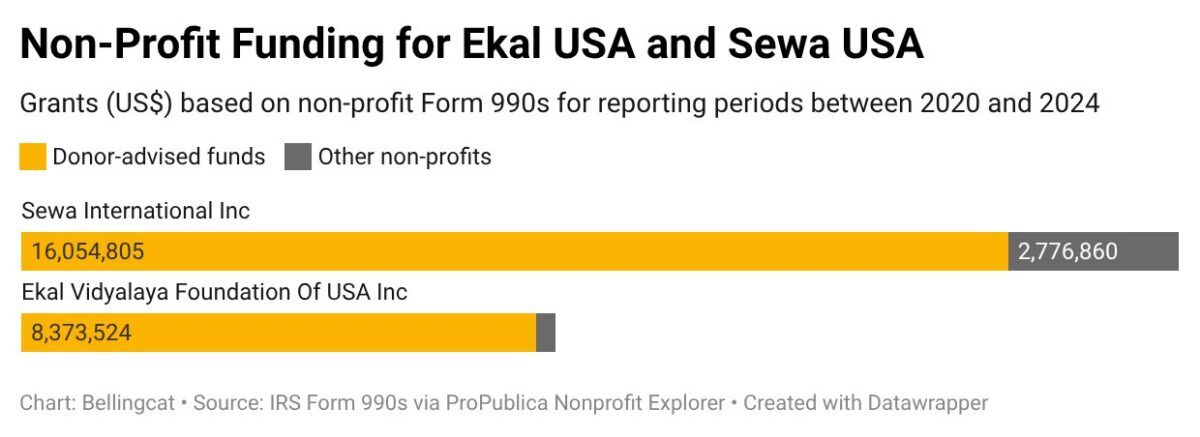
    This analysis showed that the charities received at least US$24.4 million from 34 organisations that manage donor-advised funds (DAFs), or 20.7 percent of the total $117.8 million they reported receiving in contributions and grants during this period. 

    The actual amount from DAFs may be higher, as we excluded filings that covered partial years outside of this period – for example, June 2019 to June 2020. The filings from the two charities we identified were based on the calendar year.

    The Form 990s also revealed that the vast majority of the money spent by these two charities on grants to other organisations or individuals was in India or the South Asia region rather than in the US: Ekal USA donated $33.7 million in foreign grants – all of which went towards the Ekal Vidyalaya project in India according to its filings –  and none in domestic grants in the five years from 2020 to 2024, while Sewa USA reported $29.7 million in foreign grants and $622,613 in domestic grants during the same period. 

    Support Bellingcat

    Your donations directly contribute to our ability to publish groundbreaking investigations and uncover wrongdoing around the world.

    DAFs are common vehicles for people in the US who want to make donations to charitable causes while receiving tax relief or benefits. Donors do not control the money once they donate it but can advise on which charities the money eventually ends up at.

    These funds are legally maintained and operated by non-profit sponsoring organisations. As public charities, DAF sponsor organisations detail the amounts and recipients of grants that they make on behalf of their donors in their Form 990s. However, they do not disclose who their donors are, and donors can choose to remain anonymous. (Note: Bellingcat US receives grants from donor-advised funds, and some grants do not disclose the name of the grant recommender. However, many of our donors are listed on our funding page.)

    There are many more organisations reportedly linked to the RSS that are not included in this analysis, but we focused on these two because of the large amounts of grants they received through DAFs, with the original sources of the funds untraceable from public information, as well as evidence pointing to both historical and current connections between them and the RSS or organisations associated with the RSS. 

    It is worth noting that some of the evidence we found pointing towards a connection between the two charities and the RSS or organisations associated with the RSS was from before or after the period we analysed (2020 to 2024). There is no evidence that DAF grants funded the RSS, only that they went to organisations that appear to have connections with the RSS. Experts told us that DAF grants undergo less regulatory scrutiny than other charitable donations and that DAF sponsor organisations have discretion over whether to restrict or permit donations to certain recipients.

    Ekal USA

    Houston, Texas-based Ekal USA is a non-profit that describes its mission in its Form 990s as “to provide free elementary education and free primary healthcare to children in remote and rural India”. The USA branch of Ekal Vidyalaya, according to its website, was founded in 2001 as part of efforts to “reach out to the global diaspora” in order to achieve a goal to “expand the reach of Ekal to 100,000 villages”. 

    RSS chief Mohan Bhagwat has appeared at multiple Ekal Vidyalaya events in India promoting the initiative over the years, as far back as 2014 and most recently in May.

    Ekal USA was started in the late 1990s as a programme of the Vishwa Hindu Parishad of America (VHPA), or World Hindu Council of America, VHPA spokesperson Shyam Tiwari told Bellingcat in an email response. He added that it was set up as an independent organisation in early 2000. According to VHPA’s website, Ekal USA was established in 2002.

    VHPA is based in the US, while the similarly named Vishwa Hindu Parishad (VHP) is in India. VHP lists VHPA in the “Hindus Abroad” section of its website. A 2017 article from VHPA’s magazine states that late founder Mahesh Mehta was trained by the RSS since he was 10 years old, and that the VHPA was born after Mehta was advised by the former supreme leader of the RSS to “build VHP in USA”. The national spokesperson of VHP in India, Vinod Bansal, said that it is an independent organisation that “sometimes shares ideology” with VHPA.

    RSS’ website states that VHP was launched to organise Hindus and “reconvert all those who had been knowingly or unknowingly proselytised to alien faiths and are now desirous of coming back to the Hindu fold”. Bansal referred to VHP as an “independent part of the RSS” and an “ideological brother”. 

    Ekal USA Chairman-Advisor Subhash Gupta wrote in an Ekal USA publication this year that in the ‘80s and ‘90s, he was “president of the VHP’s Houston chapter” and “often received many high-profile guests from RSS and VHP”.

    Related articles by Bellingcat

    How Four Hindu Nationalist Websites Make Their Money

    How Four Hindu Nationalist Websites Make Their Money

    Gupta did not respond to requests for comment as of publication.

    From 2020 to 2024, Ekal USA reported receiving more than $48.4 million in contributions and grants. Of this amount, at least $8.3 million was from DAF grants, based on Form 990s that listed Ekal USA as a grantee. 

    According to Ekal USA’s Form 990s, it transferred $33.7 million in foreign grants during this period and none in domestic grants for organisations or individuals. The forms also show that all the foreign grant money went towards building Ekal Vidyalaya schools in India. The rest of its expenses involved operational costs such as staff salaries.

    The Ekal Vidyalaya movement has been criticised over reports that allege the schools are used to indoctrinate millions of India’s poorest and most vulnerable children and women with Hindu nationalist ideology, including that Muslims and Christians are “enemies of Hinduism”. Ekal Vidyalaya in India did not respond to multiple requests for comment.

    Ekal USA did not respond to Bellingcat’s questions about these reports or any relationship it may have with the RSS. However, on its FAQ page, the group states that it does not teach religion in its schools and “does not discriminate based on caste, religious affiliation or linguistic affiliations”.

    Sewa USA

    Sewa USA, also based in Houston, describes itself as a “Hindu faith-based, humanitarian, nonprofit service organisation” and is listed under the heading of “Sewa Movement” on the website of India-based charity group Sewa International. 

    Sewa USA Vice President of Public Affairs Rakhi Israni told Bellingcat over email that the organisation “does not operate as a branch or affiliate of the RSS” or participate in political activity. 

    But multiple pages on the organisation’s website appear to indicate a connection between the non-profit and the RSS. In 2022, Sewa USA reposted an article on its website referring to Sewa International as “the US-based charitable non-profit organisation with links to the Rashtriya Swayamsevak Sangh (RSS)”. In a press release about the death of its founding member Ved Prakash Nanda in 2023, it noted that Nanda was “immersed in the ideals of the [RSS]”. And two different blog posts from 2021 and 2024 on Sewa USA’s website had volunteers citing RSS-led activities as the starting point for their involvement.

    In addition, Sewa USA has also posted multiple times on social media and its website about an India-based organisation – Sewa Bharati – that appears to have the support of the RSS. 

    Sewa USA referred to Sewa Bharati as a “sister organisation” in an X post in 2014, and its regional chapter in Purvanchal as a “partner organisation” in a Facebook post in 2022.

    On its website, Sewa USA said in a post that volunteers from its “partner organisations in India” had participated in rescue operations related to the 2023 train accident in Odisha, and listed several initiatives by Sewa Bharati in India. It also launched a fundraiser for families affected by floods in Maharashtra in September 2025, which mentioned that over 100 Sewa Bharati volunteers were already on the ground clearing debris and assisting communities. 

    “Foreign grants awarded to partner agencies in India, including service-oriented NGOs like Sewa Bharati, are strictly project-based, fully audited, and evaluated based on measurable humanitarian impact in education, health, and disaster relief,” Israni told Bellingcat.

    RSS’ website links directly to the main website of Sewa Bharati through a tab on its main navigation bar labelled “Sewa”, and Sewa Bharati is mentioned in RSS’ 2016 annual report under the heading “Seva Vibhag”, a Sanskrit term for “service department”. 

    A blog post on Sewa Bharati’s website from December 2024 about an event the group organised described Indian Defence Minister Rajnath Singh as highlighting the role of RSS leaders in establishing Sewa Bharati in his address and noting that “RSS not only builds the nation but also the individual”. RSS Joint General Secretary Alok Kumar also spoke at the Sewa Bharati event, according to the blog post. 

    In response to Bellingcat’s queries, Israni said that Sewa USA had “no role in Sewa Bharati’s governance or operations”. Sewa Bharati did not respond to multiple requests for comment as of publication.

    Sewa USA received almost $69.4 million in contributions and grants from 2020 to 2024, according to its Form 990s. Filings listing Sewa USA as a grantee show that at least $16 million was from DAFs. In its expenditure statements, Sewa USA reported giving $29.7 million in foreign grants to groups in South Asia during this period and about $622,613 in grants domestically in the US, while the rest of its expenditures included operational costs such as salaries and travel. It is not specified in the forms how much funding, if any, Sewa USA transferred to Sewa Bharati during this period, and Sewa USA did not respond to questions about any amounts transferred as of publication. 

    ‘Cause-Neutral’ Funding

    Experts told Bellingcat that there was less regulatory scrutiny of grants distributed through DAFs than some other types of charitable donations.

    “For donor-advised funds, there’s actually less oversight by the IRS because donor-advised funds are considered public charities rather than private foundations,” said Samuel Brunson, a law professor at Loyola University Chicago.

    “If a private foundation were giving money to organisations in India, that would be a little bit trickier. But if it’s a public charity … there’s not really a ton of oversight on that as long as the money that the US tax-exempt organisation is giving meets its charitable purpose.”

    Lloyd Hitoshi Mayer, a law professor at the University of Notre Dame who specialises in non-profits, said that it was “irrebuttably presumed” that funds granted to US organisations with the non-profit 501(c)(3) tax status were being used for good charitable purposes.

    “The existing federal tax laws related to donor-advised funds put some restrictions on what grants donor-advised fund sponsor organisations, which actually control the funds, can make. But the big exception is that Congress said, ‘If you make a grant to a Section 501(c)(3) charity, you’re good.’ You don’t have to do any additional oversight.”

    Some DAF sponsor organisations have previously faced criticism for granting money to charities that have promoted homophobic, anti-immigrant or anti-Muslim views. Several were also criticised for pausing funding to the Southern Poverty Law Centre earlier this year, although this case demonstrated how DAFs can prevent funds from going to some groups recommended by donors, if the DAFs deem them unsuitable. 

    Brunson told Bellingcat that DAF sponsor organisations “absolutely have the right and ability” to halt processing donations to certain organisations. “Whether we want them to do that or not is a separate question,” he said. 

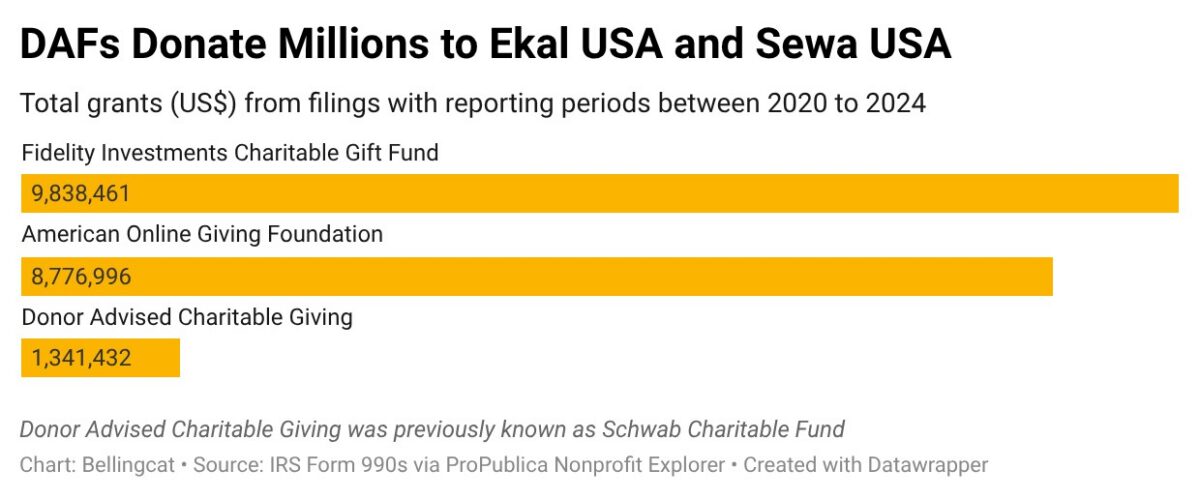
    Bellingcat reached out to the top three DAF sponsor organisations that donated to the two non-profits we identified – Fidelity Investments Charitable Gift Fund (Fidelity Charitable), American Online Giving Foundation (AOGF) and Charles Schwab-affiliated Donor Advised Charitable Giving (DAFgiving360; known before 2024 as Schwab Charitable) – to ask about their internal policies on assessing charities receiving donations through their funds. In total, the three DAFs accounted for almost $20 million, or 81.7 percent, of the DAF grants to Ekal USA and Sewa International for full reporting years between 2020 and 2024. 

    Fidelity Charitable, AOGF and DAFgiving360 all told Bellingcat that they had due diligence processes in place when evaluating non-profits. 

    Fidelity Charitable’s website states that it is a “cause-neutral” charity, but it ensures grants are used solely for charitable purposes. AOGF said non-profits must comply with eligibility requirements regarding hate speech, discrimination and the use of funds. 

    Meanwhile, DAFgiving360 said that a grant recipient may be subject to monitoring or placed under temporary suspension “due to circumstances that DAFgiving360 deems appropriate”, such as if there is a public interest consideration or if the recipient does not further DAFgiving360’s mission.


    Bellingcat is a non-profit and the ability to carry out our work is dependent on the kind support of individual donors. If you would like to support our work, you can do so here. You can also subscribe to our Newsletter and follow us on Bluesky here, Instagram here, Reddit here and YouTube here.

    Source: Bellingcat · 2026-10-06

  • Viral Google Maps Images Shared Widely This Week Show Gaza Ruins. We Obtained More Recent Satellite Imagery

    Viral Google Maps Images Shared Widely This Week Show Gaza Ruins. We Obtained More Recent Satellite Imagery

    Earlier this week, several viral social media posts and news articles stated that Google had updated satellite imagery over Gaza.

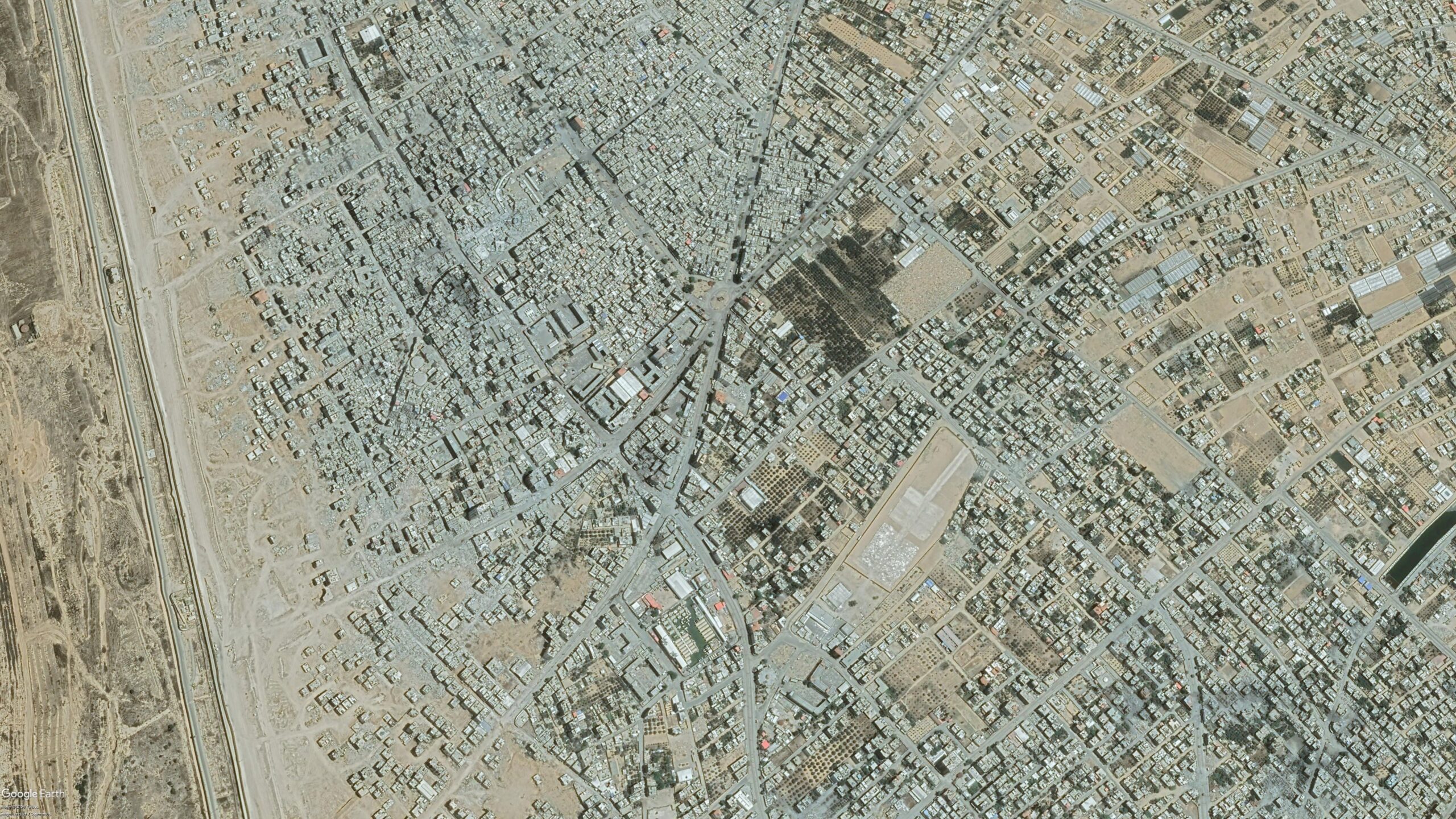
    The imagery shared in these posts and articles shows several areas, including the southern city of Rafah. Huge destruction is detailed in the images, including what appears to be entire neighbourhoods flattened

    But the imagery wasn’t entirely new. 

    A Google spokesperson told Bellingcat that they regularly updated third-party satellite images and that the latest Gaza imagery had actually been available since June 2026. 

    Social media posts from earlier this year also detailed how Google Earth Pro users (a program that needs to be downloaded) had been analysing what appears to be the same imagery that was showcased this week by media outlets as early as May.

    Bellingcat has access to satellite imagery from commercial space company Planet Labs, which shows further destruction in Rafah after the June Google update.

    The Planet Labs imagery also gives insight into destruction further north in Gaza as recently as September.

    Demolitions and Destruction Continue

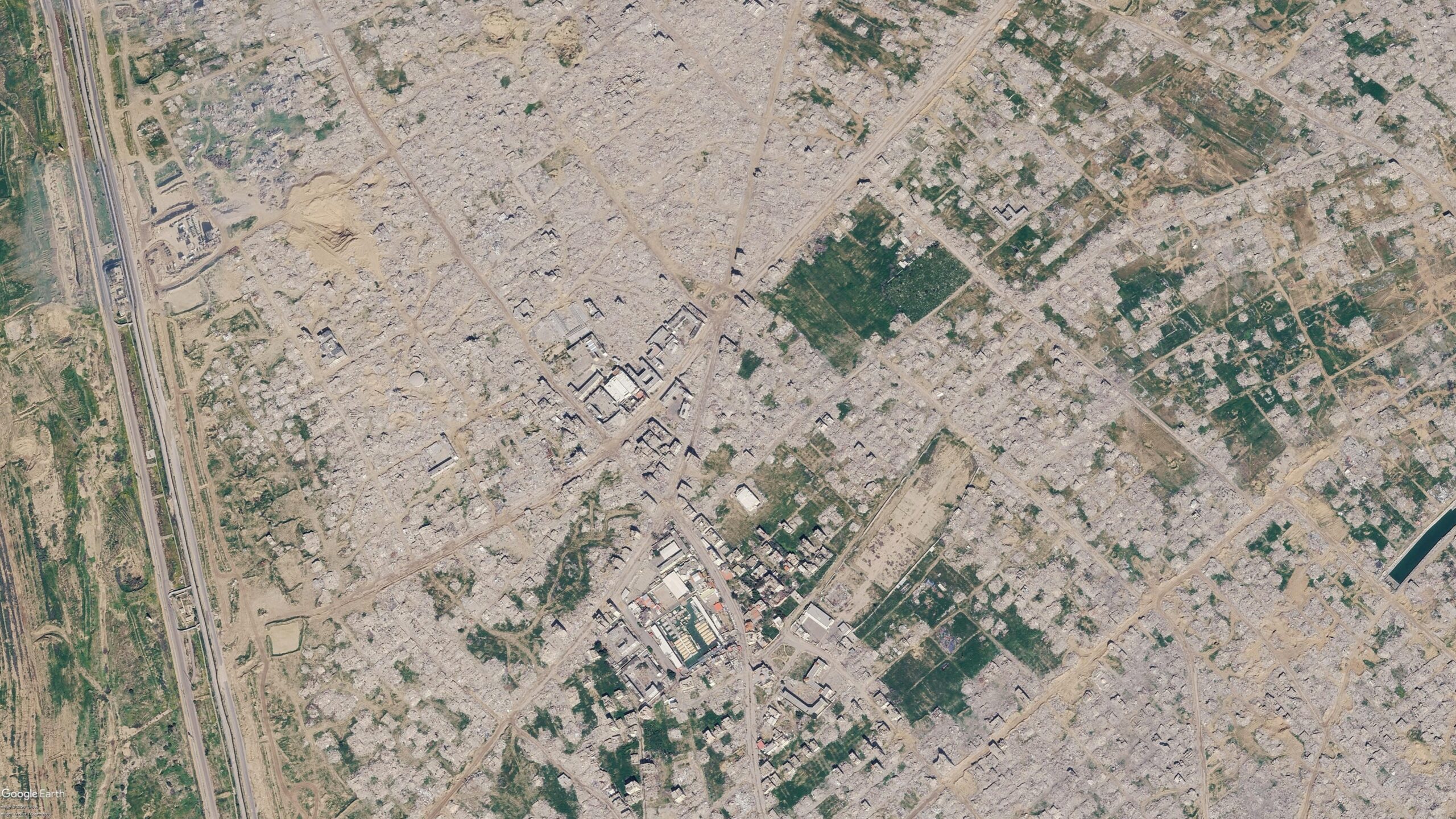
    The Google imagery updated in June showed a satellite image captured by the Airbus satellite imagery provider several months prior, in February 2026. 

    When compared to a previous image of the same area that was published and visible on Google in June 2024, the difference is stark. Entire neighbourhoods have been razed while several school facilities near the Tal as Sultan area appear to be among the most prominent buildings still standing.

    Satellite imagery shows visible changes across Rafah between June 2024 (left) and February 2026 (right). Image credit: Airbus via Google Earth.

    Bellingcat previously reported on this destruction when it first started taking place in 2024. And the demolitions have continued since Google published its latest Airbus images in June.

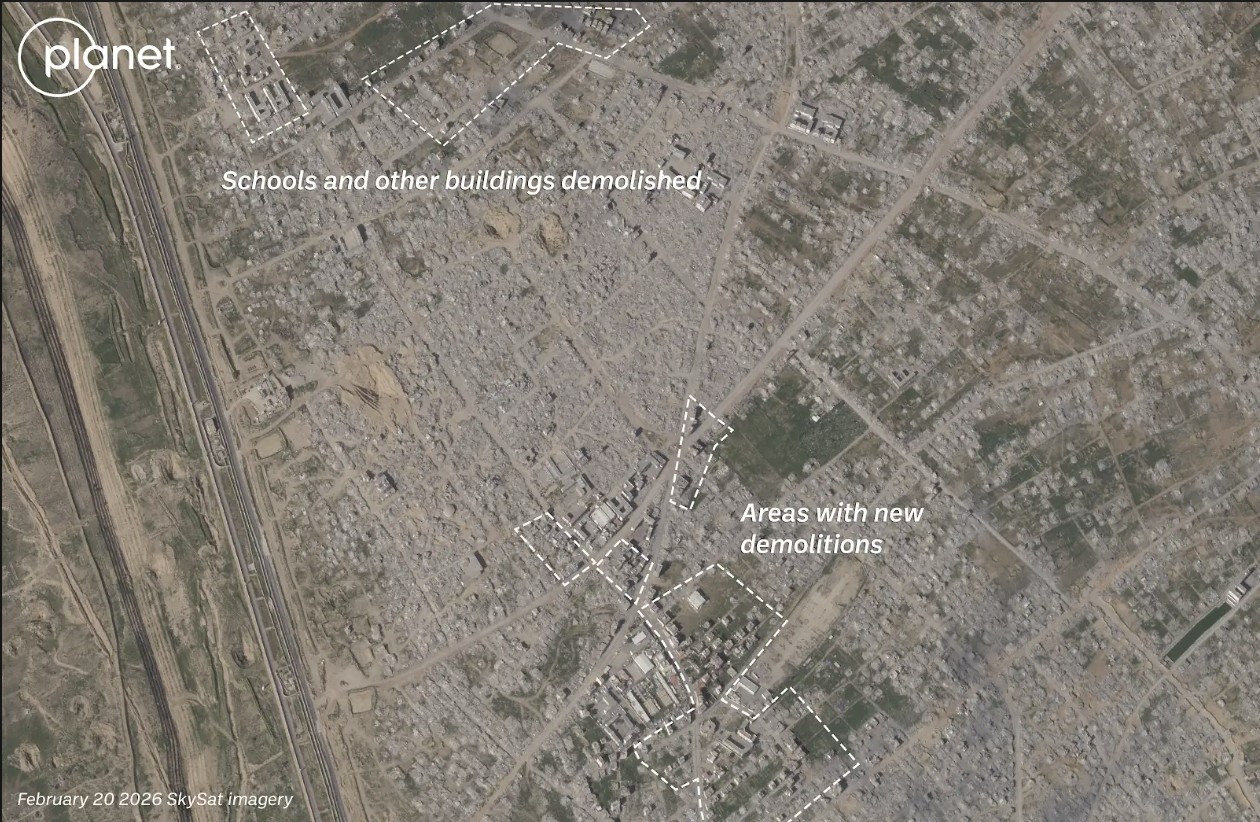
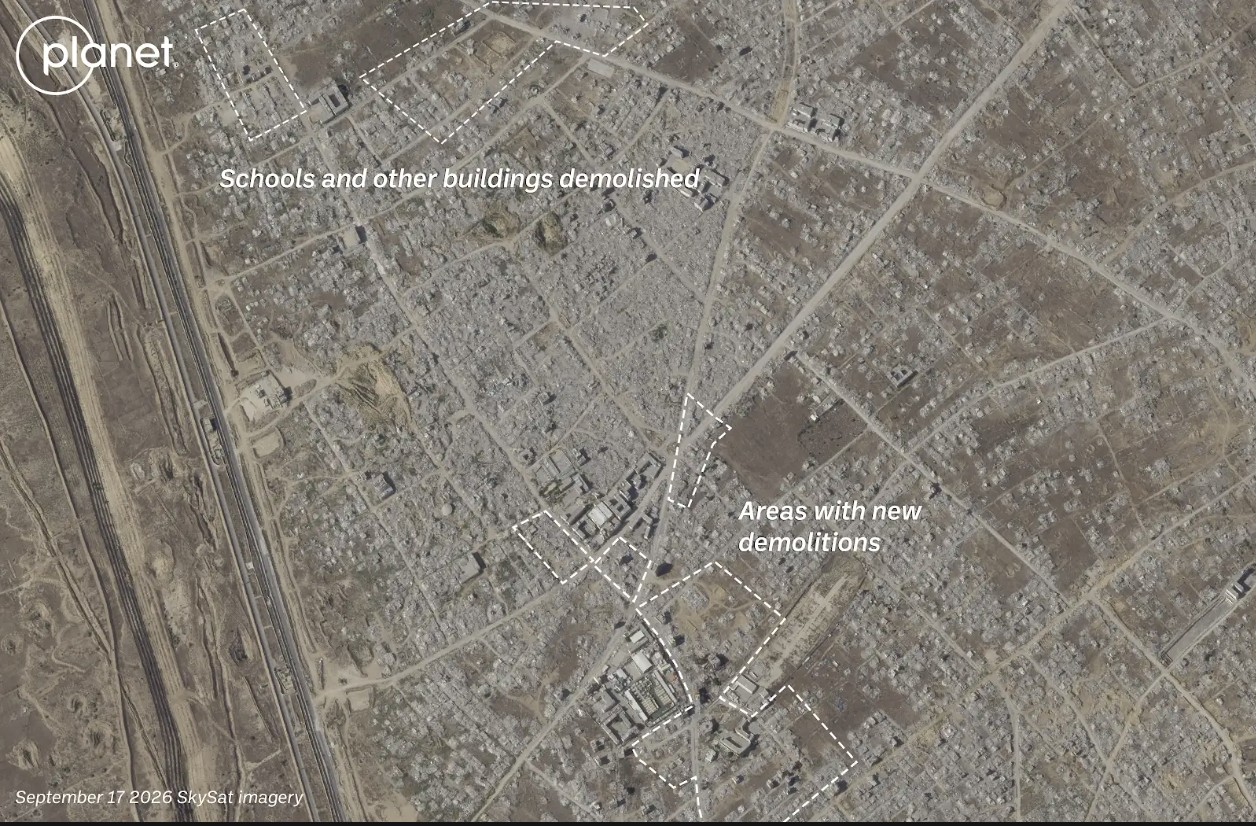
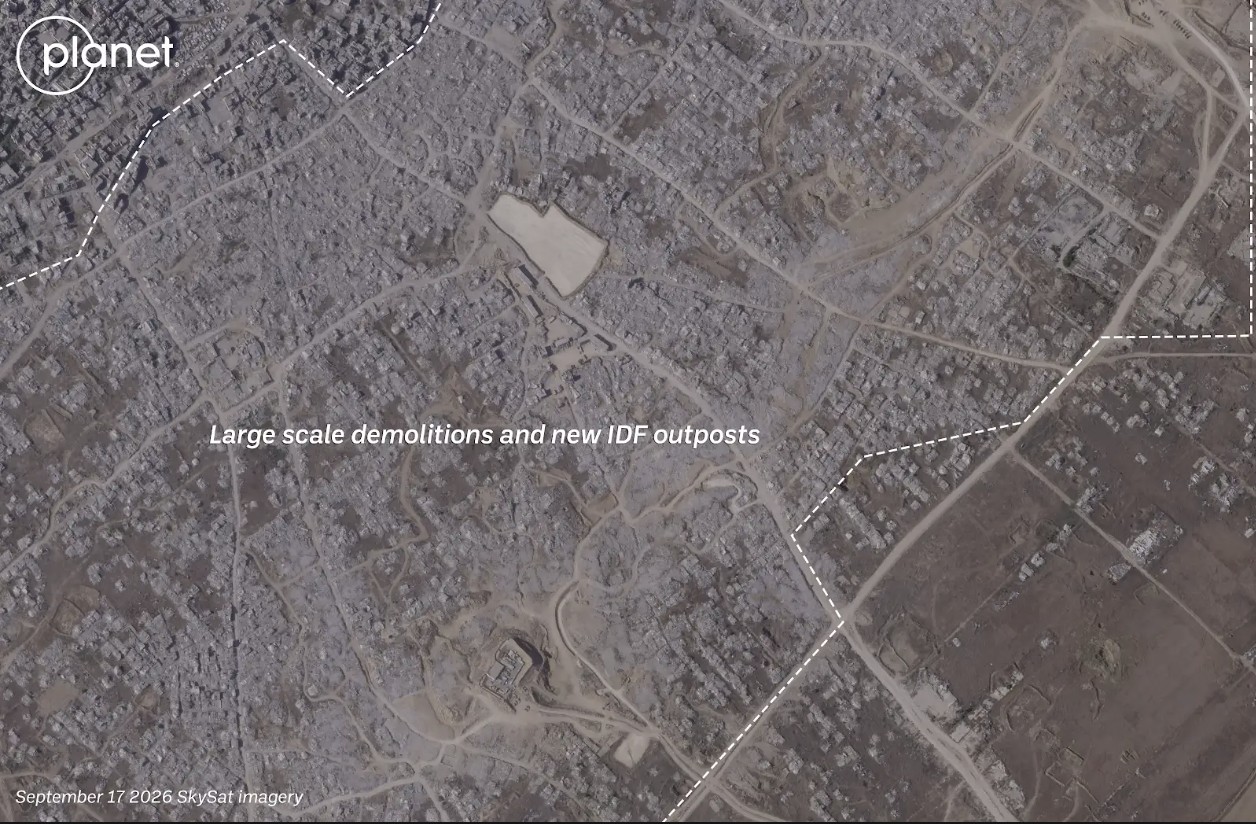
    The most recent high resolution imagery from Planet Labs, which uses its own constellation of satellites called SkySat, was taken in September. This was seven months after those now displayed on Google, and shows buildings near Rafah’s municipal stadium have now been demolished. 

    A number of schools and other buildings near the Tal as Sultan area previously still standing to the northwest of the stadium are also now shown to have been demolished in the September imagery.

    Satellite imagery shows visible changes across Rafah between February 2026 (left) and September 2026 (right). Image credit: Planet Labs PBC.

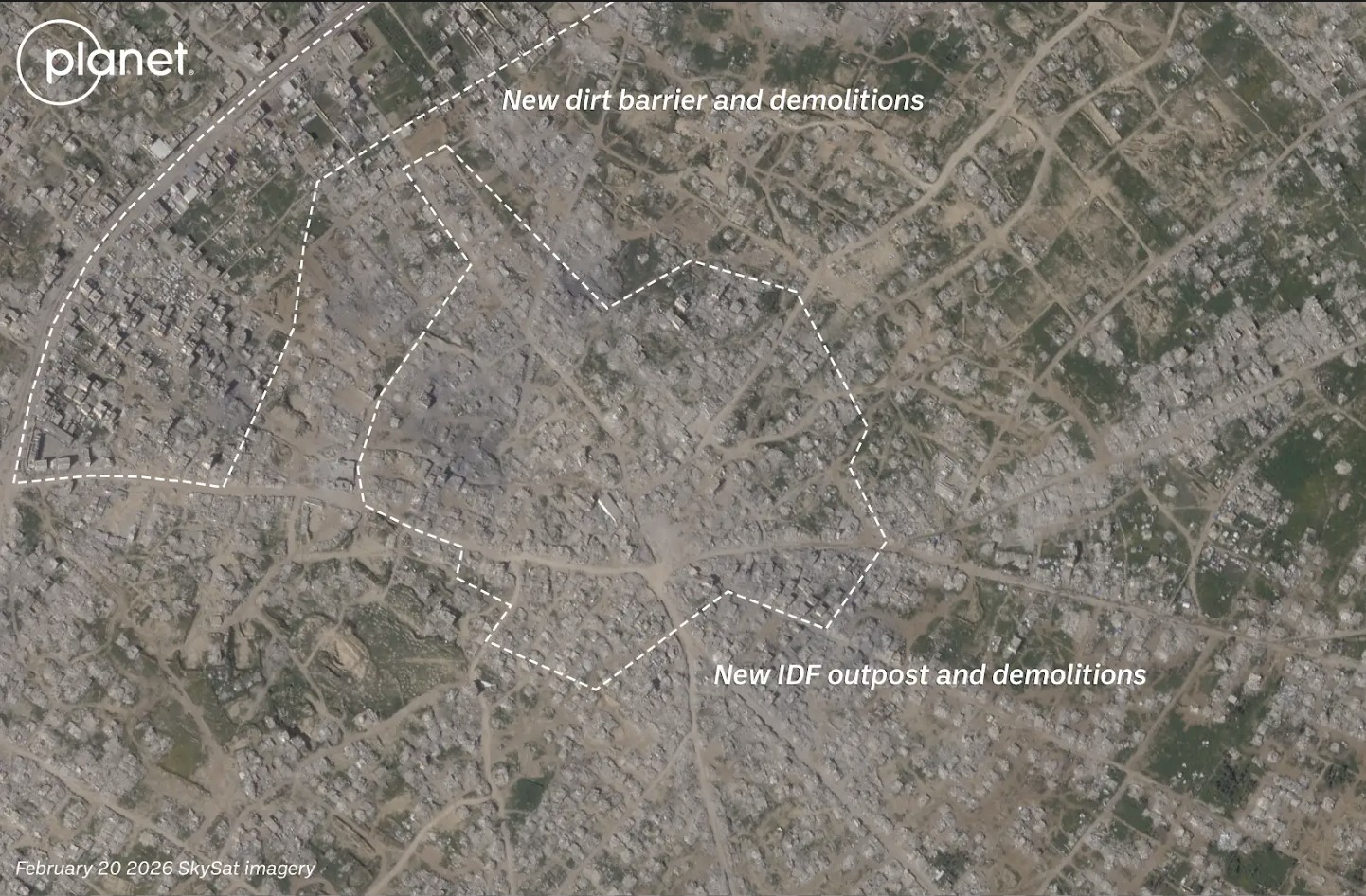
    The centre of Bani Suheila, a town just to the east of Khan Yunis in southern Gaza, also looks drastically different from how it appears in the Google imagery. 

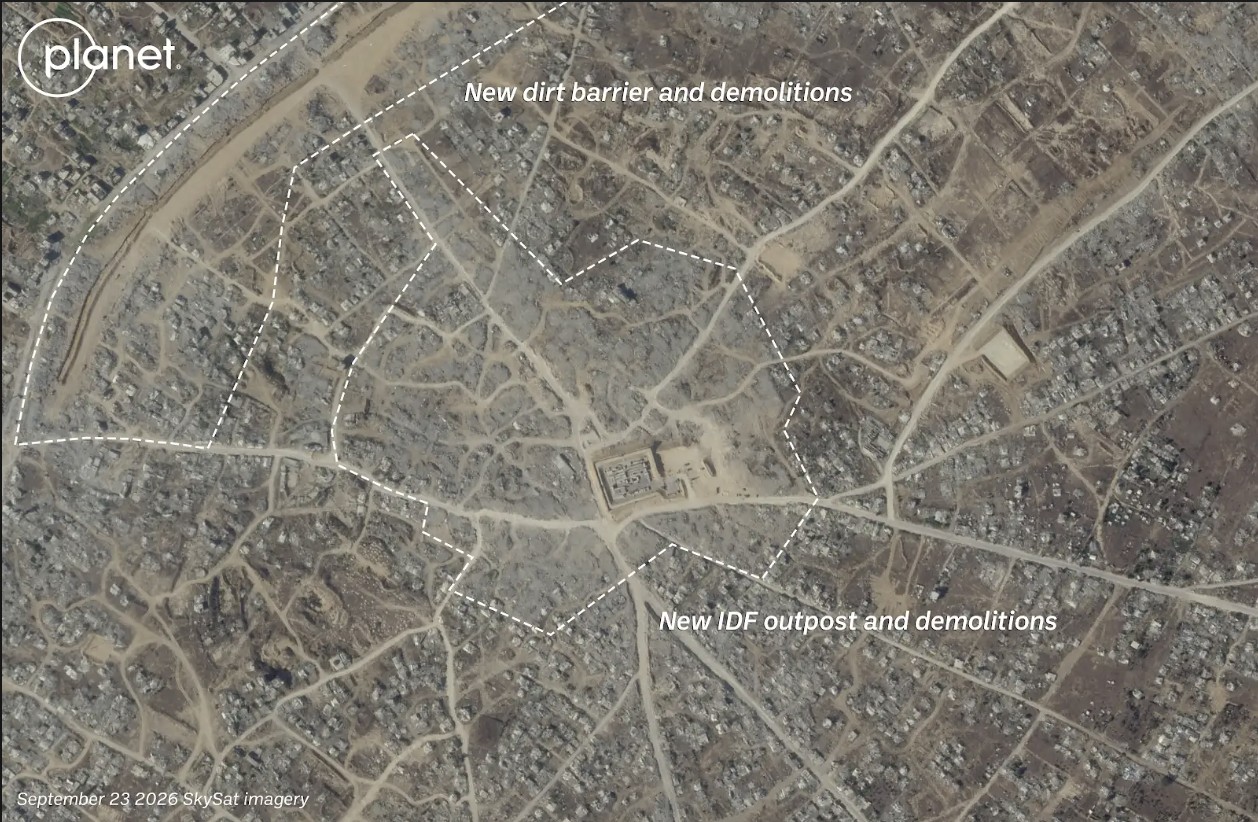
    While most of the buildings surrounding the centre of the town are visibly damaged or destroyed in the Airbus imagery, updated imagery from Planet shows that even more of the buildings have been reduced to rubble, with an IDF outpost now visible on top. A large earthen barrier is also visible, cutting through the town from north to south.

    Satellite imagery shows visible changes in town of Bani Suheila between February 2026 (left) and September 2026 (right). Image credit: Planet Labs PBC.

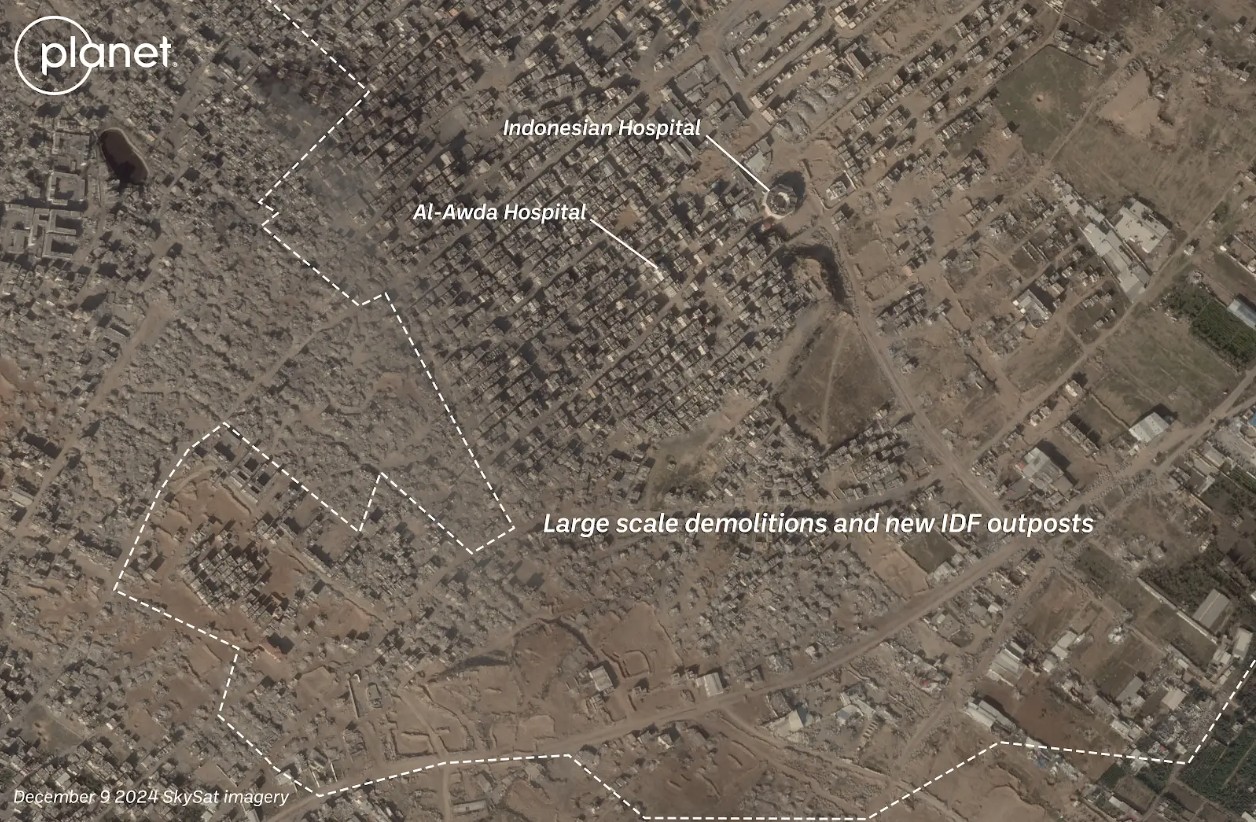
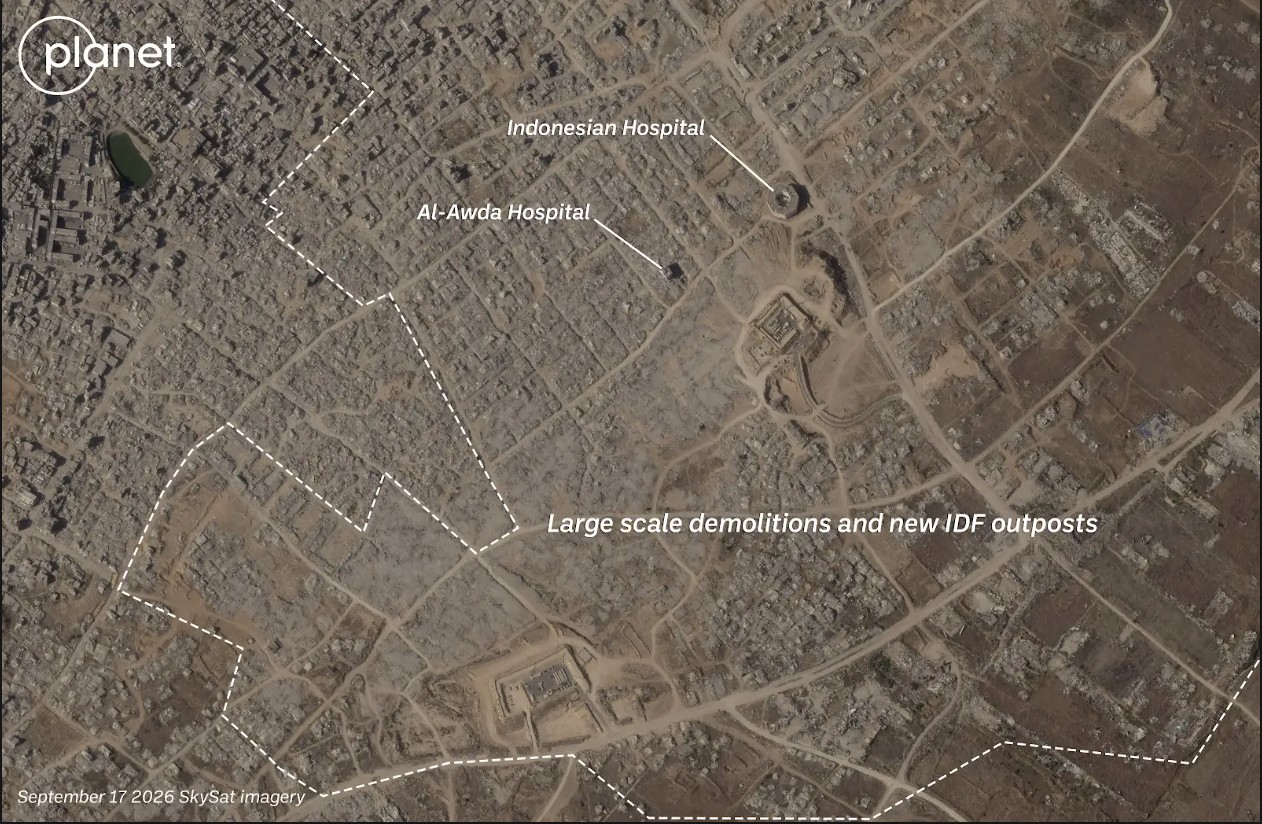
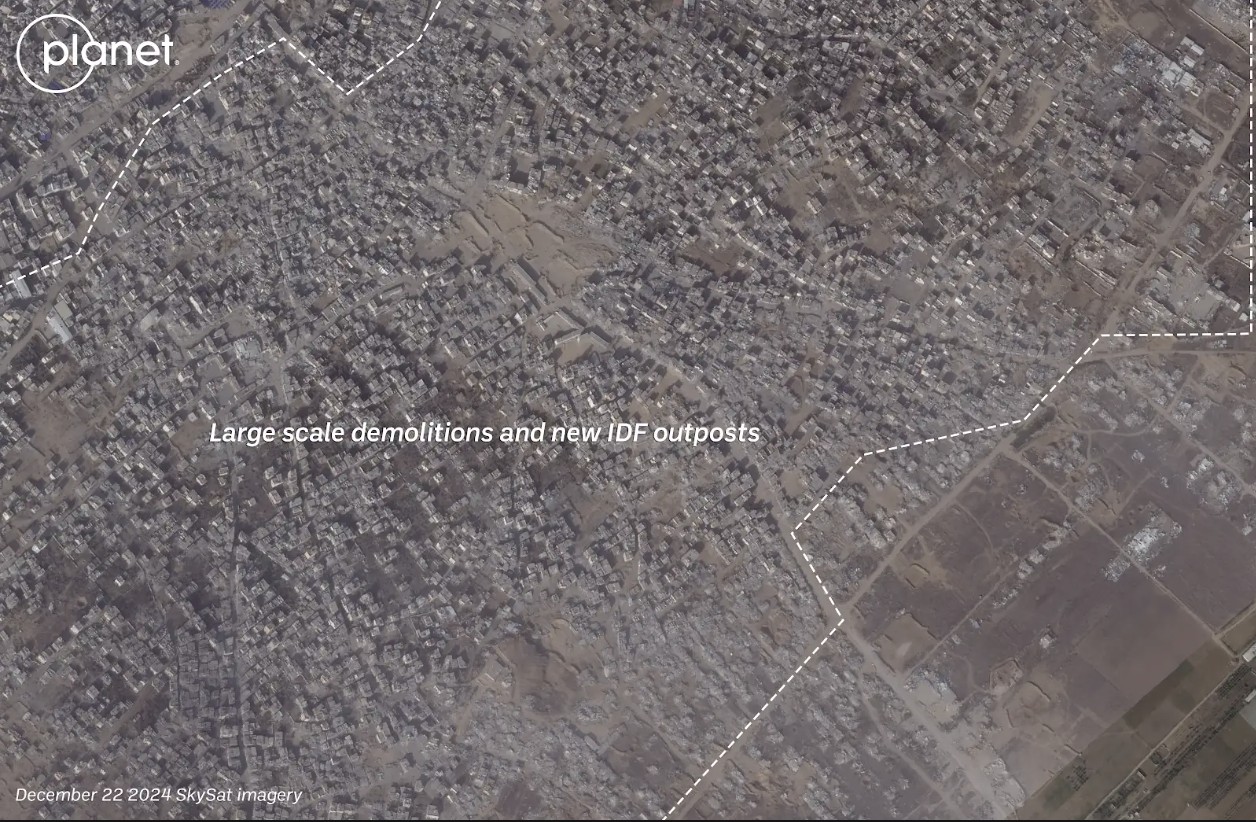
    Recent Planet Labs imagery also shows the level of destruction in northern Gaza, primarily in the eastern areas of the towns of Shujaiya and Jabaliya.

    Satellite imagery shows visible changes in town of Jabaliya between December 2024 (left) and September 2026 (right). Image credit: Planet Labs PBC.

    Both Shujaiya and Jabaliya were already heavily damaged before the most recent ceasefire. Satellite imagery shows that the IDF has continued razing large parts of both neighbourhoods while building outposts.

    Satellite imagery shows visible changes in town of Shejiya between December 2024 (left) and September 2026 (right). Image credit: Planet Labs PBC.

    Earlier this week, reports also surfaced that an Israeli satellite imagery provider had released images over northern Gaza before they were taken down.

    Satellite images such as these appear to show that Israel has not stopped reducing buildings in Gaza to rubble despite the continuation of an official ceasefire.

    Israel previously told media that the mass demolitions were part of an effort to “demilitarise” Gaza. 

    According to United Nations data, about 82 percent of the structures in Gaza are damaged, with two -thirds of them destroyed. 

    With international journalists still widely unable to enter Gaza freely, satellite imagery remains one of the only ways to assess the true scale of destruction and to understand what is happening on the ground.


    Bellingcat is a non-profit and the ability to carry out our work is dependent on the kind support of individual donors. If you would like to support our work, you can do so here. You can also subscribe to our Newsletter and follow us on Bluesky here, Instagram here, Reddit here and YouTube here.

    Source: Bellingcat · 2026-10-01