Tag: Health Care

  • Bird Flu Is Raging on a Mink Farm. It Could Spark a Human Pandemic, Experts Say, but Officials Won’t Act.

    Bird Flu Is Raging on a Mink Farm. It Could Spark a Human Pandemic, Experts Say, but Officials Won’t Act.

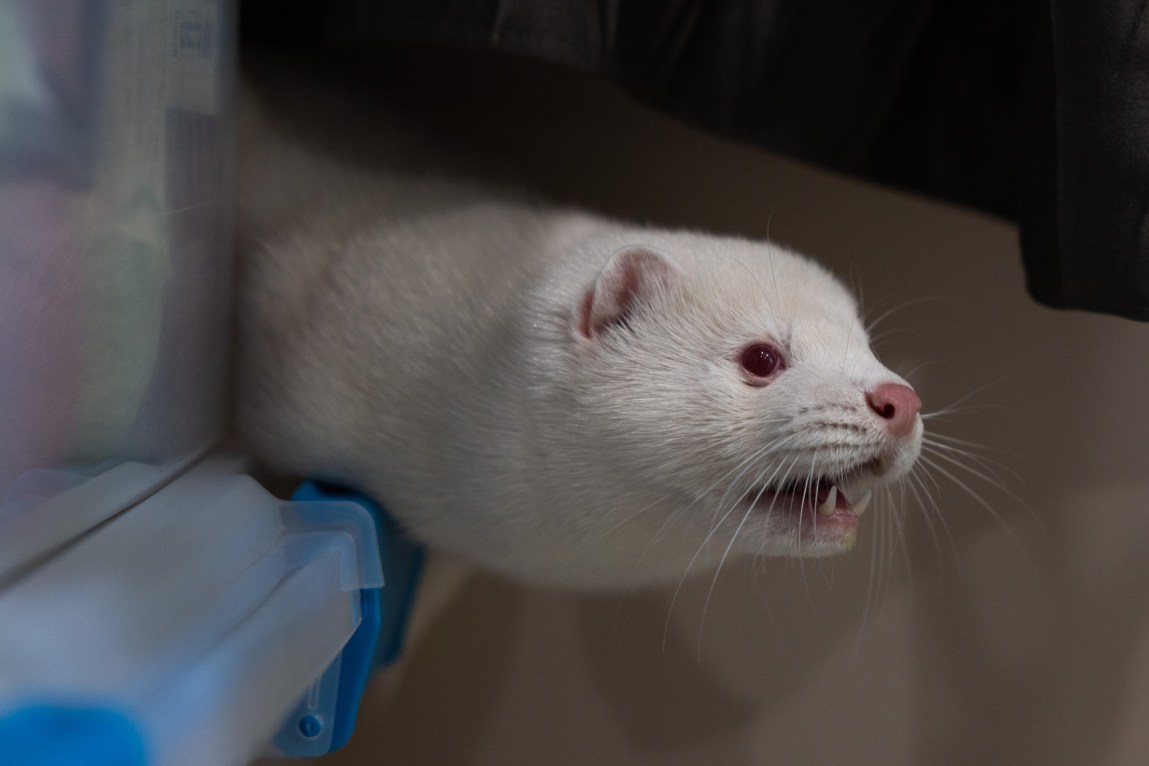
    A close-up view of a white mink with red eyes and a pink nose baring its teeth and hissing, emerging from under a dark enclosure.
    A rescued mink from a Utah fur farm Julie Leopo for ProPublica

    The strain of bird flu that’s ripped through American barns for the last four years has killed two people who caught it from sick animals. But as far as anyone can tell, humans can’t spread it. The virus has remained a true “bird” flu, tailored to attach to avian cells, not invade human throats and noses, where coughing and sneezing reliably spew droplets. 

    Under the right conditions, however, that could change. A single mutation could give the bird flu a foothold in people and spark a pandemic that experts fear could be deadlier than COVID-19. 

    For that to happen, this bird flu would likely need to find an intermediate host — an animal vulnerable to viruses that infect both birds and humans. These animals would be crowded together, each infection raising the odds that a new strain could arise through mutation. Then, for that strain to jump across species, it would have to have access to humans and time to spread among them undetected.  

    That perfect petri dish exists right now, a ProPublica investigation found. For over two months, an outbreak of bird flu has raged uncontrolled on a Utah farm that raises thousands of mink for fur. Mink have lungs and airways that on a cellular level are remarkably similar to those of people; they have caught and spread other flus and infected some humans with COVID-19. 

    Instead of trying to stop the outbreak and prevent it from spilling into humans, state and federal officials have done little except try to keep its existence quiet, our investigation shows. The failure to act amounts to a cascade of missteps flu experts called “irresponsible” and “puzzling.” One called it “playing with fire.”
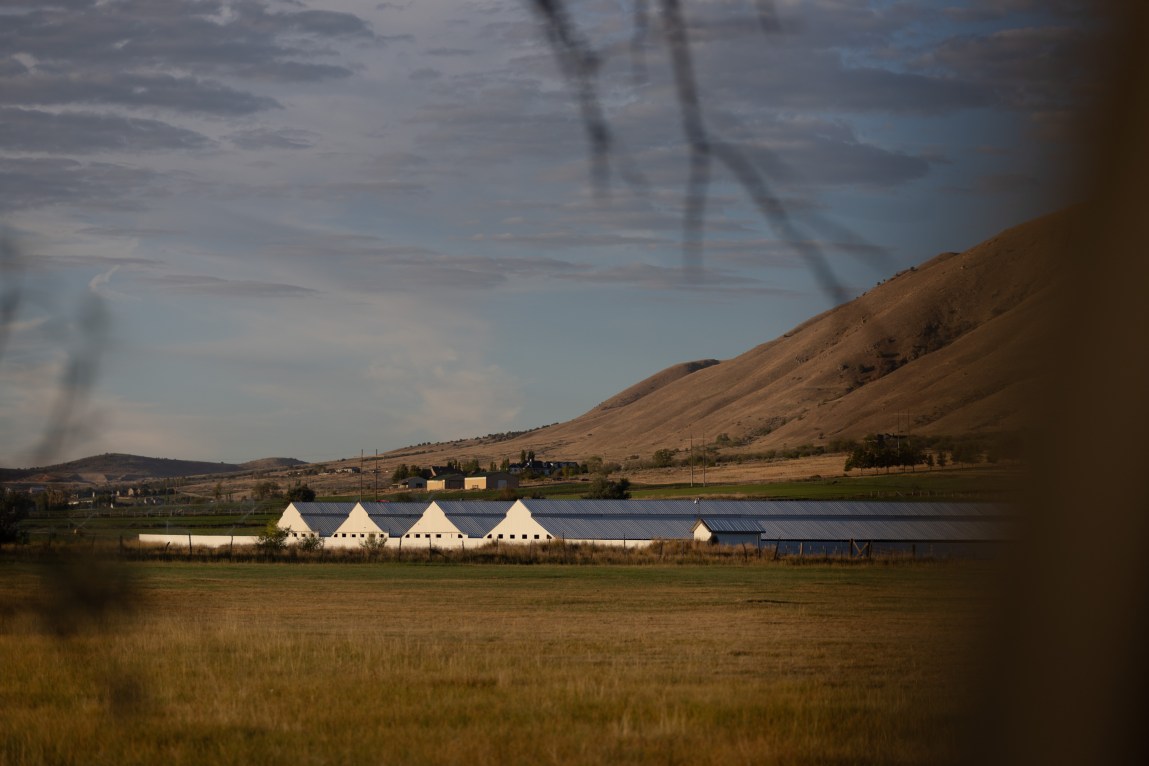
    A row of long, white-roofed agricultural buildings sits at the base of a large, barren brown hill under a cloudy sky, viewed across a dry, grassy field.
    C&T Fenn Farms, a mink fur farm west of Provo, Utah, on Sept. 25 Julie Leopo for ProPublica

    Utah agriculture officials learned in mid-August that mink were dying of bird flu on C&T Fenn Farms, about an hour’s drive south from Salt Lake City, according to communications released under the state’s public records law. 

    Had poultry been infected, the playbook would have been clear: The strain is so virulent that if a single chicken tests positive, the U.S. government requires farmers to kill the whole flock to protect other farms as well as public health. Poultry farmers are reimbursed for the loss.

    But there are no federal rules for how to deal with sick mink. 

    Handling Utah’s response was state veterinarian Amanda Price, who sought help from the U.S. Department of Agriculture, which takes the lead on bird flu outbreaks involving poultry and cows. 

    USDA officials said they didn’t regulate mink or have a vaccine that was approved to give them. And though officials with the Centers for Disease Control and Prevention spoke with Price’s health department counterparts who were less involved with the outbreak, they never talked to her, and she never reached out.

    The threat of spillover has been far from the minds of Utah officials, records and interviews show. Instead, front and center have been the interests of a business raising animals to skin for luxury pelts to ship overseas. 

    “It has been devastating,” Price told ProPublica of the outbreak and its impact on the farm’s owner. “This is his life’s work that he’s seeing be destroyed. I really hope that you understand the humanity behind this situation.”

    Flu experts were unequivocal that the government should have ordered the farm to cull its mink, as other countries have done. 

    But Utah never seriously considered it. A fur trade representative warned Price that doing so would kill the business and, ultimately, the industry. Farms spend decades breeding mink to develop unique genetic lineages. 

    “There’s just not a lot of options out there other than kind of sitting and waiting and seeing what happens,” Price said, noting that USDA officials did not urge her to kill the mink or make her feel like bird flu in mink was any riskier than infections in other animals that have caught it, like ducks and cows.

    Flu experts found that response surprising.

    “Every other country that I’m aware of that has had H5N1 in fur farms, depopulation has happened pretty quickly,” said Tom Peacock, an avian influenza researcher at the Pirbright Institute. “The fact that the first instinct wasn’t just to depopulate and figure stuff out later is very concerning to me.”

    And all the while, officials didn’t monitor the mink workers for symptoms, as guidance from the CDC urges. 

    Their exposure is significant: Mink sneeze. They escape. They attack. “The mink are fierce,” said a Spanish-speaking “minkero” who works on a nearby farm, showing the scars he got from the aggressive, solitary creatures. “You get scared because the fucking thing bites, and it claws at you.”
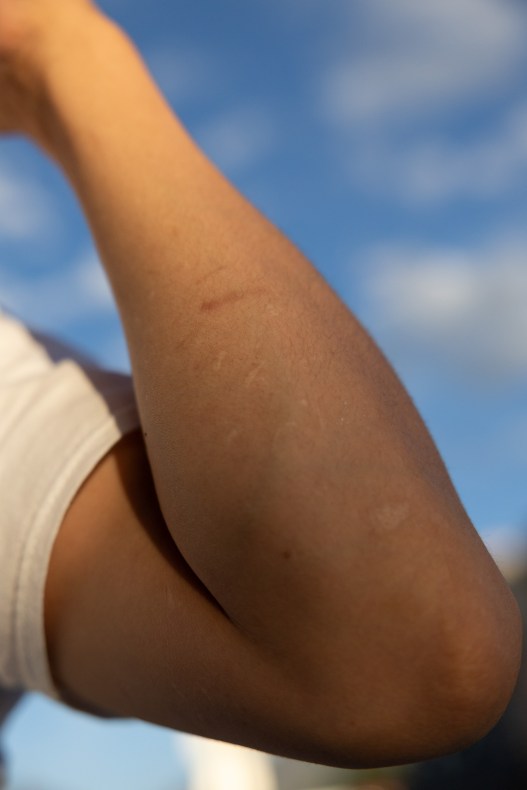
    A close-up view of a person’s bent arm, showing healed scars on the forearm against a bright blue sky with scattered white clouds.
    A mink farmworker, sometimes referred to as a “minkero” among the Spanish-speaking community, shows scars from mink bites and scratches in Payson, Utah. Workers typically wear long gloves to protect themselves but can still be bitten or scratched. Julie Leopo for ProPublica

    Right now in Washington state, officials are working to track down the contacts of a symptomatic person exposed to dairy cattle infected with bird flu. The patient is isolating at home. Utah public health officials used to do similar, proactive monitoring. But they stopped after complaints from their colleagues in the agriculture department that farmers were annoyed by it.

    “Us doing active monitoring was making it so that farms didn’t want to work with them,” said Pamela Gomez Pinedo, a respiratory disease epidemiologist for Utah’s health department. As a result, public health workers had a “pretty difficult time” getting details from agriculture officials, she said.

    As part of a 2025 agreement, the Utah Department of Agriculture and Food agreed to share information about bird flu outbreaks on farms — so long as the health officials didn’t do anything to track workers’ health. 

    “We will only do active monitoring in the case of evidence of human-to-human transmission,” Pinedo said in emails with a CDC epidemiologist. As the outbreak stretched to a month, CDC officials expressed concerns, asking how anyone would know if a worker had been infected if they weren’t getting tested.

    Price said the state’s policy not to monitor workers is meant to allow farmers to decide whether to contact the health department, rather than “forcing it on them.” “If we started seeing people actively dying from this, obviously that would change how we respond to this,” she said. 

    A telltale sign of bird flu infection in humans is eye redness. It is present in over 90% of cases and is often the sole symptom a person displays. 

    Last Saturday, a ProPublica reporter tracked down two people who worked at the Utah mink farm. One had a visibly red eye. 

    The CDC explicitly urges testing for the symptom. 

    After ProPublica reached out to the farm, its owner, Chad Fenn, contacted the Utah County Health Department about the red eye, which had cleared up by Monday, he told ProPublica. He said the worker got dust in his eye; the department didn’t recommend testing.

    “They’re not going to do anything,” Fenn said. “They said they don’t see that there’s a need.” He said the department recommended testing only if other symptoms, like a cough or sore throat, developed. 

    A half dozen flu experts had no shortage of adjectives to describe their disbelief at the government decisions not to cull the mink or monitor and test the workers. 

    “It’s amazing to me,” said Gail Hansen, a former Kansas state public health veterinarian and epidemiologist. “Utah doesn’t want to be the epicenter of the next human flu outbreak, right?”


    Most of the new viruses that have shaken humanity in the past century have spilled over from animals. Ebolas likely came from fruit bats; HIV, from chimpanzees. The leading theory for COVID-19 is that it jumped from bats to humans via an intermediate host mammal such as a raccoon dog. And all the modern flu pandemics have been bird flu viruses that mutated to spread in humans. 

    ProPublica reported extensively on spillover in a 2023 series called “Roots of an Outbreak.” To prevent more deadly spillovers, experts worldwide urge governments to take a “one health” approach to viral threats, treating dangers to animals as dangers to humans. 

    That’s not happening in Utah, experts said after reviewing ProPublica’s findings. Both the state and federal government are to blame.

    “There’s no leader of this ‘one health’ team to take charge,” said Erin Sorrell, a senior scholar at the Johns Hopkins Center for Health Security. “That is going to allow the virus to continue to circulate, potentially adapt and potentially spill over into another host, whether it’s avian, mammalian or human.”

    This strain of bird flu, which began ripping through American poultry farms in early 2022, has proved adept at jumping to other species. It took hold in cows in 2024 and since then has run rampant through dairies.

    Yet federal guidance to prevent the spread into mink farms hasn’t considered cows a threat. Farmers are encouraged to keep wild birds from infiltrating their barns and avoid feeding them raw poultry. It has said nothing about feeding beef parts to mink, which farmers commonly do in summer months to encourage the animals to put on weight and grow. 

    Dairy cows, which are not “depopulated” if exposed to bird flu, can still be slaughtered with the meat sold to farms and humans even though researchers have found the virus in the tissues of sick cows. USDA officials have insisted that beef for human consumption is free of bird flu, in part because the virus concentrates itself in sections of the cow people don’t usually eat. Fenn said that the mink are routinely fed raw organs of livestock, including cows. 

    The genomic data from the samples of mink lungs and brains sent from Utah to a USDA lab shows that the mink were stricken with the same strain of the virus that has spread in dairy herds. Officials said they didn’t know whether contaminated beef was the way the mink got infected.
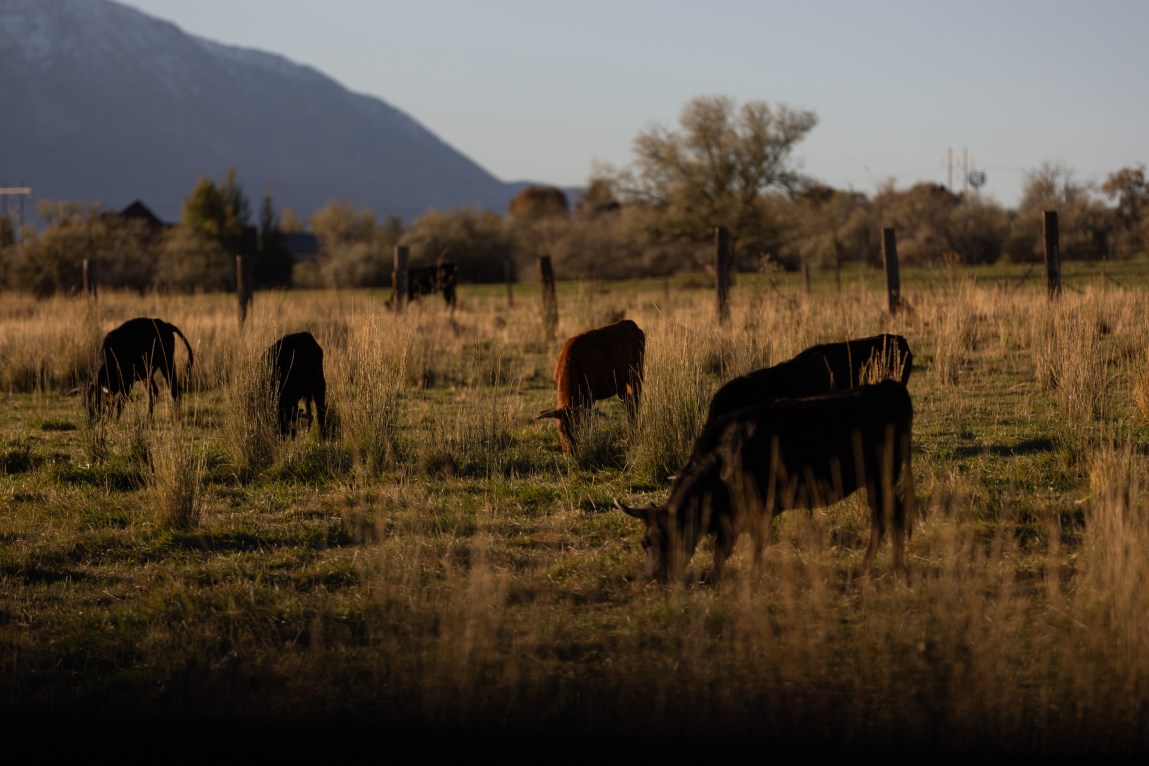
    Several cattle graze in a dry, grassy pasture with silhouetted trees and a mountain ridge in the background.
    Cows graze in a field in Utah Valley, Utah. Julie Leopo for ProPublica

    In mink, the dairy strain of bird flu may have found a much better host for mutating into a human flu, because mink airways have an abundance of the type of cell receptors in people’s throats and noses that are a common pathway for infection.  

    A 2024 study of the dairy strain of the bird flu found that a single mutation could switch the virus from preferring the bird-type receptors to human-type receptors. And in studies using ferrets, a close relative of mink, the virus acquired mutations that let it attack human-type cell receptors. 

    It’s not clear to scientists just how much of an evolutionary leap would be needed for this strain of bird flu to spread among humans, or whether mink are the host that would allow that leap to happen. 

    How this ultimately plays out “really depends on what happens with the virus,” said Meghan Davis, an epidemiologist at Johns Hopkins University.

    “We might get lucky, and a response that is not robust may not have dire consequences,” she said. “But we may get unlucky.”

    There’s also a risk of something called “reassortment,” where another flu virus could infect the same cell as a bird flu virus and swap wide swaths of genetic code already adapted to humans. 

    When the outbreak in the mink farm started, there was very little seasonal flu it could mix with, but September saw one of the earliest starts to flu season on record, compared with November, when flu normally takes off.

    “The most likely scenario for a pandemic is that we have a virus that reassorts with another virus,” said Jennifer Nuzzo, director of the Pandemic Center at the Brown University School of Public Health. “Obviously, having this circulate amid human flu season is not great.” 

    Utah officials were far more responsive to the threat of spillover in 2020, when outbreaks of COVID-19 spread explosively on mink farms – including this very farm. They invited federal officials to the state to research how the virus adapted and moved.

    Given mink’s reputation as escape artists, wildlife experts set up traps around infected farms. The traps frequently caught mink carrying COVID-19 that had originated in the nearby barns. The virus infected both escaped mink and wild mink they had come in contact with. Mink and farmworkers were frequently tested, tracking the way that the virus was spreading and mutating. 

    As other states and countries took the same measures, they identified humans infected by the mink with COVID-19 and, ultimately, human-to-human transmission.

    There are no similar efforts now in Utah with bird flu. 

    A USDA spokesperson told ProPublica that it was more involved in 2020 because the virus that causes COVID-19 had “significant” potential to transmit between humans and animals and vice versa.

    Scientists with the USDA sequenced and published bird flu genomic data from the first samples of dead mink. Those sequences didn’t show any particularly concerning mutations, experts and the CDC told ProPublica. 

    But in the past two months, experts said, the virus is sure to have continued mutating as it spread – it’s only a question of whether those mutations could confer some advantage in infecting humans as well.

    “As long as it continues to go mink to mink, then it becomes more and more likely that it could jump to a human,” Hansen said.

    Fenn said new samples were taken two weeks ago. Price said she is still waiting for the results. 

    John Korslund, a retired USDA official who helped coordinate the response to COVID-19 on mink farms several years prior, was one of several experts who said officials need to look closely at newer genetic samples to see how the virus is evolving. 

    “I really want to know what the virus has done, from when it started to today,” he said. “Are we getting accumulated mutations making the virus more dangerous?”

    A close-up view of an albino mink with white fur, reddish eyes and a pink nose looking upward directly at the camera indoors.
    Mink have the type of cell receptors that a seasonal flu will target in human throats and noses. Julie Leopo for ProPublica

    ProPublica began reporting on the outbreak late this summer after the USDA updated a bird flu dashboard that showed seven captive mink had tested positive in Utah. But neither the USDA nor state officials had said anything publicly, and, when asked, they wouldn’t discuss what was actually happening on the farm.

    Communications obtained under the state’s public records law — first published by the Animal Welfare Institute and reported on by the Salt Lake Tribune — show Utah officials took pains to protect the farm’s privacy amid the outbreak. The state did not declare an emergency, because doing so, officials said, “may alert animal rights groups,” according to the messages.

    Willy Lanier, a public health veterinarian with the state health department, told colleagues to keep the outbreak under “closer hold” than outbreaks of bird flu on poultry and dairy farms. Keeping the information confidential was consistent with state protocol, a spokesperson in his department said, adding that it was still shared with local health officials. But when ProPublica reached out to the spokesperson for the Utah County Health Department about a possible bird flu outbreak, she said, “That would be news to me.”

    Price is so deferential to the family that owns the farm that she has not set foot on the property. 

    “We might get lucky, and a response that is not robust may not have dire consequences. But we may get unlucky.”

    Meghan Davis, Johns Hopkins University epidemiologist

    “I’m really the only one here at this facility that’s been dealing with the producer. They’re a very private bunch,” Price said. “A lot of what I’m going off of is what I’ve seen from Google Maps, what I’ve talked to the producer about, what I’ve talked to the vet about. I haven’t felt the need to go out there based on those conversations.”

    She said she “became very comfortable” in conversations with the owner that the virus wouldn’t spread off the farm. It doesn’t have animals moving on and off over the course of the year like on a dairy or poultry farm; mink leave only when they’re slaughtered and skinned for pelts at the end of the year. She also said that she was confident the owner would recapture any escaped mink.

    Short of a formal quarantine, Price gave the farm a “verbal hold” to not move any mink, or manure or carcasses, off the farm. “We haven’t seen spread off of this farm. We have not had additional cases in Utah that are linked to this, so thus far the verbal hold orders and the measures that have been taken look to be successful: There is not spread happening from this farm from this case.”

    Price’s assertion didn’t allay the concerns of experts that ProPublica spoke with. When poultry test positive for this strain of bird flu, all nearby farms are quarantined and tested for the virus. But the approach in Utah relies on farms reporting cases or the public calling in reports of dead birds in the area. 

    “If you’re not looking for something, you won’t find it,” Sorrell said. “Unless you’re doing active surveillance, you can’t claim that you haven’t had cases.”

    Fenn told ProPublica his conversations with state officials made him less worried about any kind of spread. When the outbreak started, Fenn said, he asked whether the bird flu could infect people. 

    “Right off the bat, the state people we reported to, they said you don’t need to worry too much,” Fenn said. “My guys wear masks every day. They have glasses they can wear,” Fenn said. “ Me? I don’t wear it at all. Never have, never will, because I’ve been doing it for 40 years.”

    Fenn said he wished he could vaccinate the mink for bird flu to keep the rest of his animals from catching it and dying; Price asked the USDA about a vaccine that had been used to save endangered wild species but said she got nowhere with that request. The USDA told ProPublica its division responsible for protecting animal health has no “species-specific regulatory authority or dedicated programs” for vaccinating mink, depopulating them or paying owners back for such a culling.

    Fenn told ProPublica he thinks concerns about mink as a particularly risky bird flu host are trumped up by anti-fur activists, the same forces that he believed were behind the reactions in Spain and Finland, which depopulated mink farms hit with bird flu. “Europeans are a little scared of everything,” he said. “They’re going to do what they’re going to do, and here in the United States, we’re going to do what we’re going to do.”

    Price said she was aware that Finland and Spain had depopulated their fur farms when the same strain infected them. “I didn’t really look much further into it,” she said, explaining that she was interested in those cases only for lessons about how to handle the outbreak, but not the particular reasons those countries chose to depopulate the farms. 

    A USDA spokesperson said Congress would have to specifically fund a program to depopulate mink. (The program to cull poultry to stop the spread of bird flu has cost well over $1 billion since 2022.)

    The events in Utah are a “clear warning sign” about the dangers of mink farms, said Neil Vora, executive director for the Preventing Pandemics at the Source Coalition.

    “Fur farms are to produce pelts purely for luxury goods, to make fancy coats,” he said. “It’s absurd that we’re willing to gamble with the lives of millions of people just to keep an industry alive.”

    The industry has struggled as American consumers increasingly reject fur. Though domestic farms peaked about a decade ago, selling luxury pelts that often ended up in China, foreign farms have sprung up, threatening the business. 

    While animal rights advocates have pushed for Congress to adopt legislation that would phase out the fur industry, buying out farmers over the course of a year to end the practice once and for all, winds in Congress are blowing the other direction. The Senate will soon weigh in on the latest Farm Bill, which now seeks to expand market opportunities for mink farmers by undoing a prohibition in federal law on subsidizing the fur trade. 

    The virus continues to spread on the Utah farm, said Fenn, though at a slower pace. Experts told ProPublica it still poses a risk.

    “I would want a full on hazmat suit if I were on that farm,” Peacock said. “Or, preferably, I’d rather not to be on that farm.”

    Source: ProPublica · 2026-10-23
  • Nuclear Weapons Waste Made Workers Sick. Despite a Law Meant to Help, the DOE Keeps Fighting Their Claims.

    Nuclear Weapons Waste Made Workers Sick. Despite a Law Meant to Help, the DOE Keeps Fighting Their Claims.

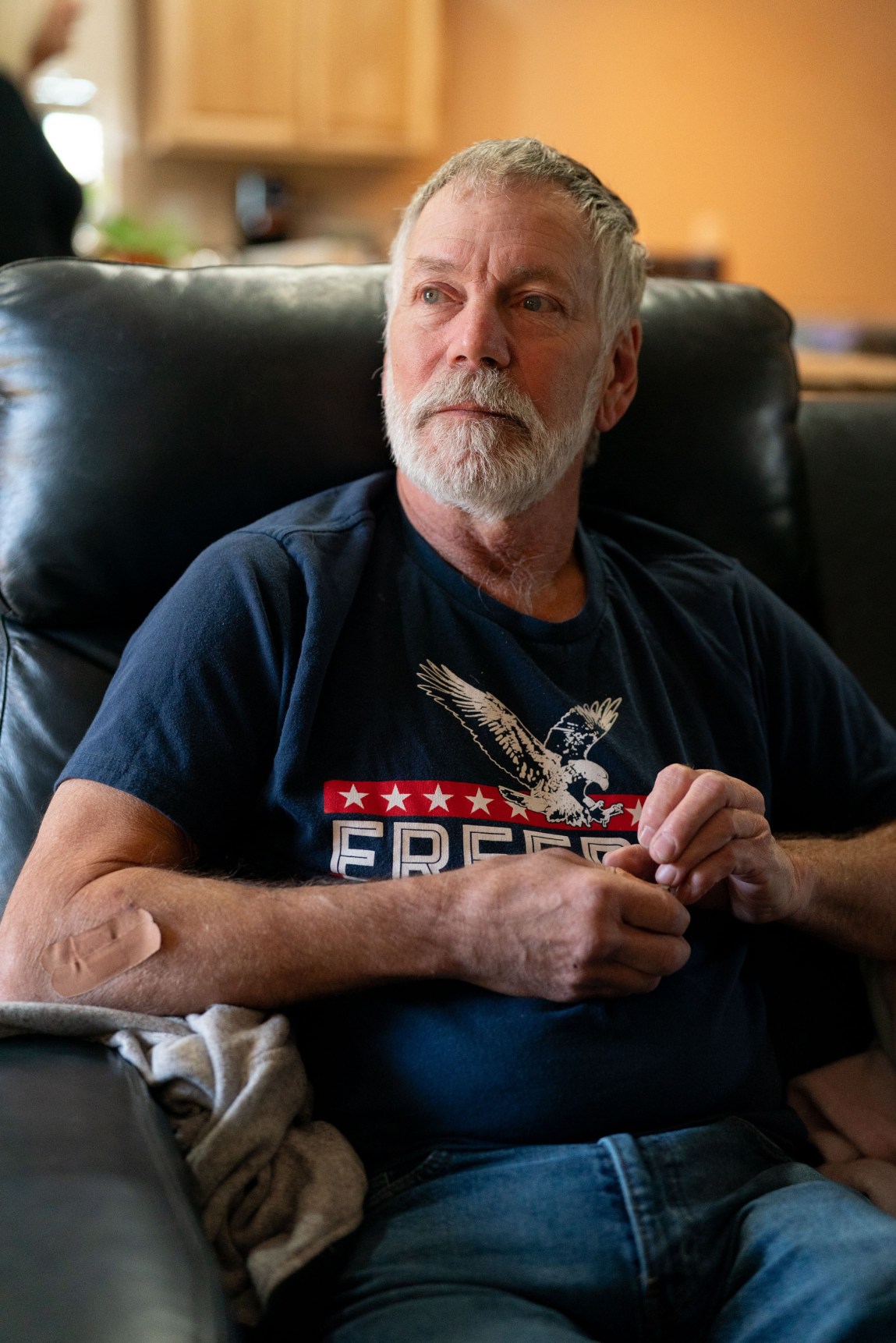
    A white man sits in a leather chair with his hands in front of his chest.
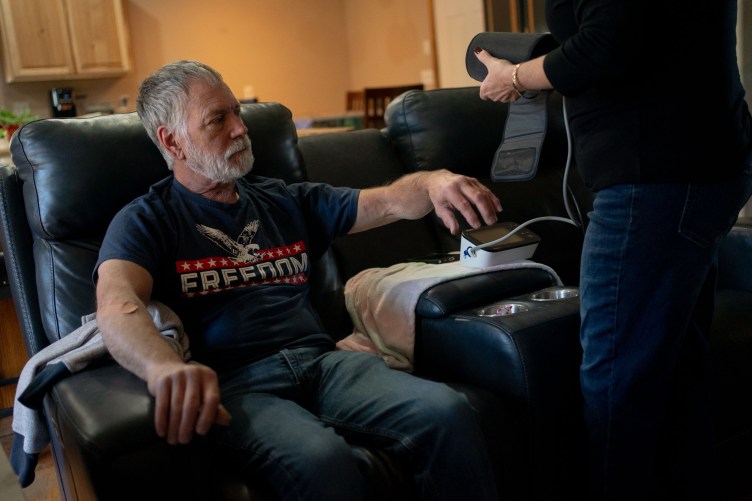
    Lonnie Rouse was diagnosed with a neurological disorder that medical experts attributed to exposure to chemicals during his work cleaning up the Hanford nuclear site in Washington. Margaret Albaugh for ProPublica

    Lonnie Rouse shuffled into a wood-paneled conference room at the Washington state Capitol in March 2018. It had been nearly a decade since medical experts diagnosed him with a neurological disease they attributed to his exposure to chemicals at work. In the time since, he had acquired a stutter, begun limping and lost several teeth biting into a banana.

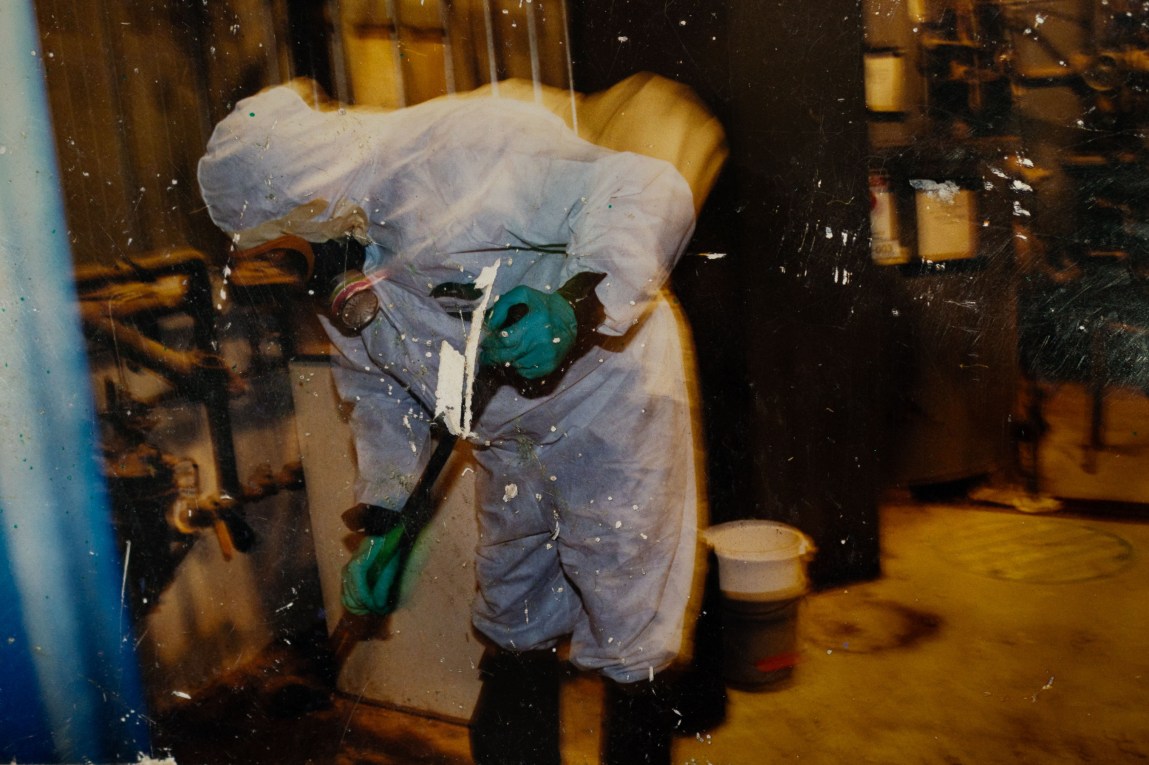
    For nearly 20 years, Rouse had packaged plutonium and monitored radioactive waste at the Hanford Site, a now-decommissioned Department of Energy nuclear weapons production plant in south-central Washington and one of the most contaminated nuclear sites in the country. Tanks full of radioactive sludge exposed him to at least 48 potentially hazardous chemicals. The worksite was so toxic, he said, that the floor once melted the rubber off his boots. 

    Rouse was among the thousands of workers responsible for the ongoing environmental cleanup at Hanford, which has been underway since the DOE shut down the last reactor in the late 1980s. Congress has acknowledged, based on voluminous studies, that radiation at DOE sites poses health risks to workers.

    Over time, some people at Hanford became so sick they could no longer work. Like Rouse, they filed for workers’ compensation. The DOE consistently challenged their claims and tried to shift the blame onto the workers themselves. 

    By the time Rouse took his place behind then-Gov. Jay Inslee, he was desperate. His 2009 workers’ compensation claim had been denied. He had burned through his retirement savings and declared bankruptcy. 

    As he watched, the governor signed a bill that was supposed to change his life.

    A scuffed-up photo of a man in a hazmat suit cleaning.
    Rouse hung onto an old photo of himself cleaning rodent feces while working at the Hanford Site. Rouse packaged plutonium and monitored radioactive waste at the site for almost 20 years. Image photographed by Margaret Albaugh for ProPublica

    For years, Hanford employees filing workers’ compensation claims had to prove the chemicals they were exposed to on the job made them sick. The new law Inslee signed flipped that burden of proof. Under the law, agencies were instructed to presume that working at Hanford had caused certain cancers, neurological diseases and respiratory illnesses. Now the Department of Energy would have to prove to the state that something other than the job had made the workers sick if it wanted to deny their claims. 

    Rouse thought the presumption law would speed up his claim for benefits. State lawmakers and the former governor thought it would force the DOE to take responsibility for the harm Hanford workers were experiencing. 

    But despite the law, the DOE continues to fight new and existing claims, Cascade PBS and ProPublica found. We asked the state for claims records going back to the presumption law’s passage in 2018, but the state only provided records going back three and a half years, to 2023. In that period, workers filed 102 new claims for benefits, state data shows. The DOE did not recommend approving a single one. 

    The state, which has final say, overruled the DOE and approved 75% of those claims. The DOE appealed all but seven of those approvals.

    Cascade PBS and ProPublica spoke to workers, surviving family members, lawyers representing workers and state officials. They all pointed to a pattern: The DOE systematically challenges and then drags out workers’ compensation claims for years with recommended denials and subsequent legal appeals. Along the way, it has spent millions on outside lawyers and expert testimony, including doctor evaluations that point to other causes for workers’ illnesses. 

    The DOE has paid out benefits to Hanford workers in some cases, lawyers and families said, but it has done so while still actively appealing the claims. It warns workers that they may have to pay the money back.  

    Our reporting found that not even death ends the cycle of appeals. About 152 workers’ claims remain stranded in this legal limbo — approved by the state but still under appeal by the DOE. Half of those workers are dead. The DOE continues to fight to deny their families survivors’ benefits.

    “It seems pretty coldhearted, calculated, that they’re trying to save money on the back of sick workers who they made sick,” said Gerry Pollet, one of the Washington state representatives who sponsored the 2018 presumption law, who is also a co-founder of the Hanford cleanup watchdog group Heart of America Northwest. “That’s why we needed a state law.”

    After Cascade PBS and ProPublica raised questions about the DOE’s pattern of litigating claims, regulators at the Washington State Department of Labor and Industries met twice with DOE staff, state agency spokesperson Carrie McCausland said. But she could not point to any other actions the agency has taken beyond the two meetings.

    “Agency staff are concerned and are right now assessing the severity of patterns we’ve seen,” McCausland wrote in an email.

    The DOE did not answer detailed questions or respond to the newsrooms’ findings. In a statement, a spokesperson wrote that the DOE is following “all applicable local, state, and federal laws” and “has a long and successful record of accomplishment of protecting human health and the environment.”

    The DOE has the right to file multiple appeals against a claim. According to court records, its appeals have sought to overturn claims approved by the state, narrow the period of back wages, or block survivors’ benefits, among other things. In appeals filings, the DOE’s lawyers have argued that factors other than work at Hanford played a role in the workers’ illnesses, including smoking, drinking, obesity or genetics.

    In Rouse’s case, the energy department blamed alcoholism and family conflicts. The state agency that handles appeals did not find those arguments persuasive. DOE awarded Rouse most of his back pay in 2024, his lawyer said. Rouse declined to say how much that was, but said he is not touching the money until the legal process concludes.

    A woman holds a blood pressure cuff while Lonnie Rouse raises his arm to allow her to put the cuff on.
    Rouse’s wife, Melinda, takes his vital signs. Margaret Albaugh for ProPublica

    In the nearly eight years it has been fighting his claim, the DOE has filed more than 20 appeals contesting different aspects of his claim. 

    “We were always told that nothing is out here that’s going to harm you — you do what you are supposed to do, and you do what you are trained to do, and you’re going to be fine,” said Rouse, who now receives 24-hour care.

    “But that’s not what happens.” 

    “Depleted and Disgusted”  

    The smell of ammonia serves as a warning, workers say, that the underground tanks holding a mix of radioactive sludge have burped chemical vapors into the air above. From 1998 to 2008, it was Rouse’s job to monitor the toxic waste held in the “tank farms.” The containers together hold more than 50 million gallons of liquid waste. Rouse says he lost count of how many times tanks released toxic vapor that took his breath away, sometimes knocking him to the ground and making him vomit and bleed from his nose. According to a 2014 report funded by the federal government, tank farm workers exposed to chemical vapors commonly reported nausea, headaches and nosebleeds.

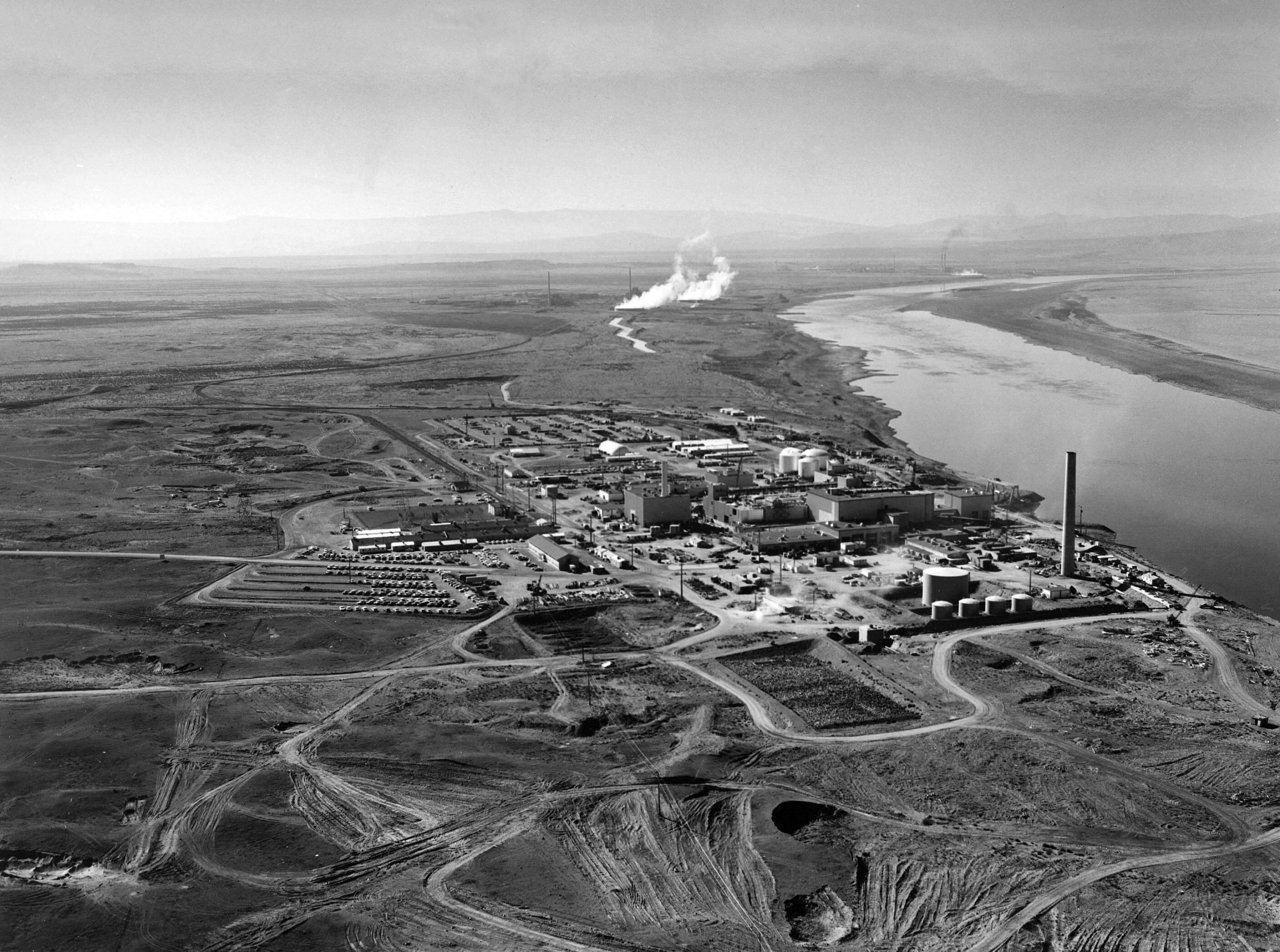
    The liquid sloshing around in those tanks represented the radioactive byproducts of the Cold War. Hanford produced two-thirds of the plutonium for the nation’s nuclear arsenal and fueled the atomic bomb dropped on Nagasaki, Japan, in 1945. 

    A black-and-white aerial photo of a plant with a tall smokestack and many big and small buildings. It sits in a dry environment next to a wide river.
    The Columbia River flows by nuclear reactors at the Hanford Site in Washington state in 1960. Department of Energy

    The end of production in the late 1980s launched a cleanup effort that is expected to continue until at least 2086. As of January 2025, more than 13,000 people were working at Hanford, nearly all of them for private companies contracted by the DOE. It is one of the largest and most expensive efforts to remediate toxic waste in the nation’s history. 

    In 2000, Congress passed the Energy Employees Occupational Illness Compensation Program Act, which provides medical care and one-time payouts to workers at DOE sites across the country. It was an acknowledgement that the nation’s nuclear weapons workers had been exposed to radioactive substances known to cause cancer. In it, lawmakers referred to a DOE policy “to litigate occupational illness claims, which has deterred workers from filing workers’ compensation claims and has imposed major financial burdens for such employees who have sought compensation.”

    But the benefits of the federal program were limited: It capped payouts at $400,000. 

    Washington’s workers’ compensation system, by contrast, can provide steady wage replacement or a pension benefit, in some cases, for the rest of an injured employee’s life. It’s a program that can easily surpass the maximum federal benefit. 

    The state went further with its 2018 presumption law. Such laws generally protect firefighters who are regularly exposed to smoke, burned plastics and extreme heat. The National Council on Compensation Insurance, the Washington state attorney general and Pollet all said they were unaware of any other state that has extended that protection for radiological workers.

    The federal government challenged Washington’s state law later that year in court, arguing it was discriminatory because it only applied to Hanford and the DOE.

    Anticipating a Supreme Court decision that ultimately agreed, lawmakers passed an expanded version that covered all workers at “radiological hazardous waste facilities” in the state, including the state’s only functioning nuclear power plant and a French-owned facility that manufactures nuclear fuel rods. Nonetheless, roughly 75% of the 428 claims filed since 2018 have come from the DOE’s Hanford workers, according to the state Department of Labor and Industries. 

    Kathleen Kersey spent 10 years at Hanford, during both the production and cleanup stages. Much of her work involved measuring radiation around the site and making sure levels were safe. She says her safety training covered radiation, but not other hazards like chemical vapors burping from the waste tanks.

    Kersey struggles to walk, has short-term memory problems and at one point lost vision in her right eye for three months. A doctor diagnosed her with multiple sclerosis, which is a neurological disorder, one of the categories of illnesses the state’s presumption law recognizes as related to chemical exposure at Hanford. In 2019 she filed a claim, which the state approved. 

    The DOE has appealed, arguing that something other than her time at Hanford caused her multiple sclerosis.

    Kersey is one of the 152 workers still awaiting a resolution on her workers’ compensation claim. The DOE has not paid her any back wages, she said. The DOE declined to comment on her case. 

    “I feel depleted and disgusted,” Kersey said of the appeals process. “It makes me feel like I’m worthless. I have no value.” 

    “When Does This End?”

    State records show that the DOE has filed more than 500 appeals since the presumption law passed in 2018. In 20 cases, as it did with Rouse, the DOE has appealed a single worker’s claim half a dozen times or more.

    “We have seen tremendous pushback from DOE on essentially almost every single case that’s been brought,” said Washington State Attorney General Nick Brown. 

    Rouse’s wife, Melinda, said she knew something was wrong when he could not remember how to cut an orange. His vision started to blur, he stumbled often, and suddenly he felt irritable all the time. His primary care physician first thought he might have had a brain tumor. The physician referred him to a neurologist who noted cognitive impairment, possibly due to exposure to multiple toxins at the Hanford Site. The neurologist then referred him to a neuropsychologist, who diagnosed him with “toxic encephalopathy” in 2009, saying it was “more likely than not” that chemical exposure damaged his brain, according to court records.

    Rouse at home with his wife, Melinda, and their dogs. After working at Hanford, he developed a neurological disorder that medical experts attributed to exposure to chemicals on the job. Lizz Giordano/Cascade PBS

    The U.S. Department of Labor agreed too, approving him in 2010 for benefits under the Energy Employees Occupational Illness Compensation Program Act, saying it was “at least as likely as not” that Hanford contributed to his illness. A federal medical consultant even praised the neuropsychologist who assessed Rouse for his “unusually thorough analysis of causation.” 

    Rouse refiled his 2009 state workers’ compensation claim under the new law in 2018. Washington state approved it later that year. 

    The DOE appealed. It hired a medical toxicologist, who reviewed Rouse’s medical records and testified that he did not have the disease he claimed, and brought in an industrial hygienist, who downplayed the exposure risks at Hanford. The DOE’s toxicologist testified that Rouse’s drinking was “the most significant, what we might term, ‘toxic exposure’ that’s described in the medical record.”

    A group of three physicians and an industrial hygienist have collectively earned over $1.7 million testifying against Hanford workers since the presumption law’s passage, according to DOE invoices the newsrooms obtained by a federal records request. One of the DOE’s go-to expert witness doctors earned more than $200,000 from the DOE last year alone. He did not respond to multiple emails seeking comment. 

    A single law firm, Wallace, Mann, Capener, Bishop & Debney, handles all of the DOE’s appeals. In addition to the fees paid to expert witnesses, the department paid the firm nearly $10 million between 2018 and 2025. The law firm did not reply to multiple requests for comment. 

    In cases where the DOE has appealed the state’s approval of a claim since 2018, the agency that handles appeals has sided with workers nearly 9 times out of 10, according to state data. 

    Pollet, the state representative who sponsored the 2018 presumption bill, acknowledged that the law has fallen short of his expectation. 

    “This was supposed to have ended a decade ago,” he said about sick Hanford workers still awaiting back wages and medical care. “It’s even worse than it was 10 years ago.”

    “I think their actions are not only despicable, but they are criminal,” he said of the DOE. 

    The state Department of Labor and Industries said it expected “to engage further with the DOE,” which could include putting the department on an improvement plan and monitoring its progress. 

    Another option state regulators have is to revoke the DOE’s ability to accept and pay out claims directly. According to the state Department of Labor and Industries, the contractors that employ Hanford workers on behalf of the DOE would then decide whether to join the state-managed fund or seek state approval to manage claims themselves. Doing so could limit the DOE’s power to appeal, but contractors would still have that right. 

    Brown, the state attorney general, said he wants to wait and see how the DOE’s appeals of claims play out in higher courts. He hopes that once the DOE’s losses start stacking up, it will slow the volume of its litigation. 

    Attorney Charlynn Hull said she thought the DOE’s approach might soften during the Biden administration. But Hull said she observed no change in the DOE’s behavior. Her firm, Smart Law, represents the majority of Hanford workers’ compensation claimants, including Rouse and Kersey.

    One of the hardest things about the DOE’s appeals, Hull said, is the testifying that the children and spouses of dead workers must do. 

    “I think that it’s just, it’s tormenting to them, in many ways, to relive how awful that experience was, especially with the cancer-related death,” Hull said. “When does this end?”

    Telephone poles and some low buildings stick up from the desert, as seen from across the Columbia River. Mountains rise up behind the site.
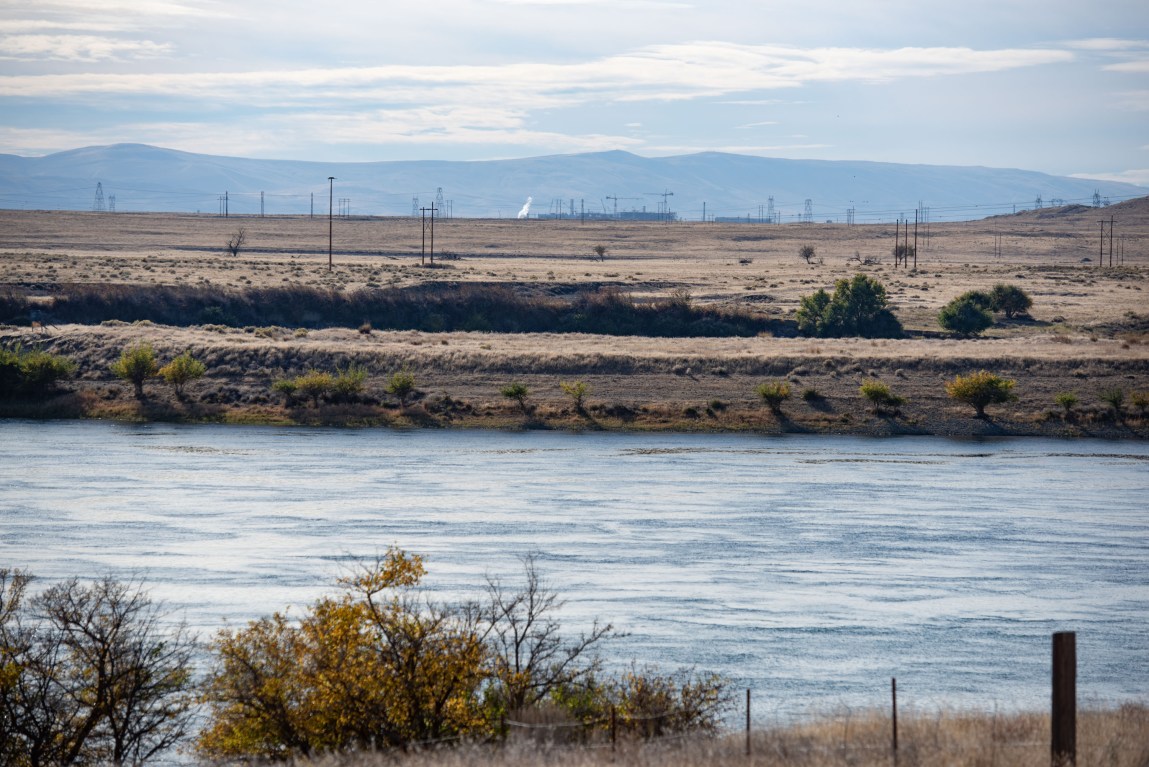
    A view of the Hanford Site, which is undergoing one of the largest and most expensive toxic waste remediation efforts in the nation’s history. Margaret Albaugh for ProPublica

    Dying While Under Appeal

    For Isidoro Mata Jr., it ended with his children draining fluid from his lungs through a tube doctors had surgically inserted into his chest.

    Mata demolished buildings at Hanford for nearly 30 years. Court records show he was diagnosed in 2015 with thyroid cancer, one of the illnesses that Washington’s law ties to work at Hanford. Sara Chilcoat, his daughter, said he kept working as long as he could.

    State claims managers approved Mata’s claim in 2019. The DOE appealed, arguing that “medical opinion supports denial of this claim as not related to the distinctive conditions of employment.” The appeal did not elaborate further. The state forced the DOE to pay his wages and the cost of his medications, Chilcoat said. But the DOE filed a separate motion to stop his benefits while the appeal was adjudicated. 

    In its motion, the DOE argued that it was likely to prevail in its appeal because a doctor who examined Mata in 2019 believed his cancer was unrelated to his work at Hanford, according to court records. The state found the doctor’s examination “lacking in objective findings.” 

    “He was fighting for his life while they were trying to do that,” Chilcoat said. “That makes me mad.” 

    Mata’s case file notes that he missed three meetings with DOE lawyers in 2020. The state attorney general’s office sent the appeals judge a letter in July explaining that Mata was unable to participate because of his chemotherapy treatments. The DOE, which did not respond to questions about Mata’s case, dropped its appeal in December.

    Less than three months later, Mata died.

    Source: ProPublica · 2026-10-22