
It was a stark and forbidding vision for those who followed the righteous path. Scorn, the preacher told his congregation, was a person’s lot if they led an “honest, clean, pure, godly life.” The world hated “people that live like that,” he said.
“They want you to be just as ungodly and filthy as they are,” he said in a rare audio recording, obtained by The Oregonian/OregonLive, of a 1958 sermon.
The preacher was Walter White, who led an Oregon City offshoot of the Followers of Christ, an Idaho sect that spurns medical treatment as a show of faith. White was a grocer, originally from Picabo, Idaho, whose congregants came to view as a prophet. He rambled at times during his sermon but always returned to simple and severe messages about choosing righteousness rather than the ways of the world. A trim figure in wire-rim glasses and dark combed-back hair, he spoke in a voice that evoked the stentorian tones of an old newsreel announcer. In the scratchy recording, people cough and babies cry as he preaches.
White was uneasy about being taped, according to a note by the congregant who made the recording. White didn’t want his message to fall into what he thought were undesirable hands. He viewed disbelievers with disgust. They put their trust in human experts, such as doctors, rather than in God. People like that, he told the faithful, “want to be somebody.” They want “the wisdom of the world and admiration.”
Today, nearly 60 years after White’s death, his pronouncements continue to influence the faithful. For many Followers, White remained “the highest authority,” said Mark Shaw, who left the sect in 2019 and keeps in touch with some Followers. Members invoked his teachings to settle disagreements. “It was used as the trump card,” he said. “It was the discussion-ender.”
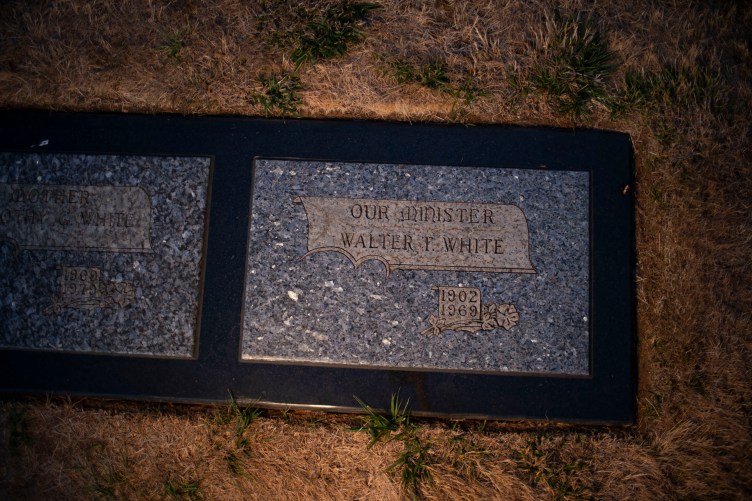
To understand the modern-day Oregon City congregation, it’s essential to examine White’s role. No pastor ever succeeded him, leaving the sect all the more reliant on his teachings.
The Oregonian/OregonLive and ProPublica have published a series of articles in recent months about the Followers of Christ in Oregon and Idaho, focusing on the long history of parents in Followers congregations declining to seek medical care for their critically ill children and the sometimes fatal consequences.
Little has been publicly known about White, likely due to the Followers’ culture of isolation and secrecy. The Oregonian/OregonLive was able to piece together details through documents we obtained, including biographical sketches, a transcript and the recording of the sermon, along with written accounts of dreams White purported to have and records of baptisms he performed. Among the documents was a list of his prophecies and even a sex guide he disseminated.
White was born into the Followers, whose members migrated to Idaho from the Midwest around the turn of the 20th century. Men in White’s family preached, and he joined them in his 20s, the story goes, after he dreamed that worms would devour him if he didn’t.
In the early 1930s, White joined two church elders on a journey from Idaho to Oregon City to minister to a dying man. After talking with them, the man readily discarded his medications and was relieved to see White, an avid smoker, roll a cigarette because the man didn’t want to kick the habit. For the next five years, White traveled between Idaho and Oregon to preach and by 1938, he had moved to Oregon to lead a fledgling congregation.
Followers at the time were led by a constellation of preachers and elders, all men. Notes from one of their meetings in 1937 revealed that Followers believed White possessed the “gift of prophecy.” It also recorded the debates that simmered among them — whether women should be allowed to cut their hair, for instance. They talked about the value of dictionaries, which some classified as “worldly” items to be avoided, and determined that women assisting with home births should not “look under the cover” as women labored. One account written years later by a Follower suggested that White split with a prominent Idaho preacher after revelations that the man had sexual contact with a 15-year-old girl.
Some of those values still shape the Followers today. Congregants tend to stay out of what they view as the worldly affairs of politics and civic life, and they generally don’t pursue education beyond high school or vocational training. The Followers remain patriarchal; men are expected to lead their households.
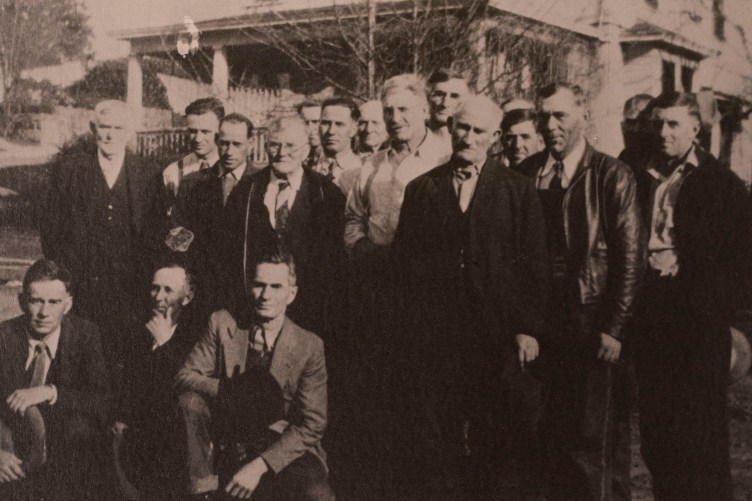
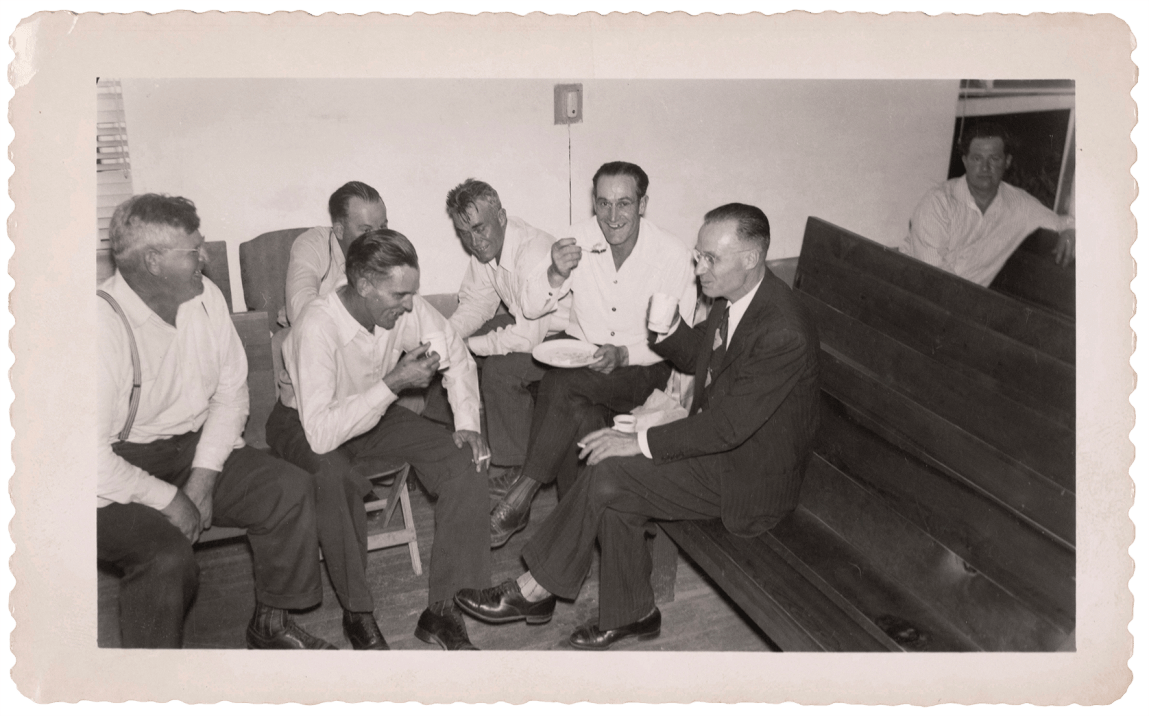
White was known among Followers as “brother Walter.” An undated black-and-white photograph shows him baptizing a child in what appears to be a baptismal pool, his arm raised in prayer. In another image dated 1951, he wears a suit jacket and tie, a mug in one hand and a cigarette in the other.
As much a ruler as a spiritual leader, White enjoyed near-absolute authority. Followers believed he possessed such divine power that he knew their thoughts and secrets. They turned to him for approval on matters both consequential and mundane, from marital advice to appliance purchases. (White even weighed in on where to shop: He owned a local market and made it clear he expected to see Followers there.)
White’s earthly teachings extended to a perhaps unexpected realm: Couples on the cusp of marriage received a sex guide, which continued to be distributed as recently as 2018. Complete with explicit detail and anatomical diagrams, the 15-page manual includes chapters titled “the ideal love act” and “the control of climax.” And, in a seeming exception to the prohibition on medical treatment, it goes so far as to recommend that women who feel inhibited should consider seeing a doctor “who has given the sex problems sincere study.”
White preached the Oregon City sect’s singularity: His flock was spiritually superior to other Follower congregations, he contended, including ones in Idaho and Grants Pass, Oregon. By the 1950s, he had cut off ties to those groups.
In 1965, White told his congregation of his prophecy that the end times were near. He recounted a dream, which he said was set against the backdrop of the Kennedy Space Center in Florida, that involved walking with Jesus Christ, according to one account. He dreamed they climbed a launchpad, and White noted he was impressed with Christ’s physical agility. Days before White shared his vision, NASA launched Gemini 3, the first U.S. mission to send multiple astronauts into space.
White told the faithful that it was during this dream that Christ said the world would come to an end in six years. He said Christ warned that baptisms among the Followers would end even sooner. That his apocalyptic prophecy fizzled didn’t shake Followers’ faith.
White died in 1969. He was seen as irreplaceable. A handful of elders divided his leadership duties but lacked White’s authority. The faithful never tapped a successor, believing only a man called by God could fill the role. No one was ever deemed worthy enough to take his place.
But one element of White’s prophecy did come true. Given that he was the only person who could perform baptisms, his passing also meant that the ritual ended. As a result, the flock, which former members say numbered 1,500 or more at its peak, today consists solely of generations of the same families who were members in 1969.
Like other elders in the early days of the Followers, White saw illness as a test of faith. During the 1937 meeting, about 18 elders and preachers from congregations in Idaho and Oregon gathered at the Oregon City meetinghouse to settle the rules that would shape the church, according to a written account compiled by sect members years later.
The men discussed the Book of James in the New Testament, which says, “And the prayer of faith shall save the sick, and the Lord shall raise him up.” Followers interpret the lines as an edict to rely only on faith when faced with illness. The passage would be “strictly enforced to show faith,” according to an account of the meeting compiled years later. They believed that death, if it came, was God’s will.
Years later, in 1965, when the state investigated the case of a teen in the sect whose broken ankle had gone untreated, White said, “faith can heal,” according to a story in The Oregonian at the time. “We believe that God comes before man. If a person’s faith doesn’t go far enough, then he can seek help from man.”
The consequences of this belief system still reverberate. For years, the Oregon City Followers suffered multiple child deaths, many from treatable or preventable conditions. The deaths prompted the Legislature in 1999 to chip away at legal protections for parents whose children died without medical care. Then in 2011, lawmakers removed all protections for faith healing.
The faith-healing doctrine would affect White’s own descendants. Two of his great-granddaughters spent years in prison for failing to seek medical care for their premature newborns who died. In 2017, one of his great-great-granddaughters, Evelyn, suffered respiratory complications related to her premature birth. Authorities attribute her survival to the intervention of law enforcement officials who ordered her parents to get her to the hospital. Evelyn’s life and journey out of the Followers is the subject of a story and documentary published by The Oregonian/OregonLive and ProPublica.

Source: ProPublica · 2026-11-11