Day: October 30, 2026

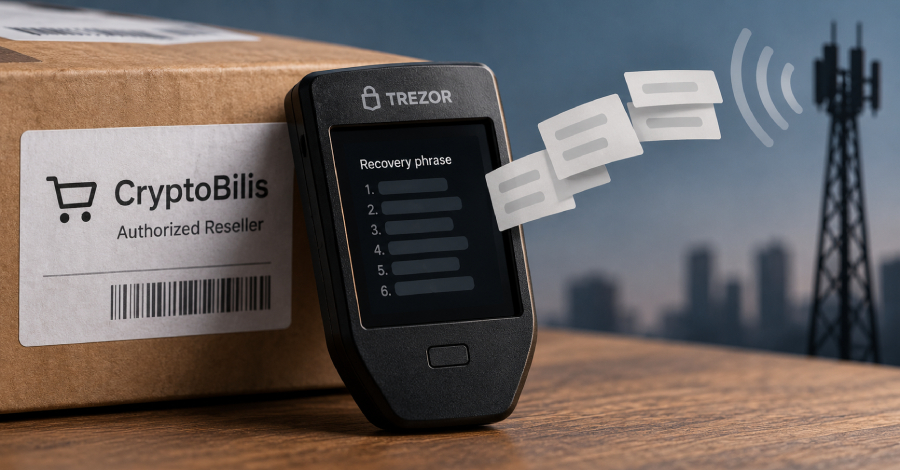
  • Trezor Warns of Suspected Hardware Implant in One of Its Wallets Sold by CryptoBilis

    Trezor Warns of Suspected Hardware Implant in One of Its Wallets Sold by CryptoBilis

    A Trezor Safe 5 hardware wallet bought from the reseller CryptoBilis has an extra circuit board that sends out the recovery phrase over a mobile network, a customer has reported.

    Trezor has not yet examined the device. It is telling everyone who bought a Trezor from CryptoBilis since March 2026 to move their funds to a new wallet with a new recovery phrase.

    Trezor said in a blog post&nbsp

    Source: The Hacker News · 2026-10-30

  • How to prioritize remediation after a pentest: a practitioner workflow

    A practical pentest workflow combines CVSS, EPSS and business impact to validate findings, prioritize fixes and document remediation decisions.

    Remediation prioritization after a pentest is the process of ranking and ordering security findings based on their risk, exploitability, and business impact. A penetration test can produce any number of findings, ranging from the very low (zero) to the very high (hundreds).

    The security of the tested organization depends on the findings management processes addressing the most important results first.

    • CVSS alone misranks risk. Accurate prioritization relies on combining CVSS, EPSS, and business context.
    • 68.4% of practitioners say a 500+ candidate finding set would strain the team or be unmanageable, so it’s important to validate first.
    • 81.7% of practitioners see AI-generated findings that need significant manual validation, so validation with concrete proof remains essential.
    • Document every deprioritization, because that record counts as audit evidence.

    Why aren’t CVSS scores alone enough to inform remediation?

    When prioritizing pentest results, some practitioners rely solely on frameworks like the Common Vulnerability Scoring System (CVSS). The logic is sound: the higher a vulnerability’s CVSS score is, the more risk it poses, and the sooner you should fix it, right?

    Unfortunately, the reality is much more complicated. Boiling down a complex ecosystem of risk into a one-dimensional number means ignoring the wider business context. In the end, that means you fix vulnerabilities that pose serious theoretical risk first, while genuine exposures get pushed to the back of the queue.

    Lets use two hypothetical vulnerabilities as an example.

    • Vulnerability A is an RCE flaw, CVSS 9.8, on an isolated intranet site.
    • Vulnerability B is a BOLA flaw, CVSS 6.5, on a public facing production payment API.

    Now think about which one you would fix first.

    Would you prioritize the“critical” flaw on an intranet site, containing no sensitive data that attackers could only reach if they’d already compromised your internal network? Or would you prioritize the “medium” flaw on an API that processes live credit card transactions, and that any script kiddie could manipulate?

    Across an entire organization, or multiple organizations if you’re a consultant or MSP, those critical flaws can really pile up. In one AI pentesting survey of 158 base practitioners by Pentest-Tools.com, conducted in June 2026, 68.4% of respondents said a 500+ candidate finding set would strain the team or be unmanageable.

    Approaching risk prioritization by trying to fix every “Critical” finding is going to exhaust you and your team. That’s when people make mistakes, and you end up with a major incident on your hands.

    What separates a validated finding from a candidate?

    That same distinction, in part, separates a candidate finding from a validated one. For example, vulnerability with a high CVSS score but near-zero exploitability should remain a candidate. To graduate a vulnerability from a candidate to a legally and technically validated finding, it must pass through a strict filter that involves three processes.

    The first step is to eliminate as much administrative noise as possible. That means deduplicating findings and removing any that are obviously non-exploitable. 

    Then, you need to confirm exploitability. That typically means executing a safe, controlled attack path against the target environment to prove that a state change, data exposure, or privilege escalation can actually occur.

    Finally, you need concrete evidence. A validated finding cannot rely on a generic tool’s “confidence score.” It must include comprehensive proof that a developer or auditor can immediately follow:

    • Technical proof tends to include HTTP request/response traces or specific error payloads.
    • Proof of impact includes things like screenshots or server-side telemetry demonstrating unauthorized data access.

    Now, many vendors are going to claim that AI-generated findings ease the strain of exploit validation. In many cases, they’re telling the truth. But as with any AI technology, a healthy level of skepticism is important. According to the same study, 81.7% of respondents encounter AI-generated findings that need significant manual exploit validation at least sometimes.

    How do CVSS, EPSS and business context combine into a ranking?

    Together, CVSS, Exploit Prediction Scoring System (EPSS) scores, and business context create a single risk ranking that reflects real-world danger to the tested organization.

    CVSS, as mentioned earlier, measures theoretical severity. It tells you how bad a flaw is in a vacuum, but is entirely blind to context. EPSS measures probability. It tells you how likely an attacker is to exploit a flaw in the wild over the next 30 days, but doesn’t measure the potential impact of an exploitation.

    Business context measures operational impact. It tells you the value of the affected asset, how easily an attacker can reach a flaw, and what they can steal. It tells you nothing, however, about the threat itself. Ultimately, business context is expressed as residual risk, the danger left over after you factor in your existing defenses. Calculating it relies on measuring four factors:

    • Exposure: Whether a server is open to the public internet.
    • User count: How many people use a system.
    • Data sensitivity: Whether the system holds sensitive information.
    • Compensating controls: Whether you have firewalls or antivirus tools actively blocking the attack path.

    By checking these boxes, you won’t waste time fixing a “Critical” bug locked in an empty, disconnected server. Instead, you’ll prioritize the “Medium” bug on your public checkout page that hackers are actively trying to breach.

    What goes first when dev time is limited?

    Sometimes, you’re not going to have much time for remediation. That’s natural. In those situations, prioritize validated findings with high threat activity (EPSS score) and critical business exposure. They’re the findings that pose the most threat to your organization.

    Prioritization done well is itself evidence. A ranked, validated list, with a written reason for what was deprioritized, is what a team can defend later.

    You’ll need to record the owner (the specific individual accepting the risk), the date of the decision, the technical operational basis for deprioritization (such as an active compensating control), and a hard review date for re-evaluation.

    Why does the ranked list count as audit evidence?

    A prioritized ranking list counts as valid audit evidence because it proves compliance alignment with several major security frameworks. For example:

    • ISO 27001 A.8.8 demands that organizations evaluate real-world exposure, take targeted corrective actions, and retain objective evidence that the remediation loop has successfully closed.
    • PCI DSS 11.4 mandates that penetration testing actively validates and exploits findings, with formal retesting conducted after significant organizational changes.
    • SOC 2 CC7.1 relies on this documentation to confirm that an organization maintains systemic operational consistency and rigorous vulnerability triage over time.

    A ranked, validated list also gives MSPs and MSSPs a clear, auditable record of truth that clients can either accept or challenge with their own evidence. This transparency ensures both sides agree on which real-world risks need to be addressed first.

    What does a defensible ranking record contain?

    A defensible ranking record contains the validated asset identification, its technical CVSS severity, its real-world EPSS probability, the active compensating controls defining its residual list, the formal sign-off from the risk owner, and the targeted review schedule.

    About the Author: Josh Breaker-Rolfe is a Content writer at Bora. He graduated with a degree in Journalism in 2021 and has a background in cybersecurity PR. He’s written on a wide range of topics, from AI to Zero Trust, and is particularly interested in the impacts of cybersecurity on the wider economy.

    Follow me on Twitter: @securityaffairs and Facebook and Mastodon

    Pierluigi Paganini

    (SecurityAffairs – hacking, pentest)

    Source: Security Affairs · 2026-10-30
  • Fresh WordPress Vulnerability in Attackers’ Crosshairs

    Threat actors are attempting to exploit a high-severity unauthenticated race condition leading to remote code execution.

    Source: SecurityWeek · 2026-10-30

  • Chinese Actor Compromises US Government Network Via Chained PHP2Shell Exploit

    Dream found that a suspected Chinese-nexus actor gained root access to Palo Alto Network firewall servers to target government organizations

    Source: Infosecurity Magazine · 2026-10-30

  • Why Urgent Security Fixes Aren’t Fixed. Observe, Prove, Act, Confirm Gets Them Moving

    Why Urgent Security Fixes Aren’t Fixed. Observe, Prove, Act, Confirm Gets Them Moving

    The alert is critical. The fix is known. And the ticket sits in a queue for days. Security teams understand the risk, but the people who keep applications available need proof that the change won’t break anything. 

    Their concerns are practical. An IPS protection could block legitimate traffic. A configuration change could interrupt a service. An endpoint policy could affect an application

    Source: The Hacker News · 2026-10-30

  • Binance Probes DevOps Engineer’s Hacked Laptop After $6.3B Theft

    Binance probes a DevOps engineer’s hacked laptop after a $6.3 billion theft linked by researchers to North Korean hackers, and promises to cover all customer losses.

    Source: HackRead · 2026-10-30

  • British intelligence agency misplaced ‘thousands’ of storage devices, years later still can’t say how many

    British intelligence agency misplaced ‘thousands’ of storage devices, years later still can’t say how many

    Thousands of GCHQ storage drives containing sensitive data have been lost for years, and the British signals intelligence agency still cannot explain where they are. According to the Investigatory Powers Commissioner’s Office’s (IPCO) annual report, the missing storage drives have been known to officials for years, and may contain data related to the Investigatory Powers Act (IPA). “I remain concerned that GCHQ has not yet established a sufficiently clear understanding of the scale, location, and recoverability of lost removable media that may contain IPA-related data, notwithstanding that the underlying issues were first drawn to my attention several years ago,” wrote investigatory powers commissioner Lord Brian Leveson. “While I recognize the technical and practical challenges involved, the passage of time without a comprehensive account heightens the importance of sustained senior focus and assured remediation. Given the potential sensitivity of the material involved, I will continue to monitor progress closely.” Described as “a very significant number,” the report notes that GCHQ has scoped the maximum number of potentially lost drives, but is unaware of the exact scale of the issue. The agency has embarked on “a program of further work” to locate as many of the lost devices as possible, which includes implementing an automated asset-tracking system by the end of the year. After this is up and running, it said it will be able to provide a more precise number of lost drives. A GCHQ spokesperson told The Register: “As IPCO have reported, our management system for removable media was previously not sufficiently robust to effectively track the items that were registered for use. IPCO are right to note the flaws in the data the system produced, and we have taken action against all their recommendations. “We recognize the importance of security of removable media in our systems, and have a range of measures to mitigate the risks posed by these items. The findings in the report have been addressed comprehensively, and all necessary steps to correct this issue have been taken.” Peter Sommer, digital forensics expert and visiting professor at de Montfort and Birmingham City universities, told us: “Bearing in mind the sort of highly sensitive data collected and processed by GCHQ IPCO is right to be very concerned, the more so as the issue is already several years old. Vast quantities of data can be stored on the cheapest lowest cost hard disks and cards. At a much more modest level as an expert witness I know how important it is to keep careful track of the data entrusted to me.” Losing important devices is not an achievement that’s exclusive to GCHQ. Myriad stories like this have emerged from all corners of the public sector over the years, such as the British Minidstry of Defence misplacing USB drives containing secret information in the mid-noughties, civil servants routinely losing their BlackBerry handsets, and UK police losing thousands of devices, too. The missing storage drives comprise just one of the agency’s various transgressions highlighted by IPCO in its report. There are also “significant concerns” over the lax safeguards used to restrict the UK’s overseas partners when accessing bulk-intercepted data collected by GCHQ. IPCO was satisfied at how GCHQ ensured its own analysts remained compliant with safeguards around accessing confidential material related to journalism, journalistic sources, and privileged legal information. However, there were concerns around how these same safeguards were applied to its international partners, which have access to its so-called bulk data interception “product.” The report notes that most partners were properly restricted from accessing such material, although an internal probe found that there were inadequate arrangements in respect to one partner and their access to journalistic material. Both GCHQ and the overseas agency committed to rectifying the situation. GCHQ was also questioned after a software bug in a web app “used by a relatively small section of the public” misidentified individuals thought to be participating in terrorist activities. The agency identified and reported the flaw in the software, which it used for “target discovery work,” and although it only affected a small number of individuals, the errors led to five port stops made under the Terrorism Act and caused “serious prejudice” to the victims. A port stop, for the uninitiated, involves law enforcement detaining a suspect at a UK port, airport, train station, or within one mile of the Northern Ireland border, and can be carried out without suspicion. Once detained, individuals have a legal responsibility to provide passwords to their electronic devices, which can be seized for up to seven days, and in some cases have their biometric markers taken. Failure to comply can lead to a three-month prison term. IPCO ruled, however, that there was ultimately no error made as defined by the IPA. “This is because the activity was lawfully authorised under an interception warrant and the adoption of an unintentionally and unforeseeably imperfect target discovery methodology did not constitute such an error,” the report stated. Despite the agency’s vast technical expertise, IPCO said that the issue affecting the software was not foreseeable. GCHQ was not the only offender among the UK intelligence community (UKIC), with MI5’s mishandling of the infamous Agent X case taking center stage in the report. Agent X was an anonymous MI5 informant whose real identity has never been publicly released. A secret inquiry by IPCO as well as the report revealed that MI5 managed Agent X despite knowing he was a violent misogynist obsessed with extreme violence. Lord Leveson said “the case of Agent X is as serious as anything I have dealt with as Commissioner,” after MI5 gave false evidence to the High Court and Investigatory Powers Tribunal to protect a foreign neo-Nazi informant who was under police investigation for abusing his partner, referred to publicly as “Beth.” ®

    Source: The Register Security · 2026-10-30

  • British intelligence agency misplaced ‘thousands’ of storage devices, years later still can’t say how many

    British intelligence agency misplaced ‘thousands’ of storage devices, years later still can’t say how many

    Thousands of GCHQ storage drives containing sensitive data have been lost for years, and the British signals intelligence agency still cannot explain where they are. According to the Investigatory Powers Commissioner’s Office’s (IPCO) annual report, the missing storage drives have been known to officials for years, and may contain data related to the Investigatory Powers Act (IPA). “I remain concerned that GCHQ has not yet established a sufficiently clear understanding of the scale, location, and recoverability of lost removable media that may contain IPA-related data, notwithstanding that the underlying issues were first drawn to my attention several years ago,” wrote investigatory powers commissioner Lord Brian Leveson. “While I recognize the technical and practical challenges involved, the passage of time without a comprehensive account heightens the importance of sustained senior focus and assured remediation. Given the potential sensitivity of the material involved, I will continue to monitor progress closely.” Described as “a very significant number,” the report notes that GCHQ has scoped the maximum number of potentially lost drives, but is unaware of the exact scale of the issue. The agency has embarked on “a program of further work” to locate as many of the lost devices as possible, which includes implementing an automated asset-tracking system by the end of the year. After this is up and running, it said it will be able to provide a more precise number of lost drives. A GCHQ spokesperson told The Register: “As IPCO have reported, our management system for removable media was previously not sufficiently robust to effectively track the items that were registered for use. IPCO are right to note the flaws in the data the system produced, and we have taken action against all their recommendations. “We recognize the importance of security of removable media in our systems, and have a range of measures to mitigate the risks posed by these items. The findings in the report have been addressed comprehensively, and all necessary steps to correct this issue have been taken.” Peter Sommer, digital forensics expert and visiting professor at de Montfort and Birmingham City universities, told us: “Bearing in mind the sort of highly sensitive data collected and processed by GCHQ IPCO is right to be very concerned, the more so as the issue is already several years old. Vast quantities of data can be stored on the cheapest lowest cost hard disks and cards. At a much more modest level as an expert witness I know how important it is to keep careful track of the data entrusted to me.” Losing important devices is not an achievement that’s exclusive to GCHQ. Myriad stories like this have emerged from all corners of the public sector over the years, such as the British Minidstry of Defence misplacing USB drives containing secret information in the mid-noughties, civil servants routinely losing their BlackBerry handsets, and UK police losing thousands of devices, too. The missing storage drives comprise just one of the agency’s various transgressions highlighted by IPCO in its report. There are also “significant concerns” over the lax safeguards used to restrict the UK’s overseas partners when accessing bulk-intercepted data collected by GCHQ. IPCO was satisfied at how GCHQ ensured its own analysts remained compliant with safeguards around accessing confidential material related to journalism, journalistic sources, and privileged legal information. However, there were concerns around how these same safeguards were applied to its international partners, which have access to its so-called bulk data interception “product.” The report notes that most partners were properly restricted from accessing such material, although an internal probe found that there were inadequate arrangements in respect to one partner and their access to journalistic material. Both GCHQ and the overseas agency committed to rectifying the situation. GCHQ was also questioned after a software bug in a web app “used by a relatively small section of the public” misidentified individuals thought to be participating in terrorist activities. The agency identified and reported the flaw in the software, which it used for “target discovery work,” and although it only affected a small number of individuals, the errors led to five port stops made under the Terrorism Act and caused “serious prejudice” to the victims. A port stop, for the uninitiated, involves law enforcement detaining a suspect at a UK port, airport, train station, or within one mile of the Northern Ireland border, and can be carried out without suspicion. Once detained, individuals have a legal responsibility to provide passwords to their electronic devices, which can be seized for up to seven days, and in some cases have their biometric markers taken. Failure to comply can lead to a three-month prison term. IPCO ruled, however, that there was ultimately no error made as defined by the IPA. “This is because the activity was lawfully authorised under an interception warrant and the adoption of an unintentionally and unforeseeably imperfect target discovery methodology did not constitute such an error,” the report stated. Despite the agency’s vast technical expertise, IPCO said that the issue affecting the software was not foreseeable. GCHQ was not the only offender among the UK intelligence community (UKIC), with MI5’s mishandling of the infamous Agent X case taking center stage in the report. Agent X was an anonymous MI5 informant whose real identity has never been publicly released. A secret inquiry by IPCO as well as the report revealed that MI5 managed Agent X despite knowing he was a violent misogynist obsessed with extreme violence. Lord Leveson said “the case of Agent X is as serious as anything I have dealt with as Commissioner,” after MI5 gave false evidence to the High Court and Investigatory Powers Tribunal to protect a foreign neo-Nazi informant who was under police investigation for abusing his partner, referred to publicly as “Beth.” ®

    Source: The Register — Security · 2026-10-30

  • The $6.3 Billion Binance Hack Was Pulled Off in Just 20 Minutes

    The $6.3 Billion Binance Hack Was Pulled Off in Just 20 Minutes

    Multiple crypto-tracing firms say notorious North Korean hackers TraderTraitor may be behind the largest digital heist in history—with billions of crypto likely gone for good.

    Source: WIRED Security · 2026-10-30

  • Hackers steal and publish data on 41,000 Homeland Security workers

    .kadence-column482644_f2c16d-bc > .kt-inside-inner-col{padding-top:20px;padding-right:20px;padding-bottom:10px;padding-left:20px;}.kadence-column482644_f2c16d-bc > .kt-inside-inner-col{column-gap:var(–global-kb-gap-sm, 1rem);}.kadence-column482644_f2c16d-bc > .kt-inside-inner-col{flex-direction:column;}.kadence-column482644_f2c16d-bc > .kt-inside-inner-col > .aligncenter{width:100%;}.kadence-column482644_f2c16d-bc > .kt-inside-inner-col{background-color:#ffe5e5;}.kadence-column482644_f2c16d-bc > .kt-inside-inner-col:before{opacity:0.3;}.kadence-column482644_f2c16d-bc{position:relative;}@media all and (max-width: 1024px){.kadence-column482644_f2c16d-bc > .kt-inside-inner-col{flex-direction:column;justify-content:center;}}@media all and (max-width: 767px){.kadence-column482644_f2c16d-bc > .kt-inside-inner-col{flex-direction:column;justify-content:center;}}

    In this article

    • Hackers published work details and internal group memberships for more than 41,000 DHS workers.
    • The data could enable targeted scams, harassment, stalking, or physical threats.
    • DHS employees should follow agency guidance, verify unexpected contact, and report threats to security.

    A group of hackers calling themselves the Department of Peace says it stole and published the personal details of more than 41,000 people working for the US Department of Homeland Security (DHS). The department says it is aware of a potential breach.

    The group, which also claimed the theft of contract documents from the DHS in March, gave the data to Swiss hacktivist maia arson crimew, who published it in collaboration with the transparency collective DDoSecrets. The latter also published the BlueLeaks data dump that listed law enforcement officers’ details in 2020.

    The aim of publishing the data was to replace “anonymity with accountability,” DDoSecrets co-founder Emma Best said in an online statement.

    According to TechCrunch, timestamps on the records suggest the data was taken around mid-August. The group said it had launched the attack in response to a July 17 statement by DHS Secretary Markwayne Mullin, in which he promised to “turn up the heat” with traffic stops.

    What was stolen?

    The data files published online, which the publishers have called “Icepick,” span staff at nearly 7,000 offices. They include the names, work email addresses, phone numbers, office addresses, job titles and membership in internal DHS groups. The employees impacted include almost 6,600 Immigration and Customs Enforcement (ICE) employees. ICE is the DHS unit responsible for immigration enforcement and deportations in the US.

    The dataset also carried details of over 21,000 Customs and Border Protection (CBP) employees, along with information on people who work at the Cybersecurity and Infrastructure Security Agency (CISA).

    The data dump revealed less information than the ShinyHunters’ FBI data heist in September, which reportedly contained Social Security numbers, emergency contacts, medical records and home addresses. Nevertheless, this is more than just a phone book of folks in the DHS.

    For one thing, it doesn’t take much to cross-reference data. Reuters matched six DHS employees’ data to credit bureau records and breach data from a dark web intelligence platform. Online activists regularly use open-source intelligence (OSINT) to “doxx” people from very few clues, meaning that even a leak of basic identity information can put someone in danger. In fact, the creators of a separate searchable version say they added information through automated and manual research. So some details shown in that version may not have come from the data stolen from DHS.


    The data in this case also included membership of groups within Active Directory, a Microsoft tool that contains identity information about computer users. Active Directory controls who can access different internal tools, services, and third-party software within an organization.

    The files listed over 200 CBP users in a group that could access the facial recognition tool Mobile Fortify. Other groups reference a service called Penlink, which the company claims can track the location data of hundreds of millions of mobile devices.

    According to the Guardian, job titles in the data dump show which agents were assigned to sensitive jobs such as special operations, surveillance, and undercover work.

    How did they get the data?

    The Department of Peace said that it got to the information via a single sign-on (SSO) service provided by identity company Okta. SSO is a prized target for hackers because a single authentication can get a user into many different workplace services and applications.

    Okta says it has no evidence its data or systems were compromised, but that doesn’t rule out someone abusing a DHS account with stolen credentials.

    DHS told reporters it was aware of a potential breach. One DHS employee whose data showed up in the breach told Reuters they hadn’t heard anything about it.

    What DHS employees can do now

    The leaked records include work contact details and internal group memberships. This information could help attackers create convincing messages or calls, and may expose some employees to unwanted attention or threats. DHS has warned about the risk of harassment, stalking, and physical harm. It is not yet clear whether the leak has led to specific threats or affected any operations.

    If you work for DHS:

    • Follow security advice and instructions from the DHS.
    • Treat unexpected calls, emails, and texts about your role or colleagues with caution. Verify them through a contact method you already trust, and never share passwords or MFA codes.
    • Change any personal passwords you’ve reused for work, and turn on MFA where available. Follow your agency’s process for work accounts.
    • Report suspicious contact or threats to your agency’s security team. If you believe there’s an immediate danger, contact law enforcement.

    Do you think your information might have been leaked in a data breach? Check out the Malwarebytes Identity Theft Protection service.


    Source: Malwarebytes Labs · 2026-10-30