Day: October 28, 2026

  • Meet ProPublica’s 2026 Class of Emerging Reporters

    Meet ProPublica’s 2026 Class of Emerging Reporters

    ProPublica’s Emerging Reporters Program provides support and mentorships to college students who are pursuing careers in investigative journalism and need additional training and financial support to help advance their goals.

    Participants receive a $9,000 stipend, a trip to the annual NICAR investigative journalism conference, occasional training and presentations by speakers. They’ll also be paired one-on-one with ProPublica journalists who can help counsel them on stories, build their connections in the industry and expose them to the varied paths that careers in investigative journalism can take. Past Emerging Reporters have gone on to work at The New York Times, The Associated Press, Fresnoland, Capital B, The Tributary and other outlets.

    Our goal is to encourage the next generation of journalists who seek to shine a light on abuses of power and produce stories with moral force that provoke change. In choosing the class, we look for students who demonstrate an early dedication to journalism as a career, through internships, work at local news outlets or work at campus publications. And where those opportunities — which are often unpaid — aren’t accessible, we look for other ways the student has shown an eagerness and a drive to learn the craft.

    This year’s class of exceptional student journalists are from schools in Illinois, Texas, Nebraska, Iowa and New York.

    Meet our 2026 class:

    Annisyn Krebs-Carr (she/her)
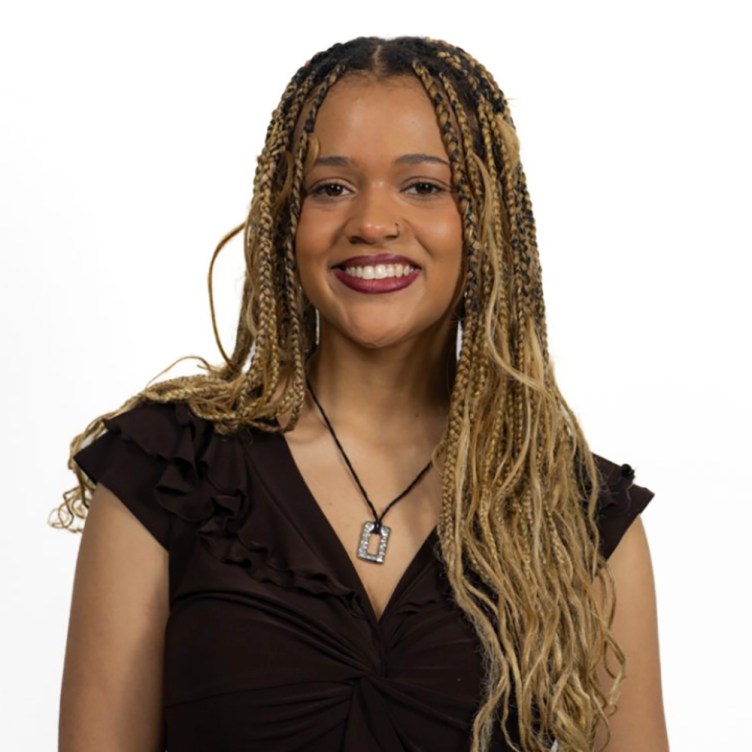
    A woman with long blonde braids smiles at the camera and wears a black top and a necklace with a silver pendant.
    Courtesy of Annisyn Krebs-Carr

    Annisyn Krebs-Carr is a senior at the University of Illinois, Urbana-Champaign studying journalism and animal sciences. She is a reporter for Illinois Public Media Student Newsroom, where she reports on the ongoing housing crisis in Champaign-Urbana. Previously, she served as the arts and entertainment editor at The Daily Illini, the independent newspaper at the university. She is now the managing editor and oversees content produced by the entire newsroom. In 2026, she interned for St. Louis Public Radio and formed relationships with the investigative reporters at NPR’s Midwest Newsroom. This is where she developed a deeper appreciation for investigative journalism. As she continues her journalism career, she wants to focus on how the criminal justice system has failed, and continues to fail, Black people. She also wants to explore how environmental racism has impacted lower-income communities. After graduation, she hopes to work in a public media newsroom and report on local stories while honing her investigative journalism skills. Long term, Annisyn hopes to build a dedicated career as an investigative journalist in public media.

    Jessica Meza (she/her)
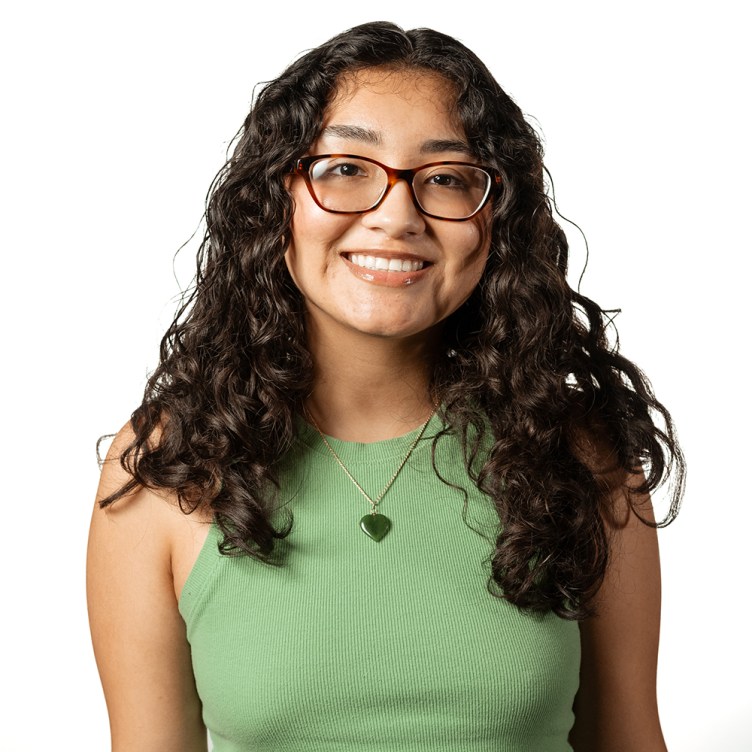
    A woman with shoulder-length wavy dark brown hair smiles at the camera. She wears glasses, a green tank top and a silver necklace.
    Courtesy of Jessica Meza

    Jessica Meza is a senior at the University of Nebraska, Lincoln studying journalism, advertising and public relations. Jessica works across mediums, including in data visualizations, video, print and social media, with an emphasis on audio reporting. Jessica hopes to begin her career in investigative, in-depth reporting, focusing on marginalized communities. She hopes to use her reporting to amplify the voice of people facing hidden injustices in her community. Other interests include housing, immigration and food reporting. Jessica currently works at Nebraska Public Media as a reporting intern. She previously interned at NPR’s Midwest Newsroom and, as the Hortencia Zavala Foundation intern, wrote for The Fulcrum and the Latino News Network. In 2025, she was part of the team at Nebraska News Service that was awarded a regional Society of Professional Journalists Mark of Excellence Award for its investigative project on missing and murdered marginalized women.

    Lajward Zahra (she/her)
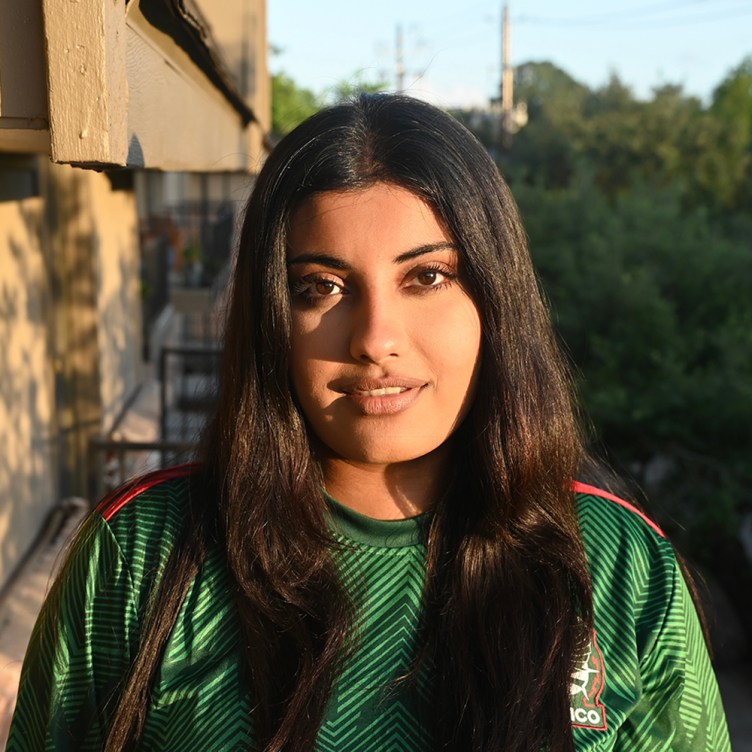
    A woman with long black hair wears a green top and smiles at the camera. Her face is dramatically lit and she is in front of a building and out-of-focus trees.
    Courtesy of Lajward Zahra

    Lajward Zahra is a senior English major at Rice University in Houston, originally from El Paso, Texas. Her reporting focuses on politics, immigration and the environment, particularly in Texas. She is a 2026 writing fellow at The Nation and has written for the magazine since 2023. She previously interned with the Houston Chronicle editorial board in summer 2025, reporting and writing on local and state politics, including the Texas Republican Party convention, among other issues. Lajward’s freelance work has also appeared in publications including The American Prospect, Teen Vogue, Business Insider, Rewire News Group and Scalawag. She was a 2024 Asian American Journalists Association Voices fellow.

    Thai Theodoro (she/her)
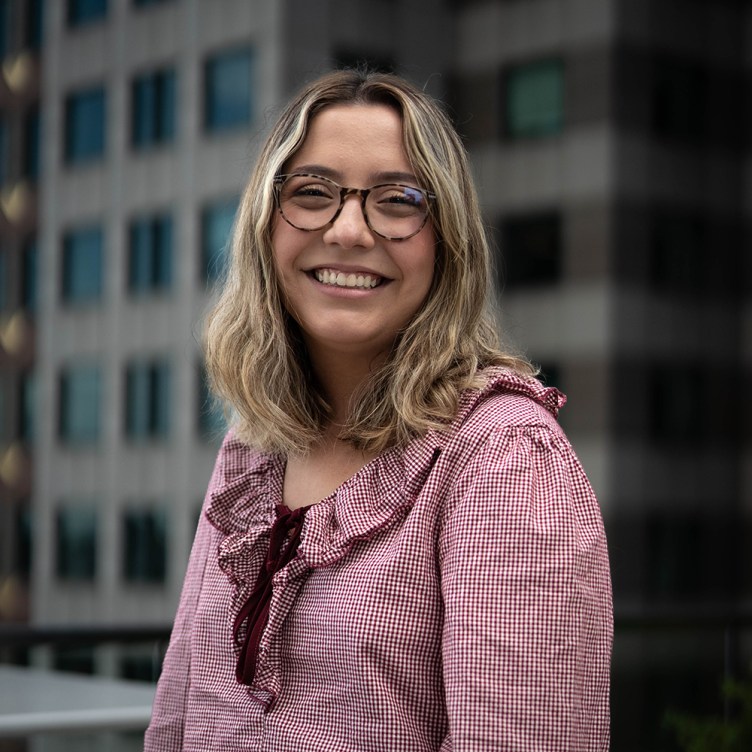
    A woman with shoulder-length blonde hair smiles at the camera. She wears glasses and a red patterned blouse and is in front of out-of-focus buildings.
    Courtesy of Thai Theodoro

    Originally from Brazil, Thai Theodoro studies political science with a concentration in Latin American studies at Grinnell College in Iowa. Now in her senior year, she is the managing editor of The Scarlet & Black, Grinnell’s independent student newspaper. Thai has interned at The Boston Globe, the Des Moines Register and the Pittsburgh Post-Gazette, and her reporting has been published in dozens of newspapers across the country. She is a member of the New York Times Corps and a former participant in the National Association of Hispanic Journalists’ Student Project. Thai is passionate about telling untold stories, pursuing investigative reporting with the power to challenge the status quo, using the three languages she speaks to reach underrepresented communities, and, of course, writing the occasional quirky story.

    Tsehai Alfred (she/her)
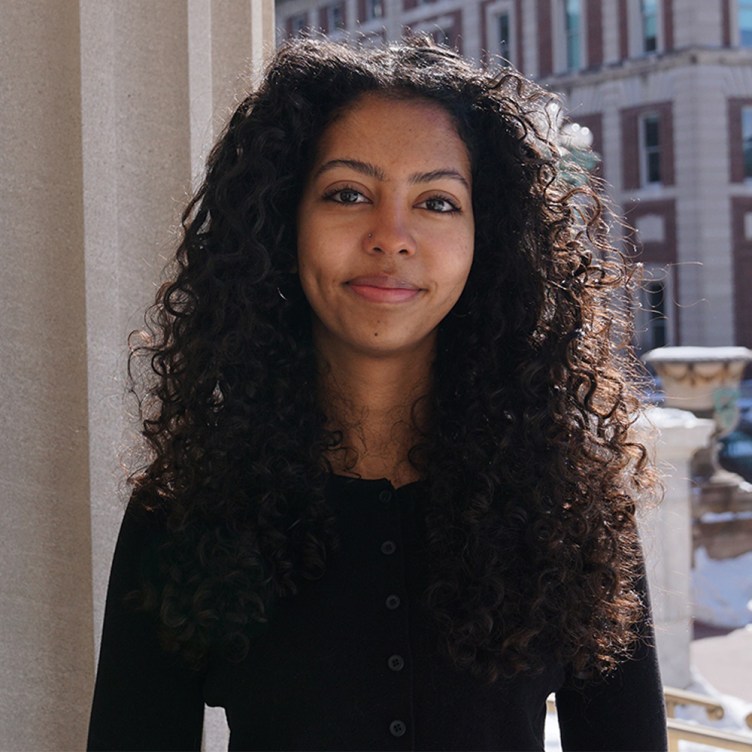
    A woman with long, dark, curly hair wears a black long-sleeved shirt and smiles at the camera. She is standing in front of a white pillar, and a stone-and-brick building can be seen in the background.
    Courtesy of Tsehai Alfred

    Tsehai Alfred is a senior at Columbia University studying English. She is the 150th editor-in-chief and president of the Columbia Daily Spectator, the campus newspaper, and is also an intern on CNN’s criminal justice team. Over the summer, she was a Dow Jones News Fund intern at VTDigger, an accountability-focused newsroom in Vermont, investigating the troubled integration of AI into healthcare, a struggling dairy farming industry, and soaring police use-of-force payouts. Previously, she has interned at City & State New York, covering the 2025 mayoral race and city council; at PBS News as a Gwen Ifill Journalism Fellow; and at her local news outlet, the Virgin Islands Consortium. Her reporting interests include local government, economic inequality, and political and corporate accountability.

    Source: ProPublica · 2026-10-28

  • INBI School of English WhatsApp Data Claim Includes 3.34 Million Messages and 171,967 Phone Numbers

    Data Exposure Report
    INBI School of English WhatsApp Data Claim Includes 3.34 Million Messages and 171,967 Phone NumbersMexico
    Education
    WhatsApp Communications
    Published
    Unverified

    INBI School of English WhatsApp Data Claim Includes 3.34 Million Messages and 171,967 Phone Numbers

    Claimed messages3,337,394
    Phone numbers171,967
    CountryMexico
    Data typeWhatsApp messages

    INBI School of English WhatsApp Data Claim Includes 3.34 Million Messages and 171,967 Phone Numbers

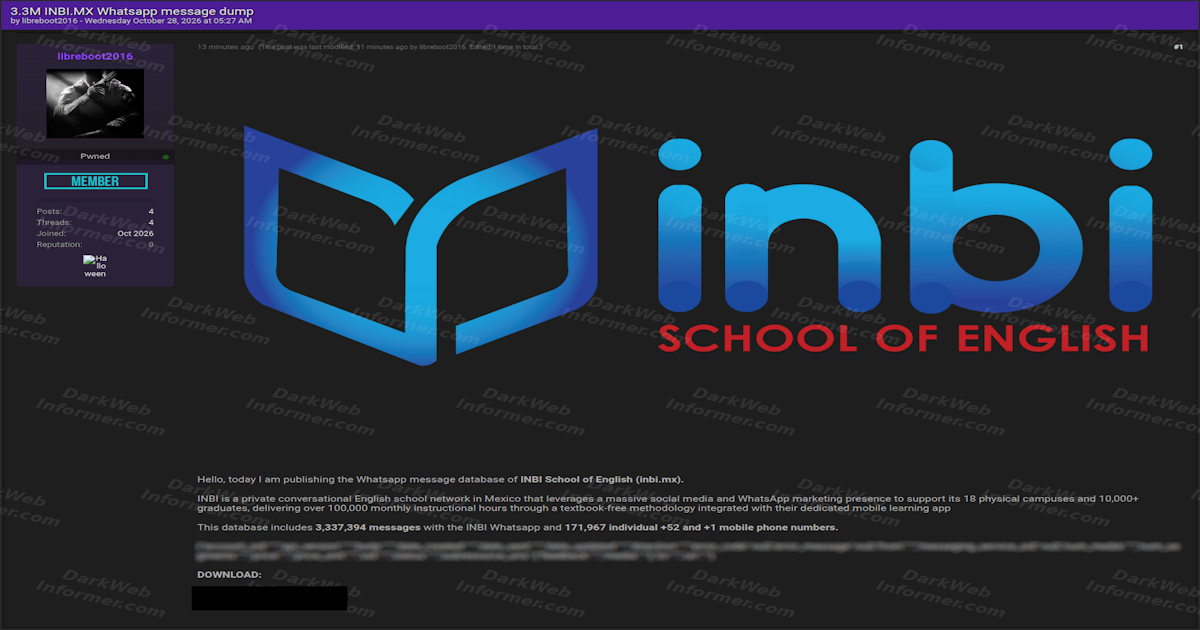
    An actor using the handle “libreboot2016” claims to have published a WhatsApp message dataset associated with INBI School of English, a private conversational English school network in Mexico.

    The post states that the dataset contains 3,337,394 WhatsApp messages and 171,967 individual mobile phone numbers using +52 and +1 country codes. A visible field list includes message body, creation and sent timestamps, direction, error fields, sender and recipient fields, messaging-service identifiers, media-related fields, pricing fields, message SID, status, feedback, media metadata and URI data. The dataset, its source, the stated counts and current availability have not been independently verified.

    Post details

    OrganizationINBI School of English
    CountryINBI School of English WhatsApp Data Claim Includes 3.34 Million Messages and 171,967 Phone NumbersMexico
    SectorPrivate education / English-language training
    Actor“libreboot2016”
    Claimed messages3,337,394
    Claimed phone numbers171,967
    Number ranges named+52 and +1
    Post date shown

    What the post claims

    • 3,337,394 WhatsApp messages
    • 171,967 individual mobile phone numbers
    • +52 and +1 number ranges represented
    • Message-body field included
    • Creation, sent and update timestamps included
    • Message-direction field included
    • Error-code and error-message fields included
    • Sender and recipient fields included
    • Messaging-service identifier included
    • Media-count and media metadata fields included
    • Segment-count field included
    • Pricing and price-unit fields included
    • Message SID field included
    • Status field included
    • Feedback and subresource-URI fields included
    • Download mirrors provided

    The visible field list resembles structured messaging-platform export data rather than a simple contact list. The screenshot does not show individual message contents, so the sensitivity and subject matter of the communications cannot be independently assessed from the supplied material alone.

    Screenshots

    The supplied capture shows the INBI School of English claim, the stated WhatsApp message and phone-number counts, a structured message-field list and direct download mirrors. Those download links are not reproduced here.

    IOCs & identifiers

    Identifiers directly visible or supported by the supplied material. These support correlation and do not independently verify the dataset claim.

    Type Identifier Source
    Actor handle libreboot2016 Screenshot 1
    Named organization domain inbi[.]mx Screenshot 1

    The organization domain identifies the entity named in the claim, not malicious infrastructure. No Tox ID, Session ID, Telegram handle, malware hash or attacker-controlled IP address is visible in the supplied screenshot. Direct download mirrors shown in the source material are intentionally not reproduced here.

    Mapped techniques

    Claimed identifies behavior explicitly described by the actor. Inferred identifies an analytical mapping supported by the supplied material. Neither label means the activity has been independently verified.

    • Collection
      T1213.006
      Data from Information Repositories: Databases
      Inferred
      The listing presents a structured message dataset containing communications metadata and phone-number information. The supplied material does not reveal how the data was obtained or independently establish unauthorized access to INBI systems.

    Potential impact

    If authentic, the claimed dataset could expose large-scale messaging metadata, mobile phone numbers and potentially the content of communications involving students, prospects, graduates or staff. Depending on the underlying message bodies, the material could enable targeted phishing, impersonation, spam, social engineering or significant privacy violations.

    Status Unverified

    Dark Web Informer has not independently verified the dataset’s authenticity, source, completeness, 3,337,394-message count, 171,967-number count or current availability. The supplied screenshot documents the listing and visible field structure, not independent confirmation of the underlying data.

    Dark Web Informer

    Source: Dark Web Informer · 2026-10-28

  • AI Takes Root in Hospital Corridors, Raises Security Stakes

    AI Takes Root in Hospital Corridors, Raises Security Stakes

    Artificial intelligence is everywhere in healthcare, from doctors’ intake forms to cancer screenings. But in some cases, life-and-death uses are outpacing cybersecurity.

    Source: Dark Reading · 2026-10-28

  • Hive ransomware affiliate jailed, years after FBI infiltrated the gang’s systems

    A Ukrainian man who carried out ransomware attacks for both the Nefilim and Hive gangs, including attacks on law firms and a healthcare provider during the COVID-19 pandemic, has been sentenced to 70 months in a US prison.

    Read more in my article on the Hot for Security blog.

    Source: Graham Cluley · 2026-10-28

  • Amazon’s new Echo Studio gives Alexa+ an AI camera to see inside your home

    Amazon’s new Echo Studio gives Alexa+ an AI camera to see inside your home

    The Echo Studio with Home Camera essentially equips Alexa+ with eyes to enable ‘visual intelligence’ features – but there’s a kill switch.

    Source: ZDNet Security · 2026-10-28

  • JPN: Times Car reporting ¥5.5 billion loss has firms bracing for data breach fallout

    Maddie Baker and Spencer Landers As cyberattacks continue across Japan, companies are coming to realize the great financial risk of such attacks if their lax cybersecurity systems cause millions of peoples’ personal information to be leaked. Times Car, which saw personal data that included the driver’s licenses of 1.46 million people leaked in September, is learning…

    Source: DataBreaches.net · 2026-10-28

  • Attackers Hide Malware Behind Signed ChatGPT and Claude Binaries

    Attackers have used fake ChatGPT and Claude projects to distribute Yoba malware

    Source: Infosecurity Magazine · 2026-10-28

  • Samsung’s new clip-style Galaxy Buds On have a major advantage over Sony and Bose

    Samsung’s new clip-style Galaxy Buds On have a major advantage over Sony and Bose

    Advanced audio features are great, but ecosystem integration is better. Here’s how Samsung’s newest clip-on Buds compare to its rivals.

    Source: ZDNet Security · 2026-10-28

  • Flávio Bolsonaro Flees Brazil After Election Defeat and Amid Fraud Probes

    Flávio Bolsonaro Flees Brazil After Election Defeat and Amid Fraud Probes

    Just three days after securing more than 59 million votes in a fiercely contested presidential runoff, Flávio Bolsonaro fled Brazil on Tuesday and landed in the United States, halting investigations at home over his alleged ties to a banker accused of financial fraud.

    A senior U.S. State Department official confirmed Tuesday that the U.S. “State Department will issue visas to Flavio Bolsonaro and his family and allow them entry into the United States.”

    Argentina’s National Directorate of Migration (DNM) confirmed on the social network X that Flávio—son of the convicted former Brazilian President Jair Bolsonaro—crossed into Argentina through the Tancredo Neves International Bridge, which connects the Brazilian city of Foz do Iguaçu with Argentina’s city of Puerto Iguazú.

    Accompanied by his wife and two daughters, Bolsonaro then boarded a private jet that made a short stop in Ecuador before landing in Miami, Florida.

    The defeated candidate is under investigation by the Brazilian justice system for a scheme involving million-dollar payments received from Daniel Vorcaro, the former owner of Banco Master, now in pre-trial detention for suspected $ 7 billion financial fraud. Vorcaro invested heavily in the production of “Dark Horse,” a biographical film about the life of Jair Bolsonaro.

    In May, the Intercept Brasil news outlet released audio recordings in which allegedly Flávio Bolsonaro is asking the banker, whom he referred to as “brother,” for 134 million reais ($26 million) to finance the feature film. Investigators allege that Vorcaro paid nearly half of that amount, and that the funds were diverted into U.S. accounts linked to the Bolsonaro family for personal use.

    Flávio Bolsonaro, who has not been charged in this case, previously claimed that in this case “a son was seeking private sponsorship for a private film about his father’s story,” adding that it involved “no public money at all.” He also stated that when negotiations with Vorcaro began in 2024, “there were no public accusations or suspicions about the banker.”

    Separately, a few days before the runoff election, Brazilian media reported that Bolsonaro is also being investigated for money laundering linked to Willer Tomaz, a close associate linked to the sports betting industry. Media reported that investigators suspect that Bolsonaro held a concealed interest in Tomaz’s activities through companies registered in Portugal. Both men deny the allegations.

    An electoral victory would have shielded Flávio Bolsonaro from both probes, as Brazilian law protects sitting presidents from prosecution during their term for acts committed prior to taking office.

    Source: OCCRP · 2026-10-28

  • China Sentences Ex Anti-Graft Official to Suspended Death for Bribery

    China Sentences Ex Anti-Graft Official to Suspended Death for Bribery

    A Chinese court sentenced a former senior anti-graft official at the China ​Securities Regulatory Commission, to a suspended death sentence for accepting more than 436 million yuan ($65.4 million) in bribes.

    Between 1998 and 2025, Wang Huimin abused his positions in the northwestern Xinjiang region and at the national securities regulator to secure business and fundraising favors for companies and individuals in exchange for the illicit payments, the state-run Xinhua news agency reported.

    A suspended death sentence gives the 67-year-old Wang Huimin a two-year reprieve from execution, after which the penalty is automatically commuted to life in prison under Chinese law.

    Source: OCCRP · 2026-10-28