On the night of Feb. 15, 2022, Robert Maddox Jr., a rookie cop in a small Alabama town, called his colleague in a panic. His wife was about three months pregnant and bleeding heavily. They needed someone to watch their two sleeping children while they went to the hospital.
Headland police Officer James “Bo” Knight arrived with his wife. He had been serving as a mentor of sorts to Robert, who had just recently joined the department, and had urged him to reach out if he ever needed help.
The situation Knight encountered was a heavy one. Robert had something in a plastic bag that looked to Knight like fetal remains. His wife stood by silently. Robert said he’d be back as soon as possible, that he was taking both his wife and the bag to the hospital.
When the couple returned three hours later, Robert was holding a white container.
“They put my fucking baby in a box,” he said.
Investigators soon began building a case that it was Robert who caused the miscarriage. About six weeks after she lost the pregnancy, Brittany Maddox reported her husband for assaulting her before and after she went to the hospital. She first went to an abuse-prevention organization, which connected her to the police and helped her get a protective order from the court. She provided the Houston County judge with a description of how Robert choked and beat her in front of their 1- and 2-year-old children just before the miscarriage, as well as pictures taken starting the following week of marks on her neck. She handed over text messages from Robert in which he promised not to hurt her again and begged her to consider how his imprisonment would hurt their family.
“Being honest is going to get us both screwed,” he wrote. “The truth is going to give me locked up.”
Then, the Headland Police Department colleague who had offered to help Robert stepped forward. Knight gave a sworn statement to investigators in Dothan, the nearby city where the young couple rented an apartment. He recounted how, weeks after the incident, Robert confided in him that he had hit Brittany in the stomach, choked her and pushed her to the ground.
“I asked him how many times he has done this,” Knight said in his statement. “He stated many.”
According to the statement, Knight asked when he had last hurt her — and Robert responded “the night before you kept my kids.”
In Alabama, the legal implications of causing a miscarriage are severe. Politicians and prosecutors have long proclaimed their mission to defend the unborn. The state has gone further than almost every other to embrace “fetal personhood” — the legal concept that embryos and fetuses deserve the same rights and protections as children. The result is that people charged in Alabama with harming a fetus face especially lengthy prison sentences.
The authorities came down hard on Robert, at least at first. He was charged with murder.
But in the years that followed, Houston County’s criminal justice system would prove lenient for him. Robert was released on bond about five weeks after his arrest and never again saw the inside of a jail or prison cell.
His case stands in stark contrast to dozens of other fetal personhood prosecutions in Houston County, which sits in the corner of the state near the borders of Florida and Georgia. Those defendants were pregnant women. They were charged not for actually harming their unborn babies but for potentially endangering them — not by violence but by using drugs.
In all but one of those cases, which date back nearly two decades, their babies survived. Some of the women spent months in jail and even went to prison.
A former nurse, who had been battling a meth addiction for years, was arrested in 2018 after she tested positive for drug use while in labor and wound up spending nearly 10 months in prison. Another woman, who also tested positive at the hospital where she gave birth, ended up in jail for four months in 2024 — and said many fellow inmates were women who’d been arrested for using drugs while pregnant.
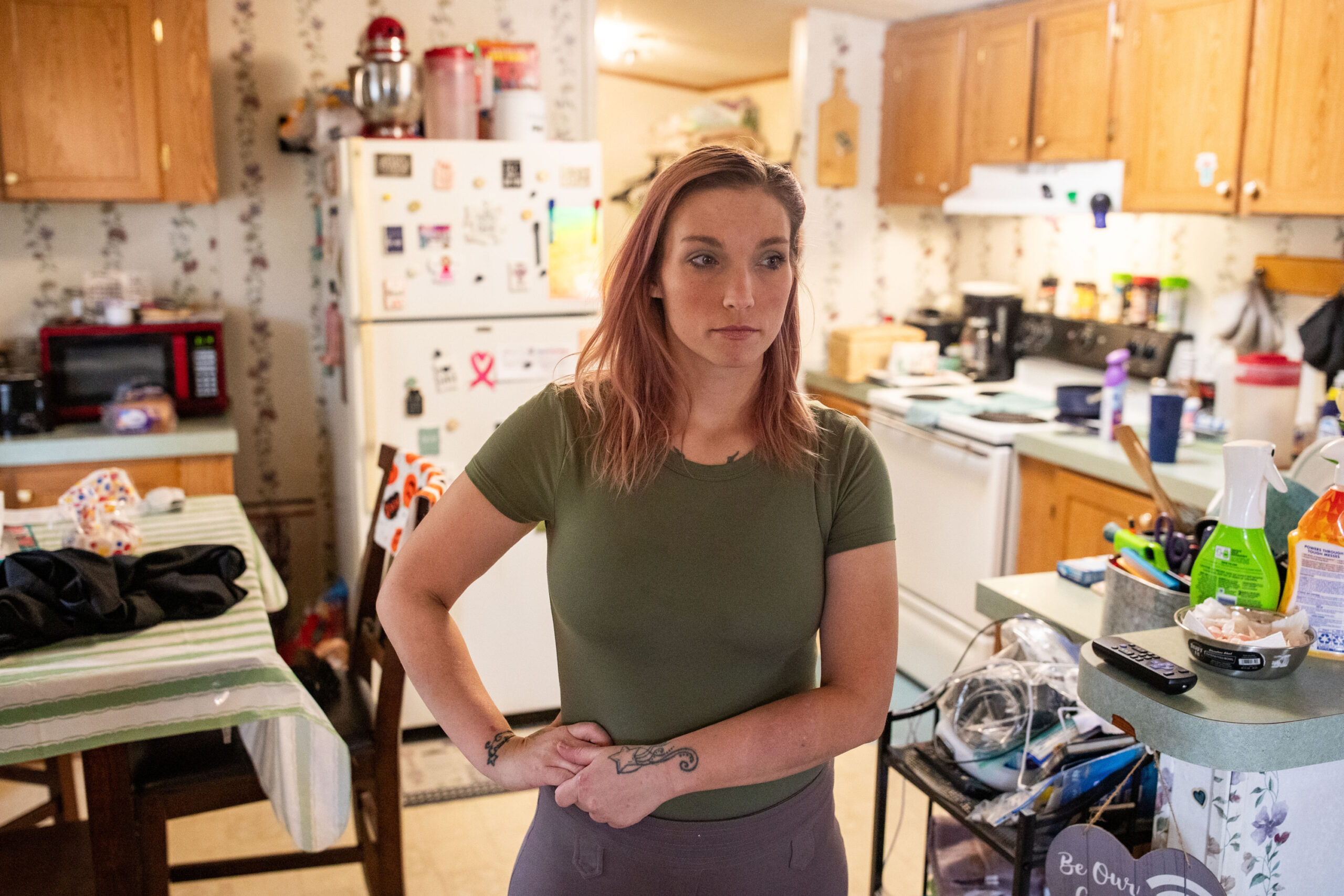
Houston County District Attorney Russ Goodman, who took office in January 2023, said in an email that his office has made efforts to help the women by recommending addiction treatment as part of their sentences. He also said some were rearrested and imprisoned for violating probation — or never completed the treatment offered by the court.
“During my term it is rare that we would sentence a defendant in these types of cases to a straight prison sentence,” Goodman said, “unless of course there were other extenuating circumstances, such as prior criminal history.”
As for Robert Maddox, Goodman said that the evidence against him was inconclusive, and he questioned the prior district attorney’s decision to seek an indictment. “It pained me as a prosecutor that I was not to be able to seek justice in this case,” he said.
Robert declined an interview but said in an email, “I was made out to be someone I wasn’t.” He did not respond when pressed to elaborate. ProPublica later sent him a detailed list of the allegations against him. He replied, “That is not what happened.” In response to a follow-up email, he said his wife had no bruising or marks at the hospital.
“If I was abusive and abused her then took her to the hospital they would have saw the marks and not let me leave with her,” he wrote in an email.
Lourdes Rivera, president of the advocacy group Pregnancy Justice, said her organization has identified 2,298 cases of women arrested since 2006 on charges related to their pregnancy. Most of those were for drug use and are concentrated in Oklahoma, South Carolina and Alabama. Rivera said the numbers of women prosecuted for pregnancy loss appear to be on the rise compared with the years before the U.S. Supreme Court overturned the right to an abortion.
“Law enforcement is using laws that were never intended to apply to pregnancy to investigate, arrest and punish women,” Rivera said. “And it’s only getting worse.”
Robert’s promise not to hurt Brittany again after the miscarriage lasted about a week, she said. She would later tell a judge that he began hitting and choking her again, and photos from that time show bruising on her neck and eye. In that time, something shifted.
“I started hating him when I saw my baby dead,” she wrote in response to ProPublica’s questions.
She said it took her several weeks to come forward because she had to work through complicated feelings about the loss of both her pregnancy and a husband she still loved despite the hatred that was building. She also wasn’t sure if she and her daughters could safely leave him.
About a week before she went to the authorities, she got a text from her husband asking if she’d give him one more chance. “I can’t give you your baby back,” he wrote. “That’s something I’m always going to live with knowing I did that.”
Asked about the text, Robert wrote to ProPublica, “I was referring to having to pull my kid out a toilet I couldn’t believe I had to do that. It was painful emotionally.”
Robert had started working as an officer at the Headland Police Department about four months earlier. Brittany worried the other officers would side with her husband, but she quashed her fears and reached out on social media to several of them anyway. She said Robert went into her account and deleted the messages she’d sent. But it was too late.
Knight, one of the officers she messaged, confronted Robert, who admitted that he had hit Brittany in the stomach before the miscarriage, the officer later told the Dothan police. Robert furiously messaged Brittany.
“If you want me to go to jail keep accusing me of it,” he wrote. “Just know I love you and it will never happen again but I think I’m getting fired.”
Domestic abuse is a leading killer of pregnant women. And for every fatal case, there are an estimated 70 nonfatal ones. Researchers have found that almost 13% of women surveyed experienced domestic violence during pregnancy.
Nonfatal cases usually go unreported, according to Maeve Wallace, an expert on domestic violence at the University of Arizona. The same goes for miscarriages, which often happen at home and may leave no medical record. That can make it difficult to determine how often abuse causes miscarriage, she said.

Brittany said her relationship with Robert had been turbulent from the start. She was still in high school when they started dating, and she uprooted her life to relocate to his hometown of Dothan. She said he started physically hurting her months into the relationship and that it escalated after the move. Brittany found herself isolated in Alabama, where life revolved almost entirely around her husband, two young children and the couple’s car-detailing business.
“Robert would also hurt me if things weren’t done perfectly or if any issues happened,” Brittany wrote.
Unlike many other victims of domestic violence, she hounded the police and prosecutors to take her case seriously after the miscarriage.
Cases against abusers accused of causing pregnancy loss can be tricky to prove, often requiring evidence that the abuser intentionally struck the victim in the stomach and testimony from a forensic pathologist linking the violence to the pregnancy loss. In one strange turn, a grand jury in a city outside of Birmingham indicted a woman for starting a fight that led to her being shot in the stomach and suffering a miscarriage.
It’s easier and more common to pursue charges against defendants when they are accused of killing both a pregnant woman and her fetus.
Laws don’t provide an easy path for punishing abusers of pregnant women, especially when the baby survives, according to law professor Mary Ziegler, who teaches at the University of California, Davis. But laws do make prosecution of pregnant women who use drugs astonishingly easy. Those cases come to light almost automatically — and there is little opportunity to challenge them. Hospitals frequently administer drug tests to pregnant women and notify child protective services of positive results. Those agencies often turn over that information to police in Alabama, where drug use is not grounds just for a child welfare investigation but for a felony charge.
The women are prosecuted under Alabama’s chemical endangerment law, which makes it illegal to expose children to drugs. Although the 2006 law initially was designed to address the dangers of home-based meth labs, prosecutors almost immediately began using it against pregnant women.
ProPublica identified more than 40 pregnant women arrested in Houston County since 2009 on chemical endangerment charges after testing positive for drugs. An analysis of court data also found that the county prosecuted women for chemical endangerment at one of the highest rates in the state, though the data doesn’t specify whether the cases involved pregnancies.
In one case, a 24-year-old whose newborn tested positive for methadone and marijuana received a five-year prison sentence in 2009. Another woman, who’d been convicted for exposing her fetus to THC in 2013, had her probation revoked for possessing synthetic marijuana and spent about nine months in prison.
Pat Jones, who was Houston County’s district attorney at the time of these cases, did not respond to a request for comment.
According to Ziegler, there is a pronounced unevenness in who gets punished under statutes that protect fetuses.
“The versions of personhood that are enshrined in our laws have tended to focus on the conduct of women,” she said.
Courtney Haney grew up in Dothan but left at age 18 to join a high-pressure sales crew that traveled across the country, selling boxes of frozen meat door-to-door. The work was stressful, and it attracted misfits and risk-takers. Several of her colleagues used drugs, but Haney became pregnant unexpectedly and stayed clean.
Her daughter was born healthy, arriving exactly on her due date. But soon, cracks appeared in her relationship with the father, and he split, taking the baby with him. When her colleagues moved on to other cities, Haney remained in Denver to look for her child. She had no family there and no friends. Her despair became overwhelming. She turned to drugs and became homeless, eventually losing custody.
Almost a year later, Haney found out she was pregnant again and returned to Dothan in 2020 with a full-blown addiction to heroin. She went to the hospital with contractions the week before she gave birth and knew she would test positive for drugs. She also said no one offered her options for drug treatment, even after she asked for help. Instead, hospital staff stabilized and discharged her. She kept using until she returned to give birth, when she was drug-tested again.
“I was holding my daughter in my hands and the police walked in,” Haney said.
They asked her questions, and she hoped they might show mercy and allow her to go home with her child. After they told her she might be charged with a felony for exposing her fetus to drugs, she burst into tears.
“I answered honestly, thinking that if I’ve answered honestly they wouldn’t press charges,” she said. “And that was pointless.”
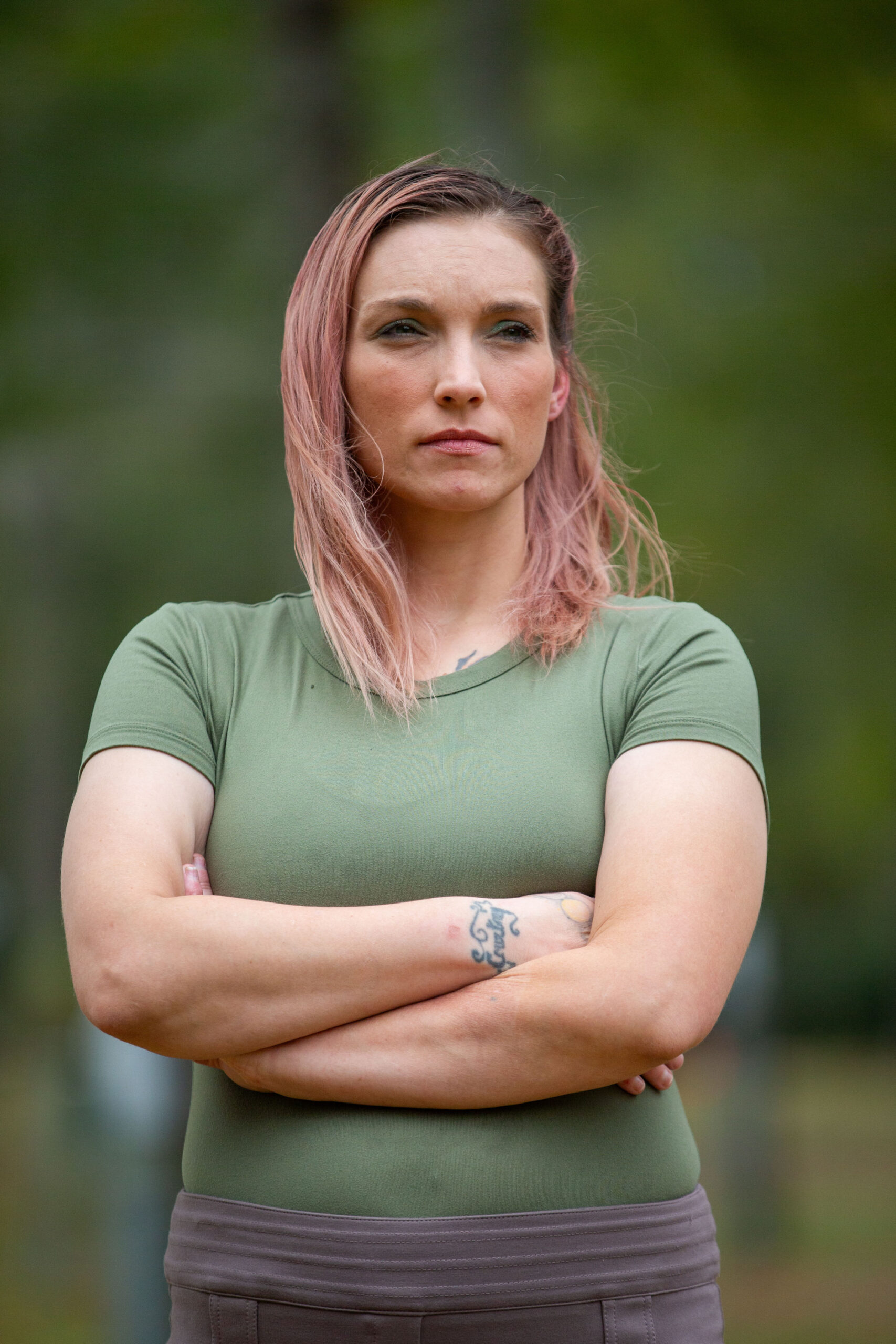
She was arrested for chemical endangerment three months later.
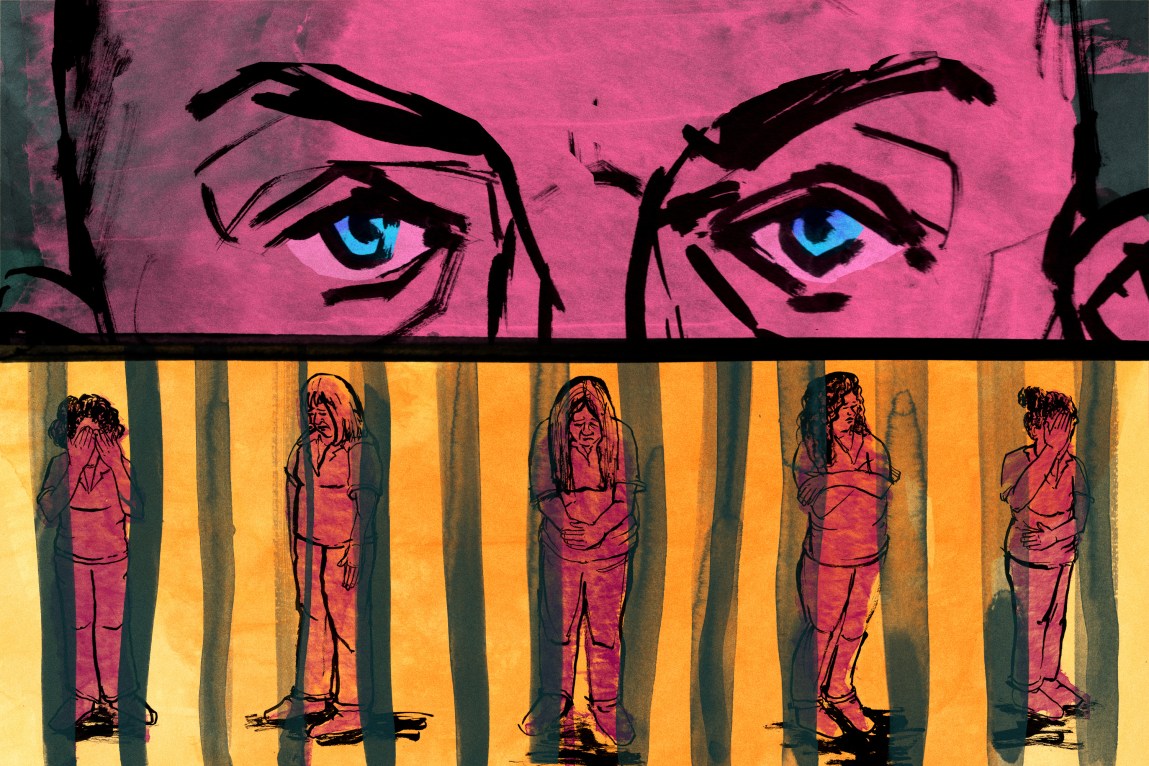
For women struggling with addiction during pregnancy, a chemical endangerment arrest can initiate a cycle of devastating court fees, imprisonment on probation violations and even additional charges. And the separation from their newborns and other children can drive them deeper into addiction. Unlike in many other counties, Houston County does not offer a drug court program, which allows defendants to get substance-abuse treatment instead of prison time and avoid a felony on their record.
A woman who was about seven months’ pregnant was arrested in Houston County the very same day as Robert Maddox, in 2022. She was briefly jailed for violating probation stemming from a past chemical endangerment conviction. She then faced additional felony charges when, weeks later, she tested positive for cocaine at the hospital where she gave birth. She later received a five-year sentence and wound up at Tutwiler Prison for Women.
Her release date is right before Christmas in 2028.
Haney had no felony convictions, but a sentencing report recommended against straight probation due to charges in other states that had been dismissed. Ultimately, the Houston County district attorney’s office offered a plea deal for a lesser charge and just over a year of probation.
Haney struggled to abide by the conditions of her sentence. She did not complete court-ordered drug treatment and failed to report to her probation officer several times. As a result, she was jailed for a total of four months.
Many of the other women jailed with her also had been arrested on charges of chemical endangerment as a result of failing drug tests during childbirth.
“Whenever I went to jail, that’s where I met most of them,” Haney said. “There’s a whole lot of them in Houston County.”
Haney became pregnant two more times while she was addicted. For her third child, she traveled to nearby Georgia to give birth, and then to Florida for her fourth. Neither state arrests women for prenatal drug use at the same high rate as Alabama.
Xaviera Smith, a former nurse and mother of three from Tennessee, said she knew she would be arrested before she even gave birth in Houston County to her youngest son in 2018. Smith couldn’t deny the results of the drug test that had been administered while she was in labor. She had been battling a meth addiction for years.
She said that, fortunately, her baby was born healthy and did not need to go to the neonatal intensive care unit for drug withdrawal.
Smith had a court-appointed attorney who negotiated a deal on her chemical endangerment charge. She was sentenced to 10 years but could avoid prison by serving time through the local work-release program.
“I just went to court and took what they gave me,” Smith said. ”There’s nothing I really could do.”
After violating the terms of work release, she ended up in prison for nearly a year.
Brittany Maddox believed the case against her husband was a straightforward one. She felt there was solid evidence that the abuse caused her miscarriage. But the effort proved to be harder than she anticipated.
A few months after his arrest, the grand jury declined to indict him for murder, opting instead for a lesser charge of manslaughter.
The indictment alleged that Robert had “recklessly” caused the death of his wife’s fetus by “punching her in the stomach with a closed fist.” The maximum punishment would be 20 years in prison.
As Robert waited for his day in court, he asked the judge to relax some of the conditions of his bond. He had lost his job with the Headland police because of his wife’s claims of abuse and had started washing cars again. He wanted the court to remove the ankle monitor so he could more easily travel to work in Florida, which is near Dothan.
From her home out of state, Brittany had been calling the district attorney’s office once or twice a month to ensure authorities kept an eye on her estranged husband’s whereabouts. She was shocked to learn of his out-of-state travel request — not from prosecutors but from a news story. For the first time since his arrest, she felt unsafe.
A judge denied his motion to remove the ankle monitor but granted his request to commute to north Florida.
Brittany stayed in touch with prosecutors and began to mentally prepare for trial. She said that as months stretched into years, the conversations with them began to shift. They asked her how she felt about a plea deal, and she said she would be open to it, as long as the charge related to her miscarriage wasn’t dropped completely.
“I told them I could push through a trial emotionally,” Brittany wrote.
Finally, almost four years after Robert was arrested, his attorney brokered a plea deal with prosecutors. He would plead guilty to domestic violence, and the prosecution would recommend the manslaughter charge be dismissed.
Goodman, the district attorney, told ProPublica that he would not have been able to prove at trial that Robert committed manslaughter. “There was never any evidence that tied the actions of the defendant to the death of the baby,” he said, adding that “no expert could tie a causal connection.”
He also said he explained to Brittany that “we would not have moved forward on the manslaughter case” had he been in office when his predecessor chose to seek an indictment against Robert.
Brittany said if Goodman believed the charge should be dropped, he should have done it sooner, instead of having her spend years preparing for trial.
“The charge being dropped four years after he was arrested as part of a plea deal makes no sense to me,” she said. “That wrecked me in a lot of ways, more than the times I laid in bed for days after he hurt me.”
On May 18, 2026, Robert appeared before a judge in a Houston County courtroom. Brittany attended the hearing as well. She had traveled to Alabama for all of the hearings, even though she still feared being in the same room with Robert.
After all that waiting, the sentencing felt surprisingly short to her. When the judge moved to dismiss the most serious charge, he didn’t say the word manslaughter or mention the miscarriage. Brittany said she tried to ask questions about the deal, but she wasn’t sworn in, and the judge quickly moved on.
“The victim and the defendant were in a verbal dispute whereas the defendant was alleged to throw the victim down and choke her,” the judge said. “The state alleges that this occurred in front of their minor children as well.”
The judge went on to say that the presence of the children might have increased Robert’s punishment to a minimum six months’ imprisonment. But because he was a first-time offender, that minimum didn’t apply.
The judge sentenced him to five years’ probation and fined him about $3,000, which he could pay off at $50 a month. Then the judge added one more thing: anger management classes, to be completed through the court referral office.
Source: ProPublica · 2026-11-15